Two Days in Sarajevo: Ottoman Bazaars, Coffee Rituals & the Story of a Siege
A tightly planned 48 hours in Bosnia's capital, from the copper-lined lanes of Baščaršija to the Tunnel of Hope, with the best cevapi, Bosnian coffee, and viewpoints along the way.
2 days in Sarajevo
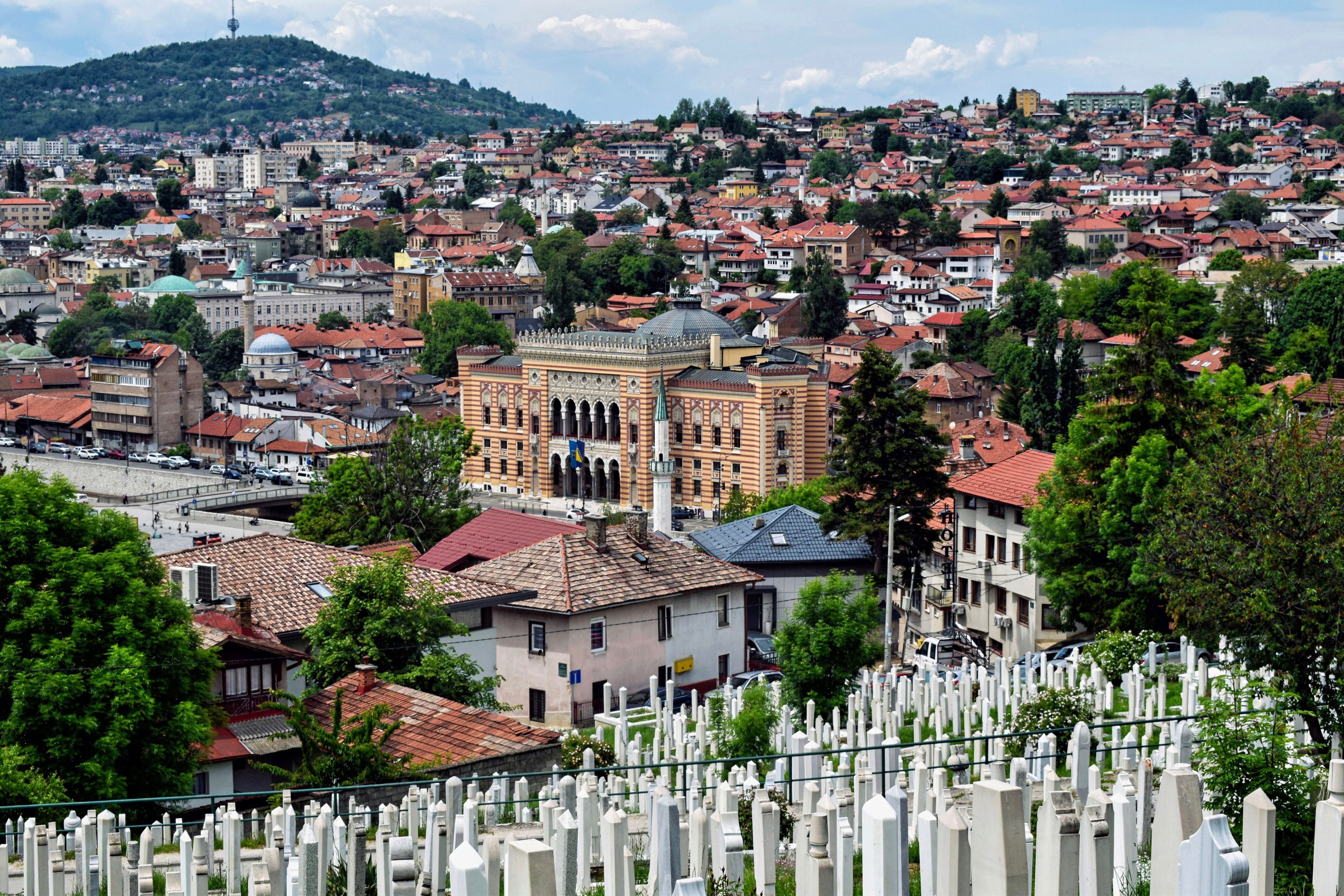
Few cities pack as much history into so small a space as Sarajevo. Within a ten-minute walk you can cross from Ottoman-era mosques and copper workshops into a district of Austro-Hungarian facades, then reach the corner where the assassination of Archduke Franz Ferdinand in 1914 helped ignite World War I. Ringed by green mountains that hosted the 1984 Winter Olympics, the city later endured the longest siege of a capital in modern warfare, from 1992 to 1996.
This layering of empires and faiths earned Sarajevo its nickname, the 'Jerusalem of Europe,' where a mosque, an Orthodox church, a Catholic cathedral, and a synagogue sit within a few hundred meters. The everyday culture runs on ritual: thick Bosnian coffee served with a copper džezva and a cube of sugar, grilled cevapi tucked into warm somun bread, and slow evenings of people-watching along the pedestrian spine of Ferhadija.
Getting around the center is easy on foot, and the compact old town means two days is enough to hit the essentials. The currency is the convertible mark (KM/BAM), pegged to the euro, and Sarajevo remains one of Europe's most affordable capitals. Late spring through early autumn is the most comfortable time to visit; winter is cold but atmospheric, with nearby ski resorts a short drive away.

Arrival, Baščaršija & a First Taste of the Old Town
Sebilj in Sarajevo · Jaimrsilva / CC BY-SA 4.0Drop your bags and head straight into Baščaršija, Sarajevo's Ottoman-era bazaar quarter and the obvious place to find your feet. Start at the Sebilj, the wooden fountain that anchors Pigeon Square, then wander the copper-lined lanes of Kazandžiluk.
The 15th-century bazaar district is the soul of Sarajevo, a compact grid of pedestrian lanes lined with coppersmiths, jewelers, and cafes. Begin at the Sebilj fountain, then follow Kazandžiluk to watch artisans hammer copper džezvas and shell casings into art. It's free to wander and ideal for shaking off travel legs.
The finest Ottoman building in the country, completed in 1531, with a serene courtyard fountain and a soaring dome. Modest dress is required and a small entry fee applies for non-worshippers (around 5 KM); it closes to tourists during prayer times, so check the posted schedule.
If you'd rather have the layers explained, this two-hour walk with a local guide connects the Ottoman bazaar, the mosques, and the Austro-Hungarian core, framing why Sarajevo is called the meeting point of East and West. A quick, well-reviewed orientation on your first afternoon.
Walk the 'Meeting of Cultures' line on Ferhadija, marked by a plaque where Ottoman cobblestones give way to Habsburg pavement, then climb to a viewpoint as the light turns gold over the domes and minarets.
A short uphill walk from the old town leads to this 18th-century bastion, the city's favorite free sunset spot. The view sweeps across the valley, the river of red roofs, and hundreds of minarets. Bring a coffee from a nearby kiosk and settle in.
The Ottoman-era bridge beside the corner where Gavrilo Princip assassinated Archduke Franz Ferdinand in 1914, a moment that helped trigger World War I. It's a two-minute detour along the river and worth a pause at the small museum on the corner.
Your first dinner should be the city's signature dish: cevapi, small grilled beef sausages served in warm somun flatbread with raw onion and kajmak. Baščaršija's grill houses are famous for it.
The most beloved cevapi institution in the old town, going strong for decades. Order a portion of 10 with somun and a dollop of kajmak; expect around 8-12 KM and a lively, no-frills room. Cash is king here.
A rival contender with plenty of locals swearing it's the best cevapi in town, tucked at the edge of the bazaar. Smoky, generous portions and quick service make it a reliable first-night choice.
If you'd rather sit down for a broader Bosnian meal, this cheerful courtyard tavern serves grilled meats, stuffed vegetables (dolma), and hearty stews at gentle prices. A short walk from the center and popular, so arrive early or expect a wait.
End the night the Sarajevo way, with a slow Bosnian coffee served in a copper set, or a scoop of the city's excellent ice cream along the promenade.
Bosnian coffee is a ritual, not a caffeine hit: unfiltered, poured from a džezva into a small fildžan, sipped alongside a sugar cube and a piece of rahat lokum. Any of the small terraces around the Sebilj will do; expect around 2-4 KM and no rush to leave.
A long-running local favorite for creamy sladoled, perfect for an evening stroll along Ferhadija. A cone runs just a couple of marks and the line moves fast.

Bosnian Coffee, the Tunnel of Hope & Farewell
Sarajevo Tunnel · Baumi / CC BY-SA 3.0Fuel up before a morning that turns from pastry to history. Start with either a serious specialty coffee or a traditional Bosnian breakfast of burek and yogurt.
For an authentic first bite, order burek (a coiled, flaky meat pie) or sirnica (cheese) sold by weight, with a glass of drinking yogurt. It's fast, filling, and costs only a few marks, the way locals start the day.
A specialty coffee bar that takes both third-wave espresso and traditional Bosnian coffee seriously, with knowledgeable baristas. A calm, design-minded spot for a proper flat white before the day begins.
Devote the morning to understanding the 1992-96 siege, the defining chapter of modern Sarajevo. The Tunnel of Hope, dug beneath the airport runway to smuggle in food, fuel, and weapons, is the single most moving site in the city, and a guided tour ties it to the wider story.
A powerful half-day tour led by someone who lived through the siege, covering Sniper Alley, key frontlines, and the War Tunnel Museum with entrance fees included. The firsthand perspective is what sets it apart. Confirm timing so you're back with room to spare before departure.
Sarajevo's top-rated war tour, praised for guides who explain the fall of Yugoslavia and the siege with clarity and empathy, including the Tunnel of Hope Museum and frontline viewpoints. A comprehensive way to grasp the region's recent history in one morning.
A budget-friendly minibus tour focused squarely on the Tunnel of Hope and the story of how the city survived, a good option if you want the essentials without a full half-day. Convenient pickups and a straightforward itinerary.
Back in the center, have a relaxed final lunch and pick up any last gifts near the bazaar before heading to the airport or bus station.
If you have a little more time, the historic brewery near the old town pairs local beer with hearty plates in a grand hall. A relaxed way to close the trip before a mid-afternoon departure.
Duck into the covered market hall and its open-air produce square for cheese, honey, and dried fruit to take home. The site is also a solemn memorial to two wartime shellings; a plaque and red markings commemorate the victims.
Pick your base
Base yourself in or beside Baščaršija (the old town) or along Ferhadija in the central Austro-Hungarian core. Both put the major sights, cafes, and restaurants within a short walk and keep you off the trams for most of your trip. The area around Ferhadija and Titova is quieter at night while still central; Baščaršija itself is livelier and more atmospheric but can be busy in the evenings.
A grand, well-run hotel on the seam between Baščaršija and the Austro-Hungarian center, so you can walk to almost everything. Expect polished service, a good breakfast, and a spa; excellent value for a full-service property.
A clean, sociable, well-located hostel steps from Baščaršija with private rooms as well as dorms. A reliable, friendly budget pick with helpful staff who know the city.
A large resort with thermal pools and spa on the edge of the city near Ilidza, good for families who want space and water play. It's away from the old town, so plan on a taxi or tram into the center.
An atmospheric small hotel built around a restored Ottoman hammam, right in the old town. Guests get access to the historic Turkish bath, a memorable and central splurge.
Good to know
How many days do you need in Sarajevo?
Two full days is enough to see central Sarajevo's highlights, including Baščaršija old town, the main mosques and churches, key viewpoints, and a war-history tour to the Tunnel of Hope. Add a third or fourth day if you want a day trip to Mostar and Herzegovina or the Lukomir highland village.
What is the best area to stay in Sarajevo for first-time visitors?
Stay in or right beside Baščaršija (the old town) or along Ferhadija in the central Austro-Hungarian core. Both areas put the major sights, cafes, and restaurants within an easy walk, so you rarely need public transport.
Is Sarajevo expensive to visit?
Sarajevo is one of Europe's most affordable capitals. A plate of cevapi costs around 8-12 KM, a Bosnian coffee just 2-4 KM, and mid-range hotels are inexpensive by Western European standards. The currency is the convertible mark (BAM), pegged to the euro, and cash is preferred at many small eateries.
What is the best time to visit Sarajevo?
Late spring (May-June) and early autumn (September-October) offer the most comfortable weather and lively streets. Summers are warm and busy, while winters are cold and atmospheric, with ski resorts like Jahorina and Bjelašnica a short drive away.
How do you get from Sarajevo airport to the city center?
Sarajevo International Airport (SJJ) is about 20-30 minutes from the center. A taxi typically costs 15-25 KM, and there are tram and bus connections as well; agree on the fare or use a metered/reputable taxi to avoid overcharging.
Is the Tunnel of Hope worth visiting and how do you get there?
Yes, the Tunnel of Hope (Tunel spasa) is Sarajevo's most powerful war-history site, a tunnel dug beneath the airport during the 1992-96 siege. It sits near the airport about 20-30 minutes from the center, so most visitors reach it on a guided tour that includes transport and context.
Two days is enough to fall for Sarajevo: to trace its Ottoman lanes and Habsburg boulevards, to sip coffee the way locals have for generations, and to sit with the harder, more recent history at the Tunnel of Hope. Small, walkable, and remarkably affordable, it leaves most visitors plotting a return, whether for the mountains, Mostar, or simply another plate of cevabi. Safe travels, and enjoy the meeting point of East and West.