
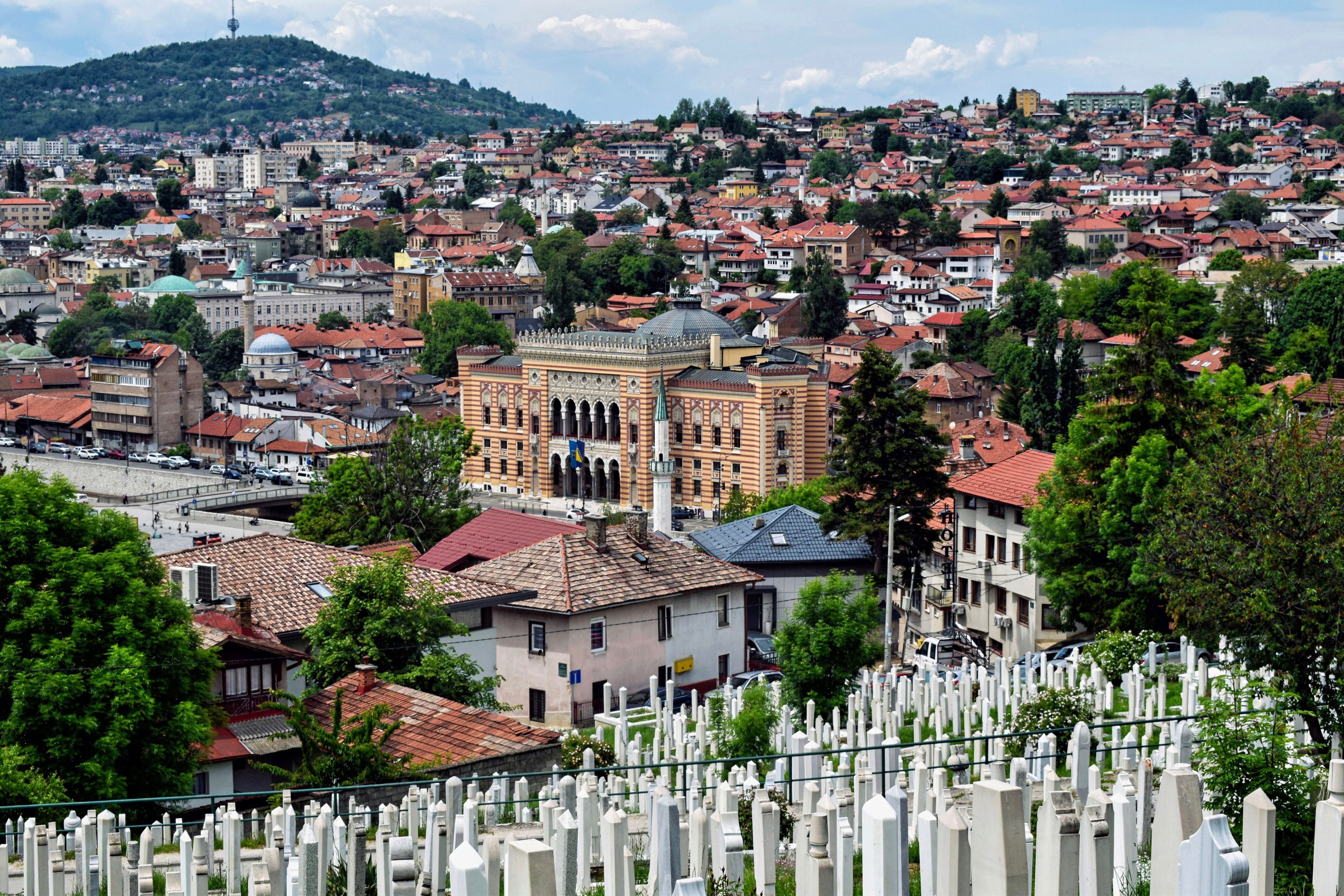
Few cities pack as much history into so small a space as Sarajevo. Within a ten-minute walk you can cross from Ottoman-era mosques and copper workshops into a district of Austro-Hungarian facades, then reach the corner where the assassination of Archduke Franz Ferdinand in 1914 helped ignite World War I. Ringed by green mountains that hosted the 1984 Winter Olympics, the city later endured the longest siege of a capital in modern warfare, from 1992 to 1996.
This layering of empires and faiths earned Sarajevo its nickname, the 'Jerusalem of Europe,' where a mosque, an Orthodox church, a Catholic cathedral, and a synagogue sit within a few hundred meters. The everyday culture runs on ritual: thick Bosnian coffee served with a copper džezva and a cube of sugar, grilled cevapi tucked into warm somun bread, and slow evenings of people-watching along the pedestrian spine of Ferhadija.
Getting around the center is easy on foot, and the compact old town means two days is enough to hit the essentials. The currency is the convertible mark (KM/BAM), pegged to the euro, and Sarajevo remains one of Europe's most affordable capitals. Late spring through early autumn is the most comfortable time to visit; winter is cold but atmospheric, with nearby ski resorts a short drive away.
Sarajevo rewards travelers who slow down. Its heart, Baščaršija, is a warren of pedestrian lanes where coppersmiths still hammer at their trade and the scent of grilling meat drifts past centuries-old caravanserais. But the city is more than its bazaar: it is a living document of the 20th century, from Habsburg grandeur to Olympic glory to the resilience that carried it through the 1990s siege. Two days here move naturally between pleasure and remembrance, and the city carries both with unusual grace.


Where to Stay
Base yourself in or beside Baščaršija (the old town) or along Ferhadija in the central Austro-Hungarian core. Both put the major sights, cafes, and restaurants within a short walk and keep you off the trams for most of your trip. The area around Ferhadija and Titova is quieter at night while still central; Baščaršija itself is livelier and more atmospheric but can be busy in the evenings.
Hotel Europe Sarajevo
midrange GoogleA grand, well-run hotel on the seam between Baščaršija and the Austro-Hungarian center, so you can walk to almost everything. Expect polished service, a good breakfast, and a spa; excellent value for a full-service property.
Hostel Franz Ferdinand
budget GoogleA clean, sociable, well-located hostel steps from Baščaršija with private rooms as well as dorms. A reliable, friendly budget pick with helpful staff who know the city.
Hotel Hills Sarajevo Congress & Thermal Spa Resort
family friendly GoogleA large resort with thermal pools and spa on the edge of the city near Ilidza, good for families who want space and water play. It's away from the old town, so plan on a taxi or tram into the center.
Isa Begov Hamam Hotel
boutique GoogleAn atmospheric small hotel built around a restored Ottoman hammam, right in the old town. Guests get access to the historic Turkish bath, a memorable and central splurge.
Two days is enough to fall for Sarajevo: to trace its Ottoman lanes and Habsburg boulevards, to sip coffee the way locals have for generations, and to sit with the harder, more recent history at the Tunnel of Hope. Small, walkable, and remarkably affordable, it leaves most visitors plotting a return, whether for the mountains, Mostar, or simply another plate of cevabi. Safe travels, and enjoy the meeting point of East and West.