Turkey and Greece in 15 Days: Istanbul, Cappadocia, Athens & Santorini
A two-week journey from the minarets of Istanbul and the balloon-filled skies of Cappadocia to the ancient Acropolis and the caldera cliffs of Santorini.
15 days in Istanbul + 3 more
Few trips pack as much wonder into two weeks as the classic Turkey-and-Greece loop. You begin where Europe meets Asia in Istanbul, a city layered with Byzantine and Ottoman glory, then drift over the volcanic valleys of Cappadocia in a dawn balloon. From there the story crosses the Aegean to Greece, where the Acropolis has crowned Athens for 2,500 years and Santorini's whitewashed villages spill down cliffs above a flooded caldera.
The practical rhythm is simple: base yourself in Istanbul for four nights, fly to Cappadocia for three, hop to Athens for three, then take a ferry or short flight to Santorini for the finale. Domestic flights within Turkey are cheap and frequent, and Aegean and Sky Express connect Athens to the islands in under an hour. Turkish and Greek cuisines both reward the curious eater, from Istanbul's kebabs and meze to Santorini's fava and fresh-caught fish.
Time your visit for the shoulder months if you can: late April to June and September to October bring warm days, thinner crowds, and calmer ferry seas. July 2026 will be hot and busy, so book balloon rides, Acropolis entry, and island transport well ahead. Both countries use different currencies (Turkish lira and the euro), cards are widely accepted, and a little cash helps for markets, taxis, and tips.

Arrival in Sultanahmet: Hippodrome & First Rooftop Views
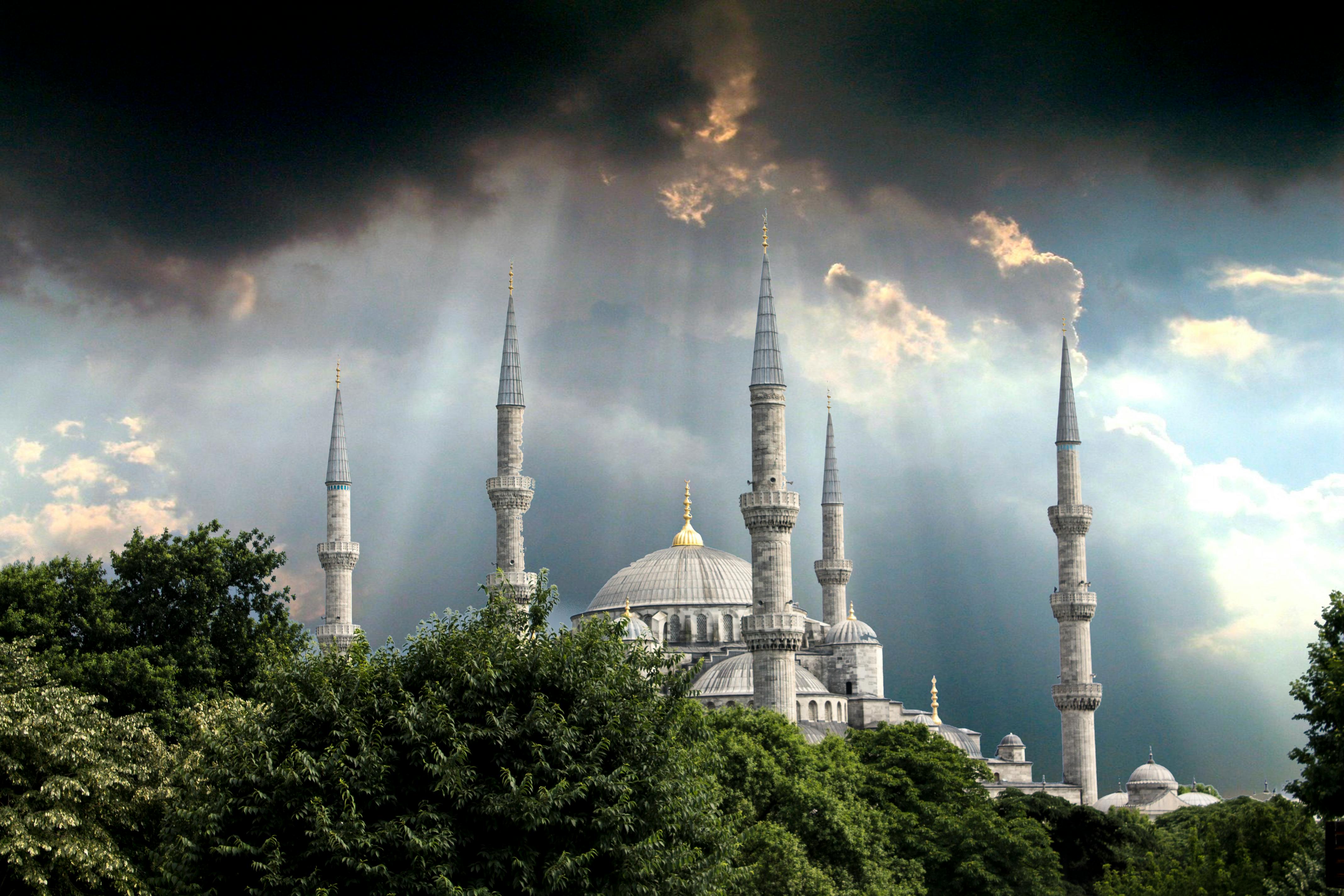
Blue Mosque, Istanbul · Pedro Szekely from Los Angeles, USA / CC BY-SA 2.0Drop your bags and ease into Istanbul on foot in Sultanahmet, the walkable historic core where the greatest hits sit within a few hundred meters of each other.
The former Byzantine chariot-racing arena is now a free public square anchored by the Egyptian Obelisk and the Serpent Column. It is the perfect low-key orientation walk on arrival day, ringed by the Blue Mosque and Hagia Sophia.
Istanbul's iconic six-minaret mosque, famous for the more than 20,000 blue Iznik tiles lining its interior. Entry is free but closed to visitors during the five daily prayer times; dress modestly and bring a scarf (women cover their hair).
Watch the light soften over the domes with a Turkish tea or a glass of wine before dinner.
A rooftop with one of the best simultaneous views of Hagia Sophia, the Blue Mosque, and the Bosphorus. Come for a drink at golden hour even if you dine elsewhere.
Ease into Turkish cooking with meze, grilled meats, and a first taste of the country's warm hospitality.
Refined Ottoman palace cuisine served in an intimate courtyard, reviving recipes from the sultans' kitchens. Try the lamb with quince or the mutancana; mains run roughly 500-800 TL.
Another strong choice for historic dishes like Sarayi-style stews and saffron desserts, popular with travelers who want atmosphere without a rooftop premium. Reserve for a window table.

Byzantine & Ottoman Icons: Hagia Sophia, Topkapi & the Cistern
Hagia Sophia · Adli Wahid / CC BY-SA 3.0Fuel up on a Turkish breakfast spread or a serious espresso before a big sightseeing day.
A specialty roaster near the old city pouring well-made flat whites and pour-overs for those who need proper coffee. A calm, modern break from Turkish tea.
A classic serpme kahvalti (spread breakfast) of cheeses, olives, eggs, jams, and simit with a rooftop view. Order for two and share; expect around 400-600 TL per person.
Start at the building that has defined the skyline for 1,500 years, arriving at opening to beat the crowds.
Built as a cathedral in 537, later a mosque, then a museum, and now a working mosque again, Hagia Sophia is an architectural marvel of gold mosaics and a soaring dome. The upper gallery requires a ticketed entry (around 25 euro for foreign visitors); go early and dress modestly.
Grab a quick, authentic bite between monuments.
A no-frills institution since 1920 serving grilled meatballs (kofte) with white beans, pickles, and bread. Fast, filling, and inexpensive at around 250-350 TL.
Spend the afternoon among sultans and then descend into a subterranean marvel.
The opulent seat of Ottoman power for four centuries, with courtyards, the Imperial Treasury (home to the Topkapi Dagger and Spoonmaker's Diamond), and sweeping Bosphorus views. Buy the Harem add-on separately; combined entry runs roughly 45-50 euro and it is closed Tuesdays.
A hauntingly lit 6th-century underground reservoir with 336 columns and two famous Medusa-head bases. The atmospheric walkways make it a cool respite; timed tickets run about 30 euro and evening slots are quietest.
Reward the day with a lively meze-and-raki dinner.
A Cretan-influenced seafood house with a fixed-price menu of endless cold and hot meze plus fish and unlimited local drinks. A splurge worth it in a leafy garden setting; book ahead.
A beloved fish restaurant in a wooden Ottoman house serving whatever came in fresh that day. No printed menu; let the waiter guide you through the meze and catch.
Bazaars, Suleymaniye & a Bosphorus Cruise
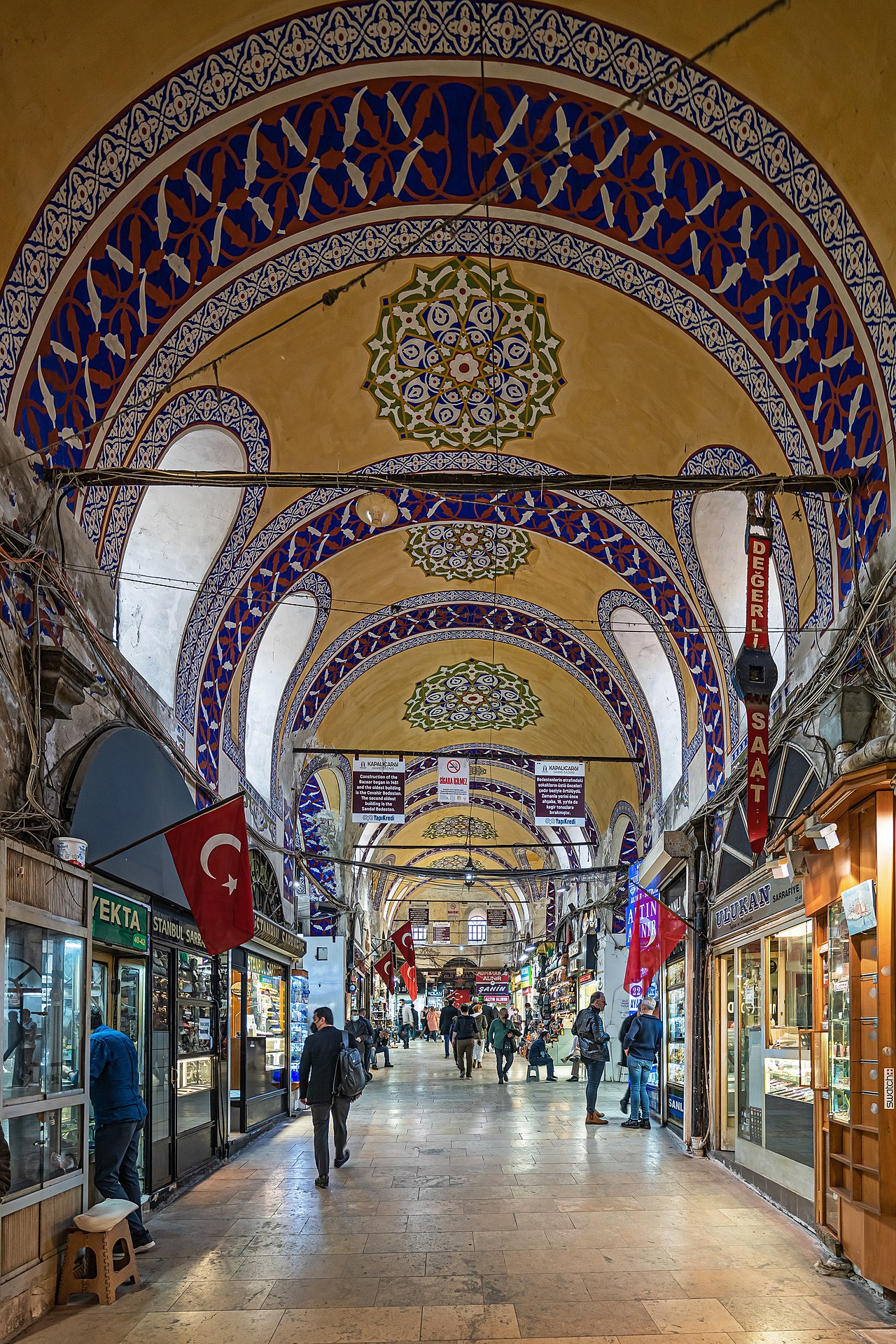
Grand Bazaar, Istanbul · A.Savin / FALA quick pastry and Turkish coffee sets you up for the maze of the bazaars.
A Kadikoy classic if you cross the water, but the Eminonu branch area also serves proper foam-topped Turkish coffee. Pair it with a piece of baklava.
A bustling deli near the Galata Bridge piled with cheeses, cured meats, and breakfast plates. Popular with locals fueling up for the day.
Dive into the world's oldest covered market, then visit Istanbul's most graceful mosque.
Over 4,000 shops sprawl across 60-plus lanes selling carpets, ceramics, lanterns, gold, and spices. Haggling is expected and part of the fun; it is closed Sundays. Fix landmarks in your mind or you will happily get lost.
Sinan's masterpiece crowns one of the city's seven hills, with a serene courtyard and a terrace offering the finest free panorama over the Golden Horn. Less crowded than the Blue Mosque and just uphill from the bazaar.
Eat where the mosque's architect intended: a centuries-old bean house nearby.
A local favorite beside Suleymaniye Mosque famous for its creamy white beans (kuru fasulye) served over rice with pickles. Cheap, hearty, and quick at around 200-300 TL.
Stock up on saffron and Turkish delight, then take to the water.
A fragrant L-shaped market piled with spices, dried fruit, teas, and lokum. Smaller and easier than the Grand Bazaar, it is perfect for edible souvenirs near the Eminonu ferry docks.
Cruise the strait that divides continents, gliding past Ottoman palaces, waterfront mansions (yalis), and fortresses. The public Sehir Hatlari ferry is inexpensive; private sunset boats add wine and commentary. Sit on the deck for the best photos.
Cross to the Karakoy waterfront for buzzy modern Turkish plates.
A tiled, art-deco favorite serving refined meze and daily specials at lunch and a more elevated menu at night. Book ahead; the sea bass and lamb shank are standouts.

Modern Istanbul: Galata, Karakoy & Istiklal
Galata Tower · GrandEscogriffe / CC BY-SA 4.0Start the day in Istanbul's third-wave coffee heartland.
One of Istanbul's pioneering specialty roasters, pouring precise espresso and filter in a bright Cihangir space. Ideal launchpad for a Beyoglu wander.
A cult spot for an eastern-Turkish breakfast: honeycomb with clotted cream (kaymak), herbed cheeses, and endless bread. Come hungry and early to avoid a wait.
Climb the medieval tower, then browse Karakoy's design shops and galleries.
A 14th-century Genoese watchtower with a 360-degree observation deck over the old city, Golden Horn, and Bosphorus. Tickets run around 30 euro; go at opening to skip the midday line.
Wander Karakoy's lanes of coffee bars and boutiques, then visit Istanbul Modern in its striking Renzo Piano waterfront building for Turkish contemporary art and a rooftop terrace.
Sample the best baklava in the city for a sweet, decadent lunch, or a proper kebab.
The most famous baklava house in Istanbul, cutting fresh pistachio and walnut trays all day. Order a mixed plate and a tea; it is a rite of passage.
A smoky grill house near Taksim where you sit around open coals for skewers of lamb, kofte, and marinated wings. Some of the best kebab in the city; expect a wait at peak.
Stroll the city's grand pedestrian avenue and, if energy allows, tour a lavish waterfront palace.
A 1.4 km pedestrian boulevard of 19th-century facades, bookshops, and passages, with a red heritage tram trundling to Taksim Square. Detour into the Cicek Pasaji arcade for a drink.
The Ottomans' opulent 19th-century European-style palace on the Bosphorus, dripping with crystal (including a 4.5-ton chandelier) and gold leaf. Entry is by guided route, around 45 euro, and it is closed Mondays; allow 1.5-2 hours.
Toast your last Istanbul night with meze and a rooftop panorama.
Chef Mehmet Gurs's acclaimed rooftop restaurant blends Anatolian ingredients with Nordic technique atop the Marmara Pera hotel. A special-occasion tasting menu with jaw-dropping views; reserve well ahead.
An intimate, chef-driven spot on Istiklal turning out inventive seasonal meze and seafood. A more relaxed but still memorable send-off; booking recommended.

Fly to Cappadocia: Cave Country & a Sunset Viewpoint
Göreme · MusikAnimal / CC BY-SA 4.0After the morning flight and transfer, settle into your cave hotel and get your bearings in Goreme village.
Wander Goreme's lanes of rock-cut homes and shops, then take a short taxi or walk to the Love Valley viewpoint for your first look at the towering fairy chimneys. An easy, jet-lag-friendly introduction.
Chase your first Cappadocian sunset from a classic vantage point.
The hilltop viewpoint above town glows orange and pink as the sun drops behind the valleys. Bring a tea from the kiosk and claim a rock ledge; it is a 15-minute walk uphill from the center.
Try a regional specialty cooked in a sealed clay pot.
A tiny, family-run cave restaurant known for testi kebab (meat and vegetables slow-cooked in a clay pot cracked open at the table). Reservations essential; it fills up nightly.
A polished spot serving elevated Anatolian dishes and mant (Turkish dumplings) with a lovely terrace. A good choice if Topdeck is booked out.

Sunrise Balloons, Open-Air Museum & Valley Hikes
Hot air balloon · Kropsoq / CC BY-SA 3.0A pre-dawn pickup means coffee comes after the flight; most operators serve a light snack before takeoff and a sparkling toast on landing.
The unmissable experience: lift off in the dark and float over fairy chimneys and valleys as the sun rises and hundreds of balloons fill the sky. Flights run roughly 200-350 euro per person and last about an hour; a bucket-list morning worth every lira.
After a celebratory breakfast back at the hotel, visit the region's greatest concentration of cave churches.
A UNESCO-listed monastic complex of rock-cut churches with vivid Byzantine frescoes, including the ticketed Dark Church (Karanlik Kilise). Entry is around 20 euro plus a small extra for the Dark Church; go early before tour buses arrive.
Refuel in the village before an afternoon walk.
A relaxed, affordable spot for gozleme, borek, and fresh salads with quick service. Perfect light lunch before hiking; mains around 150-250 TL.
Lace up for a scenic valley walk through the region's namesake rock formations.
A gentle-to-moderate trail winds through blush-colored rock, hidden cave churches, and orchards, best late afternoon when the stone glows. Allow 2-3 hours and carry water; some sections are unshaded.
A shorter path lined with pigeon houses carved into the cliffs, ending at Uchisar Castle, the highest point in Cappadocia. Climb it for a sweeping sunset panorama.
Dine with a view over the valleys you just walked.
A warm, family-run place in Goreme serving generous testi kebab and meze at fair prices. Friendly service and a cozy cave dining room.
A more upscale option in Uchisar with a terrace framing the castle and valleys, ideal for a leisurely sunset dinner. Modern Anatolian plates and a good wine list.

Underground Cities, Avanos Pottery & Devrent Valley
Kaymakli underground city · MusikAnimal / CC BY-SA 4.0Enjoy a slower start with your hotel's terrace breakfast and one more look at the balloons if they fly.
A cheerful Goreme cafe pouring proper espresso drinks and smoothies with a rooftop terrace. A good caffeine stop before a day of touring.
Descend into the extraordinary engineering of an ancient subterranean refuge.
These multi-level cities carved deep into the rock sheltered thousands of people, complete with ventilation shafts, wells, stables, and rolling-stone doors. Derinkuyu goes down eight levels; entry is around 20 euro and low passages mean it is not for the claustrophobic.
Eat beside the Kizilirmak (Red River) in the pottery town of Avanos.
A characterful stone house restaurant in Avanos serving regional dishes and clay-pot kebabs. A relaxed lunch before browsing the potters.
See a craft dating to the Hittites, then marvel at the strangest rock shapes in the region.
Avanos has thrown clay from the red river for millennia; watch a master at the wheel and try shaping a piece yourself at a family workshop like Chez Galip. A fun, hands-on hour.
Devrent's surreal formations resemble camels and dolphins, while nearby Pasabag has the region's most dramatic multi-capped fairy chimneys. Free to wander and quick to photograph.
Round off Cappadocia with a memorable final meal.
A 475-year-old stone house where you sit on cushions and eat slow-cooked pottery kebab and testi dishes (some need ordering hours ahead). Atmospheric and authentic.
An intimate spot offering a set multi-course dinner of homestyle Anatolian dishes. Reserve ahead; the fixed menu is a relaxed, generous send-off.

Arrival in Athens: Plaka & Acropolis at Dusk
Plaka · Joanbanjo / CC BY-SA 3.0Land, check in, and wander the old town's most photogenic lanes as the day cools.
The oldest neighborhood of Athens climbs the north slope of the Acropolis in a tangle of neoclassical houses, bougainvillea, and the tiny Cycladic-style Anafiotika quarter that feels like an island village. A perfect, low-effort first walk.
Climb a rocky outcrop for the classic Athens sunset over the ancient city.
A smooth marble outcrop below the Acropolis where locals gather at dusk for panoramic views over the Agora and city rooftops. Wear grippy shoes; the rock is slippery.
A greener, less crowded hill with pine-lined paths and a head-on view of the Parthenon glowing at sunset. A short walk from Koukaki and Thissio.
Ease in with rooftop views or a beloved rooftop taverna.
A creative Greek restaurant on Adrianou with a rooftop overlooking the Acropolis and Agora. Inventive meze and pasta; book a terrace table at sunset.
A century-old taverna near Monastiraki with home-style Greek classics and live rebetiko music some nights. Warm, unpretentious, and reasonably priced.

The Acropolis, the Museum & Monastiraki
Acropolis of Athens · Giles Laurent / CC BY-SA 4.0Grab a proper Greek coffee or a flaky pastry before the climb.
A wildly over-the-top themed cafe in Psyrri, more spectacle than specialty, but fun for a morning coffee and cake. Go early before the crowds.
An Athens institution since 1922 famous for loukoumades (honey-soaked doughnuts) and bougatsa. A sweet, historic start to the day near the central market.
Beat the heat and crowds by hitting the Acropolis at opening.
The sacred citadel crowned by the 5th-century-BC Parthenon, plus the Erechtheion with its Caryatid porch and the Temple of Athena Nike. General admission is around 20 euro (higher in summer) with timed entry; arrive at 8am opening as it is punishingly hot and busy by midday.
Cool off with a relaxed lunch below the hill.
A refined first-floor restaurant in Koukaki specializing in dishes from the Mani peninsula, like the excellent ravioli with citrus. A calm, air-conditioned break; mains around 15-20 euro.
See the treasures from the hill in one of the world's great museums.
A luminous glass building displaying the original sculptures, friezes, and Caryatids, with a top-floor Parthenon gallery aligned to the temple itself and a glass floor over ongoing excavations. Entry is around 15 euro; allow two hours and don't miss the cafe terrace view.
Browse the antiques, records, and souvenirs of Monastiraki's market, then step into the ruins of Hadrian's Library nearby. A lively contrast to the museum.
Dine on modern Greek cooking in a buzzing central neighborhood.
A chef-driven bistro blending Greek and Japanese influences to acclaim near Syntagma. Small, seasonal plates; reserve ahead for this local favorite.
A deli-taverna near the central market piled with cured meats and cheeses, serving generous meze boards with wine. Fun, sociable, and great value.

Ancient Agora, National Museum & Lycabettus Sunset
Temple of Hephaestus · Julian Lupyan / CC0Start with specialty coffee in a leafy corner of town.
One of Athens's pioneering specialty roasters, serving expertly pulled espresso and filter. A quiet, quality caffeine fix before sightseeing.
Walk the civic heart of ancient Athens, remarkably intact and less crowded than the Acropolis.
The marketplace where Socrates once taught, home to the best-preserved Doric temple in Greece and the reconstructed Stoa of Attalos museum. Included in the combo ticket; allow 1.5 hours in the shade of the olive trees.
Sample the city's most famous souvlaki.
A tiny, decades-old hole-in-the-wall off Agia Irini square grilling superb pork souvlaki with a smoky tomato-spiked sauce. Expect a short line and cash-friendly prices under 5 euro a skewer.
O Thanasis on Mitropoleos is a Monastiraki classic for kebab platters with pita and onions if you want a sit-down souvlaki lunch. Fast and filling.
Devote the afternoon to Greece's greatest trove of antiquities.
The country's premier museum, holding the golden Mask of Agamemnon, the Antikythera Mechanism, and rooms of stunning bronzes and sculpture. Entry is around 12 euro; it is a 15-minute walk or short metro from the center and deserves at least two hours.
Ride to the city's highest point for a farewell sunset.
A funicular (about 10 euro round trip) climbs to the summit chapel of St. George for a 360-degree view over Athens to the sea, spectacular at sunset. Time it so the Acropolis lights up below you.
Toast the mainland before the islands with a standout Greek dinner.
A cozy neighborhood bistro in Kolonaki with homestyle Greek dishes done well and a warm buzz. Reasonable prices for the smart address; book ahead.
A romantic fine-dining courtyard in Metaxourgeio serving modern Greek tasting menus. A special final Athens dinner; reserve in advance.

Ferry to Santorini: Fira & the Caldera Rim
Fira · Tango7174 / CC BY-SA 4.0After the crossing, transfer up to your hotel and take your first cliff-top walk along the caldera.
An easy paved path traces the rim from Fira to Firostefani, passing blue-domed churches and cafes with drop-dead caldera views. A gentle 20-30 minute stroll to shake off the ferry.
Toast your arrival on the islands with a caldera-view aperitivo.
A cliff-edge bar in Fira with cushioned terraces angled straight at the sunset and volcano. Arrive before dusk to grab a front-row seat; cocktails are pricey but the view is the point.
Dig into island cooking your first night.
A long-running, well-priced taverna in central Fira serving Santorinian classics like fava, tomatokeftedes (tomato fritters), and grilled octopus. Good value away from the caldera premium.
A caldera-edge spot for fresh seafood and Greek staples with a memorable view. Book a terrace table at sunset.

Oia, the Blue Domes & the Famous Sunset
Oia, Greece · TomasEE / CC BY 3.0Start slow with coffee overlooking the caldera before heading north.
A relaxed Fira cafe with strong coffee and a caldera-facing terrace, great for breakfast before the bus. Try a freddo espresso, the Greek summer staple.
Head to Oia early, before the cruise crowds, to enjoy its lanes at their calmest.
The island's most beautiful village is a warren of whitewashed lanes, boutiques, and the postcard trio of blue-domed churches near the Byzantine castle ruins. Go by 9am to photograph the domes before the streets fill; buses from Fira take about 25 minutes.
Linger over a seaside lunch below the cliffs.
Descend the 300 steps (or drive down) to Ammoudi, a tiny fishing port where tavernas like Dimitris and Sunset serve grilled fish and lobster pasta at the water's edge. A memorable, breezy lunch; you can swim off the rocks afterward.
Explore Oia's shops and galleries or nap before the evening spectacle.
Browse the jewelry, art, and ceramic shops along Oia's main lane and duck into the small Naval Maritime Museum for the island's seafaring history. A gentle way to pass the hot hours.
Claim a spot early for the sunset that made Santorini famous.
Crowds gather on the ruined Byzantine castle for the applause-worthy sunset over the caldera. Arrive at least an hour ahead for a viewpoint, or watch from a reserved restaurant terrace to skip the crush.
Stay in Oia for a special caldera-view dinner.
A warm, well-regarded Oia taverna set back from the crowds serving creative Greek dishes at fairer prices than the cliff-edge spots. Reserve ahead in summer.
Perched by the castle with front-row sunset views and refined Greek plates. Pricier and touristy, but the terrace timing is unbeatable; book days in advance.

Caldera Cruise, Volcano & Hot Springs
Champion Jet 1 · Lourakis / CC BY-SA 4.0A quick bite before a day on the water.
A local bakery in Fira for fresh bougatsa, spanakopita, and coffee to go. Grab pastries for the boat.
Trade the cliffs for the caldera itself on a small-group sailing trip, the best way to see Santorini from below and swim in its volcanic waters.
A half-day catamaran sail circles the caldera with stops to swim at the Red and White beaches and soak in the sulfur hot springs near the volcanic islet, usually with a barbecue lunch and wine on board. Sunset cruises are the most popular; book ahead and expect roughly 120-180 euro per person.
For a cheaper, land-focused option, take a boat to the active volcanic islet of Nea Kameni and hike to the steaming crater, often combined with the Palea Kameni hot springs. Wear sturdy shoes and a hat; the black rock radiates heat.
Unwind with dinner back in town after the sea air.
A cult-favorite taverna near Exo Gonia serving generous Cretan-Santorinian dishes at honest prices, worth the short taxi from Fira. Reserve well ahead; it is consistently booked out.
A superb seafood taverna above Vlychada marina with impeccably fresh fish and a relaxed local crowd. Book ahead and let them recommend the day's catch.

Wine Country, Akrotiri & Pyrgos
Santorini · Pitichinaccio / CC BY 3.0A leisurely breakfast before an inland day of ruins and wine.
A pleasant Fira cafe for a proper breakfast and coffee before renting a car or catching the bus south. Good pastries and juices.
Step back 3,600 years at the Aegean's own Pompeii.
A remarkably preserved Bronze Age Minoan town buried by the volcanic eruption around 1600 BC, with multistory buildings, drainage, and frescoes under a modern roof. Entry is around 12 euro; combine it nicely with a beach and winery afternoon.
Eat by a strikingly colored beach.
Near Akrotiri, the Red Beach's russet cliffs make a dramatic swim stop, with casual tavernas nearby for grilled fish and salad. Note the beach access can be unstable, so heed any safety signs.
Taste the island's distinctive volcanic wines, then explore its highest village.
Santorini's volcanic soil and basket-trained vines yield mineral Assyrtiko whites and sweet Vinsanto. Santo Wines offers a huge caldera-view terrace for tastings; Venetsanos nearby is more atmospheric. Tasting flights run about 20-40 euro.
The former capital climbs to a Venetian castle with sweeping island-wide views, far quieter than Oia. Wander its car-free lanes at golden hour.
Enjoy a relaxed final island dinner with a view.
Santorini's most celebrated fine-dining restaurant in Pyrgos, championing island ingredients in a refined tasting menu. A memorable farewell; reserve well in advance.
For a simpler last night, a caldera-view taverna in Firostefani pairs sunset with fava, grilled fish, and local wine. Book a rim-side table.
Farewell Santorini: Slow Morning & Departure
Santorini · Pitichinaccio / CC BY 3.0Savor one last caldera-view breakfast before packing up.
Take your final Greek coffee and yogurt with honey overlooking the volcano, either on your hotel terrace or at a rim-side cafe in Fira. A calm send-off to the trip.
Fit in a last stroll or souvenir before heading to the airport or port.
Take a short walk along the rim for final photos and pick up local Assyrtiko wine or ceramics in Fira. Santorini's airport (JTR) is about 15 minutes from Fira and the port about 20-30; allow buffer time as summer transfers get busy.
Grab a quick, easy bite before departure if time allows.
A cheap, reliable Fira gyros counter for a fast, satisfying last Greek bite before the airport. Wrap it to go if you are tight on time.
Pick your base
Sultanahmet puts you within walking distance of Hagia Sophia, the Blue Mosque, and Topkapi, ideal for first-timers who want history on the doorstep. Beyoglu (around Galata and Karakoy) is more contemporary, with better nightlife, coffee, and restaurants, plus quick tram and funicular links across the Golden Horn.
A consistently top-rated boutique hotel in Sultanahmet with an excellent rooftop breakfast overlooking the Sea of Marmara and minarets. A short walk to the Blue Mosque and tram.
A stylish, intimate hotel in a restored building just below Galata Tower, with a rooftop restaurant framing the old city. Perfect base for Beyoglu's cafes and nightlife.
Family-run hotel between Sultanahmet and the Golden Horn with spacious rooms, a small indoor pool, and free walking tours. Steps from Gulhane Park and the tram.
A friendly, well-located hostel with private rooms and dorms and a lively rooftop terrace with Hagia Sophia views. Great value in the heart of the old city.
The Instagram-famous Goreme cave hotel with a terrace overlooking the balloon-filled sunrise sky. Cozy carved rooms and a lavish breakfast; book the terrace-view suites early.
A refined Goreme cave hotel with one of the best panoramic breakfast terraces for balloon-watching. Warm service and comfortable rooms carved into the rock.
A long-running favorite spread over a hillside with family suites, a pool, hammam, and terrace views. Runs its own cooking classes and tours, great for first-timers.
A friendly, well-run cave hostel in central Goreme with clean dorms and privates and a sociable terrace. Excellent value with balloons overhead at dawn.
A comfortable, design-forward hotel in Koukaki with natural-material rooms and a rooftop bar looking straight at the Acropolis. Steps from the Acropolis Museum and metro.
A sleek design hotel on the pedestrianized Dionysiou Areopagitou promenade with a rooftop restaurant facing the Parthenon. Prime location for walking to every ancient site.
A grand Plaka hotel with a rooftop pool and restaurant with Acropolis views, spacious rooms, and a central location. A dependable, comfortable base for families.
A stylish, sociable hostel in Psyrri with bright privates and dorms and a rooftop bar. Great value in a lively area near Monastiraki.
An iconic Oia cave-suite hotel perched on the caldera with private plunge pools and front-row sunset views. The splurge that defines a Santorini honeymoon; book months ahead.
Elegant cave suites carved into the Fira cliff with caldera views, a small pool, and easy walking access to town and the bus station. Excellent value for a caldera-view stay.
A friendly, good-value guesthouse in Karterados near Fira with a pool and simple, clean rooms. A smart base for exploring by bus without the caldera markup.
For families or groups, a multi-bedroom villa with a private pool and terrace offers space and value over cave suites. Search Imerovigli or Firostefani for the best views with a bit of quiet.
Good to know
How many days do you need for a Turkey and Greece trip?
Two weeks is the sweet spot for a first visit combining both countries, allowing roughly four nights in Istanbul, three in Cappadocia, three in Athens, and four on a Greek island like Santorini. With less than 10 days you would need to cut either the Turkish interior or the islands to avoid rushing.
What is the best time to visit Turkey and Greece?
Late April to June and September to October offer warm weather, thinner crowds, and calmer seas for ferries. July and August are hot and busy, especially on Santorini and at the Acropolis, so book accommodation, balloons, and island transport well ahead if you travel in peak summer.
How do you get from Turkey to Greece?
The easiest way is to fly: Cappadocia and Istanbul connect to Athens in a few hours, usually via an Istanbul hub. From Athens, Santorini is a 45-minute flight or a high-speed ferry of about five hours from the port of Piraeus.
Is Cappadocia worth it, and is the hot-air balloon ride reliable?
Cappadocia's fairy-chimney landscape and cave hotels are a highlight of any Turkey trip and well worth three nights. Balloon flights are spectacular but weather-dependent and can be canceled for wind, so book early and build in a spare morning to increase your chances of flying.
What is the best area to stay in Athens for first-time visitors?
Plaka and Monastiraki are ideal for first-timers, placing you within walking distance of the Acropolis, the Agora, and dozens of tavernas. Koukaki, just south of the Acropolis Museum, is a slightly quieter, more local alternative with excellent cafes and easy metro access.
Should you stay in Fira or Oia in Santorini?
Fira is more central, better connected by bus, and generally cheaper, making it a practical base with caldera views. Oia is the most beautiful and romantic village with the famous sunset, but it is the priciest and most crowded; Imerovigli in between offers the quietest luxury and the best panoramas.
In fifteen days you will have traced two of the Mediterranean's greatest civilizations, from Istanbul's imperial skyline and Cappadocia's balloon-filled dawns to the marble heights of Athens and the caldera sunsets of Santorini. It is a trip of dramatic contrasts, ancient and modern, Asian and European, that somehow flows together as one unforgettable journey. Book your balloon, Acropolis, and island transport early, come hungry, and let each place set its own pace.