Three Weeks in French Canada: Montréal, Québec City & Ottawa
A 21-day journey through the cobblestones, café terraces, and river valleys of Canada's francophone heart, from Old Montréal to the ramparts of Québec City and the capital on the Ottawa River.
21 days in Montréal + 2 more
Quebec is the closest thing to Europe you can reach without crossing an ocean: a French-speaking province where 400-year-old stone churches lean over cobblestone lanes, café terraces spill onto sidewalks, and the St. Lawrence River threads the whole story together. Montréal, founded in 1642 as Ville-Marie, grew from a fur-trading outpost into North America's great bilingual metropolis, while Québec City, perched on its cliff above the river, remains the only walled city north of Mexico and a UNESCO World Heritage Site.
Three weeks gives you room to do this properly: time to linger over a smoked-meat sandwich and a flaky butter croissant, to climb Mount Royal at sunset, to ride the funicular up to Château Frontenac, and to slip across the provincial line to Ottawa, Canada's stately capital, where the Gothic Parliament Buildings rise above the Rideau Canal. Late June lands you squarely in festival season, when Montréal's jazz festival and Québec's summer celebrations fill the squares with music.
Getting around is easy: Montréal and Québec City reward walking and have good metro and bus networks, and VIA Rail links the cities comfortably. Summers are warm (highs around 25-27C / 77-81F) with the occasional thunderstorm, so pack a light rain layer and comfortable shoes for the cobbles. French is the working language, but English is widely understood in tourist areas, and a cheerful 'bonjour-hi' will carry you far.
Vieux-Montréal, the Old Port & the Riverfront
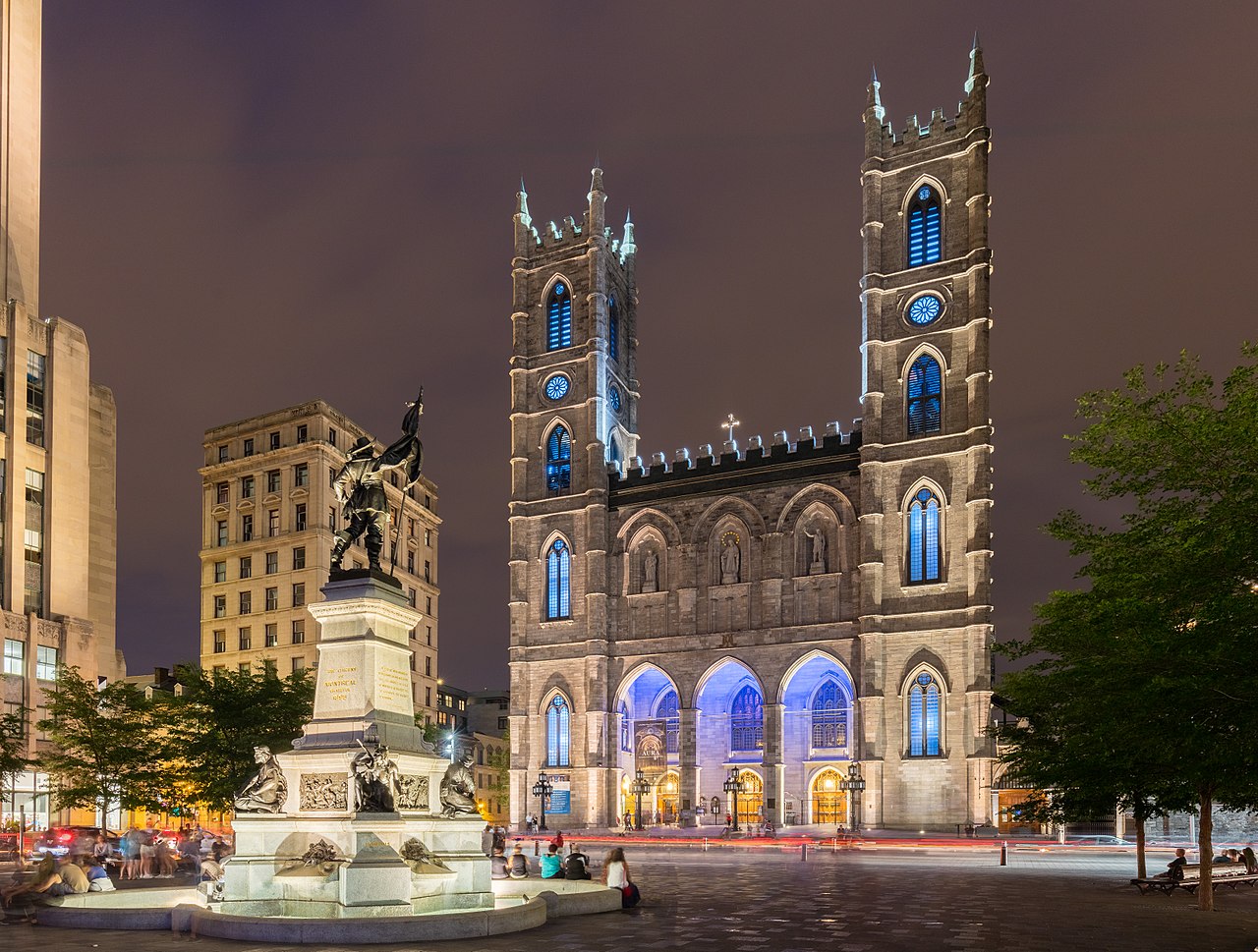
Notre-Dame Basilica (Montreal) · Diego Delso / CC BY-SA 4.0Ease into the cobblestones with a strong coffee and something flaky before the crowds arrive.
A spectacular café set inside a vaulted 1920s former bank hall with soaring ceilings and brass details, on Saint-Jacques Street. Order a flat white and a pastry and soak up arguably the most photogenic coffee room in Canada.
A beloved Old Montréal bakery-café on Saint-Paul Street, famous for its grilled-cheese sandwiches, pastries, and brunch plates. Expect a short line; it moves fast and is worth it.
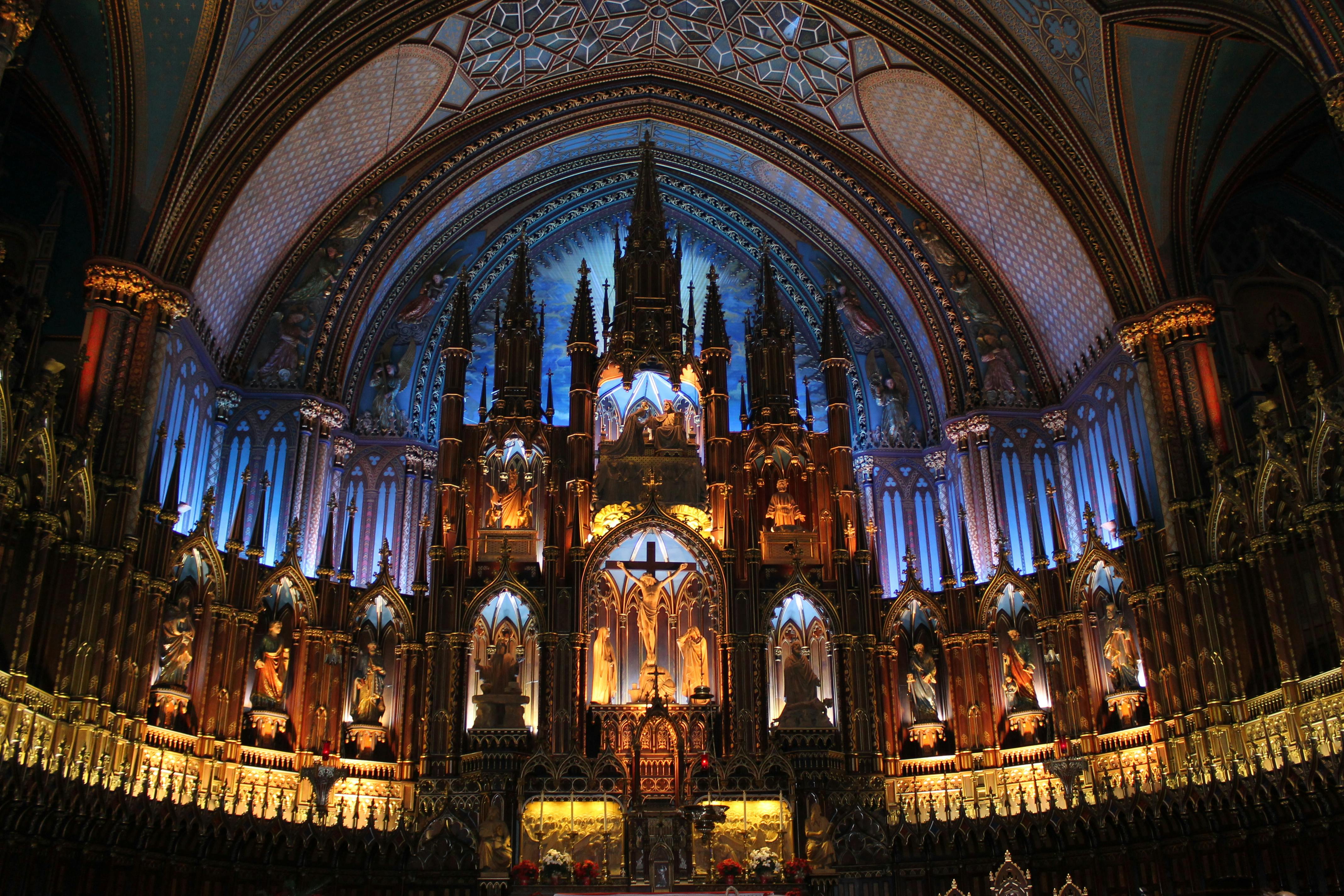
Devote your first morning to the heart of Old Montréal and its star landmark, the Notre-Dame Basilica.
A Gothic Revival masterpiece from 1829 with a deep-blue, star-spangled vaulted ceiling and one of the largest pipe organs in North America. Daytime admission is about C$16; book ahead in summer, and consider returning for the AURA light-and-sound show in the evening.
A locally owned, small-group (max 10) two-hour walk covering Place d'Armes, the Old Port, and the district's essential history and hidden corners. The single best way to orient yourself on day one.
Grab a casual lunch near the waterfront before exploring the Old Port.
A rustic French bistro and charcuterie shop on Saint-Paul Street serving generous cassoulet, charcuterie boards, and baguette sandwiches. Cozy, unpretentious, and authentically French.
Stroll the Old Port promenade along the St. Lawrence and take in the river views.
A revitalized 2.5-kilometre waterfront with walking paths, a 60-metre observation wheel (La Grande Roue), and views across to Habitat 67. Lovely for an unhurried afternoon walk and people-watching.
Montréal's archaeology and history museum, built atop the actual ruins of the city's birthplace, with an immersive walk through underground foundations. Admission is around C$26; a rainy-day-proof highlight.
Settle in for dinner in or near the old city, from refined Québécois to a classic terrace.
Chef Chuck Hughes's lively Old Montréal institution, known for seafood, lobster poutine, and a buzzy late-night room. Reserve ahead; it stays popular years after opening.
A polished Italian-leaning bistro in a converted foundry in Griffintown, with handmade pasta and a smart wine list. A short walk or quick taxi from the old city.
Cap the night with a light show or a ghostly stroll.
An immersive light-and-music experience that bathes the basilica's interior in color and projection, running most evenings. Tickets are roughly C$32 and frequently sell out; book in advance.
An after-dark walk through the old city's tales of crime, witchcraft, and hauntings, led by a costumed guide. Atmospheric and family-friendly fun on a summer night.

The Plateau, Mile End Bagels & Jean-Talon Market
Jean-Talon Market · Brandon Moore (Raskuly) / CC BY 4.0Start in the Plateau or Mile End, the city's coffee and brunch heartland.
A Mile End institution since 1970, pouring proper Italian espresso to a mix of artists, hockey fans, and neighborhood regulars. Order a cappuccino and grab a sidewalk seat.
A 1942 chrome-and-vinyl diner famous for its 'Beautys Special' bagel with lox, cream cheese, tomato, and onion. A nostalgic Montréal brunch ritual; expect a weekend wait.
Make your bagel pilgrimage, then wander the Plateau's colorful streets and murals.
Wood-fired, hand-rolled, honey-boiled Montréal bagels made around the clock since 1957. Buy them hot by the dozen; the sesame is the classic. Cash-friendly and cheap.
Self-guided wander along Saint-Laurent and the side streets to see large-scale murals from the annual MURAL festival, plus the Plateau's signature exterior spiral staircases. Free and endlessly photogenic.
Lunch like a Montrealer at the city's most famous deli counters.
The legendary 1928 smoked-meat institution on Saint-Laurent, where a hand-cut medium-fat sandwich with mustard, pickle, and a cherry soda is a rite of passage. The line moves quickly; communal seating.
A 24-hour poutine temple with more than 30 varieties, from classic to extravagant. Casual, cash-and-card, and open whenever the craving strikes.
Spend the afternoon at Jean-Talon Market or on a deep-dive food tour of the neighborhoods.
One of North America's largest open-air markets, in Little Italy, brimming with Quebec produce, cheeses, maple products, and cider. Graze your way through; many stalls offer free samples.
A guided tasting walk through bohemian Mile End with six dishes, from wood-fired bagels to local cheese and sweets, plus the stories behind them. A delicious way to understand the neighborhood.
A locally owned, deliberately non-touristy tasting tour around the Jean-Talon area, visiting family-run shops and a Salvadoran neighborhood joint. Consistently rated among the city's best tours.
Dine in the Plateau or Little Italy, where the city's most interesting tables cluster.
A timeless Parisian-style bistro on Saint-Denis, open since 1980, with steak frites, bone marrow, and a vast wine list. The black-and-white tiled room feels like Paris; reserve ahead.
Refined Syrian cuisine in Outremont, regularly named among Montréal's best restaurants, with charcoal-grilled meats and mezze under a chandelier-lit room. A standout for a special dinner.
Mount Royal, Downtown Museums & the Olympic Quarter
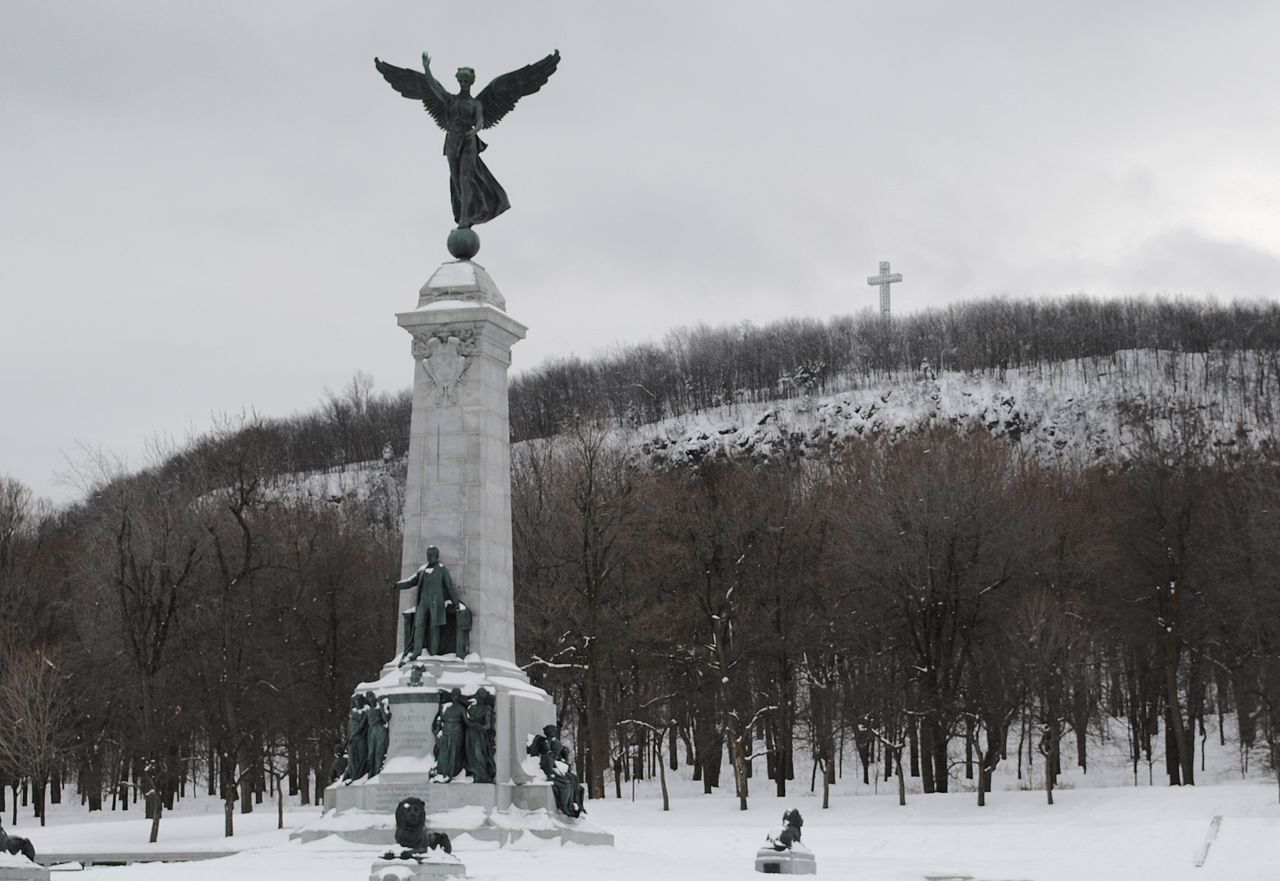
Mount Royal · Chicoutimi / Public domainFuel up downtown or in the Golden Square Mile before a morning climb.
A bright, plant-filled café in a heritage building near Old Montréal and downtown, good for espresso and avocado toast. A reliable pick before a day of museums.
Climb Mount Royal, the city's namesake green heart, for the classic skyline panorama.
Frederick Law Olmsted's 200-hectare park crowns the city; the Kondiaronk lookout in front of the chalet offers the postcard view over downtown and the river. Walk up via the Peel Street steps or take bus 11. Free.
Canada's largest church, a vast domed basilica on the mountain's north slope, reached by 283 steps (pilgrims climb the central wooden ones on their knees). Free to enter; the dome view is sweeping.
Lunch downtown between sights.
A popular vegetarian spot near McGill serving inventive tacos, nachos, and burgers that satisfy even committed carnivores. Casual and good value in a pricey part of town.
Choose a world-class museum, or head east to the Olympic and Botanical quarter.
Quebec's largest art museum, spread across several pavilions on Sherbrooke Street, with a strong Canadian collection and ambitious touring shows. General admission is around C$24 (the permanent collection is often free for under-21s).
75 hectares of themed gardens including renowned Japanese and Chinese gardens, beside the Olympic Stadium and Biodome. Admission is roughly C$22; combine with the Insectarium for a full afternoon.
A guided coach tour past 200-plus landmarks with live commentary, handy if you want a wider overview of the city's far-flung sights in one go. A relaxed option on a hot day.
For your last Montréal nights, book one of the city's signature tables.
The famous Little Burgundy restaurant from David McMillan and Frédéric Morin, beloved for indulgent, market-driven cooking and a no-rules wine cellar. Reservations open weeks ahead and vanish fast.
Joe Beef's slightly more relaxed sibling next door, with a Mediterranean lean, fresh pasta, and the same playful spirit. Easier to book and just as memorable.
Martin Picard's temple to Québécois excess, famous for foie gras poutine and the duck in a can. Rich, raucous, and quintessentially Montréal; reserve in advance.

Old Québec: Upper Town, Petit-Champlain & the Ramparts
Château Frontenac · Bernard Gagnon / CC BY-SA 4.0Begin with a café au lait and a viennoiserie in the old town.
A bustling bakery-café on rue Saint-Jean with excellent croissants, macarons, and sandwiches in a big communal room. A reliable, well-priced morning stop inside the walls.
A respected Quebec roaster with a location in the Saint-Roch district, serving carefully made espresso. Worth the walk downhill for serious coffee lovers.
Get your bearings with a guided walk through the layered history of the walled city.
A guided introduction to one of North America's oldest settlements, weaving through Upper Town and down to Petit-Champlain, with a ride on the funicular included. A highly rated, efficient orientation.
A leisurely, mostly downhill two-hour walk covering the city's main highlights, suitable for families and all ages. One of the most reviewed and best-loved tours in the city.
Lunch on hearty Québécois fare near the Château.
Set in the 1675 Maison Jacquet, Aux Anciens Canadiens serves traditional Québécois dishes like tourtière, meat pie, and maple-glazed ham in a series of historic dining rooms. Touristy but genuinely good for regional classics; the lunch table d'hôte is the best value.
Walk the ramparts and ride down to the lower town's cobbled lanes.
Promenade along the boardwalk beneath the Château Frontenac for sweeping river views, then walk a stretch of the star-shaped city walls (free) toward the Citadelle. The Plains of Abraham lie just beyond.
Reach the lower town by the funicular (about C$5) or the Breakneck Stairs, and explore the oldest commercial district in North America, with its boutiques, Église Notre-Dame-des-Victoires, and the Fresque des Québécois mural. Pure storybook.
Dine in the lower town, from intimate bistros to refined tasting menus.
A cozy Petit-Champlain bistro specializing in rabbit and duck dishes with a flower-filled terrace. Snug, romantic, and reasonably priced for the location.
A boundary-pushing restaurant championing 'cuisine boréale' built on foraged and local Quebec ingredients. One of the city's finest tables; reserve ahead.

Montmorency Falls & Île d'Orléans
Montmorency Falls · CC BY-SA 2.5Grab a quick breakfast in town before heading out along the river.
A homey crêperie and café inside the walls, good for a relaxed morning meal before a day in the countryside. Try the savory buckwheat galettes.
Visit Montmorency Falls, taller than Niagara, on the eastern edge of the city.
An 83-metre waterfall (about 30 metres higher than Niagara) plunging into the St. Lawrence, with a suspension bridge across the crest, a cliff-side staircase, and a cable car. Roughly a 15-minute drive from the old town; the gondola is around C$17.
A guided half-day combining the falls with the grand pilgrimage basilica of Sainte-Anne-de-Beaupré, with hotel transfers. Convenient if you would rather not drive.
Cross the bridge to Île d'Orléans for a farm-country lunch.
A blackcurrant estate on Île d'Orléans producing crème de cassis and selling everything from cassis ice cream to bistro plates on a terrace overlooking the river. A delicious island stop.
Tour the island's farms, orchards, and cider houses, or join a guided tasting loop.
A 67-kilometre loop road past strawberry fields, vineyards, cideries, and six historic villages, the cradle of French settlement in Quebec. Stop for fresh berries, artisanal cheese, and chocolate.
A small-group 'Route des Saveurs' tasting tour just 15 minutes from Old Québec, sampling the island's wines, ciders, and local foods. An easy way to do the island without a car.
Return to the city for a relaxed dinner in Saint-Roch.
A warm Saint-Roch bistro praised for its market-driven Québécois cooking and excellent brunch. A local favorite away from the tourist crush.

Plains of Abraham, Saint-Roch & the River
Ramparts of Quebec City · Judicieux / CC BY-SA 3.0A final round of pastries and strong coffee before the day.
A specialty coffee bar in Saint-Roch with carefully sourced beans and skilled baristas. The pick for a top-notch flat white.
Walk the historic battlefield park and its museum, or dig into the food scene.
The vast clifftop greensward where the pivotal 1759 battle decided the fate of New France, now a beloved urban park with river views, gardens, and the Citadelle nearby. Free to roam; the museum exhibit is inexpensive.
A guided crawl through the cobblestone streets with more than ten local tastings, from cheese and charcuterie to maple and sweets, spanning centuries of Quebec food culture. A flavorful, highly rated half-day.
Lunch in the lively Saint-Jean-Baptiste or Saint-Roch districts.
A small, beloved natural-wine bar and bistro in Saint-Jean-Baptiste serving inventive small plates. Arrive early; it fills with locals.
See the fortified city from the water, then shop the old streets.
A guided cruise from Chouinard Pier near Petit-Champlain offering river-level views of the cliffs, Château Frontenac, and Île d'Orléans. A restful, scenic way to appreciate the city's setting.
Browse the boutiques and galleries of the lower town and the antique shops along rue Saint-Paul, then watch the funicular climb the cliff. Pleasant, unhurried wandering.
A memorable final Québec City dinner.
Inside the Auberge Saint-Antoine, a farm-to-table restaurant in a restored 19th-century maritime warehouse, sourcing from its own Île d'Orléans farm. Refined and atmospheric.
A classic, old-school table near the Château known for tableside flambé service of duck à l'orange and steak. A nostalgic, white-tablecloth send-off.

Parliament Hill, the Canal & the National Museums
Parliament Hill · Wladyslaw / CC BY-SA 3.0Start near the market with coffee and a famous local pastry.
Art-Is-In Bakery, in a converted warehouse, turns out some of Ottawa's best croissants and breads. A satisfying morning stop before sightseeing.
Equator Coffee, an Ottawa Valley roaster with downtown cafés, serves dependable espresso for your morning fuel. Easy to find near the core.
Explore Parliament Hill and the surrounding government quarter.
The seat of Canada's federal government, a striking Gothic Revival ensemble above the Ottawa River. Free guided tours run when Parliament is in session (the Centre Block is under long-term restoration, so tours focus on the West Block and grounds); book free timed tickets in advance.
Walk the historic locks where the 1832 canal drops to the Ottawa River, beside the Bytown Museum in the city's oldest stone building. A relaxed introduction to Ottawa's founding.
Lunch in the ByWard Market, the city's social hub.
One of Canada's oldest public markets, packed with food stalls, restaurants, and the original BeaverTails stand for a cinnamon-sugar fried pastry. Graze your way through for lunch.
Spend the afternoon in one of Ottawa's exceptional national museums.
A glass-and-granite landmark by Moshe Safdie, marked by Louise Bourgeois's giant spider 'Maman' out front, holding the country's premier art collection. Admission is around C$24; allow two to three hours.
Just across the river in Gatineau, this is Canada's most-visited museum, home to the soaring Grand Hall of totem poles and the Canadian History Hall. Admission is roughly C$22; the riverfront view back toward Parliament is superb.
Dinner in the market or downtown.
A handsome restaurant in a former bank on Sparks Street, consistently named among Ottawa's best, with seasonal Canadian cooking and a grand dining room. Reserve ahead.
A dimly lit, perpetually busy taco spot known for crispy fish tacos and a fun atmosphere. Walk-in only and worth the wait.

Gatineau Park, the River & a Relaxed Farewell
Gatineau · Wladyslaw / CC BY 3.0A final easy morning over coffee.
A respected local roaster with a relaxed café, great for a last carefully pulled espresso. A fitting low-key start to your final days.
Get out into nature in Gatineau Park, or see the city from the water.
A 361-square-kilometre conservation park just minutes from downtown, with the Pink Lake lookout, Champlain Lookout over the Ottawa Valley, and dozens of hiking and cycling trails. Bring water and good shoes; a car or e-bike helps.
A 90-minute sightseeing cruise on the Ottawa River with views of Parliament, the museums, and Rideau Falls, departing near Jacques-Cartier Park. A restful way to take in the capital's setting.
Lunch in the leafy Glebe neighborhood.
The Glebe and the redeveloped Lansdowne offer easygoing cafés, brewpubs, and patios near the canal. A pleasant, local-feeling lunch away from the tourist core.
Choose a last museum or a canal-side stroll to close out the trip.
A powerful, architecturally striking museum tracing Canada's military history, with the cavernous LeBreton Gallery of tanks and vehicles. Admission is around C$22; thoughtfully done and rarely crowded.
A final unhurried walk along the canal and through Major's Hill Park for skyline views of Parliament and the Château Laurier. Free and quietly lovely at golden hour.
Toast three weeks in French Canada with a memorable last dinner.
A warm, Venetian-inspired restaurant celebrated for fresh pasta and cicchetti, regularly ranked among Ottawa's finest. A relaxed yet special farewell; reserve ahead.
A small-plates and wine-focused spot in the ByWard Market with an inventive, sharing-friendly menu. An easygoing, food-forward way to end the journey.
Pick your base
For first-timers, Vieux-Montréal (Old Montréal) puts you among the cobblestones, the riverfront, and the best photo ops, though it skews pricier. Downtown (Centre-Ville) is the most convenient for the metro and underground city. For a more local, walkable stay among cafés and brunch spots, base in the Plateau Mont-Royal or near Mile End.
A sleek, modern downtown hotel a short walk from Old Montréal and the Palais des congrès, known for its self-check-in robots and floor-to-ceiling windows. Reliable comfort at a fair price with an unbeatable central location.
A stylish boutique property in the heart of Old Montréal, blending a heritage stone facade with a glass tower, plus a popular rooftop terrace overlooking the old city. Great for couples who want design and atmosphere.
A friendly, well-located value pick on the edge of downtown and the Quartier des spectacles, with larger-than-average rooms and free breakfast. An easy walk to the metro and Chinatown.
For a nine-night stay, a vacation rental on a Plateau side street (with its spiral staircases and tree-lined blocks) gives families a kitchen, laundry, and a true neighborhood feel near Mont-Royal and brunch spots.
The Golden Square Mile grande dame, open since 1912, with marble bathrooms, a garden courtyard, and the acclaimed Maison Boulud restaurant. The one splurge worth considering for a special anniversary or celebration.
A boutique hotel in a 1766 stone building in the Petit-Champlain quarter, with exposed beams and modern rooms steps from the river. Excellent location and character for the price.
A refined Relais & Châteaux property in the Old Port built around archaeological artifacts found on-site, with a top restaurant (Chez Muffy). Among the city's most atmospheric stays.
A comfortable, well-run hotel inside the walls of Upper Town offering good value and a free breakfast within walking distance of every major sight. A smart budget base.
For a week-long stay, a rental flat in or near Petit-Champlain gives families room to spread out, a kitchen, and a base in the prettiest part of the city.
The grand 1893 railway hotel that defines the Québec City skyline, with turreted rooms above the St. Lawrence. The iconic splurge, and worth at least a drink at the bar even if you stay elsewhere.
A contemporary hotel in the heart of the ByWard Market with a popular rooftop bar overlooking the city. Walkable to Parliament Hill and the National Gallery; strong value for the location.
A historic 1941 hotel facing Confederation Park and the Rideau Canal, steps from Parliament Hill and the National Arts Centre. Classic, comfortable, and central.
A sharp, modern hotel near the train station and Lansdowne with flat, fair pricing and easy LRT access into downtown. A reliable value choice.
A rental apartment in Centretown or near the canal gives families space, a kitchen, and proximity to the museums and the Glebe's parks for the final stretch of the trip.
The castle-like 1912 railway hotel beside Parliament Hill and the canal locks, with turrets, limestone halls, and river views. Ottawa's iconic grand-hotel splurge.
Good to know
How many days do you need in Montréal?
Three to four days covers Montréal's essentials (Old Montréal, the Plateau and Mile End, Mount Royal, and the major museums), but a longer stay lets you slow down for the city's food scene, markets, and festivals. On a three-week Quebec trip, dedicating eight to nine days to Montréal as a base is comfortable and leaves room for day trips.
What is the best way to get from Montréal to Québec City?
VIA Rail runs several daily trains between Montréal's Gare Centrale and Québec City's Gare du Palais in about 3 hours 15 minutes, typically C$45-90 each way. Driving takes a similar time via Highway 20 or the scenic Highway 132 along the river, and intercity buses are a cheaper but slower option.
What is the best time of year to visit Quebec?
Summer (late June through August) brings warm weather, long days, and the region's biggest festivals, making it ideal for walking and patios, though it is the busiest and priciest season. September and early October are gorgeous for fall foliage and thinner crowds, while winter draws visitors for Carnaval and snow but demands serious cold-weather gear.
Is Ottawa worth adding to a Quebec trip?
Yes, especially on a longer trip. Ottawa is a relaxed, museum-rich capital with Parliament Hill, the Rideau Canal, several free or low-cost national museums, and Gatineau Park nearby. It pairs naturally with Montréal (about a 2-hour train ride) and rounds out the cultural picture of the region.
Do you need to speak French to visit Montréal and Québec City?
No. French is the official and everyday language of Quebec, but English is widely understood in tourist areas, hotels, and restaurants, particularly in Montréal. Learning a few phrases and opening with 'bonjour' is appreciated; in Québec City's old town, staff in shops and restaurants routinely switch to English.
Is Montréal expensive to visit?
Montréal is more affordable than Toronto or many large U.S. cities, with excellent budget-friendly food (bagels, smoked-meat sandwiches, and poutine), a good-value metro, and many free attractions like Mount Royal and the city's churches. Costs rise during peak summer festival season, when hotel prices climb, so booking lodging early helps keep the trip reasonable.
Three weeks lets Quebec unfold at its own gracious pace: the terrasse evenings and bagel mornings of Montréal, the storybook ramparts and river country of Québec City, and the museums and canal-side calm of Ottawa. You will leave with a deeper feel for French Canada's history, its remarkable food, and its easy bilingual warmth. Bonne route, and à la prochaine.