The Ramayana Trail in Sri Lanka: An 8-Day Pilgrimage from Colombo to the Southern Coast
Follow the footsteps of Rama, Sita, Hanuman, and Ravana across the island of Lanka, from the temples of Chilaw to the misty Ashok Vatika hills and the herb-scented Rumassala shore.
8 days in Negombo + 4 more
For millions of Hindus, Sri Lanka is the Lanka of the Ramayana, the island kingdom of the demon-king Ravana who carried off Sita and was ultimately defeated by Rama and his ally Hanuman. The epic left a trail of places woven into the country's landscape: temples where Rama prayed to atone for war, hillside gardens said to be the Ashok Vatika where Sita was held, caves attributed to Ravana, and a coastal hill supposedly torn from the Himalayas by Hanuman. Locals have tended these associations for centuries, and a modern 'Ramayana trail' now links them across the island.
This route runs roughly west to central hills to south coast, so it doubles as a grand tour of Sri Lanka: Chilaw's ancient Shiva temples, the sacred city of Kandy, the tea-covered mountains around Nuwara Eliya (cool enough for a jacket even in summer), the waterfalls and railway views of Ella, and the palm-fringed beaches near Galle. Sri Lankan cuisine keeps you happy throughout, from rice and curry and hoppers to fiery devilled seafood and sweet king coconut water sold roadside.
Practically, the trail is best done with a private driver-guide, since the sites are spread out and hill roads are slow and winding; budget for eight days of comfortable, flexible travel. Temples require modest dress (covered shoulders and knees) and removing shoes, and many welcome small offerings. Bring an ETA visa arranged online before arrival, pack layers for the highlands, and time your visit for the drier months (roughly December to March on the west and hills, and the southwest coast) to keep the mountain views clear.

Arrival in Negombo: Lagoon, Beach, and Seafood
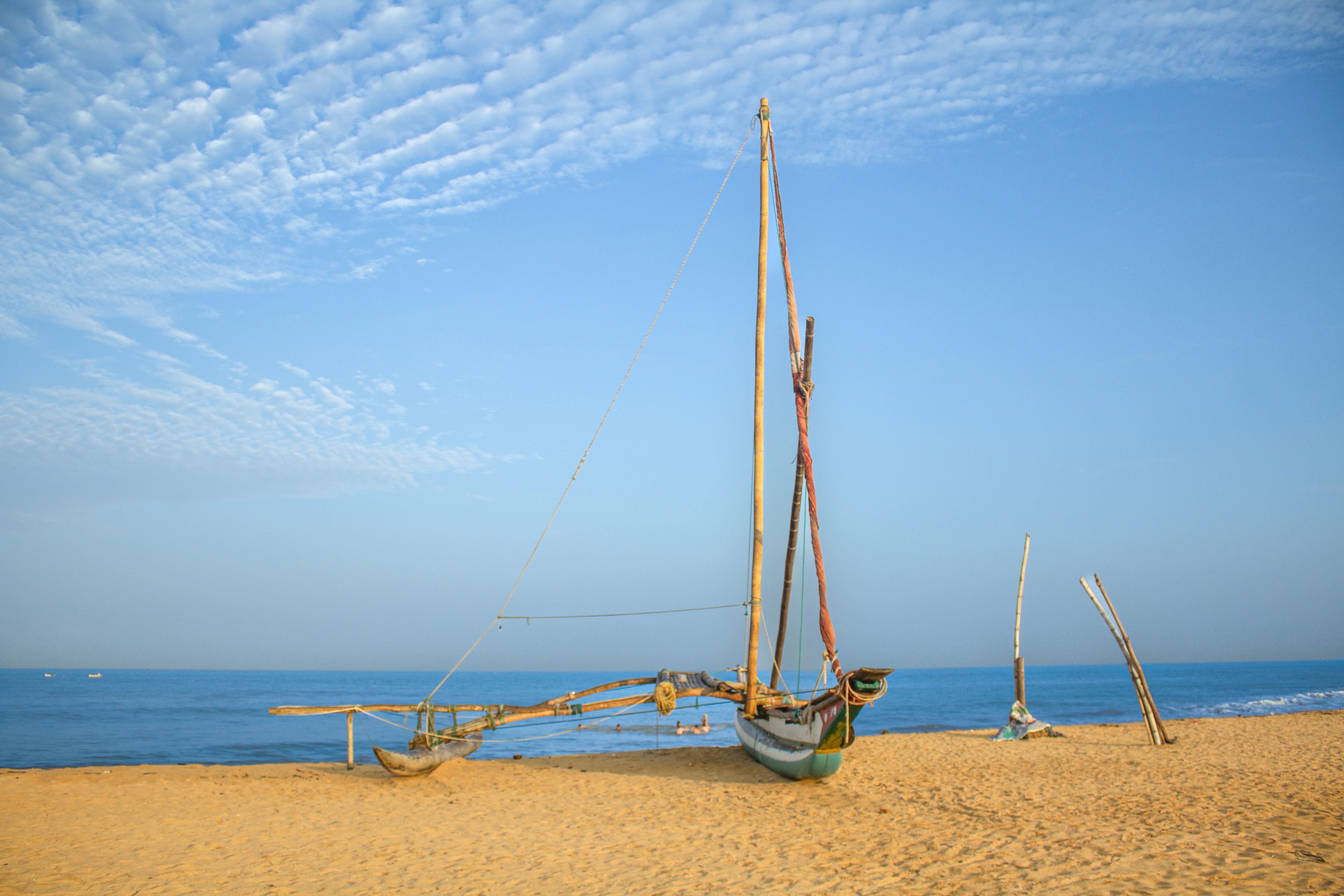
Negombo · Recal Media recalmedia / CC0Land, drop bags, and ease into island time. Negombo's flat, walkable waterfront is the perfect low-key first afternoon after a long flight.
Walk the wide, palm-lined beach then follow the 300-year-old Dutch-built Hamilton Canal, where outrigger fishing boats still tie up. It is a gentle, free way to shake off jet lag and see everyday Negombo.
One of Sri Lanka's largest churches, with a vividly painted ceiling that reflects Negombo's strong Catholic heritage. A quick, atmospheric stop a short tuk-tuk ride from the beach.
Watch the sun drop into the sea, then settle in for your first taste of Sri Lankan flavors.
The evening auction and drying yards give a raw, photogenic look at the fishing life that built the town. Go with your driver and keep cameras respectful.
Negombo is seafood country, from beachside grills to old-school curry houses.
A long-standing, buzzy spot on Porutota Road known for creative Sri Lankan and fusion plates, cocktails, and a lively vibe, an easy first-night win. Mains roughly LKR 2,000-4,500.
Relaxed beachfront dining with fresh lagoon crab, prawns, and grilled catch of the day. Come for the sea breeze and honest seafood at fair prices.
Chilaw's Ramayana Temples: Munneswaram and Manavari
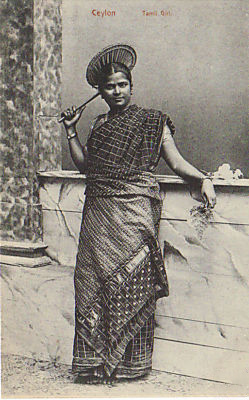
Sri Lankan Tamils · Unknown authorUnknown author / Public domainFuel up before the drive north to Chilaw, about an hour up the coast.
Most Negombo hotels lay on a generous spread of hoppers, string hoppers, and fresh fruit; if you want a proper flat white first, Negombo's cafes along the beach road do good espresso. Start early to beat midday temple heat.
Two of the most significant Ramayana temples sit near Chilaw. This is where Rama, having killed the Brahmin-born Ravana, is said to have worshipped Shiva to be released from the sin of Brahmahatya.
An ancient and important Shiva temple complex where, by legend, Rama prayed after the war to atone for killing Ravana. Shiva is said to have advised him to install four lingams, the beginning of the sacred sites here. Dress modestly, remove shoes, and expect an active, incense-heavy devotional atmosphere.
A few kilometers away, Manavari is believed to house the first lingam Rama installed and worshipped, known as Ramalinga Shivan, one of the only lingams named after Rama himself. Small and serene, it is a moving counterpoint to busy Munneswaram.
Break for a simple, satisfying rice-and-curry lunch on the way back toward Negombo.
Roadside 'hotels' (Sri Lankan diners) around Chilaw serve heaping vegetarian and seafood rice-and-curry plates for just a few dollars. Ask your driver for a busy, clean local favorite, a far better meal than any tourist restaurant.
Return to Negombo for a slower afternoon. You have a full driving day tomorrow, so bank some rest.
Glide through the mangrove channels of Negombo Lagoon to spot kingfishers, monitor lizards, and traditional fishermen. A calm, scenic way to spend a couple of hours.
Simply enjoy the pool and beach at your hotel, a smart choice before the hill-country legs ahead.
One more Negombo seafood dinner before you head inland.
A reliable, welcoming kitchen for Sri Lankan classics like devilled prawns, kottu, and a proper rice-and-curry spread. Good for easing yourself into local spice levels.

Kelaniya, the Kingdom of Vibhishana, to Sacred Kandy
Temple of the Tooth · A.Savin / FALHave an early breakfast and check out; today combines a major Ramayana temple with a long, scenic drive into the hills.
Load up on hoppers, curries, and fruit before the road. Ask for a packed coffee or grab one at the beach cafes; you will want an early start to reach Kandy with time to spare.
Just outside Colombo, on the Kandy road, lies one of the trail's most important shrines.
This revered temple beside the Kelani River is associated in the Ramayana with Vibhishana, Ravana's virtuous brother, who defected to Rama and was crowned king of Lanka here after the war. The complex is also a masterpiece of Buddhist art, with dazzling murals and a graceful dagoba. Dress modestly and remove shoes.
Break the drive with lunch as you climb toward the hills; the road passes fruit stalls and roadside eateries.
Have your driver stop at a busy local buffet-style spot along the A1. For a few dollars you get a mountain of rice with a rainbow of curries, sambols, and papadum, the real taste of Sri Lanka.
Arrive in Kandy, settle in, and walk the lakeside to the island's holiest Buddhist site.
Kandy's centerpiece enshrines a tooth relic of the Buddha and is the country's most important temple. Entry for foreigners is around LKR 2,000; wear clothing that covers shoulders and knees. Time your visit for the evening puja, when drummers and pilgrims fill the shrine.
A gentle loop around the man-made lake built by the last Kandyan king, with monitor lizards, herons, and cool late-afternoon light, a pleasant way to stretch after the drive.
Catch a slice of Kandyan culture or simply enjoy the highland air.
The nightly show at the Kandyan Art Association (or YMBA hall) delivers acrobatic drumming, masked dance, and a fire-walking finale in about an hour. Touristy but genuinely fun, tickets around LKR 2,000.
For a hands-on evening, this top-rated class starts at a local market and ends with a home-cooked Sri Lankan feast, one of the best-reviewed experiences in the region.
Kandy's dining ranges from local kottu joints to hotel restaurants with valley views.
A cozy colonial-style cafe in the heritage quarter serving Sri Lankan curries, rich desserts, and good coffee, an easy, atmospheric choice near the temple.

Into the Hills: Ramboda's Hanuman Temple and Tea Country
Nuwara Eliya District · User:Uwe Dedering / CC BY-SA 3.0Breakfast in Kandy, then check out for the climb into the tea country.
Enjoy a highland breakfast before the drive. The road out of Kandy is winding, so an unhurried start settles the stomach for the switchbacks ahead.
The drive up to Nuwara Eliya is one of the loveliest in Sri Lanka, past waterfalls and emerald tea slopes.
Run by the Chinmaya Mission, this hilltop temple crowned by a towering Hanuman statue overlooks the Ramboda valley, where Hanuman is said to have searched for Sita. The panoramic view over the tea hills alone is worth the stop.
One of the island's tallest waterfalls, tumbling beside the road in two dramatic drops. There is a viewpoint and a short trail near the base, an easy, scenic leg-stretch.
Pause at a tea estate for lunch and a fresh brew with a view.
Several roadside hotels and tea centers between Ramboda and Nuwara Eliya serve rice and curry with valley views. Pair it with a pot of estate-fresh Ceylon tea.
Tour a working tea factory to see plucking, withering, and grading, then taste and buy at the source. Tours are typically free; factories dot the hills around Labookellie and Ramboda.
Arrive in Nuwara Eliya and get your bearings in 'Little England.'
The town's popular lake has pedal boats, lakeside lawns, and pony rides, a relaxed spot to feel the cool mountain air. Small entry fee.
Stroll the well-kept Victorian gardens and the town's Tudor-style Post Office and brick clubhouses, a quick, pleasant introduction to Nuwara Eliya's colonial character.
Dinner is a cozy, warming affair up here in the hills.
Excellent North and South Indian cooking in the historic Grand Hotel, a fitting stop on a Ramayana pilgrimage and a comfortable, elegant room to warm up in.

Ashok Vatika: Seetha Amman, Hakgala Gardens, and Divurumpola
Seetha Amman Temple · Buddhika Mawella / CC BY-SA 3.0A leisurely highland breakfast before the day's cluster of Sita sites just south of town.
Fuel up with eggs, hoppers, and hot tea. The Ramayana sites today are close together, so there is no need to rush out at dawn.
The area around Seetha Eliya, a short drive south, is the most emotionally resonant on the whole trail: the Ashok Vatika where Sita was said to be held.
A brightly painted Hindu temple beside a mountain stream at Seetha Eliya, believed to mark the spot where Sita was held captive and prayed daily for rescue. Look for the circular marks on the rocks across the stream, said by devotees to be Hanuman's footprints. The most visited Ramayana shrine in the country.
These lush terraced gardens on the slopes of Hakgala are identified with the Ashok Vatika, Ravana's pleasure garden where Sita was kept. Beyond the legend, they are among the island's finest gardens, with roses, ferns, and mountain views. Entry around LKR 3,000 for foreigners.
Return toward town for lunch after the morning's temples and gardens.
Nuwara Eliya's town-center eateries do generous, inexpensive rice and curry and biryani. A warm, filling midday meal before the afternoon drive to Divurumpola.
Continue the story to the place of Sita's vindication, plus a devotional stop revered by pilgrims.
'Divurumpola' means 'place of oath,' and this quiet forest temple is believed to be where Sita underwent her agni pariksha, the fire ordeal that proved her purity. So sacred is its association with truthful oaths that legal disputes were once settled here. A peaceful, moving contrast to busier shrines.
A revered Hindu temple in Nuwara Eliya dedicated to worship connected with the Ramayana period, with a serene shrine and resident priests who explain the trail's spiritual thread. A worthwhile devotional stop for pilgrims.
Wind down with the highland ritual of afternoon tea or a lakeside sunset.
Take colonial-style high tea with scones, cakes, and pots of estate Ceylon on the Grand's lawns or lounge, a quintessential Nuwara Eliya experience.
One last cozy dinner in the cool of the hills.
For a warming evening, most colonial hotels serve hearty set dinners by the fire. In town, casual grills and Indian restaurants offer good vegetarian-friendly options fitting for the pilgrimage.

Ravana's Ella: Falls, Cave, and the Nine Arch Bridge
Nine Arch Bridge · MichaelJames2468 / CC BY-SA 4.0Start with strong hill-country coffee before Ella's easy morning hike.
Ella's main street is lined with backpacker-favorite cafes doing good coffee, smoothie bowls, and big breakfasts. Cafe Chill is the town's social hub; the smaller cafes are quieter for an early start.
Ella's most famous sights are close at hand and best tackled in the cooler morning.
A gentle 45-minute walk through tea fields to a ridge with panoramic views toward Ella Gap and Ella Rock. The easiest of Ella's hikes and a wonderful photo perch.
This graceful colonial-era railway viaduct arcs across a jungle gorge and is Ella's signature image, especially when a blue train rolls over it. Check the day's train times to catch one crossing.
Refuel in town before the Ramayana sites of the afternoon.
A tiny, beloved spot famous for its rice-and-curry spread and vegetable roti, cooked with care and served with a smile. Arrive a little early to beat the crowd.
The lively main-street stalwart for grilled seafood, curries, and cold drinks. Reliably good and a fun place to compare hiking notes with fellow travelers.
The gorge below Ella holds the trail's most dramatic Ravana sites.
A wide, powerful cascade beside the Ella-Wellawaya road, named for the demon-king himself; legend says Ravana hid Sita in caves near here. It is one of Sri Lanka's most photographed waterfalls and a quick roadside stop.
A steep climb of several hundred steps leads to this cave in the hillside, tied by tradition to Ravana's hiding of Sita and to hermit-monks in later centuries. The climb is short but strenuous; the views over the valley reward the effort.
Toast the highlands one last time before the descent to the coast tomorrow.
Ella's hillside bars and hotel terraces frame the deep V of Ella Gap, which glows at sunset. A relaxed way to close out the hill country.
Ella packs a lot of good eating into its little main street.
A surprising Japanese-Sri Lankan kitchen just outside town serving excellent ramen, tempura, and curries in a garden setting. A local favorite worth the short ride.
A long-running, dependable spot with a broad menu of curries, pasta, and grills plus a leafy courtyard, easygoing and traveler-friendly.

Descent to the Coast: Ussangoda and Hanuman's Rumassala
Galle Fort · Rovin Shanila / CC BY-SA 4.0An early breakfast in Ella; today is a long, scenic descent from the mountains to the sea.
Ella's guesthouses are famous for lavish fruit-and-hopper breakfasts. Eat well and get an early start for the drive down through Wellawaya.
Break the drive with a wildlife safari or a Ramayana curiosity as you reach the lowlands.
Roughly on the route, Udawalawe is Sri Lanka's most reliable place to see wild elephants in the open, often in herds. A 4-hour private jeep safari is an excellent midday break from driving.
A windswept coastal plateau of reddish, sparsely vegetated earth near Ambalantota, held in Ramayana tradition to be a landing site of Ravana's flying chariot, the scorched color attributed to the fire. Now a small national park with cliff-top ocean views, an atmospheric detour on the coastal route.
Lunch on the south coast as you approach Galle.
The stretch from Tangalle to Galle is dotted with beach restaurants grilling the morning's catch. Have your driver pick a busy one for fresh fish, rice, and a coconut.
Arrive near Galle and walk the trail's poetic final site, the herb-scented hill of Rumassala.
This forested headland above Unawatuna is said to be a fragment of the Himalayan Sanjeevani mountain of healing herbs that Hanuman carried to save Rama's brother Lakshmana, dropping a piece here. Wander the trails (locals point out rare medicinal plants) and cool off at the sheltered Jungle Beach below.
A calm, curving bay good for a swim after the long drive, an easy way to relax before your final evening.
Spend golden hour on the ramparts of Galle Fort, one of Asia's best-preserved colonial towns.
Walk the 17th-century Dutch walls past the lighthouse and Flag Rock as the sun sinks into the Indian Ocean. Free to enter and endlessly photogenic, with cafes and boutiques in the lanes within.
A memorable last dinner inside the Fort walls.
Polished Sri Lankan and international cooking in a stylish Fort courtyard, a lovely spot for a celebratory final meal. Book ahead in season.
A relaxed, well-liked restaurant just outside the Fort serving inventive Sri Lankan plates and fresh seafood at gentler prices, a local favorite with a warm vibe.
Galle Fort Farewell and Airport Transfer
Galle Fort · Rovin Shanila / CC BY-SA 4.0A relaxed final morning before the drive to the airport; the Southern Expressway makes Galle to CMB a manageable 2.5-3 hours.
A characterful cafe in a Fort heritage building serving strong coffee, fresh juices, and breakfast plates, a fitting last stop among the old Dutch lanes.
Several cafes along Church Street and Pedlar Street do good espresso and light breakfasts if you want one more slow morning before travel.
Squeeze in a final wander before you point the car north.
Browse the gem shops, galleries, and boutiques of the Fort's grid of lanes, and revisit the ramparts in the softer morning light. Pick up Ceylon tea or spices as a last souvenir.
If you have an hour, these small museums in old Fort buildings give a quick sense of Galle's trading past. A gentle, low-key morning option.
Grab an early lunch, then transfer to Bandaranaike International Airport (about 2.5-3 hours via the E01/E02 expressways) in good time for your flight home.
Eat a light rice-and-curry or a rice packet in Galle before you set off, or ask your driver to stop at an expressway service area. Aim to leave with a comfortable buffer for airport check-in.
Pick your base
Base yourself along Negombo Beach and Lewis Place / Porutota Road, where most hotels, cafes, and seafood restaurants cluster within a short tuk-tuk ride of each other and the airport. It is quieter and more convenient for an early or late flight than central Colombo.
A polished beachfront hotel on Porutota Road with a big pool, spa, and reliable service, a comfortable and well-located first or last night on the island.
A long-running family favorite right on the beach with spacious rooms and a garden pool, good value and an easy walk to Negombo's restaurant strip.
A characterful, artist-run guesthouse by the beach with a cozy cafe, a warm-value pick that still books up thanks to its personality and location.
A modern, well-run hotel overlooking Kandy Lake with a rooftop pool and easy walking access to the Temple of the Tooth, a comfortable central base.
A large resort-style hotel just outside town with spacious rooms, big pools, and gardens by the river, good for families who want room to spread out.
A restored 19th-century manor house set in gardens outside the city, all antiques, verandahs, and a stunning infinity pool, the most atmospheric splurge in Kandy.
A friendly hilltop guesthouse with knockout views over the river valley and home-cooked breakfasts, excellent value a short tuk-tuk from town.
A restored colonial hotel with wood-paneled lounges, log fires, and a lovely garden near the golf course, refined comfort at the top of town.
A large, modern hotel with an indoor pool and generous rooms, central and dependable for families who want warmth and space in the cool highlands.
A genuinely one-of-a-kind hotel built inside a converted 1930s tea factory amid the estates at Kandapola, with the old machinery still in place and tea fields at the door.
The town's iconic Tudor-style grande dame beside the golf course, all manicured lawns, high tea, and old-world grandeur, the classic Nuwara Eliya splurge.
A comfortable, well-located resort near the town center with a pool and mountain views, an easy walk to Ella's cafes and trailheads.
Ella's signature view hotel, with cottages set among tea bushes and a much-photographed infinity pool facing Ella Rock, a memorable highland splurge.
Bright, spacious rooms with balconies overlooking the valley and legendary breakfasts, warm hosts and great value a short ride from town.
A large, modern hotel with a cliff-edge pool and sea views just outside the Fort walls, comfortable and well-placed for both the Fort and Unawatuna.
A stylish restored merchant's house inside Galle Fort with a leafy courtyard and one of the town's best restaurants, ideal for soaking up the Fort's atmosphere on foot.
A friendly beachfront hotel right on Unawatuna's sheltered bay, steps from swimming and near the Rumassala trail, great for a relaxed last night by the sea.
The Aman group's restoration of the 17th-century New Oriental Hotel inside Galle Fort, all colonnaded verandahs, teak floors, and colonial calm, the area's iconic splurge.
Good to know
What are the main Ramayana sites to visit in Sri Lanka?
The most visited Ramayana sites include Munneswaram and Manavari temples near Chilaw (where Rama is said to have worshipped Shiva), Kelaniya Raja Maha Vihara (linked to Vibhishana), the Sri Bhakta Hanuman Temple at Ramboda, Seetha Amman Temple and Hakgala Gardens near Nuwara Eliya (the Ashok Vatika where Sita was held), Divurumpola (Sita's fire ordeal), Ravana Falls and Ravana Cave near Ella, Ussangoda on the south coast, and Rumassala hill near Galle.
How many days do you need for the Ramayana trail in Sri Lanka?
A focused Ramayana trail covering the key western, hill-country, and southern sites is comfortable in 7 to 10 days. Eight days lets you link Chilaw, Kelaniya, Kandy, the Nuwara Eliya Sita sites, Ella, and Rumassala without rushing, while still leaving time for tea country, wildlife, and the beach.
What is the best way to travel the Ramayana trail in Sri Lanka?
By far the easiest way is to hire a private driver-guide for the whole loop, since the sites are spread across the island on slow, winding hill roads and public transport between them is time-consuming. Many travelers add the scenic Nanu Oya-to-Ella train as a highlight leg while the driver meets them at the station.
Where is the Ashok Vatika where Sita was held in Sri Lanka?
The Ashok Vatika is traditionally located in the hills around Seetha Eliya near Nuwara Eliya, marked today by the Seetha Amman Temple beside a mountain stream, with the nearby Hakgala Botanical Gardens also identified as part of Ravana's garden where Sita was kept captive.
What is the best time of year to do the Ramayana trail in Sri Lanka?
The most reliable window is roughly December to March, when the west coast, hill country, and southwest are generally driest and the mountain views around Nuwara Eliya and Ella are clearest. Note that the hills stay cool year-round and can be cold at night, so pack layers regardless of season.
Do I need a visa to visit Sri Lanka?
Most visitors need an ETA (Electronic Travel Authorization) arranged online before arrival, which is usually approved quickly. Apply a few days to a week ahead through the official Sri Lankan ETA system to avoid delays at immigration.
This eight-day journey threads the great Ramayana story through Sri Lanka's finest landscapes, from Rama's atonement temples at Chilaw and Vibhishana's Kelaniya, up to the misty Ashok Vatika hills where Sita prayed for rescue, on to Ravana's Ella caves, and finally to the herb-scented Rumassala shore near Galle. Along the way you get the whole island in miniature: sacred cities, tea-country trains, wild elephants, and southern beaches. Travel it with an unhurried private driver, dress respectfully at the shrines, and let the legend give shape to one of the most rewarding road trips in Asia.