Ten Days in Vienna: An Imperial City, Coffeehouse by Coffeehouse
A slow, thorough 10-day Vienna itinerary through Habsburg palaces, world-class galleries, wine taverns and the Wachau, built for travelers who want to go deep rather than dash.
10 days in Vienna
For centuries Vienna was the seat of the Habsburgs, who ruled a sprawling Central European empire from the Hofburg and their summer palace at Schonbrunn. That imperial weight is everywhere: in the ringing Ringstrasse boulevard laid out where the city walls once stood, in gilded concert halls, and in the coffeehouses that UNESCO recognizes as living cultural heritage. Mozart, Beethoven, Schubert, Brahms, Mahler, Freud and Klimt all worked here, and the city still runs on music, cake and unhurried conversation.
Ten days is a luxury of time in a city many rush through in two, and it lets you pair the blockbuster sights with the things that make Vienna itself: an afternoon nursing a melange over a newspaper, a heurige wine tavern in the hills, a tram loop around the Ring at dusk. Getting around is effortless. The U-Bahn, trams and buses are clean, punctual and cheap, and a single travel pass covers them all; the historic center is compact and made for walking.
Expect grand cuisine and comfort food side by side: crisp Wiener schnitzel, boiled beef Tafelspitz, sausages from a street stand, and an entire universe of pastry crowned by the Sachertorte. Summer (this trip lands in July) is warm and lively, with long evenings, garden concerts and open-air dining, though popular palaces and day trips book up, so reserve timed tickets ahead. Vienna is safe, orderly and consistently ranked among the world's most livable cities, which makes a longer stay a genuine pleasure rather than an endurance test.

Arrival, Stephansdom and the Old City's First Impressions
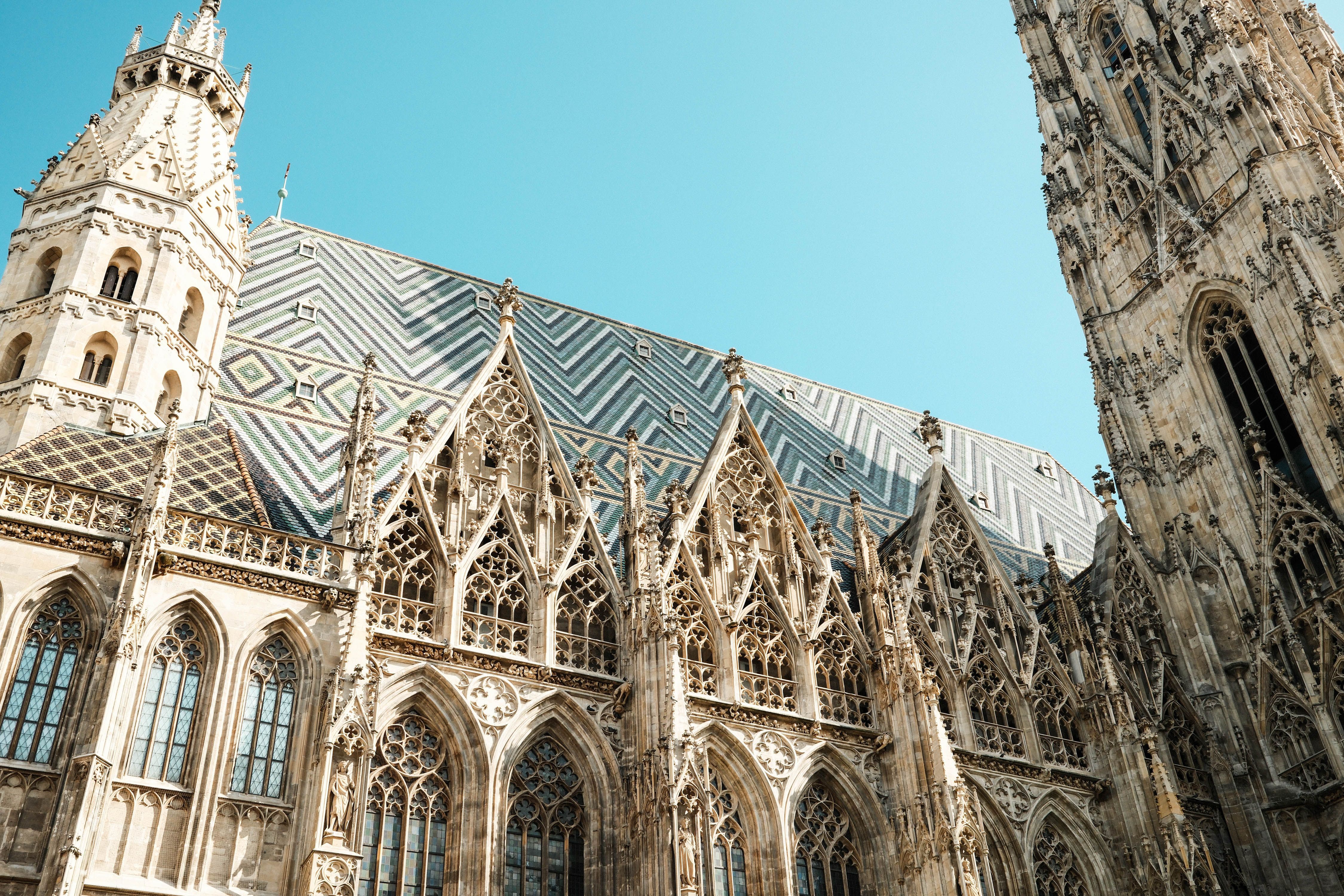
St. Stephen's Cathedral, Vienna · C.Stadler/Bwag / CC BY-SA 4.0Drop your bags and walk straight into the heart of old Vienna. Start at St. Stephen's Cathedral, the Gothic giant at the city's center, then let the pedestrian lanes pull you along.
Vienna's soaring Gothic landmark, with its patterned tile roof and 137-meter south tower. Entry to the main nave is free; the tower climb (343 steps), the north tower elevator and the catacombs run a few euros each. Even jet-lagged, the interior and the roofline are the perfect welcome to the city.
From the cathedral, wander the Graben past the Baroque Plague Column (Pestsaule) and turn onto Kohlmarkt toward the Hofburg gates. This is Vienna's grandest window-shopping promenade, lined with historic storefronts and confectioners, and an easy way to orient yourself on day one.
Ease into the evening with a golden-hour walk down the Kartnerstrasse toward the Opera, watching the city light up.
The main pedestrian artery links Stephansplatz to the State Opera in about 10 minutes of easy strolling, passing street musicians and the elegant Lobmeyr glass house. A relaxed way to get the lay of the land before dinner.
Kick things off with the dish every visitor comes for: a Wiener schnitzel the size of a dinner plate.
The legendary schnitzel house since 1905, famous for a pounded, pan-fried cutlet that overhangs the plate. Expect a lively, tourist-heavy but genuinely good experience; reserve ahead, as it fills nightly. Mains run roughly 18-25 EUR.
A tiny, wood-paneled Viennese tavern near the cathedral serving beautifully executed classics like Tafelspitz and schnitzel to a mostly local crowd. Warm and unfussy; book a table since it seats only a few dozen.

Imperial Vienna: The Hofburg, Sisi and a Classical Concert
Hofburg · C.Stadler/Bwag / CC BY-SA 3.0 atBegin the imperial day the Viennese way, in a marble-and-mirrors coffeehouse with a newspaper on a wooden rack.
A soaring, vaulted coffeehouse where Trotsky and Freud once sat, now serving melange and fresh pastries under chandeliers. Come early (it opens at 8am) to beat the queue, order an Apfelstrudel with your coffee, and soak up the grandeur. Expect a line by mid-morning.
A darker, bohemian institution run by the same family for generations, beloved for its buchteln (sweet yeast buns) served warm in the evenings and its unpretentious mood. A good low-key alternative to the grand cafes.
Spend the morning inside the Habsburgs' winter palace, a city-within-a-city that housed the dynasty for over 600 years.
The heart of Habsburg power, telling the story of Emperor Franz Joseph and the enigmatic Empress Elisabeth (Sisi) through opulent apartments and personal artifacts. A guided skip-the-line tour covers the highlights and the courtyards efficiently. Independent tickets are around 17-19 EUR.
One of the most beautiful Baroque library halls on earth, a golden barrel-vaulted room lined with 200,000 volumes and globes. Entry is about 8 EUR and it takes 30-45 minutes; a stunning add-on within the Hofburg complex.
Lunch near the palace with a choice between refined Viennese cooking and a quick market-style bite.
The place to try a textbook Tafelspitz (boiled beef with horseradish and apple), carved and served with ceremony in an elegant dining room. A proper sit-down lunch of Viennese classics; mains around 22-30 EUR.
A century-old counter selling small open-faced spread sandwiches and mini beers, a beloved quick Viennese lunch since 1902. Point at a few, stand at the ledge and eat like a local for a handful of euros.
Stay in the Hofburg orbit for an afternoon of high culture, choosing horses, treasures or armor.
Watch the world-famous Lipizzaner stallions train in the Baroque Winter Riding School. Morning training sessions (check the schedule, typically Tue-Fri) are cheaper than gala performances and let you see the horses up close under the chandeliers.
Home to the crown jewels of the Holy Roman Empire, imperial regalia and curiosities like a narwhal-tusk 'unicorn horn.' Around 14 EUR and rarely crowded; a dazzling hour if you skipped the horses.
This is the music capital of the world, so spend your first evening at a candlelit classical concert in a historic church.
An intimate program of Mozart, Bach, Beethoven, Schubert and Vivaldi performed under the frescoed dome of a Baroque church just off the Graben. Atmospheric and central, an easy stroll from dinner. Tickets from about $45.
A string ensemble drawn from Viennese orchestras plays Mozart, Beethoven and Schubert in a jewel-box Baroque church. A well-priced, warmly reviewed option starting around $31.
Dine in a classic Viennese setting near the Hofburg, either before or after your concert.
An institution since 1618, part deli, part elegant restaurant, famous for its open sandwiches, Beinschinken ham and Jugendstil interiors. Grab a standing bite at the deli counter or settle into the dining room; a Vienna classic beloved by locals.
The temple of Tafelspitz, where the boiled-beef ritual is served in the copper pot with marrow bones, rosti and apple-horseradish. Book ahead; mains around 25-30 EUR.

Schonbrunn Palace, Gardens and an Evening at the Orangery
Schönbrunn Palace · C.Stadler/Bwag / CC BY-SA 4.0Fuel up in the center before hopping the U4 out to the summer palace (about 15 minutes to Schonbrunn station).
An 1880 coffeehouse with billiard tables, bentwood chairs and a time-capsule mood near the U4 line, perfect for a melange and a fresh Kaisersemmel before heading out. Less touristy than the center's grand cafes.
Beat the crowds to Schonbrunn, the Habsburgs' 1,441-room summer residence and a UNESCO World Heritage Site. Timed entry is mandatory, so pre-book.
A guided walk through the imperial staterooms, from Maria Theresa's apartments to the Hall of Mirrors where a six-year-old Mozart performed, plus the Baroque gardens. Skipping the line matters here, as same-day tickets often sell out. From about $73.
An alternative guided highlights tour of 22 staterooms with a licensed guide, covering the palace's history and legends. A slightly lower-cost skip-the-line option from about $64.
Eat on the palace grounds before exploring the gardens, with a historic option and a casual one.
A grand cafe within the palace complex serving Viennese lunches and, famously, apple-strudel show baking where you can watch the pastry stretched by hand. Convenient and atmospheric between palace and gardens.
For a lighter, faster bite, the garden kiosks and the seasonal cafe near the Gloriette offer sandwiches, coffee and cake with a view. Good if you'd rather spend your time walking the grounds.
The gardens are free and vast; give them a couple of hours to climb to the Gloriette and take in the classic panorama over the palace to the city.
Walk the manicured parterre up to the hilltop Gloriette colonnade (1775) for the postcard view back over the palace and Vienna beyond. The gardens are free; the rooftop terrace and the palm-filled Palm House charge small fees. Allow time for the maze if traveling with kids.
The world's oldest continuously operating zoo (founded 1752), home to giant pandas and set in the palace park. Around 28 EUR; a strong option for families with an afternoon to spare.
Stay on-site for a concert in the very Orangery where Mozart once performed, or head back to town.
The Schonbrunn Palace Orchestra plays Mozart and Strauss with vocal and ballet performances in the historic Orangery. A festive, family-friendly evening in an imperial setting; tickets from about $67.
Round out the day back toward the center with hearty Viennese fare.
A traditional neighborhood gasthaus in the 15th district (near the U-Bahn back from Schonbrunn) serving generous, well-priced schnitzel, roast pork and seasonal specials to a local crowd. Cozy and authentic; book ahead.
An old-school inn with big portions of Austrian home cooking and a leafy garden in summer. A relaxed, good-value dinner away from the tourist center.
Museum Day: Kunsthistorisches and the MuseumsQuartier
Kunsthistorisches Museum · PDStart near the Ring with coffee and a proper breakfast before a day among masterpieces.
A landmark cafe designed in the Adolf Loos tradition, popular with the arts crowd and steps from the MuseumsQuartier and Secession. Good coffee, eggs and pastries in a handsome, unstuffy room.
A relaxed traditional coffeehouse with a strong breakfast menu, favored by locals and civil servants near the Rathaus. A calmer start than the tourist cafes.
Devote the morning to the Kunsthistorisches Museum, the Habsburgs' astonishing art collection housed in a palatial building on Maria-Theresien-Platz.
One of the world's great art museums, with the largest Bruegel collection anywhere, plus Vermeer, Raphael, Caravaggio, Titian and Velazquez. Admission is about 21 EUR; don't miss the domed cafe on the staircase landing, arguably the most beautiful museum cafe in Europe. Allow at least two to three hours.
Cross Maria-Theresien-Platz into the MuseumsQuartier, one of the world's largest cultural complexes, for lunch in the courtyards.
Tucked behind the MuseumsQuartier with a green summer garden, serving updated Viennese classics to a stylish local crowd. A lovely, shaded midday break; mains around 16-24 EUR.
The MuseumsQuartier's inner courtyards are dotted with cafes and the famous colored Enzi loungers where Viennese sprawl in the sun. Grab a casual bite and people-watch between galleries.
Spend the afternoon with Vienna's modernists inside the MuseumsQuartier, choosing between Schiele and Klimt or contemporary art.
Home to the world's largest Egon Schiele collection and important works by Klimt and the Vienna Secession, in a bright limestone cube. Around 17 EUR; the essential stop for early-20th-century Austrian art.
Austria's leading modern and contemporary art museum, a dark basalt monolith with Pop Art, Viennese Actionism and rotating shows. About 15 EUR; for those who prefer the avant-garde to the classical.
Neubau and the 7th district are the city's coolest quarter for an early-evening drink among boutiques and bars.
A grid of cobbled Biedermeier lanes behind the MuseumsQuartier, full of small bars, craft shops and courtyard restaurants. Lovely for an aimless pre-dinner wander.
Dine in Neubau, the district that best captures Vienna's contemporary food scene.
A buzzy corner bistro on a pretty square, big with locals for brunch, burgers and modern plates with a good wine and cocktail list. Reserve the terrace on a summer night.
A tiny, deeply traditional cook-shop serving grandma-style Viennese daily specials at fair prices. Book ahead; it's a favorite for honest home cooking.
Belvedere, Klimt's Kiss and a Deep Dive into Vienna's Food
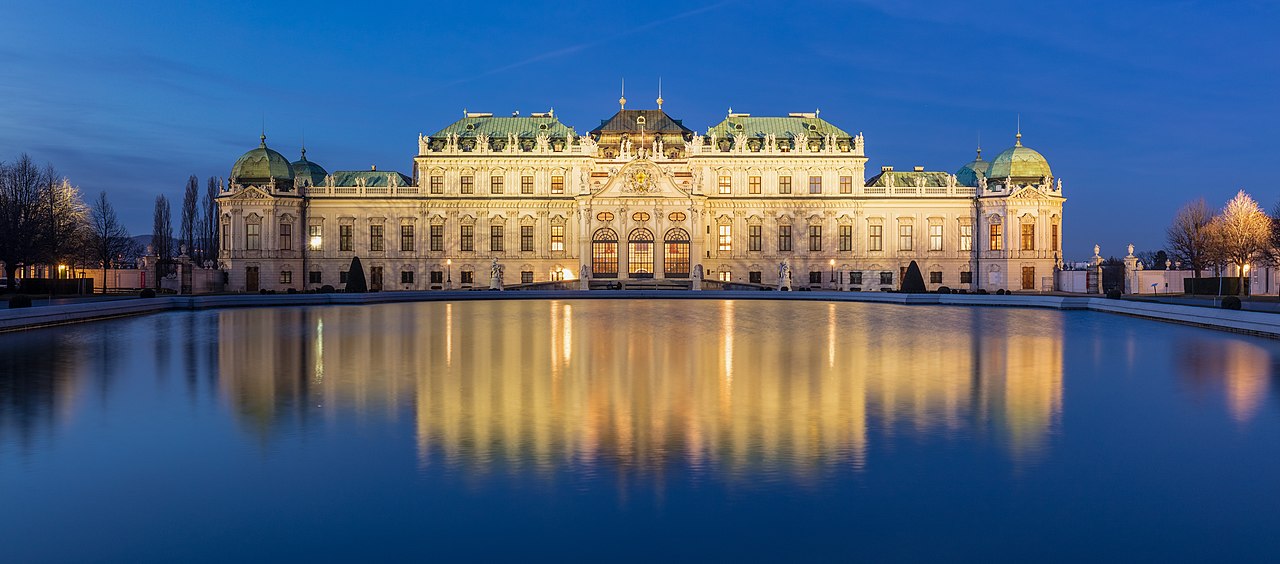
Belvedere, Vienna · Diego Delso / CC BY-SA 4.0A gentle start near the Belvedere, whose gardens open onto one of Vienna's best palace vistas.
A handsome 1910 coffeehouse near the Belvedere with a billiard room and a loyal local following. Come for a quiet melange and breakfast before the galleries fill.
See Klimt's 'The Kiss' at the Upper Belvedere, a Baroque palace built for Prince Eugene of Savoy and now Austria's national gallery.
Home to the world's largest Klimt collection, crowned by 'The Kiss,' plus Schiele, Kokoschka and French Impressionists, all in a hilltop palace with a formal garden sloping toward the city. Tickets are about 17 EUR; book a timed slot as the Klimt room gets busy. Allow two hours plus garden time.
Keep it light near the Belvedere or the Naschmarkt ahead of an afternoon of eating.
A brewery-restaurant in the Belvedere's former monastery buildings, serving house beer, ribs and hearty Austrian plates in vaulted rooms or the courtyard. Casual and satisfying right by the palace.
Hand yourself over to a local guide for a walking food tour, the single best way to understand how Vienna eats, from coffeehouses to markets to street stands.
A small-group walk through the city's neighborhoods (Gratzls) tasting everything from coffeehouse pastries to market bites, sausages and regional specialties, with a knowledgeable local guide. One of the highest-rated experiences in the city and a genuine education in Viennese food culture. From about $153.
After grazing all afternoon, take it easy with a drink and a stroll rather than a heavy meal.
The landscaped Stadtpark with its gilded Johann Strauss statue is a pleasant, leafy loop to walk off the tastings. A calm, free way to end the day close to the center.
If the food tour left you hungry, opt for something light; if not, a wine bar makes a perfect nightcap.
A relaxed wine bar and shop near Stephansplatz pouring Austrian Gruner Veltliner and Blaufrankisch by the glass, with small plates and pizzas. Ideal for a low-key evening after a big afternoon of eating.
A dependable canal-side spot for wood-fired pizza and a spritz if you want something simple and light after the tour. Good value and a summery riverside setting.

Day Trip: The Wachau Valley and Melk Abbey
Melk Abbey · Thomas Ledl / CC BY-SA 4.0Trade the city for the Danube's most beautiful stretch, the Wachau Valley, a UNESCO-listed run of terraced vineyards, apricot orchards, medieval towns and hilltop monasteries about 80 km west of Vienna. Choose a guided day trip or a more active wine-and-bike outing.
A classic outing to the magnificent yellow Baroque Melk Abbey, overlooking the Danube, with a stop in the wine village of Durnstein where Richard the Lionheart was once imprisoned. A well-rounded introduction to the Wachau with transport handled. From about $142.
A smaller, more personal day in the valley with lunch at a traditional Heurige wine tavern and tastings of the region's crisp Gruner Veltliner and Riesling. Excellent for wine lovers who want a slower pace and local color. From about $232.
An active day combining easy cycling along the Danube, wine tastings, a swim in the river and lunch at a wine tavern through some of Austria's prettiest countryside. The most memorable option if you're up for pedaling. From about $157.
Back in Vienna, head to the city's own wine country in the northern hills for a heurige if your tour didn't include one, or keep it simple downtown.
A historic wine tavern in Heiligenstadt where Beethoven once lived, pouring estate wines with a hearty buffet of Austrian dishes in a vine-shaded courtyard. The quintessential Viennese heurige experience, a tram-and-bus ride from the center.
A large, welcoming Grinzing heurige with garden seating and live Schrammelmusik on some nights, good for those who want the wine-village mood without leaving town late. Casual and fun.

Karlsplatz, the Secession and Vienna's Great Market
Karlskirche · Thomas Ledl / CC BY-SA 4.0Begin near Karlsplatz, a hub surrounded by Jugendstil architecture and one of the city's most striking churches.
A short walk from Karlsplatz and the Secession, this arts-crowd cafe is a fine spot for coffee and eggs before a morning of architecture. Reliable, unpretentious and central to the day's sights.
Take in the Baroque drama of Karlskirche and the golden dome of the Secession, two landmarks a few minutes apart.
Vienna's finest Baroque church, fronted by two Trajan-style columns and topped by a great dome. Admission (about 9.50 EUR) includes a panorama lift up into the cupola to see the frescoes at eye level, a rare treat. Reflecting pool and Henry Moore sculpture out front.
The white 1897 temple of the Vienna Secession, crowned with a golden filigree dome the locals nicknamed the 'golden cabbage,' housing Klimt's monumental Beethoven Frieze. Around 12 EUR; a compact, essential stop for Art Nouveau fans.
Dive into the Naschmarkt, Vienna's sprawling open-air market, for a graze-as-you-go lunch.
A popular market restaurant serving Israeli and Eastern Mediterranean mezze, hummus and shakshuka on a busy terrace. A flavorful sit-down option in the heart of the market; expect a wait at peak.
Choose between more art or a green break, both close by, then rest ahead of an evening concert.
A Habsburg residence turned museum with grand state rooms and a superb collection spanning Monet to Picasso plus Durer's famous 'Young Hare' in rotation. About 20 EUR and centrally located near the Opera; excellent on a warm afternoon.
The park around Karlsplatz frames Otto Wagner's gilded 1899 U-Bahn pavilions, gems of Viennese Art Nouveau. A relaxed, free stroll to admire the design before dinner.
Return to Karlskirche after dark for a candlelit concert beneath its dome, a very Viennese way to spend the night.
An orchestra performs Vivaldi's 'The Four Seasons' in the extraordinary Baroque interior of Karlskirche, a roughly 75-minute program in one of the city's most beautiful settings. Tickets from about $44.
For a grander night, the Vienna Mozart Orchestra performs in period costumes and wigs in the gilded Musikverein, home of the New Year's Concert. A theatrical, crowd-pleasing show; tickets from about $80.
Eat near Karlsplatz or the Naschmarkt, timing it around your concert.
A convenient, dependable Viennese tavern near the Opera for schnitzel, goulash and a beer before or after a concert. Central and unfussy.
A warm, wood-lined Wieden beisl serving refined Austrian home cooking and a leafy garden in summer, popular with locals. A short walk from Karlsplatz; reserve on weekends.

The Prater, the Danube and Hundertwasser's Vienna
Wiener Riesenrad · Thomas Ledl / CC BY-SA 4.0Start on the eastern side of the center with breakfast before a more playful, less palatial day.
A 'grandmothers' cafe' where seniors bake the cakes, serving standout homemade Kuchen and good coffee in a cozy, mismatched-furniture room. A heartwarming, only-in-Vienna breakfast; expect a line on weekends.
A 1950s-styled traditional coffeehouse across from the Stadtpark with big windows and classic cakes, handy on the way to the 3rd district. Good breakfast and a genuine local mood.
Visit the whimsical Hundertwasser buildings, the antidote to the city's imperial symmetry, then ride the old Ferris wheel.
Friedensreich Hundertwasser's undulating, tree-sprouting 1985 social-housing block is a free, photogenic wonder; the nearby Kunst Haus Wien museum (about 12 EUR) shows his art and philosophy. A colorful counterpoint to Baroque Vienna.
The 1897 Ferris wheel at the Prater, a symbol of Vienna made famous by 'The Third Man,' turns slowly for panoramic views over the city. About 14 EUR; ride it before the amusement-park crowds build.
Lunch at the Prater or in the leafy Leopoldstadt district beside it.
A Prater institution (open March-October) famous for its Budweiser Budvar on tap and Stelze, a giant roasted pork knuckle, served in a huge beer garden under the trees. Boisterous, seasonal and quintessentially Viennese; cash-friendly and popular.
A relaxed spot along the Danube Canal for salads, bowls and drinks with waterside seating. A lighter option if the pork knuckle feels like too much.
Spend the afternoon on the water, either strolling the Danube Canal's street-art banks or heading to the Danube Island to swim.
A 21-km recreational island in the middle of the Danube with free swimming spots, bike paths and beach bars, a short U-Bahn ride from the center. Perfect on a hot July afternoon; rent a bike or just cool off in the river.
The canal embankment through the center is an open-air gallery of murals lined with pop-up bars and lounge chairs. A free, easygoing wander back toward town.
For something different, ride up to the vineyard hills for sweeping sunset views over the city.
A hilltop terrace above the Vienna Woods with a panorama over the whole city and the Danube, reachable by the 38A bus from Heiligenstadt. Time it for sunset and pair it with a heurige on the way down.
Dinner in a hillside wine tavern or back in lively Leopoldstadt.
A vineyard-terrace heurige on the Nussberg with wine grown on the slope below and one of the best city views in Vienna, open seasonally in good weather. A memorable, romantic dinner spot; check opening days before heading up.
A stylish Leopoldstadt bistro with a scribbled-ceiling dining room serving modern Austrian and French-leaning plates. A polished, local-favorite dinner back in town; reserve ahead.

Day Trip: Hallstatt and the Alpine Lakes
Hallstatt · C.Stadler/Bwag / CC BY-SA 4.0Take one big Alpine excursion to cap the trip. Storybook Hallstatt, a lakeside village of the Salzkammergut with the world's oldest salt mine, is the classic choice; ambitious travelers can instead see three regions in a day or cross the border to Budapest.
A small-group run to the UNESCO-listed lake village hemmed by mountains, with time to wander its famous waterfront, ride up to the skywalk viewpoint and browse the lanes. The intimate group size and the scenery make this a standout day; from about $209.
A guided tour through the Salzkammergut's peaks and mirror lakes to Hallstatt, with an optional lake boat ride for the classic view back at the village. A well-priced way to reach one of Austria's most photographed places; from about $104.
For a change of country, a small-group day in the Hungarian capital covering the major sights plus free time, with an expert driver-guide. A long but rewarding day for those who'd rather see another great city than the mountains; from about $197.
You'll return to Vienna in the evening, so keep dinner easy and close to home.
Vienna's classiest sausage stand, behind the Opera, where locals in tuxedos queue for a Kasekrainer and a beer or glass of wine after the theater. A fun, cheap, authentically Viennese way to end a long travel day; open late.
A restaurant inside a restored Art Nouveau glass palm house in the Burggarten, serving Austrian and Mediterranean plates under soaring arches. A relaxed, atmospheric option if you have energy for a proper sit-down; book ahead.
A Last Coffee, a Slice of Cake and Farewell
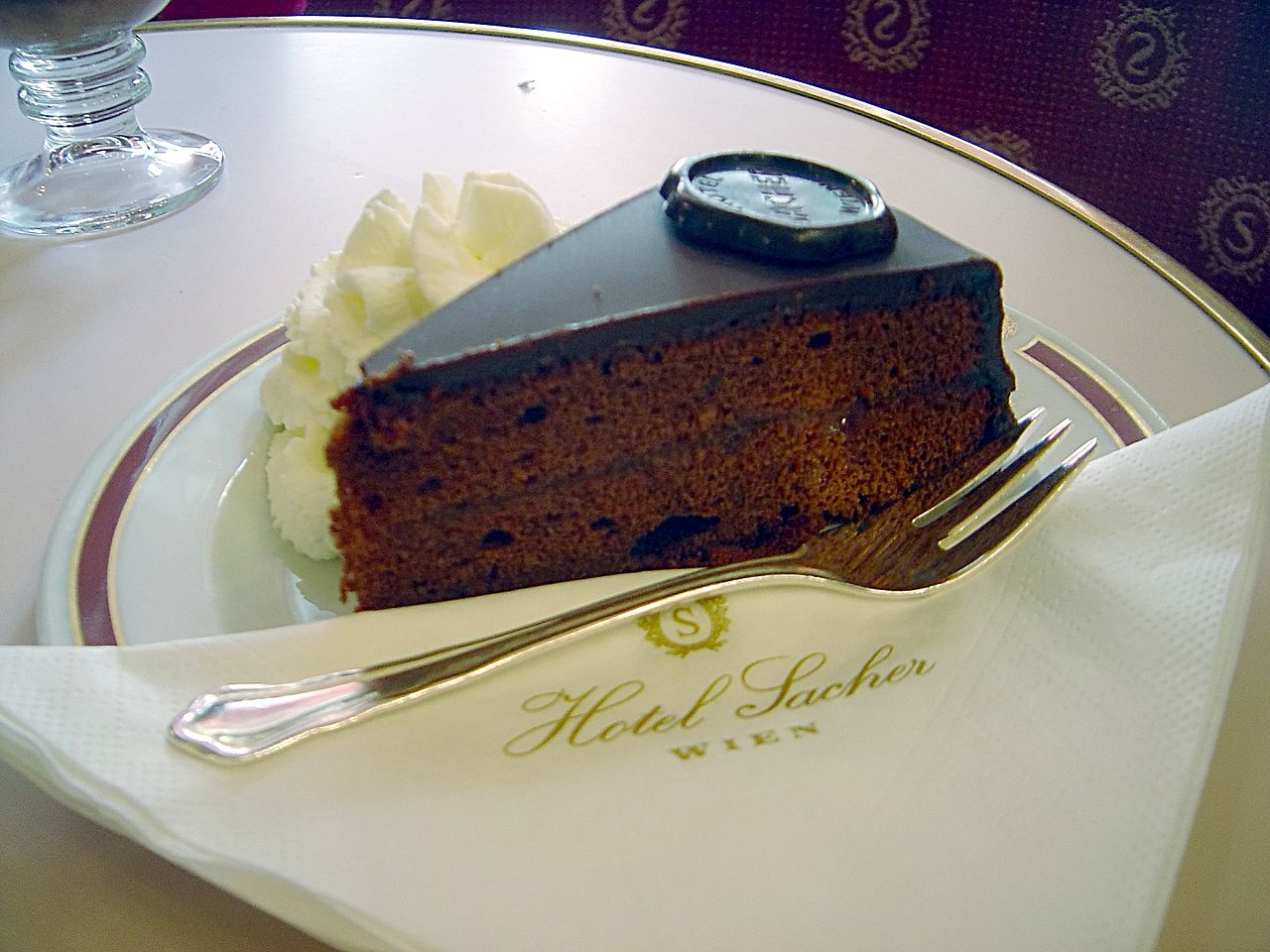
Sachertorte · David Monniaux / CC BY-SA 3.0Save the most Viennese ritual for last: a proper coffeehouse breakfast and the definitive slice of chocolate cake.
The home of the original Sachertorte, a dense chocolate-apricot cake served with unsweetened whipped cream, behind the Opera. A touristy but genuinely special send-off; go at opening to avoid the queue, and pair it with a Wiener melange.
The former imperial confectioner on Kohlmarkt, a marble-and-glass patisserie where you can watch pastry chefs at work and choose from a jewel case of cakes. Its own version of the Sachertorte fuels a long-running rivalry with Sacher.
Use your final free morning for one last easy stroll and any souvenir shopping before collecting your bags.
A green walk through the Stadtpark past the golden Strauss statue, or a ride around the grand Ringstrasse on trams 1 and 2 to see the Opera, Rathaus, Parliament and University one more time. A relaxed, low-commitment way to say goodbye.
Pick up Austrian chocolate, coffee or Augarten porcelain along the elegant lanes between the Hofburg and Stephansplatz. Central and quick before you head to the airport.
Have a final light Viennese lunch near the center, then make for the airport (allow about an hour door-to-gate via the CAT or S7 from Wien Mitte).
A grand Ringstrasse coffeehouse since 1873, once Freud's regular, with a full menu of Viennese classics and a lovely terrace. A civilized last lunch with reliable schnitzel and goulash before departure.
If time is short, duck into this century-old counter for a few open-faced sandwiches and a mini beer, a quick and quintessentially Viennese bite on your way out. Cheap and fast.
Pick your base
First-time visitors should base in the Innere Stadt (District 1), the walkable historic core around Stephansdom and the Hofburg, where you can stroll to most major sights. For better value with easy transit, the streets just outside the Ring near the Staatsoper, Karlsplatz or the Naschmarkt (Districts 4 and 6) put you one or two U-Bahn stops from everything. Families and travelers wanting more space often like the greener areas near Schonbrunn (District 13) or along the Danube.
A stylish, reliably comfortable design-budget hotel steps from the Opera and the Ring, with the Innere Stadt on your doorstep. Excellent value for the location, with a good breakfast buffet and cocktail-bar lounge.
A large, dependable hotel overlooking the Stadtpark with big rooms, a fitness center and the Landstrasse U-Bahn/CAT hub attached, making airport transfers painless. Good for those who want space and consistency near the center.
Set beside the Schonbrunn gardens and zoo in a leafy district, this is a calm, family-friendly base with parkland at hand and a quick U4 ride into town. Ideal if you want a garden-side retreat over city bustle.
A well-run, sociable hostel by the Naschmarkt with private rooms as well as dorms, a bar and easy transit. A smart pick for budget travelers and solo visitors who still want a central location.
Vienna's most storied grand hotel, home of the original Sachertorte and directly behind the Opera. A genuine splurge with old-world service, a spa and a legendary cafe if you want one iconic night.
Good to know
How many days do you need in Vienna?
Three to four days covers Vienna's headline sights like Schonbrunn, the Hofburg and the Belvedere. Ten days is generous but rewarding, letting you add museums, coffeehouses, concerts and day trips to the Wachau Valley and Hallstatt without rushing.
What is the best area to stay in Vienna for first-time visitors?
The Innere Stadt (District 1), the historic center around Stephansdom and the Hofburg, is the most convenient base because you can walk to most major sights. For better value, stay just outside the Ring near the Staatsoper, Karlsplatz or the Naschmarkt, which are one or two U-Bahn stops from the center.
What is the best time to visit Vienna?
Late spring (May-June) and early autumn (September-October) offer warm, comfortable weather and thinner crowds. July and August are lively with long evenings, garden concerts and open-air dining, though it can be hot and busy, while December brings famous Christmas markets and imperial atmosphere.
How do you get around Vienna?
Vienna's public transport is excellent: the U-Bahn, trams and buses are clean, punctual and inexpensive, and one travel pass covers them all. The historic center is compact and walkable, and the airport is 16 minutes away by the City Airport Train or about 25 minutes on the cheaper S7.
Is Vienna expensive?
Vienna is mid-range for Western Europe, generally cheaper than London, Paris or Zurich. Museums run roughly 15-22 EUR, a coffeehouse melange around 5-6 EUR, and a hearty schnitzel dinner 18-30 EUR; sausage stands, market lunches and the excellent transit passes keep costs down.
What day trips can you take from Vienna?
The most popular are the Wachau Valley with Melk Abbey along the Danube (about 1-1.5 hours away), the storybook lake village of Hallstatt in the Salzkammergut (a long full day), and cross-border trips to Budapest or Bratislava. Small-group tours handle transport and sell out in summer, so book ahead.
Ten days lets Vienna unfold at its own graceful pace: the imperial one-two of the Hofburg and Schonbrunn, Klimt at the Belvedere, candlelit concerts, market lunches, and unhurried afternoons over coffee and cake, with time still left for the Wachau's vineyards and the Alpine beauty of Hallstatt. It is a city best measured not in sights ticked off but in mornings spent lingering. Come hungry, wear good shoes, and let the coffeehouse rhythm set the tempo.