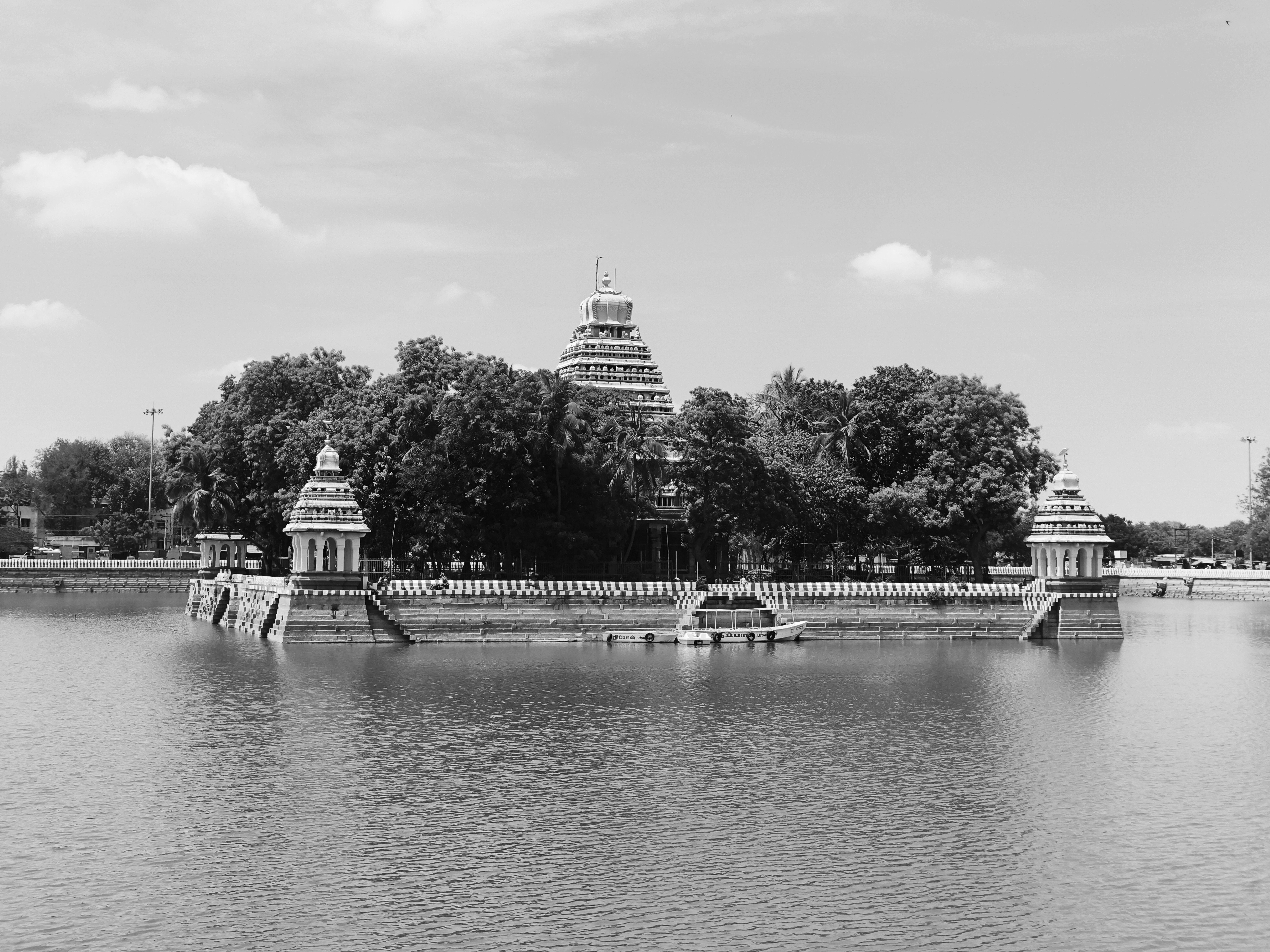
Temples, Tides & Tamil Flavors: A 5-Day Madurai to Rameswaram Journey
Trace 2,500 years of Dravidian devotion from Madurai's towering Meenakshi gopurams to the sacred sands of Rameswaram, with jigarthanda stops and a ghost town at land's end along the way.
5 days in Madurai, Rameswaram
Madurai is one of the oldest continuously inhabited cities on earth, a temple town on the Vaigai River that Greek and Roman traders knew by name more than two thousand years ago. Its heart is the Meenakshi Amman Temple, a riot of thousand-figure gopurams and torch-lit corridors that still pulses with ritual from before dawn until the night ceremony at 9pm. Beyond the temple gates lies a working bazaar city famous for tailors, flower sellers, and a street-food culture that treats mutton and the cold coffee-jelly drink jigarthanda as civic pride.
Four hours east, the land narrows to a thread of sand pointing toward Sri Lanka. Rameswaram, on Pamban Island, is one of Hinduism's holiest sites, home to the Ramanathaswamy Temple and its record-breaking pillared corridor, where pilgrims bathe at 22 sacred wells. Out at the tip sits Dhanushkodi, a cyclone-wrecked ghost town where the Bay of Bengal meets the Indian Ocean, and overhead arcs the new Pamban vertical-lift rail bridge, India's engineering showpiece.
Practically, fly into Madurai (airport code IXM), then travel to Rameswaram by car or the scenic train across the Pamban bridge. English gets you far, but a few Tamil words are warmly received. Dress modestly for temples (covered shoulders and knees; men often remove shirts for inner shrines), carry socks since stone floors bake in the sun, and note that cameras and sometimes phones are banned inside the main temples. The best months are November to February, when the heat eases; April and May are punishing.
Arrival, First Sight of Meenakshi & the Night Ceremony
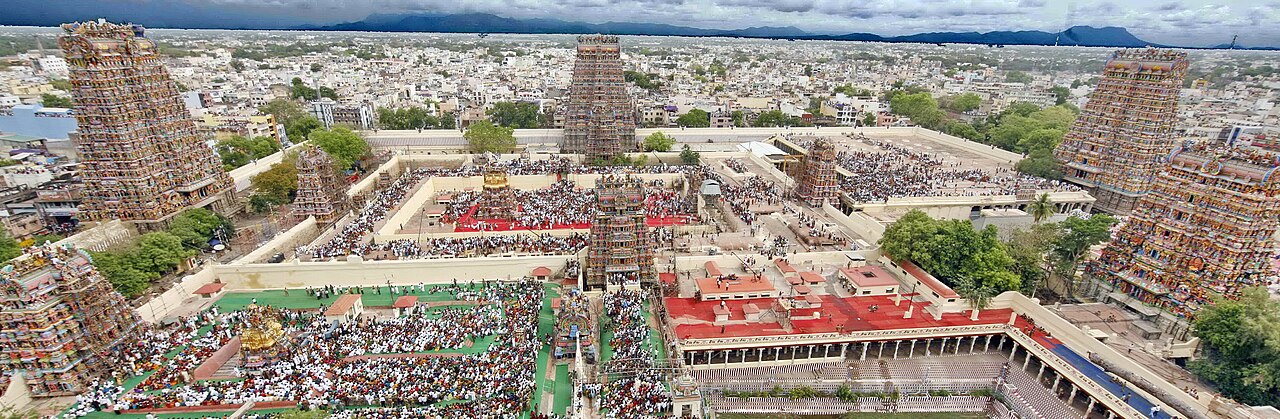
Meenakshi Temple · எஸ்ஸார் / CC BY 3.0Settle in, then make your first pilgrimage to the Meenakshi Amman Temple as the afternoon session opens around 4pm and the light softens on the carved gopurams. Leave cameras at the hotel (they are not allowed inside) and be ready to go barefoot.
The 14-acre temple complex is Madurai's soul: 14 gopuram towers dense with painted deities, the Hall of a Thousand Pillars, and shrines to the fish-eyed goddess Meenakshi and Lord Sundareswarar. Entry is free; a special darshan line costs a small fee, and you can hire a temple guide at the gate. Afternoon hours run roughly 4pm to 9:30pm.
The pillared 17th-century hall just east of the temple is now a warren of tailors and cloth merchants who can stitch a shirt in hours. A great low-key introduction to Madurai's mercantile buzz while you are near the temple.
Circle back for the temple's most atmospheric ritual, the Palliyarai Pooja, when an image of Sundareswarar is carried in procession to Meenakshi's chamber for the night, accompanied by drums and nadaswaram. A local storyteller-guide makes sense of the symbolism.
A small-group evening walk that explains the temple's legends and rituals before positioning you for the roughly 9pm Palliyarai (bedchamber) ceremony. The context transforms it from spectacle into meaning.
An alternative guided version of the night-ceremony experience for those who want a knowledgeable escort through the crowds to witness the procession. Good if the other option is sold out.
Ease into Madurai's food scene with something classic and unfussy near the temple. Vegetarians and meat-eaters are both spoiled here.
The Madurai institution that went national, still serving pillow-soft idlis, crisp dosas, and a spread of chutneys on banana leaf. Cheap, quick, and reliably excellent; expect a queue at peak hours.
A beloved non-veg mess famous for mutton chukka, kari dosa, and bold Madurai-style masalas. Casual, busy, and the real deal for local carnivore cooking; a full meal runs modest.
Cap the night with Madurai's signature cold drink, a ritual in itself.
Jigarthanda is Madurai's answer to falooda: milk, almond-gum jelly, homemade ice cream, and a dark syrup, served cold in a metal tumbler. This much-loved stall on East Marret Street is the classic place to try it.

Palaces, Museums, Markets & the Flavors of Madurai
Thirumalai Nayakkar Mahal · எஸ்ஸார் / CC BY-SA 3.0Start the Tamil way with filter coffee and a hot breakfast before the heat builds.
A local favorite for hearty morning tiffin and famous kari dosa; earthy, generous, and packed with regulars. Go early for the freshest batch.
A modern cafe for those who want a proper espresso or cold brew alongside their South Indian filter coffee, plus air-conditioning and Wi-Fi to plan the day.
Dig into Madurai's regal and political past. The Nayak-era palace and the Gandhi museum are the two must-sees beyond the temple, and both open by mid-morning.
A 17th-century palace of soaring stucco columns and a grand courtyard, blending Dravidian and Islamic design. Entry is about Rs 50 for foreigners; a Tamil-and-English sound-and-light show runs in the evenings if you want to return.
Housed in a 17th-century Nayak palace, this free museum tells India's freedom story and displays the blood-stained dhoti Gandhi wore when assassinated. Moving and well-curated; allow an hour.
Refuel with a proper Madurai meals plate or the city's legendary mutton.
Old-school non-veg mess known for mutton and chicken dishes served with soft parottas. A no-frills local institution where you eat well for very little.
A dependable pure-veg spot for a banana-leaf South Indian thali (unlimited meals) if you want the vegetarian counterpoint to Madurai's meat-heavy fame.
Trade the heat of the day for a guided walk through the bazaars and heritage lanes, when a storyteller reveals the layers behind the flower markets, temple tanks, and old merchant streets.
An excellent-value guided walk (from around $15) through Madurai's neighborhoods, local markets, and landmarks with an engaging local guide. Ideal for understanding the living city around the temple.
A private, air-conditioned car-and-guide option covering the Meenakshi Temple, Thirumalai palace, a potters' village, the Gandhi museum and a bazaar walk, if you prefer depth and comfort over walking.
Give yourself over to Madurai's greatest export: its street food. The city truly comes alive after dark, and a guided crawl gets you to the stalls locals trust.
A two-hour guided tasting through beloved food joints, sampling everything from kari dosa to Madurai's own snacks and sweets. Perfectly rated and a low-cost way to eat like a local without the guesswork.
A longer, deeply local food experience run by passionate hosts who take you to places no guidebook lists. The highest-reviewed food tour in the city if you want the full culinary immersion.
If the food crawl leaves room, or you skipped it, end with a sit-down dinner that shows Madurai's range.
A comfortable multi-cuisine option with strong Chettinad dishes and reliable service, good if you want air-conditioning and a calmer close to the day.
A long-standing veg eatery near the temple known for good thalis and North Indian favorites, handy for a quick, satisfying meal before an early start tomorrow.
Across the Pamban Bridge to Sacred Rameswaram
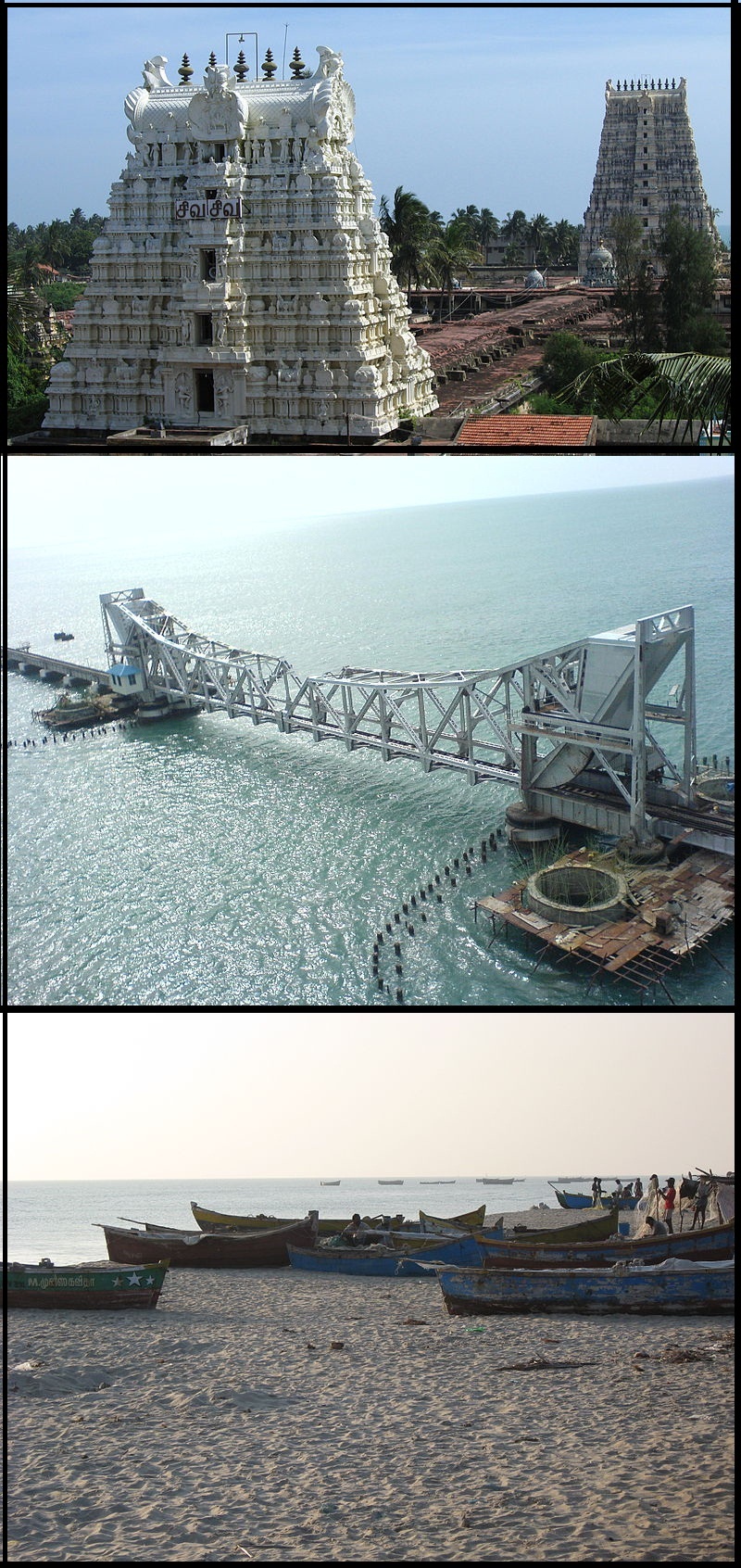
Rameswaram · user:Rockfang, user:எஸ்ஸார், user:Vinayaraj, user:Keyan20 / CC BY-SA 3.0Grab an early filter coffee and tiffin before the road trip east to the coast.
Fuel up with idli, vada, and coffee before the roughly 4-hour drive. An early start beats the heat and gets you to Rameswaram by lunch.
Make the journey to Pamban Island. The route runs through paddy country and salt pans before the dramatic causeway crossing to Rameswaram, one of India's great scenic approaches.
A private car covers the roughly 170 km in about 4 hours on good highway. The finale is the crossing to Pamban Island beside the historic Pamban rail bridge and the new vertical-lift bridge that opened in 2025. Arrange through your hotel for comfort and stops.
For a memorable alternative, trains connect Madurai to Rameswaram and glide across the sea on the Pamban bridge. It is slower and less flexible than a car, but the over-water crossing is unforgettable; check current schedules as the new bridge came into service in 2025.
Arrive on Pamban Island and eat near the temple, where seafood and Tamil meals dominate.
A popular vegetarian option close to the temple serving thalis, dosas, and North Indian dishes, good for pilgrims keeping to a sattvic diet.
Devote the afternoon to the Ramanathaswamy Temple, one of the holiest sites in India and the reason most pilgrims come. Its record-length pillared corridors are among the most photographed spaces in the subcontinent (though photography inside is restricted).
One of the twelve Jyotirlinga shrines to Shiva, famous for the longest pillared corridor of any Hindu temple, running over 1,200 meters with hundreds of carved columns. Devotees bathe at 22 sacred theertham wells inside before darshan; you can hire a guide at the gate to lead you through the ritual. Temple hours run roughly 5am to 1pm and 3pm to 9pm.
The sea shore directly east of the temple where pilgrims take a ritual sea bath at sunrise or sunset before entering. Even if you do not bathe, it is a photogenic, spiritually charged spot to feel the town's rhythm.
Wind down by the water as the fishing boats come in and the temple bells sound.
Stroll the temple-front shore as pilgrims perform evening rituals and vendors sell shells and snacks. A gentle, atmospheric close to a travel day.
Rameswaram dinners are simple and often vegetarian near the temple; seafood is best sought at hotel restaurants.
A clean, comfortable pure-veg multi-cuisine restaurant popular with travelers who want reliable quality and air-conditioning after a long day.
The best hotel dining in town, with a mix of South Indian, North Indian, and continental dishes and lovely views. A calm splurge on arrival night.

Land's End: Dhanushkodi, Kalam Memorial & the Pamban Bridge
Dhanushkodi · AttributionRise early for sunrise at the sea and a quick tiffin before heading to the island's wild eastern tip.
Watch pilgrims take their dawn sea bath as the sun rises over the Bay of Bengal, then grab coffee and idli at a nearby stall. A serene, quintessentially Rameswaram start.
Drive the ~18 km southeast to Dhanushkodi, the ribbon of sand pointing toward Sri Lanka. A cyclone destroyed the town in 1964, and its ruins now sit between two seas, reached by a road built across the shoals.
The abandoned town's roofless church and station stand against the surf, and at Arichal Munai, the very tip, the Bay of Bengal meets the Indian Ocean. It is windswept and otherworldly; go before midday for softer light and fewer crowds.
A private guided trail that links the Ram Setu viewpoint, Dhanushkodi, the bird sanctuary, the Kalam Memorial, and the temples, with a knowledgeable local to explain the mythology and history behind each stop.
Return toward town for a seafood or thali lunch after the salt and sun of the tip.
If you want air-conditioning and fresh seafood done well, the hotel restaurant is the most comfortable midday option on the island.
Honor the island's modern hero and take in its engineering marvel. Both are quick, meaningful stops.
A striking memorial to the beloved scientist-president, born in Rameswaram, displaying models of missiles and rockets, his personal effects, and exhibits on his life. Entry is free and it takes under an hour.
See the new vertical-lift Pamban rail bridge, opened in 2025 as India's first sea bridge of its kind, alongside the historic 1914 cantilever bridge it replaced. Time it with a passing train for the full spectacle.
Climb for a hilltop shrine and a wide view over the island before dusk.
The highest point on the island, crowned by a small shrine housing an imprint said to be Lord Rama's feet, with sweeping views across Rameswaram and the sea. Best at golden hour.
A colorful temple displaying floating stones said to be from Rama's bridge, a quick and popular stop for pilgrims and the curious alike.
Keep dinner easy on your last full night on the island.
Reliable pure-veg multi-cuisine dining with a calm atmosphere, a good choice to rest tired legs.
For fish and prawn done Tamil-style, ask your hotel to point you to the current best fresh-catch eatery near the temple; the daily catch varies and locals know which kitchen is on form.

Final Darshan & Departure
Ramanathaswamy Temple · Ssriram mt / CC BY-SA 4.0One last early morning by the sea, followed by coffee and tiffin before you pack up.
Join the pilgrims for a dawn dip or simply watch the ritual unfold, a fitting farewell to a town built on faith and tides.
Make a final, unhurried visit to the great temple for early darshan when the corridors are cool and less crowded, then collect your bags.
The temple opens around 5am; an early visit means quieter corridors and a calmer path to the sanctum. If you did the 22-well bath on arrival day, this morning is about a peaceful last look at the columns and shrines.
Have an early lunch near the temple before your journey out, timed so you can travel in the afternoon.
A quick, satisfying vegetarian meal near the temple before departure, with dosas and thalis served fast.
Depart Rameswaram by early afternoon. Most travelers return to Madurai to catch a flight or onward train.
Drive back to Madurai (about 4 hours, ~170 km) for an evening flight from IXM, or take the train across the Pamban bridge one last time. Confirm your onward flight or rail timings and allow buffer for the road.
Pick your base
For first-timers, staying within a short auto-rickshaw ride of the Meenakshi Temple (the old town / West Masi Street area) puts you at the center of the action and within reach of the night ceremony. For quiet and views, the hilltop hotels southwest of the center trade walkability for calm gardens and skyline vistas over the temple.
A leafy former club redesigned with private-pool villas and a strong restaurant, about 4 km from the temple. Calm, design-forward, and a good balance of comfort and character.
A Taj-group heritage property set on a 62-acre hilltop with sweeping views toward the Meenakshi gopurams at sunset. The colonial bungalow, gardens, and pool make it the city's iconic splurge.
A long-running, well-run business hotel a short walk from the temple, with a popular rooftop veg restaurant and a handy travel desk. Excellent value and location for pilgrims and first-timers.
The most polished hotel in town, with sea-facing rooms, a pool, and the island's best restaurant, a short drive from the temple. The reliable choice for comfort and service.
A well-run, pilgrim-friendly hotel with spacious rooms, a good pure-veg restaurant, and helpful arrangements for temple visits. Great for families and those who want dependable quality.
A clean, no-frills option close to the temple, popular with pilgrims for its location and value. Book direct for the best rates.
Good to know
How many days do you need for Madurai and Rameswaram together?
Five days is a comfortable amount, allowing two days for Madurai's temple, palace, museums and food scene, and two nights in Rameswaram for the Ramanathaswamy Temple, Dhanushkodi and the Pamban Bridge, with travel time factored in. With only three days you would have to choose one base and day-trip, which feels rushed.
How do you get from Madurai to Rameswaram?
It is about 170 km, roughly a 4-hour drive by private car or taxi, or you can take a train that crosses the sea on the Pamban bridge, which reopened as a new vertical-lift bridge in 2025. Madurai has the nearest airport (IXM); Rameswaram itself is served only by road and rail.
What is the best time to visit Madurai and Rameswaram?
November to February offers the most comfortable weather, with cooler days ideal for temple visits and Dhanushkodi. April and May are extremely hot, and the northeast monsoon can bring rain from October to December, so pack accordingly.
Can non-Hindus enter the Meenakshi Amman and Ramanathaswamy temples?
Yes, visitors of all faiths can enter most areas of both temples, though the innermost sanctums are typically reserved for Hindus. Dress modestly with covered shoulders and knees, remove footwear, and note that cameras and often phones are banned inside.
Is Rameswaram worth visiting for non-pilgrims?
Absolutely. Beyond the great temple, Rameswaram offers the surreal ghost town of Dhanushkodi where two seas meet, the moving Dr. A.P.J. Abdul Kalam Memorial, the spectacular Pamban rail bridge, and quiet beaches, making it rewarding for anyone drawn to history, engineering and dramatic coastal scenery.
What food is Madurai famous for?
Madurai is renowned for its street food, especially kari dosa, Madurai-style mutton dishes, and jigarthanda, a cold drink of milk, almond-gum jelly, ice cream and syrup. It is best explored on a guided food crawl or at institutions like Murugan Idli Shop, Amma Mess and Konar Kadai.
In five days you will have moved from the incense-thick corridors of Madurai's Meenakshi Temple to the ocean-swept ruins of Dhanushkodi, eating jigarthanda and Chettinad mutton along the way and bathing where pilgrims have bathed for centuries. It is a compact route that captures the devotion, flavor, and drama of deep-south Tamil Nadu. Travel modestly, rise early, and let the temples and tides set your pace.