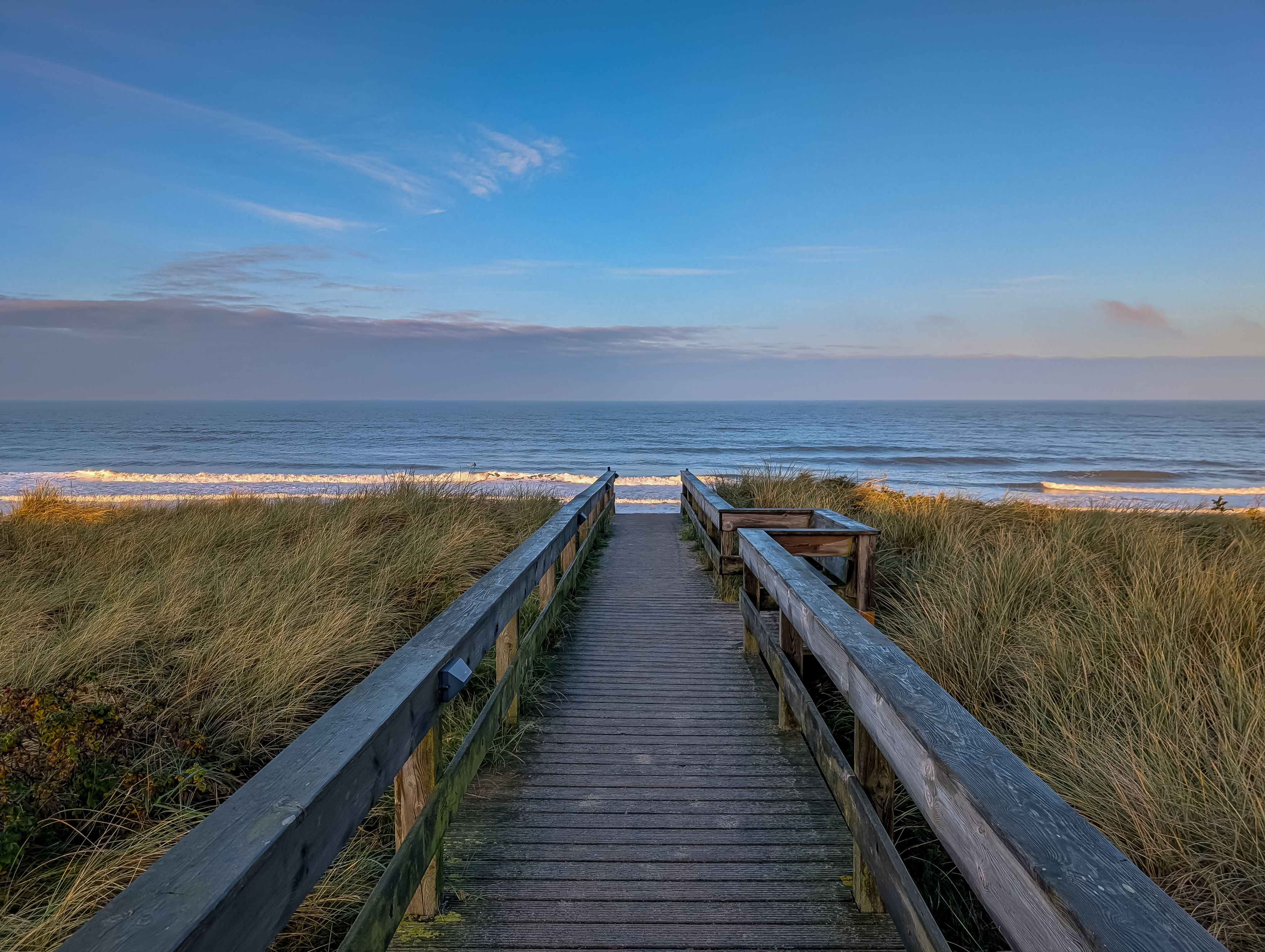
Sylt at an Easy Pace: A 5-Day Dog-Friendly Island Escape
Five unhurried days on Germany's most beautiful North Sea island, built around long dune walks, red cliffs, mudflat hikes, and a four-legged travel companion at your side.
5 days in Sylt
Sylt is Germany's northernmost island, a slim 38-kilometer ribbon of dunes, heath, and red-streaked cliffs sitting in the North Sea just below the Danish border. Connected to the mainland only by the Hindenburgdamm causeway, it has drawn writers, painters, and sun-seekers since the 19th century, and today it balances a glossy reputation with wide-open nature that costs nothing to enjoy.
The island's real luxury is space: roughly 40 kilometers of sandy beach on the west coast, the UNESCO-listed Wadden Sea on the east, and a network of marked walking paths through dunes and heathland that make it one of the finest places in Germany simply to wander. It is also famously dog-friendly, with dedicated dog beaches, water bowls outside shops, and hotels and restaurants that genuinely welcome a well-behaved Hund.
Getting here is half the fun: the Marschbahn train glides across the open sea to Westerland, and once on the island the local buses, cycle paths, and your own two feet cover everything. Pack for changeable weather (wind and sudden showers are part of the deal even in summer), bring layers, and plan around the tides if you want to walk the mudflats. Late spring through early autumn is the sweet spot, with long daylight and warm enough water for the brave.

Arrival in Westerland & First Steps on the Beach
Westerland, Germany · User Magnus Manske on de.wikipedia / Public domainDrop your bags, breathe in the salt air, and ease into island time with a stroll along Germany's grandest seaside promenade. Westerland's beach is wide, the air is bracing, and your dog will be as happy as you are.
The kilometer-long promenade above Westerland's main beach is the classic first walk on Sylt, passing the landmark Musikmuschel band shell and the curious sea-staring 'Reisende Riesen im Wind' sculptures. It is flat, easy, and free, with stairs down to the sand whenever you want to feel the North Sea on your feet. Sections of beach nearby are dog-friendly, so check the signs and let your Hund have a run.
Just south of the promenade, a network of boardwalks and sand paths winds through protected dunes, a gentler, quieter alternative to the busy beachfront. It is a lovely 30-45 minute amble to stretch your legs after the train.
Settle in with a sundowner. The west-facing coast means Sylt serves up a proper sunset over open water almost every clear evening.
A laid-back beach bar on the sand at Wenningstedt (a short bus ride or pleasant walk north), perfect for a cold drink as the sun drops. The mood is barefoot and easy, exactly the Entspannend vibe you are after, and dogs are welcome on the terrace.
A cliff-top beach bar in Kampen with sweeping sunset views, casual snacks, and a relaxed crowd. An easy place to toast the start of the trip.
Keep the first night simple and local. Sylt does fresh North Sea fish better than almost anywhere in Germany.
In a thatched 17th-century house, this cozy spot serves hearty North German classics like Friesentorte and fish in a beamed, candlelit room. Book ahead in summer; it is small and popular.

Kampen's Red Cliff & the Heights of the Uwe Dune
Kampen (Sylt) · Molgreen / CC BY-SA 4.0Start the day the Sylt way, with strong coffee and fresh-baked cake in one of the island's character cafes.
A Kampen legend set in a former WWII bunker with a sprawling sea-view garden, famous for copper-pot coffee and enormous slabs of cake. Arrive when it opens to beat the crowds; the terrace and garden are dog-friendly and unforgettable.
A classic Westerland Konditorei trading since the 19th century, known for its Bienenstich and traditional Frisian cakes. A good central option if you are basing in Westerland.
Today is your marquee hiking day, and it is an easy, scenic one. The Kampen coast strings together Sylt's most photographed natural sights along a flat cliff-top path.
The Rotes Kliff (Red Cliff) glows rust-red above the sea for nearly 4 kilometers near Kampen, and a marked path runs along the top with constant sea views. It is gentle, mostly level walking on sand and grass, ideal for an unhurried morning with the dog; sturdy shoes help on the soft sections.
The Uwe Düne is Sylt's highest natural point at about 52 meters, reached by roughly 110 wooden steps to a 360-degree panorama of island, sea, and Wadden Sea. It is a quick, rewarding detour off the cliff path and completely free.
Refuel near the dunes. Kampen and neighboring Rantum hold some of the island's most storied tables.
Sylt's most famous restaurant, a weathered wooden hut in the Rantum dunes with a world-class wine cellar and a cult following, serving everything from currywurst to lobster. Reserve well ahead, expect a scene, and ask for the dune terrace; dogs are welcome and mains span a wide range from casual to splurge.
A chic Kampen institution on the Whisky-Meile, good for a long, relaxed lunch of fish and Mediterranean plates with people-watching on the side. Pricey but iconic.
Spend the afternoon on the sand at a beach made for dogs and unwinding.
One of Sylt's classic free-spirited beaches near Kampen, with a long dog-friendly stretch where your Hund can run off-lead in designated zones. There is a beach bar for drinks and the dunes behind make for an easy onward wander.
In late summer the Braderuper Heide blooms purple; a flat, well-marked trail loops through the heath above the Wadden Sea, quiet and meditative. A lovely, easy hike if you would rather walk than sunbathe.
Stay in the Kampen-Wenningstedt area for dinner, or head back to your base for something low-key.
A relaxed cliff-top spot in Kampen with sunset views, fresh fish, and a terrace that suits an easy evening. Good mid-range cooking with a sea breeze.
The bistro of Westerland's grand old Stadt Hamburg hotel offers polished regional cooking in a more affordable setting than its Michelin-starred sibling. A relaxed, dependable dinner back in town.

The Wild North: List, the Ellenbogen & Seal Country
List auf Sylt · Ichwarsnur / CC BY-SA 4.0Grab breakfast before heading to Germany's northernmost village, List, at the top of the island.
A casual harbor-side spot in List for fresh rolls, coffee, and a view over the fishing boats before you explore the north. Easy and dog-friendly to start the day.
If your hotel includes breakfast, fuel up there and head north early; List is about 30-40 minutes from Westerland by bus or car and the morning light over the dunes is worth the early start.
Drive or bus out to the Ellenbogen, Sylt's remote northern tip, where dunes meet the open sea and the Wadden Sea on either side. This is the island at its most elemental.
A hook-shaped sand peninsula with two lighthouses, sweeping beaches, and grazing sheep, the Ellenbogen is a wonderfully wild, flat place to walk for as long as you like. Access by car is via a private toll road (around 6 EUR per vehicle); on foot and by bike it is free, and dogs love the space.
Between List and the Ellenbogen lie Central Europe's largest shifting sand dunes, which move several meters a year; marked paths let you walk among them while protecting the fragile landscape. A short, striking detour.
Lunch at the harbor in List, the source of Sylt's famous fresh oysters and shrimp.
The original Gosch location at List harbor bills itself as Germany's northernmost fish stand, serving fish rolls, fried plaice, and prawns right by the boats. Casual, lively, and dog-friendly, with quick bites from about 8-18 EUR.
Sylt's working oyster farm sits on the Wadden Sea near List, serving its prized Sylter Royal oysters with a view over the flats. A memorable, relaxed lunch for seafood lovers.
The shallow seas off List are home to harbor seals and grey seals. An afternoon boat trip is an easy, gentle highlight.
Adler-Schiffe and similar operators run boat tours from List harbor out to the sandbanks where seals haul out, lasting roughly 2 hours for around 18-25 EUR. It is a calm, scenic outing; well-behaved dogs are usually allowed aboard, so confirm when booking.
Prefer to stay on land? The broad western beach below List is one of the quietest on the island, perfect for a long, slow walk with the dog and the wind at your back.
Head back south and keep dinner relaxed and regional.
A friendly Westerland spot for fish, schnitzel, and North German comfort food at fair prices, an easy walk from central hotels. Good for an unfussy evening after a long day in the north.
A stylish but unstuffy Kampen restaurant known for grilled fish and meat over open fire, with a buzzy garden. A nice mid-to-upper splurge if you want one more memorable meal.

Frisian Keitum, Hörnum's Lighthouse & a Mudflat Hike
Sylt · edited by M.Minderhoud / Public domainBegin in Keitum, the green, thatched-roof village that locals call the most beautiful on Sylt.
Keitum's lanes hide several small cafes in old captains' houses where you can take coffee and Frisian tea under the trees. A peaceful, slow start in the prettiest corner of the island.
If you are staying in Westerland, grab a quick coffee and pastry near your hotel before the short bus or bike ride to Keitum (about 10-15 minutes).
Wander Keitum's leafy lanes, then walk its Wadden Sea shore. This is Sylt's gentle, historic heart.
Stroll past thatched 18th- and 19th-century captains' houses, rose gardens, and the medieval St. Severin church with its sweeping views over the flats. It is flat, shaded, and made for an aimless morning ramble with the dog.
A low cliff path and shoreline trail run along Keitum's eastern edge above the Wadden Sea, quiet and bird-rich, especially lovely at low tide. An easy, level walk of whatever length you fancy.
Eat near the south of the island ahead of an afternoon by the sea at Hörnum.
The little harbor at Hörnum has casual fish shacks and bistros serving the morning's catch with views of the boats. A relaxed, good-value lunch before the lighthouse.
For a more refined sit-down meal, Keitum's village restaurants do excellent fish and seasonal North German dishes in garden settings. A pleasant option if you linger in Keitum.
The day's centerpiece is a guided mudflat hike, the quintessential Wadden Sea experience, followed by Hörnum's lighthouse and southern beaches.
Led by Schutzstation Wattenmeer rangers, these barefoot walks across the exposed seabed reveal lugworms, crabs, and the rhythm of the tides in a UNESCO World Heritage seascape, typically 1.5-2.5 hours. Tours run on tide-dependent schedules for a small fee (often around 10-15 EUR), must be booked ahead, and never go alone, as tides come in fast.
At Sylt's southern tip, the red-and-white Hörnum lighthouse and the wild Odde nature reserve offer big skies, shifting sandbanks, and a peaceful end-of-island feeling. The walk out to the point is flat and dog-friendly.
Your last full evening; choose a memorable table or a cozy local favorite.
For a special send-off, the dining rooms at Severin's in Keitum deliver refined regional cooking in a handsome thatched setting. The upper end of the budget, but a fine finale.
Back in Westerland, a traditional Stube serving Labskaus, fresh fish, and Friesentorte makes for a warm, relaxed last dinner at fair prices. Dog-friendly and unpretentious.
A Slow Last Morning & Farewell to the Island
Sylt · edited by M.Minderhoud / Public domainNo rush this morning. Have a long breakfast and savor the salt air one more time before the train.
Take your time over coffee and rolls, then check out and store your bags at the hotel or station. Westerland's train station is central, so you can wander right up to departure.
One last slice of Bienenstich at this historic Westerland Konditorei is a sweet way to say goodbye to Sylt. A short walk from the station.
Squeeze in a final, easy walk by the sea before you leave. The dog will thank you for it.
Repeat the walk that opened your trip, this time at a goodbye pace, with the wind and the wide sand. Flat, free, and minutes from the station so you cannot miss your train.
A short bus ride north, the low cliff path at Wenningstedt offers a last sweep of sea views if you have an hour to spare before departure.
Grab a quick bite near the station, then board the Marschbahn back across the sea to the mainland.
A final fish sandwich to go is the perfect Sylt farewell, easy to eat on the move and just steps from the platforms. Quick, cheap, and unmistakably island.
The direct train from Westerland to Hamburg-Altona takes about 3 hours across the Hindenburgdamm causeway, roughly 45-65 EUR. Reserve a seat in summer and remember a small dog ticket if needed.
Pick your base
Westerland is the most practical base: it has the train station, the broadest beach, shops, restaurants, and the most dog-friendly hotels, all walkable. For something quieter and prettier, Keitum offers leafy lanes and Wadden Sea sunsets, while Rantum and Wenningstedt put you right among the dunes. First-timers and anyone arriving by train will find Westerland the easiest place to settle.
A friendly, well-run hotel in the center of Westerland, steps from the pedestrian zone and a short walk to the beach and train station. Dogs are welcome and the location makes a car unnecessary, ideal for a relaxed, walkable stay.
A relaxed resort-style property in Rantum with apartments, a pool, and direct access to dunes and the beach. The space and self-catering options suit families and longer stays, and it is set up for guests traveling with dogs.
Sylt's signature five-star retreat in genteel Keitum, with a large spa, Frisian-modern thatched architecture, and standout dining. A splurge worth it for a special occasion, and notably welcoming to dogs.
Reet-thatched cottages and dune-side apartments across Sylt rent well for groups, longer stays, and dog owners who want a kitchen and a garden. Book early for summer, as the island's rental stock fills months ahead.
Good to know
How many days do you need on Sylt?
Four to five days is ideal to see Sylt without rushing: enough time for the main villages (Westerland, Kampen, Keitum, List), a guided mudflat walk, a seal-watching trip, and plenty of unstructured beach and dune walking. A long weekend works for a taste, but the island rewards a slower pace.
Is Sylt dog-friendly?
Very. Sylt has dedicated dog beaches, water bowls outside many shops, and numerous hotels and restaurants that welcome dogs. In summer, dogs are restricted from some main bathing beaches, so look for the marked Hundestrand sections and keep dogs leashed in nature reserves and dune areas.
What is the best way to get to and around Sylt?
The easiest way is the Marschbahn train, which runs directly to Westerland across the Hindenburgdamm causeway (about 3 hours from Hamburg). The only road access is the Sylt Shuttle car-train from Niebühl. On the island, local buses, cycle paths, and walking cover everything, so a car is optional.
What is the best time of year to visit Sylt?
Late May through early September offers the warmest weather, longest daylight, and swimmable (if bracing) water, though it is also the busiest and priciest period. May, June, and September give a good balance of mild weather and fewer crowds, while autumn and winter are dramatic and quiet but windy and cold.
Where should first-time visitors stay on Sylt?
Westerland is the most convenient base for first-timers: it has the train station, the widest beach, the most shops and restaurants, and the largest choice of dog-friendly hotels, all walkable. For a quieter, prettier setting, Keitum and the dune villages of Rantum and Wenningstedt are excellent alternatives.
Is Sylt expensive?
Sylt has a reputation as Germany's most upscale island, and top hotels and famous restaurants can be very pricey. However, the island's best experiences (beach and dune walks, the heath, mudflat hikes, and casual fish stalls like Gosch) are affordable or free, so a mid-range trip is very doable with some planning.
Five days on Sylt is enough to fall into the island's slow rhythm: cliff walks and dune paths, a barefoot mudflat hike, fresh fish at the harbor, and your dog racing along an empty beach at sunset. It is one of Germany's most relaxing escapes, and with the train doing the hard work, all you have to do is breathe the salt air and wander. Komm gut nach Hause.