
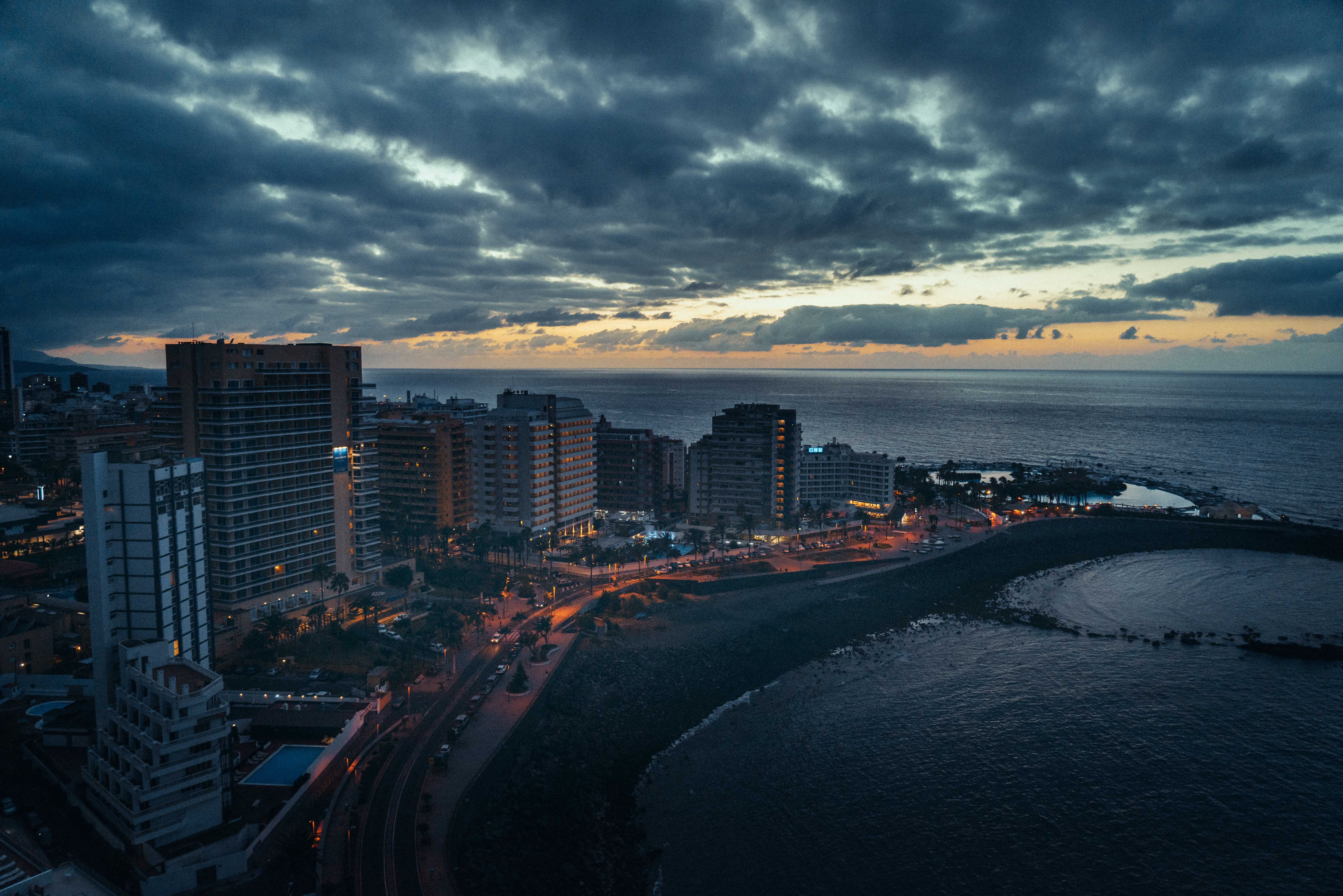
Santa Cruz de Tenerife is the working, lived-in capital of the largest Canary Island, a port city where cargo cranes, palm-lined ramblas, and Oscar Niemeyer-style architecture share the same skyline beneath the volcanic Anaga mountains. Founded after the Spanish conquest in 1494 and long a strategic Atlantic harbor (it famously repelled Admiral Nelson in 1797, who lost his arm in the attempt), the city today feels more Canarian than touristy, with its life centered on plazas, markets, and terrace bars rather than resort strips.
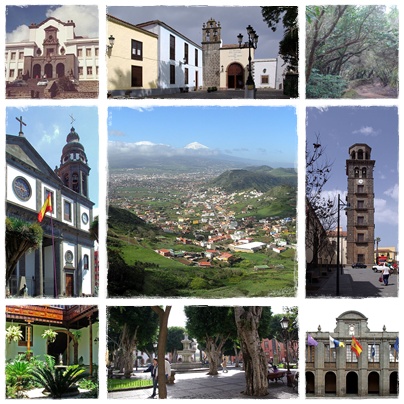
This is a place to live like a local: order a barraquito coffee, eat papas arrugadas with mojo, and time your visit around the second-biggest carnival on earth (February). The golden-sand beach at Las Teresitas, the UNESCO old town of La Laguna, and the primeval laurel forests of the Anaga Biosphere Reserve are all within a short bus or car ride, while Mount Teide, Spain's highest peak, looms on the horizon for the ambitious.
Getting here is easy: two airports serve the island (Tenerife North is 15 minutes from the city, Tenerife South about an hour), and the compact center is walkable, backed by the cheap and reliable TITSA guagua (bus) network and a single tram line to La Laguna. Spring through autumn brings warm, dry days in the low-to-mid 20s Celsius; the trade winds keep it comfortable, and prices sit below mainland Spanish resort levels, making a mid-range budget stretch nicely.
Compact, unpretentious, and genuinely Canarian, Santa Cruz rewards travelers who like to wander. Spend your days drifting between the flowering Parque Garcia Sanabria, the covered African market, and the sail-shaped Auditorio on the waterfront, then trade the city for a golden beach, a cloud forest, or a cobbled colonial town, all reachable in under an hour. Nights belong to the tapas terraces of the old quarter and the bar-lined Calle La Noria, where the city comes alive well past midnight.


Where to Stay
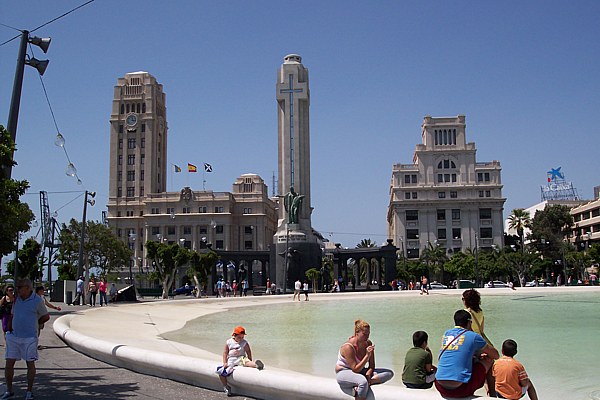
Base yourself in the city center between Plaza de Espana and Parque Garcia Sanabria: you will be walking distance from the market, the main shopping street (Calle Castillo), the old-town bars, and the tram to La Laguna. The area around Avenida de Anaga and the Rambla is quieter and leafy, while anything near Plaza de Espana puts you closest to the nightlife and the waterfront.
Silken Atlantida Santa Cruz
midrange GoogleA sleek, well-run modern hotel near Avenida Tres de Mayo and the Auditorio, with a rooftop area and easy access to the waterfront. Reliable comfort at a fair mid-range rate, and a short walk to the tram and old town.
Hotel Adonis Capital
budget GoogleCentral good-value choice steps from Calle Castillo and Plaza del Principe, putting the market, shops, and bars on your doorstep. Simple, clean rooms that leave more of your budget for seafood and boat trips.
Hotel Escuela Santa Cruz
boutique GoogleA design-forward hotel run partly as a hospitality training school, set on a quieter hillside with skyline views and unusually attentive service. A characterful, calm base a short taxi from the center.
Iberostar Heritage Grand Mencey
luxury GoogleThe city's iconic five-star grande dame, a 1950s landmark with subtropical gardens, a pool, and a spa near Parque Garcia Sanabria. The splurge pick if you want old-school elegance in the heart of town.
Central Santa Cruz apartment (VRBO)
family friendly GoogleFor families or groups, a self-catering apartment near Parque Garcia Sanabria or the Rambla offers kitchen space, laundry, and room to spread out at lower per-person cost. Handy for beach days and market shopping.
In four days Santa Cruz de Tenerife gives you the full Canarian mix: a golden beach and fresh-off-the-boat seafood, a UNESCO colonial town, cloud forests in the Anaga mountains, time on the water, and late nights on Calle La Noria, all at a pace and price that favor living like a local. It is a capital that rarely tries to impress tourists, which is exactly why it charms them. Come hungry, ride the tram, and let the trade winds set the tempo.