Purwokerto Unhurried: 8 Days at the Foot of Mount Slamet
A slow, flavor-soaked week through Banyumas: hot-spring valleys and forest waterfalls in Baturaden, the birthplace of tempe mendoan, a Dieng Plateau sunrise, and a temple-day escape to Yogyakarta.
8 days in Purwokerto
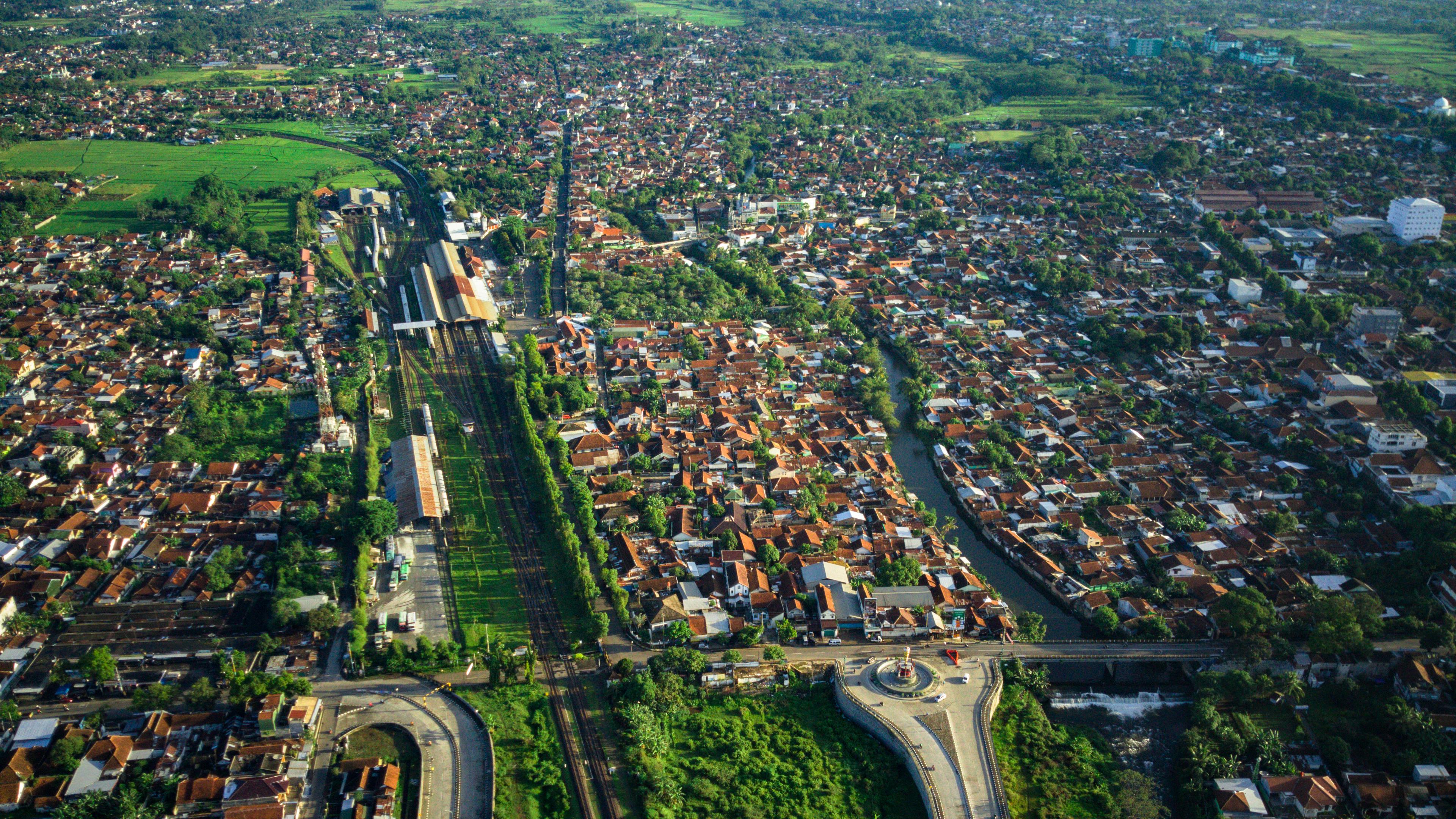
Purwokerto is the easygoing capital of the Banyumas region, spread across the southern skirt of Mount Slamet, Java's second-highest volcano. It rarely makes the front page of Indonesia guidebooks, and that is exactly its appeal: a student city with a big appetite, an old-fashioned town square, and cool green valleys just a short drive uphill. This is also where BRI, one of the country's largest banks, was founded in 1895, and where the beloved snack tempe mendoan (barely-fried, still-floppy fermented soy in a herby batter) is said to have been born.
The Banyumas people speak their own down-to-earth dialect of Javanese called Ngapak, blunt and funny where courtly Yogyakarta Javanese is soft and layered, and that plain-spoken warmth carries into the food and the welcome. Expect deeply local eating: sroto Sokaraja (soto brightened with peanut sauce and crackers), sate kelinci (rabbit satay) up in the hills, getuk goreng (fried cassava sweets) sold by the box in Sokaraja, and durian in season. Days are warm and humid in town, noticeably cooler and often misty around Baturaden and higher still on the Dieng Plateau, so pack a light layer.
Getting here is easiest by train: Purwokerto sits on the main Jakarta-Surabaya line, roughly 5 hours from Jakarta and about 3.5 hours from Yogyakarta, and the station is central. Around town, ride-hailing apps (Gojek and Grab) are cheap and everywhere, but for the waterfalls, Dieng, and the temple day you will want a hired car with driver. The best months are the drier stretch from May to September, when Slamet's summit is more likely to show itself and mountain roads are less slippery.

Arrival, the Old Town Square & a First Bowl of Sroto
Purwokerto · Nararya Danuwijaya / CC BY-SA 4.0Drop your bags and ease into Purwokerto on foot around its old heart. The pace here is gentle, so treat the first afternoon as an orientation stroll rather than a checklist.
The town's green central square, framed by the grand Baitussalam mosque and ringed by street-food carts that fill up toward dusk. Loop the square, watch families and students gather, and get your bearings; it is free and open all day.
A relaxed public park on the south side of town with shady lawns, food stalls, and a laid-back local crowd. A soft-landing alternative to the square if you want to sit with a snack and people-watch after the journey.
Settle in with a coffee at one of the student-driven cafes that give Purwokerto its evening buzz.
A popular garden cafe-and-eatery where locals linger over coffee and light meals in an open-air setting. Easy first stop to shake off travel and sample local beans from Slamet's slopes.
Go straight for the dish that defines Banyumas: sroto Sokaraja, a soto set apart by its sweet-savory peanut sauce, crumbled rice crackers, and ketupat.
One of the best-known names for sroto in the region, ladling out fragrant bowls layered with peanut sambal and kerupuk. Simple, busy, and cheap (a bowl runs only a couple of dollars); the benchmark against which you can judge every soto for the rest of the week.
A sit-down Banyumas restaurant serving mendoan, grilled fish, and Javanese classics in a garden setting, handy if you want a fuller first dinner with more variety. A comfortable introduction to regional cooking.
Baturaden: Waterfalls, Seven Hot-Spring Spouts & Rabbit Satay
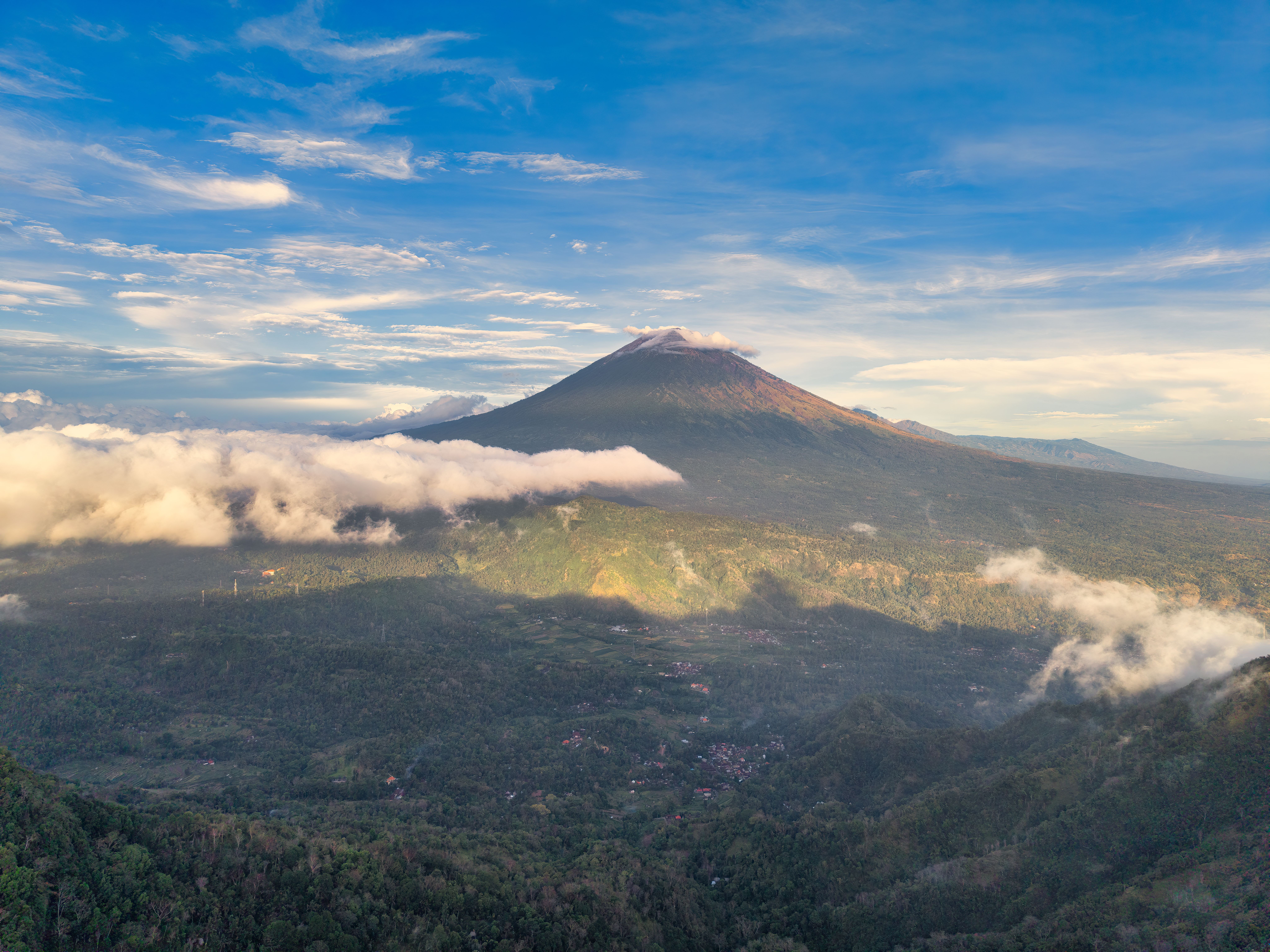
Breathtaking aerial view of Mount Agung among clouds in Bali, capturing the serene landscape. · Photo by Tom Fisk on PexelsFuel up before the drive uphill. Mornings in Banyumas practically demand mendoan, eaten hot with fresh chilies and sweet soy.
Start with your hotel spread, then grab a paper cone of just-fried tempe mendoan from a roadside warung on the way to Baturaden. The batter is intentionally under-fried and floppy, an acquired texture that quickly becomes an addiction.
Head about 30-45 minutes up the slopes of Mount Slamet to Baturaden, the cool resort town that has been Purwokerto's weekend escape for generations.
The classic Baturaden park, with the Curug Gumawang waterfall, walking paths, viewpoints, and a cable-car ride over the ravine. Entry is inexpensive (around 20,000-30,000 IDR); come early to beat the domestic-tourist crowds and the midday mist.
Lunch in the hills means Baturaden's signature: sate kelinci, skewers of tender rabbit grilled over charcoal and dressed in peanut sauce, served with warm rice as the cool air rolls in.
The roadside satay stalls clustered around the Baturaden entrance grill rabbit (and chicken, if you prefer) to order, smoky and cheap. Pair with hot ginger tea; the elevation makes it perfect.
Trade the crowds for steam and forest. The hillsides above Baturaden hide natural hot springs and a serene highland pool.
A short walk (or ojek ride) up from Lokawisata leads to seven natural hot-spring spouts steaming out of the mountainside, where locals dab on sulfur mud said to soothe the skin. The forest trail there is as much the point as the soak.
The 'silent lake,' a clear, cold spring-fed pool tucked in the forest a few kilometers from Baturaden, quieter and more photogenic than the main park. Best in dry weather when the water runs clear.
Back in town, keep it local and lively along Purwokerto's evening food streets.
The Kalibogor and Jalan Bank stretches fill with warungs serving sroto, sate ayam, and nasi goreng after dark. Graze between a couple of stalls for a proper Banyumas street dinner at pocket-money prices.
Botanical Gardens, Miniature Worlds & a Hidden Waterfall
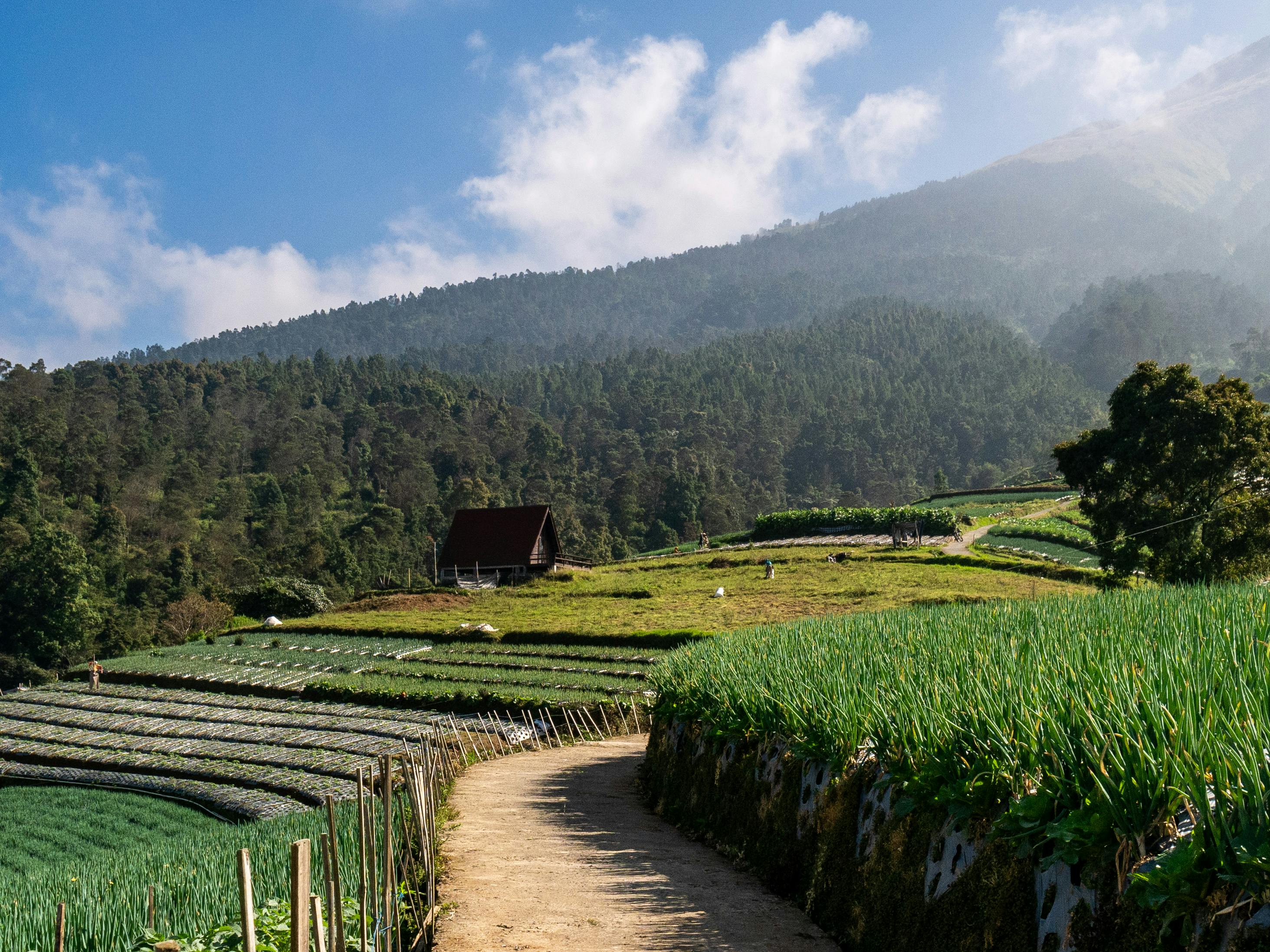
Breathtaking view of terraced fields and mountains in Central Java, perfect for nature and travel photography. · Photo by Wahyu Prabowo on PexelsAn easy start with good coffee before another day in the highlands.
A bright specialty-leaning cafe popular with Purwokerto's students and remote workers, good for a proper flat white and a light breakfast. A calm place to plan the day.
Spend the morning among the ferns and forest canopy of Central Java's mountain botanical garden.
A large, cool-climate botanical garden on Slamet's slopes with themed collections, shaded trails, and mountain views, part of Indonesia's national network of scientific gardens. Wear good shoes; the paths climb, and morning light through the trees is lovely.
Eat with a view where the valley opens up below the forest.
The hillside restaurants and rest areas around Baturaden serve Javanese standards (nasi liwet, grilled chicken, sayur) on terraces looking over the valley. Straightforward, scenic, and inexpensive.
Mix a little kitsch with a lot of nature. Baturaden's family attractions and a lesser-known waterfall make an easy, fun afternoon.
A miniature-landmarks theme park where world monuments are recreated at knee-height, a crowd-pleaser for families and a guilty-pleasure photo stop for everyone else. Ticketed and busy on weekends.
A picturesque waterfall in Ketenger village with suspension footbridges and river pools, quieter than the main Baturaden park. A short, rewarding walk into the greenery.
Reward the day's walking with a heartier sit-down meal in town.
Purwokerto's mid-range restaurants along the main avenues do generous plates of grilled and fried freshwater fish, ayam bakar, and sambals. Comfortable, air-conditioned, and good value.

Curug Cipendok & the Waterfall Country of Cilongok
Curug Cipendok · Crisco 1492 / CC BY-SA 3.0Grab breakfast early; the best light and the calmest crowds at Cipendok come before mid-morning.
Start with bubur ayam (chicken rice porridge) from a street vendor and a strong local coffee. Light and quick before the drive west toward Cilongok.
Drive about an hour west into the forested highlands of Cilongok to one of Banyumas's most dramatic waterfalls.
A powerful 90-meter waterfall plunging into thick rainforest, reached by a short forest trail from the parking area (entry is only around 20,000 IDR). The spray, the cool air, and the birdsong make it the region's most memorable falls; wear grippy shoes as the path can be muddy.
Eat simply near the falls or back toward town, where warungs specialize in the crisp, spicy fare that suits a day in the hills.
The stalls at the Cipendok entrance serve hot mendoan, indomie rebus, grilled corn, and coffee, exactly what you want after the trail. Cheap, cheerful, and perfectly placed.
Choose your own adventure for the afternoon: adrenaline on the river or a relaxed soak in a highland pool.
The Serayu, one of Java's classic whitewater rivers east of Purwokerto, offers half-day rafting through Grade II-III rapids with several established operators. Book a morning slot in advance in the dry season; it is one of Central Java's best-value adventures.
If you would rather stay mellow, head back toward Baturaden for a late-afternoon soak at the hot-spring spouts or a swim at the forest lake. A gentle close to an active day.
Keep dinner comforting and warm after a day outdoors.
Round out the day with another bowl of sroto and, in durian season (roughly December-March), a bowl of es duren (durian ice) from a Purwokerto vendor. A true Banyumas indulgence.
The Dieng Plateau: Ancient Temples, Colored Lakes & Sulfur Craters
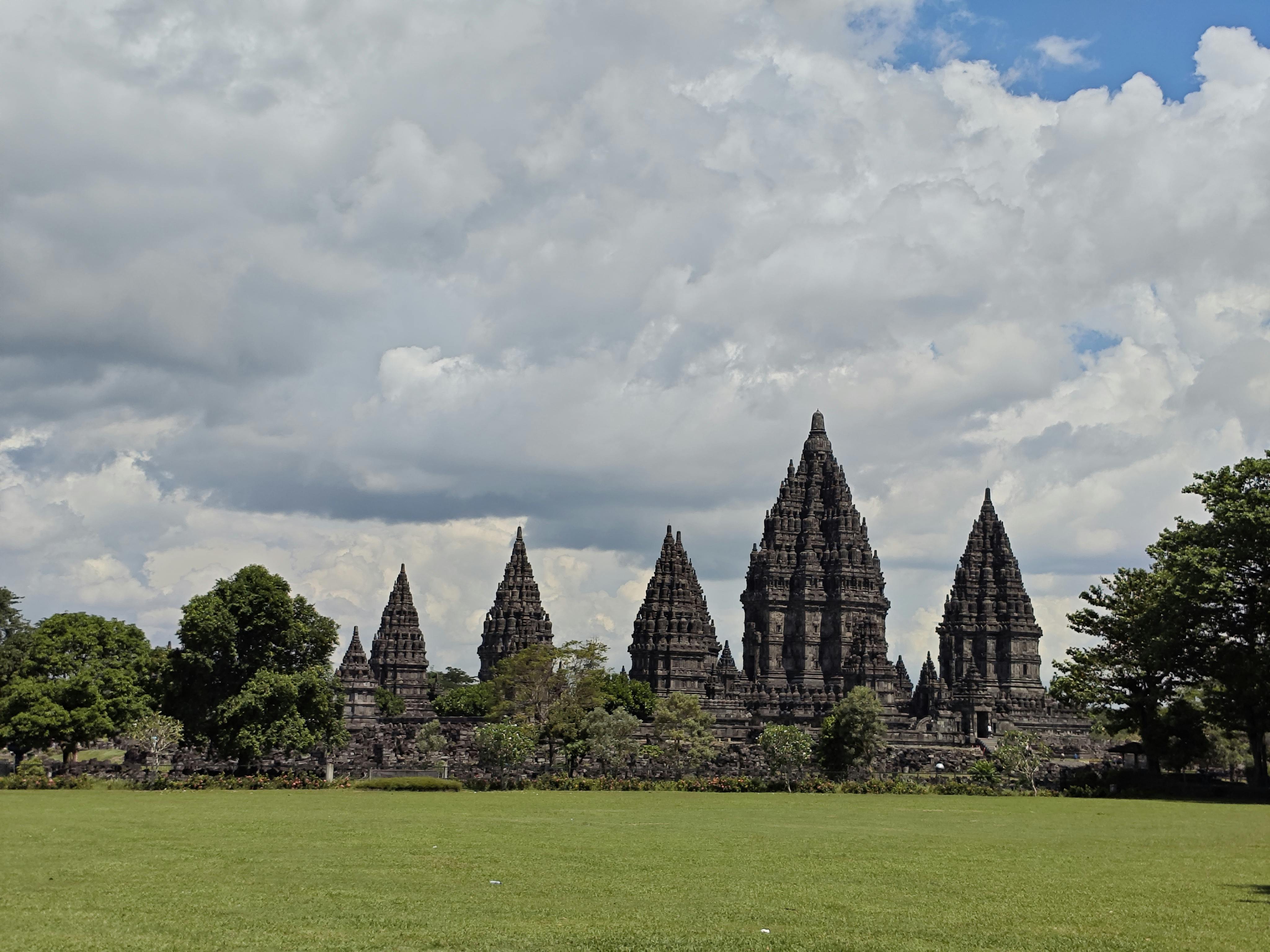
Majestic view of the Prambanan Temple, a UNESCO World Heritage Site in Java, Indonesia. · Photo by Dedy Rahmat on PexelsGive a full day to the Dieng Plateau, a volcanic highland caldera about 2,000 meters up and roughly 2.5-3 hours northeast of Purwokerto (via Wonosobo or Banjarnegara). It is cold, otherworldly, and unlike anywhere else in Java: the oldest Hindu temples in the country stand amid steaming vents, turquoise lakes, and terraced potato fields. Hire a car with driver for the day and start early to beat the afternoon cloud.
A cluster of small, weathered 8th-century Hindu temples set on a grassy plain, among the oldest surviving stone temples in Indonesia. The scale is intimate and the setting, ringed by hills and mist, is unforgettable. A combined Dieng ticket covers several sites.
Telaga Warna is a mineral lake that shifts between green and turquoise, best viewed from the Batu Pandang overlook; Kawah Sikidang is an active sulfur crater where you can walk near bubbling mud on boardwalks. Bring a mask or scarf for the sulfur and a warm layer for the wind.
If you are willing to leave Purwokerto around 2-3am, the short pre-dawn climb at Bukit Sikunir delivers Dieng's famous 'golden sunrise' over a sea of clouds and distant volcanoes. It is a big commitment on a day trip; consider an overnight in Dieng or Wonosobo to do it comfortably.
Temple Day: Borobudur & Prambanan via Yogyakarta
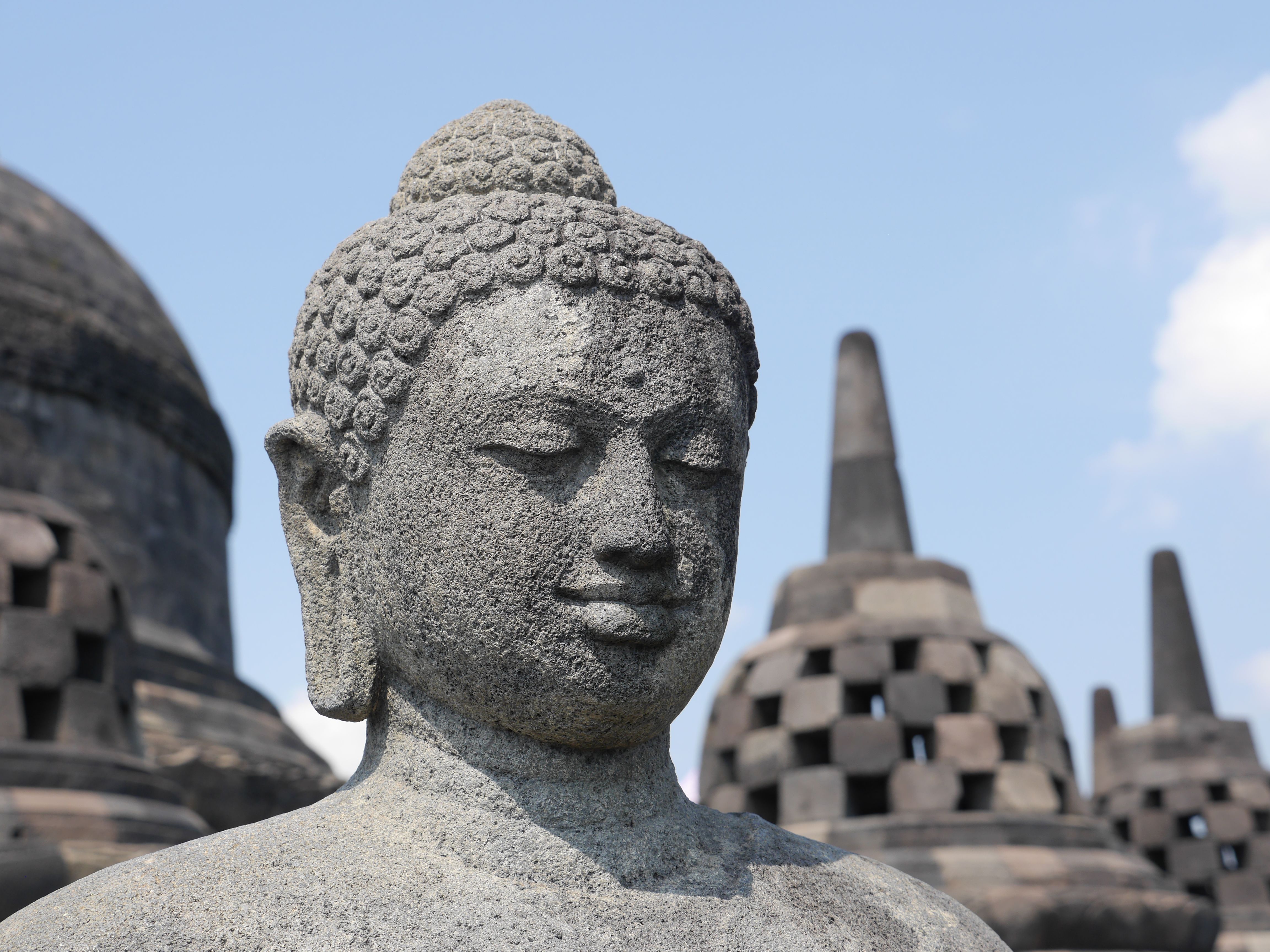
Stone Buddha statue at Borobudur under a clear blue sky. Iconic religious landmark. · Photo by Giant Asparagus on PexelsCentral Java's two great UNESCO temples sit near Yogyakarta, about 3.5 hours from Purwokerto by train. It is a long but rewarding day: take an early train (or, better, consider spending the night in Yogyakarta and returning the next morning to do it justice). A guided small-group tour from Yogyakarta handles the logistics, timed climb tickets, and transport between the two sites.
The efficient way to see both temples in one day: climb the terraces of Borobudur, the largest Buddhist temple on earth, then explore the soaring Hindu spires of Prambanan, with transfers and entry sorted. Climbing to Borobudur's upper levels requires a special timed ticket that this package includes; slots are limited, so book ahead.
For those overnighting in Yogyakarta, this fuller version adds a Setumbu Hill sunrise over Borobudur and a Mount Merapi jeep leg to the two temples. A packed, spectacular day best paired with a night near the temples rather than a same-day return to Purwokerto.
Sokaraja Food Trail, BRI Museum & Banyumas Culture
Purwokerto · Nararya Danuwijaya / CC BY-SA 4.0Ease back into Purwokerto with a slow local breakfast after the big temple day.
Seek out a warm bowl of local rice or porridge with a glass of Slamet-slope coffee to start gently. A restorative morning after yesterday's early train.
Dive into the story of the region at the museum where Indonesia's biggest microfinance bank began, right here in Purwokerto.
A surprisingly engaging small museum marking the 1895 founding of Bank Rakyat Indonesia in Purwokerto, with old ledgers, currency, and colonial-era artifacts. Quick, free or very cheap, and a neat window into the town's outsized place in national history.
Devote lunch to Sokaraja, the town just east of Purwokerto that gave sroto its name and getuk its fame.
Eat sroto at its source along Sokaraja's main road, where rival warungs have perfected the peanut-sauce soto for generations. Order it with sate and a plate of kerupuk for the full effect.
Shop the sweet stuff and, if you like, browse Banyumas batik, which favors bold, earthy motifs distinct from Yogyakarta's court styles.
The most famous name for getuk goreng, fried palm-sugar cassava sweets sold warm by the box; the Sokaraja strip is lined with vendors, and this is the benchmark. Buy extra for the trip home.
Banyumas batik uses darker indigos and browns and a freer, folk aesthetic; small workshops and shops around Sokaraja and Banyumas town sell it and sometimes demonstrate the wax-and-dye process. A meaningful, portable souvenir.
For your last full evening, settle into Purwokerto's most enjoyable dinner-and-dessert crawl.
Graze the angkringan (cart-style eateries) around the alun-alun for sate, nasi kucing, and grilled snacks, then finish with es duren or a bowl of dawet ireng, the region's black-hued sweet drink. A fitting, unpretentious farewell to Banyumas eating.
Pick up nopia and mino, the hollow baked sugar pastries traditional to Banyumas, from a local producer to round out your edible souvenirs. Light, unusual, and very local.
Slow Morning & Departure
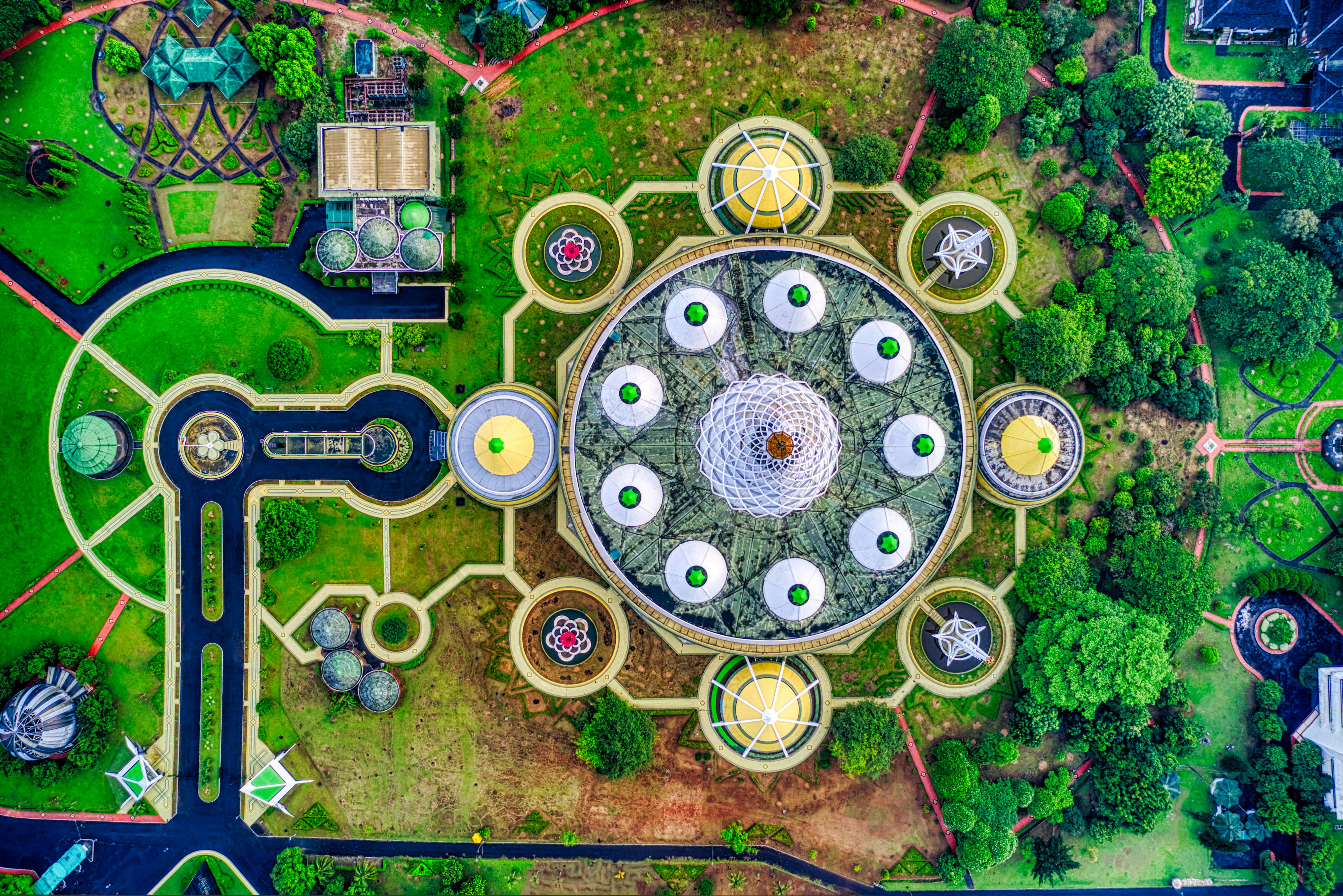
Colorful aerial shot of Taman Mini Park's unique design in Jakarta, Indonesia. · Photo by Tom Fisk on PexelsTake one last unhurried Banyumas breakfast before you head to the station or airport.
You cannot leave Purwokerto without a final round of hot mendoan and local coffee. Simple, cheap, and the taste you will miss most.
Stretch your legs and pick up any last edible gifts before travel.
A gentle final walk through the city's riverside park, with time to grab boxed getuk goreng, nopia, or Slamet coffee for the road. Relaxed and central to the station.
Swing through a Sokaraja or town-center shop for last-minute getuk goreng and batik before you depart. Everything travels well.
Have an early, easy lunch near the station, then make your onward train or flight.
One last bowl of sroto Sokaraja near Purwokerto Station is the perfect send-off, quick and satisfying before you board. Time it about 60-90 minutes before departure.
Pick your base
Base yourself in central Purwokerto near Jalan Jenderal Sudirman, the alun-alun, and GOR Satria for the best mix of restaurants, cafes, malls, and quick access to the train station and highways out to the waterfalls and Dieng. If you would rather wake up in cool mountain air, spend a night or two in Baturaden, about 30-45 minutes uphill, where hot-spring resorts sit right at the forest edge; it is quieter and cooler but further from the city's food and nightlife.
A polished 4-star hotel on Jalan Jenderal Sudirman with a colonial-Javanese design, rooftop pool, and one of the town's better breakfast spreads. Central for the alun-alun, malls, and dinner, and an easy pickup point for day trips.
A reliable, well-run business hotel near GOR Satria with a pool, gym, and good on-site dining, walkable to cafes and the Rita SuperMall. A safe, comfortable pick for first-timers who want everything close.
Bright, modern rooms at a friendly price in a central location off Jalan Sudirman. Strong value for travelers who plan to spend most of the day out at waterfalls and markets.
A hot-spring resort set into the cool forest above Baturaden, with hinoki-style soaking tubs and mountain views. Ideal if you want to swap city noise for mist and birdsong for a night or two.
For families or groups, a private villa in the Baturaden hills gives you a kitchen, garden, and cool nights close to the botanical garden and waterfalls. Good for longer, slower stays.
Good to know
How many days do you need in Purwokerto?
Three to four days is enough to cover Purwokerto itself plus Baturaden's waterfalls and hot springs and a food day in Sokaraja. A week, as in this itinerary, lets you add day trips to the Dieng Plateau and to the Borobudur and Prambanan temples near Yogyakarta at a relaxed pace.
What is the best area to stay in Purwokerto for first-time visitors?
Central Purwokerto near Jalan Jenderal Sudirman, the alun-alun, and GOR Satria is the most convenient base, with the best cafes, restaurants, malls, and easy access to the train station and highways. For cooler air and a nature-first stay, spend a night or two up in Baturaden, about 30-45 minutes uphill.
How do you get to Purwokerto and get around once there?
Purwokerto sits on Java's main rail line, roughly 5 hours by train from Jakarta and about 3.5 hours from Yogyakarta, and the station is central; limited flights also serve nearby Jenderal Soedirman Airport in Purbalingga. In town, Gojek and Grab ride-hailing are cheap and easy, but hire a car with driver for waterfalls, Dieng, and the temple excursion.
What food is Purwokerto known for?
The Banyumas region is famous for tempe mendoan (lightly fried, still-floppy battered tempe), sroto Sokaraja (soto with a sweet-savory peanut sauce and rice crackers), getuk goreng (fried palm-sugar cassava sweets from Sokaraja), and sate kelinci (rabbit satay) in the Baturaden hills. Nopia and mino pastries and, in season, durian round out the local specialties.
Is the Dieng Plateau doable as a day trip from Purwokerto?
Yes, Dieng is about 2.5-3 hours northeast of Purwokerto and works as a long day trip by hired car, covering the Arjuna temples, Telaga Warna, and Kawah Sikidang crater. If you want the famous Sikunir sunrise, it is more comfortable to overnight in Dieng or Wonosobo, since that requires a pre-dawn start.
When is the best time to visit Purwokerto and Mount Slamet?
The drier months from May to September are best, with clearer mountain views, safer trails, and less rain for waterfalls and Dieng. Expect warm, humid days in town year-round and noticeably cooler, often misty conditions in Baturaden and cold mornings on the Dieng Plateau.
Purwokerto rewards travelers who slow down: a week here means misty waterfalls on Mount Slamet's slopes, steaming hot springs, the surreal Dieng highlands, a temple day within reach of Yogyakarta, and more mendoan, sroto, and getuk goreng than you thought possible. It is one of the last corners of Central Java where you can eat superbly, wander freely, and rarely see another foreign face. Come hungry, pack a light jacket for the hills, and let Banyumas set your pace.