Peru in 17 Days: Lima, the Colca Canyon, Lake Titicaca, Cusco & Machu Picchu on a Budget
A dry-season grand loop from ceviche in Lima to condors over Colca, floating islands on Titicaca, and sunrise at Machu Picchu, built for travelers who want the classics without the luxury price tag.
Peru packs three worlds into one country: a fog-wrapped Pacific coast that gave the world ceviche and Nobel-nominated cooking, a spine of Andes topped by Inca stonework and glacier lakes, and the green edge of the Amazon. This loop threads the greatest hits, from Lima's kitchens to the deepest canyons on earth, the highest navigable lake, and the ruin everyone comes for, Machu Picchu. Seventeen days is enough time to do it without sprinting and to let your body adjust to serious altitude along the way.
You are traveling in the Andean dry season (roughly May to September), which is the single best window for the mountains: crisp blue-sky days, little rain on the Inca trails, and the clearest chance of condors over Colca. The trade-off is cold nights (near freezing in Cusco, Puno, and the Colca highlands) and Peru's busiest tourist stretch, sharpened by the Fiestas Patrias independence holidays at the end of July. Lima, by contrast, sits under its winter garua, a soft grey overcast with cool, damp air around 15-19C. Pack in layers: sun hat and high-SPF sunscreen for intense high-altitude UV, plus a warm jacket, gloves, and a hat for after dark.
Getting around is straightforward and, done right, cheap. Long-distance buses (Cruz del Sur, Peru Hop, and the tourist services between Arequipa, Puno, and Cusco) are comfortable and a fraction of flying, while a couple of short domestic flights save days you would rather spend exploring. Eat like a local to stretch a budget: the fixed-price menu del dia lunch runs about 12-30 soles, and markets and street stalls are where the best flavors hide. Altitude is the real thing to respect here, so this plan climbs gradually and builds in easy days before the big hikes.
Lima
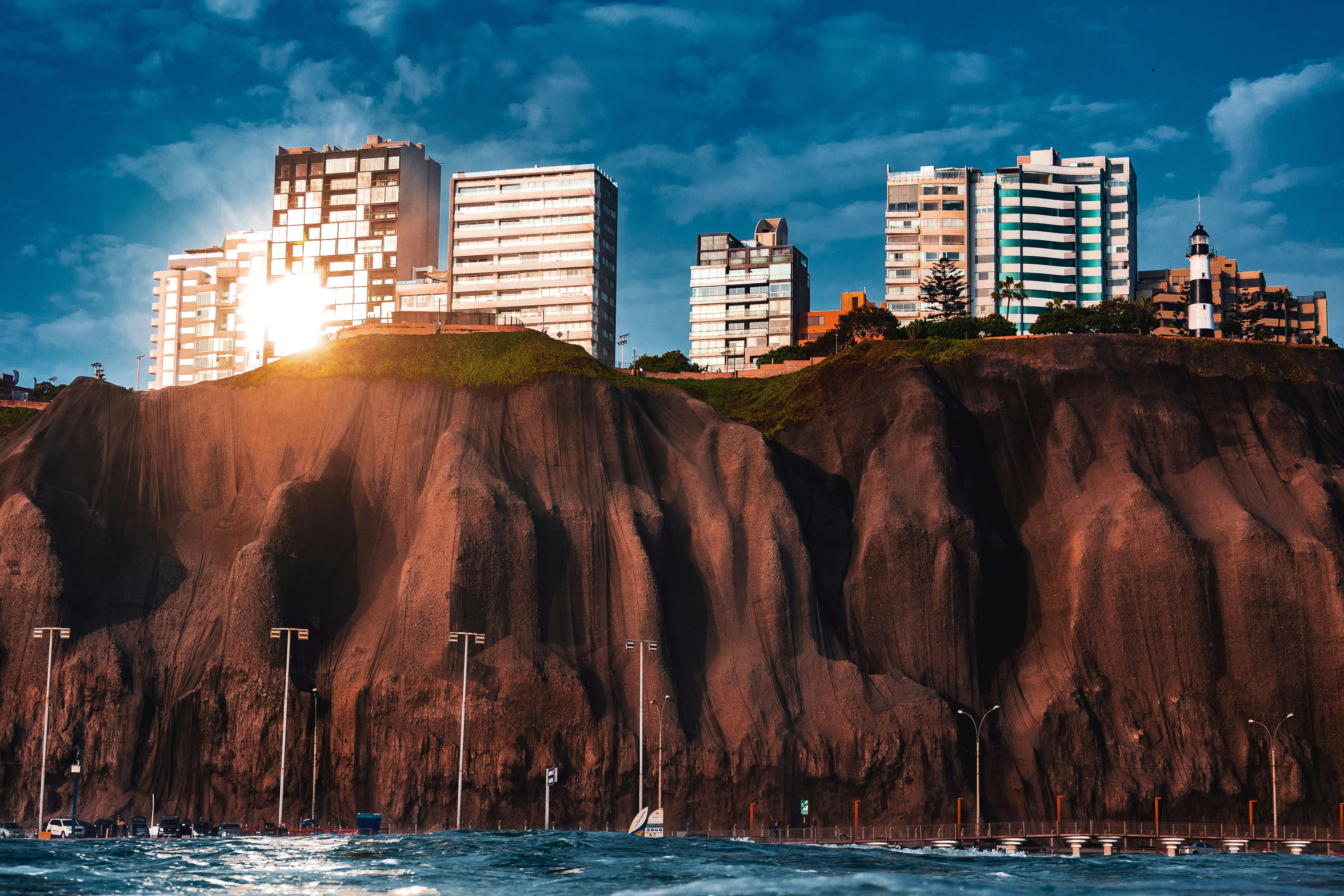
Peru's sprawling capital rewards anyone who slows down for it. Come for the food first: Lima is routinely called the culinary capital of South America, and you can eat brilliantly for a few soles or a small fortune. Base yourself on the coast in Miraflores or bohemian Barranco, walk the clifftop malecon above the Pacific, and dip into a historic center laced with baroque churches and bone-lined catacombs.
Getting there by planeFly into Jorge Chavez International (LIM). A taxi or app car (Uber/Cabify) to Miraflores takes 45-70 minutes depending on traffic and runs roughly 45-70 soles ($12-19); the official airport taxi desks are pricier.View on Trip.com
Day 1
Arrival in Lima: Miraflores Clifftops & First Ceviche
Ease in gently after the flight. Drop bags in Miraflores and walk the Malecon, the clifftop park path that runs for kilometers above the Pacific, catching paragliders launching off the bluffs.
Parque del Amor & the Miraflores Malecon Google
4.5 · 30,727 reviews · Miraflores
A free clifftop stroll past the mosaic-tiled Parque del Amor and its giant kissing-couple sculpture, with big Pacific views (softened by winter mist this season). Continue to Faro la Marina lighthouse and watch paragliders ride the updrafts off the cliffs.
A remarkable adobe pyramid from the Lima culture rising out of a Miraflores residential block, dating to around 400 AD. Entry is about 15 soles; late afternoon light is best and evening guided visits run when open.
Settle into the rhythm of Parque Kennedy, the buzzy central square where cats lounge and street artists gather.
Parque Kennedy & Parque 7 de Junio Google
4.5 · 24,623 reviews · Miraflores
Miraflores's linked central parks, ringed by cafes and famous for their resident colony of cats. A relaxed spot to people-watch and find your bearings on the first night.
Keep the first night simple, fresh, and cheap with two Lima institutions loved by locals.
La Lucha Sangucheria Google
4.6 · 11,431 reviews · Miraflores
A Miraflores classic for chicharron (crispy pork) and roast-turkey sandwiches with hand-cut fries and fresh chicha morada, for around 20-30 soles. Fast, casual, and open late right by Parque Kennedy.
A well-priced sit-down cevicheria beloved by Limenos for generous ceviche, tiradito, and arroz con mariscos. Mains run roughly 35-55 soles; arrive early as queues build.
Start with proper Peruvian coffee before heading downtown.
Arabica Espresso Bar
Miraflores
A bright, minimalist spot in Miraflores/Barranco pouring some of Lima's best single-origin espresso, sourced from Peruvian highland farms. A good flat white runs about 12-15 soles.
La Panetteria
Miraflores
A dependable neighborhood bakery-cafe for fresh croissants, eggs, and coffee before a busy sightseeing day, with breakfast sets around 20-30 soles.
Morning
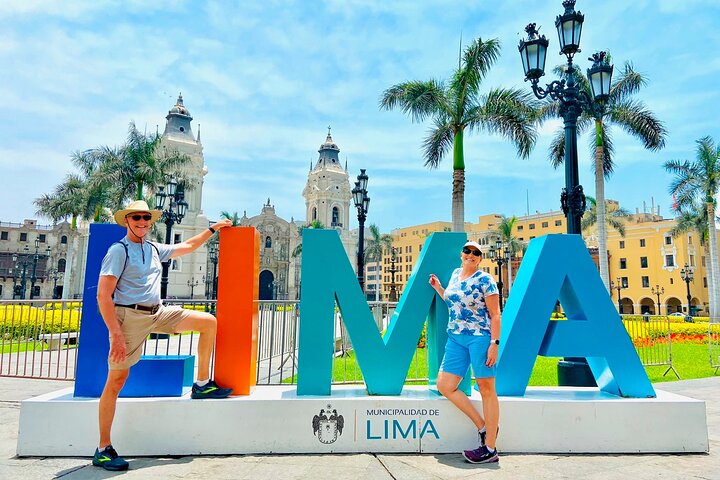
Head to the UNESCO-listed historic center. A small-group walking tour is the efficient way to link the Plaza Mayor, the cathedral, and the eerie catacombs, with a guide to explain the history.
Lima Half-Day City Walking Tour
Historic Center
A well-run small-group walk through the Plaza de Armas, Lima Cathedral, and the San Francisco Monastery with its underground catacombs full of stacked bones. A relaxed introduction to colonial Lima with local context; expect roughly 3-4 hours.
If you prefer to go independently, this ochre-and-white baroque complex hides catacombs holding an estimated 25,000 sets of remains. Guided entry is about 20-30 soles and photography is limited underground.
Eat where downtown office workers do, on a good-value set lunch.
El Cordano Google
4.2 · 3,084 reviews · Historic Center
Closed Mondays
A 100-year-old bar-restaurant across from the presidential palace, famous for its jamon del pais sandwich and old-Lima atmosphere. A plate and drink runs about 25-40 soles.
Trade colonial streets for pre-Columbian treasure at Lima's best-loved museum.
Larco Museum Google
4.8 · 17,290 reviews · Pueblo Libre
A private collection of gold, silver, and thousands of years of ceramics set in an 18th-century mansion wrapped in bougainvillea, with a famous (and famously frank) erotic pottery gallery. Entry is about 35-45 soles; allow two hours and note the pretty on-site cafe.
Give one evening to Lima's signature experience, a guided food crawl through bohemian Barranco.
Lima Ultimate Peruvian Food Tour (Barranco)
Barranco
A superb, top-rated small-group evening tasting up to 14 Peruvian dishes, drinks, and fruits while walking the murals and clifftop streets of Barranco. A splurge for this budget but arguably the single best food intro in the city; you leave full, so it replaces dinner.
A budget-friendly Barranco cevicheria plastered in football memorabilia, serving hearty ceviche and seafood rice for around 35-50 soles. A local favorite if you skip the tour.
A long but exhilarating day south into the coastal desert: sea lions and seabirds on a boat around the Ballestas Islands, then dune buggies and sandboarding at the palm-ringed Huacachina lagoon, usually with a Pisco or wine tasting. Buses leave Lima very early and return late evening, so it is a full-day commitment.
Full Day Tour From Lima: Paracas and Huacachina Oasis
Paracas & Ica
The best-value version of Lima's classic desert day trip, at local prices: a Ballestas Islands boat cruise past sea lions and Humboldt penguins, then dune-buggy rides and sandboarding on Huacachina's giant dunes at sunset. Long days (roughly 5am-10pm) but a huge amount packed in for the money.
Paracas & Huacachina Day Trip with Sunset Experience
Paracas & Ica
A slightly more premium alternative combining the Ballestas boat, an Ica wine and Pisco tasting, and dune buggies timed for the desert sunset. A good pick if the cheaper option is sold out.
Good to know · The Paracas and Huacachina day trip is a very long day (around 5am pickup to 10pm return). Book a day or two ahead in July, and bring sunscreen, a hat, and a light layer for the boat. (book 1-2 days ahead)View on Viator
Where to Stay
Miraflores is the easy first-timer's choice: safe, walkable, packed with cafes and served by the airport road, with the ocean-view Malecon on its doorstep. Barranco next door is more artsy and nightlife-forward. Avoid basing in the historic center overnight; visit it by day.
Hilton Lima Miraflores
midrange Google
4.7 · 5,750 reviews
A reliable full-service base a block from the Larcomar clifftop mall and the Malecon, with ocean-view rooms and a rooftop restaurant. Good for a comfortable landing on night one.
A social hostel-hotel hybrid with dorms and private rooms, coworking space, and a young crowd, walkable to Parque Kennedy. The best value pick for budget-minded travelers who still want a private room option.
Lima's iconic splurge, a glass tower over the Pacific with a rooftop pool and one of the city's best afternoon teas. Worth it if you want one memorable night of coastal luxury.
Peru's elegant second city is built from sillar, a white volcanic stone that glows under a permanent sun and gives Arequipa its nickname, the White City. Three snow-topped volcanoes frame the skyline, the food is some of the country's best (this is picanteria country), and the vast Santa Catalina Monastery is a walled town-within-a-town of ochre and cobalt lanes. It also sits at a comfortable 2,335m, an ideal first step up before the higher Andes to come.
Getting there by planeFly Lima to Arequipa (about 1h35m), the time-smart choice over a 15-16 hour bus. Book early for fares around $60-110; the airport is 20-30 minutes from the center.View on Trip.com
After the flight, dive straight into Arequipa's showpiece before it closes, then take in the plaza.
Monasterio de Santa Catalina Google
4.7 · 10,251 reviews · Historic Center
A 20,000-square-meter convent founded in 1579, a maze of cobalt- and ochre-painted lanes, cloisters, and cells that operated as a city sealed from the world for centuries. Entry is about 40 soles; allow 1.5-2 hours and consider a guide for the stories.
Arguably Peru's handsomest main square, arcaded on three sides in white sillar with the twin-towered cathedral filling the fourth. Free to wander; the rooftop and tower tours give volcano views.
Climb for the classic Arequipa panorama as the volcanoes catch the last light.
Mirador de Yanahuara Google
4.5 · 19,339 reviews · Yanahuara
A sillar-arched viewpoint across the river in the Yanahuara district, framing El Misti volcano through carved white arches. A 15-20 minute walk or short taxi; best at sunset and free.
Eat the local specialty at a traditional picanteria, the spicy, hearty heart of Arequipeno cooking.
La Nueva Palomino Google
4.3 · 10,247 reviews · Yanahuara
Closed Wednesdays
The most celebrated picanteria in the city, family-run, serving rocoto relleno, adobo, and chupe de camarones (shrimp chowder) with local chicha. Generous plates run about 35-60 soles; go hungry and, ideally, at lunch or early evening.
A stylish spot known for meats served sizzling on volcanic-stone platters (alpaca, beef, ostrich) in a colonial building. Mains around 45-70 soles for a slightly nicer night out.
Good to know · The 2-day Colca Canyon tour typically starts with an early pickup from Arequipa (around 3am the next morning) and can be booked to end in Puno instead of returning to Arequipa, which saves a backtrack. Confirm the Puno drop-off option when you book. (book 1-2 days ahead)
Day 5
Into the Colca Canyon: Andean Highlands & Hot Springs
A classic two-day overland trip climbs over the 4,910m Patapampa pass (your highest point yet, so hydrate and go slow) across altiplano dotted with vicunas, then descends to the Colca Valley's terraced villages. Most tours include Chivay's thermal baths in the afternoon before an overnight in the valley.
Colca Canyon 2-Day Tour (overnight Chivay/Yanque)
Colca Valley
The standard, budget-friendly way to reach one of the world's deepest canyons: a scenic drive past the Salinas y Aguada Blanca reserve, viewpoints over terraced Colca villages, and a soak in the Chivay/La Calera hot springs. Book locally in Arequipa (roughly $30-60 including basic lodging); arrange the version that continues to Puno on day two.
Dinner
Dinner is usually included at your valley lodging; if not, eat simply in Chivay.
Chivay town eateries Google
4.3 · 445 reviews · Chivay
Small local restaurants around Chivay's plaza serve set dinners with alpaca stew, soups, and quinoa dishes for about 15-30 soles. Warm up, sleep early, and rest for the pre-dawn condor start.
Stay in or just off the Plaza de Armas in the historic center, so the monastery, markets, and picanterias are all on foot. It is compact, safe by day, and lively in the evening.
Casa Andina Standard Arequipa
midrange Google
4.2 · 1,386 reviews
A dependable mid-range chain hotel a short walk from the Plaza de Armas, with warm rooms (a plus on cool nights) and a good breakfast. Easy, central, and well priced.
A lively, social backpacker hostel in a colonial house with dorms, a few privates, and an on-site bar. Best for budget travelers who want to meet people.
Puno is Peru's folkloric capital and the jumping-off point for Lake Titicaca, the highest navigable lake on earth at 3,812m, shared with Bolivia and impossibly blue under the dry-season sun. The draw is the lake itself and its living cultures: the Uros people on their hand-built reeds islands and the weaving communities of Taquile. Nights here are cold and thin on oxygen, so take it easy in town.
Getting there by busContinue by road from the Colca Valley across the altiplano to Puno (roughly 6 hours), a spectacular high-plains drive; many 2-day Colca tours offer this transfer. If returning to Arequipa first, the direct Arequipa-Puno bus is about 5-6 hours for $10-25.
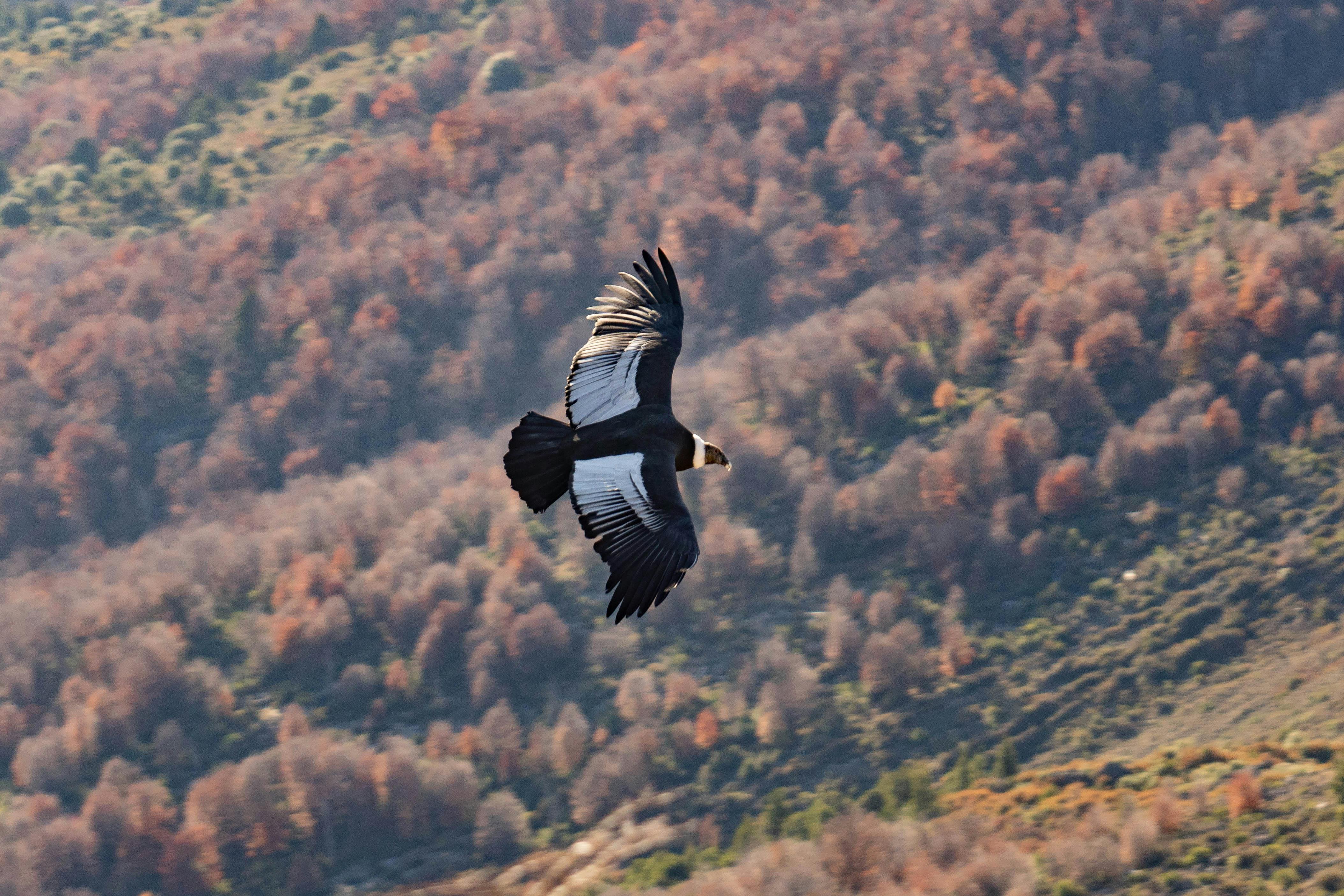
An early start for the reason everyone comes to Colca: giant Andean condors riding the morning thermals out of the canyon.
Cruz del Condor viewpoint Google
4.7 · 6,062 reviews · Colca Canyon
A canyon-edge lookout where condors with three-meter wingspans glide up on the warming air, usually best between roughly 8 and 10am. The Colca boleto turistico (tourist ticket, about 70 soles for foreigners) is typically required and often collected en route.
The tour continues across the altiplano toward Titicaca, with photo stops at high-plains lagoons and vicuna herds before dropping into Puno.
Altiplano transfer to Puno
Altiplano
A long, scenic road day over 4,000m plains studded with volcanoes and flamingo lagoons. Keep water and snacks handy and layer up; you will feel the altitude, so move slowly on arrival.
Dinner
Arrive tired; eat light and warm to help with the altitude.
Mojsa Restaurant Google
4.4 · 1,648 reviews · Plaza de Armas
An upstairs spot overlooking the Plaza de Armas doing trout from the lake, quinoa dishes, and good soups, with mains around 30-50 soles. Comforting and central.
Grab a quick early breakfast before the port pickup, usually included at your hotel.
Hotel breakfast or Jiron Lima cafes
Historic Center
Cafes along the pedestrian Jiron Lima open early for coffee, eggs, and bread if your hotel does not. Keep it light before a full day on the water.
All day
A full-day boat tour is the essential Titicaca experience, combining the surreal Uros reed islands with the weaving island of Taquile and its terraces and lake-wide views.
Uros & Taquile Full-Day Boat Tour
Lake Titicaca
A shared-boat day (about $20-35 booked locally) crossing to the buoyant Uros islands, built and rebuilt from totora reeds, then out to Taquile, a UNESCO-recognized community famed for its men's knitting tradition, with a home-cooked trout lunch. Bring sunscreen and a hat; the high-altitude sun is fierce on open water even when it is cold.
Dinner
Back in town, celebrate the lake with the local catch.
Mojsa Restaurant Google
4.4 · 1,648 reviews · Plaza de Armas
Return for grilled Titicaca trout and a pisco sour with a plaza view, around 30-50 soles. Reliable and warm.
Base near the pedestrianized Jiron Lima and the Plaza de Armas for restaurants and easy walks, or on the lakeshore for views. It is a small city; most things are within a short taxi ride of the port.
Tierra Viva Puno Plaza
midrange Google
4.4 · 494 reviews
A comfortable, well-run mid-range hotel steps from the main square, with heating, hot water, and a solid breakfast, all welcome at altitude. Central and reliable.
Set on its own small peninsula just outside town with direct lake views and gardens, good for families wanting space and calm. A short taxi from the center.
Once the capital of the Inca empire and now the vibrant hub of the Andes, Cusco layers Inca masonry, Spanish baroque, and modern buzz over steep cobbled hills at 3,400m. The San Blas artisan quarter, the golden temple of Qorikancha, and the massive walls of Sacsayhuaman are all here, and this is your base for Rainbow Mountain and the launchpad for the Sacred Valley and Machu Picchu. Take the first day slow to acclimatize (though your Colca and Titicaca days will have prepared you well).
Getting there by busTake a tourist bus from Puno to Cusco (about 7-8 hours) that stops at Pukara, the La Raya pass, and the Raqchi and Andahuaylillas sites en route, turning the transfer into a sightseeing day for roughly $20-55 (Inka Express, Turismo Mer). A quick 55-minute flight is the alternative.
Day 8
Scenic Route to Cusco: The Andes Between Two Capitals
The route north climbs to the 4,338m La Raya pass and stops at Inca and colonial highlights, so the travel day earns its keep. Relax into it, drink water, and enjoy the changing altiplano scenery.
Puno-Cusco Tourist Bus (Ruta del Sol)
Altiplano to Cusco
A guided bus with stops at Pukara's pre-Inca museum, the photogenic La Raya pass, the giant adobe walls of the Raqchi temple to Wiracocha, and the Sistine-Chapel-of-the-Andes church at Andahuaylillas, with lunch included on most services. A relaxed, scenic way to cover the distance for about $20-55.
Dinner
Arrive in Cusco in the early evening; stay close to your hotel and eat lightly on your first night at altitude.
Green Point Vegan Restaurant Google
4.7 · 3,601 reviews · San Blas
A beloved, great-value spot in San Blas with an excellent-value set menu and hearty plant-based Andean dishes, around 20-35 soles. Easy on the stomach as you settle in.
A central, well-priced modern Peruvian kitchen near the plaza doing solid lomo saltado, quinoa bowls, and wraps for about 30-50 soles. Friendly and reliable.
Start slow with coffee and altitude-friendly coca tea.
Cafe Dwasi
Historic Center
A cozy little cafe near the plaza pouring good Peruvian coffee and fresh breakfasts at fair prices, around 15-25 soles. A calm start to an easy day.
La Valeriana
Historic Center
A popular bakery-cafe known for empanadas, pastries, and strong coffee, ideal for a grab-and-go breakfast before wandering. Items from a few soles.
Morning
Ease into the altitude with a half-day tour linking the essential Inca and colonial sites, letting a guide carry the story while you take it slow.
Cusco City Tour: Four Ruins in Half-Day
Cusco
A well-priced half-day covering the Qorikancha sun temple and the hilltop ruins of Sacsayhuaman, Q'enqo, Puca Pucara, and Tambomachay, with a guide to decode the astonishing Inca stonework. A gentle way to acclimatize while sightseeing; the boleto turistico or site fees may be extra.
Dive into the sensory overload of Cusco's main market for a cheap, delicious lunch.
Mercado Central de San Pedro Google
4.3 · 44,883 reviews · San Pedro
The city's main market, where juice stalls and comedor counters serve caldo de gallina, stuffed peppers, and huge fruit juices for a handful of soles. The best budget lunch in town and a feast for the senses.
Wander uphill into the artisan quarter at your own pace, keeping activity gentle while you adjust.
San Blas neighborhood & Plaza San Blas Google
4.5 · 3,090 reviews · San Blas
Cusco's steep bohemian quarter of whitewashed lanes, craft workshops, and viewpoints over the terracotta rooftops. Poke into galleries and the small San Blas church with its famous carved pulpit.
A fun, low-exertion 2-hour hands-on class making chocolate from the cocoa bean, perfect for an easy acclimatization afternoon. Family-friendly and inexpensive.
Eat well but not too heavy on your acclimatization night.
Pachapapa Google
4.7 · 7,129 reviews · San Blas
A courtyard restaurant on Plaza San Blas serving Andean classics, including cuy (guinea pig) and clay-oven dishes, for about 40-65 soles. Atmospheric, especially by the fire.
A long-loved tapas bar and restaurant above a colonial courtyard, great for sharing plates and a pisco sour at the bar, roughly 40-70 soles. Book for the dining room.
Good to know · Cusco sits at 3,400m; drink plenty of water, go easy on alcohol the first day, and consider coca tea to help with altitude. Many pharmacies sell soroche (altitude) tablets over the counter. (first day in Cusco) · Machu Picchu entry is capped daily and sold by timed circuit through the official Ministry of Culture / joinnus platform; over the late-July Fiestas Patrias peak it can sell out well ahead. Book your entry ticket and the round-trip train (PeruRail or Inca Rail) as far in advance as possible. (book 1-3 months ahead)View on Viator
Peru's second-most-visited sight after Machu Picchu, the striped slopes of Vinicunca top out near 5,000m, so this is the payoff for all your acclimatizing. It is a long day with an early start; go slowly on the final climb and carry water, sun protection, and warm layers.
Rainbow Mountain Full Day (optional Red Valley)
Vinicunca
The best-value guided trip to Vinicunca, with round-trip transport, breakfast and lunch, and a guide, plus the option to add the quieter, equally colorful Red Valley. The hike to the viewpoint takes roughly 1.5-2 hours each way; horses are available for hire on the trail. Superbly rated and easy on the wallet.
Rainbow Mountain Beat-the-Crowd Small Group (8am departure)
Vinicunca
A later, less frantic small-group alternative that reaches the summit after the pre-dawn crowds have thinned. Costs more but trades the 4am wake-up for a gentler pace and emptier trails.
Back in Cusco by late afternoon, reward tired legs with something hearty and warm.
Nuna Raymi Google
4.7 · 2,488 reviews · Historic Center
A welcoming spot near the plaza focused on regional ingredients, with alpaca, trout, and quinoa dishes and a good-value tasting option, roughly 35-60 soles. Comforting after the mountain.
A polished but fair-priced Andean kitchen known for slow-cooked meats and a rooftop with views, mains around 40-70 soles. A satisfying end to a big day.
The historic center around the Plaza de Armas puts you within walking distance of everything, while the San Blas quarter just uphill is quieter and more bohemian (with steep climbs). Both are safe and atmospheric; pick central for convenience.
Novotel Cusco
midrange Google
4.5 · 1,367 reviews
A comfortable mid-range hotel blending a colonial building with a modern wing, a few minutes from the Plaza de Armas, with heating and oxygen-enriched rooms available. A dependable, central base.
A big, sociable hostel right off the main square with dorms, privates, a courtyard bar, and nightly events. Excellent value and great for meeting other travelers.
A well-run backpacker favorite in a colonial house with a lively common area, good breakfast, and a helpful travel desk. A step up in comfort from the average hostel.
A landmark 16th-century mansion facing the Qorikancha temple, with a spa and one memorable splurge-worthy setting. Worth it if you want to bookend the trip in comfort.
The Rio Urubamba threads a broad, fertile valley below Cusco that the Incas prized for its warmer climate and rich soil. Today it is a string of standout sights: the market and hillside ruins of Pisac, the eerie agricultural terraces of Moray, the cascading salt pans of Maras, and the fortress-town of Ollantaytambo, where you catch the train to Machu Picchu. Sleeping here also drops you to a gentler altitude than Cusco.
Getting there by carHead down from Cusco into the Sacred Valley by private transfer, colectivo, or tour (Pisac is about 1 hour, Ollantaytambo about 1.5-2 hours). A guided day tour that ends in Ollantaytambo is the simplest way to see the valley's sites and connect to the train.
Day 11
Sacred Valley: Pisac, Moray, Maras Salt Pans & Ollantaytambo
Fuel up in Cusco before the drive down into the valley.
La Valeriana
Cusco
Quick pastries, empanadas, and coffee to go before your transfer or tour pickup. Cheap and central.
Morning
Begin at Pisac, where hillside Inca terraces and temples crown a village famous for its craft market.
Pisac Ruins & Market Google
4.4 · 2,216 reviews · Pisac
A dramatic complex of agricultural terraces, an Inca cemetery, and a hilltop temple sector, with a colorful market in the town below. Entry is via the Cusco boleto turistico; allow a couple of hours for the ruins.
Take in the valley's two most surreal landscapes, ideally under your own steam or by ATV for a bit of adventure.
ATV Tour to Moray, Maras & the Salt Mines
Maras & Moray
A fun quad-bike ride linking the concentric Inca agricultural terraces of Moray with the dazzling white terraces of the Maras salt pans, thousands of pools worked since pre-Inca times. A memorable, affordable way to cover the two sights; helmets and instruction provided.
Maras Salt Mines (Salineras) independent visit Google
4.7 · 1,567 reviews · Maras
If you prefer to go by car, the salt terraces alone are worth the trip, an amphitheater of pink-white evaporation pools tumbling down the hillside. Entry is about 10-15 soles.
Settle into Ollantaytambo and climb its fortress if there is daylight and energy left.
Ollantaytambo Fortress Google
4.8 · 26,226 reviews · Ollantaytambo
Steep terraces rise to a sun temple of massive pink-granite blocks above a town whose grid and canals are still purely Inca. Entry is via the boleto turistico; late afternoon light is lovely and crowds thin out.
Dine simply in the little town before an early night ahead of Machu Picchu.
Chuncho Google
4.5 · 609 reviews · Ollantaytambo
An Andean-focused restaurant on the main plaza using native potatoes, corn, and highland ingredients, with mains around 35-60 soles. The best sit-down meal in town.
Ollantaytambo is the smart overnight base: it is the train gateway to Aguas Calientes, one of the few living Inca towns with original streets and water channels, and lower and warmer than Cusco.
Apu Lodge
midrange Google
4.7 · 134 reviews
A friendly lodge with garden views up to the Ollantaytambo ruins, a short walk from the plaza and train station. Warm, well-run, and good value.
A comfortable hotel with gardens right by the Ollantaytambo train station, handy for families and early departures. Spacious grounds and a good breakfast.
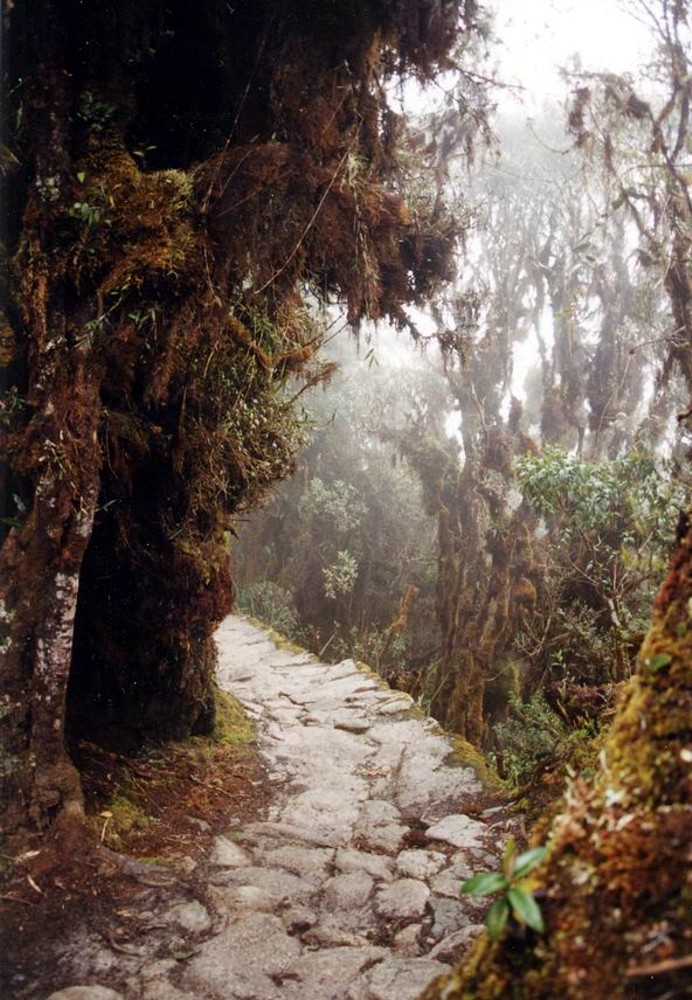
The lost city of the Incas needs little introduction: a citadel of temples, terraces, and precise stonework perched on a saddle between green peaks, half-wrapped in cloud forest. You reach it from Aguas Calientes (officially Machu Picchu Pueblo), the small town in the gorge below, connected to the ruins by a switchback bus. Even at the height of the season, an early entry and a good circuit make the visit unforgettable.
Getting there by trainTake the train from Ollantaytambo to Aguas Calientes (about 1h30-2h) with PeruRail or Inca Rail, a scenic ride down the Urubamba gorge. Book ahead in July; round-trip fares typically run $70-130 depending on service.
Day 12
Ollantaytambo to Aguas Calientes: Down the Urubamba Gorge
A relaxed morning in Ollantaytambo before the train; explore anything you missed.
Ollantaytambo plaza cafes
Ollantaytambo
Grab coffee and eggs on the square and wander the town's original Inca lanes and water channels while it is quiet. A calm start to a big-view day.
Afternoon
Board the afternoon train down the gorge to Aguas Calientes, watching the landscape shift from dry Andes to green cloud forest.
Train to Aguas Calientes
Urubamba Gorge
A memorable 1.5-2 hour ride beside the rushing Urubamba, with big windows framing the peaks. Sit on the left heading down for the best river views; keep your passport and ticket handy.
Evening
Settle in, pick up water and snacks for tomorrow, and consider a soak in the town's namesake baths.
Baños Termales de Aguas Calientes Google
4.6 · 2,147 reviews · Aguas Calientes
The hot springs that gave the town its name, a set of simple thermal pools up the main street, entry about 20 soles. Low-key but pleasant after a travel day.
Eat early and get to bed; the first buses leave before dawn.
Indio Feliz Google
4.6 · 1,943 reviews · Aguas Calientes
A long-running French-Peruvian restaurant with a quirky nautical interior and a well-priced three-course menu, around 60-80 soles. The most reliable full meal in town.
Good to know · Buy your Machu Picchu bus tickets (Consettur) in advance online or at the Aguas Calientes office the evening before; queues for the first buses up form well before dawn. Bring your passport, as it is checked at the citadel entrance. (buy the night before)
A very early breakfast (or a packed one from your hotel) before the first buses up the mountain.
Early hotel breakfast or bakery grab-and-go
Aguas Calientes
Most hotels arrange early breakfast or a boxed one for Machu Picchu mornings; otherwise a bakery near the bus queue opens early. Carry water and snacks, as food is not sold inside the site.
Morning
The main event: enter the citadel on your timed ticket and follow your circuit through terraces, temples, and the iconic overlook, ideally before the midday crowds and haze.
Machu Picchu Citadel Google
4.8 · 84,712 reviews · Machu Picchu
The 15th-century Inca estate and its exquisite dry-stone architecture, framed by the sugarloaf of Huayna Picchu. Entry is by timed ticket and fixed circuit (roughly $45-55 for foreigners, more with a Huayna Picchu or Machu Picchu Mountain add-on); a guide at the gate greatly enriches the visit. Dry-season mornings are usually clear once early cloud burns off.
Descend to Aguas Calientes for a late lunch, then begin the journey back: train to Ollantaytambo and transfer to Cusco.
Return train + transfer to Cusco
Ollantaytambo to Cusco
An afternoon train to Ollantaytambo (1.5-2 hours) connects with a bus or colectivo on to Cusco (about 2 hours), arriving in the evening. Prebook the train time that suits your plans; combined transfers are widely sold.
Dinner
Back in Cusco, celebrate reaching the trip's headline with a special dinner.
Chicha por Gaston Acurio Google
4.4 · 3,366 reviews · Cusco
Star chef Gaston Acurio's Cusco restaurant on the Plaza Regocijo, serving refined regional dishes in a handsome upstairs room, mains around 50-80 soles. A fitting splurge after Machu Picchu.
Aguas Calientes is the only base at the mountain's foot and the launch point for the first buses up. It is touristy and pricey for what you get, but staying overnight lets you beat the day-trippers to the gate.
Casa del Sol Machupicchu
midrange Google
4.4 · 538 reviews
A comfortable riverside hotel with a small spa, a short walk from the bus stop for the ruins. A solid mid-range choice in an expensive town.
Casitas set in cloud-forest gardens with resident hummingbirds and its own nature trails, the town's iconic splurge. A serene retreat if you want one luxurious night here.
One more day in Cusco lets you exhale after the big-ticket days, dig into the food, and shop the artisan markets without a schedule. Use it for the things the acclimatization day left out, or simply to relax at altitude with coffee and a view before the trip home.
Day 14
Cusco at Leisure: Markets, Cooking & San Blas Views
A slow morning with good coffee in the old center.
Three Monkeys Coffee
Historic Center
A friendly cafe pouring quality Peruvian coffee and full breakfasts near the plaza, around 20-30 soles. A relaxed place to start a day with no alarms.
Cafe Dwasi
Historic Center
A cozy alternative for espresso and pastries, easy on the budget. Good for a quiet morning.
Morning
Turn Cusco's flavors into a hands-on morning with a market visit and cooking class, one of the city's most enjoyable and best-value experiences.
Local Market & Peruvian Cooking Class with Pisco Sour
Cusco
A guided San Pedro market walk to taste exotic fruits and learn the ingredients, followed by a downtown class cooking classic Peruvian dishes and shaking your own pisco sour. Great fun, hugely rated, and a fitting way to take a piece of the cuisine home.
Shop for crafts and take in the rooftops one last time.
Centro de Textiles Tradicionales del Cusco Google
4.6 · 428 reviews · Historic Center
Closed Sundays
A nonprofit weaving center on Avenida El Sol where you can watch backstrap weavers at work and buy authentic, fairly priced textiles. The best place to shop with a clear conscience.
Stay again in the historic center or San Blas for the easiest access to markets, cafes, and the airport transfer. (See the earlier Cusco lodging picks.)
Novotel Cusco
midrange Google
4.5 · 1,367 reviews
An easy, central return base for your last Andean night, a few minutes from the plaza. Comfortable and reliable.
Return to the coast to close the loop where you started, trading thin mountain air for sea-level Lima and its extraordinary food. With the sightseeing box ticked, these final days are for eating your way through Barranco and Miraflores, catching anything you missed, and unwinding before the flight home.
Getting there by planeFly Cusco to Lima (about 1h25m) in the early afternoon; book ahead for fares around $60-120. From the airport, allow 45-70 minutes to Miraflores by taxi or app car.View on Trip.com
Land back in Lima and head to bohemian Barranco to wander its mural-splashed streets and clifftop lookouts as the light softens.
Puente de los Suspiros & Bajada de Baños Google
4.6 · 24,427 reviews · Barranco
The Bridge of Sighs and the leafy path winding down toward the sea sit at the heart of Barranco's prettiest corner, ringed by street art and old mansions. Free to explore; sunset over the Pacific is the reward.
Photographer Mario Testino's museum in a restored Barranco townhouse, including his famous Peruvian portrait series, entry about 35 soles. A quick, worthwhile cultural stop.
Dinner in Barranco, from a classic anticuchos grill to a modern Peruvian kitchen.
Isolina Taberna Peruana Google
4.6 · 7,698 reviews · Barranco
A beloved Barranco taberna serving big, shareable portions of home-style criollo cooking (think tacu tacu and stewed classics), roughly 45-70 soles per person. Order to share and arrive hungry.
Return for a proper flat white and a calm morning in Miraflores or Barranco, around 12-18 soles. Reliable specialty coffee.
El Pan de la Chola
Miraflores
A cult artisan bakery-cafe with sourdough, superb pastries, and strong coffee, breakfast around 25-40 soles. Popular, so expect a short wait.
Morning
Explore Lima's food culture at ground level, at the market that supplies its top kitchens.
Mercado de Surquillo No. 1 Google
4.3 · 4,318 reviews · Surquillo
The market where Lima's best chefs shop, piled with Amazonian fruits, dozens of potato varieties, aji peppers, and fresh seafood. Free to browse; the juice and ceviche stalls make a great snack.
For a hands-on final morning, a market tour plus class cooking ceviche and a main with a choice of proteins, finishing with the dishes you make. A fun, tasty way to lock in the flavors of the trip.
Have your farewell ceviche at lunch, when Lima's cevicherias serve the day's freshest catch.
La Mar Cebicheria Google
4.6 · 8,494 reviews · Miraflores
Gaston Acurio's famous open-air cevicheria, lunch-only and no reservations, serving pristine ceviche and tiraditos, around 60-90 soles. Go early to beat the queue; a bucket-list Lima meal.
A final clifftop stroll past manicured parks and the lighthouse, with paragliders overhead and the grey Pacific below. Free and quintessentially Lima; you can pay for a tandem paraglide if the weather cooperates.
Send the trip off with one of Lima's standout meals, at a price point to suit.
Maido Google
4.7 · 5,021 reviews · Miraflores
Closed Sundays
Mitsuharu Tsumura's Nikkei temple, regularly ranked among the world's best restaurants, blending Japanese technique with Peruvian ingredients. A serious splurge and a reservation you must make weeks ahead if you want it.
A more affordable Acurio taberna doing beautifully executed comfort classics like causa and slow-cooked meats, around 40-65 soles. A relaxed, delicious farewell dinner.
Good to know · Top-tier Lima restaurants like Maido and Central book out weeks to months ahead, especially for dinner. If a world's-best meal is on your list, reserve online well before you travel. (book 1-2 months ahead)
Ease into the last morning with coffee near your hotel.
El Pan de la Chola
Miraflores
One more excellent coffee and a fresh pastry before you pack up, around 20-30 soles. A satisfying final Lima breakfast.
Morning
A short, low-key wander to fit the airport timing, then collect your bags.
Parque Kennedy & Indian Market shopping Google
4.3 · 9,188 reviews · Miraflores
A last stroll through Miraflores's central parks, with the nearby Mercado Indio craft market handy for any final alpaca knits or souvenirs. Keep it close to your hotel so you are not rushed.
Allow 45-70 minutes by taxi or app car to the airport, and more during peak traffic; for international flights, arrive about 3 hours ahead. Confirm your ride in advance to avoid a last-minute scramble.
Where to Stay
Miraflores again is the practical choice for the airport connection and coastal walks; Barranco suits anyone wanting a quieter, arty final base. (See the earlier Lima lodging picks.)
Hilton Lima Miraflores
midrange Google
4.7 · 5,750 reviews
A comfortable, central Miraflores base for the last nights, close to Larcomar and the Malecon. Easy for the airport run.
A glass tower directly over Larcomar and the Pacific cliffs, with big ocean-view rooms and a pool. A polished final splurge with the best coastal outlook in Miraflores.
In seventeen unhurried days you will have traced Peru from Pacific ceviche counters up through the White City and the condor-filled Colca Canyon to the reed islands of Titicaca, then across the old Inca heartland to Machu Picchu itself, all timed for the clear, festive dry season. It is a big loop, but a gentle one, climbing gradually so the altitude never gets the better of you and leaving room to linger over the food that makes this country unforgettable. Pack your layers and your appetite; Peru rewards travelers who take it slow.
Frequently asked questions
How many days do you need to see Peru's highlights?
Two weeks is the sweet spot for the classic circuit of Lima, Cusco, the Sacred Valley, and Machu Picchu, while 17 days lets you add southern Peru's Arequipa, Colca Canyon, and Lake Titicaca without rushing. The extra days also allow a sensible, gradual climb in altitude, which reduces the risk of altitude sickness before the big hikes.
What is the best time of year to visit Peru's Andes and Machu Picchu?
The dry season from roughly May to September brings the clearest skies and best trekking conditions in the Andes, making late July and August an excellent time for Machu Picchu, Rainbow Mountain, and Colca Canyon. The trade-offs are cold nights near freezing at altitude and larger crowds, sharpened by Peru's Fiestas Patrias independence holidays around July 28-29.
Do I need to book Machu Picchu tickets in advance?
Yes. Machu Picchu entry is capped daily and sold as timed tickets by circuit through the official government platform, and it can sell out weeks ahead in the busy July-August season. Book your entrance ticket and your round-trip train (PeruRail or Inca Rail) as early as you can, and bring your passport, which is checked at the gate.
How do you handle the altitude in Cusco and Puno?
Cusco sits at about 3,400m and Puno at 3,800m, high enough to cause altitude sickness if you ascend too fast. Climbing gradually (for example via Arequipa and Colca before Puno and Cusco), taking your first day easy, drinking plenty of water, going light on alcohol, and using coca tea all help; over-the-counter soroche tablets are widely sold in pharmacies.
Is Peru expensive, and can you do this trip on a budget?
Peru is one of South America's better-value destinations. You can travel comfortably on a modest budget by eating the fixed-price menu del dia lunches (around 12-30 soles), sleeping in well-run hostels and mid-range hotels, and using long-distance buses instead of flights for some legs. The main fixed costs that add up are Machu Picchu (entry, train, and bus) and a couple of domestic flights.
What is the best area to stay in Lima for first-time visitors?
Miraflores is the easiest first-timer base: safe, walkable, packed with cafes and restaurants, served by the airport road, and set along the clifftop Malecon above the Pacific. Neighboring Barranco is a good alternative for travelers who want a more artistic, nightlife-focused atmosphere, while the historic center is best visited by day rather than used as a base.