Namibia in 7 Days: Desert Dunes, Skeleton Coast & the Capital
A self-drive loop from Windhoek through the towering red dunes of Sossusvlei to the Atlantic mists of Swakopmund and Walvis Bay.
7 days in Windhoek + 2 more
Namibia is a land of staggering emptiness and outsized beauty: the oldest desert on Earth, a coastline strewn with shipwrecks, and night skies so dark they feel three-dimensional. Independent only since 1990, it carries a layered history of San rock art, German colonial architecture, and a proud mix of Herero, Himba, Nama, Damara, and Owambo cultures, all set against landscapes that look freshly minted.
This week traces the country's most rewarding short loop. You start in compact, walkable Windhoek, drop south to the apricot-colored dunes of Sossusvlei and the petrified ghost trees of Deadvlei, then cross the Namib to the cool Atlantic at Swakopmund and Walvis Bay, where dunes tumble straight into the sea at Sandwich Harbour. It is a greatest-hits route that still leaves room to breathe.
Practical notes: this is a self-drive itinerary on a mix of tar and well-graded gravel, so rent a sturdy SUV or 4x4, carry a spare and water, and fill up at every town. Distances are long and fuel stations scarce, so start early. Winter (May to September) brings crisp, clear days and cold desert nights, ideal for dunes and game viewing; summer is hotter with dramatic afternoon light. The Namibian dollar is pegged to the South African rand, and English is the official language.

Arrival in Windhoek: Capital Sights & Game Meat
Christ Church, Windhoek · Diego Delso / CC BY-SA 4.0Collect your vehicle, drop your bags, and get oriented on foot in the compact center. The colonial-era Christuskirche and the gleaming Independence Memorial Museum sit a two-minute walk apart on a single hill.
A bold, North Korean-built museum tracing Namibia's anti-colonial struggle to independence in 1990. Entry is free, and the top-floor cafe has the best panoramic view in the city, over Christuskirche and the Tintenpalast gardens.
Windhoek's most photographed landmark, a 1907 Lutheran church in pink sandstone and Art Nouveau detail, with the old fort (Alte Feste) just behind. A quick, scenic stop to stretch your legs after the flight.
If you would rather be guided on day one, this half-day tour covers the historic center plus Katutura township, giving real context on Windhoek's communities. A well-reviewed, affordable orientation.
Catch the highland sunset with a cold Windhoek Lager, brewed to the German purity law and a point of national pride.
A rooftop pool bar with sweeping city and mountain views, perfect for a first-night sundowner. Casual, breezy, and central.
Windhoek punches well above its weight for game meat and hearty cooking. Reserve ahead, as the best tables fill on weekends.
A rollicking, lantern-lit institution famous for its mixed game platters of oryx, kudu, springbok, and zebra, plus ice-cold draft beer. Touristy but genuinely good and a quintessential Windhoek night out; book a table.
Polished bistro with an outstanding South African wine list and dry-aged game and beef. A calmer, more refined alternative to Joe's.
Dining inside the turreted Heinitzburg castle hotel, with city-light views and a Namibian-European tasting menu. The choice for a special arrival dinner.

South to the Namib: Spreetshoogte Pass & Sesriem Canyon
Sesriem · dconvertini / CC BY-SA 2.0Fuel up properly before a big driving day; there is little between Windhoek and the desert.
Namibia's best-known specialty roaster, with strong flat whites and breakfast rolls to take on the road. A quick, quality caffeine stop before you leave town.
A relaxed sit-down breakfast option if you want eggs and good coffee before the drive. Central and dependable.
Point the car south and settle into the rhythm of gravel roads, with the Spreetshoogte Pass delivering one of Namibia's great viewpoints as the highlands drop away to the desert plains.
The steepest paved-then-gravel pass in Namibia, with a jaw-dropping escarpment view over the Namib far below. Stop at the viewpoint to photograph the descent.
Break the drive at the lonely outpost of Solitaire, a quirky must-stop on the route to Sesriem.
A legendary desert pit stop famous for its warm apple crumble, set among rusting vintage cars and a single fuel pump. Grab pie, coffee, and a top-up of petrol; there is nothing else for miles.
Reach Sesriem, check in, and warm up with the park's easy canyon walk before the dunes tomorrow.
A narrow, shaded gorge carved by the Tsauchab River, walkable on the canyon floor in under an hour. A cool, atmospheric leg-stretch and part of your park permit.
Climb a dune or settle on your lodge deck for the desert's famous sunset color show.
A reddish dune about 5 km inside the gate, accessible to 2WD and perfect for a sunset scramble with views across the gravel plains. Far quieter than the famous dunes deeper in the park.
Dine at your lodge under a blaze of stars; outside light is almost nonexistent here.
Open-sided dining with a buffet and grill of game and Namibian dishes, plus a floodlit waterhole that often draws nocturnal visitors. The most convenient dinner at the gate.

Sunrise at Deadvlei, Dune 45 & Big Daddy
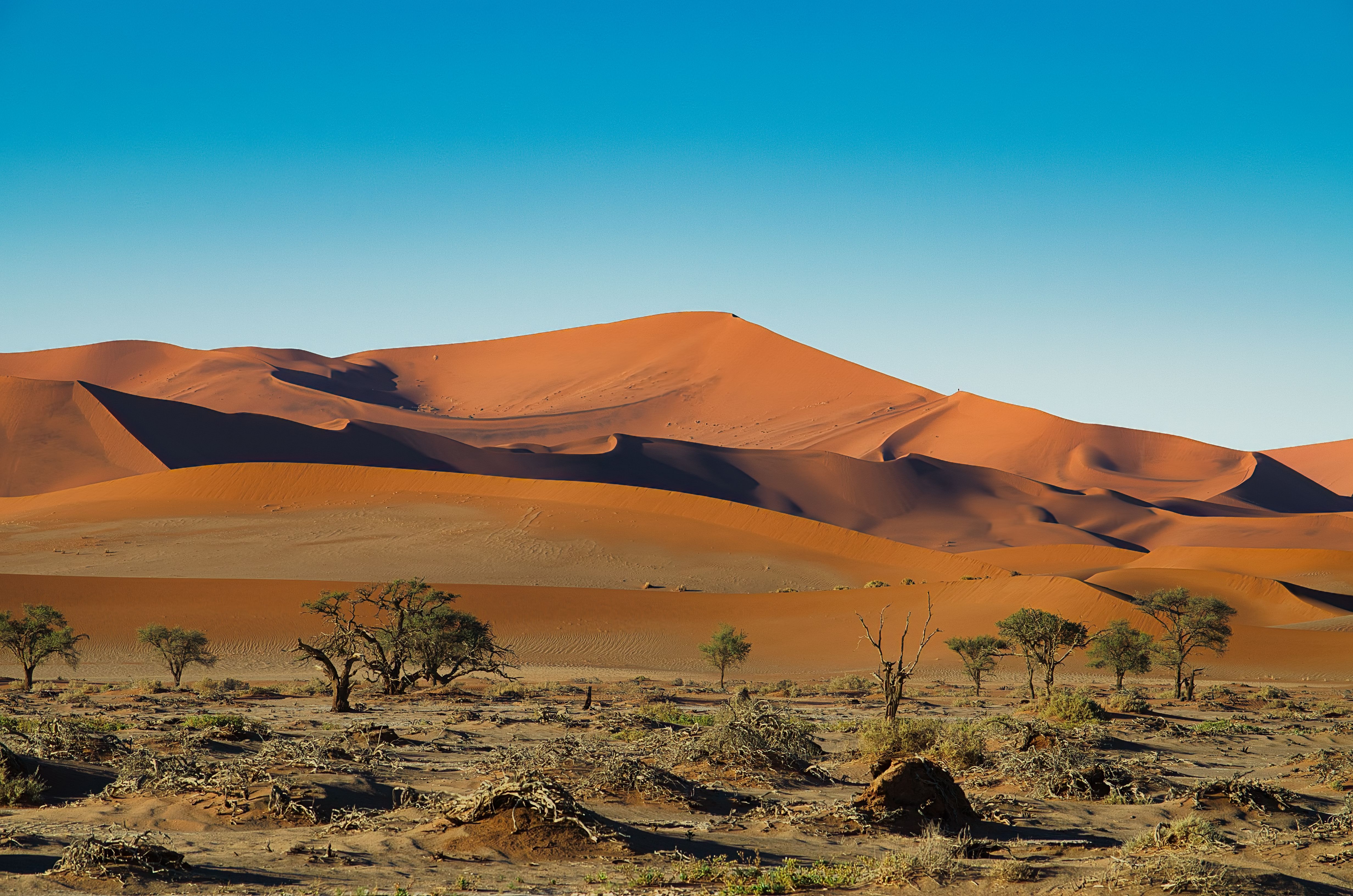
Sossusvlei · Ikiwaner / GFDL 1.2This is a pre-dawn start; the magic is in beating both the heat and the crowds. Most lodges lay out coffee and a grab-bag breakfast for early risers.
Arrange a flask of coffee and a packed breakfast the night before so you can be at the gate the moment it opens. Eat at Dune 45 as the sun comes up.
Drive the 60 km tar road into the park as the dunes ignite. Tackle the icons in order, ending the last 5 km of soft sand to Sossusvlei by 4x4 or the park shuttle.
The shapely, much-photographed dune 45 km from the gate, climbable in 20-30 minutes for sunrise views along its knife-edge ridge. A perfect warm-up before Deadvlei.
The surreal white clay pan studded with blackened, centuries-old camelthorn trees beneath the towering Big Daddy dune. A 1.1 km walk from the 4x4 parking; go early before the pan turns to a furnace.
One of the highest dunes in the area at around 325 meters; the climb takes 1-1.5 hours, with a thrilling run straight down the face into Deadvlei. For the fit and early only, before the sand bakes.
Retreat from the midday heat back toward the gate for a proper meal and a cool-down.
Light lunches and cold drinks by the pool after a hot morning on the sand. Refuel and rehydrate before the afternoon.
The middle of the day is brutally hot in the dunes, so this is downtime: nap, swim, and let the desert quiet work on you.
Recover at your lodge pool with the dunes shimmering in the distance. Save your energy for the night sky.
The Namib has some of the darkest skies on Earth, and Sesriem sits in a designated dark-sky area.
With near-zero light pollution, the Milky Way is dazzling here; some lodges offer telescopes or astronomy talks. Bring a warm layer, as desert nights turn cold fast even in summer.
A final desert dinner before tomorrow's crossing to the coast.
Grilled game, Namibian sides, and a fire under the stars. Order a Windhoek Lager or a South African red and toast the dunes.
Across the Namib to the Atlantic Coast
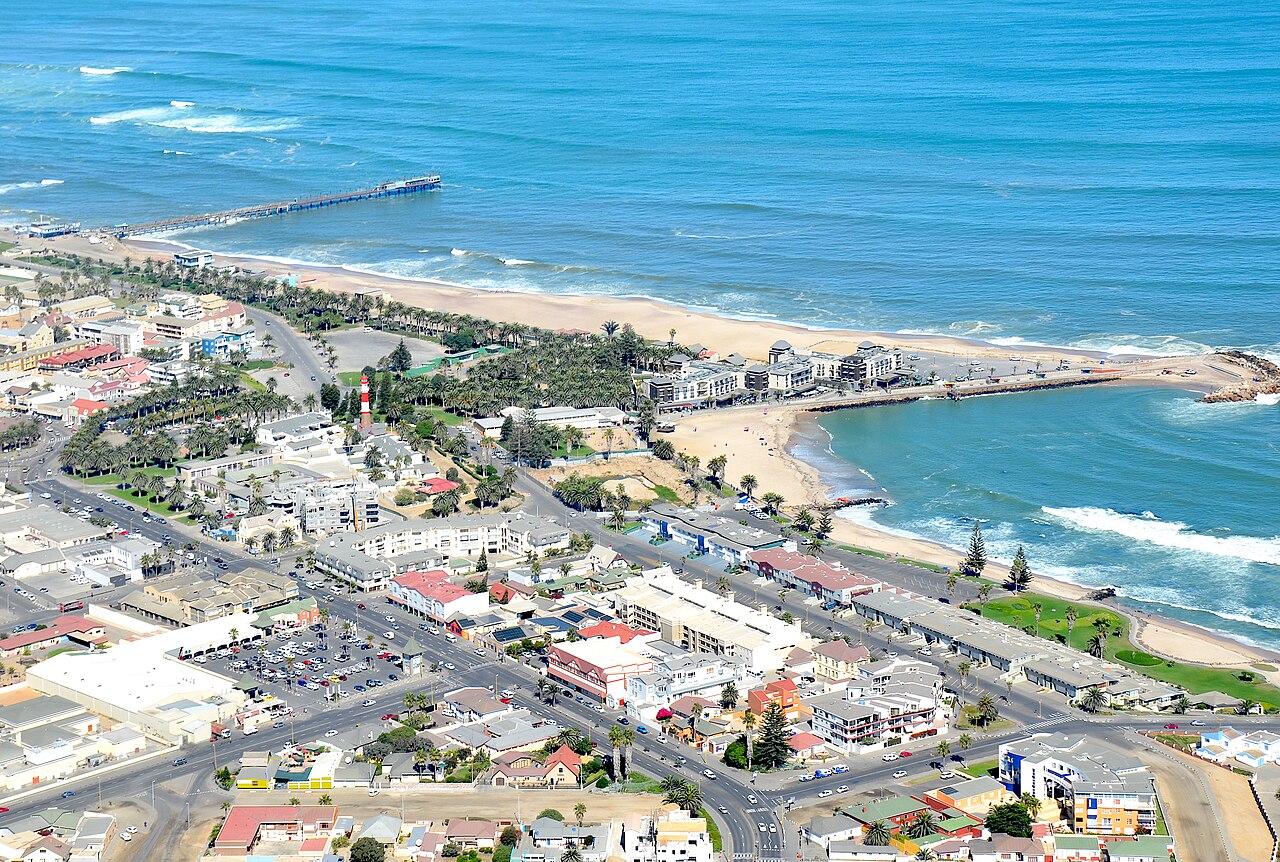
Swakopmund · Olga Ernst / CC BY-SA 4.0A full lodge breakfast sets you up for the long, scenic transfer to the coast.
Eat well before the drive; the route has only a couple of stops. Fill your fuel tank and water bottles at Sesriem or Solitaire.
The drive itself is the attraction, threading the moonlike Gaub and Kuiseb canyons before the gravel gives way to gravel plains dotted with quiver trees and, eventually, ocean fog.
A dramatic dry-canyon crossing followed by the much-photographed Tropic of Capricorn sign, a fun stop to mark the latitude. Watch for the temperature plunge as the coastal fog rolls in.
Arrive at the coast via Walvis Bay, where the lagoon often blushes pink with thousands of flamingos.
A wood-and-glass restaurant built on stilts over the lagoon, with flamingos at the windows and fresh local oysters and seafood on the plate. A memorable first taste of the coast.
Pull over along the esplanade to watch flamingos, pelicans, and the salt pans before continuing the short 30 km to Swakopmund. Bring binoculars.
Check into Swakopmund and shake off the road with a stroll through its toy-town streets and along the seafront.
Walk the restored 1905 wooden jetty out over the breakers and along the Mole sea wall. The classic Swakopmund orientation, ending with a drink as the sun drops into the Atlantic.
A surprisingly good local museum on the town's geology, German-colonial past, and desert ecology, right by the lighthouse. A worthwhile hour if the fog rolls in.
Swakopmund's German heritage shows up in its beer halls and bakeries; settle in for a cold one with a sea view.
An in-house microbrewery and grill on the waterfront, pouring its own craft beers with the ocean at the windows. A relaxed spot for a pre-dinner pint.
The coast is all about seafood, from Lüderitz oysters to fresh kingklip and kabeljou.
Swakopmund's signature restaurant, built around a salvaged tugboat beside the jetty, famed for fresh fish, oysters, and sunset views. Book ahead; it is deservedly popular.
A long-running, convivial pub-restaurant doing excellent seafood platters, calamari, and game in generous portions. A local favorite with a buzzy atmosphere.
Dining literally at the end of the jetty, surrounded by ocean, with refined seafood and a strong wine list. The most scenic table in town.
Where Dunes Meet the Sea: Sandwich Harbour
Swakopmund · Olga Ernst / CC BY-SA 4.0Caffeinate before your pickup; the big dune-and-ocean adventure is a half- to full-day affair.
A hip cafe doing proper espresso, smoothies, and big breakfasts, a favorite morning gathering spot in town. Quick and excellent before a tour.
The coastal branch of Namibia's top roaster, ideal for a flat white and a pastry to go. Reliable quality right in the center.
Today's headline is Sandwich Harbour, a Ramsar wetland where colossal dunes pour straight into the Atlantic, reachable only by guided 4x4 timed to the tides. Most operators include the Walvis Bay lagoon, salt pans, and birdlife, with a dune-top picnic of oysters and sparkling wine.
The classic, top-rated 4x4 excursion across the lagoon and salt works to the spot where dunes meet sea, with expert guides, dune driving, and a beachside picnic. Tides dictate timing, so your operator sets the start; it includes cruise-ship and town pickups.
A full-day combo pairing a morning dolphin-and-seal catamaran cruise (with oysters and bubbly) and an afternoon Sandwich Harbour dune drive. The best of land and sea in one day, and superbly reviewed.
For something gentler, paddle among thousands of Cape fur seals in the calm waters off Pelican Point, with curious pups swimming right up to your kayak. A half-day, beginner-friendly trip with a perfect rating.
Back in Swakopmund, reward the day with hearty coastal fare.
A beachfront restaurant built to resemble a shipwreck, with waves crashing below and excellent fresh fish. Sunset tables go fast, so reserve.
Hefty grills, game, and house-brewed beer in a lively waterfront hall, ideal if you are ravenous after a day on the dunes. Family-friendly and central.
Swakopmund Adventures, then the Road to Windhoek
Swakopmund · Olga Ernst / CC BY-SA 4.0One last coastal breakfast before turning inland this afternoon.
A laid-back, leafy garden cafe popular for big breakfasts, fresh juices, and good coffee. A pleasant final morning in town.
Squeeze in one signature Swakopmund experience while you are still on the coast. Choose adrenaline in the dunes or the surprising wildlife of the gravel sands.
A guided morning in the dune belt revealing the 'little five' of the Namib: chameleons, geckos, sidewinder snakes, and dancing white lady spiders. A genuinely eye-opening look at desert survival, great for all ages.
Roar across the dunes by quad bike or carve down them on a board, with operators running short morning sessions just outside town. The classic Swakopmund thrill.
For a low-key morning, browse the world's largest known quartz crystal cluster and pick up handmade Namibian crafts before the long drive. Indoor and weather-proof.
Eat early so you can hit the road; the inland drive is about four hours.
A quirky, colorful spot with all-day breakfasts, salads, and toasted sandwiches, perfect for a quick fill-up before departure. Vegetarian-friendly.
Drive the well-maintained tar B2 east through the gravel plains and the Khomas Hochland back up to the highlands and Windhoek, roughly 4 hours (about 360 km).
A straightforward, scenic paved drive past Usakos and Karibib, with the Spitzkoppe inselbergs visible to the north. Fuel up in Swakopmund and aim to arrive in Windhoek before dark.
Back in the capital, enjoy a relaxed final dinner.
Return to this polished Klein Windhoek favorite for game, steak, and a last glass of Cape wine. A fitting farewell meal.

Last Morning in Windhoek & Departure
Independence Memorial Museum (Namibia) · Choinowski / CC-BY-SA-4.0A final unhurried Namibian breakfast before you head to the airport.
A bright cafe inside the craft center, ideal for combining breakfast with last-minute souvenir shopping. Good coffee and pastries under one roof.
One more excellent flat white before you fly. Quick and central.
Spend your last couple of hours on whatever you skipped on day one, or shop for Namibian crafts to take home.
The best one-stop shop for authentic Namibian crafts: Himba jewelry, baskets, kudu-horn carvings, and woven textiles from cooperatives nationwide. Fair-trade focused and central.
A final stroll past the colonial facades, the parliament gardens, and the pink church if you want photos before the flight. Easy and walkable.
If your flight is in the late afternoon or evening, this half-day reserve just north of the city offers a last bush fix with rhino and plains game. Confirm timing against your departure first.
Grab a relaxed early lunch, then return your rental and head to Hosea Kutako for your flight home.
A pleasant, central spot for a final light lunch and glass of wine before the airport run. Allow at least 90 minutes for the drive plus check-in.
Pick your base
Base yourself in or just above the central business district (Klein Windhoek and the Auas Hills are quiet, leafy, and minutes from restaurants). Central means you can walk to the museum, Christuskirche, and the craft market, while the eastern suburbs offer boutique guesthouses with pool views.
A reliable, centrally located full-service hotel with a rooftop pool and easy walking access to Independence Avenue and the museum quarter. The most convenient mid-range pick for a first or last night.
Windhoek's standout boutique stay: seven design-forward suites in leafy Klein Windhoek, each themed to a Namibian region, with a small pool and excellent in-house dining. The splurge worth it if you want to bookend the trip in style.
A friendly, secure budget institution with dorms, private rooms, a pool, and a travel desk that knows the country cold. Great for solo travelers and anyone organizing onward logistics.
The only lodge right at the Sesriem gate, with adobe-style chalets, a waterhole that draws oryx and springbok, and that priceless early park access. The convenient sweet spot for a two-night dune stay.
Smart self-catering units a few kilometers from the gate, with private kitchenettes, a pool, and big desert views at a friendly price. Run by Sossusvlei Lodge, so it shares some of its facilities.
A fort-like resort with a pool, spa, and spacious rooms about 25 km south of the gate, good for families wanting comfort and space after long drives. Dramatic desert setting for sundowners.
The town's prime waterfront hotel, built out on the Mole peninsula with the ocean on three sides, several restaurants, and a spa. The best-located mid-range splurge, steps from the jetty.
A bright, modern hotel a short walk from the center, with a generous breakfast and a calm contemporary feel. Excellent value and very comfortable.
A sociable, well-run hostel with a fire pit, communal kitchen, and helpful tour bookings. Ideal for budget travelers and those wanting to meet other overlanders.
Convenient and central for an easy final night and a smooth run to the airport. Rooftop pool and on-site dining if you arrive late.
Good to know
Is 7 days enough time for Namibia?
Seven days is enough for Namibia's classic southern loop: Windhoek, the Sossusvlei dunes, and the Swakopmund and Walvis Bay coast. It does not leave time to add Etosha National Park or the far north (Damaraland, Kaokoland), which typically need 10 to 14 days; for those, plan a longer trip or fly between regions.
What is the best way to get around Namibia?
Self-driving is by far the most popular and flexible way to explore Namibia. Roads are a mix of tar and well-graded gravel, distances are long, and fuel stations are sparse, so rent a sturdy SUV or 4x4, carry a spare tire and water, and fill up in every town. Guided tours and fly-in safaris are alternatives if you prefer not to drive.
What is the best time of year to visit Namibia?
The dry winter months from May to September offer the most comfortable conditions: clear skies, mild days, and excellent dune and wildlife viewing, though desert nights are cold. Summer (November to March) is hotter with occasional dramatic thunderstorms, while the shoulder months still deliver great light and fewer crowds at Sossusvlei.
Do you need a 4x4 to visit Sossusvlei and Sandwich Harbour?
You can reach Sesriem and drive the 60 km tar road to the 2WD parking inside the park in a normal car, but the final 5 km of soft sand to Sossusvlei requires a 4x4 or the park shuttle. Sandwich Harbour near Walvis Bay is only accessible on a licensed guided 4x4 tour timed to the tides, never in a standard rental.
Why stay inside the Sesriem gate at Sossusvlei?
Lodges inside the Sesriem gate, such as Sossusvlei Lodge and the NWR camp, grant entry about an hour before the public gate opens. That head start is what lets you reach Deadvlei and Dune 45 for sunrise before the crowds and the heat arrive, which is the highlight of any Sossusvlei visit.
Is Namibia expensive to travel?
Namibia is mid-range for Africa: more affordable than premium safari destinations but with costs driven up by long driving distances, fuel, and lodge accommodation. The Namibian dollar is pegged one-to-one with the South African rand, both are accepted, and budget travelers can keep costs down with self-catering camps while mid-range lodges and tours remain reasonably priced.
In one well-paced week you have stood among the oldest dunes on Earth at sunrise, walked the ghostly clay of Deadvlei, watched dunes crash into the Atlantic at Sandwich Harbour, and bookended it all with the easy charm of Windhoek. Namibia rewards travelers who give it room to unfold, and this loop captures its greatest contrasts of desert and sea, silence and adventure. Drive carefully, start early, and let the big empty work its magic.