Jagannath Puri in 3 Days: Temple Town, Konark's Sun Chariot & the Bay of Bengal
A tight, well-paced three-day pilgrimage-and-coast itinerary through Odisha's holiest town, from the roar of the Jagannath Temple to the carved wheels of Konark and the fishing shores of the Bay of Bengal.
3 days in Puri
Puri is one of the four sacred Char Dham pilgrimage towns of India, built around the 12th-century Jagannath Temple whose 65-metre spire has drawn Hindu pilgrims for more than 800 years. The town gives the English language the word 'juggernaut', from the giant chariots hauled through the streets during the annual Rath Yatra, and life here still revolves around temple ritual, the smell of the Ananda Bazaar kitchens and the constant boom of the Bay of Bengal.
Beyond the temple, this stretch of the Odisha coast is a compact treasure of sandstone art: the UNESCO-listed Konark Sun Temple sits about 35 km away, its base a giant stone chariot with 24 carved wheels, while the nearby village of Raghurajpur keeps the pattachitra painting tradition alive house by house. Puri Beach itself is a working shore of fishing boats, sand artists and sunrise crowds rather than a resort strip, which is exactly its appeal.
Getting here is easiest via Bhubaneswar's Biju Patnaik International Airport (about 60 km) or the direct trains into Puri railway station. October to February is the comfortable season; summers are hot and humid and the July Rath Yatra brings enormous crowds. Note that the Jagannath Temple admits Hindus only, the coastal sun is strong, and cash is still handy for prasad, offerings and small shops.
Arrival, the Jagannath Temple Precinct & Sunset on Puri Beach
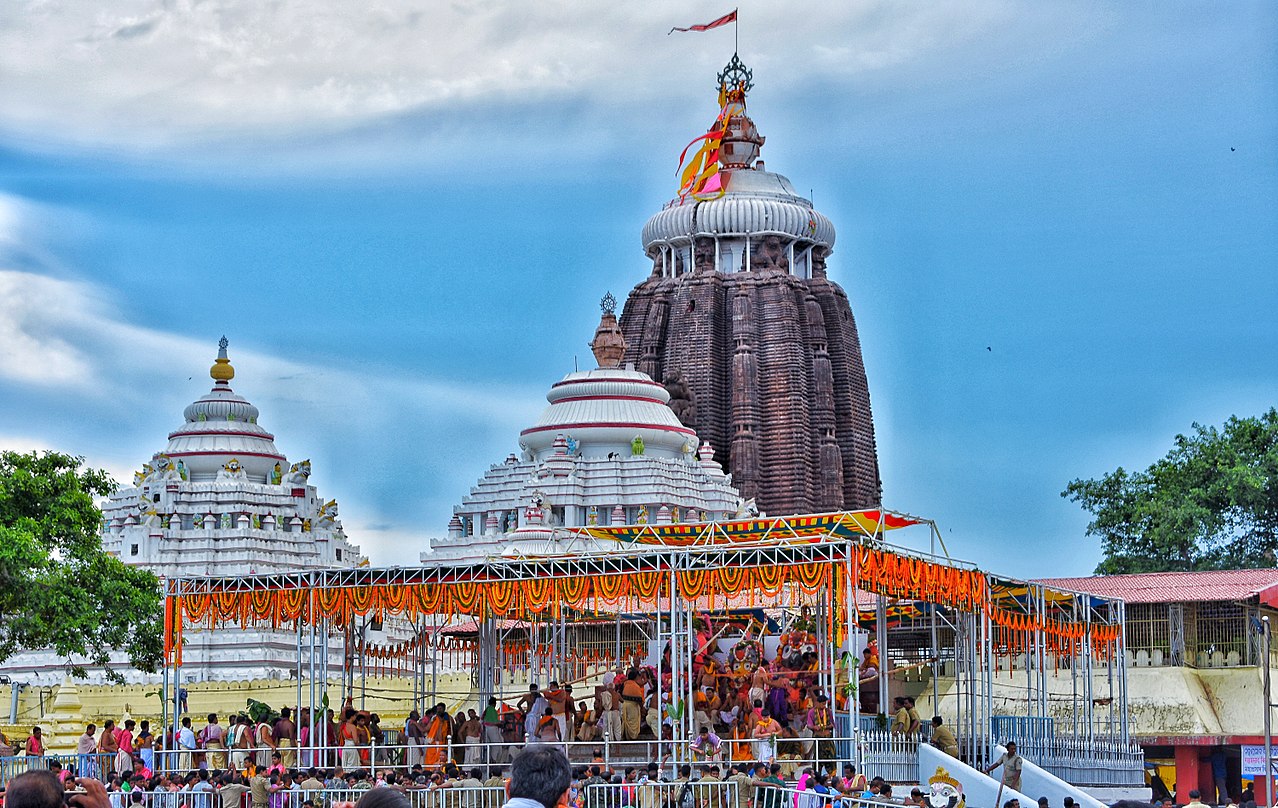
Jagannath Temple, Puri · Prachites / CC BY-SA 3.0Settle in, then walk into the heart of temple town along Grand Road (Bada Danda), the wide processional avenue that fills with a million pilgrims during Rath Yatra. Even outside festival season it is a river of color, sweet-shops and offerings leading to the temple's main Singhadwar (Lion Gate).
The 12th-century temple to Lord Jagannath is the spiritual center of Odisha, its towering shikhara visible across the town. Note that entry is for Hindus only; visitors of other faiths can view the temple beautifully from the roof of the Raghunandan Library opposite the Lion Gate for a small donation. Leave phones, cameras, leather and bags at the free cloakrooms outside, as they are not permitted inside; darshan queues are lightest in the mid-afternoon lull.
Inside the temple complex, the Ananda Bazaar is the world's largest open-air kitchen-market, where Mahaprasad (rice, dal and vegetables cooked in earthen pots over wood fire and offered to the deity) is sold on leaf plates. For non-Hindus who cannot enter, similar prasad-style thalis are served at eateries just outside the gates. It is a humbling, essential taste of Puri.
Head to the Swargadwar (Gateway to Heaven) end of Puri Beach as the light softens. This is the town's social shore at dusk: sand artists finishing sculptures, conch-shell and pearl sellers, and families paddling in the surf.
The most atmospheric stretch of Puri Beach, lined with fishing catamarans and busy with evening crowds. Watch the local nolias (fishermen) and, if you like, hire one for a short guided paddle beyond the break line. Keep valuables close and swim only near the lifeguard flags, as currents here are strong.
Puri is India's sand-art capital, home to the legacy of artist Sudarsan Pattnaik and his students. Around sunset you can often watch elaborate sculptures take shape near the main beach entrance, a free and genuinely local spectacle.
Puri eats early. Choose between a relaxed traveler-favorite garden cafe or authentic Odia home-style cooking heavy on fresh Bay of Bengal seafood.
A casual CT Road cafe good for wood-fired pizza, fresh bakes and coffee, handy if you are staying beachside and want something light. Budget-friendly and open late by Puri standards.

Konark Sun Temple, Chandrabhaga Beach & the Painters of Raghurajpur
Konark Sun Temple · Subham9423 / CC BY-SA 4.0Fuel up early for the day trip east along the Marine Drive coast road. Grab a quick beachside breakfast or serious coffee before the driver arrives.
The garden cafe at Z Hotel on CT Road does a calm early breakfast of eggs, toast, fruit and proper coffee with a sea breeze. A pleasant, unrushed start before the Konark road.
For something fast and authentically Odia, the morning stalls near the beach road serve piping ghuguni, aloo dum, kachori and sweet milky chai for a handful of rupees. Point-and-eat and be on the road by 8.
Drive about 35 km (roughly 1 hour) along the scenic Marine Drive to Konark, arriving when the site opens at 6 am and light is gentle on the carvings. This is the marquee sight of the region.
A UNESCO World Heritage Site built in the 13th century as a colossal stone chariot of the sun god Surya, drawn by seven horses on 24 intricately carved wheels that double as sundials. Indian nationals pay about 40 rupees and foreign visitors about 600 rupees; it opens 6 am to 8 pm daily. Hire one of the licensed guides at the gate (around 500-700 rupees) to decode the astonishing sculptural detail.
A short hop from the temple, the small Archaeological Survey museum displays fallen sculptures, while Chandrabhaga Beach nearby is a wide, clean, uncrowded stretch famed for sunrise and the winter sand-art festival. A good place to stretch your legs before lunch.
Eat near Konark before turning back toward Puri, or push on to the artist village and eat lighter.
The government-run tourist dining options near the temple complex offer straightforward veg and non-veg meals in a calmer setting than the roadside stalls. A safe, quiet choice for families.
On the way back to Puri, detour to Raghurajpur, a heritage crafts village where nearly every home is an artist's studio. It is one of the most rewarding cultural stops in Odisha.
A living village of pattachitra (cloth-scroll) painters, palm-leaf engravers, stone and papier-mache artists, and the birthplace of the Gotipua dance tradition. Wander freely between the painted houses, watch artists at work and buy directly from them; expect to spend 1-2 hours. Entry is free; carry cash and bargain gently for the exquisite paintings.
If time allows on the Konark-Puri road, the town of Pipili is famous for brilliant appliqué (chandua) work: lanterns, canopies, umbrellas and wall hangings in riotous color. A quick, photogenic shopping stop for handicrafts.
Back in Puri, unwind with the sea. Choose a quiet beach walk or a rooftop drink to watch the light fade over town.
The stretch of sand off Chakratirtha Road is calmer than Swargadwar and good for an easy barefoot evening walk, with cafes to duck into. A gentle wind-down after a full day on the road.
One of Puri's important Shiva temples, atmospheric in the evening with lamplight and far fewer crowds than the main temple. A short auto ride from the beach and open to all visitors.
Dinner tonight leans into Odisha's coastal larder, from fiery prawn curries to grilled fish, at some of the town's best-loved tables.
A CT Road stalwart run for the traveler crowd, with a broad menu of Odia fish curries, tandoor, thalis and Western comfort dishes. Friendly, cheap and consistent, with most mains under 300 rupees.
A no-frills local favorite near Grand Road famous for its generous fish and veg thalis in the Bengali-Odia style, packed with pilgrims at meal times. Great value and deeply authentic flavors.
Sunrise Beach, Gundicha Temple & a Slow Farewell to Puri
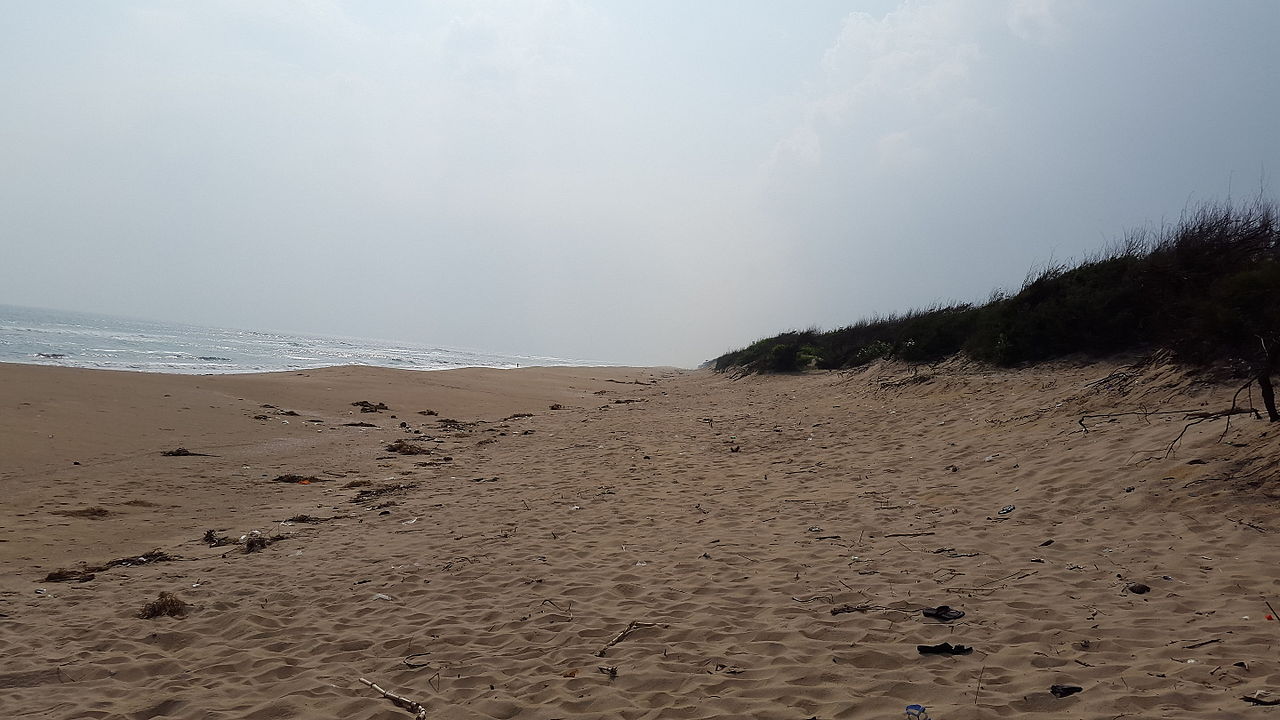
Chandrabhaga Beach · Sidsahu / CC BY-SA 4.0Rise early for the thing Puri does best: sunrise over the Bay of Bengal, with fishermen dragging in the night's catch. Then a quick breakfast before your last morning of sights.
The eastern-facing shore delivers a spectacular sunrise, and the beach is at its most peaceful and photogenic just after dawn, with catamarans silhouetted against the light. Bring a chai from a beach stall and simply watch the town wake up.
Reliable early opener on CT Road for fresh croissants, omelettes, pancakes and strong coffee before checkout. Quick, comfortable and easy on the wallet.
Spend your final morning on the temple sights that ring the town, most of which are open to all visitors and less crowded than the main Jagannath complex.
The 'Garden House' temple about 3 km from the main temple is where the deities journey during Rath Yatra, and it stands serene and open for most of the year. Its clean lines and quiet garden setting make it one of Puri's most photogenic and accessible temples for all visitors.
The largest and holiest temple tank in Puri, a large stepped water body with a central island shrine used for the Chandan Yatra boat festival. A calm, atmospheric spot for a short walk and reflection.
A cluster of small, ancient tanks and Shiva shrines near Gundicha Temple that see few tourists, rewarding for anyone who wants a quieter, more contemplative last stop. Easy to combine by auto-rickshaw in under an hour.
Close the trip with one last proper Odia meal, then head for your train or the Bhubaneswar airport (allow 2 hours for the airport transfer). Keep it early so you are not rushed.
For a fitting farewell, eat a simple prasad-style thali of rice, dalma and vegetables at one of the trusted eateries just outside the temple, echoing the Mahaprasad tradition. Inexpensive, satisfying and quintessentially Puri.
If you want a heartier, more familiar send-off, this old favorite delivers generous seafood and Indian-Chinese plates with quick service, so you can eat and go. Budget around 300-500 rupees a head.
Pick your base
Base yourself along the beachfront on and around Chakratirtha Road (CT Road) for the calmest stretch of sand, easy cafes and quick auto-rickshaw access to the temple. For pilgrims who want to walk to darshan, the lanes near the Jagannath Temple and Grand Road put you in the thick of the ritual life but are noisier and more crowded. Families and those wanting resort calm often prefer the greener Baliapanda / New Marine Drive side.
A leafy beachfront property on CT Road with a sea-facing pool, spa and reliable Odia and multi-cuisine dining. Comfortable and well run without being stiff, and an easy auto ride to the temple.
A grand old British-era railway hotel with high ceilings, wide verandahs and gardens facing the sea. Full of character for travelers who like heritage atmosphere over modern gloss.
A characterful budget-to-midrange beach guesthouse in a converted 1930s mansion on CT Road, with a garden cafe and direct beach access. A longtime backpacker and traveler favorite for value and location.
A sprawling low-rise resort on the road toward Konark with lawns, two pools and a private beach shuttle, good for families who want space and activities. About 10 minutes from the town center.
For groups or longer stays, several serviced villas and apartments near CT Road and New Marine Drive offer kitchens and sea views at good value. Handy for families who want to self-cater between temple meals.
Good to know
How many days do you need in Jagannath Puri?
Two to three days is ideal. You need about a full day for the Jagannath Temple, Puri Beach and the town's smaller temples, plus a second day for a Konark Sun Temple and Raghurajpur day trip; a third morning lets you catch sunrise and see Gundicha Temple before departing.
Can non-Hindus enter the Jagannath Temple in Puri?
No. Entry to the Jagannath Temple is restricted to Hindus only. Visitors of other faiths can still see the temple clearly from the rooftop of the Raghunandan Library across from the Lion Gate for a small donation, and can freely visit most other temples in town such as Gundicha and Lokanath.
What is the best area to stay in Puri for first-time visitors?
Chakratirtha Road (CT Road) along the beachfront is the easiest base, with the calmest stretch of sand, traveler-friendly cafes and quick auto-rickshaw access to both the temple and the beach. Pilgrims who want to walk to darshan can stay in the lanes near Grand Road, while families often prefer the quieter resort strip toward Baliapanda.
What is the best time to visit Puri?
October to February offers the most comfortable weather, with warm days and cooler evenings ideal for the beach and temple visits. Summers (April to June) are hot and humid, and the famous Rath Yatra chariot festival in June or July brings enormous crowds that require booking well in advance.
How far is the Konark Sun Temple from Puri and how do you get there?
The Konark Sun Temple is about 35 km from Puri, roughly a one-hour drive along the scenic Marine Drive coastal road. Most visitors hire a taxi or auto-rickshaw for a half-day trip, often combining it with Chandrabhaga Beach and the artist village of Raghurajpur on the way back.
Is Puri expensive to visit?
Puri is very affordable by Indian standards. Comfortable midrange hotels run roughly 2,500-6,000 rupees a night, hearty Odia thalis and seafood meals cost 200-500 rupees a head, and local transport by auto-rickshaw is cheap, though a full-day car hire for the Konark trip adds around 1,500-2,500 rupees.
Three days is enough to feel Puri's rare double pull: the fervor and ritual of the Jagannath Temple on one side, the open Bay of Bengal and the carved grandeur of Konark on the other. Eat the Mahaprasad, watch a sunrise over the fishing boats, and buy a pattachitra straight from the artist who painted it. You will leave with a deeper sense of Odisha than most travelers ever get, and very likely a plan to return for the chariots.