Family-Friendly Dublin in 4 Days: Castles, Cliffs & Cozy Pubs
A relaxed but full four days built for families, weaving Dublin's storybook history with a day trip into the green Wicklow hills and easy South Dublin bases.
4 days in Dublin
Dublin wears its thousand years lightly. Founded by Vikings around a dark tidal pool (the 'dubh linn' that gave the city its name), it grew into a Georgian capital of red-brick squares, then into the literary hometown of Joyce, Yeats, and Wilde. For a family, that layered past reads like a treasure hunt: illuminated medieval manuscripts, a working brewery you can smell across the Liffey, deer grazing in one of Europe's largest city parks, and castles a short drive into the hills.
The city is compact and walkable, and the River Liffey neatly splits north from south. A LEAP Visitor Card (around 8 euros per day, unlimited on Luas trams, DART trains, and buses) is the easiest way for families to get around, and most headline sights sit within a 20-minute walk of Trinity College. South Dublin (think Dundrum, Rathmines, Ballsbridge, and the foothills toward the Dublin Mountains) makes a calmer, better-value base than the tourist core, with quick tram and DART links into town.
Come prepared for changeable weather in any season (pack layers and a rain jacket year-round), and know that summer is peak: the Book of Kells, Guinness Storehouse, and popular day tours sell out days ahead. Irish food has come a long way, and beyond the pub classics you'll find excellent seafood, hearty breakfasts, and plenty of genuinely kid-friendly spots. Four days is enough to enjoy the city's greatest hits at a comfortable pace and still escape into Leinster's countryside for a day.

Arrival, Trinity College & the Old City
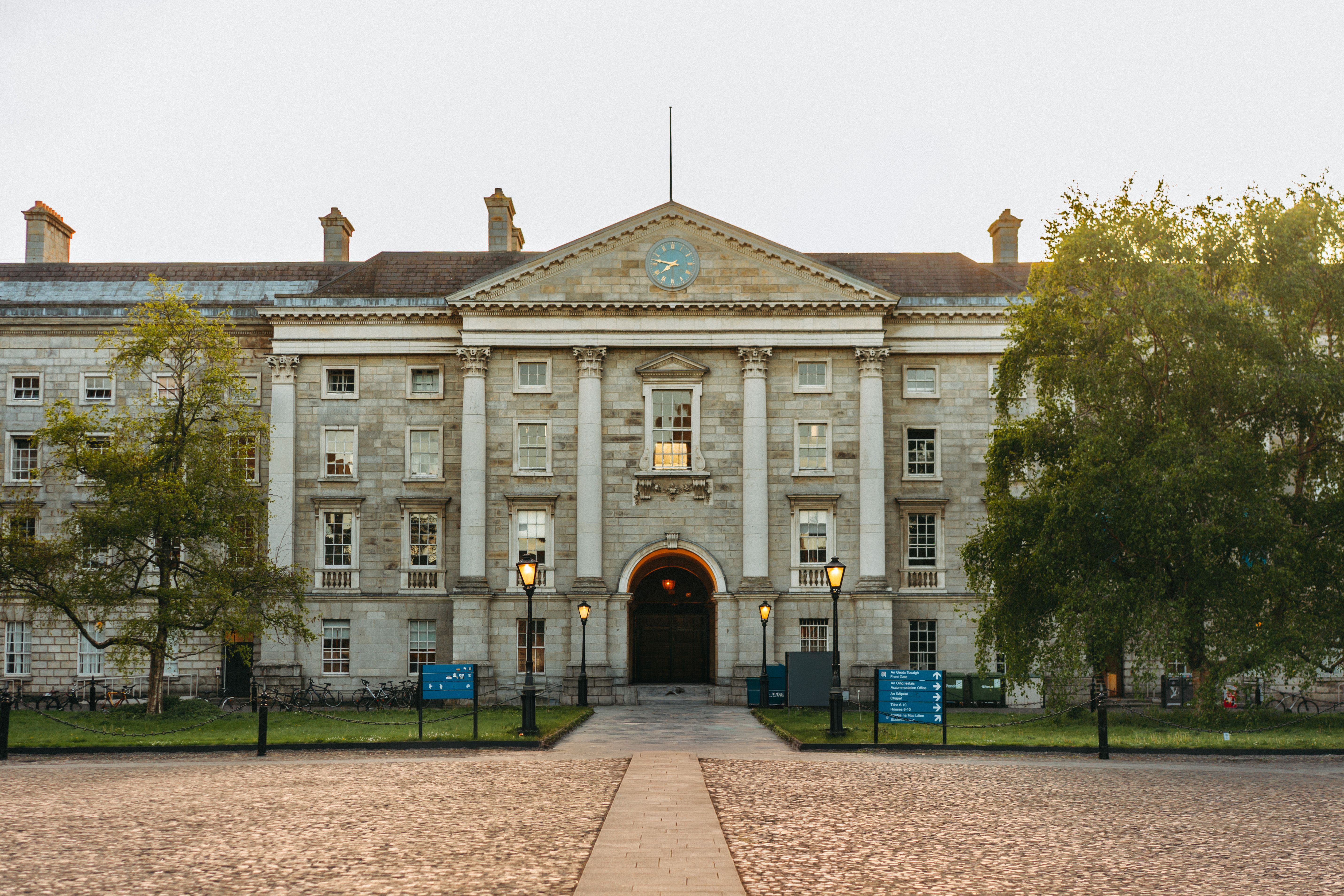
Library of Trinity College Dublin · Diliff / CC BY-SA 4.0Drop your bags and ease into the city on foot. Trinity College sits right in the center and gives kids and adults alike a satisfying first hit of Dublin history without much walking.
Trinity's 9th-century illuminated gospel book is the city's most famous treasure, displayed alongside the breathtaking barrel-vaulted Long Room lined with 200,000 antique books. Tickets run about 18-25 euros for adults (kids under 12 free), and timed slots sell out in summer, so book online ahead. Allow about an hour; the exhibit's short films help keep younger children engaged.
If you'd rather not commit to tickets on a travel day, the cobbled Trinity quads are free to wander and make a calm introduction to the city. Just outside the gates on Suffolk Street stands the Molly Malone statue, a fun, quick photo stop tied to Dublin's famous folk song.
Wander into the Temple Bar quarter for its cobbled lanes, buskers, and painted pub fronts. It's touristy but genuinely lively, and by early evening it's family-friendly before the late crowds arrive.
Walk the tangle of Temple Bar's lanes, catch a street musician or two, then cross the elegant white cast-iron Ha'penny Bridge (1816) over the Liffey for a classic Dublin photo. It's a short, flat loop that's easy with kids and free.
Keep the first night simple and comforting with a proper Irish welcome dinner near the center.
A cheerful Temple Bar institution known for pizzas, burgers, and a relaxed family atmosphere (Sinead O'Connor once waitressed here). Mains run roughly 15-22 euros and there's a proper kids' menu. Good for a low-stress arrival night.
The place to try boxty, the traditional Irish potato pancake, alongside stews and coddle in a warm, wood-lined room. Expect around 18-26 euros for mains; a fun, distinctly Irish introduction for the whole family.

Guinness, Kilmainham & Phoenix Park
Guinness Storehouse · Steven Lek / CC BY-SA 4.0Fuel up before a big day. Dublin does breakfast well, from serious flat whites to full Irish fry-ups.
One of the roasters that put Dublin coffee on the map, with expertly pulled espresso and pastries. Great for a quick, high-quality caffeine hit before the day begins.
A beloved little bakery-cafe near Dublin Castle serving hearty breakfasts, scones, and excellent cakes. Cozy and family-friendly; arrive early as it fills up. Breakfast plates run about 10-15 euros.
Head to St James's Gate for the city's most popular attraction. The Guinness Storehouse is a slick, seven-story experience built inside the old fermentation plant, and yes, it works for families (kids get the science, spectacle, and a soft-drink alternative up top).
Ireland's number-one paid attraction walks you through the brewing story across seven floors, ending in the Gravity Bar with 360-degree views over Dublin. Tickets are around 30-36 euros for adults with discounts for children; book online for a timed slot to skip the line. Allow about two hours.
Stay in the historic Liberties neighborhood for lunch before the afternoon in the park.
A bright, easygoing cafe near the Guinness Storehouse serving generous sandwiches, soups, and salads with a wholesome bent. Relaxed and welcoming to kids; lunch runs about 10-16 euros.
A friendly traditional pub right by St James's Gate doing dependable Irish comfort plates like beef and Guinness stew and fish and chips. Mains around 15-22 euros in a warm, unpretentious setting.
Trade brewing history for wide green space. Phoenix Park is one of Europe's largest enclosed city parks, home to a herd of wild fallow deer and the excellent Dublin Zoo, perfect for burning off kid energy.
Set within Phoenix Park, this well-regarded zoo has an African savanna, an Asian elephant habitat, and an orangutan forest. Adult tickets are roughly 23-26 euros with family passes available; book online to save and skip the queue. Easily half a day if the kids are enjoying it.
If you'd rather stay outdoors and free, walk or cycle the park's tree-lined avenues and look for the wild fallow deer that roam near the Fifteen Acres. You can also spot Dublin's tallest obelisk, the Wellington Monument, and glimpse Aras an Uachtarain, the president's residence.
Back toward the center, settle in for a hearty Irish dinner with room for the whole family.
Dublin's oldest pub (dating to 1198 by tradition) serves classic Irish dinners in a rambling, atmospheric warren of rooms, often with live trad music from the evening. Mains run about 18-27 euros; go early for a family-friendly seat before the music crowd builds.
A modern Irish eatery by the Ha'penny Bridge with river views, generous portions, and a good kids' menu. Comforting dishes like bacon and cabbage or fish and chips run roughly 17-25 euros.

Into the Wicklow Mountains & Glendalough
Glendalough · Denzillacey / CC BY-SA 4.0Escape the city for the day into 'the Garden of Ireland.' A guided coach tour takes the stress out of driving and packs in Wicklow's glacial valleys, the ancient monastic ruins of Glendalough, and often a stop in medieval Kilkenny, all easy and engaging for families.
A top-rated full-day trip from Dublin through the Wicklow Mountains to Glendalough's 6th-century monastic site, with its iconic round tower and two dark glacial lakes, then on to Kilkenny's castle town. Comfortable coaches with a live guide; around $52 per adult, roughly 9-10 hours. Great value and no driving on winding mountain roads.
A similar full-day loop that adds a working-farm sheepdog demonstration, which children usually love, plus a guided walk in Kilkenny and time at Glendalough. About $47 per adult and a fun, rural-Ireland change of pace from the city sights.
You'll return to Dublin in the early evening, tired and hungry. Keep dinner close to base and casual.
A long-running Temple Bar favorite famous for its chicken wings and big American-style burgers, with a buzzy, family-friendly vibe. Mains run about 16-24 euros. Reliable comfort food after a long day on the road.
If the tour drops you back later than planned, a neighborhood pub in Rathmines, Ballsbridge, or your base area is the easy call for stew, fish and chips, or toasties. Expect roughly 14-22 euros for mains and a warm welcome for kids in the early evening.

Georgian Dublin & an Easy Send-off
St Stephen's Green · Dronepicr (edited by King of Hearts) Edit corrects CA and sharpens image / CC BY 3.0On your last morning, keep it relaxed with a good breakfast near the center before a short bit of sightseeing.
A grand Dublin cafe institution since 1927, with stained-glass windows and famous sticky buns alongside full breakfasts. A memorable, distinctly Dublin spot for a farewell morning; breakfast plates run about 10-16 euros.
A stylish specialty coffee bar on Drury Street for a top-notch flat white and a pastry if you want something quick and quality before wandering. Casual and central.
Spend your final hours on foot in Georgian Dublin, with a green park for the kids and a choice of free national museums that are easy to dip into before checkout.
This Victorian park at the top of pedestrianized Grafton Street has ponds, ducks, flowerbeds, and playground space, a relaxed way to spend an hour. Grafton Street's buskers and shops make for an easy stroll toward your last stops. Both are free.
A free, compact museum on Kildare Street with genuinely wow-worthy Iron Age bog bodies, Viking artifacts, and dazzling Celtic gold. It's engaging for kids and a great rainy-morning option; allow about an hour.
A charming, story-driven museum on St Stephen's Green that packs the city's 20th-century history into a Georgian townhouse, told with wit on quick guided visits. Tickets around 15 euros; a fun, digestible last stop.
Grab an easy lunch near the center, then collect your bags and head for the airport (allow 45-60 minutes by taxi or Airlink bus from the city).
The upstairs cafe above the beloved Irish lifestyle store serves wholesome salads, quiches, hot plates, and famously good cakes. Family-friendly and central, with lunch around 12-18 euros; you can grab treats for the flight downstairs.
A Dublin chipper since 1913, perfect for one last plate of fresh fish and chips before you go. Cheap, quick, and a proper local classic; around 10-15 euros. Order to go and eat in a nearby square.
Pick your base
For families on a mid-range budget, South Dublin neighborhoods like Ballsbridge, Rathmines, and Dundrum offer larger, better-value rooms with quick tram (Luas) or DART links into the center, plus green space nearby. If you prefer to walk everywhere, base in the city center around Trinity College, St Stephen's Green, or the quieter southside of Temple Bar; you'll pay more but save on transit and time.
A comfortable, well-run mid-range hotel in leafy Ballsbridge with spacious rooms and family options, a short DART hop or 25-minute walk to the center. Reliable value and near the RDS and Aviva Stadium.
A handsome Georgian-fronted hotel a few minutes' walk from Trinity College and Merrion Square, ideal if you want to skip transit and walk to nearly everything. Good-sized rooms and a solid breakfast.
A dependable, budget-friendly choice in South Dublin beside The Square shopping center and the Luas Red Line tram, which runs straight into town. Family rooms and free parking make it easy on the wallet.
A modern hotel in South Dublin near the M50 and the Luas Green Line, with large family rooms, free parking, and easy tram access to the center. A good pick if you're renting a car for the Wicklow day.
For more space and a kitchen, a self-catering apartment in Rathmines or Ranelagh puts you in a real Dublin village with cafes, parks, and a fast tram into town. Ideal for families who want to cook breakfast and spread out.
Dublin's grand dame on St Stephen's Green, where the Irish Constitution was drafted in 1922. A splurge, but the location, afternoon tea, and old-world service are genuinely iconic if you want one special night.
Good to know
How many days do you need in Dublin?
Three to four days is ideal for Dublin. That gives you time for the headline sights (Trinity College and the Book of Kells, the Guinness Storehouse, Phoenix Park) plus one full-day trip into the countryside, such as the Wicklow Mountains and Glendalough, without feeling rushed.
What is the best area to stay in Dublin for families?
For families, South Dublin neighborhoods like Ballsbridge, Rathmines, and Dundrum offer larger, better-value rooms and green space, with quick Luas tram or DART train links into the center. If you'd rather walk everywhere, stay near Trinity College or St Stephen's Green, though you'll pay more.
Is Dublin expensive to visit?
Dublin is one of Europe's pricier capitals, especially for hotels and pub dinners in the tourist core. You can keep costs down by staying in South Dublin, using a LEAP Visitor Card for transit (around 8 euros a day), visiting the free national museums and Phoenix Park, and booking major attractions online in advance.
What is the best time to visit Dublin?
May, June, and September offer the best balance of milder weather, long daylight hours, and fewer crowds than peak July and August. Dublin is rainy and cool year-round, so pack layers and a waterproof jacket whenever you come.
How do you get around Dublin with kids?
Central Dublin is compact and walkable, and the Luas trams, DART trains, and buses cover everywhere else. A LEAP Visitor Card gives unlimited travel across all three for a set daily price, which is easier and cheaper than buying individual tickets with children in tow.
Can you do a day trip from Dublin to the countryside in four days?
Yes. Guided full-day coach tours reach the Wicklow Mountains and Glendalough (about an hour from the city) or the Cliffs of Moher on the west coast, all returning the same evening. The Wicklow and Glendalough trips are the easiest and most family-friendly, typically running nine to ten hours.
Four days gives a family a real taste of Dublin: illuminated manuscripts and a brewery skyline on day one and two, wild deer and a mountain valley on day three, and a gentle Georgian send-off on the last morning. Base yourself just south of the center for space and value, book the big sights ahead in summer, and leave a little room for a spontaneous pub session with fiddles playing. You'll leave with the city's stories, and probably a few sticky-bun crumbs, in tow.