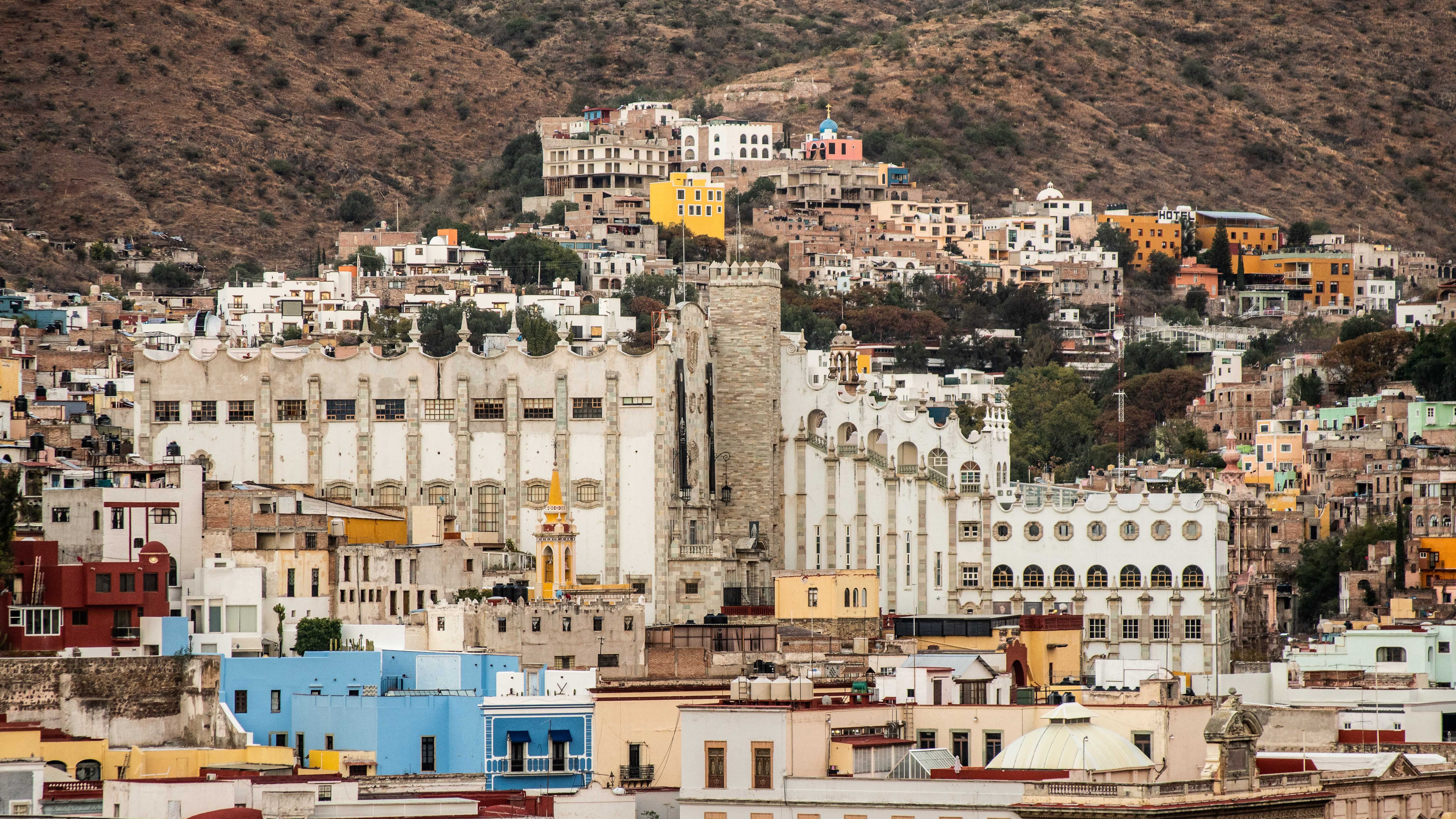
Eight Days in Guanajuato: Silver-Mine Streets and San Miguel's Cobblestones
A week threading two of Mexico's most beautiful highland towns, from the painted canyons of Guanajuato City to the rooftop sunsets of San Miguel de Allende.
8 days in Guanajuato City, San Miguel de Allende
Guanajuato made its fortune underground. From the 1500s, the silver veins beneath these mountains funded cathedrals and palaces, and the wealth left behind a labyrinth of a city: houses stacked up ravine walls in lemon, rose, and cobalt, threaded by stepped alleys and a network of old riverbed tunnels that now carry the traffic. The state capital, Guanajuato City, is a UNESCO World Heritage Site and the birthplace of muralist Diego Rivera; an hour and a half east, San Miguel de Allende is a former cattle-and-textile town turned arts colony, repeatedly voted among the world's best small cities.
Both towns sit on the high plateau around 6,000 to 6,800 feet, so days are bright and warm and evenings cool quickly even in summer; pack a layer. The two pair beautifully because they feel so different: Guanajuato is dense, student-fueled, and dramatically vertical, while San Miguel is open, polished, and built for slow rooftop afternoons. You will mostly walk, though Guanajuato's hills are steep and its streets are stone, so bring sturdy shoes.
Getting in is easy via Del Bajio International Airport (BJX) near Leon, roughly 45 minutes from Guanajuato City and 90 minutes from San Miguel de Allende. The food runs from mining-town classics like enchiladas mineras to San Miguel's award-winning modern Mexican kitchens, and the surrounding Independence Valley has quietly become one of the country's better wine regions. Spring and fall bring the most reliable weather; if you come in October, book far ahead, because the Festival Internacional Cervantino fills every room in Guanajuato City.

Arrival, the Jardin de la Union, and a First Sunset
Guanajuato (city) · Carlos ZGZ / CC0Settle in, then ease into the city's rhythm on foot. Everything central is within a few minutes of the Jardin de la Union, so let yourself get a little lost.
Start at the triangular main plaza, ringed by cafe terraces and shaded by clipped Indian laurel trees, then admire the columned, lamp-lined facade of Teatro Juarez next door. Peek inside the theater if it is open (small entry fee, usually closed Mondays) for its astonishing Moorish-Art Nouveau interior.
The mustard-yellow basilica on Plaza de la Paz holds a jeweled wooden image of the Virgin gifted by the Spanish crown in the 1500s. A quiet, atmospheric stop two minutes uphill from the Jardin.
Climb (or ride) above the rooftops for the city's signature view as the lights come on, then drop back down into the plaza buzz.
The little funicular behind Teatro Juarez climbs the ravine wall in two minutes to the El Pipila monument and a sweeping terrace over the whole painted city. Go near sunset; the round-trip is inexpensive, and you can walk down the alleys afterward if your knees allow.
After dark, costumed student minstrels lead singing, story-filled processions through the alleys, a Guanajuato tradition. Buy a ticket from the performers gathering near the Jardin or the basilica early evening; expect a lively hour-plus of music and bawdy local legends.
Keep the first night easy and central, with a table near the plaza action.
A polished classic facing Teatro Juarez, good for enchiladas mineras and other regional plates with reliable service. The terrace seats are prime people-watching.
A bohemian, art-cluttered local institution a block off the Jardin, beloved for hearty, cheap comida and strong coffee. Cash-friendly and unpretentious.
Modern Mexican cooking on Plaza San Fernando with a thoughtful mezcal list and a leafy terrace. A step up for a celebratory first dinner.

Viewpoints, the University, and the City's Secret Alleys
Guanajuato · Alexis Rojas, VegaMex Derivative work : Giggette, VegaMex / Public domainCaffeinate where the students and artists do before the climbing begins.
Guanajuato's cult roaster, dim and buzzy, pulling some of the best espresso in town from early until late. Order a cortado and a pastry and watch the alley wake up.
A relaxed cafe near the Jardin with solid breakfasts, chilaquiles, and reliable coffee for a sit-down start.
Tackle the landmarks that climb the hillside, starting high and working back down through the old university quarter.
The university's monumental white staircase and Moorish-arched facade are among the most photographed sights in the city. Wander the lanes around it, then drop to the basilica and Plaza de la Paz.
Housed in a cast-iron 1910 hall that looks like a train station, this two-level market sells everything from cajeta (regional caramel) to woven baskets and quick antojitos. A great browse, even if you only buy a paper cone of fruit.
Eat like a local, fast and cheap, between sights.
The upstairs comedores and ground-floor stands serve enchiladas mineras, gorditas, and fresh juices for a few dollars. Point at what looks good and grab a stool.
A short cab ride uphill rewards you with refined regional cooking (think pipian and house moles) and a long valley view. Worth a midday reservation if you want a calmer, special lunch.
Hand the storytelling to an expert, then chase the city's most famous alley legend.
A three-hour guided walk that goes beyond the postcards into the symbolism, architecture, and tangled history behind the facades, consistently rated near-perfect. The best way to make sense of how this vertical city came to be.
The Alley of the Kiss narrows to barely 27 inches, the stage for a doomed-lovers legend; couples still kiss on the third step for luck. It gets crowded, so pair it with the quieter alleys nearby.
Settle into the city's small but serious dining scene.
Contemporary Mexican plates with care taken over ingredients and a good wine and mezcal selection, in an intimate central room. A locals' favorite for a proper dinner.
A French-Mexican bistro on leafy Plaza San Fernando, strong on tartines, salads, and a calm terrace. A nice change of pace from heavier regional fare.
Silver Mines, a Baroque Masterpiece, and Christ on the Mountain
Guanajuato · Alexis Rojas, VegaMex Derivative work : Giggette, VegaMex / Public domainFuel up before heading to the hills above town.
A tiny cafe straddling a bridge over a callejon, romantic and great for a quick breakfast or coffee. Window seats hang right over the alley.
A central, design-minded spot for espresso drinks and light breakfast plates before a day out of town.
Head 10 minutes uphill to La Valenciana, the mine that bankrolled much of colonial Guanajuato, for both the church it built and the shafts it dug.
This pink-stone Churrigueresque church is one of Mexico's baroque high points, its interior dripping with gilded altarpieces funded by the silver below. Modest entry, and the view back over the city is superb.
Descend into a preserved colonial mine shaft on a short guided visit to grasp the brutal labor that produced all that silver. Small admission, helmets provided, not for the claustrophobic.
Eat near the mines with a view before the afternoon excursion.
If you skipped it yesterday, this hilltop kitchen for refined moles and regional dishes is an easy add-on near Valenciana. Book ahead for the terrace.
Simple family fondas around Valenciana serve comida corrida (a fixed multi-course lunch) for a few dollars. Ask your mine guide for their pick.
Drive up to the geographic center of Mexico for one of the country's most striking monuments.
A 65-foot bronze Christ crowns Cerro del Cubilete at nearly 8,500 feet, roughly an hour from the city, marking the symbolic center of the country. The pilgrimage road and summit views are the draw; arrange a taxi to wait or join a tour.
Prefer to stay close? This 17th-century hacienda just outside town has a museum of period rooms and a series of formal themed gardens, a peaceful couple of hours. Modest entry.
End the day with a view back over the lit-up city.
A steep stair-climb leads to this long-running Italian-leaning kitchen with arguably the best dinner view in Guanajuato. Go for the panorama as much as the pasta.
An easy, central fallback on the Jardin if you would rather not climb after a long day. Dependable regional and Mexican standards.
Diego Rivera, Don Quixote, and the Mummies
Guanajuato (city) · Carlos ZGZ / CC0A relaxed museum morning starts with a proper breakfast.
Return for the best coffee in town and a chilaquiles or pan dulce before the museums open. It runs on a student schedule, so it is comfortably unhurried in the morning.
Dive into the city's art and history museums, all walkable from the center.
The muralist's birthplace is now a museum with the family's restored ground-floor rooms below and galleries of his sketches and paintings above. Small admission, usually closed Mondays.
A surprisingly captivating collection devoted entirely to Don Quixote across paintings, sculpture, tapestry, and stamps, a only-in-Guanajuato passion project. Compact and worth an hour.
The former granary where the 1810 independence uprising saw its first major battle, now the state regional museum with murals by Chavez Morado. History buffs should not miss it.
Keep it light and central between museums.
Back to the bohemian standby for an affordable, filling comida and good coffee. Ideal mid-museum refuel.
One more pass through the market for tacos or a fresh juice if you want to graze rather than sit.
Face Guanajuato's most famous, and most macabre, attraction, then take it easy.
The city's mineral-rich soil naturally mummified bodies disinterred from the cemetery, and they are now displayed in this oddly compelling museum. It is touristy and not for everyone; tickets are sold on site and lines build on weekends.
Prefer something gentler? Spend the afternoon plaza-hopping and shopping the alleys for Talavera, cajeta, and crafts, ending with a coffee in the shade.
A last Guanajuato dinner before tomorrow's move to San Miguel.
Round out your stay with modern Mexican cooking and a long mezcal pour on Plaza San Fernando. Reserve for the terrace.
An intimate, ingredient-driven dinner if you want one more refined meal in the center.
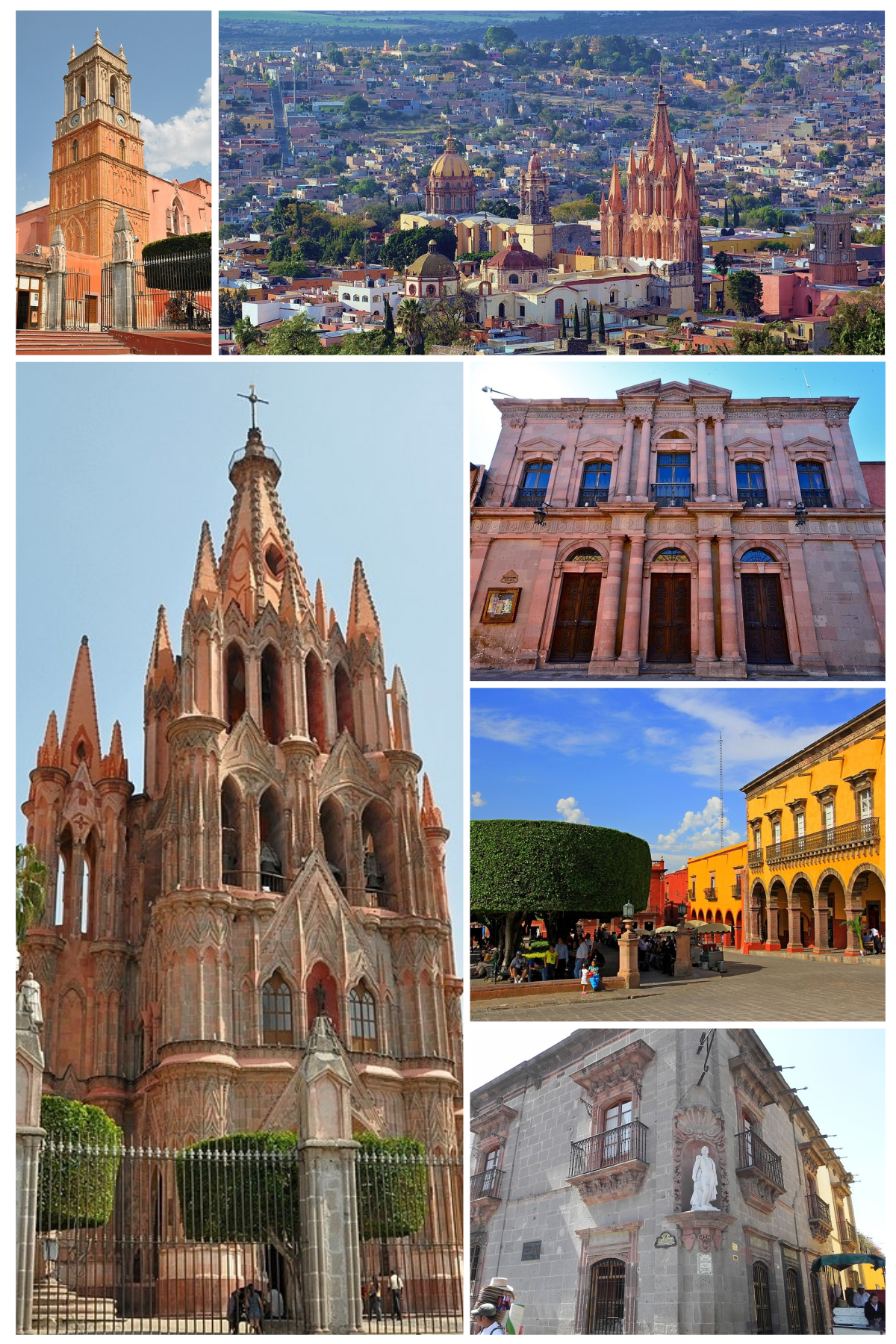
Over the Hill to San Miguel: the Parroquia and First Rooftop
San Miguel de Allende · Microstar / CC BY-SA 4.0A last Guanajuato breakfast before the road.
An easy, central spot for chilaquiles and coffee before checking out and heading to the bus or your transfer.
Make the 90-minute hop east to San Miguel and drop your bags.
Take a private car (about 90 minutes) or a first-class ETN/Primera Plus bus (about 2 hours with a connection). Aim to arrive by early afternoon so you have the rest of the day in town.
Land softly with lunch near the Jardin.
A relaxed, well-priced local kitchen for hearty Mexican plates a short walk from the center, a good first meal that won't blow the budget. Generous portions and quick service.
A bright, popular all-day cafe known for excellent breakfasts and brunch plates if you arrive earlier. Expect a short wait at peak times.
Orient yourself around the town's storybook center, ideally with a guide who knows the backstories.
A warmly reviewed local-led walk through the Parroquia, the Jardin, and the lanes around them, unpacking the town's independence-era history and architecture. The fastest way to feel at home here.
The pink, fairy-tale-spired parish church anchors the Jardin Principal, San Miguel's social heart. Wander the square, step inside the cool nave, then duck into the Templo de San Francisco and the Oratorio nearby.
Claim a rooftop for the town's famous golden hour.
The Rosewood's top-floor bar frames the Parroquia at sunset better than anywhere in town. Arrive 45 minutes before sundown for a table; it fills fast and minimum spends apply.
A lively, more affordable rooftop above Calle Umaran with cocktails and small plates and a fine Parroquia view. A younger, buzzier scene than the Rosewood.
First dinner in a town that takes food seriously.
A long-loved rooftop terrace beside the Oratorio serving solid traditional Mexican plates and margaritas under the floodlit spires. Reserve a railing table.
A polished steakhouse-meets-Mexican grill with a romantic courtyard, good for a celebratory arrival dinner. Book ahead on weekends.

Ancient Pyramid Morning, Art and Food Afternoon
Cañada de la Virgen · Erik Reinecke / CC BY-SA 4.0An early, strong coffee before the pyramid pickup.
A serious-coffee favorite roasting Mexican beans, ideal for an early cortado and a quick bite before a morning tour. Calm and dependable.
A French-leaning bakery-cafe with excellent pastries, eggs, and bread for a proper sit-down breakfast. Get there early to beat the queue.
Head into the countryside to one of central Mexico's most atmospheric archaeological sites, accessible only on a guided visit.
This Otomi ceremonial complex on a mesa ringed by canyons, occupied between roughly 540 and 1050 AD, can only be reached with an authorized guide and a short walk in from the shuttle. The archaeologist-led version digs into Mesoamerican astronomy and legend, and the half-day runs about morning to midday. The site opens only certain days, so book ahead.
Refuel back in town after the morning out.
A bright, modern market hall of healthy and international stalls, good for a build-your-own lunch after a hot morning at the site. Smoothies, bowls, tacos, and good coffee under one roof.
A cheerful, long-running cafe near the Jardin doing reliable Mexican and comfort dishes. A safe, central bet.
Swap ancient stone for San Miguel's art scene.
A former textile mill now packed with galleries, design studios, antique dealers, and a couple of cafes, free to wander. Browsable for an hour or three, about a 15-minute walk or short cab from the center.
A 170-acre botanical garden and nature reserve on the edge of town with cactus collections, a canyon, and big views. A peaceful late-afternoon escape; modest entry.
Turn dinner into an event with a guided graze through the town's best bites.
A small-group, three-hour evening crawl through five tastings at some of the town's award-winning kitchens, substantial enough to be dinner. A delicious, social way to cover ground you would never find solo.
Prefer something rowdier? This three-hour walk pairs family-stand tacos with tequila education across the center. Come hungry and thirsty.
Your Day, Your Way: Cooking, Wine, Hot Springs, or Horses
San Miguel de Allende · Microstar / CC BY-SA 4.0A leisurely start before a flexible day of options.
Return for the town's best-loved breakfast, from huevos rancheros to lavender lattes. Go early or expect a wait.
A relaxed local cafe for good coffee and a simpler breakfast if you have an early activity. Friendly and unhurried.
Choose your adventure for the day, from hands-on cooking to the saddle or the springs. All of these are bookable experiences; pick one.
Build your own menu and cook traditional dishes start to finish with a professional chef, then sit down to the feast. A hands-on, deeply rated way to spend a half day and bring recipes home.
Ride out across high plateau and canyon country on a working family ranch about 18 km from town. A near-perfectly rated outdoor morning for riders of all levels.
Continue the theme or pivot to the surrounding wine valley and pilgrimage sights.
The hills around San Miguel have become serious wine country; this tasting and pairing visit to a local vineyard shows off the so-called cradle of wine in the Americas. A scenic, sit-down afternoon.
A short drive north reaches the Atotonilco sanctuary, the mural-covered "Sistine Chapel of Mexico" and a UNESCO site, then Dolores Hidalgo, where independence was declared and where you can try wild ice cream flavors on the plaza. Hire a driver or join a tour for the half day.
Prefer to do nothing strenuous? Book a deeply rated deep-tissue massage and let the cobblestones' toll on your legs melt away. A restful counterweight to a busy week.
Go all-in on San Miguel's celebrated dining for your last big night.
A modern tasting-driven kitchen at Dos Casas hotel, among the most ambitious cooking in town. Reserve well ahead for a special send-off.
Chef Donnie Masterton's courtyard mainstay does globally inflected plates and great cocktails in a romantic setting. A reliable, festive choice.
A glamorous rooftop with a sweeping Parroquia view and crowd-pleasing international menu, good for a celebratory last-night drink even if you eat elsewhere.
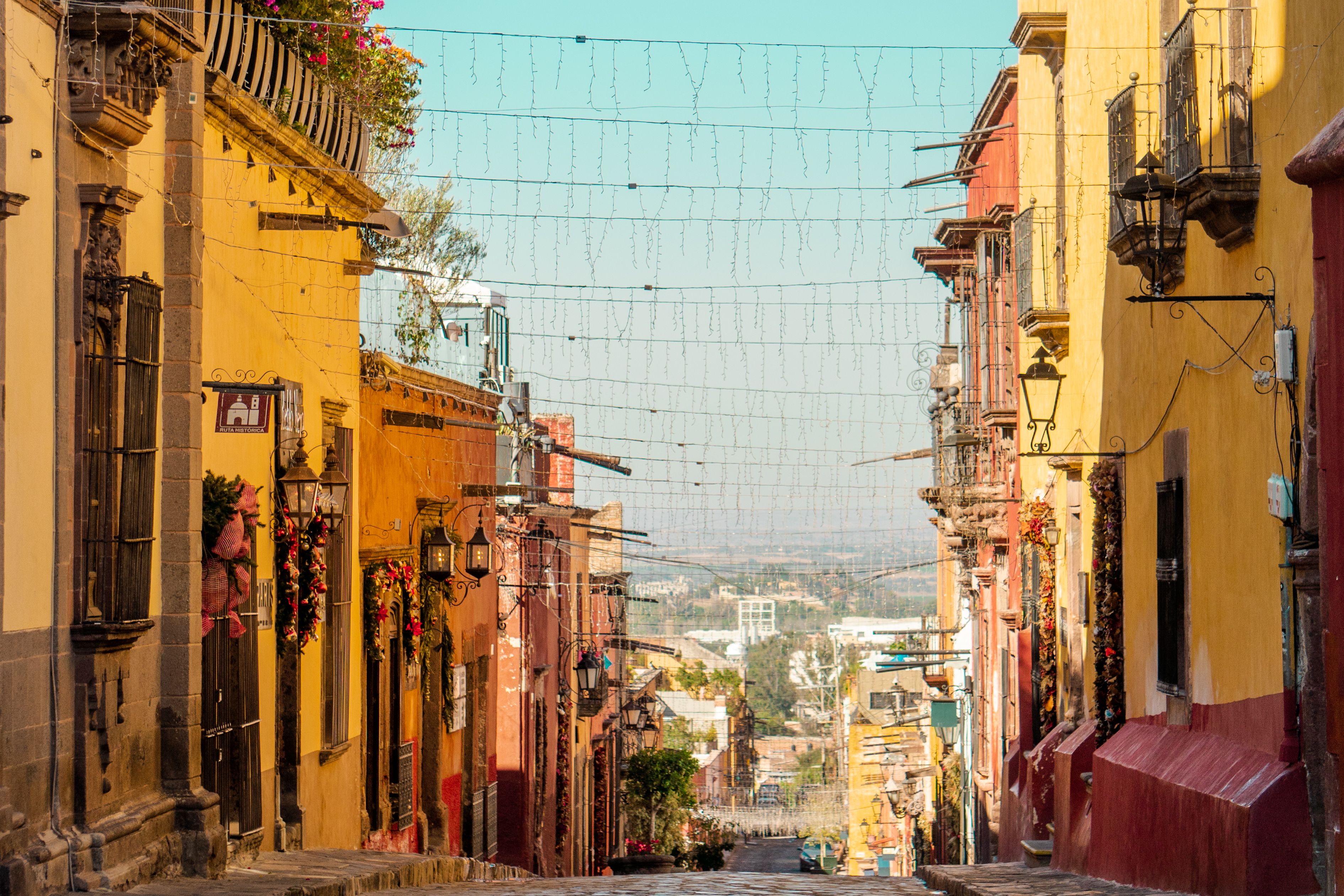
A Slow Last Morning and the Road to the Airport
Colorful buildings line a steep street in San Miguel de Allende, México. · Photo by Heber Vazquez on PexelsOne more San Miguel breakfast before the wind-down.
A final round of excellent pastries, bread, and eggs to start the day right. Easy and central.
A friendly specialty cafe for a proper last espresso and a light bite before packing up.
Catch the postcard view and squeeze in last-minute shopping before checkout.
The classic overlook southeast of the center frames the whole town and its pink spires, best in clear morning light. A short uphill walk or quick cab for one last photo.
This long crafts market off Calle Loreto is the place for tin work, textiles, jewelry, and Talavera to fill your suitcase. Bargain politely and bring small bills.
A light, early lunch, then head for the airport before traffic.
An easy, quick final meal before your transfer, with light plates that won't slow you down. Time it early if you have an afternoon flight.
Allow about 90 minutes by private car or shuttle from San Miguel to Del Bajio International Airport (BJX) near Leon, roughly $90-110 USD, plus buffer for check-in. Pre-book the day before for a smooth departure.
Pick your base
Base yourself in the Centro Historico within a few minutes' walk of the Jardin de la Union and Teatro Juarez; this puts the plazas, museums, and callejoneada nightlife at your door. Streets are steep and largely pedestrian, so pack light and expect to climb. Avoid booking up the highest alleys unless you don't mind a stair workout to your room.
A handsome historic hotel steps from Teatro Juarez with a small rooftop pool and terrace overlooking the basilica domes. Reliable comfort in the best possible location.
Right on the Jardin de la Union, this restored mansion mixes contemporary rooms with a rooftop bar perched over the plaza. Pay for a view room and you will hear the mariachis from bed.
A rambling, good-value warren of rooms tucked just off Plaza San Fernando, decorated with nods to famous poets. Friendly and central without the boutique price tag.
For families or longer stays, a private apartment near Plaza de la Paz gives you a kitchen, more space, and a local-feeling base among the alleys. Look for one with step counts you can live with.
A small Relais-style mansion hotel with a spa and elegant period rooms, the city's most refined splurge. A short walk or quick cab from the center.
A stylish small hotel a few blocks from the Jardin with a rooftop pool and terrace looking toward the Parroquia. Comfortable, central, and a notch below the big-name splurges.
An intimate, design-forward boutique with a rooftop bar and warm service, a short stroll from the center. A great-value alternative to the marquee hotels.
A rambling former convent turned budget hotel with character, terraces, and a central location for a fraction of San Miguel's usual rates. Book a room on the upper floors for the views.
For families or groups, a private colonial house with a courtyard and rooftop near the Centro offers space and a kitchen plus that classic San Miguel terrace. Many come with a cook or daily cleaning.
The town's iconic splurge, a hacienda-style retreat whose Luna rooftop bar has the most famous sunset view over the Parroquia. Worth a drink even if you sleep elsewhere.
Good to know
How many days do you need in Guanajuato?
Three to four days is enough to see Guanajuato City's main sights, plus three to four more if you pair it with San Miguel de Allende, which is why an 8-day trip splitting roughly four nights in each works so well. With a week-plus you can add day trips like the silver mines, Cristo Rey, or Canada de la Virgen without feeling rushed.
Is it worth visiting both Guanajuato City and San Miguel de Allende?
Yes. They sit about 90 minutes apart but feel completely different: Guanajuato City is dense, hilly, student-driven, and laced with tunnels, while San Miguel de Allende is open, polished, and built around rooftop dining and galleries. Together they give you both the dramatic mining-town landscape and the refined arts-colony experience.
What is the best area to stay in San Miguel de Allende for first-time visitors?
Stay in the Centro within walking distance of the Jardin Principal and the Parroquia, where most restaurants, rooftops, and shops are concentrated. The adjacent Guadalupe neighborhood is a more bohemian, slightly cheaper alternative about a 10-15 minute walk from the square.
How do you get from Guanajuato City to San Miguel de Allende?
A private car or taxi takes about 90 minutes and costs roughly $90-110 USD, while a first-class ETN or Primera Plus bus runs about 2 hours, usually with a connection in Dolores Hidalgo or Celaya, for around $15-20. Both depart from the city's main bus terminal.
What is the best time of year to visit Guanajuato and San Miguel de Allende?
Spring (March to May) and fall (September to November) bring the most reliable weather, with warm days and cool evenings at this high altitude. Note that the Festival Internacional Cervantino fills Guanajuato City's hotels in October, so book months ahead if you travel then.
Do you need a car to visit Guanajuato and San Miguel de Allende?
No. Both town centers are best explored on foot, and intercity buses or private transfers connect them easily. A car is only useful for countryside excursions, and even those (mines, hot springs, vineyards, Canada de la Virgen) are simpler to do with a guide or hired driver given the narrow streets and limited parking.
Across eight days you will trade Guanajuato's tunnels, mine churches, and singing alleys for San Miguel's rooftop sunsets, pyramids, and celebrated kitchens, two highland towns that are close enough to pair and different enough to feel like two trips. Walk slowly, eat everything, and leave room in your suitcase for crafts and a bottle of Independence Valley wine. The Bajio has a way of pulling visitors back, so consider this a first chapter.