Bangkok in 5 Days: Temples, Markets, and Street Food You'll Remember
A five-day plan through Bangkok's gilded temples, canal neighborhoods, rooftop bars, and legendary street-food lanes, built for a traveler landing on the afternoon of day one.
5 days in Bangkok
Bangkok, known to Thais as Krung Thep, has been Thailand's capital since 1782, when King Rama I moved the court across the Chao Phraya River and began building the Grand Palace. The result is a city that layers 18th-century royal temples, teak canal houses, and clattering Chinatown gold shops beneath a skyline of glass towers and elevated trains.
The draws are the big set-pieces (the Grand Palace, Wat Pho's reclining Buddha, sunset over Wat Arun) balanced by the everyday pleasures Bangkok does better than almost anywhere: a bowl of boat noodles for a dollar, a foot massage at midnight, a rooftop cocktail 60 floors up. It is a city that rewards curiosity and a strong appetite.
Getting around is easy: the BTS Skytrain and MRT subway are cheap, clean, and beat the traffic, while Grab (the local ride app) and the Chao Phraya river boats fill the gaps. The best months to visit are the cooler, drier November-to-February window; July sits in the green, humid monsoon season, so pack light layers and an umbrella and plan indoor breaks in the afternoon heat.

Arrival, Riverside Orientation, and a First Night in Chinatown
Wat Arun · Mastertongapollo / CC BY-SA 4.0Drop your bags and ease into the city with the river as your compass. The Chao Phraya is Bangkok's original highway, and a slow boat ride is the gentlest way to shake off the flight.
Hop the public river boat from Saphan Taksin (Central Pier) and ride upriver past the Grand Palace and Wat Arun for around 16-20 THB, or take the tourist-blue boat with commentary for about 60 THB. It's the fastest orientation to the city's landmarks and a breezy escape from traffic. Boats run roughly every 15-20 minutes until early evening.
If the heat is heavy, start indoors at this glossy riverside mall, home to SookSiam, an air-conditioned indoor 'floating market' with regional street food under one roof. Free to enter, with a lovely river promenade for photos of the skyline. A soft-landing first stop with easy currency exchange and SIM-card kiosks.
As the light softens, aim for Yaowarat, Bangkok's Chinatown, where neon signs flicker on and the food stalls take over the sidewalks. It's the most electric introduction to the city.
Walk the main drag of Chinatown as vendors set up around 6pm: grilled prawns, oyster omelets, chestnuts roasted in giant woks, and stalls of tropical fruit. The sensory overload (gold shops, red lanterns, sizzling grills) is the point. Come hungry and graze.
Dinner in Chinatown is best done as a crawl, but a couple of anchor spots are worth planning around.
The green-shirted seafood institution at the corner of Soi Texas, grilling prawns and serving tom yum on plastic stools that spill into the street. Expect a short wait and a lively scene; a big grilled-prawn feast runs a few hundred baht per person. Cash is king here.
A beloved, Michelin-listed pork noodle shop famous for kuay jab (peppery rolled rice-noodle soup) and tender braised pork. Cheap, fast, and open late, it's a perfect first bowl. Around 60-100 THB a dish.
Cap the night with a drink hidden in the Chinatown lanes, where a wave of tiny bars has reinvented the old shophouses.
A gin bar behind a heavy wooden door on Soi Nana (the Chinatown one, not the nightlife district), pouring creative, locally inspired drinks in a candlelit shophouse. Small, atmospheric, and a great nightcap. Cocktails around 300-400 THB.

The Grand Palace, Wat Pho, and Sunset at Wat Arun
Grand Palace · Preecha.MJ / CC BY-SA 4.0Fuel up early: the Grand Palace opens at 8:30am and both the heat and the crowds build fast, so an early start pays off.
A polished all-day cafe (originally from Thonglor, with riverside branches) doing proper flat whites and hearty breakfast plates. A reliable, air-conditioned start before a temple day. Breakfast plates around 250-350 THB.
For a Thai-style morning near the Old Town, this stylish spot near Wat Pho serves excellent jok (rice porridge), grilled meats, and Thai coffee. It opens mid-morning, so ideal if you prefer a later, local breakfast. Expect 150-300 THB.
This is the marquee morning of the trip: Thailand's most sacred temple complex and the reclining Buddha next door. Dress modestly (shoulders and knees covered) or you'll be turned away.
The dazzling 18th-century royal compound and home of the Emerald Buddha, Thailand's most revered image. Entry is 500 THB and includes the Queen Sirikit Museum of Textiles; open daily 8:30am-3:30pm. Arrive at opening to beat tour groups and the midday sun, and ignore any tout who tells you it's 'closed today.'
A five-minute walk south, Wat Pho holds the 46-meter gold Reclining Buddha and is the birthplace of traditional Thai massage. Entry is 300 THB (includes a small bottle of water); open daily around 8am-6:30pm. Consider a 30-minute foot massage at the on-site school to reset your feet.
Escape the heat with a proper sit-down lunch near the river before the afternoon.
Just behind Wat Pho, this is a smart place to try grilled river prawns, nam prik dips, and crispy pork with a cold Thai craft beer. Cool, characterful, and reasonably priced for the quality. Mains 180-400 THB.
A riverside terrace with a straight-on view of Wat Arun, serving Thai and Western dishes. Book a river-facing table for the view; it's a touch more expensive but the setting is hard to beat. Mains 300-500 THB.
Cross the river to the 'Temple of Dawn,' which, counterintuitively, glows best in the late-afternoon light.
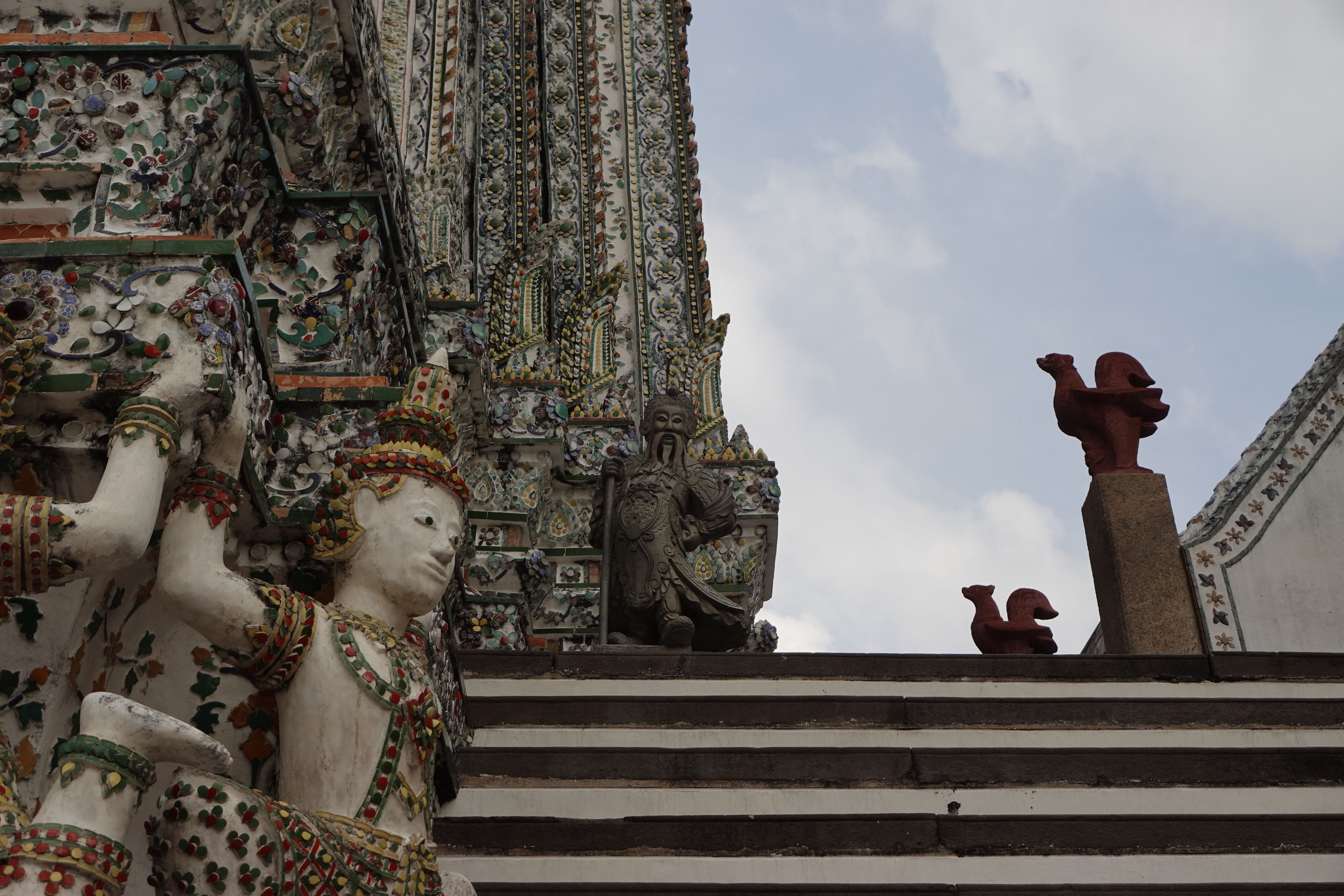
Take the 5 THB cross-river ferry from Tha Tien pier to reach Wat Arun's steep, porcelain-encrusted central spire. Entry is 200 THB; open daily to about 6pm. Climb the lower terraces for close-up views of the mosaic-covered prang made from broken Chinese ceramics.
Stay on the Thonburi side or head back across for sunset, then a relaxed dinner. The river turns golden as the sun drops behind Wat Arun.
A small rooftop bar directly across from Wat Arun with an unobstructed sunset view of the illuminated temple. Arrive by 6pm to claim a spot; drinks around 250-400 THB. One of the best free-to-watch light shows in the city (with a drink in hand).
Round out a classic Bangkok day with dinner in the atmospheric lanes near the river.
Refined home-style cooking from eastern Thailand (Trat and Khon Kaen recipes) served in a handsome riverside room. Order the moo cha muang (pork stewed with cha muang leaves) and crispy pork belly. Mains 200-400 THB; reservations wise on weekends.
A no-frills, Michelin-recommended Thai kitchen famous for stir-fried crab with yellow curry and fluffy crab omelet. Beloved by locals and worth the short taxi ride. Most dishes 150-350 THB.

Floating Market, Canals, and a Rooftop Finale
Damnoen Saduak Floating Market · Roberto Faccenda from Canale CN, Italy / CC BY-SA 2.0Today involves an early departure to beat the crowds and the heat at the floating markets, so grab a quick coffee near your hotel or on the go.
Because most floating-market trips leave between 7 and 8am, take breakfast at your hotel or grab an iced coffee and a pandan bun from any 7-Eleven or nearby cafe. You'll eat plenty at the market itself.
Head out to a floating market, a quintessential Thai scene of vendors paddling boats laden with noodles, mango, and grilled seafood. The two big options suit different tastes.
The most famous (and most photographed) floating market, about 100km southwest of the city, roughly 1.5 hours by car. Go as early as possible (before 9am) to see it at its liveliest and least touristy, and hire a paddle boat to glide the canals. Best combined with a driver or organized half-day trip.
A more local, weekend-focused market (Fri-Sun afternoons and evenings) known for grilled seafood cooked right on the boats and evening firefly tours. If your day 3 falls on a weekend, this is the atmospheric choice. About 1.5 hours from the city.
Near Amphawa, this astonishing market packs its stalls right onto live train tracks, then folds up its awnings each time a train rumbles through (several times daily). Pair it with a floating market for a memorable morning. Free to wander.
Eat on the way back or near the market, where fresh seafood and coconut sweets are the move.
Both Damnoen Saduak and Amphawa have riverside restaurants and boat vendors grilling giant river prawns, squid, and cockles to order. Point at what looks good and eat by the water. Budget 200-400 THB per person.
Back in the city, trade the tourist canals for Bangkok's own khlongs in Thonburi, the leafy, low-rise side of the river where life still runs on the water.
Charter a longtail boat (roughly 1,000-1,500 THB per boat for an hour or so) from a riverside pier to buzz through the Bangkok Yai and Bangkok Noi canals, passing stilt houses, riverside temples, and the Royal Barges Museum. It's the quieter, more authentic canal experience. Negotiate the price and route before boarding.
Alternatively, take a short ferry to this jungle-covered river island, rent a bicycle, and pedal elevated paths past mangroves and a herb-scented weekend market. A cool, green half-day and a total contrast to central Bangkok. Bike rental around 100 THB.
Clean up and head skyward: Bangkok's rooftop bars are a rite of passage, and sunset is the sweet spot.
An open-air rooftop on the 61st floor with a 360-degree panorama and no glass to block the view. Come at 6pm for sunset; there's a smart-casual dress code (no shorts or sandals). Cocktails around 500-700 THB.
The golden-domed bar made famous by 'The Hangover Part II,' perched over the river on the 63rd floor. Pricey drinks but an unforgettable perch; dress code applies. Arrive early for a rail-side spot.
After the view, settle into a great Thai dinner in the Silom/Sathorn area.
Bright, family-friendly southern-Thai cooking with fiery curries, stir-fried sator beans, and turmeric fried chicken. Portions are generous and prices fair. Mains 150-300 THB.
A long-running modern bistro off Convent Road with a lush courtyard, strong wine list, and inventive dishes; a good change of pace if you want a break from Thai food. Book ahead; mains 500-900 THB.

Markets, Modern Bangkok, and Sukhumvit Nightlife
Chatuchak Weekend Market · Azreey / CC BY-SA 3.0Start in the Ari or Sukhumvit cafe scene, home to some of the city's best independent roasters.
A serious specialty roaster with well-pulled espresso and single-origin pour-overs, popular with Bangkok's cafe crowd. A calm, quality caffeine hit before a big market day. Coffee 90-150 THB.
A bright plant-based spot on Sukhumvit doing smoothie bowls, avocado toast, and a well-known veggie burger, plus good coffee. A healthy reset if you've been eating rich food. Dishes 180-320 THB.
If it's a weekend, dive into the largest market in Southeast Asia; on a weekday, swap in a fascinating house-museum and a fresh market instead.
More than 15,000 stalls of clothing, antiques, plants, art, and street food, open Saturdays and Sundays roughly 9am-6pm. Go early before the heat peaks, grab a map, and embrace getting lost. Reach it via MRT Chatuchak Park or BTS Mo Chit.
The teak home of the American who revived Thailand's silk industry before vanishing mysteriously in 1967, now a museum of Asian art and gardens. Guided tours run throughout the day; entry around 200 THB. A cool, shaded weekday alternative to Chatuchak.
Across from Chatuchak, this pristine gourmet market is a feast of glossy tropical fruit, prepared curries, and premium durian. Great for a snack-heavy graze any day of the week. Open daily.
Eat where the market crowds do, or duck into an air-conditioned food hall.
The market's food section serves coconut ice cream, grilled skewers, pad thai, and the famous Viva 8 paella; follow the queues. Cheap and satisfying, 50-150 THB a plate. Grab a cold coconut to stay hydrated.
If you'd rather sit in air-con, most Bangkok malls (like Central branches) have this reliable Thai comfort-food chain doing egg-topped rice bowls and curries. Easy, cheap, and cool. Around 150-250 THB.
Cool off in modern Bangkok, the city of glossy malls, art spaces, and a wildly popular street-food alley in the middle of the shopping district.
A free, spiraling contemporary-art center connected to the National Stadium BTS, with rotating exhibitions, indie shops, and cafes. A quiet, air-conditioned escape and a window into the city's creative scene. Closed Mondays.
The Siam district (Siam Paragon, Siam Center, CentralWorld) is a mega-mall universe with an aquarium, cinemas, and food halls. Even non-shoppers enjoy the gourmet basement markets and the frigid air-con at the day's hottest hour.
Ease into a Sukhumvit evening, perhaps with a traditional Thai massage to loosen up before dinner.
A trusted, great-value spa chain where a two-hour traditional Thai massage runs around 650 THB in clean private rooms. Book a slot for late afternoon; it's the best-value pampering in the city. Reserve ahead as it fills up.
Sukhumvit is Bangkok's dining playground, from smoky street grills to acclaimed restaurants.
A perennial favorite off Thonglor for regional Thai dishes and excellent cocktails in a snug, buzzy room. The northern-style pork belly and som tam are standouts. Mains 200-350 THB; reservations recommended.
If you want a landmark meal, this progressive Indian tasting-menu destination is among Asia's most celebrated restaurants. It books out weeks ahead and runs several thousand baht per person. A once-a-trip event for food lovers.
A quirky garden restaurant whose profits fund public-health work, serving solid classic Thai in a leafy setting strung with lights. Fun, family-appropriate, and a good story. Mains 200-350 THB.
End the night with rooftop drinks or a wander down a lively Sukhumvit soi.
A three-tier rooftop atop the Marriott on Sukhumvit 57, with 360-degree city views and a livelier, less formal vibe than the Silom towers. Come for the DJ and the skyline. Cocktails around 400-500 THB.

A Slow Morning and Farewell
Bangkok · Ninara from Helsinki, Finland / CC BY 2.0On your final morning, take it easy with a leisurely breakfast before checkout and the airport run.
A photogenic Thai restaurant-cafe in a converted riverside warehouse at The Jam Factory, great for a relaxed late breakfast or early lunch by the water. Order Thai iced tea and something grilled. Dishes 150-350 THB.
A whimsical apothecary-style cafe in Ekkamai famous for edible-flower sparkling drinks and a pretty interior, plus proper brunch plates. A memorable last coffee. Around 200-400 THB.
Squeeze in one final Bangkok experience close to the river before you have to leave.
On the edge of Chinatown near Hua Lamphong, this temple houses a 5.5-ton solid-gold Buddha rediscovered by accident in 1955. Quick to visit, with a small museum on Chinatown's history. Entry around 100 THB; open daily.
A fun, airport-themed mall at Asok BTS with each floor styled as a world city, a cheap and excellent top-floor food court (Pier 21), and easy souvenir shopping. A practical, cool final stop before heading out. Free entry.
Have one last great Thai meal, then make your way to the airport with a comfortable buffer for traffic.
An unbeatable-value food court where a plate of pad kaprao or a bowl of noodles costs 40-60 THB. Perfect for a fast, tasty final lunch right on the BTS line. Pay with a stored-value card at the counter.
If you're near the Old Town, Bangkok's most famous pad thai, wrapped in a thin egg blanket, makes a fitting farewell. There's often a queue but it moves; around 120-250 THB. Then head to the airport.
Leave plenty of time for the airport transfer, as Bangkok traffic is unpredictable.
From central Bangkok, allow 60-90 minutes to Suvarnabhumi door-to-door by Grab/taxi (roughly 300-450 THB) or take the Airport Rail Link from Phaya Thai (about 30 minutes, 45 THB) if you're near the line. Aim to arrive at the airport at least 3 hours before an international flight.
Pick your base
For first-timers, Riverside/Old Town access matters. Sukhumvit (around Asok and Phrom Phong BTS) is the easiest base: modern hotels, great restaurants, nightlife, and direct Skytrain links. Silom/Sathorn suits business travelers and rooftop-bar fans and connects to the river. Riverside (near Saphan Taksin) puts you on the Chao Phraya for temple-hopping by boat, while Old Town (Rattanakosin) is atmospheric and close to the Grand Palace but quieter after dark.
A stylish, well-reviewed 4-star on Wireless Road, walkable to Ploenchit BTS and Central Embassy mall. Great rooftop pool and easy access across the city.
A restored 1940s garden retreat tucked at the quiet end of Sukhumvit Soi 1, steps from Ploenchit BTS. Intimate, leafy, and a calm counterpoint to the city buzz.
A dependable, affordable riverside base with its own pier and free shuttle boat, handy for Chao Phraya temple-hopping. Good value for the location.
Spacious rooms and suites with kitchenettes, a large riverfront pool, and river-view balconies, ideal for families. Its own boat shuttle links to the BTS at Saphan Taksin.
The city's most storied hotel, on the river since 1876 and famous for its service. A genuine splurge with the Authors' Lounge, riverside dining, and a legendary spa across the water.
Good to know
How many days do you need in Bangkok?
Four to five days is ideal for a first visit. That gives you time for the Grand Palace, Wat Pho and Wat Arun, a floating market and canal trip, Chinatown and market days, and a rooftop night, without feeling rushed. Three days is enough for just the highlights.
What is the best area to stay in Bangkok for first-time visitors?
Sukhumvit (around Asok and Phrom Phong) is the easiest base for first-timers, with modern hotels, dining, and direct BTS Skytrain access. Riverside near Saphan Taksin is best for temple-hopping by boat, while Silom/Sathorn suits rooftop-bar and nightlife fans.
What is the best time of year to visit Bangkok?
The cool, dry season from November to February is the most comfortable time to visit, with lower humidity and less rain. March to May is very hot, and June to October is the monsoon season with short, heavy afternoon downpours, though rain rarely lasts all day.
How do you get around Bangkok?
The BTS Skytrain and MRT subway are cheap, fast, and air-conditioned, and they avoid the notorious traffic. Grab (the local ride-hailing app) is affordable and easy, and the Chao Phraya river boats are the best way to reach the Old Town temples.
Is Bangkok expensive?
Bangkok is very affordable by global standards. Street-food meals cost 40-100 THB, a Thai massage runs about 300-650 THB, and public transport is a few dollars a day. Costs rise mainly with international hotels, rooftop bars, and fine dining.
Do I need to dress a certain way to visit Bangkok's temples?
Yes. Temples like the Grand Palace and Wat Pho require shoulders and knees to be covered for all visitors, and shoes are removed before entering shrine halls. Bring a light scarf or long pants, or rent a sarong at the entrance.
Five days is enough to fall for Bangkok: the gold of the Grand Palace at dawn, a bowl of noodles slurped on a Chinatown stool, sunset over Wat Arun, and one last rooftop cocktail above the glittering sprawl. Move slowly in the midday heat, eat everything, and let the river and the Skytrain carry you between the icons and the back lanes. You'll leave already planning your return.