
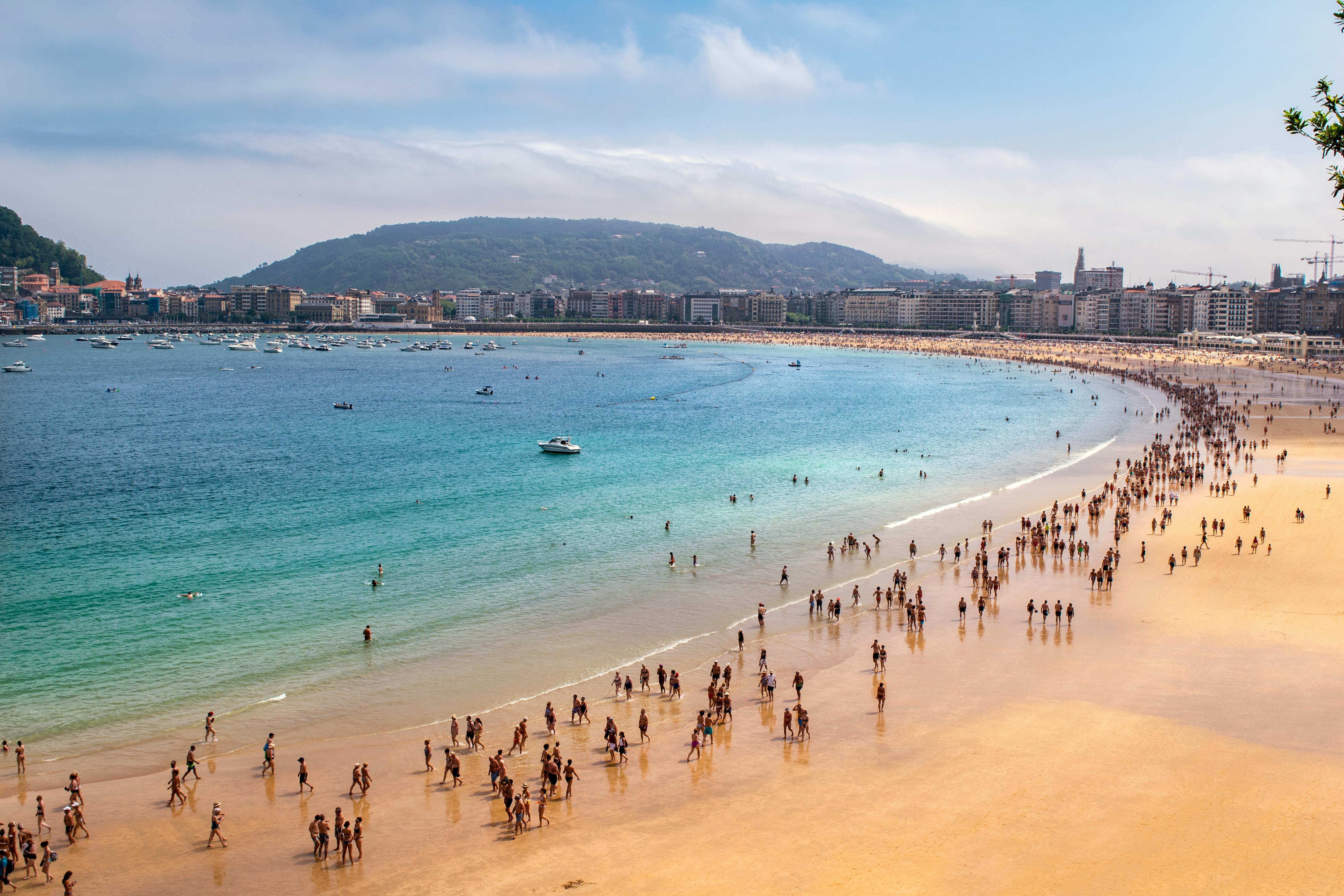
Elegant and sea-breezy, Donostia–San Sebastián curls around the Bahía de La Concha like a crescent of gold. Its Belle Époque promenades, graceful balconies, and hilltop fort tell a story that runs from medieval fishing port to holiday darling of queens. Today, it’s a compact coastal city where you can walk nearly everywhere as Atlantic light bounces off grand facades and surf breaks roll onto urban beaches.
Food lovers pilgrimage here. Donostia has one of the highest densities of Michelin stars in the world, yet its soul lives behind a pintxos counter. Anchovies gleam like jewels, txuleta steaks sizzle, and txakoli wine fizzes with a salty spritz. Festivals fire up the calendar—from January’s drum-thundering Tamborrada to August’s Semana Grande fireworks vaulting over La Concha.
Practicalities: it’s walkable, bike-friendly, and delightfully safe. Expect late dining hours (pintxos from 7:30–11 pm; restaurants often 1:30–3:30 pm and 8:30–11 pm). Pack a light jacket; rain visits often, even in summer. You’ll eat standing sometimes, nap occasionally, and always find the sea just a few steps away.
Donostia–San Sebastián
A city of three beaches—La Concha for postcard perfection, Ondarreta for family calm, and Zurriola for surf—Donostia is stitched together by elegant bridges over the Urumea River and the ever-buzzing Parte Vieja (Old Town). Monte Urgull guards the harbor with cannon batteries and a 12th‑century fort; across the bay, Monte Igueldo’s vintage funicular climbs to a storybook amusement park with huge Atlantic views.
- Top sights: La Concha promenade, Monte Urgull & Castillo de la Mota, Monte Igueldo funicular & viewpoint, Miramar Palace gardens, San Telmo Museoa (Basque culture), Aquarium, Kursaal contemporary center, Paseo Nuevo coastal walk.
- Food highlights: pintxos in Parte Vieja (Ganbara, La Cuchara de San Telmo, Atari), grills (Gandarias, Casa Urola), cheesecake at La Viña, Gros neighborhood classics (Bodega Donostiarra, Bergara), and world-famous Michelin temples (Arzak, Akelarre, Martín Berasategui).
- Local sips: txakoli (crisp, lightly sparkling white), Basque cider (sagardoa)—visit a sagardotegi in season for the communal “txotx.”
- Fun fact: Donostia hosts the San Sebastián International Film Festival each September, when stars sweep the red carpets and locals spot them from cafés.
Where to stay (Centro for elegance, Old Town for nightlife, Gros for surfers, Antiguo for quiet near Igueldo): find apartments and hotels here:
- Apartments and unique stays: VRBO Donostia
- Hotels of all styles: Hotels.com Donostia
For orientation: Hotel de Londres y de Inglaterra faces La Concha; Hotel Maria Cristina pampers cinema royalty; Lasala Plaza overlooks the harbor; Zenit Convento San Martín offers atmospheric cloisters; Villa Soro is a serene villa retreat.
Getting there & around
- Fly: San Sebastián Airport (EAS) is 30 min by bus/taxi; Bilbao (BIO) ~75 min by direct coach. Search flights within or to/from Europe via Omio Flights.
- Train: Madrid–Donostia ~5–5.5 h; Barcelona–Donostia ~5.5–6.5 h. Compare fares and times on Omio Trains.
- Bus: Bilbao–Donostia ~1 h 15 min; Pamplona–Donostia ~1 h 20 min. Check options via Omio Buses.
- In town: You’ll mostly walk. Taxis and bikes handle the rest; city buses are reliable for Igueldo or the university quarter.
Day 1: Arrival, La Concha Stroll, and a Legendary Pintxos Crawl
Morning: Travel day. If you arrive before noon, drop bags and breathe in the bay air along the Alderdi Eder gardens. Grab an easy bite like a pantxineta (almond cream pastry) at Pastelería Otaegui or a cortado at Kafe Botanika’s riverside garden.
Afternoon: Walk the full curve of La Concha promenade to Ondarreta and back (about 1 hour, flat). Detour to Miramar Palace lawns for royal views over Santa Clara Island. If it’s warm, wade at La Concha’s shore or rent a lounger; in summer, small boats run to the island’s pocket beach.
Evening: Your first pintxos route through Parte Vieja. Start at Ganbara for wild mushrooms on toast (setas a la plancha) and crab tartlets; they’re masters of market-driven bites. Cross to Txepetxa for anchovies crowned with spider crab or sea urchin—an Old Town classic. Slide to La Cuchara de San Telmo for slow-braised veal cheek and seared foie, cooked to order from a tiny kitchen. For steak and jamón, Gandarias balances a lively bar with a serious grill; ask for a “punto” txuleta to share. End with the famous burnt cheesecake at La Viña—yes, take a slice to go for tomorrow’s breakfast.
Nightcap options: sip a crisp txakoli under the basilica at Atari Gastroleku (great terrace) or hunt down a superb gin-tonic at La Gintonería Donostiarra. If you crave a coastal breeze, amble the Paseo Nuevo as waves slap the breakwater.
Day 2: Surf and Gros Flavors, Igueldo Views, and a Michelin Night
Morning: Espresso up at Sakona Coffee Roasters (single-origin pour-overs and buttery croissants) in Gros. Then pick your lane: take a 2-hour surf lesson at Zurriola Beach (local schools run ~€55–€65 including board and suit; best for beginners at mid-tide), or wander the revitalized San Martín Market to see pristine hake, spider crab, and local produce while nibbling a tortilla wedge from a market bar.
Afternoon: Lunch in Gros: Bodega Donostiarra for the “Indurain” skewer (tuna, anchovy, guindilla pepper) and a tuna-topped “completo,” or Bar Bergara for elegant counter pintxos and creamy crab gratin. After, ride the century-old Monte Igueldo funicular up to panoramic terraces and a pocket-sized amusement park; the old wooden roller coaster circles clifftop views. Stroll down to Miramar Palace gardens, or book a late-afternoon seawater circuit at La Perla Thalassotherapy on La Concha (from ~€30–€40; bring flip-flops).
Evening: Celebrate Basque haute cuisine. Secure reservations well in advance for Arzak (pioneering New Basque; fine-tuned creativity), Akelarre (clifftop views and tasting menus that echo the sea), or Martín Berasategui in nearby Lasarte (~15 min by taxi). For a slightly more relaxed but still special dinner, consider Rekondo (legendary wine cellar, charcoal-grilled turbot and meats) or Casa Urola (upstairs dining room with wood grill). Cap the night with jazz downstairs at Altxerri, or a seaside stroll past the Kursaal cubes where the river meets the Atlantic.
Day 3: Urgull, Basque Culture, Harbor Bites, and Departure
Morning: Wake with a flat white at Old Town Coffee Roasters (Gros) or a napolitana at Pastelería Barrenetxe. Hike Monte Urgull via the port steps (30–40 minutes to the top). Explore the battlements and the small history exhibit inside Castillo de la Mota, then descend through dappled pines to the old fishermen’s quarter.
Afternoon: Duck into San Telmo Museoa (1–1.5 h) to grasp Basque identity—from whaling to modern art—in a monastery fused with contemporary architecture. Lunch near the harbor: old-school shrimp and bravas at La Mejillonera (order clams “a la marinera”) or a sit-down grill at Txuleta just off the plaza. If you missed it, try for Bar Néstor at 1 pm for their famed tomato salad and limited tortilla slices (they release just two per day—arrive early to put your name down). Time permitting, the Aquarium (about €14, 60–90 minutes) offers a glass tunnel beneath Atlantic species and a maritime museum section.
Evening: Departure day, so keep it easy. Pick up edible souvenirs: Idiazabal cheese from San Martín Market, anchovies from a deli, and a bottle of txakoli. Bus to EAS takes ~30 minutes; coaches to Bilbao Airport ~75 minutes. Compare departures on Omio Buses and trains via Omio Trains; flights on Omio Flights. Wave a last goodbye from the La Concha railing—the city tends to lure people back.
Local tips: Book Michelin restaurants 1–2 months ahead; for pintxos, go bar-to-bar ordering one or two signatures at each. In cider season (roughly January–April/May), consider a taxi to a nearby sagardotegi like Petritegi for a fixed menu (cod omelet, T-bone, cheese with quince) and cider straight from the barrel—the “txotx!” call is your cue.
Estimated costs: Pintxos €3–€6 each; glasses of txakoli €3–€5; funicular ~€4 round-trip; museum entries ~€8–€12; surf lesson ~€55–€65; fine-dining tasting menus vary widely—budget €170+ at the top end.
With its surf-sparkled mornings, balcony-lined promenades, and counters piled high with edible art, Donostia makes three days feel like a feast. You’ll leave with sea salt in your hair, a pocketful of bar napkins, and a promise to return for “just one more” pintxo.