
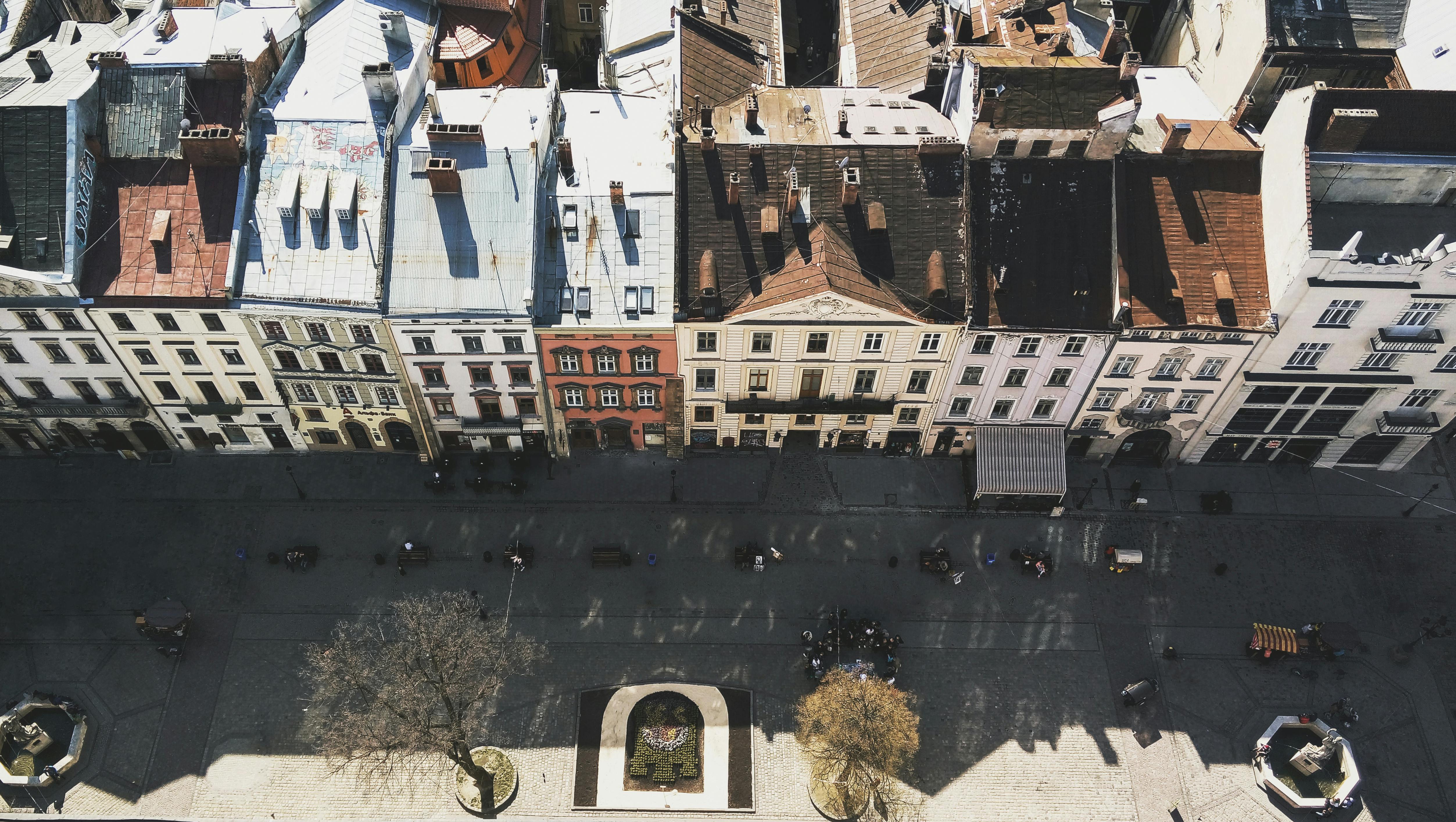
Lviv is a city of bell towers, cobbles, and candlelit courtyards—an old Habsburg frontier where Renaissance mansions and Art Nouveau façades frame a scene that feels plucked from a novel. Its UNESCO-listed Old Town tells a layered story: Armenian merchants, Polish nobility, Jewish craftsmen, and Ukrainian guilds built a culture of craft and conviviality that you can taste in every cup of coffee and slice of honey cake.
Today, Lviv hums with street music, a thriving coffee culture, and one of Eastern Europe’s most photogenic opera houses. You’ll find hidden courtyards, “secret” bunker-themed eateries, and brass-band beer halls alongside Gothic chapels and romantic outlooks on Castle Hill. The city is compact and walkable, and its historic core rewards wandering without a map.
Practical note: Ukraine remains under wartime conditions. Commercial flights into Ukraine are suspended; you’ll enter overland (most travelers connect via Poland). Air-raid alerts can pause performances and museum visits; shelters are clearly marked and staff are well-drilled. Check your government’s travel advisory, carry ID, confirm any night curfew hours (often around 00:00–05:00), and expect card payments to be widely accepted; cash in UAH is still useful for small purchases.
Lviv
Lviv blends Central European elegance with Ukrainian soul. Start in Rynok Square, where guild houses in pastel hues ring café terraces and the 19th-century Lviv National Opera anchors the city’s cultural life. Climb to High Castle (Vysokyi Zamok) Park for a panoramic sweep of spires, then slow down in vaulted coffee cellars where beans are “mined” from the bedrock—a bit of local theater you’ll remember.
Top sights include the incense-scented Armenian Cathedral, sculpture-dotted Lychakiv Cemetery, the sweeping stair of the House of Scientists, the salons of Potocki Palace, and the folk-houses at Shevchenkivskyi Hai (Open-Air Museum). Food-wise, expect varenyky (dumplings), borshch, galician-style cheesecakes, and ribs grilled over fragrant wood at a beloved arsenal-turned-smokehouse.
Stay in the heart of the Old Town to maximize your short visit. Search stays on Hotels.com (Lviv) or browse apartments on VRBO (Lviv) to be steps from Rynok and the opera.
Getting to Lviv (current as of March 2025):
- Fly to Poland, then train/bus to Lviv. Popular gateways: Kraków (KRK), Rzeszów (RZE), or Warsaw (WAW). Compare flights on Omio (flights in Europe). If flying from outside Europe, also check Kiwi.com (global flights).
- Train route: Kraków → Przemyśl (2–3h), then Przemyśl → Lviv (~2h; allow extra time for border formalities). Typical combined cost ~€20–40 one-way. Search schedules on Omio (trains in Europe).
- Bus route: Direct buses from Kraków/Warsaw to Lviv take ~6–9h depending on the border; €20–35. Compare options on Omio (buses in Europe).
Within Lviv, the historic core is walkable. Trams and trolleybuses cost roughly 15–20 UAH per ride; ride-hailing is widely used for late evenings or rainy spells.
Day 1: Old Town First Impressions, Coffee Cellars, and Opera
Morning: Travel to Lviv. Aim to arrive by early afternoon. Drop your bags at your hotel near Rynok Square—being central is key on a 2-day itinerary. If you need a last-minute stay, check Hotels.com or VRBO.
Afternoon: Start with a gentle loop around Rynok Square. Pop into the Armenian Cathedral for its frescoed chapel and shady cloister, then continue to Boim Chapel to admire its lace-like stonework. For your first taste of Lviv’s coffee lore, descend into the showy cellar at Lviv Coffee Manufacture where “coffee mining” theatrics accompany a caramel-foam cappuccino. If you prefer a quieter cup, try Svit Kavy on Rynok for single-origin pours and honey cake.
Evening: Book an early performance at the Lviv National Opera. Tickets are typically 150–500 UAH; note that air-raid alerts may pause performances, with staff guiding guests to shelters. Dine late at one of these local favorites: Baczewski Restaurant (Galician classics; their duck with apples and house nalewka liqueurs are standouts), Atlas (an Old Town institution for varenyky and Georgian adjika-spiced meats), or Kumpel on Volodymyra Vynnychenka (brewpub vibe, homemade sausages, horseradish-infused vodka). Nightcap ideas: a sour cherry liqueur at Drunken Cherry (Piana Vyshnia) by the square, or a brass-band set at Pravda Beer Theatre where the balcony overlooks the brewhouse.
Day 2: High Castle Views, Lychakiv Heritage, and Secret Cellars
Morning: Be at Baczewski for breakfast when doors open—their sunlit conservatory fills quickly for eggs with salmon, “syrnyk” (cheesecake), and coffee served in glass pots. Then climb to High Castle Park (20–30 minutes from the center; or take a short taxi) for the city’s grand panorama—ideal for photos in soft morning light. Swing by the photogenic House of Scientists to see its carved wooden staircase; a short, timed visit is usually possible, entry generally 50–100 UAH.
Afternoon: Tram or taxi to Lychakiv Cemetery (allow 1.5–2 hours). This 18th-century necropolis is an open-air sculpture garden where ivy climbs angels and obelisks; entry is about 50–70 UAH. On your way back, stop at Potocki Palace to glimpse aristocratic Lviv. For lunch, try Strudel Haus near Rynok for savory cabbage or veal strudels and an apple-cinnamon version for dessert, or Blue Bottle (Synia Plyashka) for homestyle borshch and deruny (potato pancakes).
Evening: Explore Lviv’s playful themed spots. At Kryivka, the “secret” bunker restaurant, you’ll be asked for a password at the door (locals respond with “Slava Ukraini!”) before descending for clay-pot stews and honey-pepper horilka. Carnivores shouldn’t miss Arsenal Ribs (Rebernya under the Arsenal)—ribs grilled over wood, eaten with gloves; expect a queue but fast turnover. Finish sweet with truffles at Lviv Handmade Chocolate or a dessert wine at Gasova Lampa, a bar-museum honoring Lviv’s invention of the kerosene lamp, with rooftop city views.
Optional Add-Ons (time permitting):
- Lvivarnya Beer Museum: A modern museum on the city’s brewing heritage with tasting flights.
- Shevchenkivskyi Hai: An open-air museum of wooden churches and farmsteads; peaceful in late afternoon.
- Armenian Quarter cafés: Virmenka for Turkish-style coffee and bohemian history; Black Honey for third-wave espresso.
Departure Tips: On your final day, plan a relaxed morning—coffee and last stroll—then head for your bus or train. For schedules and tickets back toward Poland or elsewhere in Europe, compare options on Omio (trains) and Omio (buses). If you’re flying onward within Europe, check Omio (flights); for long-haul connections, also search Kiwi.com.
Where to Stay (central and convenient):
- Old Town hotels: Stay steps from Rynok to maximize walking time and evening ambiance. Browse options on Hotels.com.
- Apartments: Quiet courtyards and high ceilings are a Lviv specialty—great for coffee lovers and longer breakfasts. See VRBO.
Insider Notes: Many venues post temporary schedule changes; always check same-day hours. Carry a light jacket for hilltop breezes. If an air-raid siren sounds, follow staff to designated shelters; most major museums and the opera have clear procedures. Tipping 5–10% in restaurants is appreciated.
In two days, you’ll sip Lviv’s legendary coffee, trace history from Gothic chapels to Habsburg salons, and taste the city’s generous kitchen—from rib smokehouses to cozy strudel cafés. The Old Town’s lanes and courtyards reward curiosity; your only challenge will be choosing which café to revisit on your next trip.