
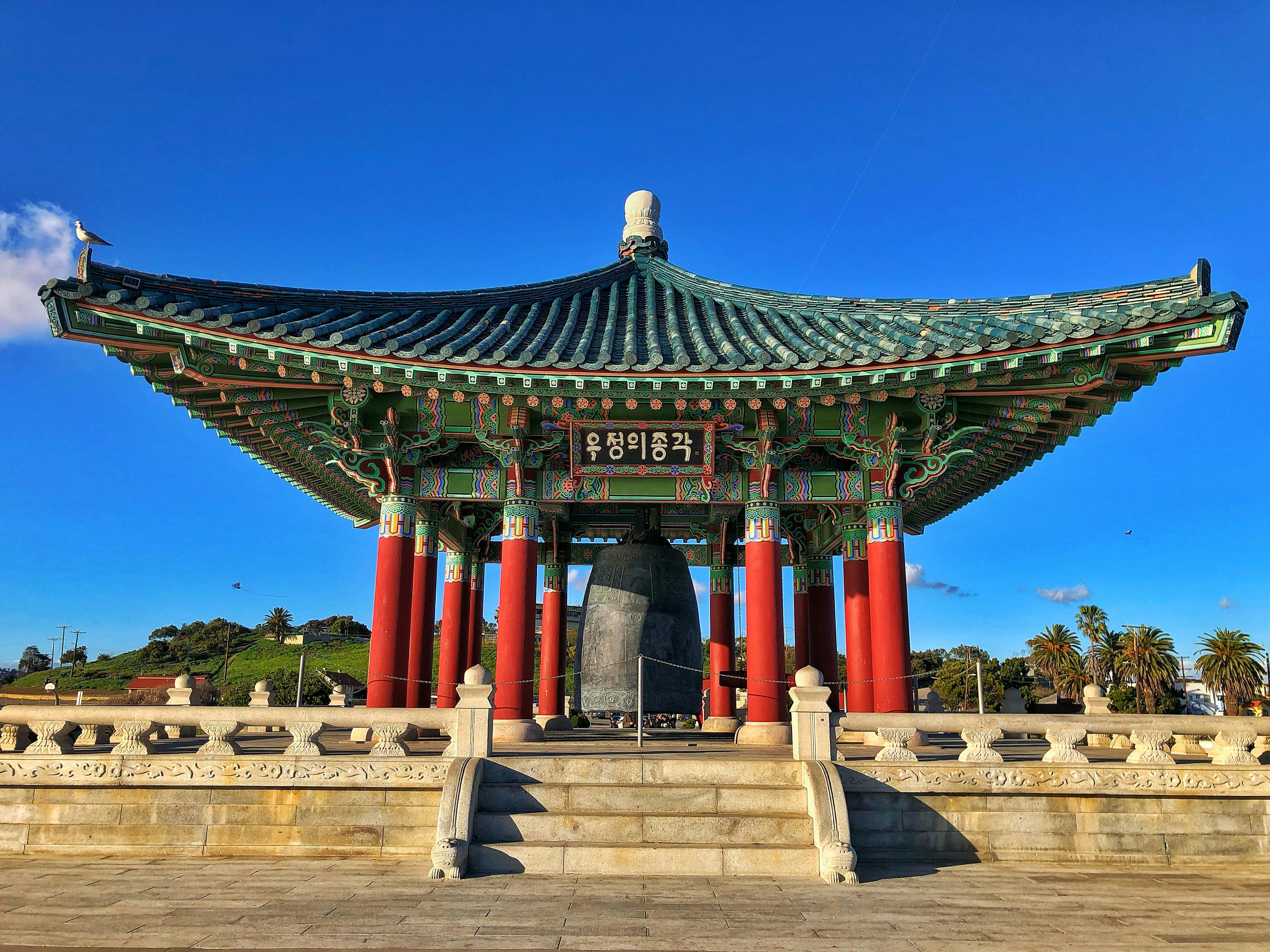
South Korea rewards curiosity quickly. In one trip you can move from Joseon-era palace courtyards and hanok lanes to steel-and-glass skylines, mountain temples, fish markets, and cafés so stylish they feel like miniature galleries. For a 9-day Korea itinerary, pairing Seoul and Busan gives you the country’s most compelling contrast: royal capital and creative metropolis first, then a maritime city where hills, harbors, and beaches shape daily life.
Seoul has been the heart of Korean political and cultural life for more than six centuries, and traces of that long history appear everywhere: at Gyeongbokgung Palace, in the scholarly lanes of Bukchon Hanok Village, and in old market districts still animated by cooks, tailors, and traders. Busan, by contrast, rose through port commerce, wartime refuge, and modern industry into Korea’s great southern gateway; today it blends temple serenity, seafood abundance, contemporary art, and some of the country’s best urban coastal scenery.
Practically speaking, South Korea is one of Asia’s easiest countries to travel through independently. High-speed KTX trains are efficient, public transit is excellent, and food options range from market dumplings to refined tasting menus; just note that many restaurants specialize narrowly, queues at famous spots can be long, and some businesses close one day a week. This plan assumes an afternoon arrival on Day 1 and an afternoon departure on Day 9, with a morning intercity transfer from Seoul to Busan.
Seoul
Seoul is a city of layers rather than a city of single icons. A palace wall may sit beside a design museum, a century-old market may lead into a neon drinking alley, and a quiet tea house may be five minutes from one of the busiest shopping streets in Asia.
For a first visit, Seoul shines when you divide your time by neighborhood. Jongno gives you dynastic history and traditional architecture; Myeongdong and Euljiro reveal commerce, street food, and nightlife; Hongdae and Seongsu show the city’s youthful, creative side; and the Han River ties it all together.
Where to stay in Seoul: For a polished classic base, consider The Shilla Seoul, known for strong service and easy taxi access. For value and a central location near key sights, look at Hotel 8 Hours or Hostel Haru. You can also browse broader options on VRBO Seoul and Hotels.com Seoul.
Getting there: Search flights into Seoul via Trip.com flights or Kiwi.com flights. From Incheon International Airport to central Seoul, the AREX express or all-stop train generally takes about 45-60 minutes depending on your destination, while airport limousine buses and taxis are convenient if you are carrying luggage.
Day 1 - Arrive in Seoul and Settle into Myeongdong or Jongno
Morning: In transit. If your flight timing allows, use Trip.com flights or Kiwi.com flights to compare arrival options into Incheon. Plan a light first day because immigration, airport transfer, and hotel check-in can take time.
Afternoon: After arrival, check in and take an easy orientation walk through Myeongdong or nearby Cheonggyecheon Stream. The stream is a restored urban waterway that cuts through downtown Seoul; it is one of the city’s smartest civic projects, and strolling here helps shake off jet lag without demanding too much energy.
Evening: Have your first Korean dinner at Myeongdong Kyoja, famous for kalguksu, a comforting bowl of hand-cut noodle soup with a rich broth, plus mandu dumplings that regulars order automatically. If the queue is too long, try Hadongkwan for old-school gomtang, a clear beef soup beloved for its restrained depth and historic pedigree. For dessert or a night coffee, stop at Osulloc Tea House Bukchon on another day if you prefer tea, or keep things simple tonight with a café in Myeongdong before an early rest.
Day 2 - Royal Seoul: Gyeongbokgung, Bukchon, and Insadong
Morning: Begin at Gyeongbokgung Palace, the grandest of Seoul’s Five Grand Palaces and the symbolic seat of the Joseon dynasty. Arrive early for gentler crowds and better photos; the palace complex is vast enough to reward a slow walk, especially around Geunjeongjeon Hall and Gyeonghoeru Pavilion. For breakfast beforehand, try London Bagel Museum Anguk if you are willing to queue for Seoul’s current bagel obsession, or choose a quieter local bakery nearby for a faster start.
Afternoon: Walk to Bukchon Hanok Village, where traditional wooden houses survive on sloping lanes between palace districts. This is not an open-air museum but a living neighborhood, so quieter voices and respectful pacing matter. Continue to Insadong for lunch at Tosokchon Samgyetang, known for ginseng chicken soup served in a bubbling stone bowl; it is a classic restorative dish, especially good after a morning outdoors. Later, browse tea shops, calligraphy stores, and craft boutiques, then pause at a traditional tea house such as Shin Old Tea House for jujube tea or omija tea in a courtyard setting.
Evening: End in Ikseon-dong, one of Seoul’s most atmospheric evening districts, where hanok structures now house cocktail bars, dessert cafés, and compact restaurants. For dinner, book or queue for Jongno Sikdang-style Korean barbecue in the area, or seek out a well-regarded hanjeongsik set-meal restaurant for a broader spread of banchan. If you want a drink, choose a low-lit bar tucked into a renovated hanok rather than a loud chain venue; the district is at its best when you linger rather than rush.
Day 3 - Markets, Street Food, and the Old Commercial Core
Morning: Start at Gwangjang Market, one of Seoul’s oldest covered markets and still one of its most enjoyable food destinations. Go hungry. Order bindaetteok, the savory mung bean pancake that crackles at the edges; try mayak gimbap, the small seaweed rice rolls served with mustard sauce; and if you are adventurous, sample yukhoe, Korean-style seasoned raw beef. For coffee after breakfast, head to a specialty café in nearby Euljiro where old print shops now sit beside stylish coffee counters.
Afternoon: Explore Euljiro, a district sometimes called “Hipjiro,” where Seoul’s industrial backbone has evolved into one of its most interesting creative zones. The pleasure here lies in contrast: hardware stores, aging signage, rooftop bars, noodle houses, and design studios sharing the same blocks. For lunch, try Woo Lae Oak, one of Seoul’s revered names for naengmyeon, the buckwheat noodle dish served in an icy broth that is especially refreshing if the day turns warm.
Evening: Visit N Seoul Tower around sunset if visibility is clear. The view is the point rather than the tower itself: the city stretches in every direction, revealing how mountainous terrain shapes Seoul’s neighborhoods. For dinner, head to Jinokhwa Halmae Wonjo Dakhanmari near Dongdaemun for dakhanmari, a communal chicken hot pot with sliced potatoes, rice cakes, and a sharp mustard-vinegar dipping sauce. It is convivial, distinctly local, and ideal after a full day on foot.
Day 4 - Modern Seoul: Hongdae, Yeonnam, and the Han River
Morning: Spend the morning in Hongdae and Yeonnam-dong, areas shaped by nearby universities, indie music culture, and a steady turnover of cafés and boutiques. Have breakfast at Thanks, Oat for yogurt bowls and lighter fare if you want a break from heavier meals, or pick a neighborhood café serving excellent pastries and hand-drip coffee. Then stroll the Gyeongui Line Forest Park, a linear park that threads through the district and makes the neighborhood feel more relaxed than its nightlife reputation suggests.
Afternoon: For lunch, choose Okdongsik if you can secure a spot; it is celebrated for 돼지곰탕, a clear pork soup that demonstrates just how elegant minimal Korean cooking can be. Spend the afternoon browsing record stores, small fashion labels, character shops, and galleries. If contemporary art appeals, consider heading to the Leeum Museum area instead, but for many travelers the joy of this day is simply watching Seoul’s present tense unfold in real time.
Evening: Take a taxi or subway to the Han River, ideally Yeouido Hangang Park or Banpo Hangang Park depending on your mood. Pick up a casual picnic or fried chicken and beer, a famously local ritual known as chimaek. If you prefer a sit-down dinner before the river, seek out a good Korean fried chicken specialist or a pork belly restaurant in Mapo. The Han at night is one of Seoul’s most democratic pleasures: students, office workers, couples, and families all claim a patch of riverfront and stay until the breeze cools.
Day 5 - Seongsu, Design, and Gangnam Side Trips
Morning: Head to Seongsu-dong, often compared loosely to Brooklyn but best understood on its own terms: former factory blocks transformed into cafés, concept stores, bakeries, and design spaces. Start with coffee at a respected roastery or warehouse-style café, then browse the neighborhood’s evolving mix of Korean labels and pop-up exhibitions. Seongsu is especially good if you enjoy urban change made visible.
Afternoon: Lunch at Somunnan Seongsu Gamjatang is a strong choice if you want one of Seoul’s defining comfort foods: pork bone soup simmered until the broth is deep, peppery, and immensely satisfying. Afterward, you can remain in Seongsu, visit COEX for the photogenic Starfield Library, or stop at Bongeunsa, a Buddhist temple whose calm grounds stand in striking contrast to Gangnam’s towers. This juxtaposition says a great deal about modern Seoul in one glance.
Evening: Make this your refined dinner night. Reserve a Korean barbecue restaurant known for high-quality hanwoo beef, or choose a modern Korean restaurant where traditional ingredients are interpreted with contemporary technique. If you would like a cocktail afterward, seek out a thoughtful bar in Cheongdam or Seongsu rather than a generic high-rise lounge; Seoul’s best drinking culture now often lives in intimate, carefully designed spaces.
Day 6 - Travel from Seoul to Busan by KTX and Explore Nampo
Morning: Check out and take a morning KTX high-speed train from Seoul Station to Busan Station. Book through Trip.com trains; the journey is typically about 2.5 to 3 hours and often costs roughly $45-$75 depending on class and availability. This is the most efficient city-to-city move in the itinerary and also one of the easiest rail experiences in Asia.
Busan
Busan is South Korea turned toward the sea. It is breezier, hillier, saltier, and less ceremonious than Seoul, with fishing boats, beach walks, temple cliffs, and a relaxed confidence rooted in trade and tides.
The city’s attractions are spread out, so grouping them by district matters. Nampo offers markets, street food, and wartime history; Haeundae and Gwangalli deliver beach life and skyline views; and the northeastern coast gives you Haedong Yonggungsa, one of Korea’s most dramatically placed temples.
Where to stay in Busan: Search apartments and homes on VRBO Busan or hotels on Hotels.com Busan. First-time visitors often enjoy staying near Nampo for traditional markets and old Busan, or Haeundae for beach access and modern hotels.
Afternoon: After arriving in Busan, drop your bags and begin in Nampo-dong. Visit Jagalchi Market, Korea’s most famous seafood market, where tanks, auction energy, knife work, and the smell of the sea all remind you that Busan’s identity is maritime before it is metropolitan. Continue to BIFF Square, once linked to the Busan International Film Festival and still lively with snacks, shops, and movie references.
Evening: For dinner, eat seafood close to its source. At Jagalchi, choose a vendor and enjoy sliced raw fish or grilled shellfish upstairs, or go for a more casual local meal nearby if you want something warmer and less adventurous. Do not miss Busan’s famed ssiat hotteok, a sweet pancake stuffed with seeds, nuts, and syrup, sold from busy street stalls around BIFF Square. If you still have energy, ride up to Yongdusan Park for a nighttime city view from Busan Tower.
Day 7 - Gamcheon Culture Village, Songdo, and Gwangalli at Night
Morning: Start early at Gamcheon Culture Village, a hillside neighborhood painted in bright colors and threaded with stairways, art installations, and lookout points. It began as a refuge settlement and later reinvented itself through community-led art projects, which gives the district a more meaningful story than its photogenic reputation suggests. Grab breakfast and coffee at a small café in the village or in Nampo before heading up.
Afternoon: Move to Songdo for a seaside change of pace. The Songdo Marine Cable Car offers broad views over the water and coast, while the skywalk gives you a pleasant, low-effort stroll. For lunch, seek out a local seafood stew house or a milmyeon specialist; Busan-style milmyeon, cold wheat noodles in a tangy broth, is one of the city’s signature dishes and worth trying at least once. It is lighter than a heavy seafood meal and excellent in mild or warm weather.
Evening: End at Gwangalli Beach, where the view toward Gwangan Bridge is one of Busan’s great urban panoramas. This is the right place for dinner if you want atmosphere: choose a grilled shellfish restaurant, a Korean pub with harbor views, or a modern bistro tucked on an upper floor. After dinner, walk the beachfront slowly. Busan at night is less about monuments than mood, and Gwangalli captures that beautifully.
Day 8 - Haedong Yonggungsa, Haeundae, and Busan’s Contemporary Coast
Morning: Visit Haedong Yonggungsa, the rare Korean temple set dramatically on the coast rather than in the mountains. Arrive earlier in the day to enjoy the sea air and temple paths before tour crowds build. For breakfast, keep it simple with coffee and pastry in Haeundae before taking a taxi or local transport to the temple. The site is especially memorable because prayer halls, lanterns, and waves share the same frame.
Afternoon: Return to Haeundae for lunch. Try a good raw fish restaurant, a pork soup specialist, or a casual Korean set-meal spot depending on your appetite. Then stroll Haeundae Beach and, if you enjoy scenic walking, continue to the Dongbaekseom area for coastal paths and city-sea views. If time allows, the Busan X the Sky observatory offers a more polished skyline perspective, but the shoreline itself is the stronger experience.
Evening: Make your final full night in Korea a celebratory one. Reserve a seafood dinner in Haeundae or choose a well-reviewed Korean barbecue restaurant. For dessert or a relaxed nightcap, Busan has an increasing number of stylish cafés that stay open late, especially around Haeundae; choose one with ocean or city views and toast a trip that has already covered royal history, market food, mountain silhouettes, and the sea.
Day 9 - Final Morning in Busan and Departure
Morning: Keep the last day gentle. If you are staying in Haeundae, take one final beach walk and have breakfast at a neighborhood bakery-café; if you are in Nampo, enjoy a last local meal such as abalone porridge or simple kimbap before packing. This is also a good window for souvenir shopping: seaweed snacks, teas, traditional sweets, or stylish Korean stationery travel well.
Afternoon: Head to the airport for departure. Search onward domestic or international flights through Trip.com flights or Kiwi.com flights. For most travelers, leaving from Busan works best on a 9-day route because it avoids backtracking to Seoul.
Evening: In transit. If you have a late flight, fit in one last coffee and pastry rather than a rushed heavy meal; Korean airport dining is generally reliable, but your best memories are likely to come from the markets, noodle shops, barbecue rooms, and seaside tables you enjoyed over the previous eight days.
This 9-day South Korea itinerary pairs the country’s most compelling first-time combination: Seoul for palace history, neighborhoods, design, and street food, then Busan for sea air, temple views, and market-fresh seafood. It is a trip built on contrast and continuity, moving easily by high-speed rail while giving you enough time in each city to do more than skim the surface.
If you follow this plan, you will leave with a strong sense of how Korea lives now as well as how it remembers itself. Expect excellent meals, efficient travel, vivid neighborhoods, and the kind of daily variety that makes a 9-day journey feel much larger than the calendar suggests.