
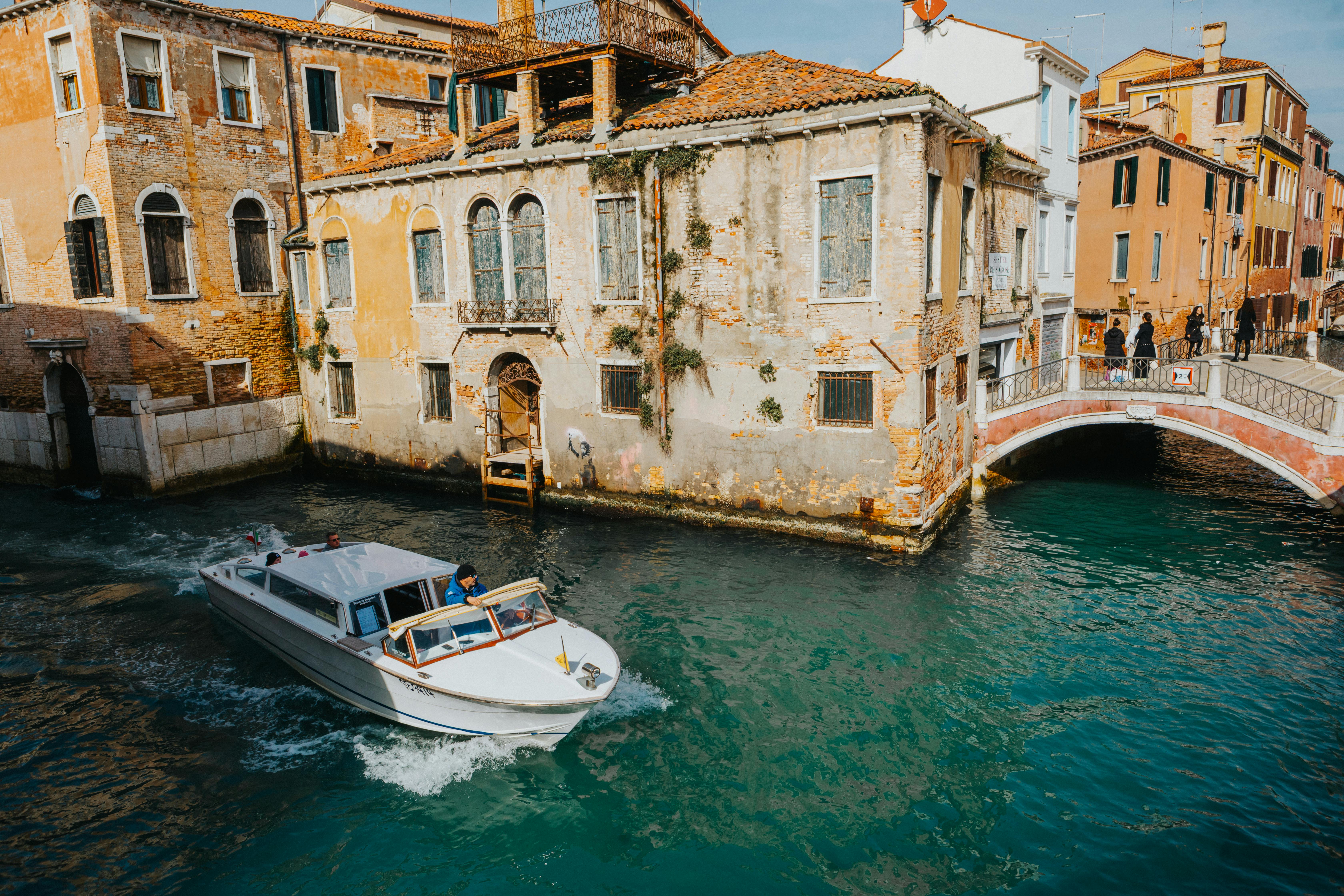
Venice is one of the rare cities that feels invented by a novelist and engineered by a republic. Built across more than 100 lagoon islands and stitched together by canals instead of roads, La Serenissima rose from a marshy refuge to a maritime power whose merchants, diplomats, and shipbuilders shaped the Mediterranean for centuries.
Its great monuments still tell that story in stone and gold. St. Mark’s Basilica glitters with mosaics gathered from centuries of wealth and conquest, the Doge’s Palace reveals the political machinery behind the pageantry, and the Grand Canal remains a watery parade of Gothic palaces, working boats, and gondolas slipping past church domes.
Practical notes matter here. Venice is best enjoyed on foot and by vaporetto, with comfortable shoes, a light day bag, and patience for bridges; reserve major sights ahead, expect tourist crowds around St. Mark’s and Rialto, and make time for cicchetti, seafood, risotto al nero di seppia, spritz, and quiet evening walks once the day-trippers leave.
Venice
For a 7-day trip, Venice works beautifully as a single-city stay with deeper exploration rather than hurried hopping. The city rewards repetition: the same canal looks different at dawn, at aperitivo hour, and under lamplight, and neighborhoods like Cannaregio, Dorsoduro, Castello, and San Polo each reveal a distinct rhythm.
This itinerary mixes the canonical Venice of basilicas, palaces, and gondolas with the lived-in Venice of wine bars, market lunches, artisan islands, and hidden courtyards. You will have time to see the city’s masterpieces properly, but also to develop that rarest Venetian pleasure: a sense of direction gained by getting gently lost.
Where to stay: For classic views and polished service, consider The Gritti Palace or Belmond Hotel Cipriani. For a well-located and more approachable option near the station and vaporetto links, Hotel Antiche Figure is consistently convenient; for more space, browse VRBO Venice rentals or compare Hotels.com Venice stays.
Getting there: For flights to Venice from Europe, compare routes on Omio. From Marco Polo Airport, a memorable arrival is by water: the shared Venice Marco Polo Airport Link Arrival Transfer is practical, while the Private Arrival Transfer via Motorboat is faster and especially appealing after a long flight. If you are arriving in Italy by rail, compare schedules on Omio trains; Venezia Santa Lucia station sits directly on the Grand Canal.
Day 1 – Arrival in Venice and a First Taste of the Grand Canal
Morning: This is your travel day, so keep the morning focused on transit. If arriving by air, pre-book your airport transfer and aim for a hotel in Santa Croce, San Polo, or near San Marco for an easier first afternoon with luggage.
Afternoon: After check-in, begin gently with a walk from Santa Lucia or Piazzale Roma toward the Rialto area. Stop for coffee and something sweet at Pasticceria Tonolo if you are near Dorsoduro later in the day, or settle in at Caffè del Doge for a proper espresso; both are respected stops where the ritual matters as much as the caffeine.
Afternoon: Continue to the Rialto Bridge and nearby market quarter. Even if the full market is quieter later in the day, this district offers the ideal first orientation: the Grand Canal traffic, narrow calli, and the mix of trade and theater that has defined Venice for centuries.
Evening: For dinner, book Antiche Carampane in San Polo, known for serious Venetian cooking and seafood dishes that avoid tourist shorthand. If you want something more casual on night one, Cantina Do Mori is one of Venice’s oldest bacari and a fine place to begin your cicchetti education with small bites, a glass of ombra wine, and the understanding that Venice often eats standing up.
Evening: After dinner, stroll to St. Mark’s Square after dark. The crowds thin, the paving stones glow under lamplight, and the basilica façades feel almost theatrical; it is one of the best first-night walks in Europe.
Day 2 – St. Mark’s Basilica, Doge’s Palace, and the Ceremonial Heart of Venice
Morning: Start early with breakfast at Rosa Salva, a historic Venetian pastry shop known for excellent coffee, veneziane pastries, and a central location that lets you reach St. Mark’s before the day grows busy. Then take a guided landmark experience such as Best Of Venice: Saint Mark's Basilica, Doges Palace with Guide and Gondola Ride, which is efficient for first-time visitors and helps decode what you are seeing.

Afternoon: After the tour, linger around the Piazza and the waterfront. The basilica’s mosaics are not merely decorative but a declaration of Venetian ambition, while the Doge’s Palace reveals how a city famed for romance was also a remarkably disciplined mercantile state.
Afternoon: For lunch, dine at Osteria Enoteca San Marco, a dependable choice near the main sights with a stronger wine program and more thoughtful cooking than many nearby restaurants. Order Venetian staples if available, especially sarde in saor or seafood pasta, both dishes rooted in the city’s lagoon pantry and trading past.
Evening: Spend the evening in Castello, walking away from the busiest lanes. For dinner, Al Covo is a long-admired restaurant with a refined but grounded kitchen; it is especially good for seasonal Adriatic seafood and produce-driven plates, making it ideal when you want a memorable meal without stiffness.
Evening: If you still have energy, walk the Riva degli Schiavoni and watch the lagoon darken. Venice is at its most persuasive when the day’s spectacle gives way to water, stone, and silence.
Day 3 – Rialto Market, Hidden Venice, and a Bacari Evening
Morning: Have breakfast at Farini or Majer, both useful for a quick but good start with coffee, pastries, and savory options. Then head to the Rialto Market area early, when the fruit stalls, fish displays, and local shopping patterns make clear that Venice is not only a museum but a living city fed by the lagoon and mainland.
Morning: Follow this with Tour of The Real Hidden Venice. This is an excellent counterweight to the monumental center, taking you into more local quarters and helping you understand the social geography of neighborhoods such as Cannaregio.

Afternoon: For lunch, settle into Trattoria alla Madonna near Rialto, a venerable seafood institution known for no-nonsense Venetian dishes and brisk, old-school service. Another strong option is Osteria Bancogiro by the Grand Canal, where the setting is memorable and the menu suits a lighter midday meal.
Afternoon: Spend the later afternoon browsing Cannaregio. Walk Fondamenta della Misericordia and nearby canals, where you will find a Venice of laundry lines, neighborhood bars, and less hurried foot traffic.
Evening: Dedicate tonight to cicchetti and wine. Try Vino Vero in Cannaregio for natural wines and carefully prepared small plates, then continue to Al Timon, a beloved local spot where the canal-side atmosphere often matters as much as the food; cicchetti are Venice’s answer to tapas, but with a distinctly lagoon identity built around baccalà mantecato, marinated seafood, polpette, and crostini.
Evening: If you prefer a guided food experience, substitute your evening with Eat Like a Local: Venice 3-Hour Small-Group Food Tasting Tour. It is particularly worthwhile early in the trip because it teaches you what to order for the rest of the week.

Day 4 – Murano and Burano by Boat
Morning: Begin with breakfast near your hotel, then set out for the lagoon islands. The best structured option is Murano & Burano Islands Guided Small-Group Tour by Private Boat, which saves time and gives useful context on glassblowing traditions and the history of lacework.

Afternoon: Murano offers more than souvenir glass; it has been a center of glass production since the late 13th century, when furnaces were moved from Venice proper in part for fire safety. Seeing a demonstration helps explain why Venetian glass became one of the republic’s most prized exports.
Afternoon: In Burano, the painted houses create one of the lagoon’s most photogenic scenes, but the island also has a strong fishing heritage and a distinct local identity. For lunch, Trattoria al Gatto Nero is the standout if you can secure a reservation, especially for risotto di gò, seafood pasta, and fish dishes that justify the trip on their own.
Evening: Return to Venice by late afternoon and keep dinner relaxed. Osteria alle Testiere is tiny, excellent, and deeply respected for its seafood, though reservations are essential; if you want a more casual final stop after a full day, choose a neighborhood bacaro near your hotel and enjoy a lighter meal with a spritz.
Evening: Take a short post-dinner walk along a quiet fondamenta. After the color and motion of the islands, the stillness of evening Venice feels especially beautiful.
Day 5 – Dorsoduro, Art, and a Gondola Through the Smaller Canals
Morning: Have breakfast at Pasticceria Tonolo, one of Venice’s most cherished pastry shops, where the cream-filled pastries and strong coffee attract locals as much as visitors. Then spend the morning in Dorsoduro, the sestiere that balances major art collections with a more residential, student-influenced mood.
Morning: You may wish to focus on the Accademia area, the Zattere waterfront, and the churches and squares nearby at a gentle pace. Dorsoduro is ideal for travelers who love Venice beyond the postcard, because it retains beauty without requiring constant spectacle.
Afternoon: For lunch, Cantinone già Schiavi is an excellent cicchetti stop near the canal, famous for inventive crostini and a relaxed lunchtime rhythm. If you prefer a seated meal, Osteria Al Squero offers an appealing canal-side location facing a gondola workshop, making it one of the most evocative places to pause in the city.
Afternoon: Later, take Venice Private Gondola Ride: Explore Hidden Canals and Sights. A private gondola is most worthwhile when it slips into narrower canals rather than only the busiest stretches, because you notice staircases meeting the water, hidden courtyards, and the intimate scale of the city’s architecture.

Evening: For dinner, book Estro for a more contemporary meal with an excellent cellar, or choose Local, which has become one of the city’s most admired modern kitchens. Both work well for travelers who want to see that Venetian dining is not trapped in nostalgia.
Evening: Finish with a stroll over the Accademia Bridge at twilight. The Grand Canal vista from here is one of Venice’s classic views, and at dusk it earns the reputation.
Day 6 – A Day Trip to the Dolomites or a Venetian Slow Day
Morning: If you would like one dramatic change of scenery, take the Dolomites Day Trip from Venice: Scenic Mountain Escape. It is a long day, but it reveals how quickly Veneto shifts from lagoon light to alpine grandeur, with Cortina d'Ampezzo and Lake Misurina offering a completely different chapter of northern Italy.

Afternoon: On the Dolomites option, lunch will typically be taken during the excursion, with mountain views replacing lagoon panoramas. The contrast is the point: after several days of water and stone, the jagged peaks feel almost unreal.
Evening: Return to Venice for a simple dinner close to your hotel. This is the night for comfort rather than ceremony: a plate of bigoli in salsa, grilled fish, or a bowl of seafood pasta and an early evening works best after a full excursion.
Morning: If you prefer to remain in Venice instead, make Day 6 a slower city day. Start with coffee and breakfast at Marchini Time near Campo San Luca, then browse quieter corners of Castello, especially around Campo Santa Maria Formosa and the Arsenale district, where Venice’s naval history once powered the republic’s expansion.
Afternoon: For lunch on the slower-day option, CoVino offers a thoughtful small-plate format and strong wine pairing ideas. In the afternoon, consider the Pasta and Tiramisu Cooking Class with Wine in Venice, a pleasant hands-on break from church-and-palace sightseeing.

Evening: On the slower-day version, enjoy a final proper Venetian dinner at Osteria La Zucca in Santa Croce, beloved for vegetable-forward dishes and a warmer, more local atmosphere than many canal-side addresses. It is a smart choice when you want substance and personality rather than a view.
Day 7 – Final Canals, Last Shopping, and Departure
Morning: Rise early for one last walk before the city fully wakes. A dawn or early-morning circuit through San Marco, San Polo, or along the Zattere is one of the most memorable experiences of the week, because Venice briefly feels as if it belongs only to residents, delivery boats, and gulls.
Morning: Stop for breakfast at your favorite café from earlier in the trip, or choose a final pastry and espresso at Rosa Salva. Use the remainder of the morning for souvenir shopping with some discernment: look for quality paper goods, masks from reputable artisans, or Murano glass from serious workshops rather than generic imports.
Afternoon: Enjoy a final lunch near your departure route. If you are heading to the airport or train station, a convenient meal around Santa Croce or near the station keeps logistics simple; then transfer out by pre-booked boat, water bus, or rail connection.
Afternoon: If departing by train, check options on Omio trains; if departing by flight within Europe, compare schedules on Omio flights. Build in extra time, because Venice’s bridges, water transport, and occasional weather quirks can make even short distances slower than expected.
Over seven days, this Venice itinerary lets you do more than tick off landmarks. You will see the ceremonial city, the local city, the lagoon city, and, if you choose, the mountain world beyond it—returning home with a far fuller sense of why Venice has captivated merchants, painters, poets, and travelers for centuries.
The great pleasure of a week here is that Venice stops being a postcard and becomes a place. By the final day, you will know where to go for coffee, which route to take at dusk, and why this improbable city on the water remains one of Europe’s most unforgettable destinations.