
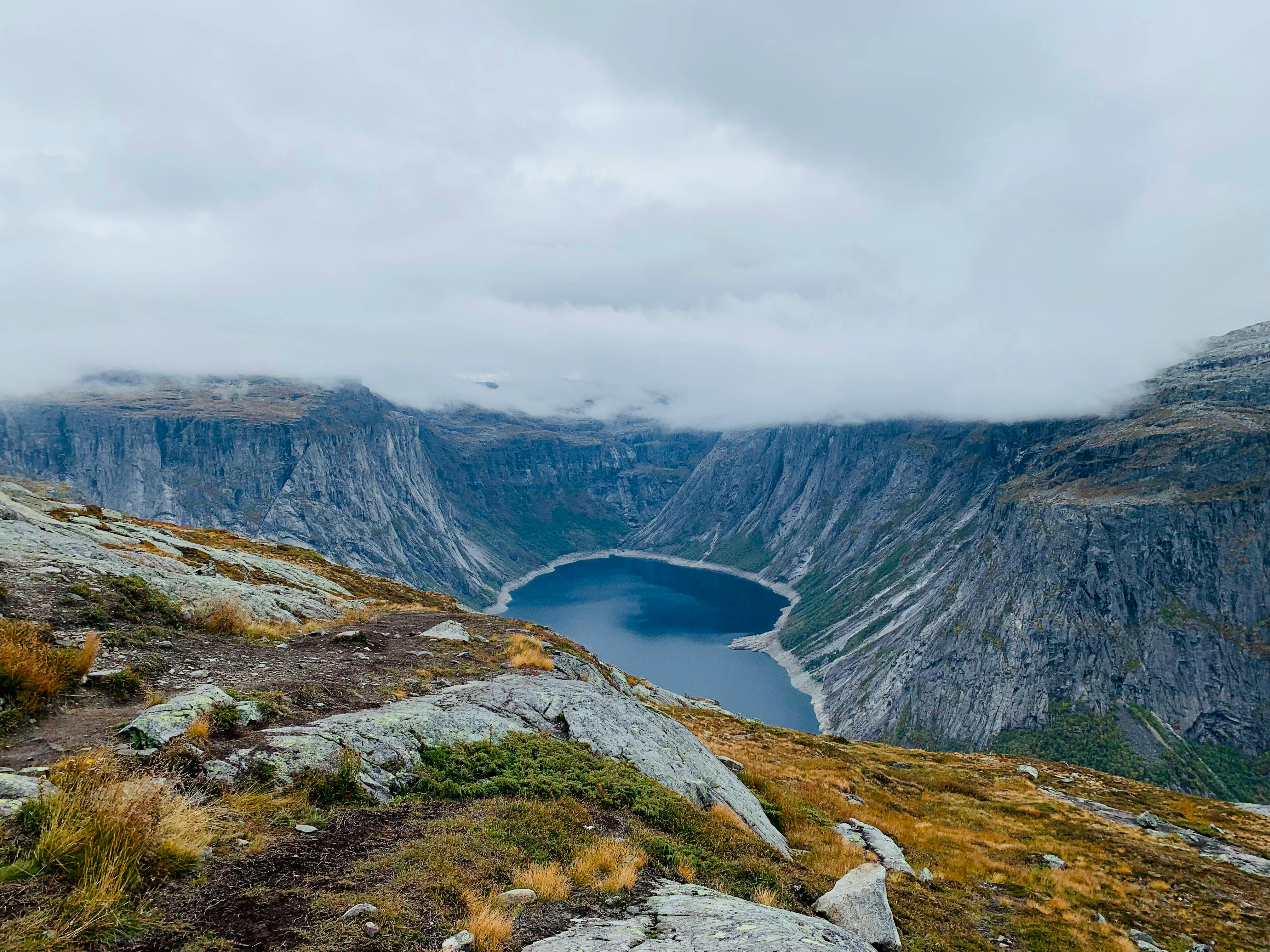
Carved between high plateaus and a deep fjord, Tyssedal grew from a hydropower boomtown into a gateway for outdoor legends like Trolltunga. Just 6 km from Odda on the Sørfjorden (Hardangerfjord), it’s a perfect, affordable base for hikes, waterfalls, orchards, and glacier views.
Hardanger is Norway’s orchard garden. In spring, hillsides blush with apple blossoms; in summer and fall, farm stands overflow with cherries and apples that become award-winning Hardanger cider. Add historic stave churches, museum power plants, and glacier-fed lakes, and you have a compact region dense with big-scenery days out.
Norway rewards planners. Weather changes fast; pack layers, waterproofs, and sturdy footwear. Most hikes are free, buses are reliable, and self-catered meals from supermarkets (Rema 1000, Kiwi, Coop) help keep costs down. Cards are accepted everywhere; book parking or shuttles for popular hikes in advance during summer.
Tyssedal
Tyssedal hugs the fjord under steep slopes streaked by old hydropower penstocks. The village’s identity is tied to energy: the Norwegian Museum of Hydropower and Industry (Kraftmuseet) tells the story of how waterfalls powered Norway’s modernization.
Top nearby sights include the museum’s Tysso I power station and the Lilletopp viewpoint, the starting areas for the Trolltunga hike in Skjeggedal, and calm evening strolls along the Sørfjorden.
- Stay (budget to mid-range): Compare stays in Tyssedal and neighboring Odda on VRBO Tyssedal or Hotels.com Tyssedal. For more options 6 km away, check VRBO Odda or Hotels.com Odda.
- Getting to Tyssedal (budget-friendly): Fly to Bergen or Oslo, then bus/train + bus to Odda/Tyssedal. Search and compare on Omio (flights in/out of Europe), Omio (trains in Europe), and Omio (buses in Europe). Typical times: Bergen to Odda/Tyssedal by bus ~3–3.5h (about 320–450 NOK). Oslo to Odda via train to Voss + bus ~6–7h (approx. 700–1100 NOK).
Odda
Odda is the region’s service hub—supermarkets, gear shops, and trailhead shuttles—set between sheer valley walls at the fjord’s head. It’s your practical springboard for Trolltunga, Buerbreen, and Låtefoss.
- Food & coffee: Grab hearty Norwegian classics at Gry Helge’s Bar & Restaurant (pub vibe, generous portions), and dine with fjord views at the Glacier Restaurant & Bar at Trolltunga Hotel (seasonal menus, local trout and lamb). For budget breakfasts, supermarkets in Odda have excellent fresh pastries and sandwiches.
- Activities: Book guided hikes to Trolltunga or Buerbreen (seasonal), rent bikes, or browse the small waterfront for a relaxed evening.
Kinsarvik & Lofthus
North along Route 13, orchards climb from the fjord into the hills. Kinsarvik is the gateway to Husedalen’s four mighty waterfalls; Lofthus tempts with the Monk Steps to Nosi’s viewpoint and legendary stone-oven pizza at Lofthus Ekspedisjon.
- Eat & drink: Lofthus Ekspedisjon (creative pizzas, salads, and fresh bakes; try with local Hardanger cider). In season, many farm shops sell cherries, apples, and juices—ideal trail snacks.
- Optional stays: If you ever split nights, compare VRBO Lofthus, Hotels.com Lofthus, and Hotels.com Kinsarvik.
Utne & Rosendal (with Sunndal/Bondhusvatnet)
Cross the fjord to Utne for folk heritage and traditional wooden architecture. South-west through the Folgefonna tunnel, Sunndal’s Bondhusdalen offers an easy path to emerald Bondhusvatnet with glacier views; Rosendal’s manor and gardens are summer-season gems.
- Culture & nature highlights: Hardanger Folk Museum (Utne), Bondhusvatnet walk (Sunndal), Baroniet Rosendal manor and gardens (seasonal).
- Optional stays: For an occasional overnight, browse Hotels.com Utne or Hotels.com Rosendal.
Day 1: Arrive in Tyssedal, Fjord Stroll, and Hydropower Heritage
Morning: Travel to Bergen or Oslo, then onward to Odda/Tyssedal. Compare options and book on Omio (flights), then connect by train or bus. Aim to arrive in Tyssedal by early afternoon.
Afternoon: Drop bags and walk to the Norwegian Museum of Hydropower and Industry. Explore the monumental Tysso I power station and learn how mountain water turned into electricity and industry. If time and weather allow, continue up to Lilletopp for fjord panoramas.
Evening: Dinner in Odda (10 minutes by bus/car). Try Gry Helge’s Bar & Restaurant for Norwegian comfort food on a budget, or Glacier Restaurant & Bar at Trolltunga Hotel for fjord views. Stock up at supermarkets for tomorrow’s trail snacks.
Day 2: Trolltunga Hike — Full Day Icon
Start pre-dawn for one of Norway’s most famous hikes (June–September unguided; shoulder/winter seasons require proper gear or a certified guide). From P2 Skjeggedal (or P3 Mågelitopp with limited, pre-booked parking/shuttle), it’s 20–28 km round trip, 800–1200 m elevation gain, 10–12 hours. Pack layers, headlamp, map/GPS, food (3 meals), 2+ liters of water, and check the forecast. In summer, consider a guided via ferrata route to Trolltunga if you want a roped experience; in poor conditions, swap to the Lilletopp via ferrata above Tyssedal or a lower-elevation hike. After returning, celebrate with pizza and a cold local cider at Lofthus Ekspedisjon if you still have energy—or a hot meal back in Odda.
Day 3: Waterfalls and Glacier Valley — Låtefoss, Røldal, and Buerbreen
Morning: Drive or bus 20 minutes south to Låtefoss, the roaring twin waterfall that floods the roadside with mist—bring a lens cloth. Continue about 40 minutes to Røldal to see the 13th-century Røldal Stave Church (interior visits typically summer; otherwise enjoy the exterior and village). Winter alternative: ski at Røldal if lifts are running.
Afternoon: Return toward Odda and detour into Buerdalen (about 15 minutes from Odda center). Hike the rugged trail toward Buerbreen glacier (often 2–3 hours round trip to the best viewpoints; expect roots, boulders, and some ropes). Turn back well before any ice unless on a guided glacier tour.
Evening: Casual dinner back in Odda. For a budget-friendly option, pick up fresh seafood or rotisserie chicken at the supermarket and picnic by the fjord. If you prefer a sit-down, Gry Helge’s does hearty plates at sensible prices.
Day 4: Bondhusvatnet and Rosendal (Folgefonna Side)
Morning: Head through the Folgefonna tunnel to Sunndal (Mauranger) for the Bondhusvatnet walk (about 55–65 minutes from Tyssedal by car; bus options via Omio vary by season). The old cart road to the lake is an easy 3–4 km round trip with stunning emerald water and glacier views—perfect for a budget picnic.
Afternoon: Continue 30–40 minutes to Rosendal. In season, visit Baroniet Rosendal, Norway’s only barony, with rose gardens and mountain backdrops. Off-season, stroll the harbor and coastal trails or visit a local café.
Evening: Drive back to Tyssedal (about 1.5 hours) or dine before returning. On summer evenings, sunsets over the fjord can be magical from roadside pullouts.
Day 5: Husedalen’s Four Waterfalls (Kinsarvik)
Morning: Travel 30–40 minutes north to Kinsarvik and start the Husedalen hike. You can turn around after the second waterfall for a shorter day, or continue to see all four (plan 4–6 hours total). The trail follows the river with dramatic viewpoints—exercise caution near edges.
Afternoon: Refuel in Kinsarvik village. In season, pick up fruit from farm stands or a simple café lunch. If legs allow, stop by Lofthus on the way back for a fjord swim in summer, or coffee and cake at a hotel lounge.
Evening: Dinner at Lofthus Ekspedisjon (share a salad and a pizza for a good-value meal) or self-cater back in Tyssedal. Budget tip: bring Tupperware and refill water bottles from taps—Norwegian tap water is excellent.
Day 6: Lofthus Viewpoints and Hardanger Cider
Morning: Hike the Munketreppene (Monk Steps) from Lofthus to Nosi—historic stone steps built to reach mountain pastures. It’s steep but rewarding (allow 3–5 hours round trip). Summer alternative: walk a section of Dronningstien (Queen’s Trail) as a one-way ridge hike; arrange a local bus/taxi shuttle back via Omio (buses in Europe).
Afternoon: Celebrate with a Hardanger cider tasting (book ahead). Notable producers near the fjord include Aga Sideri (south of Utne) and producers around Lofthus and Øystese; tastings are usually guided and informative. Non-drinkers can sample fresh apple juice.
Evening: For a special regional dinner, the historic Utne Hotel’s dining room focuses on local fish and lamb (reserve in season). Otherwise, keep it budget-friendly with a supermarket cheese-and-charcuterie spread on the fjord.
Day 7: Utne Folk Heritage and Departure
Morning: If timing allows, ferry or drive to Utne (ferry routes vary—check schedules and book via Omio (ferries in Europe)). Visit the Hardanger Folk Museum for traditional costumes (bunad), woodcarving, and historic buildings.
Afternoon: Return to Tyssedal, collect your bags, and depart toward Bergen or Oslo. For onward travel, compare flights, trains, and buses on Omio. Bergen is typically 3–3.5 hours by bus; Oslo via Voss + train about 6–7 hours.
Evening: If you have a late flight, enjoy a final fjordfront meal in Odda. Toast the week with one last Hardanger cider or a hot chocolate before heading out.
Budget & Seasonal Tips
- Seasonality: Trolltunga is safest June–September; outside that, use certified guides and winter gear. Rosendal gardens and some cider farms are seasonal (late spring–early autumn). In winter, swap big hikes for valley walks, museum time, and Røldal skiing.
- Transport savings: Buses connect most places; search times/fares on Omio. If renting a car, share costs and check tolls/ferries.
- Food savings: Build trail picnics from supermarkets; carry a thermos for coffee/tea. Bring microspikes in shoulder seasons to expand safe hiking options.
- Where to stay (if you need extra nights): Compare in Tyssedal/Odda on VRBO Odda and Hotels.com Odda; for orchard country, look at VRBO Lofthus.
With Tyssedal as your base, this 7-day itinerary balances blockbuster hikes like Trolltunga with accessible gems—Bondhusvatnet, Husedalen, and Låtefoss—plus the flavors of Hardanger cider country. You’ll leave with full memory cards, tired legs, and a deep sense of Norway’s water-powered soul.