
7 Days in Rameswaram & Madurai: Temples, Dhanushkodi Shores, and Tamil Nadu Pilgrimage Trails
Rameswaram is one of India’s great pilgrimage destinations, a windswept island town in Tamil Nadu where mythology, seafront landscapes, and temple ritual shape daily life. It is most famous for Ramanathaswamy Temple, revered in Hindu tradition and celebrated for its immense corridors, carved pillars, and sacred water tanks.
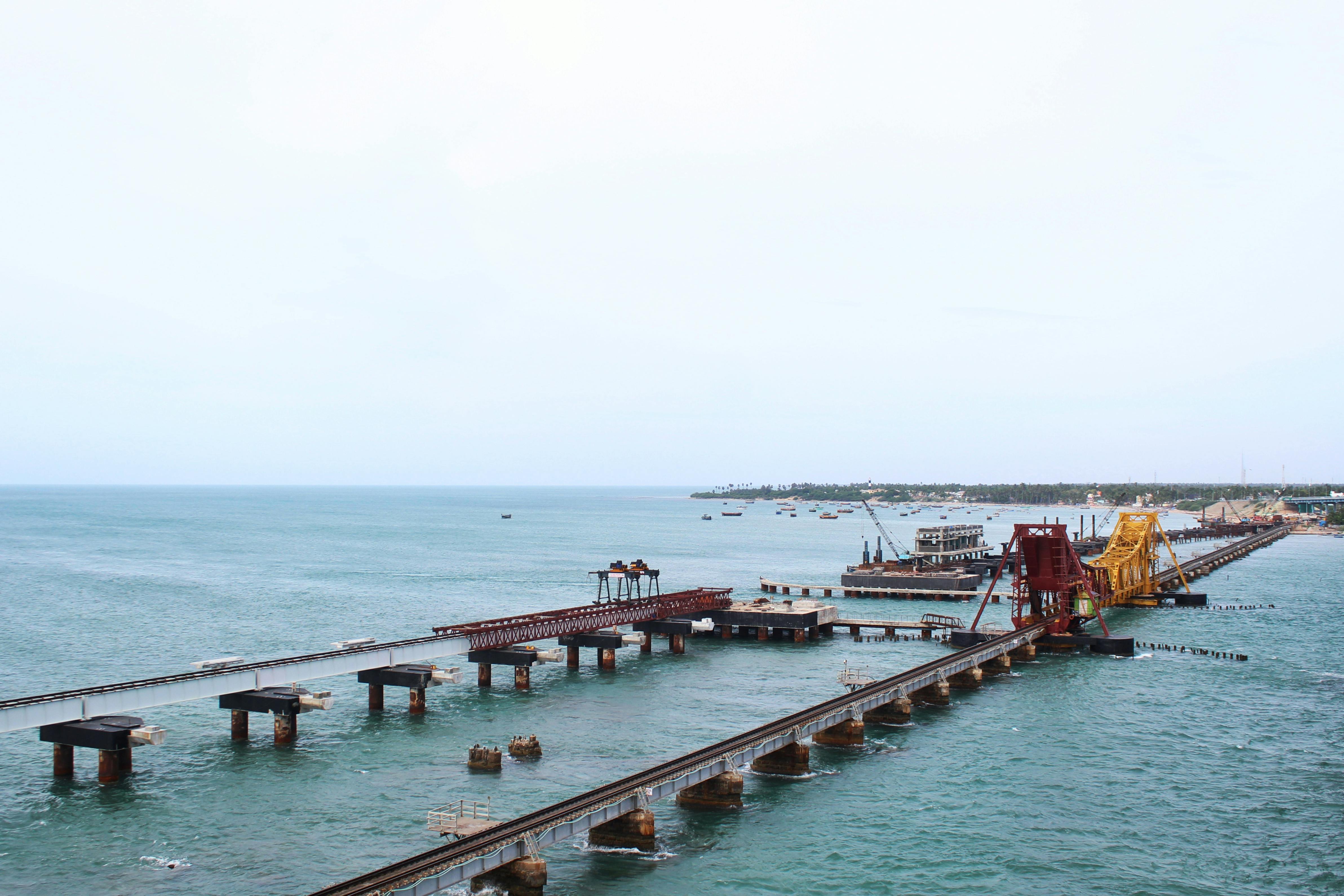
The area also carries a powerful geographical romance. Pamban Bridge links the island to the mainland, Dhanushkodi sits at the edge of land and legend near the ghost-town ruins destroyed in the 1964 cyclone, and the coast faces toward Sri Lanka, tying local storytelling to the Ramayana and the idea of Ram Setu.
For a 7-day trip, pairing Rameswaram with Madurai creates the best rhythm. Madurai adds urban energy, exceptional Tamil food, and one of South India’s most important temple cities; practical notes: dress modestly for temples, expect heat and humidity for much of the year, carry socks for hot stone surfaces, and favor train or private car transfers for the smoothest travel flow.
Rameswaram
Rameswaram is less about rushing from monument to monument and more about atmosphere. Here, dawn prayers, fishing boats, temple bells, salt air, and quiet stretches of coast combine into a place that feels both devotional and elemental.
The essential sights are Ramanathaswamy Temple, Agni Theertham, Pamban Bridge, Dhanushkodi, the APJ Abdul Kalam Memorial, and viewpoints connected to Ram Setu lore. Food is rooted in Tamil cooking: crisp dosas, pongal, filter coffee, seafood curries in non-vegetarian kitchens, and traditional vegetarian meals served on steel thalis or banana leaves.
For stays, consider Hyatt Place Rameswaram for polished comfort and reliable amenities, Daiwik Hotels Rameswaram for convenience near pilgrimage circuits, or browse VRBO in Rameswaram and Hotels.com listings in Rameswaram for more options. Another locally known option is Hotel MCM Towers, often considered for central access and straightforward value.
To reach Rameswaram, most travelers fly into Madurai and continue overland by train or car. Search flights via Trip.com flights or Kiwi.com flights, then compare rail options on Trip.com trains. Madurai to Rameswaram generally takes about 3.5 to 4.5 hours by road or roughly 4 to 6 hours by train depending on service; budget around $4-$15 for train classes or approximately $45-$90 for a private car.
Recommended activity: the Rameshwaram Heritage and Private Walking Trail is a strong early-trip choice because it ties together Dhanushkodi, Ram Setu viewpoints, birdlife, Kalam memorial sites, and temple context in one guided experience.

Day 1 - Arrive in Rameswaram
Morning: This is your arrival day, so keep the morning reserved for transit. The most practical route is to fly into Madurai, then continue by pre-booked car or train to Rameswaram; if you are still arranging tickets, use Trip.com, Kiwi.com, and Trip.com rail search.
Afternoon: Check into Hyatt Place Rameswaram or Daiwik Hotels Rameswaram and take time to settle in. Afterward, head to Agni Theertham, the seafront bathing ghat near Ramanathaswamy Temple, where pilgrims gather and the Bay of Bengal horizon gives your first sense of the island’s devotional atmosphere.
Evening: Visit the exterior precincts around Ramanathaswamy Temple before or after dusk, when the light softens and the streets fill with flower sellers, brass-lamp shops, and temple-bound families. For dinner, look for a traditional South Indian meal centered on ghee roast dosa, idli, pongal, curd rice, and filter coffee; choose a busy vegetarian restaurant near the temple area for freshness and local rhythm, or a well-reviewed hotel restaurant if you prefer a quieter first night.
Day 2 - Ramanathaswamy Temple and the Sacred Core of Rameswaram
Morning: Start early at Ramanathaswamy Temple, the great spiritual and architectural heart of Rameswaram. Go with modest clothing and enough time to appreciate the famed pillared corridors, among the longest in India, whose repeating lines and painted ceilings create one of South India’s most memorable temple interiors.
Afternoon: Return for lunch and rest during the hottest part of the day. A classic midday meal here is a vegetarian thali with sambar, rasam, poriyal, kootu, appalam, and rice; if you want a lighter option, order curd rice and lime soda, both practical in the coastal heat.
Evening: Spend the later hours at local temple streets and smaller shrines, pausing for snacks such as medu vada or mini tiffin plates. If you still have energy, walk again near Agni Theertham for the sea breeze and a calmer evening view than the morning pilgrimage crowds.
Day 3 - Dhanushkodi, Ram Setu Lore, and Kalam Memorial
Today is ideal for the Rameshwaram Heritage and Private Walking Trail. It is especially useful because it gives historical narration and local context to places that can otherwise feel scattered on a map: Dhanushkodi’s cyclone ruins, Ram Setu viewpoints, migratory bird areas, APJ Abdul Kalam’s legacy sites, and key religious landmarks.
If you prefer to go independently, leave early for Dhanushkodi. The long spit of land is one of Tamil Nadu’s most haunting landscapes, with church remains, open sky, rough sea on one side, calmer water on the other, and the feeling of standing at the edge of both geography and epic narrative.
On the return, stop at the Dr. A.P.J. Abdul Kalam Memorial. It is a thoughtful site honoring India’s former president and beloved scientist, who was born in Rameswaram; the memorial adds a modern national story to a destination better known for ancient pilgrimage.
In the evening, reward yourself with a seafood dinner if you eat non-vegetarian food. Look for local kitchens serving fish fry, prawn masala, pepper crab, or meen kuzhambu with parotta or rice; if you prefer vegetarian cuisine, stick to a temple-town classic supper of dosa, chapati with kurma, and strong filter coffee.
Day 4 - Pamban Bridge, Local Life, and a Slower Island Day
Morning: Head to Pamban Bridge viewpoints. This crossing is more than a transport link: it is one of the iconic engineering images of coastal India, with the rail bridge and sea stretches offering excellent photo opportunities, especially when fishing boats pass under changing light.
Afternoon: Spend time in local markets and neighborhood streets rather than chasing major sights. Browse shells, religious souvenirs, jasmine garlands, brass puja items, and simple snack stalls; this is where Rameswaram feels most lived-in and least performative.
Evening: Choose a restful final evening on the island. Have dinner at your hotel or a reliable local restaurant and order a spread of dosa varieties, uthappam, tomato chutney, coconut chutney, and a sweet finish such as kesari if available.
Madurai
Madurai is one of the oldest continuously inhabited cities in India and one of the finest companions to Rameswaram on a 7-day itinerary. If Rameswaram is tidal, meditative, and sea-bright, Madurai is dense, ceremonial, and gloriously urban.
The city revolves around the Meenakshi Amman Temple, but its appeal stretches further: flower markets, textile shops, banana-leaf meals, jigarthanda stalls, old streets, and a living temple culture that still shapes the city’s schedule. It is a wonderful place to eat deeply and walk often.
For accommodation, browse VRBO in Madurai or compare Hotels.com options in Madurai. Travel from Rameswaram to Madurai is straightforward by morning train or private car; expect about 3.5 to 4.5 hours by road or roughly 4 to 6 hours by rail, with train fares often under $15 and private transfers commonly around $45-$90 depending on vehicle type.
Use Trip.com trains for rail search or Trip.com flights if you are booking onward departure from Madurai airport later in the week.
Day 5 - Transfer to Madurai and First Temple Walk
Morning: Depart Rameswaram after breakfast for Madurai by train or private car. Morning departures are best because they preserve your afternoon for sightseeing; if booking at the last minute, search rail on Trip.com.
Afternoon: Check in and head to the area around Meenakshi Amman Temple. Even before entering, the city announces itself through gopurams crowded with vividly painted deities, market lanes perfumed by jasmine, and snack counters selling fresh bajji, poli, and buttermilk.
Evening: Visit Meenakshi Amman Temple during the evening, when the lit towers and devotional soundscape are especially compelling. Afterward, have a classic Madurai dinner: kari dosa if you eat meat, or kal dosa with vegetable kurma if you do not; finish with jigarthanda, the city’s beloved chilled dessert drink made with milk, almond gum, nannari syrup, and ice cream.
Day 6 - Markets, Food, and Madurai Heritage
Morning: Begin with South Indian breakfast at a long-running local tiffin spot. Order idli, pongal, poori masala, or ghee dosa with filter coffee; Madurai breakfasts are fast, filling, and among the best value meals in India.
Afternoon: Explore the old city markets around the temple district. Look for flowers, bronze items, temple textiles, and stainless-steel household wares; this is a wonderful place to understand Madurai not as a museum city, but as a working commercial center shaped by religion and trade for centuries.
Evening: Dedicate the evening to food. If you want the city’s famous non-vegetarian repertoire, seek out mutton chukka, bun parotta, kola urundai, or pepper chicken; vegetarian travelers can build an equally strong meal around mini tiffin, adai avial, mushroom pepper fry, and rose milk or jigarthanda for dessert.
Day 7 - Final Morning in Madurai and Departure
Morning: Enjoy one last temple-area walk or a slow breakfast before checkout. This is a good time for final shopping: jasmine oil, small brass lamps, prayer beads, spice mixes, or packaged sweets that travel well.
Afternoon: Depart from Madurai. For onward travel, compare options on Trip.com flights or Kiwi.com flights. If you are continuing overland, train search is available via Trip.com trains.
Evening: Most travelers will already be in transit, but if your departure is later, fit in a final early dinner near the station or airport area. Keep it simple with dosa, lemon rice, curd rice, or chapati and kurma so the journey home is comfortable.
This 7-day Rameswaram itinerary gives you the sacred stillness of Tamil Nadu’s island pilgrimage center and the vivid street life of Madurai in one balanced week. It is a journey of temple corridors, sea horizons, market color, and deeply rooted South Indian food—rich in meaning without feeling rushed.