
7 Days in Prayagraj: Sangam, Forts, Temples, and a Deeper Uttar Pradesh Journey
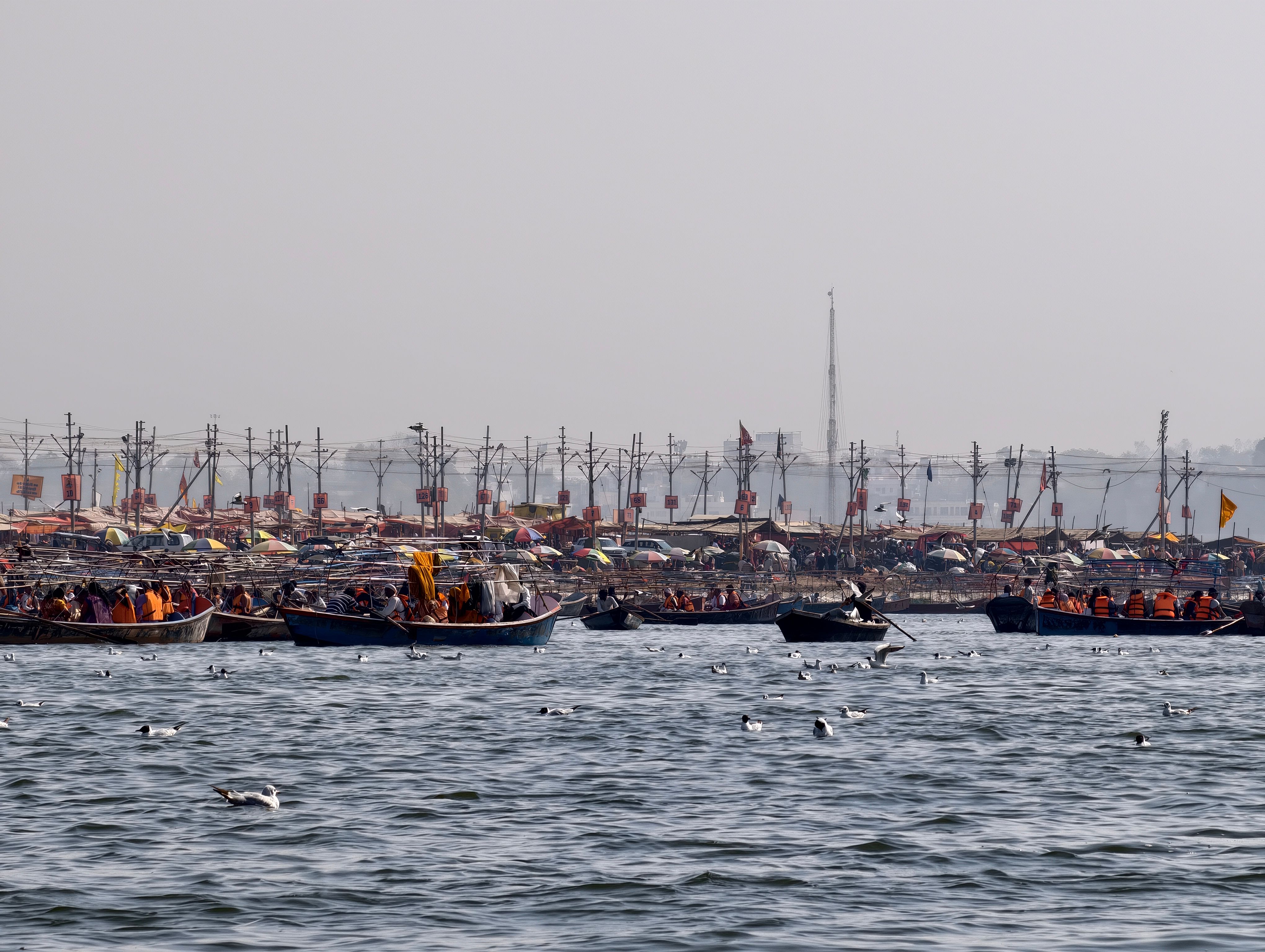
Prayagraj, long known to many travelers as Allahabad, is one of India’s great pilgrimage cities and one of the oldest continuously revered urban centers on the subcontinent. At its heart lies the Triveni Sangam, the confluence of the Ganga, Yamuna, and the mystical Saraswati, a site woven into epic literature, imperial history, and the living rhythms of Hindu devotion.
The city is famous worldwide for the Kumbh Mela, one of the largest human gatherings on earth, but Prayagraj is more than a festival destination. It is a place of Ashokan inscriptions, Mughal fortifications, colonial boulevards, venerable temples, and riverfront dawns that feel older than memory.
For practical planning, the best sightseeing months are generally October through March, when days are more comfortable for walking and boat rides. Dress modestly at temples and ghats, carry cash for smaller vendors and boatmen, and expect security restrictions around some heritage zones, especially near Prayagraj Fort and major religious sites.
This 7-day itinerary uses two cities for a smooth 5–9 day journey: Prayagraj as your main base, plus Varanasi for a well-matched extension into the sacred geography of Uttar Pradesh. The route is logical, the train connection is easy, and the contrast between Prayagraj’s broad ceremonial landscapes and Varanasi’s dense ritual intensity gives the week real narrative shape.
Food is another reason to linger. In Prayagraj, look for kachori-sabzi breakfasts, North Indian thalis, old-school sweets, and satisfying vegetarian fare near the old city; in Varanasi, add blue lassi, tomato chaat, Banarasi paan, and riverside dining with a view of the Ganges.
Prayagraj
Prayagraj is a city of meeting points: rivers, faiths, dynasties, and ideas. One moment you are on a quiet avenue lined with institutional buildings from the colonial era; the next you are descending toward a ghat where priests chant by lamplight and pilgrims cup water in their palms.
The headline sights are undeniable: Triveni Sangam, Prayagraj Fort, Anand Bhavan, Khusro Bagh, Allahabad Museum, and the old bazaars around Chowk. Yet the city’s real pleasure is the atmosphere between them: chai stalls, fruit carts, temple bells, university neighborhoods, and the broad sky over the rivers.
For stays, I recommend Kanha Shyam Hotel for a dependable full-service base, The Legend Hotel for a polished central option, or Hotel Mandiram for a simpler city stay. You can also browse broader options on VRBO Prayagraj or Hotels.com Prayagraj.
For arrival into Uttar Pradesh, search flights via Trip.com flights or Kiwi.com flights. Many travelers route through Delhi, Lucknow, or Varanasi before continuing to Prayagraj; if arriving overland, train searches on Trip.com trains are useful, with major routes often taking several hours depending on origin and service class.
Note on activities: the available Viator products provided for this destination are incorrectly matched to Indianapolis rather than Prayagraj. Because accuracy matters, I am not recommending those unrelated tours. Instead, this itinerary focuses on current, viable local experiences in Prayagraj itself.
- Top sights: Triveni Sangam boat ride, Prayagraj Fort exterior and permitted areas, Patalpuri Temple and Akshayavat access when open, Anand Bhavan, Khusro Bagh, Allahabad Museum, All Saints Cathedral.
- Breakfast & coffee ideas: street-side kachori-sabzi near Civil Lines or Chowk, local chai stalls, and café stops in Civil Lines for a cleaner sit-down start before museum visits.
- Lunch & dinner ideas: North Indian restaurants in Civil Lines, vegetarian thali spots around the market district, and hotel dining rooms for a comfortable first evening after arrival.
Day 1 – Arrival in Prayagraj and a Gentle Introduction
Morning: This is your transit window. Use Trip.com flights or Kiwi.com flights to compare air options into Prayagraj or nearby gateways; if coming by rail, Trip.com trains is the simplest affiliate route for schedules and fares.
Afternoon: Arrive, check in, and keep the first hours light. If you stay at Kanha Shyam Hotel or The Legend Hotel, you will be well placed for Civil Lines, the area developed under British rule with broad roads and easier navigation than the old-city lanes.
Afternoon: Step out for an orientation walk through Civil Lines. This district offers a different face of Prayagraj: institutional, leafy, and calm, useful for settling in before the denser spiritual sites begin. Pause for coffee or masala chai at a local café, then have an early lunch of paneer tikka, dal, tandoori breads, or a simple North Indian thali.
Evening: Head toward the Sangam area before sunset if your energy allows. Even from the shore, the meeting of rivers has a solemn grandeur, and your first evening there helps frame the rest of the week. Finish with dinner back in Civil Lines, choosing either a hotel restaurant for convenience or a well-frequented local family restaurant serving kebabs, curries, and fresh breads.
Day 2 – Triveni Sangam, Ritual Prayagraj, and the Riverfront
Morning: Start early with a sunrise boat ride to Triveni Sangam. This is the essential Prayagraj experience: the visible contrast between the greenish Yamuna and the lighter Ganga, the boats clustered at dawn, the priests offering brief rituals, and the sense that this confluence is both geography and cosmology.
Morning: If you wish, take part in a simple puja arranged by a boatman or local priest, but keep expectations practical and agree costs clearly in advance. Wear sandals that can get wet, bring a scarf or shawl, and keep valuables minimal, since river outings are active and crowded around major bathing areas.
Afternoon: After breakfast—ideally kachori-sabzi with jalebi from a trusted local shop—continue to the outer precincts of Prayagraj Fort. Built by Akbar in the late 16th century, the fort occupies one of the most symbolically charged locations in North India. Access varies because parts remain under military control, but when permitted, the associated sacred sites such as Patalpuri Temple and Akshayavat are worth the security checks and queues.
Afternoon: Lunch should be unhurried. Choose a reliable restaurant for a vegetarian thali, seasonal sabzi, curd, and roti; after the intensity of the Sangam, a sit-down meal in air-conditioning is less indulgence than strategy.
Evening: Return to the ghats or riverfront zone for a slower twilight hour. While Prayagraj’s evening ritual atmosphere is subtler than Varanasi’s famed aarti, that is part of its appeal: less spectacle, more space to absorb the city’s devotional cadence. For dinner, try a local favorite known for North Indian mains—paneer lababdar, dum aloo, chicken curry if you prefer non-vegetarian fare—and end with kulfi or rabri.
Day 3 – Anand Bhavan, Allahabad Museum, and Intellectual Prayagraj
Morning: Begin at Anand Bhavan, the Nehru family residence that places Prayagraj at the center of modern Indian political history. The house is not merely a memorial; it is an atmospheric entry point into the world of the independence movement, elite reform circles, and the making of 20th-century India.
Morning: Spend time in the galleries rather than rushing room to room. The value here lies in context: family photographs, period interiors, and the feeling of a private home that became a political nerve center.
Afternoon: Continue to the Allahabad Museum in Chandrashekhar Azad Park. This is one of the city’s strongest cultural stops, with archaeology, miniature paintings, nationalist-era material, and regional art that expands your understanding beyond pilgrimage. It is especially rewarding after Anand Bhavan, since one site personalizes history while the other broadens it.
Afternoon: Have lunch nearby or return to Civil Lines for a comfortable meal. Good choices include a restaurant specializing in North Indian platters, biryani, or South Indian staples if you want a lighter break from heavier gravies.
Evening: Walk through Chandrashekhar Azad Park and, if time allows, pass by All Saints Cathedral, a striking Gothic revival church often called one of the finest colonial churches in Asia. Its stonework and proportions offer a dramatic contrast to the temple architecture you have seen so far. Dinner can be a quieter hotel meal tonight, especially if you want an early start the next day.
Day 4 – Khusro Bagh, Old City Lanes, and Prayagraj’s Everyday Flavor
Morning: Start at Khusro Bagh, a walled Mughal garden complex holding the sandstone mausoleums of Prince Khusro and members of the imperial family. It is one of Prayagraj’s most elegant historic sites, less crowded than the Sangam and deeply evocative in the early hours when the gardens are still cool.
Morning: The architecture rewards slow looking: carved details, elevated platforms, and the melancholy politics of succession embedded in the site’s history. This is where Prayagraj stops being only a pilgrimage city and reveals itself as a stage for Mughal ambition and tragedy.
Afternoon: Move into the old market areas around Chowk for street life, local sweets, and snacks. This is the right day for tasting Prayagraj more directly: kachori, samosa, chaat, lassi, and seasonal mithai from busy, long-running shops. Choose places with steady turnover and visible cleanliness.
Afternoon: If you enjoy textiles, puja items, brassware, or ordinary market photography, give yourself time to wander. The old city is not manicured for tourists; that is exactly why it is memorable. The lanes hold the texture of the city in a way monuments alone cannot.
Evening: End with a proper sit-down dinner in Civil Lines or at your hotel. Order something distinct from previous meals—perhaps tandoori fish, handi chicken, paneer tikka masala, or a mixed kebab platter—so the culinary side of the itinerary keeps evolving. Pack lightly afterward for tomorrow’s transfer to Varanasi.
Varanasi
Varanasi is the perfect second act to a week anchored in Prayagraj. If Prayagraj feels expansive and ceremonial, Varanasi is dense, intimate, and incandescent: an ancient city of ghats, labyrinthine alleys, temple bells, silk shops, cremation fires, scholars, and riverlight.
It is one of the world’s oldest living cities and one of India’s most overwhelming in the best sense. Here, sacred geography is not confined to a single confluence; it spills through stairs, shrines, courtyards, music, and the daily theater of the Ganges.
For accommodation, browse VRBO Varanasi or Hotels.com Varanasi. Staying near the ghats offers atmosphere and walkability, while a hotel a little farther out can be easier for car access and a quieter night.
Travel from Prayagraj to Varanasi is straightforward by train, usually around 2.5 to 4 hours depending on service, often roughly US$3–15 in standard classes and more in premium categories. Search current options on Trip.com trains; a private road transfer generally takes about 3 to 4 hours depending on traffic.
- Top sights: Dashashwamedh Ghat, Assi Ghat, Kashi Vishwanath area, Banaras Hindu University precincts, Sarnath as an optional side trip.
- Best food targets: blue lassi, Banarasi chaat, malaiyyo in season, kachori breakfast, riverside dinners, and paan from a reputed old-city vendor.
- Practical note: the old city is dense and best explored on foot or by cycle rickshaw plus walking; wear comfortable shoes that slip off easily for temple visits.
Day 5 – Morning Transfer to Varanasi and First Evening on the Ghats
Morning: Depart Prayagraj after breakfast for Varanasi. The most logical option is rail; use Trip.com trains to compare departure times and classes. Aim for a morning train so you arrive with most of the day ahead.
Afternoon: Check in and have a restorative lunch before heading out. For a first Varanasi meal, choose something classic but gentle—vegetarian thali, jeera rice, dal, and fresh tandoori roti—before plunging into the old city’s sensory overload.
Afternoon: Spend your first hours walking from Assi Ghat toward the busier riverside stretches if energy permits. Assi offers a softer landing than the central ghats, with students, cafés, morning-yoga culture spilling into daytime, and enough movement to feel Varanasi without being swallowed by it.
Evening: Make your way to Dashashwamedh Ghat for the evening Ganga aarti. It is theatrical, crowded, devotional, and unforgettable: synchronized lamps, conch shells, smoke, drums, and the river reflecting everything. Have dinner afterward at a reputable rooftop or riverside restaurant, where the night view over the ghats becomes part of the meal.
Day 6 – Sunrise Boat Ride, Kashi Vishwanath Area, and Banarasi Food
Morning: Rise before dawn for a sunrise boat ride on the Ganges. This is Varanasi at its most extraordinary: bathers descending the steps, priests at prayer, washermen at work, and a city slowly revealing itself in gold and ash-blue light. It is one of the finest urban dawn experiences anywhere in the world.
Morning: After landing, have a local breakfast of kachori-sabzi and jalebi, or try a well-known lassi stop for something cooling. The city’s food culture is inseparable from the pilgrimage circuit, and breakfast here feels like part ritual, part reward.
Afternoon: Explore the Kashi Vishwanath corridor area and surrounding lanes, bearing in mind security protocols and crowd patterns. Even if you are not entering the temple itself, the neighborhood is fascinating for the sheer density of religious commerce, shrines, metalwork, flowers, sweets, and processions.
Afternoon: Later, browse old-city shops for silk scarves, brass items, or music-related crafts associated with Banaras’s classical heritage. Stop for Banarasi tomato chaat or other local street snacks from a trusted, busy vendor.
Evening: Keep dinner focused and memorable: order regional vegetarian dishes, tandoori specialties, or a slow-cooked curry at a respected local restaurant. End with Banarasi paan, not merely as a novelty but as a tiny edible emblem of the city’s flavor and ceremony.
Day 7 – A Final Varanasi Morning and Afternoon Departure
Morning: Use your last morning according to your interests. If you want one final contemplative experience, return to the ghats for a quieter walk and tea by the river. If you prefer history over atmosphere, make an early excursion toward Sarnath, where the Buddha is believed to have given his first sermon; it adds a powerful Buddhist layer to a week otherwise centered on Hindu sacred geography and North Indian history.
Morning: Keep the schedule disciplined because departure logistics in Varanasi can be slower than they look on a map. Build in time for traffic, station procedures, or airport security.
Afternoon: Depart by train or flight. Use Trip.com flights or Kiwi.com flights for onward air options, or Trip.com trains if continuing overland through India.
Evening: In spirit, the trip ends not with a checklist completed but with a richer sense of how Uttar Pradesh’s sacred cities speak to one another. Prayagraj gave you confluence and breadth; Varanasi offered intensity and flame.
This itinerary balances pilgrimage, history, food, and practical transit without turning the week into a race. Over seven days, you will see why Prayagraj and Varanasi remain two of the most compelling cultural and spiritual destinations in India: cities where rivers, memory, and daily life still shape one another in plain view.