
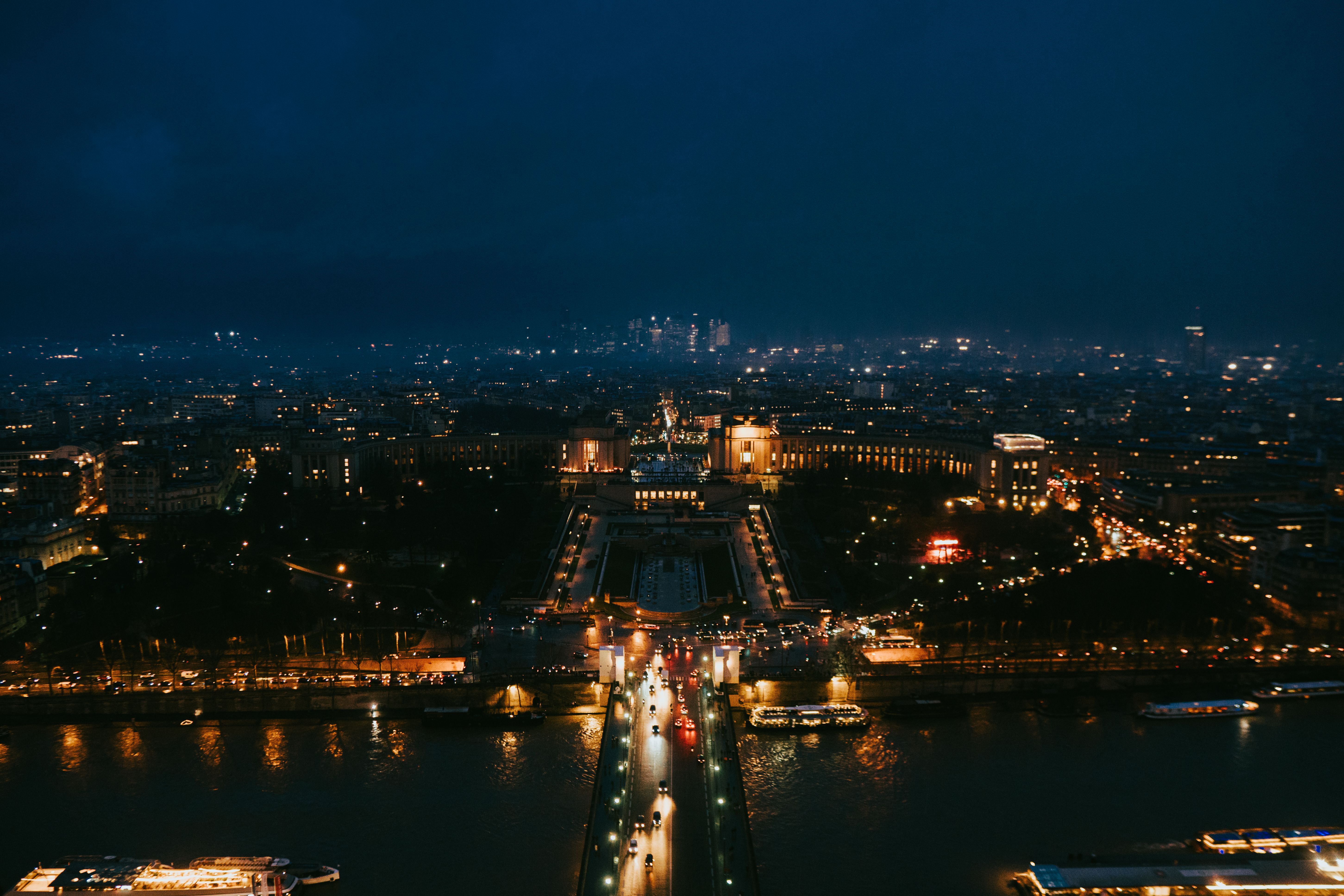
Paris began as a settlement on the Île de la Cité and grew into a capital that shaped European art, politics, fashion, and cuisine. Over centuries it became a city of revolutions, cathedrals, salons, and ateliers, where Gothic stone, Haussmann boulevards, and Belle Époque glamour still share the same skyline.
Its great pleasure is contrast. You can stand before the Mona Lisa in the Louvre in the afternoon, then end the day with natural wine in a tiny cave à manger, or watch the Eiffel Tower sparkle after dark from a quiet bridge instead of a crowded plaza.
For practical notes, Paris is best navigated by Metro, on foot, and with advance bookings for major sights. Keep an eye on your belongings in crowded areas, reserve headline attractions early, and come hungry: this is a city where a butter-rich croissant, a plate of steak-frites, and a wedge of Comté can each feel like a cultural education.
Paris
Paris is not merely a checklist of monuments. It is a city of neighborhoods, each with its own cadence: the intellectual gravitas of Saint-Germain-des-Prés, the village feel of Montmartre, the aristocratic polish of the Marais, and the river-bound drama of the historic center.
The great sights are worth every bit of their fame. The Eiffel Tower remains an engineering marvel from the 1889 Exposition Universelle, the Louvre is a former royal palace turned encyclopedic museum, and Notre-Dame stands again as one of Europe’s defining Gothic landmarks.
Yet the city’s deepest pleasures are often smaller: a morning espresso at the zinc counter, a bookstore browse in the Latin Quarter, a picnic assembled from a market, or the changing light along the Seine. Paris rewards both planning and wandering.
Where to stay: Browse VRBO Paris rentals for apartment-style stays, or compare Hotels.com Paris hotels for central neighborhoods like the Marais, Saint-Germain, Opéra, or the 7th arrondissement.
Getting there: For flights into Paris from Europe, compare options on Omio. If you are arriving by rail from elsewhere in Europe, use Omio trains. From Charles de Gaulle Airport to central Paris, allow roughly 45 to 75 minutes depending on train, taxi, or traffic; from Orly, roughly 30 to 50 minutes.
Paris highlights worth building around:
- The Eiffel Tower for classic skyline views and a look at Gustave Eiffel’s iron masterpiece.
- The Louvre for world-famous art, royal history, and the scale of one of the planet’s great museums.
- The Seine for orientation, romance, and some of the finest urban vistas in Europe.
- Montmartre for painterly streets, Sacré-Cœur panoramas, and a more bohemian mood.
- Versailles as a day trip into the spectacle of Bourbon power and French garden design.
Featured activities in Paris:
Eiffel Tower Dedicated Reserved Access Top or 2nd floor by lift is one of the smartest ways to handle one of Paris’s busiest landmarks. You save time, get context from a guide, and avoid turning a highlight into a queueing exercise.

Louvre Museum Masterpieces Guided Tour with Access is ideal for a first visit because the museum is enormous and can be exhausting without a plan. A guided route helps you focus on major works while understanding the building’s royal past.

Versailles Palace and Gardens Tour from Paris removes the logistical friction from a very popular excursion. It is especially useful if you want the palace, Hall of Mirrors, and gardens explained rather than merely seen.

Paris Food Tour: Eat Like a Local with Cheeses, Wines & Secrets is a strong choice for travelers who want Paris through appetite as much as architecture. Montmartre is particularly good terrain for this, where food shops, history, and neighborhood character mingle beautifully.

Day 1: Arrival, the Seine, and a First Taste of Paris
Morning: This is your travel day, so keep the morning focused on arrival logistics. If you have not yet booked transport into the city, compare airport and rail options via Omio flights and Omio trains.
Afternoon: After checking in, ease into Paris with a gentle walk along the Seine from Pont Neuf toward the Île de la Cité. Stop for a late lunch at Café de Flore if you want classic Left Bank people-watching and literary history, or choose Les Deux Magots nearby for another storied Saint-Germain address associated with writers, artists, and philosophers.
Afternoon: If you prefer something more quietly local, head to Breizh Café in the Marais for excellent Breton buckwheat galettes and cider. The savory crêpes are satisfying without being too heavy after a flight, and the setting places you close to one of Paris’s best strolling districts.
Evening: For your first night, take a relaxed river introduction on the Paris Seine River Sightseeing Cruise with Commentary by Bateaux Parisiens. A cruise early in the trip helps you understand the geography of Paris while gliding past the Louvre, Musée d’Orsay, Notre-Dame, and the Eiffel Tower.

Evening: For dinner, book Chez Janou in the Marais for Provençal cooking in a leafy courtyard; the chocolate mousse, served generously from a large bowl, has become something of a local legend. If you want a bistro note instead, consider Le Comptoir du Relais in Saint-Germain for rich French classics and a room that feels unmistakably Parisian.
Day 2: Eiffel Tower, Trocadéro, and the 7th Arrondissement
Morning: Start with coffee and breakfast at Café du Trocadéro or Carette at Place du Trocadéro. Carette is especially good for refined pastries, hot chocolate, and a polished Paris breakfast with one of the city’s best first views of the Eiffel Tower.
Morning: Then enjoy the Eiffel Tower Dedicated Reserved Access Top or 2nd floor by lift. Built for the 1889 World’s Fair and once bitterly criticized, the tower is now the emblem of Paris; going up with reserved access makes the experience far more pleasant and informative.
Afternoon: Walk the Champ de Mars and then make your way to Rue Cler, one of the most appealing market streets in central Paris. For lunch, try Café du Marché for a dependable, convivial bistro meal, or assemble a picnic from neighborhood shops with cheese, fruit, charcuterie, and a tart from a local pâtisserie.
Afternoon: If you want a museum after lunch, the Musée Rodin is an excellent choice. Its sculpture garden is manageable in scale, deeply beautiful, and a fine counterpoint to the vertical spectacle of the Eiffel Tower.
Evening: Dine at Les Cocottes by Christian Constant for polished French comfort food served in cast-iron cocottes; it is especially well placed if you want to remain in the 7th arrondissement. For a more traditional bistro mood, Café Constant nearby is a favorite for straightforward, well-executed classics.
Evening: End with the Eiffel Tower sparkle viewed from Pont de Bir-Hakeim or the Trocadéro gardens. Seeing the tower from outside after seeing it from within gives you both the engineering marvel and the full theatrical effect.
Day 3: The Louvre, Palais Royal, and Classic Paris Museums
Morning: Begin with coffee at Café Kitsuné Palais Royal, where the courtyard setting is as appealing as the espresso. This area offers one of the most graceful starts to a museum day, with arcades, clipped gardens, and a sense of old royal Paris.
Morning: Continue with the Louvre Museum Masterpieces Guided Tour with Access. A guided highlights visit is the right strategy here: the Louvre’s holdings are vast, and context helps you appreciate not just the Mona Lisa, but also the Winged Victory of Samothrace, Venus de Milo, and the palace interiors themselves.
Afternoon: For lunch, choose Bistrot Valois near Palais Royal for an elegant yet approachable meal, or head to Juveniles for a beloved combination of serious wine and strong seasonal cooking. Both are particularly good for a cultured midday pause after the museum.
Afternoon: Spend the rest of the afternoon in the Tuileries Garden and Place de la Concorde, or cross to the Musée d’Orsay if your appetite for art remains high. Orsay’s Impressionists make a wonderful companion to the Louvre’s older masterworks, and the former railway-station setting is spectacular in its own right.
Evening: Have dinner at Le Grand Colbert, whose Belle Époque dining room feels made for a Paris itinerary. The menu leans traditional, with dishes such as onion soup, seafood, and classic desserts, and the room itself offers the sort of old-world ceremony many visitors hope to find.
Evening: If you still have energy, stroll the covered passages nearby, especially Galerie Vivienne. These 19th-century glass-roofed arcades preserve a quieter, more intimate Paris than the grand avenues outside.
Day 4: Notre-Dame, the Latin Quarter, and the Marais
Morning: Take breakfast at Shakespeare and Company Café for a simple coffee-and-pastry start near the Seine, or choose Odette for cream puffs and a light breakfast close to Notre-Dame. This part of Paris is the city’s historic core, where Roman Lutetia gave way to medieval Paris.
Morning: Join the Early Access Paris Notre Dame Cathedral Walking Tour. Notre-Dame is not only one of the great Gothic cathedrals of Europe; it is also a lesson in Parisian endurance, restoration, and identity.

Afternoon: Walk into the Latin Quarter and have lunch at Le Procope, often cited as Paris’s oldest café, where Voltaire and other Enlightenment figures once lingered. If you prefer something more contemporary, Kodawari Ramen near Saint-Germain offers an atmospheric, highly popular bowl in a remarkably stylized setting.
Afternoon: Later, cross into the Marais to explore Place des Vosges, small galleries, and independent boutiques. Stop at L’Éclair de Génie or Yann Couvreur for pastry, or pause for coffee at Fragments, one of the neighborhood’s better specialty coffee addresses.
Evening: For dinner, book Robert et Louise for steak cooked over a wood fire in an old-fashioned room, or choose Chez l’Ami Louis if you want a deeply traditional, famously rich French meal and are prepared for a splurge. Both feel rooted in a more old-guard idea of Paris dining.
Evening: Finish with a walk on the Seine quays or over to Hôtel de Ville. Paris at night is often best appreciated on foot, when façades glow softly and the city feels at once grander and more intimate.
Day 5: Versailles Day Trip
Dedicate today to the Versailles Palace and Gardens Tour from Paris. This excursion is one of the most rewarding day trips from Paris, revealing the ceremonial world of Louis XIV, the theatrical Hall of Mirrors, and gardens designed to express absolute control through geometry, fountains, and perspective.
If you prefer to arrange rail independently, compare schedules on Omio trains. The journey from central Paris to Versailles is usually around 45 to 60 minutes depending on your starting point and connections, making it very feasible as a full-day outing.
Evening: Return to Paris for a restorative dinner close to your hotel. A fine choice is Bouillon Chartier for historic atmosphere and budget-friendly French staples, or Bouillon République if you want the same democratic bistro spirit in a busier, more contemporary part of town.
Evening: If you want a nightcap, seek out a classic wine bar such as Le Baron Rouge, if timing aligns, or a polished cocktail at Bar Hemingway if you are in the mood for old-school ceremony. After Versailles, keep the evening deliberately light; the day is visually and physically full.
Day 6: Montmartre, Food, and a Memorable Paris Night
Morning: Begin at Hardware Société near Sacré-Cœur for a stronger breakfast and serious coffee, or pick a simpler start at a neighborhood boulangerie with a croissant and café crème. Montmartre still preserves something of the hilltop village it once was before Paris absorbed it.
Morning: Spend the late morning wandering Montmartre: Rue de l’Abreuvoir, Place du Tertre, and the steps around Sacré-Cœur. The neighborhood’s artistic mythology is real enough to be enjoyable, but its side streets are most rewarding when you slip away from the main tourist flow.
Afternoon: Join the Paris Food Tour: Eat Like a Local with Cheeses, Wines & Secrets. This is a particularly smart way to understand Parisian food culture, because you will encounter not just flavors but also the habits of shopping, tasting, and discussing food that animate daily life here.
Evening: Make your final full night in Paris special with the Bateaux Parisiens Seine River Gourmet Dinner & Sightseeing Cruise. This works best later in the trip, once you can recognize the monuments and appreciate how the city’s architecture gathers around the river after dark.

Evening: If you would rather dine on land, reserve Septime for creative seasonal cooking if you can secure a table, or choose Le Bon Georges for excellent meat, strong wine, and a lively bistro atmosphere. Either option gives you a memorable final dinner without relying on clichés.
Day 7: Market Morning, Last Museum, and Departure
Morning: Use your last morning for a slower Paris ritual. If it is market day near your neighborhood, browse for edible souvenirs such as butter biscuits, caramels, tea, or vacuum-packed cheese; otherwise, head to a dependable pastry stop like Du Pain et des Idées for superb viennoiserie and bread.
Morning: For a final cultural stop, choose one manageable museum rather than overcommitting. The Musée de l’Orangerie is excellent for Monet’s Water Lilies and can be visited in a compact timeframe, while the Musée Carnavalet offers a rewarding look at the history of Paris itself.
Afternoon: Have an early lunch at a neighborhood bistro close to your hotel or transit route. If you are near Saint-Germain, Josephine Chez Dumonet is beloved for classic French cooking and a famously good boeuf bourguignon; if you are nearer the center, Frenchie Bar à Vins is a stylish final-toast option with small plates and strong bottles.
Afternoon: Allow comfortable time for your airport or rail departure. For onward European rail, compare schedules with Omio trains; for flights within or from Europe, use Omio flights.
Over seven days, this Paris itinerary gives you the city’s grand essentials without losing sight of what makes it so addictive: neighborhood texture, meals worth remembering, and the constant conversation between history and daily life. You will leave having seen the icons, certainly, but also having tasted, walked, and lingered enough to feel that Paris was not just visited, but genuinely met.