
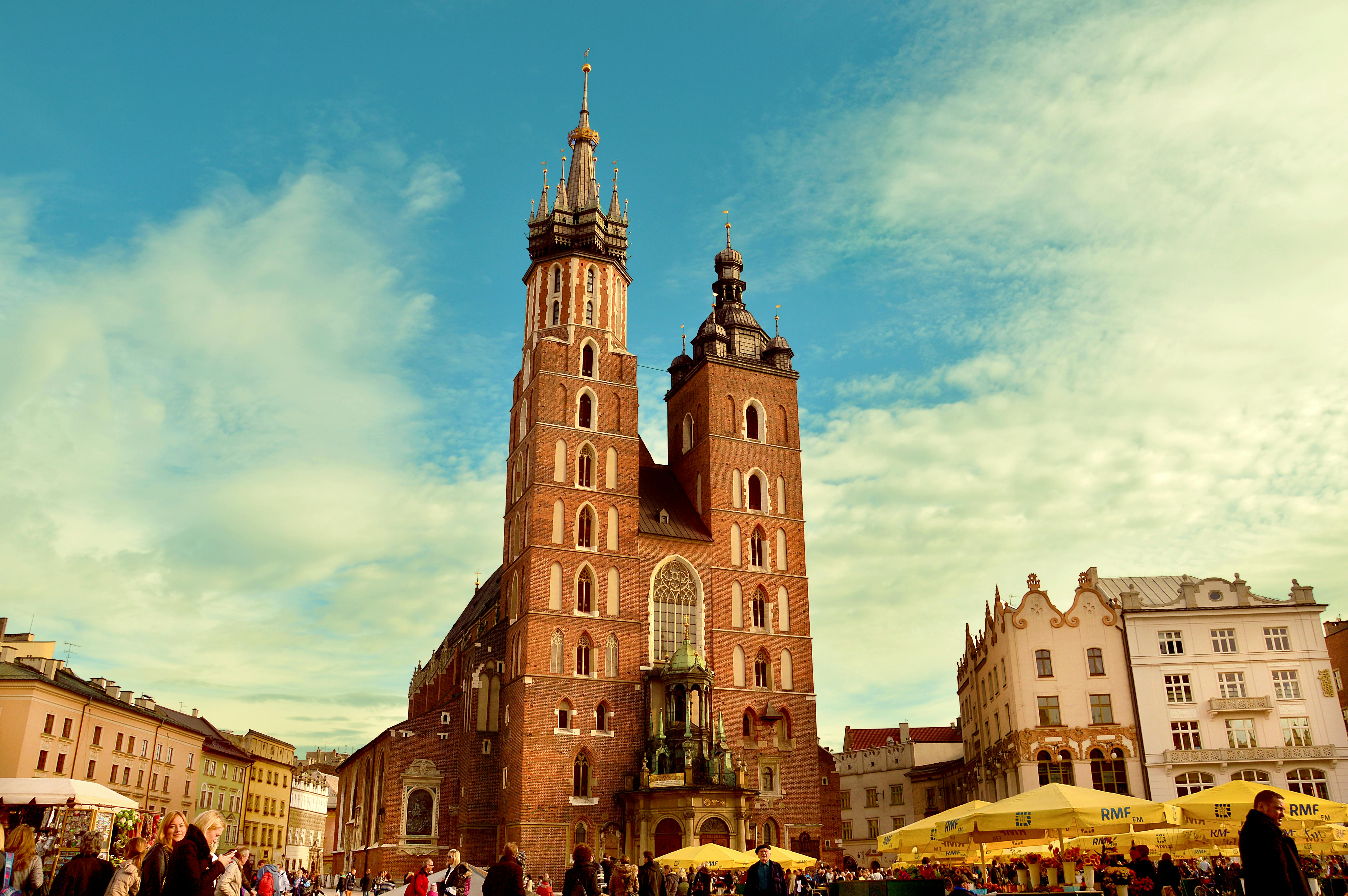
Kraków is Poland’s former royal capital, a layered city where cobbled lanes lead to Gothic towers and Renaissance courtyards, and where cafés hum inside centuries-old cellars. The Old Town and Kazimierz (the historic Jewish Quarter) are both living museums—beautiful yet very much in use—while Wawel Castle crowns it all like a painted backdrop.
Fun fact: Kraków’s St. Mary’s Basilica bugler has sounded a truncated tune on the hour for more than 600 years, commemorating a legendary watchman. Another favorite: you can walk beneath the Main Square through Rynek Underground, a high-tech museum of medieval Kraków’s market life.
Practical notes: Kraków is walkable and well served by trams. Cards are widely accepted, though small cash is handy for markets. Expect hearty Polish cuisine—pierogi, żurek (sourdough soup), and oscypek (smoked highlander cheese)—alongside superb coffee, craft beer, and inventive modern kitchens.
Kraków
Compact yet endlessly rich, Kraków rewards lingering. The UNESCO-listed Old Town surrounds a grand medieval square, Rynek Główny. South lies Wawel Hill—home to the Royal Castle and Cathedral—while Kazimierz adds synagogues, galleries, and late-night bars. Cross the Vistula to Podgórze for Schindler’s Factory and MOCAK’s contemporary art.
Top highlights include Wawel State Rooms, the Cloth Hall and its 19th-Century Polish Art Gallery, Collegium Maius (Jagiellonian University’s oldest building), Rynek Underground, the Remuh Synagogue and cemetery, and the poignant Schindler’s Factory museum. For viewpoints, aim for Kościuszko Mound at golden hour.
- Where to stay: For first-timers, base in the Old Town or Kazimierz. Search vetted stays on VRBO or compare hotels on Hotels.com. Aim for a townhouse near the Planty Park for quiet nights and quick walks to everything.
- Getting to Kraków: Fly to KRK or take a train/bus within Europe. Search flights or trains on Omio (flights), Omio (trains), and Omio (buses). Sample times: Warsaw–Kraków fast train ~2h20m (from ~$18–40), Vienna–Kraków train ~5–6h (from ~$30–60), Prague–Kraków bus ~6.5–7.5h (from ~$25–40). From KRK airport, the train to Kraków Główny takes ~20 minutes (~$4).
Day 1: Arrival, First Look at the Old Town, and a Cellar Supper
Afternoon: Arrive and settle in. Stretch your legs with an orientation loop: Planty Park’s ring of trees, the Barbican and Floriańska Gate, then the Main Square. Listen for the hourly bugle (hejnał) from St. Mary’s. For coffee and a slice of szarlotka (apple cake), slip into Café Camelot’s candlelit rooms or grab a flat white at Karma Coffee Roasters on Krupnicza.
Evening: Dine beneath brick vaults at Pod Aniołami—try the wild boar or pierogi ruskie and a glass of Polish mead. Prefer refined Polish classics? Kogel Mogel near the square does elegant goose and seasonal soups. Nightcap at Mercy Brown, a speakeasy with live swing nights and polished cocktails (ring the bell; reservations help on weekends).
Day 2: Wawel, Royal Kraków, and Vodka Flights
Morning: Breakfast on warm pastries at Charlotte (Plac Szczepański; bread and house jam are standouts), then head to Wawel Hill. Tour the Cathedral (royal tombs, Sigismund Bell) and Wawel Castle’s State Rooms or Royal Private Apartments. Book time slots on-site early; exhibits sell out on busy days.
Afternoon: Walk down Kanonicza Street to the Vistula. Lunch at Restauracja Pod Baranem—excellent Polish dishes with a famously gluten-free-friendly menu. Explore the Rynek Underground museum beneath the Main Square; the multimedia exhibits bring medieval trade to life. Pop into Collegium Maius, where Copernicus once studied, for an intimate museum and elegant courtyard.
Evening: Try a vodka flight at Wódka Cafe Bar on Mikołajska—sip bison grass, quince, and cherry side by side. Dinner at Szara Gęś overlooking the square (the goose is a house specialty). If you like live music, wander to Harris Piano Jazz Bar for a late set in a classic cellar.
Day 3: Kazimierz and Podgórze—Synagogues, Street Art, and Schindler’s Factory
Morning: Start in Kazimierz at Cheder for cardamom coffee or at Hamsa for shakshuka and Israeli salads. Visit the Old Synagogue (now a museum of Jewish life), the Remuh Synagogue and atmospheric cemetery, and stroll Szeroka Street. Note murals and artisan workshops on Józefa and Meiselsa streets.
Afternoon: Grab a Kraków staple at Plac Nowy—zapiekanki (Polish baguette pizzas). Endzior’s long line says it all; go classic with mushrooms and cheese plus chives. Walk the footbridge to Podgórze and tour Schindler’s Factory museum (pre-book timed entry) to trace WWII Kraków. If time allows, step into MOCAK across the courtyard for sharp contemporary art.
Evening: Dinner at Starka (reserve ahead): duck with cranberry, rabbit, and homemade flavored vodkas are standouts. After, drift between Alchemia’s candlelit rooms, Singer (tables perched on vintage sewing machines), and HEVRE, a bar and cultural space inside a former synagogue, for a Kazimierz-style night.
Day 4: Wieliczka Salt Mine—Cathedrals Carved from Salt
Morning: Take the local train from Kraków Główny to Wieliczka Rynek-Kopalnia (~25 minutes; a few dollars—check Omio trains). Join the English-language Tourist Route (2–3 hours), descending through saline chambers, underground lakes, and the chandelier-lit Chapel of St. Kinga. Wear comfy shoes; it’s around 800 steps down with elevators up.
Afternoon: Lunch near the mine (Karczma Halit does hearty plates) or back in Kraków. Rest at Planty Park or browse the 19th-Century Polish Art Gallery upstairs in the Cloth Hall (great Matejko and Chełmoński canvases).
Evening: Sunset amble along the Vistula Boulevards. Casual riverside dinner at Forum Przestrzenie: thin-crust pizzas, street-food pop-ups, and deck chairs with castle views. For dessert, hunt down Good Lood ice cream (pistachio or salted caramel) before a gentle night.
Day 5: Auschwitz-Birkenau—A Day of Reflection
Plan a full day for the Auschwitz-Birkenau Memorial and Museum (Oświęcim). Buses and tours run ~1.5–2 hours each way; you can book transport and guided visits via Omio (buses) or check Omio (trains) to Oświęcim plus a short local transfer. Guided tours commonly last 3.5–4 hours across Auschwitz I and Birkenau; lines can be long, so pre-book timed entry and bring ID. Dress modestly and allow space to process the experience.
On return, keep dinner low-key. Glonojad near Matejko Square is an inviting vegetarian spot with pierogi, curries, and soups. If you prefer classic Polish fare, Morskie Oko serves highlander-style grilled oscypek with cranberry and warming soups. An evening stroll around the quiet Planty can help you unwind.
Day 6: Nowa Huta’s Modern History, Kościuszko Mound Views, and Craft Beer
Morning: Tram out to Nowa Huta (Plac Centralny). This socialist-realist district offers a fascinating contrast—broad boulevards, arcades, and community planning. Visit the Nowa Huta Museum (in the former theatre) if open, and the Ark of the Lord Church (Arka Pana), a bold 1970s landmark symbolizing spiritual resistance.
Afternoon: Lunch at Stylowa, a retro restaurant with classic Polish plates and period decor. Head back to climb or taxi to Kościuszko Mound for panoramic views across the city and, on clear days, the Tatra silhouette. Alternatively, if the weather is great, detour to Zakrzówek Park (seasonal floating pools; summer) for turquoise waters and cliffside paths.
Evening: Dine at Browar Lubicz, a revived city brewery offering house lagers and seasonal brews alongside pork knuckle and light salads. For a refined nightcap, try Sababa (above Hamsa) for Levant-leaning cocktails, or sample Polish craft taps at House of Beer on Św. Tomasza.
Day 7: Markets, Books, and Farewell Kraków
Morning: Before your afternoon departure, browse Stary Kleparz market for honey, pickles, smoked cheeses, and seasonal berries; it’s where locals actually shop. Drop into Massolit Books & Café for American-style baked goods and a last espresso, or pick up pastries at Cukiernia Rakowicka.
Afternoon: Squeeze in one more museum—Czartoryski Museum to see Leonardo’s “Lady with an Ermine”—or shop for amber and ceramics in the Cloth Hall. Grab a quick plate of pierogi at Milkbar Tomasza or a final zapiekanka to-go, then head for the airport train (~20 minutes) or long-distance connections via Omio (trains), Omio (buses), or Omio (flights).
Where to Stay (Neighborhood Tips + Bookings)
- Old Town: Steps from the square and most museums. Expect historic townhouses, boutique hotels, and cellar breakfast rooms. Search options on Hotels.com or apartment-style stays on VRBO.
- Kazimierz: Bohemian, great food and nightlife, walkable to the center. Ideal if you like galleries, cafés, and evening bar-hopping.
- Zabłocie/Podgórze: Contemporary vibe near MOCAK and Schindler’s Factory; good for modern hotels and quieter riverside walks.
Practical Tips
- Transport: Kraków’s trams/buses are reliable; a 24-hour ticket is inexpensive and easy to buy at kiosks or machines. Taxis and ride-hailing apps are widely available.
- Money & Tipping: Złoty (PLN). Cards widely accepted; 10% tip is appreciated in sit-down restaurants.
- Seasonality: Summers are lively; spring and autumn are ideal for fewer crowds; winter brings Christmas markets and cozy cellars.
- Reservations: Book Wawel exhibits, Schindler’s Factory, Wieliczka, and Auschwitz-Birkenau time slots several days in advance in peak months.
Across seven days, you’ll trace royal halls and underground chapels, sample Kazimierz’s creative kitchens, and sit with history where it matters most. Kraków will linger with you—the bugle’s call, the glow of a cellar dinner, and the soft curve of the Vistula at dusk.