
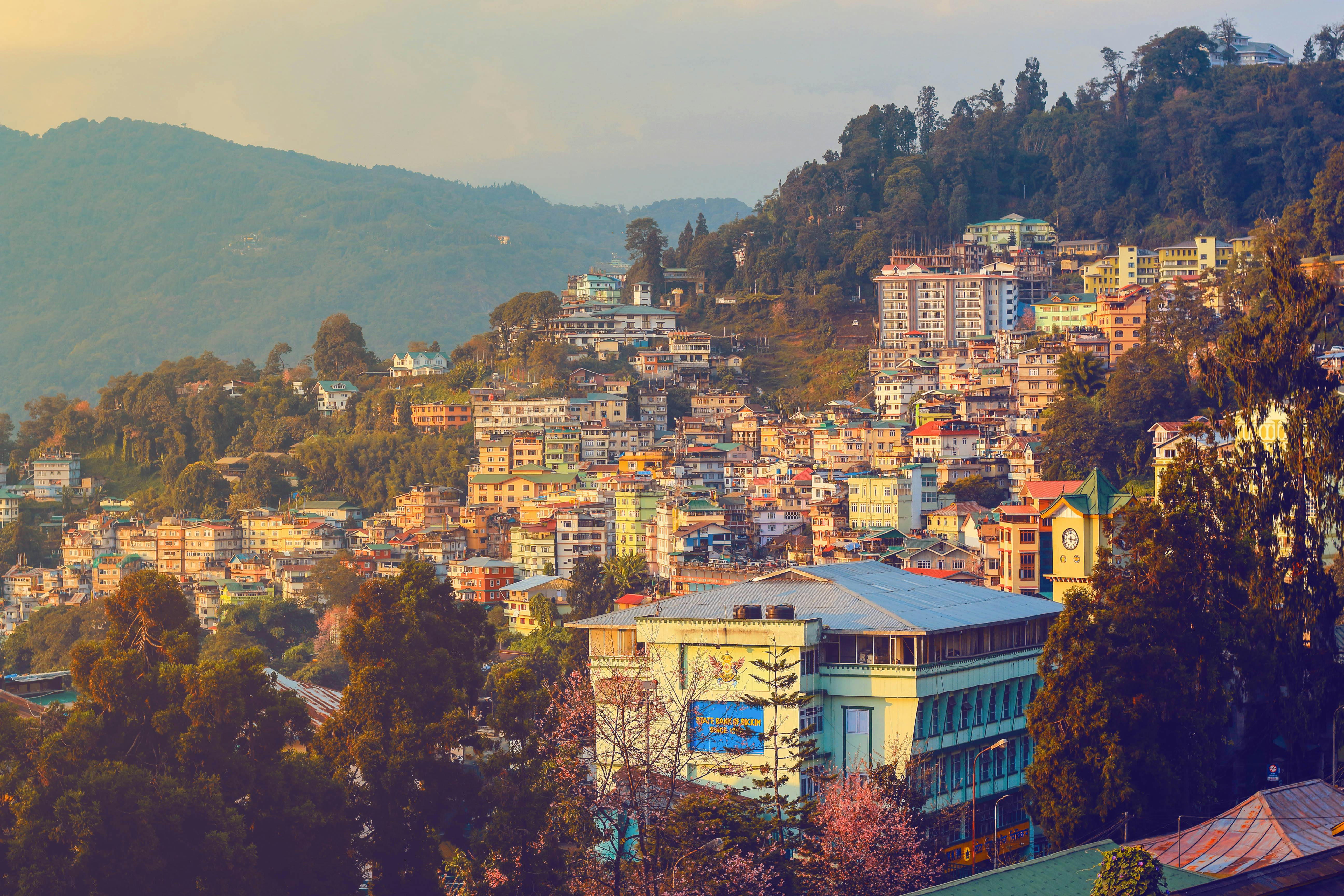
Set high in the eastern Himalayas, Sikkim is one of India’s smallest states and one of its most striking. Once an independent kingdom, it formally joined India in 1975, yet it still retains a distinct cultural identity shaped by Lepcha, Bhutia, and Nepali traditions, Buddhist monasteries, and a mountain landscape that seems built for long views and slow mornings.
Gangtok, the capital, is the natural gateway and the livelier half of this 7-day Sikkim itinerary. Pelling, farther west, offers a quieter counterpoint: sweeping Kanchenjunga panoramas, sacred lakes, monastery ruins, and village roads where the weather decides the mood hour by hour. Together, they make an excellent one-week introduction to Sikkim travel.
A practical note before you go: weather and road conditions in the Himalayas can change plans quickly, especially in monsoon season. Carry layers year-round, start early for viewpoints, keep some cash on hand, and confirm permits and access for high-altitude excursions locally, since regulations can shift. Sikkimese food is a highlight, so come ready for momos, thukpa, phagshapa, fermented flavors, and excellent tea.
Gangtok
Gangtok is a hillside capital with an unusual gift: it feels busy without feeling overwhelming. Prayer flags flutter above traffic bends, cafés spill onto steep streets, and on clear mornings the city seems to lift its face toward Kanchenjunga.
This is where to settle into Sikkim. You have monasteries, viewpoints, ropeway rides, handicraft shops, and the pedestrian-friendly MG Marg, which gives the city a sociable heart rare in Indian hill towns.
Food is one of Gangtok’s strongest pleasures. Look for steaming baskets of momos, bowls of thenthuk and thukpa, local bakeries, and Nepali and Tibetan dishes served in compact dining rooms that reward repeat visits more than grand entrances.
Where to stay in Gangtok: Browse VRBO options in Gangtok for apartments and hill-view stays, or compare hotels on Hotels.com in Gangtok. For first-time visitors, areas near MG Marg or Development Area are especially practical for dining and evening walks.
How to get there: Most travelers reach Gangtok via Bagdogra Airport (IXB) in West Bengal, then continue by road to Gangtok in roughly 4.5 to 5.5 hours, depending on traffic and mountain conditions. Search flight options on Trip.com flights or Kiwi.com; fares vary widely by origin, but domestic India segments commonly range from about $40-$140 one way when booked ahead.
Suggested activities: The Viator activities supplied for this destination are unrelated to Sikkim and are not suitable for this itinerary. For Gangtok, I recommend focusing instead on local highlights such as Rumtek Monastery, Enchey Monastery, Namgyal Institute of Tibetology, Tashi View Point, and the Gangtok Ropeway.
Day 1 - Arrival in Gangtok
Morning: This is your travel day, so keep the morning for transit into the eastern Himalayas. If you arrive via Bagdogra, expect a winding but beautiful road journey into Gangtok, with tea gardens giving way to river valleys and mountain roads.
Afternoon: Check in and ease into the altitude and terrain with a light walk around MG Marg. This pedestrian promenade is Gangtok’s social spine, lined with cafés, bookstores, bakeries, and souvenir shops, and it is ideal for a first impression because it lets you absorb the town without tackling steep side roads immediately.
Evening: Have an early dinner at Taste of Tibet, one of Gangtok’s dependable favorites for momos, thukpa, and gyathuk; the food is warming, unpretentious, and exactly right after a mountain transfer. If you want a second option, Nimtho is excellent for more regionally rooted Himalayan and Sikkimese dishes, including fermented greens and pork preparations that give a deeper taste of local cuisine.
Day 2 - Monasteries, Tibetology, and the Ropeway
Morning: Start with breakfast and coffee at Baker’s Café on MG Marg, a long-running favorite known for mountain views, pastries, and a calm upper-floor setting that works especially well on cool mornings. Then head to the Namgyal Institute of Tibetology, one of India’s most important centers for Tibetan studies, where manuscripts, ritual objects, and thangkas offer a serious but accessible introduction to the region’s Buddhist heritage.
Afternoon: Visit Do Drul Chorten, one of Gangtok’s best-known stupas, and then continue to Enchey Monastery, which sits on a ridge in a more peaceful setting above town. Afterward, ride the Gangtok Ropeway for a broad visual sweep across the city’s folds and valleys; it is less about adrenaline than perspective, and it helps you understand how Gangtok is stitched into the hillside.
Evening: For dinner, try Shuffle Momos for creative momo variations if you want something casual, or go to The Coffee Shop restaurant at Asia House for a more polished meal with Indian, continental, and local options. End with a gentle stroll on MG Marg, where evenings are sociable, safe-feeling, and often bright with families and travelers rather than rowdy nightlife.
Day 3 - Tashi View Point, Ganesh Tok, Hanuman Tok, and local flavors
Morning: Leave early for Tashi View Point, when clouds are least likely to interrupt the mountain line. On a clear day, the distant sight of Kanchenjunga is the reward; pair this outing with nearby Ganesh Tok, a tiny temple viewpoint perched dramatically above the road, where the scale of the landscape becomes the point.
Afternoon: Continue to Hanuman Tok, which is both a temple complex and one of the quieter scenic stops near Gangtok. Return to town for lunch at Nimtho if you missed it on Day 1, or at Roll House for a quick, inexpensive local favorite before spending the rest of the afternoon at the Directorate of Handicrafts & Handloom, where carpets, carved wood, and traditional crafts offer a richer souvenir option than generic market stalls.
Evening: Settle in at Café Fiction or a similar relaxed café space for coffee, dessert, or a lighter supper if lunch was substantial. If you want a proper dinner, 9'INE Native Cuisine is a strong choice for Northeastern Indian flavors and a menu that goes beyond standard tourist fare.
Day 4 - Rumtek Monastery and a slower Gangtok afternoon
Morning: After breakfast at a local bakery or at your hotel, drive out to Rumtek Monastery, the most significant monastery excursion from Gangtok. The complex is associated with the Karma Kagyu school of Tibetan Buddhism and has both spiritual importance and visual grandeur; the journey there also gives you a welcome look at life beyond the city center.
Afternoon: Return to Gangtok for lunch at Mu Kimchi if you are craving a break toward Korean flavors, or choose a traditional thali and local dishes at a trusted town restaurant. Spend the afternoon at a gentler pace: browse books and handicrafts near MG Marg, pause at a tea shop, or simply keep your schedule loose in case weather delays the Rumtek return.
Evening: Make this your slightly more indulgent dinner night. A good strategy is to seek out a restaurant serving local pork, noodle soups, and seasonal vegetable dishes, then finish with tea rather than a heavy dessert; Gangtok evenings reward comfort over excess, especially if you are heading west the next morning.
Pelling
Pelling is where Sikkim turns quieter, deeper, and more cinematic. The town and its surrounding slopes look toward Kanchenjunga, and when the clouds part, the mountain feels less like scenery than a presence.
West Sikkim is rich in sacred geography. Around Pelling you will find monasteries, lakes, old royal ruins at Rabdentse, and village viewpoints that feel less curated than those around larger hill stations.
The appeal here is not speed but atmosphere. Mornings come crisp, afternoons can roll into mist, and the best hours often belong to simple things: tea with a mountain view, a short walk through pine-scented air, and dinners finished early under a cold sky.
Where to stay in Pelling: Compare hill-view stays on VRBO in Pelling or browse hotels on Hotels.com in Pelling. Prioritize properties with direct mountain views, since sunrise visibility can be one of the defining experiences of your stay.
Travel from Gangtok to Pelling: A morning road transfer is the most practical option, usually taking about 4.5 to 6 hours depending on season and road conditions. There is no useful rail link for this segment; for broader India train planning you can still use Trip.com trains, but for this specific move a private car is standard, with typical costs often around $45-$85 per vehicle.
Suggested activities: As above, the supplied Viator listings are not for Sikkim. In Pelling, focus on the Pemayangtse Monastery, Rabdentse Ruins, Sangachoeling Monastery, Khecheopalri Lake, and the Chenrezig statue and skywalk area.
Day 5 - Transfer to Pelling and first mountain views
Morning: Depart Gangtok after an early breakfast, ideally by 8:00 a.m., for the road journey to Pelling. The drive is part of the experience: mountain bends, terraced slopes, and river-cut valleys make this one of those transfers where looking out the window is half the point.
Afternoon: Check in, have lunch at your hotel or a nearby restaurant, and keep the afternoon light. If skies are clear, head to the Pelling Skywalk and Chenrezig statue complex, where the giant statue and elevated walkway create a striking contrast between devotional space and open mountain drama.
Evening: Dine early and near your accommodation, since Pelling’s evenings are much quieter than Gangtok’s. Choose a restaurant with a view if possible and order simple Himalayan staples such as momos, noodle soup, sautéed greens, and local-style chicken or pork; the cold air makes straightforward, hot food taste better here than anything elaborate.
Day 6 - Pemayangtse, Rabdentse, and Khecheopalri Lake
Morning: Begin at Pemayangtse Monastery, one of Sikkim’s most important monasteries and historically associated with the former kingdom’s elite monastic order. Its wooden interiors, prayer halls, and hillside setting reward a slower visit, especially before larger day-trip groups arrive.
Afternoon: Walk or drive onward to the Rabdentse Ruins, the remains of Sikkim’s second capital, hidden among forested paths and viewpoints. Then continue to Khecheopalri Lake, a sacred lake revered by both Buddhists and Hindus; the approach through prayer flags and forest is as memorable as the water itself, and local belief holds that even fallen leaves are whisked away from the lake’s surface.
Evening: Return to Pelling for a relaxed dinner. If your hotel kitchen is well regarded, this is a smart night to dine in, since many of the best moments in Pelling come from simply watching the weather change over the darkening mountain range rather than chasing a packed evening schedule.
Day 7 - Sunrise, Sangachoeling area, and departure
Morning: Wake early for one final attempt at Kanchenjunga views from your hotel or a nearby viewpoint; in the Himalayas, the mountain often appears at dawn and vanishes by breakfast. If timing permits, visit Sangachoeling Monastery, reached by a pleasant uphill walk or short drive depending on current road access, for a quieter farewell to West Sikkim’s spiritual landscape.
Afternoon: Begin your departure journey after an early lunch. If you are heading back toward Bagdogra for a flight, allow generous transfer time, often 5.5 to 7 hours from Pelling depending on road conditions; search onward flights on Trip.com flights or Kiwi.com.
Evening: This will typically be in transit or at the airport, so keep plans flexible and carry snacks, water, and an extra layer. Mountain travel days reward patience more than ambition.
This 7-day Gangtok and Pelling itinerary offers a balanced introduction to Sikkim: lively streets and cultural institutions in the capital, then sacred sites and wide Himalayan views in the west. It is a trip built not only from landmarks, but from the rhythm of tea, monasteries, mountain weather, and the rare pleasure of places that still know how to slow you down.