
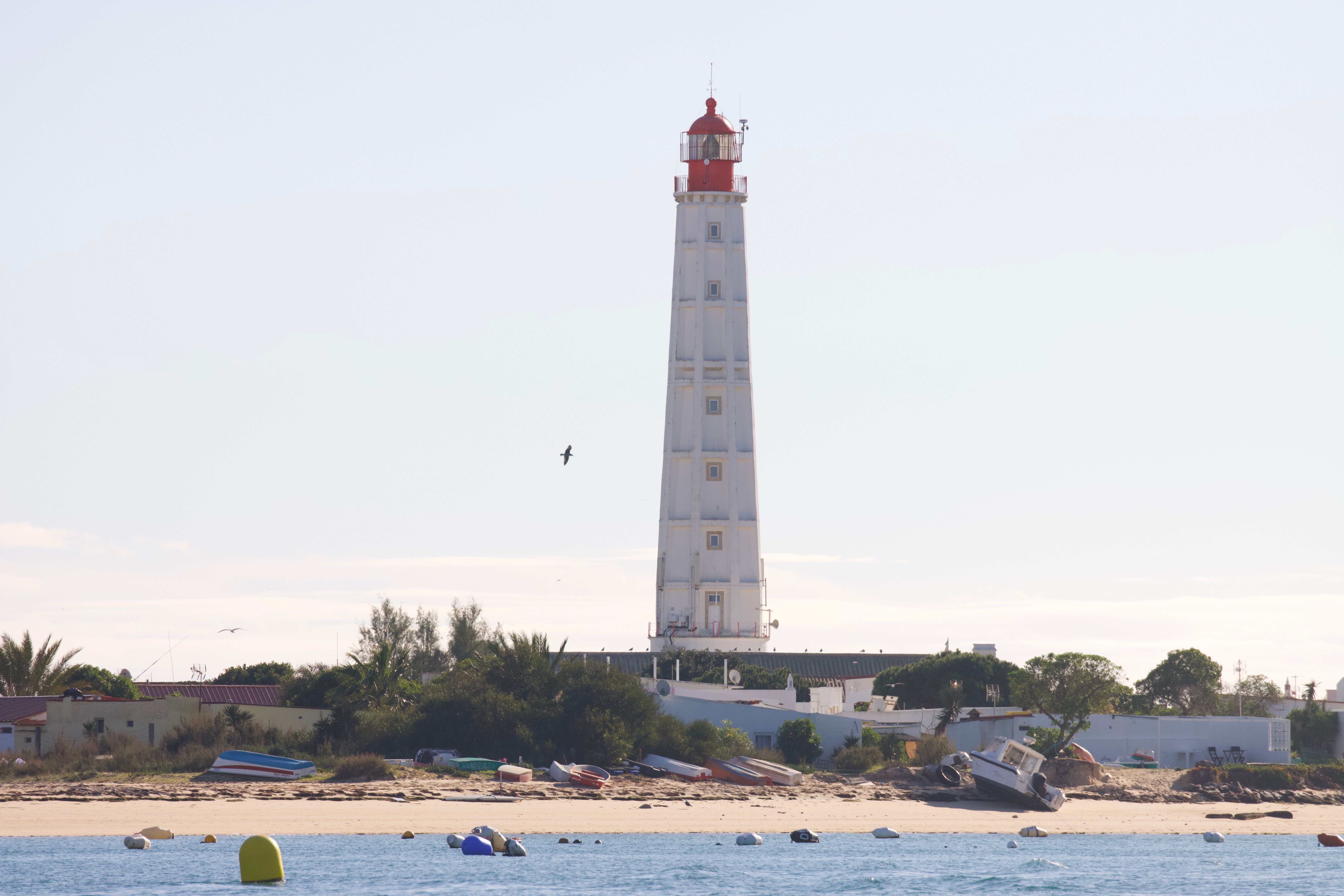
Faro is often treated as the Algarve’s airport gateway, which is a pity, because Portugal’s southern capital is one of the region’s most rewarding bases. Behind its marina and palm-lined avenues lies a walled old quarter shaped by Roman roots, Moorish influence, earthquakes, and the commercial wealth of the sea. It is a city that reveals itself slowly: in stork nests atop church towers, in orange trees glowing against whitewashed walls, and in the briny light that rolls in from the lagoon.
The great geographic marvel here is Ria Formosa Natural Park, a shifting barrier-island lagoon system of channels, salt pans, mudflats, and sandbanks that shelters flamingos, spoonbills, and fishing communities. Faro also works beautifully for a 7-day Portugal itinerary because it combines an atmospheric historic center with easy day trips to Tavira, Benagil Cave, Praia da Marinha, and inland Algarve villages. Expect Moorish traces, excellent seafood, beach access by boat or ferry, and some of the best sunlight in Europe.
Practically speaking, Faro is easy to navigate on foot in the center, while trains and regional roads make nearby towns simple to reach. The local food scene rewards anyone who likes grilled fish, octopus, clams, piri-piri chicken, almond sweets, fig desserts, and Portuguese wine; just note that lunch can run late and dinner often starts after 7:30 pm. As of March 2025, Faro remains a generally straightforward destination for independent travelers, though summer bookings for islands, cave tours, and waterfront dining should be made early.
Faro
Faro is the ideal single-base city for a week in the Algarve. It gives you a real city center, a handsome marina, a compact medieval core, and direct access to nature without the nonstop resort feel of some neighboring towns.
The old town, known as Cidade Velha, sits behind ancient walls and an arched gateway near the cathedral square. Outside those walls, Faro becomes more local and lived-in: tiled facades, low-key tascas, pastry shops, and everyday Portuguese life rather than a stage set for visitors.
For where to stay, the best central options include Hotel Faro & Beach Club for marina views and a polished full-service stay, Hotel Eva Senses for a classic waterfront location, AP Eva Senses Hotel for convenient access to trains and ferries, Stay Hotel Faro Centro for a practical budget-friendly base, and Hostellicious for sociable, well-rated value. If you prefer apartments or longer-stay rentals, browse VRBO Faro stays; for more hotels, use Hotels.com Faro listings.
For arrival, Faro is best reached via European air routes searched through Omio flights. If you are arriving overland from Lisbon or elsewhere in Portugal, rail options can be checked via Omio trains, with Lisbon to Faro typically taking about 3 to 3.5 hours and often costing roughly €15-€35 depending on timing and class.
Recommended bookable experiences in and around Faro include the Ria Formosa Natural Park and Islands Boat Cruise from Faro, the From Faro: Benagil Cave, Marinha & Carvoeiro [Full-Day Tour], the Faro City Tour on Electric Tuk tuks, and the Small Group Dolphin and Wildlife Watching Tour in Faro.


For food, start with Pastelaria Gardy for coffee and pastries in a classic local setting, and Chelia if you want a more modern breakfast or specialty coffee break. For lunch, Portas de São Pedro is one of Faro’s most reliable tables for polished Algarve cooking, while À do Pinto is beloved for old-school seafood and a room that feels more local than performative.
For dinner, Vila Adentro inside the old town is a beautiful choice for a first or last night, especially if you want Portuguese dishes in a historic building and courtyard setting. Adega Nova, near the station, is a long-running favorite for grilled fish, seafood rice, and an unfussy atmosphere that tells you immediately you are in southern Portugal, not an international hotel district.
Tavira
Tavira is the eastern Algarve’s graceful answer to Faro: quieter, more river-centered, and threaded with bridges, churches, tiled facades, and a soft elegance that makes even an ordinary walk feel cinematic. It is one of the region’s most appealing day trips, with enough history and food culture to justify a full day.
The town stretches along the Gilão River and bears traces of Phoenician, Roman, and Moorish occupation, though much of what you see now is shaped by rebuilding after the 1755 earthquake. Tavira Island adds the beach component, while the inland streets, central market area, and miradouros provide the cultural depth that many Algarve beach towns lack.
Travel between Faro and Tavira is easy by rail via Omio trains, usually around 35-45 minutes and commonly about €3-€8 one way. If schedules align better by road, regional buses can be checked via Omio buses.
A distinctive activity option for this side trip is the Tavira: Guided Table Olives Factory Tour & Tasting Experience, which adds an agricultural angle to the day and works especially well for travelers who enjoy food heritage rather than only beaches and churches.

For eating in Tavira, Padaria Vila Doce is a strong stop for breakfast pastries and coffee before sightseeing. For lunch, A Ver Tavira offers a more refined meal with excellent views and contemporary Algarve sensibility, while Come na Gaveta is a smart pick if you prefer modern petiscos and a slightly trendier room. For dinner back in Faro after your return, keep things simple with seafood or tapas depending your energy level.
Day 1: Arrival in Faro and First Walk Through the Old Town
Morning: This is your travel day, so keep the morning focused on arrival logistics and your journey into Faro. Compare air options through Omio flights if you have not yet booked, then settle into your hotel and resist the temptation to over-schedule the first few hours.
Afternoon: After check-in, ease into the city with a slow walk from the marina toward the Arco da Vila and into Cidade Velha. Visit the cathedral square, look out for the storks perched on rooftops, and take in how compact Faro’s historic heart really is; this first orientation matters because it lets the city feel legible from the start.
Evening: Have an early dinner at Vila Adentro, where the old-town setting gives Day 1 immediate atmosphere without requiring much walking. If you prefer something more traditional and seafood-led, head to Adega Nova for grilled fish, clams, or arroz de marisco, then finish with a gentle marina stroll as the light softens over the lagoon.
Day 2: Faro Essentials, Churches, Markets and a Deeper Look at the City
Morning: Start with breakfast at Pastelaria Gardy, ordering a galão and pastry while locals drift in and out on their routines. Then visit Faro’s historic center in greater depth, including the cathedral and the old walls; if you want an efficient overview with context, book the Faro City Tour on Electric Tuk tuks, which is especially useful early in the trip because it helps you understand the city’s layout and hidden corners.
Afternoon: Have lunch at Portas de São Pedro, a dependable place for elevated Algarve classics without fuss. Afterward, wander the shopping streets outside the old town, browse local food shops, and, if open during your visit, step into the Municipal Museum area for more context on Faro’s layered past from Roman remains to religious art.
Evening: Enjoy dinner at À do Pinto, where the seafood focus and old-school service make the meal feel grounded in place rather than trend. If you still have energy, take a final twilight walk along the marina; Faro at night is less about spectacle than mood, and that is precisely its appeal.
Day 3: Ria Formosa Boat Day and Island Time
Morning: Begin with coffee at Chelia or another central café, then set out for a lagoon excursion. The best pick today is the Ria Formosa Natural Park and Islands Boat Cruise from Faro, which introduces the ecosystem that defines the city more than any monument does.
Afternoon: Continue the boat outing through channels and islands, where you will see how fishing villages, sandbars, and bird habitats shape the rhythm of life here. If you prefer a more island-focused alternative, the Ilha Deserta and Farol Island: a small group boat trip in Ria Formosa from Faro is another excellent choice, particularly if beach time matters more than broad lagoon coverage.
Evening: Return to Faro for dinner at Faz Gostos if you want a more creative contemporary Portuguese meal, or keep it classic with fish and shellfish near the center. This is a good night to order local wine from the Algarve and compare it with better-known Portuguese regions; the south produces more interesting bottles than many visitors expect.
Day 4: Full-Day Algarve Coast Excursion to Benagil, Marinha and Carvoeiro
Dedicate today to the Algarve’s most dramatic coastal scenery on the From Faro: Benagil Cave, Marinha & Carvoeiro [Full-Day Tour]. This is the classic high-impact day trip from Faro, taking you west to the ochre cliffs, sea arches, turquoise coves, and postcard views that have made Benagil Cave and Praia da Marinha icons of the Algarve.
If that tour is not available on your dates, the From Faro: Benagil, Marinha Beach, 7 Hanging Valleys, Algar Seco is an equally compelling substitute, especially for travelers who enjoy viewpoint walks and geological drama. Either option saves the complexity of self-driving while giving you local commentary on coastal erosion, village life, and the tourism pressure that has made timing and crowd management so important in this region.
Back in Faro, keep dinner relaxed and restorative. Choose Adega Nova for grilled dourada or sardines when in season, or order petiscos and wine somewhere informal near the center; after a full day of cliff viewpoints and road time, simple food usually wins.
Day 5: Tavira Day Trip by Train
Morning: Catch a morning regional train from Faro to Tavira using Omio trains; expect roughly 35-45 minutes and low cost, making this one of Portugal’s easiest and most pleasant day trips. Once there, start with breakfast or a second coffee at Padaria Vila Doce, then walk the riverfront, Roman bridge area, church exteriors, and the castle garden viewpoints.
Afternoon: For lunch, book A Ver Tavira if you want a memorable meal with views and a more refined kitchen, or choose Come na Gaveta for excellent small plates in a stylish but relaxed setting. If food production interests you, add the Tavira: Guided Table Olives Factory Tour & Tasting Experience; it provides a welcome contrast to church-and-beach sightseeing by grounding the region in agriculture and flavor.
Evening: Return to Faro by train in the early evening and have dinner close to your hotel. This is a good night for a slower pace: perhaps a seafood rice, a plate of octopus salad, or simply soup, bread, cheese, and wine after a long day of walking on Tavira’s cobbled streets.
Day 6: Choose Your Algarve Mood — Wildlife, Wine or Countryside
Morning: If you love marine life, book the Small Group Dolphin and Wildlife Watching Tour in Faro, which stands out because of its science-minded angle rather than pure thrill-seeking. If you prefer something gentler, choose the Eco Boat Tour in the Ria Formosa Lagoon from Faro for a quieter appreciation of the wetland landscape.
Afternoon: Travelers interested in inland culture should consider the Tour & Wine tasting - Authentic Algarve Flavours by Quinta da Tôr or the Cork Factory Tour & Cork Shop. Both experiences reveal a side of the Algarve that many visitors miss: vineyards, cork landscapes, and working traditions beyond the beach economy.
Evening: Make this your special final full night in Faro with dinner at Faz Gostos or a favorite restaurant you discovered earlier in the week. Order dessert if you have not yet tried local almond or fig sweets; the Algarve’s Arab-influenced confectionery tradition is one of the region’s quieter pleasures.
Day 7: Last Morning in Faro and Departure
Morning: Keep the final morning easy with breakfast at a favorite café and one last walk through the old town or marina. If your flight or onward transport is later in the day, this is the moment to pick up edible souvenirs such as flor de sal, tinned fish, olive oil, or regional sweets rather than rushing them at the airport.
Afternoon: Check out and make your way to the airport or rail station. For onward Europe travel, compare options via Omio flights or Omio trains; if you are continuing elsewhere in Portugal by bus, consult Omio buses.
Evening: Departure.
This 7-day Faro itinerary gives you more than a beach break: it combines history, lagoon ecology, island landscapes, memorable seafood, and some of the Algarve’s most photogenic coast. By using Faro as a base, you get both atmosphere and efficiency, leaving with a fuller sense of southern Portugal than a resort-only stay could ever offer.