
7 Days in Delhi: A Deep-Dive Itinerary Through Old Delhi, New Delhi, Food Streets, Forts, and Mughal Splendor
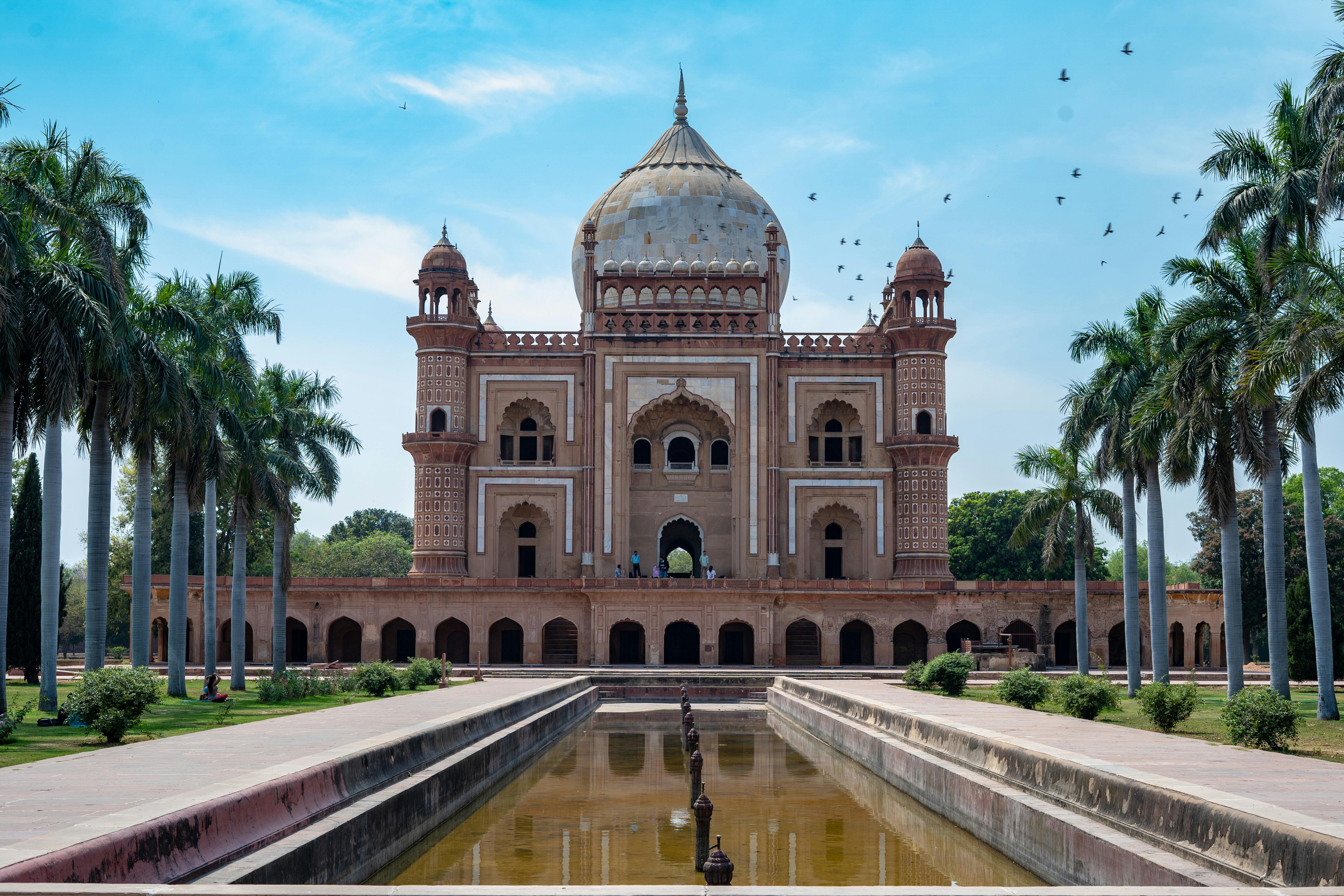
Delhi is not one city so much as a succession of capitals laid over one another. Rajput strongholds, Sultanate ambition, Mughal pageantry, and British imperial planning all left their mark here, which is why a single week in India’s capital can feel like traveling across centuries. Few places hold such a dense concentration of tombs, mosques, markets, gardens, and government grandeur within one metropolitan sweep.
It is also a city of appetite and argument, where kebabs, chaat, butter chicken, modern tasting menus, and third-wave coffee coexist with bookshops, Sufi shrines, and broad ceremonial avenues. One morning might begin under the red sandstone walls of a Mughal fort, while the evening ends over cocktails in a polished New Delhi hotel bar. Delhi rewards travelers who are curious, patient, and hungry.
Practically, March is one of the best times to visit Delhi, with generally pleasant days before peak summer heat arrives. Use app-based cabs for comfort, keep a scarf and water bottle with you, wear shoes you do not mind dusting off after markets, and build in time for traffic between neighborhoods. For your arrival and departure flights, compare options on Trip.com or Kiwi.com.
Delhi
Delhi is best understood neighborhood by neighborhood. Old Delhi is dense, noisy, fragrant, and thrilling, with alleyways that seem to fold into one another around havelis, shrines, and famous food stalls. New Delhi, planned by the British in the early 20th century, offers broad avenues, embassy districts, stately circles, and major museums.
South Delhi adds yet another mood: medieval ruins in landscaped parks, stylish markets, and some of the city’s strongest restaurant and café scenes. Together, these districts create a week that feels varied rather than repetitive. You will move from Chandni Chowk to Humayun’s Tomb, from India Gate to Hauz Khas, and from roadside snacks to elegant dining rooms.
For accommodations, Delhi gives you excellent range. Travelers wanting heritage and top-tier service should consider The Imperial, New Delhi, The Leela Palace New Delhi, or ITC Maurya. For a practical, well-located budget stay, Bloomrooms @ New Delhi Railway Station is a dependable pick, while The Suryaa New Delhi works well for South Delhi access. You can also browse wider options via VRBO Delhi or Hotels.com Delhi.
- Best bases: Connaught Place or central New Delhi for first-time visitors; Aerocity for airport convenience; South Delhi for restaurants and a more residential feel.
- Getting around: The Delhi Metro is excellent for many major sights, though cabs are often easiest in the heat or after dark.
- Food note: Delhi is one of India’s best eating cities. Balance rich Mughlai meals with lighter South Indian breakfasts, café stops, and plenty of hydration.
Day 1: Arrival in Delhi and a Gentle Introduction to New Delhi
Morning: This is your travel day, so keep the morning reserved for your flight and arrival formalities. If you are still planning transport, use Trip.com or Kiwi.com to compare fares into Indira Gandhi International Airport.
Afternoon: Check in and take time to settle. If you are staying centrally, ease into the city with a short outing around Connaught Place, the grand circular commercial hub built in the 1930s, where colonnaded arcades hold bookstores, cafés, old shops, and modern retailers. Stop for coffee at Blue Tokai in the inner circle for a reliable flat white, or head to United Coffee House Rewind for a more polished break in a district that remains one of New Delhi’s classic meeting points.
Evening: Visit India Gate around sunset, when families gather on the lawns and the city begins to glow. The memorial, originally built to honor soldiers of the British Indian Army, is now one of Delhi’s most beloved public landmarks, and nearby Kartavya Path offers a sweeping vista toward Rashtrapati Bhavan. For dinner, book Indian Accent at The Lodhi if you want one of Delhi’s most acclaimed contemporary Indian meals, where regional flavors are reworked with precision; alternatively, go to Bukhara at ITC Maurya for its legendary Dal Bukhara and robust tandoori cooking, or enjoy a more casual first dinner at Kwality in Connaught Place, a longtime favorite for North Indian classics.
Day 2: Old Delhi — Jama Masjid, Chandni Chowk, Red Fort Area, and Legendary Street Food
Morning: Start early in Old Delhi before traffic and crowds peak. Begin at Jama Masjid, commissioned by Shah Jahan in the 17th century and still one of India’s grandest mosques, where the vast courtyard and striped domes set the tone for a day in imperial Shahjahanabad. Afterward, have breakfast nearby with Old Famous Jalebi Wala for hot syrupy jalebis and a nostalgic sweet fix, or try the stuffed parathas at Paranthe Wali Gali if you want a classic, heavy Delhi breakfast with pickle, chutney, and potato curry.
Afternoon: Explore Chandni Chowk by rickshaw and on foot, letting the lanes lead you through spice markets, wedding bazaars, Jain temples, and old merchant houses. Pause at Khari Baoli, Asia’s largest wholesale spice market, where the air itself seems seasoned with cardamom, chili, and clove. For lunch, Karim’s near Jama Masjid remains a pilgrimage for many travelers because of its historic Mughlai kitchen and deeply flavored mutton korma, kebabs, and roomali roti; Al Jawahar next door is another stalwart with a devoted local following.
Evening: Visit the Red Fort from the outside and, if timing suits, stay for the light and sound presentation if operating during your travel dates. Even when admired from its gates and surrounding lanes, the fort is a powerful reminder of Mughal sovereignty and the making of modern India, especially given its role in Independence Day ceremonies. End the evening with a lighter stop at Kuremal Mohan Lal Kulfi Wale in Chawri Bazaar for stuffed kulfi flavors such as mango or pomegranate, then return to your hotel to rest after a sensory-heavy day.
Day 3: Mughal Elegance — Humayun’s Tomb, Nizamuddin, and Sufi Delhi
Morning: Begin at Humayun’s Tomb, a UNESCO World Heritage Site and one of the most beautiful garden tombs in the world. Built in the 16th century, it prefigures the Taj Mahal in both concept and geometry, with red sandstone, white marble, charbagh symmetry, and a sense of stillness unusual in such a large city. For breakfast beforehand, stop at Jugmug Thela in nearby Defence Colony or Khan Market for excellent coffee and a small, well-executed breakfast in a compact local favorite setting.
Afternoon: Continue to Sunder Nursery, now one of Delhi’s finest landscaped heritage parks, where restored Mughal-era monuments sit among flowering gardens and broad walking paths. It pairs beautifully with Humayun’s Tomb and gives the afternoon a slower rhythm. For lunch, go to Cafe Lota near the National Crafts Museum for regional Indian dishes interpreted with care; its millet khichdi, seasonal vegetables, and inventive small plates are especially good when you want something rooted in Indian traditions without the heaviness of a full Mughlai spread.
Evening: Spend the evening around Nizamuddin. If your dates align and local schedules permit, attend qawwali at the Nizamuddin Dargah, where devotional Sufi music creates one of Delhi’s most moving cultural experiences. Dress modestly and expect a lively, crowded approach through lanes packed with flowers, sweets, and worshippers. For dinner, head to Khan Market afterward and choose between Gulati for dependable North Indian staples and rich curries, or Big Chill Café for comfort food and desserts if you want a break from spice-forward meals.
Day 4: Lutyens’ Delhi, Museums, and a Classic Capital City Circuit
Morning: Have breakfast at The All American Diner at India Habitat Centre for a relaxed start, or opt for a quicker coffee and pastry at Blue Tokai in Khan Market. Then visit Gandhi Smriti, the house where Mahatma Gandhi spent his last days. The museum is thoughtful rather than overwhelming, and its preserved rooms and exhibits provide essential context for modern Indian history.
Afternoon: Continue with a drive through or stop along Kartavya Path, Rashtrapati Bhavan viewpoints, Parliament surroundings, and the diplomatic heart of New Delhi. Then choose one major museum depending on your interests: the National Museum remains the broadest overview of Indian civilization, while the National Gallery of Modern Art is rewarding if you prefer painting, sculpture, and modern South Asian art. For lunch, Andhra Bhavan Canteen is a superb local favorite known for its no-nonsense, flavorful thali and excellent value; Carnatic Café in Lodhi Colony is another strong option for dosas, filter coffee, and a lighter South Indian meal.
Evening: Spend the evening in Lodhi Colony, where government housing blocks have become an open-air canvas through the Lodhi Art District murals. Walk the neighborhood at golden hour, then move on to Lodhi Garden if you still have energy for a twilight stroll among tombs, joggers, and Delhi’s evening social life. For dinner, try Guppy in Lodhi Colony for stylish Japanese fare in a city otherwise dominated by Indian menus, or book Comorin in Gurgaon only if you do not mind a longer drive for one of the NCR’s strongest contemporary dining rooms. If staying central, end with a drink at The Imperial’s 1911 bar for old-world atmosphere.
Day 5: Qutub Minar, Mehrauli Archaeological Park, and South Delhi’s Cafés and Markets
Morning: Start at Qutub Minar, the soaring 12th-century victory tower that remains one of Delhi’s defining monuments. The surrounding complex, with the Quwwat-ul-Islam Mosque, carved pillars, and the famous Iron Pillar, reveals the layered transition from early Sultanate power to one of the great urban centers of the medieval world. For breakfast nearby, try Di Ghent Café in Cross Point Mall for eggs, breads, and good coffee, or Cafe Dori in Chhatarpur for a more design-forward setting and a strong breakfast menu.
Afternoon: Continue into Mehrauli Archaeological Park, one of Delhi’s most underrated historical zones, where tombs, stepwells, ruined pavilions, and stone pathways create a haunting counterpoint to the better-known monuments. This area rewards travelers who like history without barriers and enjoy seeing ruins in situ rather than as polished museum pieces. Have lunch at Olive Bar & Kitchen in Mehrauli for a leisurely Mediterranean-leaning meal in one of Delhi’s prettiest dining spaces, or choose Dramz near Qutub for rooftop views and a more celebratory midday break.
Evening: Dedicate the evening to one of South Delhi’s best markets. Dilli Haat is excellent for handicrafts and regional foods from across India, making it ideal if you want to sample dishes beyond Delhi itself; order momos, Nagaland pork if available, or Rajasthani snacks depending on the stalls operating that day. If you prefer a more urban market atmosphere, browse Shahpur Jat or Hauz Khas Village for boutiques and cafés. For dinner, Coast Cafe in Hauz Khas Village is a solid pick for fresh South Indian coastal flavors, while Naivedyam nearby is beloved for traditional vegetarian South Indian fare and excellent filter coffee.
Day 6: Delhi’s Spiritual and Contemporary Side — Akshardham or Lotus Temple, Then Hauz Khas and Modern Dining
Morning: Choose between Akshardham Temple and the Lotus Temple depending on your interest. Akshardham is vast, ornate, and immersive, with carved stone architecture and exhibitions that appeal to travelers curious about modern temple-building on an epic scale. The Lotus Temple, by contrast, is one of Delhi’s cleanest architectural statements: a Baháʼí House of Worship shaped like a white lotus, known for silence, symmetry, and a strikingly modern profile. For breakfast, grab coffee and a bake at Fig at Museo in South Delhi, or stop at Colocal for a chocolate-led café experience if you want something indulgent.
Afternoon: Spend your afternoon at Hauz Khas Complex and Deer Park. The reservoir, madrasa ruins, domed pavilions, and tree-lined paths offer a softer side of Delhi, where medieval remains sit beside a lively contemporary neighborhood. For lunch, try Hauz Khas Social for a casual meal with a balcony outlook, or head to Pizzeria Da Susy if you want a break from Indian cuisine and one of Delhi’s more respected pizza addresses.
Evening: Save your final full evening for a memorable dinner. Dum Pukht at ITC Maurya is one of Delhi’s most famous addresses for slow-cooked Awadhi cuisine, ideal if you want refinement and culinary heritage in one sitting. For something more intimate and chef-driven, Indian Accent remains a top choice if you did not visit on Day 1. Before dinner, consider sunset cocktails at Perch Wine & Coffee Bar in Khan Market or a final stroll through the boutiques there. If you want dessert, end with artisanal ice cream from Gelato Vinto or pastries from L’Opéra.
Day 7: Final Morning in Delhi, Last-Minute Shopping, and Departure
Morning: Keep the last morning light and flexible. Visit Lodhi Garden if you have not yet gone at dawn; it is one of the city’s most pleasant early hours, with 15th-century tombs, flowering trees, and a cross-section of Delhi life out walking, stretching, or chatting. For breakfast, go to Sardar-Ji-Baksh Coffee & Co. for a casual café stop, or have a more substantial final meal at Carnatic Café with dosas and excellent filter coffee.
Afternoon: Use your remaining time for final purchases in Khan Market, Janpath, or the government-run state emporiums near Connaught Place, which are useful for textiles, tea, handicrafts, and gifts without the chaos of bargaining-heavy bazaars. Then transfer to the airport for your departure. If you need last-minute flight planning or schedule checks, use Trip.com or Kiwi.com.
Evening: Departure day. Aim to leave for the airport with generous buffer time, as Delhi traffic can turn a short transfer into a long one without warning. If you have lounge access, use the final hour to look back over a week of forts, tombs, spice markets, and some of India’s most memorable meals.
Seven days in Delhi allows you to do more than tick off monuments. It gives you enough time to see how dynasties, faiths, cuisines, and neighborhoods overlap, creating one of the world’s most layered capital cities.
You will leave with images of domes at dusk, the perfume of cardamom in Old Delhi, the geometry of Mughal gardens, and a sharpened sense of India’s history in motion. Delhi can be demanding, but for travelers who meet it with curiosity, it is immensely rewarding.