
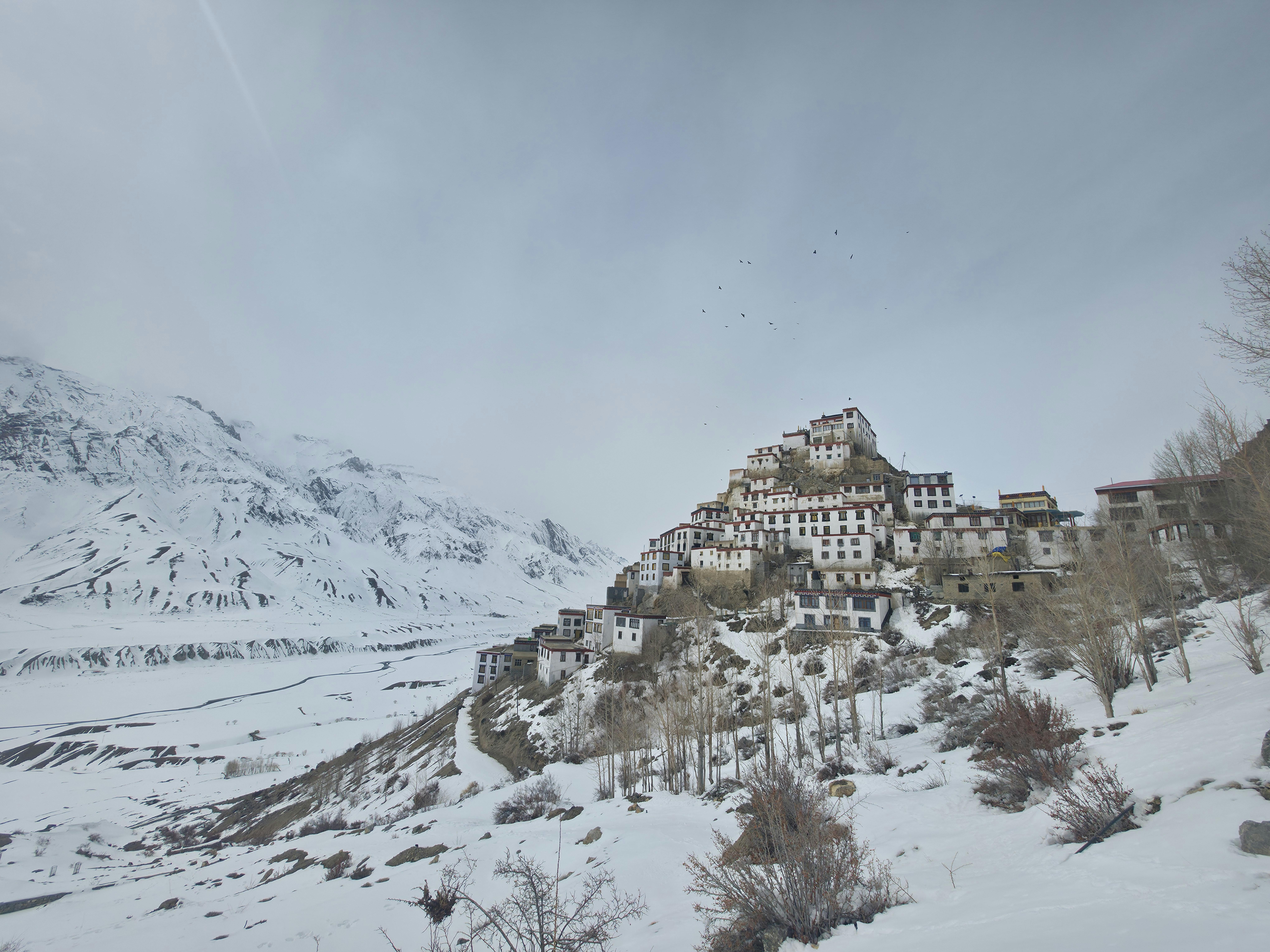
Spiti Valley, cradled between Tibet and the Greater Himalaya in Himachal Pradesh, feels like another planet—wind-sculpted ridges, whitewashed monasteries, and villages that cling to slopes above 12,000 feet. For centuries it sat on trans-Himalayan trade routes; today it shelters some of the oldest Buddhist art in India at Tabo and cliff-perched gompas like Dhankar and Key.
Expect thin air, big skies, and quiet—plus fossil-hunting at Langza, sky-high letter-posting at Hikkim, and yaks grazing by turquoise rivulets in Pin Valley. Summer (June–October) brings open high passes via Manali; the Kinnaur approach (via Shimla–Reckong Peo–Nako) is the steadier route most of the year. Winters are extreme but magical for snow-leopard tracking around Kibber.
Practical notes: Acclimatize slowly—Kaza sits ~3,650 m. Keep days easy at first, hydrate, and avoid alcohol until day 3. Carry cash (ATMs can be patchy), a working Jio/BSNL SIM, a refillable bottle, and warm layers even in summer. Roads can close after storms—build in buffer and check local advisories before moving between towns.
Kaza
Kaza is Spiti’s friendly hub: a bazaar of prayer wheels, woolen socks, and steaming thukpa, with day-trip access to Key Monastery, Chicham Bridge, Kibber, Langza, Hikkim, and Komic. It’s the right base for acclimatization and for sampling Spitian flavors like skyu stew and seabuckthorn tea.
- Top sights: Key Monastery (12th-century fortress-gompa), Kibber and the dizzying Chicham Bridge, high villages (Langza–Hikkim–Komic), Pin Valley National Park (ibex, blue sheep).
- Why go now: Summer roads are open, homestays bustle, and fossil-bearing shale peeks from the slopes near Langza.
- Food to try: Thenthuk (hand-pulled noodle soup), skyu (pasta-and-barley stew), momos, tingmo bread, and seabuckthorn juice.
Where to stay: Browse stays near Kaza on VRBO or compare guesthouses and hotels on Hotels.com. On the ground, look for Sakya Abode (quiet, warm meals), Zostel Spiti (social vibe), and homestays coordinated by Spiti Ecosphere.
How to get there (typical gateways): Fly to Chandigarh or Kullu (Bhuntar), then continue by road. Use Trip.com Flights or Kiwi.com to compare fares (Delhi–Chandigarh often $30–80; Delhi–Kullu $60–140, seasonal). If you’re training it to Kalka/Shimla first, check Trip.com Trains. From Shimla side, expect a 2-day scenic drive via Reckong Peo and Nako; private SUVs usually ₹5,000–7,500 per day including driver; shared buses ₹300–700 per leg.
Day 1: Arrive Kaza, take it slow
Afternoon: Roll into Kaza and keep activity gentle. Check in, sip hot seabuckthorn tea at Sol Café (good cappuccinos, brownie), then stroll the prayer-wheel-lined market. Pop into the Kaza gompa for a quiet moment and to set your internal metronome to mountain time.
Evening: Dinner at Taste of Spiti (Spitian thali, buckwheat pancakes, apple crumble) or The Himalayan Café (butter tea, thukpa, cardamom cake). Early night; hydrate well and avoid alcohol to help acclimatization.
Day 2: Key Monastery, Kibber, and Chicham Bridge
Morning: Drive 35–45 minutes to Key Monastery. Join the monks for butter tea in the kitchen if invited, then climb to the rooftop for sweeping views of the Spiti River’s switchbacks. Continue to Kibber (snow-leopard country) and the jaw-dropping Chicham Bridge, one of Asia’s highest suspension bridges.
Afternoon: Lunch at a Kibber homestay (simple, hearty dal, tingmo, local greens). Optional short walk along the ridge for ibex spotting with a local guide. Return via Gette/Tashigang if the road is open for bonus panoramas.
Evening: Back in Kaza, try Café Zomsa (momos, spicy chilli sauce, warm ambience) or Phayul Restaurant (Tibetan staples). For dessert, grab a slice at Sol Café before turning in.
Day 3: Langza–Hikkim–Komic high-village loop
Morning: After two nights acclimatizing, head up to Langza (the big seated Buddha and Jurassic-era ammonite fossils—buy only curated, ethical souvenirs). Views of Chau Chau Kang Nilda peak are spectacular on clear days.
Afternoon: Continue to Hikkim to post a card from one of the world’s highest post offices. End at Komic (~4,587 m), home to Tangyud Monastery with its red-and-white walls and wind-whipped prayer flags. Eat a homestay lunch—ask for skyu or thenthuk and a ladle of yak-butter tea.
Evening: Return to Kaza. Dinner at The Himalayan Café or Taste of Spiti; consider a slow walk by the river at twilight. If power is out, many cafés still serve by candlelight—it adds to the mountain mood.
Tabo
Tabo, older and quieter than Kaza, is famed for its 10th-century mud-walled monastery—often called the “Ajanta of the Himalaya”—with exquisite murals and delicate stucco sculptures. Honeycombed meditation caves watch over the village, and Dhankar’s cliffside fortress is a dramatic stop en route.
- Top sights: Tabo Monastery complex and temple rooms (with a guide), cliff caves, Dhankar Monastery and glacial-lake hike, Gue Mummy (a naturally preserved monk in a glass shrine).
- Vibe: Unhurried, spiritual, and deeply historic; perfect for sunrise and starlight photography.
Where to stay: Search Tabo stays on VRBO or compare small hotels/guesthouses on Hotels.com. On arrival, ask after monastery-run guest rooms or Norbu House-style homestays for quiet nights and home cooking.
Day 4: Kaza → Dhankar → Tabo
Morning (travel): Depart Kaza for Dhankar (approx. 1.5 hours). Explore the eyrie-like monastery and, if you’re feeling good at altitude, hike 60–90 minutes to Dhankar Lake—a sapphire bowl above the village with snow peaks mirrored on still days.
Afternoon: Simple lunch at a Dhankar family kitchen (ask for tingmo with chana and a cup of salty butter tea), then continue to Tabo (another ~1 hour). Settle in and visit the monastery museum to frame what you’ll see in the temple rooms.
Evening: Dinner at Norling Café (veg thalis, thenthuk, momos) or Tiger’s Den (seasonal; good curries and hot soups). Tabo’s night skies are brilliant—step out for Milky Way views if the weather is clear.
Getting between cities: Kaza→Tabo by Himachal Road Transport bus (~2–2.5 hours, ₹150–250) or private car (~₹2,000–3,000). Roads are narrow but scenic; start early and confirm bus schedules locally as they change with the season.
Day 5: Tabo Monastery, caves, and onward departure
Morning: Enter the Tabo Monastery complex with a local guide to appreciate the murals and clay images (photography rules vary—ask before shooting). Walk up to the meditation caves for a bird’s-eye view of the village and the river terraces.
Afternoon (departure): If heading south via Kinnaur, detour 45–60 minutes to the Gue Mummy shrine near Sumdo, then continue toward Nako/Kalpa (Tabo→Kalpa ~5–6 hours). If returning to Kaza for the night bus ahead, it’s ~2 hours back. For flights back to metros, plan an overnight stop in Reckong Peo/Kalpa or Rampur, then continue to Shimla or Chandigarh for your flight via Trip.com Flights or Kiwi.com.
Evening (if staying one more night en route): In Kalpa, dine on trout and himachali siddu at a local dhaba; in Reckong Peo, try piping-hot momos and butter tea before your onward bus the next morning.
Eating and coffee picks (Kaza + Tabo)
- Sol Café (Kaza): Espresso drinks, seabuckthorn tea, brownies; community-minded, cozy for journaling.
- Taste of Spiti (Kaza): Spitian thali, buckwheat pancakes, apple desserts; profits support local projects.
- The Himalayan Café (Kaza): Reliable coffee, thukpa, cakes; good for mixed groups and late afternoons.
- Café Zomsa (Kaza): Pan-fried momos, noodle bowls; social, often open evenings.
- Norling Café (Tabo): Simple veg plates, thenthuk; friendly owners and quick service.
Seasonal and safety tips
- Altitude: Go slow for the first 24–48 hours in Kaza. Headache or nausea? Rest, hydrate, consider descending if symptoms persist.
- Roads: The Manali–Kaza route via Kunzum Pass is usually open June–October. The Shimla–Kaza route is more reliable but still weather-dependent—check locally.
- Cash & connectivity: Carry cash; Jio/BSNL work best. Expect power cuts; a power bank is handy.
- Responsibility: Buy only ethical fossil souvenirs; pack out all trash; ask before photographing people or prayer spaces.
Optional add-ons en route (popular gateways)
If you route through Chandigarh or Dharamshala before/after Spiti, these guided experiences add context and color to your Himalayan trip:
Highlights of the Chandigarh (Guided Half Day City Tour)

Explore Le Corbusier’s modernist city—Capitol Complex, Rock Garden’s fantasy mosaics, and Sukhna Lake—ideal if you overnight in the plains before the mountain drive.
Guided 6 hrs Dharamshala's Tibetan monasteries & Nunnery tour

Deepen your understanding of Tibetan Buddhism—from Namgyal Monastery to local nunneries—before heading into Spiti’s monastery circuit.
In five days you’ll taste Spiti’s essence: Kaza’s lively lanes, high-village horizons, and the hush of Tabo’s ancient monastery. Leave room for serendipity—weather windows, a monk’s story over butter tea, stars that look close enough to touch—and Spiti will linger long after you’ve driven out of the valley.