
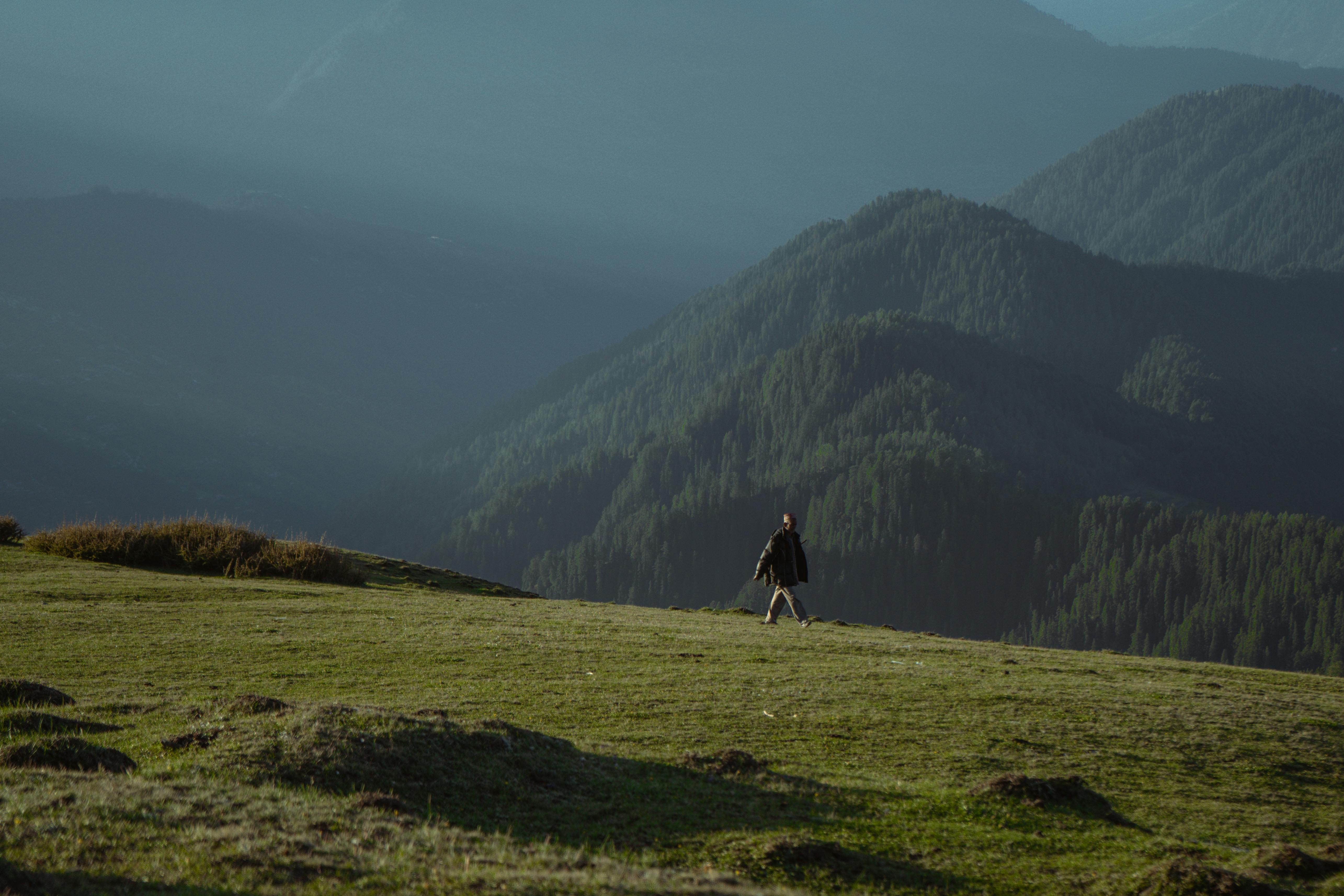
Perched above Jibhi in the Seraj (Tirthan) Valley, Shoja is a small Himalayan hamlet known for cedar forests, apple orchards, and wide-open views of the Dhauladhar and Pir Panjal ranges. Historically, traders and shepherds crossed nearby Jalori Pass—today an iconic gateway to hikes and birding.
The area sits on the edge of the UNESCO-listed Great Himalayan National Park, home to monals, goral, and ancient deodar groves. Trekkers come for the serene walk to Serolsar Lake and the meadow climb to Raghupur Fort, both great half-day adventures with big payoffs.
Practical notes: Road approaches are steep and narrow; drivers should be confident. ATMs and reliable mobile data are best in Banjar; carry cash. Winters bring snow and possible Jalori closures; spring and autumn offer clear skies, wildflowers, and crisp nights under brilliant stars.
Shoja
Shoja’s mood is unhurried—wooden kath-kuni houses, chimneys puffing in the cold, and the scent of pine after rain. It’s a place to sit on a porch with tea, then lace up boots for a forest ramble. Nearby, Jalori Pass unlocks classic day hikes and ridge-top views.
- Top sights: Jalori Pass, Serolsar Lake, Raghupur Fort meadows, Shoja Waterfall, Tirthan River valley outlooks.
- Local flavor: Try Himachali dishes like siddu (steamed bread), madra (chickpeas in yogurty spices), and trout from cold mountain streams.
- Good to know: Weather changes fast; carry layers, rain shell, and a headlamp for early starts or late returns.
Getting there (choose what fits your route and timing):
- Fly to Kullu-Manali (Bhuntar, code KUU), then hire a taxi to Shoja (approx. 80–90 km, 3–4 hours; ~$35–60 depending on vehicle/season). Search fares on Trip.com flights or Kiwi.com.
- Train + road: Delhi to Chandigarh by fast train (about 3–3.5 hours), then private car via Bilaspur–Mandi–Aut–Banjar to Shoja (8–9 hours). Check India trains on Trip.com trains.
- Overnight bus: Delhi to Aut (10–12 hours), then a taxi up to Shoja (2–3 hours; ~$18–30). This is the most budget-friendly and common option.
Where to stay: Mountain lodges and homestays are the soul of Shoja—wood-paneled rooms, views into deep valleys, hearty set meals, and bonfire nights. Browse availability on VRBO (Shoja) and Hotels.com (Shoja).
- For quiet views: Look for rooms labeled “valley view” or “upper cottage”—mornings are spectacular above the treeline haze.
- For social vibes: Hostels/retreats often include in-house cafés, bonfires, and guided morning walks.
- For foodies: Shortlist stays that serve a Himachali thali (dham) dinner or fresh river trout when in season.
Day 1: Arrival in Shoja, Forest Walks, and Himachali Comfort Food
Morning: Travel into the hills. If you’re flying into Kullu or arriving by overnight bus to Aut, aim to start the mountain drive by late morning. Expect winding roads, waterfalls by the roadside, and photo stops above Banjar. Keep a light breakfast and motion-sickness tablets handy; cell signal fades after Banjar.
Afternoon: Check into your lodge, drop bags, and warm up with chai or a French press coffee at your stay’s café. Stretch your legs on the gentle Shoja Waterfall walk (about 15–25 minutes each way through cedar and fern). Linger at the small bridge for photos, then continue to a roadside viewpoint for your first look at ridge after ridge of green.
Evening: Dinner close to your stay is best on Day 1. Ask for a Himachali dham-style thali if offered—madra (chickpeas), chana dal, red rice, and ghee-scented curd-based gravies—or go classic with siddu and butter. If you want a short outing, drive 20–25 minutes toward Jibhi for a casual café scene by the river; many places grill trout, ladle out thukpa, and bake cinnamon rolls. Return for stargazing; skies can be inky-black on clear nights—bring a warm layer and look for the Milky Way arch above the valley.
Day 2: Jalori Pass and the Serolsar Lake Trek, Optional Meadow Hike, Departure
Morning: Early start for Jalori Pass (approx. 5–7 km from Shoja; 25–35 minutes by car). From the pass, hike to Serolsar Lake—about 4–5 km one way (1.5–2 hours), a well-trodden forest path under oak and kharsu. At the lakeside temple to Budhi Nagin, circle the glassy water clockwise as locals do, then sit for a quiet snack. Carry water and a light jacket; weather flips fast at 3,000+ meters.
Afternoon: Hike back to Jalori and refuel at the cluster of dhabas on the pass. Order steaming rajma-chawal, vegetable momos, or a plate of maggi with butter and sweet chai—simple trail food that hits the spot. If you have energy and time before departure, consider the shorter, view-rich Raghupur Fort meadow hike (roughly 3 km one way; allow 2.5–3 hours round trip). The “fort” is a low ruin, but the meadow’s 360-degree panorama is the prize. Return to Shoja, check out, and begin your drive to Aut/Kullu for your onward connection.
Evening: Most travelers will be en route. If you do have an extra evening in the valley, drop to Banjar for an unhurried market stroll and plates of siddu with ghee or a hot chicken thukpa before turning in. Otherwise, time your road legs to reach the plains before late night; mountain driving after dark can be tiring.
Food and coffee suggestions (nearby, current as of 2025):
- In-house cafés at mountain lodges in Shoja are reliable for breakfast (butter-loaded aloo paratha, masala omelet, porridge) and daytime coffee/tea with views.
- Jalori Pass dhabas for trail-friendly basics: rajma-chawal, kadhi-rice, momos, siddu, hot chai, and turmeric milk—perfect post-hike fuel.
- Jibhi riverside cafés (20–30 minutes from Shoja) offer trout platters, Tibetan soups, pancakes, and espresso-based coffees. Ask your host for the latest open spots; hours can be seasonal.
Insider tips:
- Seasonality: Snowfall can close Jalori Pass in mid-winter; always check road status locally before setting out.
- Gear: Good sneakers or light hiking boots, a rain shell, sunblock, and a daypack. Trek poles help on the Serolsar return.
- Permits: Day hikes from Jalori aren’t in the GHNP core, but if you plan deeper park treks, inquire at Sai Ropa for current permits and fees.
- Cash + connectivity: Withdraw in Banjar; card machines are inconsistent in the upper valley. Jio/Airtel work intermittently; download offline maps.
- Transport ballpark: Aut–Shoja taxi $18–30; Shoja–Jalori return $10–18 depending on vehicle and season.
Plan and book: For flights and long-distance trains, compare on Trip.com (flights), Trip.com (trains), or Kiwi.com; for stays, scan options on VRBO and Hotels.com. When driving yourself, start early and keep fuel topped up in Banjar.
With one foot in cedar shade and another on sunlit meadows, Shoja gives you the Himalaya at a human pace. Two days here are enough to taste the trails, sip mountain chai, and exhale—yet you’ll leave plotting a longer return for deeper GHNP adventures.