
30 Days in Malaysia with Family: Langkawi, Penang & Kuala Lumpur-Selangor Itinerary
Malaysia rewards slow travel. In one month, you can move from Langkawi’s island mythology and beaches to Penang’s layered trading history and finally into the urban energy of Kuala Lumpur and Selangor, where mosques, markets, limestone caves, museums, and modern towers sit within a short train or car ride of one another.
There is real historical depth behind the fun. Penang and Malacca once stood at the center of maritime trade routes; Kuala Lumpur grew from a tin-mining settlement into a capital of striking modern ambition; and Langkawi, today known for family beach escapes, is also a UNESCO Global Geopark with mangroves, caves, and folklore that still shapes local identity.
Practically, this is an easy country for a family-friendly trip if you pace it well. Domestic flights are frequent and often affordable, intercity trains around Peninsular Malaysia are comfortable, English is widely understood in tourist areas, and food is one of the great joys of the journey—expect hawker centers, nasi kandar, banana leaf rice, laksa, kopi, and excellent café culture. March 2025 note: Malaysia remains straightforward for independent travelers, but tropical heat, weekend crowds at major attractions, and monsoon patterns can affect comfort, so morning sightseeing and flexible afternoons are wise.
Suggested route for the best 30-day flow: Start in Langkawi, continue to Penang, and finish with an extended stay in Kuala Lumpur while using it as a base for Selangor day trips. This keeps flights simple, avoids backtracking, and suits a low-budget, family-friendly rhythm.
Langkawi
Langkawi is where Malaysia exhales. The island has enough beaches and sea views for proper downtime, but it also offers mangrove wilderness, cable-car panoramas, legends of cursed maidens, and plenty of affordable seafood and sunset spots that feel special without straining the budget.
For families, Langkawi works best when you do not overfill the days. Build your stay around one outing in the morning, a long lunch, rest during the hottest hours, and late-afternoon beach time around Pantai Cenang or Tanjung Rhu.
Days 1-9: Beaches, island scenery, mangroves, and easygoing local life
Arrival and getting in: Fly into Langkawi and arrange airport transport in advance through Trip.com flights or Kiwi.com flights. If you want a simple pre-booked transfer after landing, this Private Arrival Transfer : Langkawi Airport To Hotel is useful, especially with children or luggage.
Where to stay: For a budget-conscious family stay near food and the beach, Cenang Plaza Beach Hotel is the practical pick. For a rainforest-and-sea setting with resort facilities, Berjaya Langkawi Resort is a strong family option. If you want to browse more homes and apartments, use VRBO Langkawi and Hotels.com Langkawi.
Spend your first block around Pantai Cenang. It is Langkawi’s most convenient beach area for casual meals, mini-marts, family walks, and quick transport links. The beach itself is easygoing rather than secluded, which is precisely why it suits a longer stay on a smaller budget.
For coffee and breakfast, look for café mornings before the heat sets in. In Pantai Cenang, choose places serving kaya toast, eggs, tropical fruit, and iced coffee so the day starts lightly. The best strategy here is not a heavy hotel breakfast every day, but rotating between simple local cafés and bakery-style coffee shops to keep costs down.
For lunch and dinner, focus on local seafood restaurants and mixed-menu warungs near Cenang and Tengah. Order grilled fish, butter prawns, tom yum soup, nasi goreng kampung, satay, and fresh juices; these are filling, widely available, and usually better value than resort dining. One of the joys of Langkawi is that dinner can be little more than a plate of seafood and a sunset.
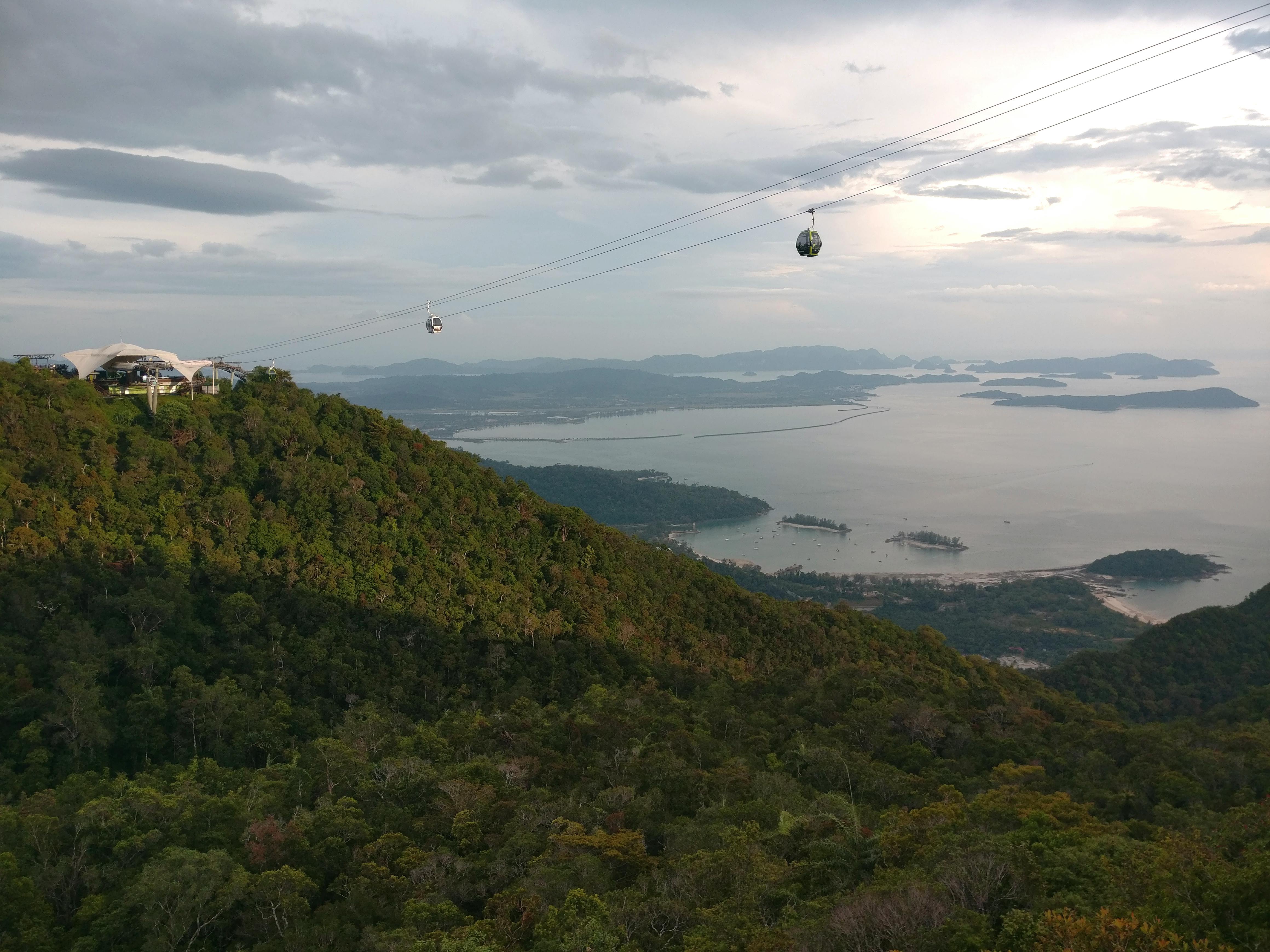
A must-do early in the stay is the cable car and mountain viewpoint area. The island’s dramatic geology is part of what earned Langkawi UNESCO Global Geopark status, and the elevated views help you understand the archipelago as more than a beach destination.
Recommended activity:
- Langkawi Cable Car Combo Package Admission Tickets — ideal for sightseeing with children because the payoff is immediate: big views, a memorable ride, and less walking than many nature attractions.
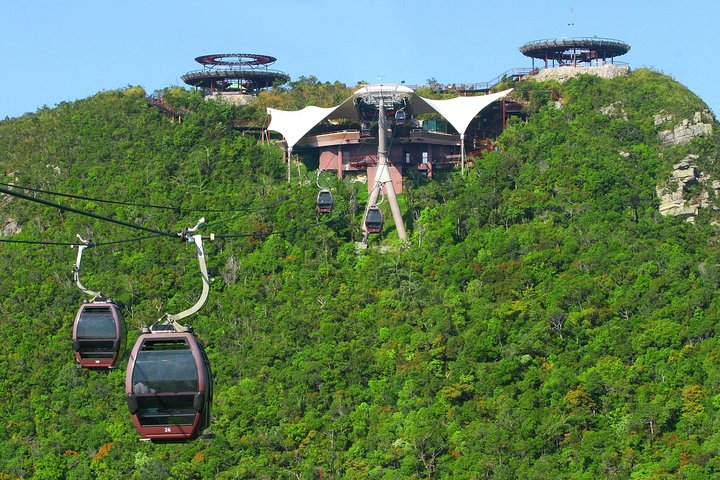
Langkawi Cable Car Combo Package Admission Tickets on Viator
Set aside another morning for island hopping. It is one of the classic Langkawi experiences and a smart match for your beach-and-unique-activities preference. Expect a speedboat route to scenic islets, eagle viewing areas, and swimming stops; bring sun protection and keep the rest of the day open for recovery.
- Langkawi Island Hopping Tour: Lake, Eagles & Beach Fun — a reliable family-friendly half day with scenery, wildlife interest, and beach time built in.

Langkawi Island Hopping Tour: Lake, Eagles & Beach Fun on Viator
The most distinctive Langkawi outing, though, is the mangrove ecosystem around Kilim. This is where the trip becomes more than beaches: limestone karsts rise from quiet water, eagles circle overhead, and caves and tidal channels reveal why the island matters ecologically.
- JungleWalla Langkawi UNESCO Geopark Mangrove Cruise — one of the better choices if you want something educational as well as scenic.

JungleWalla Langkawi UNESCO Geopark Mangrove Cruise on Viator - Langkawi 3 Hours Kilim River Mangrove Tour by Boat with Lunch — a good value option if you want lunch included and a straightforward schedule.

Langkawi 3 Hours Kilim River Mangrove Tour by Boat with Lunch on Viator
Use one quieter day for local-history sightseeing. Eagle Square is symbolic rather than essential, but Mahsuri-related sites and rural viewpoints add texture to the island and help balance nature with legend.
- Langkawi Nature & History Tour with Telaga Tujuh & Mahsuri Tomb — a sensible pick if your family enjoys storytelling, viewpoints, and a broader understanding of the island.

Langkawi Nature & History Tour with Telaga Tujuh & Mahsuri Tomb on Viator
Good rhythm for this stay: two beach days, one cable car day, one island-hopping day, one mangrove day, one lighter local sightseeing day, and several slow afternoons for sand, cafés, and night-market grazing.
Food notes: Seek out nasi campur stalls for lunch, where you pay by dish and can keep costs low while trying local curries, vegetables, fried chicken, and fish. For dinner, prioritize seafood grills and Malay restaurants over imported cuisine. Evening snacks can be as simple as roti canai, apam balik, or fruit from a night market.
Travel to Penang
Depart Langkawi in the morning. The easiest option is a domestic flight booked via Trip.com flights or Kiwi.com flights. Typical total travel time is about 3-5 hours door to door including airport procedures, and fares are often budget-friendly if booked ahead.
Penang (George Town base)
Penang is the intellectual and edible heart of this itinerary. George Town’s streets carry traces of Chinese merchants, Malay cooks, Indian traders, colonial administrators, and generations of migrants who turned the city into one of Southeast Asia’s great food capitals.
For a family that enjoys museums, coffee shops, local life, and being foodies, Penang is close to perfect. It is a place where breakfast can become a history lesson, and a casual walk can lead from clan houses to street art to curry mee to a century-old mansion.
Days 10-18: Heritage streets, hawker food, museums, and hilltop escapes
Where to stay: For heritage atmosphere, excellent location, and a memorable splurge night if budget allows, Eastern & Oriental Hotel is iconic. For better value, Chulia Mansion is practical and well-placed for George Town exploration. If you prefer beach time with resort convenience, Golden Sands Resort by Shangri-La works well. You can also browse VRBO Penang and Hotels.com Penang.
Base yourselves in George Town for most of this stay. The city rewards walking, short ride-hails, and long meal breaks. Streets such as Armenian Street, Lebuh Chulia, and the old civic district provide the richest concentration of architecture, cafés, murals, temples, and snack stops.
Begin with a heritage overview so the city’s layers make sense from the start. Many first-time visitors see murals and cafés but miss the deeper story of mercantile wealth, migration, faith communities, and preservation. A guided walk solves that immediately.
- Private George Town UNESCO Heritage Walking Tour — excellent early in the stay, especially if you want context for clan jetties, temples, old shophouses, and the UNESCO district.

Private George Town UNESCO Heritage Walking Tour on Viator
Penang is, of course, about eating. Schedule at least one guided food tour near the beginning, then spend the remaining days returning to favorite dishes independently. This approach prevents random ordering fatigue and helps you learn what to seek out later.
- Penang Plates Food Tour with 15+ Tastings — one of the strongest matches for your foodie preference, with enough variety to become a practical eating primer for the rest of the stay.

Penang Plates Food Tour with 15+ Tastings on Viator - Penang: Morning Walking Foods Tour — particularly good if your family prefers earlier outings before midday heat.

Penang: Morning Walking Foods Tour on Viator
What to eat in Penang: prioritize char kway teow with smoky wok hei, assam laksa for its tamarind-fish tang, nasi kandar for rich curries, curry mee, cendol, popiah, and roti bakar with kopi. Hawker centers are not merely cheap places to eat; they are one of the finest windows into Penang’s cultural blending.
Coffee and café time: George Town’s café scene is ideal for slower mornings and rest stops with children. Alternate between old-school kopitiams serving toast and soft-boiled eggs and newer specialty coffee shops set inside restored shophouses. The contrast itself is part of Penang’s personality.
Penang also suits your museum and architecture interests. One of the most rewarding house museums in the city is the Blue Mansion, a cobalt landmark tied to Cheong Fatt Tze, the “Rockefeller of the East,” whose fortune and cosmopolitan tastes shaped late-19th-century Penang.
- Guided Tour of Cheong Fatt Tze's Blue Mansion in George Town — a smart choice for anyone interested in design, trade history, and family-friendly storytelling.

Guided Tour of Cheong Fatt Tze's Blue Mansion in George Town on Viator
For a breezier day, head uphill. Penang Hill has been a retreat since the colonial era, and the funicular makes it easy for a family day without a punishing climb. Pair it with The Habitat if you want rainforest canopy walks and more nature.
- Penang Hill Funicular Ticket - Non-Malaysian — ideal for views, cooler air, and an easy half day.

Penang Hill Funicular Ticket - Non-Malaysian on Viator
Build in unstructured George Town time. Browse bookstores, old pharmacies, temple courtyards, and small museums; hunt murals; stop for iced nutmeg juice; and let lunch become the main event. This city shines when you leave room for accidental discoveries.
If the family wants a light beach break without changing hotels, Batu Ferringhi makes a convenient half-day or full-day outing. It is more about seaside atmosphere and resort convenience than secluded beauty, but it provides a useful contrast to George Town’s urban pace.
Travel to Kuala Lumpur
Leave Penang in the morning. For speed, book a domestic flight through Trip.com flights or Kiwi.com flights; door-to-door it is usually around 3-5 hours. If you prefer overland travel, the train option via Trip.com trains is longer, roughly 4.5-6.5 hours depending on routing, but comfortable and scenic.
Kuala Lumpur & Selangor
Kuala Lumpur is a city of juxtapositions done with confidence. Glass towers rise beyond mosque domes, Indian shrines sit beneath limestone cliffs, and food courts, megamalls, museums, and neighborhood coffee shops make it easy to keep every family member interested without spending heavily every day.
Selangor, surrounding and extending beyond the capital, gives this final leg its range. Here you can day-trip to Batu Caves, firefly-filled riverbanks, shopping hubs, family attractions, and greener edges of the metropolis while keeping one hotel base.
Days 19-30: City icons, museums, shopping, Batu Caves, and Selangor day trips
Where to stay: For affordability and easy transport, Hotel Sentral Kuala Lumpur is a practical low-budget option. For a simple city-center stay, Hotel 99 Kuala Lumpur City can work well. If you want to browse wider choices, use VRBO Kuala Lumpur and Hotels.com Kuala Lumpur. If you decide to spend a few nights in greater Selangor near family attractions and malls, Sunway Resort Hotel & Spa is the most convenient dedicated pick from the supplied options.
Start with Kuala Lumpur’s headline sights: the Petronas Twin Towers, Merdeka Square precinct, Masjid Negara, Central Market, Chinatown, and KLCC Park. These landmarks explain the city’s transition from colonial outpost to global capital, and they are easy to combine with shopping and food.
- Malaysia Petronas Twin Tower Observation Deck E-Tickets — worth doing early in the stay, especially on a clear day, to orient yourselves above the city.

Malaysia Petronas Twin Tower Observation Deck E-Tickets on Viator - Kuala Lumpur City Tour — a useful overview if you want a curated introduction before exploring independently.

Kuala Lumpur City Tour on Viator
For museums and culture, build a day around the Islamic Arts Museum Malaysia, National Museum, and the historic core nearby. Even if one family member is less museum-minded, the architecture, manageable scale, and nearby gardens make this a balanced sightseeing day.
Shopping strategy: split it between traditional and modern. Central Market and Petaling Street are better for souvenirs, snacks, textiles, and atmosphere; Bukit Bintang and Suria KLCC are better for air-conditioned breaks, international retail, and family dining variety. This mix keeps the trip lively and avoids mall fatigue.
Kuala Lumpur’s coffee culture is now excellent. Use café mornings in neighborhoods such as Bukit Bintang, Chinatown, and Bangsar for rest days between heavier sightseeing. Good cafés here are not filler; they are part of the city’s social fabric, often tucked into converted shophouses or contemporary design spaces.
A must-do Selangor outing is Batu Caves. Though often mentally filed under Kuala Lumpur, it sits in Selangor and offers one of Malaysia’s most striking visual spectacles: a colossal golden Murugan statue before a limestone cave-temple reached by a vivid staircase. Go early for cooler temperatures and gentler crowds.
- Private Half-Day Batu Caves and Cutural Tour in Kuala Lumpur — a strong family-friendly option because logistics are handled and the cultural context is explained well.

Private Half-Day Batu Caves and Cutural Tour in Kuala Lumpur on Viator
For a memorable evening beyond the city center, head into coastal Selangor for fireflies. This is one of the loveliest family experiences in the region: quiet boats on dark water, mangrove silhouettes, and trees blinking like strings of tiny lanterns.
- Glowing Kuala Selangor Firefly Tour — one of the most distinctive and child-friendly night excursions from the capital region.

Glowing Kuala Selangor Firefly Tour on Viator
Reserve another evening for the city lit up after dark. Kuala Lumpur has a different personality at night: bridges glow, the towers gleam, markets stay lively, and the heat eases enough for pleasant strolling.
- Kuala Lumpur Night Tour With Lake Symphony & Saloma Bridge — a relaxed way to see the city’s illuminated icons without planning every transfer yourself.

Kuala Lumpur Night Tour With Lake Symphony & Saloma Bridge on Viator
If the family enjoys creative activities, fit in something hands-on between major sights. That sort of afternoon often becomes the surprise favorite because it breaks the pattern of towers, temples, and museums.
- Malaysian Batik Experience-Handkerchief — an excellent family-friendly creative session and a nice souvenir that is more meaningful than a shop purchase.

Malaysian Batik Experience-Handkerchief on Viator
Food in Kuala Lumpur and Selangor: pursue variety. Eat nasi lemak for breakfast, banana leaf rice for lunch, roast duck or Hokkien mee for dinner, and save space for kuih, teh tarik, and cendol. In Brickfields, Chinatown, Kampung Baru, and mall food courts alike, the city’s diversity is your advantage.
Great meal rhythm here: simple breakfast in a kopitiam or café; big lunch in an ethnic enclave or food court; lighter dinner after sightseeing; and one or two destination dinners in busy food streets where everyone can order what they like. This keeps spending low and satisfaction high.
For shopping days, combine Suria KLCC with the park and tower area, and reserve Bukit Bintang for another day with Pavilion, Lot 10’s food hall options, and side-street cafés. If staying near Sunway in Selangor for part of the trip, that area is especially convenient for family entertainment and indoor time during rain or heat.
One optional long day trip from Kuala Lumpur is Malacca for deeper history. It is farther than Batu Caves or Kuala Selangor, but if your family likes museums, colonial layers, and riverside old quarters, it is worthwhile.
- Historical Malacca Guided Day Tour (Shared Tour) — best for travelers who want another dose of history without switching hotels.

Historical Malacca Guided Day Tour (Shared Tour) on Viator
Departure planning: For your onward flight, compare fares via Trip.com flights and Kiwi.com flights. If you want pre-arranged transport from the city to the airport, this Kuala Lumpur Airport Departure Transfer from KL City is convenient, especially for a family on a final travel day.
This 30-day Malaysia itinerary works because it balances contrast and comfort: Langkawi for beaches and nature, Penang for food and heritage, and Kuala Lumpur-Selangor for landmarks, shopping, museums, and memorable day trips. It is family-friendly, cost-conscious, and varied enough that each stop feels distinct while still fitting together as one cohesive journey.
Done at this pace, the trip never becomes a checklist. Instead, it becomes what the best month-long journeys are meant to be: a lived-in, flavorful, sunlit experience of Malaysia that leaves you with favorite cafés, favorite hawker stalls, favorite views, and the happy sense that you truly got to know the country.