
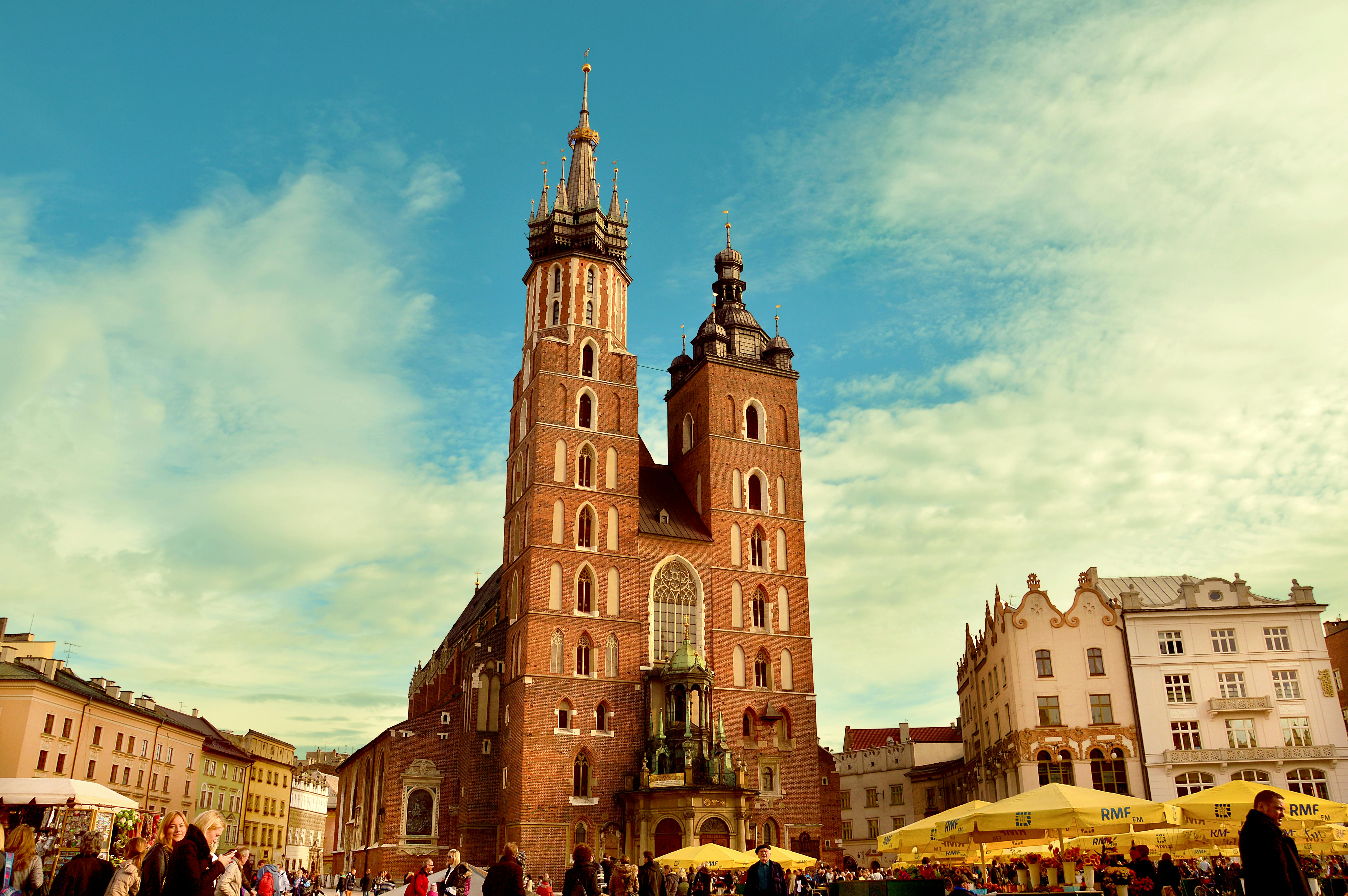
Kraków, the royal heart of Poland on the Vistula River, layers golden medieval streets with Renaissance courtyards, Baroque towers, and poignant 20th-century history. Its Old Town and Wawel Hill glow with centuries of Polish statehood, while Kazimierz hums with revived Jewish culture, artisan cafés, and atmospheric bars.
Travelers come for the postcard-perfect Main Market Square and the hourly bugle call from St. Mary’s, then stay for pierogi lunches, cellar jazz, and long walks beneath the green canopy of the Planty park. Day trips reveal deeper stories: Auschwitz-Birkenau’s memorial and museum, and the fantastical chambers of the Wieliczka Salt Mine carved from “white gold.”
Practical notes: The Polish złoty (PLN) is standard; cards are widely accepted. Kraków is walkable and well served by trams; rideshares (Bolt/Uber) are reliable. At Auschwitz-Birkenau, dress respectfully and follow site rules—photography is limited in certain areas. Book timed-entry museums and day tours in advance, especially in summer and around Christmas markets.
Kraków
Few European cities balance beauty and memory like Kraków. The Rynek Główny—Europe’s largest medieval square—beats to café clatter, carriage wheels, and the plaintive hejnał trumpet from St. Mary’s Basilica. Wawel Castle, once royal residence, stages Poland’s saga in stone and tapestry.
South across the river, Schindler’s Factory and MOCAK add modern context, while Kazimierz’s synagogues, vintage shops, and intimate bistros invite meandering. Evenings spill into speakeasy cocktails, live klezmer sets, and riverside hangouts.
Where to stay- Old Town (Stare Miasto): Walk to the square, St. Mary’s, Cloth Hall, and Wawel; ideal first-time base.
- Kazimierz: Creative cafés, nightlife, and Jewish heritage; quieter streets just off Plac Nowy.
- Podgórze/Salwator: Leafy, local feel with easy tram access and Vistula walks.
- Browse apartments on VRBO Kraków (good for families or longer stays).
- Compare hotels on Hotels.com Kraków (from historic townhouses to design-forward boutiques).
- Flights within Europe: Check Omio (flights) for direct hops (e.g., London 2h20, from ~$50–$180; Paris 2h15, from ~$70–$200).
- Trains in Europe: Use Omio (trains) to compare fast routes (Warsaw to Kraków ~2h20; Vienna ~7h, from ~€29–€59 with a change).
- Buses in Europe: Budget-friendly via Omio (buses) (Berlin ~8–9h from ~€25–€45).
- Long-haul flights (from outside Europe): Compare on Trip.com and Kiwi.com (often via Warsaw, Frankfurt, Vienna, or Munich).
Day 1 — Old Town Icons, Wawel Hill, and Kazimierz After Dark
Morning: Travel to Kraków. If you arrive early, ease in with specialty coffee and a light breakfast at Wesoła Café (scrambled eggs with bryndza, fresh bakes) or Karma Coffee Roasters (house-roasted beans, vegan-friendly pastries). Drop bags and get oriented.
Afternoon: Start in the Rynek Główny. Step into St. Mary’s Basilica to admire the Veit Stoss altarpiece; listen for the hourly hejnał from the taller tower. Stroll the Cloth Hall (Sukiennice) for local crafts, then walk the Royal Route down Grodzka to Wawel Castle—peek into the Cathedral, State Rooms, and the Dragon’s Den cave if time allows.
For a relaxed overview with narration before deeper dives, consider this fun, quick city circuit:
Krakow: City Sightseeing Tour Eco Electric Buggy Golf Cart — a breezy guided ride through the Old Town and Jewish Quarter (great if you’re jet-lagged or short on time).

Food notes: For a late lunch near the castle, try Miód Malina (Polish classics; duck with apples, spinach pierogi) or Pod Wawelem (hearty portions, convivial beer hall vibe). If you’d rather keep it light, grab a quick plate of pierogi at Przystanek Pierogarnia.
Evening: Wander into Kazimierz for dinner at Starka (modern Polish, famed house-infused vodkas), Klezmer Hois (candlelit, old-world ambiance), or Hamsa (fresh, modern Middle Eastern; great for sharing). For nightcaps: Alchemia (cult bar with candlelit nooks), Singer (tables made from vintage sewing machines; music late), or Mercy Brown (speakeasy cocktails upstairs—ask your server for the unmarked door).
Day 2 — Auschwitz-Birkenau: A Full-Day, Guided Visit
This is a solemn, essential day trip. Go with an organized tour for efficient transport, timed entry, and a licensed museum guide. Expect 7–8 hours door-to-door; many tours include pick-up.
Krakow to Auschwitz Birkenau Guided Tour with Transfer and Ticket — includes round-trip transport and a live guide. Typical itineraries begin at Auschwitz I (blocks, exhibitions) and continue to Birkenau (Auschwitz II), the vast extermination site.

Planning tips: Wear comfortable shoes; bring water and a snack. Bags larger than small handbags aren’t permitted inside—your guide will advise. Photography is restricted in some rooms; follow staff instructions. Tours typically start ~7:00–9:00 a.m. and return mid-to-late afternoon.
After you return: Take a quiet walk along the Vistula boulevards to decompress. Dinner options: Kogel Mogel (refined Polish—try the goose or veal schnitzel), Pod Aniołami (historic cellar grill; marinated pork neck, smoked sheep cheese oscypek), or a casual Kazimierz circuit—zapiekanki (giant topped baguettes) at Plac Nowy’s Endzior stall, then a shared spread at Hamsa.
Day 3 — Wieliczka Salt Mine, Podgórze Stories, and Farewell
Morning: Head to the UNESCO-listed Wieliczka Salt Mine, a 30–40 minute drive from Kraków. Descend via wooden staircases and traverse saline lakes, bas-relief sculptures, and the chandeliered Chapel of St. Kinga ~135 m below ground.
Krakow: Wieliczka Salt Mine Guided Tour with Hotel Pick-up option — a smooth half-day plan with transfers and an English-speaking guide.

Afternoon: Back in town for an early lunch: Pierożki u Vincenta (creative pierogi fillings), Kuchnia u Doroty (home-style soups and stews), or Café Camelot (quiche, salads, sernik cheesecake) if you prefer something light. If time permits before departure, visit Schindler’s Factory in Zabłocie or reflect at Ghetto Heroes Square in Podgórze; both add crucial context to Day 2.
Evening: Departure day—if you have an extra hour, pick up edible souvenirs: krówki (Polish fudge), oscypek cheese (vacuum-sealed), or artisanal chocolates. One last espresso at Tektura or Nowa Prowincja, then head for the airport or station.
Local logistics and tips- Airport transfer: The SKA1 train runs between Kraków Główny and the airport in ~18 minutes; taxis/rideshares take ~25–35 minutes depending on traffic.
- Getting around: Trams are frequent and easy; single-ride tickets cost just a few PLN and day passes are good value. Validate upon boarding.
- Museums: Many have free-entry days or limited free hours; check schedules and consider booking timed tickets for Wawel and Schindler’s.
- Seasonality: Winter brings cozy cellars and Christmas markets; spring and fall are ideal for crowd-free sightseeing; summer is vibrant but popular—book tours early.
- Dining etiquette: Reservations help on weekends. Tipping ~10% is appreciated for table service.
If hot springs and mountain views call, trade Day 3 for a full-day Tatra escape:
Krakow–Zakopane: Cable Car, Chocholow Baths, Cheese & Vodka — ride up Gubałówka for panoramas, sample smoked oscypek, and soak in geothermal pools.

Book your stay via VRBO or Hotels.com, and sort your tickets and rail with Omio. For long-haul flights, compare on Trip.com and Kiwi.com.
In three days, Kraków reveals its layers: royal capitals and market bells, café culture and candlelit cellars, memory and resilience. You’ll leave with a deeper sense of Poland’s story—and a promise to return for another plate of pierogi and one more evening stroll around the square.