
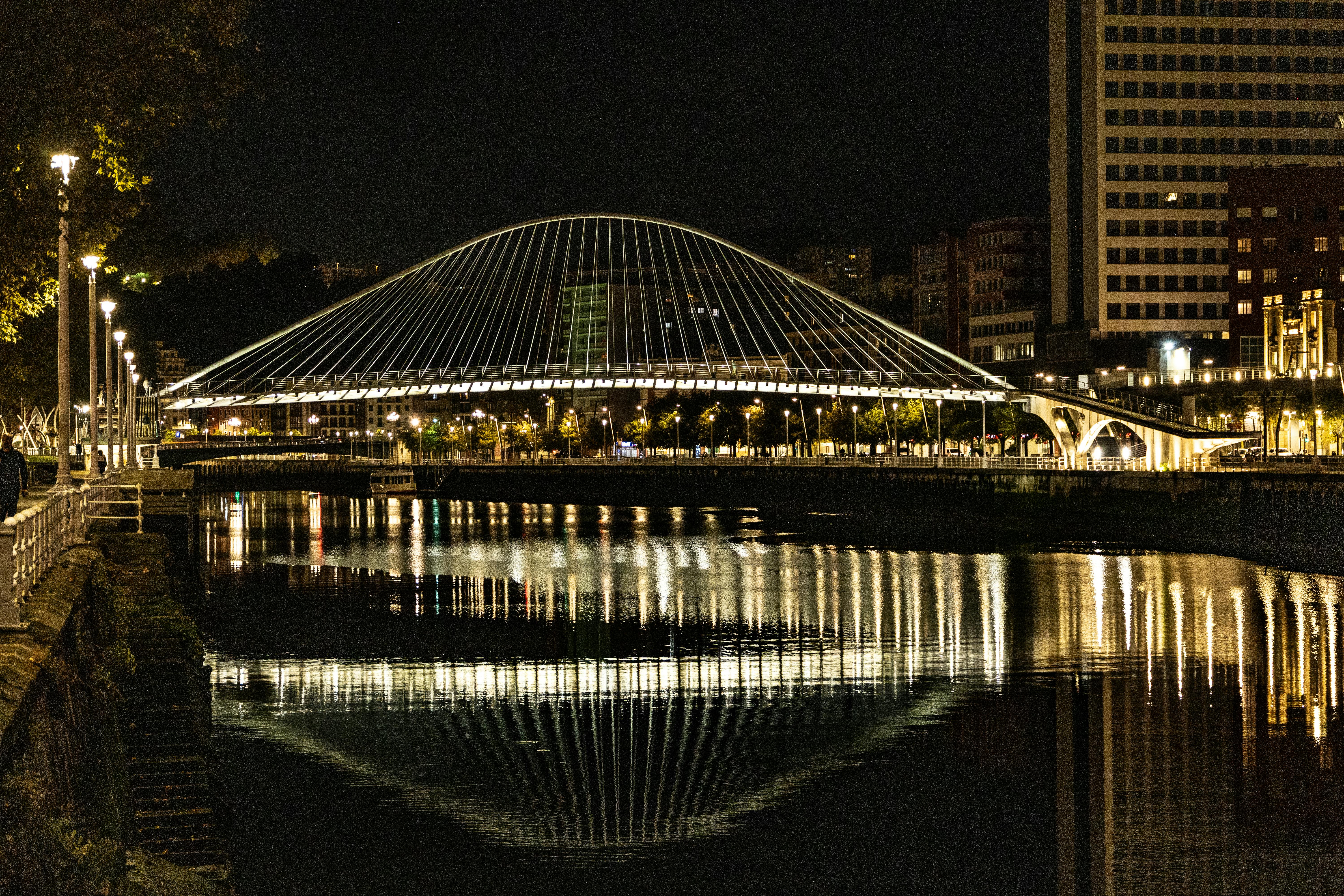
Bilbao is one of Spain’s great reinventions: once a gritty industrial port, now a polished cultural capital where titanium curves, medieval streets, and serious cooking coexist with unusual ease. The city’s modern renaissance is often traced to the 1997 opening of the Guggenheim Museum, yet Bilbao’s story runs far deeper—back to its 14th-century founding and its long role as a commercial heart of Biscay.
What makes Bilbao especially rewarding for a short trip is its contrast. In a single day you can stand before Frank Gehry’s shimmering museum, cross the Nervión River into the Siete Calles of the Old Town, then spend the evening hopping between bars where each pintxo looks like edible sculpture. It is also a fine base for the wider Basque Country, with the coast, fishing towns, wineries, and historic sites all within reach.
Practical notes matter here. Bilbao is walkable in the center, the metro is efficient, and taxis are easy when needed; for arrivals and onward European flights, start with Omio flights, and for rail within Europe check Omio trains. Basque cuisine is a major reason to come—think salt cod, txangurro, Idiazabal cheese, txakoli wine, and burnt Basque cheesecake—so come hungry, reserve restaurants early, and note that lunch and dinner often run later than in much of Europe.
Bilbao
Bilbao feels both grand and intimate. Broad avenues from its 19th-century expansion lead to Belle Époque facades, while the Casco Viejo still hums with market stalls, tiled bars, and church bells. The river is the city’s spine, and nearly every walk reveals how deliberately Bilbao has turned industry into civic beauty.
The star attraction is the Guggenheim, but the real pleasure of a Bilbao city break is how much substance surrounds it. There are old merchant streets, excellent museums beyond the blockbuster one, a market where locals still shop, and one of Europe’s most compelling bar-food cultures. Even coffee is taken seriously, which makes early starts far easier.
For where to stay, start with VRBO Bilbao or Hotels.com Bilbao. Strong hotel picks include Hotel Bilbao Plaza for a central riverside base near the Old Town, NH Collection Villa de Bilbao for comfort near the museum district, and the historic Hotel Carlton on Plaza Moyúa, one of Bilbao’s classic addresses.
If you are flying in from elsewhere in Europe, compare schedules on Omio flights. If your journey includes rail connections in Spain or neighboring countries, Omio trains is the most relevant tool here; buses can also be useful in the region via Omio buses. From Bilbao Airport to the center, expect roughly 20–30 minutes by airport bus or taxi.
Day 1: Arrival in Bilbao, Riverside Icons & Old Town Pintxos
Morning: This is your arrival day, so keep the morning unstructured for transit. If you are still planning transport into Bilbao, use Omio flights for European air options and Omio trains if arriving overland; once in town, check in and give yourself time to settle rather than overloading the first afternoon.
Afternoon: After arrival, begin with a gentle riverside orientation walk around the Guggenheim district. Even before you step inside, the museum is theatre: Gehry’s titanium panels shift with Bilbao’s famously changeable light, while Louise Bourgeois’s giant spider Maman and Jeff Koons’s flower-covered Puppy have become unofficial civic mascots.
Afternoon: If you want context rather than wandering on your own, book the Guggenheim Museum guided tour. It is especially useful in a short Bilbao itinerary because the museum can feel overwhelming without narrative, and the guide helps connect the architecture to the collection and to the city’s broader renewal.

Afternoon: For a coffee and light bite before or after the museum, consider a stop near the Ensanche rather than a generic chain. Specialty cafés in central Bilbao are ideal for a flat white, pastry, and reset after travel; if you prefer something more substantial, head toward Plaza Moyúa or the museum area for a relaxed late lunch of seasonal produce, grilled fish, or a first plate of croquetas and tortilla.
Evening: Spend your first evening in Casco Viejo, the medieval core known as the Seven Streets. Start by wandering past the Cathedral of Santiago, Plaza Nueva’s arcades, and the lanes around the Mercado de la Ribera, then settle into the Basque ritual of pintxos: small bar-top bites that reward slow, social grazing rather than one formal dinner.
Evening: For a polished introduction, book The Award-Winning Bilbao Food Tour & Wine Pairing by Basque Local or The Authentic Bilbao Pintxos, Food & Wine Tour with a Local. These are excellent first-night choices because they decode local etiquette—how to order, what to drink, and which pintxos are worth your appetite.


Evening: If you dine independently, look for classic combinations: gildas with anchovy, olive, and guindilla pepper; bacalao preparations; txangurro; and a glass of crisp txakoli poured from height. Finish with Basque cheesecake if available, then stroll back along the river for Bilbao at its most quietly cinematic.
Day 2: Bilbao History, Market Culture & a Deeper Taste of the City
Morning: Begin with breakfast and coffee in the center—ideally a proper espresso, fresh orange juice, and pastry or toasted bread with tomato and olive oil before the city fully wakes. Then make your way into the historic center for a more grounded understanding of Bilbao beyond the museum postcard.
Morning: The Bilbao walking tour is a strong fit this morning, especially if you want the city’s medieval, mercantile, and industrial chapters tied together clearly. You will better appreciate landmarks such as the Teatro Arriaga, the church façades, the river crossings, and the urban expansion that created modern Bilbao.

Afternoon: For lunch, head to Mercado de la Ribera, one of Europe’s great covered markets and far more than a sightseeing stop. This is where you can browse gleaming seafood counters, local cheeses, cured meats, and seasonal vegetables before choosing a casual lunch of pintxos, grilled fish, or a set menu nearby. It is a practical and atmospheric place to understand what Basque cooking is built on.
Afternoon: After lunch, cross into the Ensanche for elegant city-center streets, then consider the Artxanda funicular if the weather is clear. The viewpoint gives you the best overview of Bilbao’s bowl-like setting between hills, and it makes the city’s layout instantly legible: old town, river, expansion district, and museum quarter all in one frame.
Evening: Use the evening for a hands-on culinary experience or another bar-hopping session. The Basque Pintxos and Tapas Cooking Class in Bilbao is ideal if you want to do more than eat; it gives you the vocabulary of the cuisine—local ingredients, seasoning, assembly, and the logic of pintxos culture—in a way a restaurant meal cannot.

Evening: If you would rather keep things classic, devote the night to a focused pintxos crawl in Casco Viejo and nearby central streets. Choose several bars instead of one long meal: one for seafood pintxos, one for hot specialties coming fresh from the kitchen, one for vermouth or txakoli, and one for dessert. This piecemeal style is not a workaround—it is the region’s great social art form.
Day 3: Basque Coast Day Trip from Bilbao & Departure
This final day works best as a full or near-full excursion, depending on your departure time. If your flight or train leaves later in the afternoon or evening, choose a shorter self-directed morning by the river; if you have most of the day, a guided Basque coast outing gives your 3-day Bilbao trip a wider sense of place.
The most memorable option is Dragonstone, Mundaka and Guernica from Bilbao or Bilbao: Gaztelugatxe, Bermeo, Mundaka and Gernika with Txakoli. Gaztelugatxe is the dramatic islet path many know from television, but even without the screen fame it is extraordinary—a wave-battered hermitage reached by a steep stone walkway, all cliffs, sea spray, and old pilgrim atmosphere.


These coastal tours are rewarding because they show the many faces of Biscay in one sweep. Bermeo is a working fishing town with a salt-and-harbor personality, Mundaka is famous for its surf and estuary setting, and Gernika carries immense historical weight because of the 1937 bombing immortalized by Picasso. If txakoli tasting is included, so much the better: the region’s lightly sparkling white wine belongs to this landscape.
If you prefer a more urban and gastronomic finale, another excellent choice is a day trip toward San Sebastián via San Sebastian, Hondarribia, Getaria, Zarautz from Bilbao. It is a longer day, but it offers a striking contrast to Bilbao: Belle Époque elegance, bay views, and additional coastal Basque food culture before returning for departure.
For your final meal back in Bilbao, keep it simple and local—one last plate of jamón, anchovies, croquetas, or grilled seafood with a glass of txakoli or Rioja. Then collect bags and head onward using Omio flights, Omio trains, or Omio buses depending on your route.
In three days, Bilbao gives you far more than a single famous museum. This itinerary pairs art, Basque history, market life, and pintxos culture with just enough coastal scenery to show why Bilbao is one of the smartest short breaks in Spain. You will leave well fed, better informed, and almost certainly plotting a return to the Basque Country.