
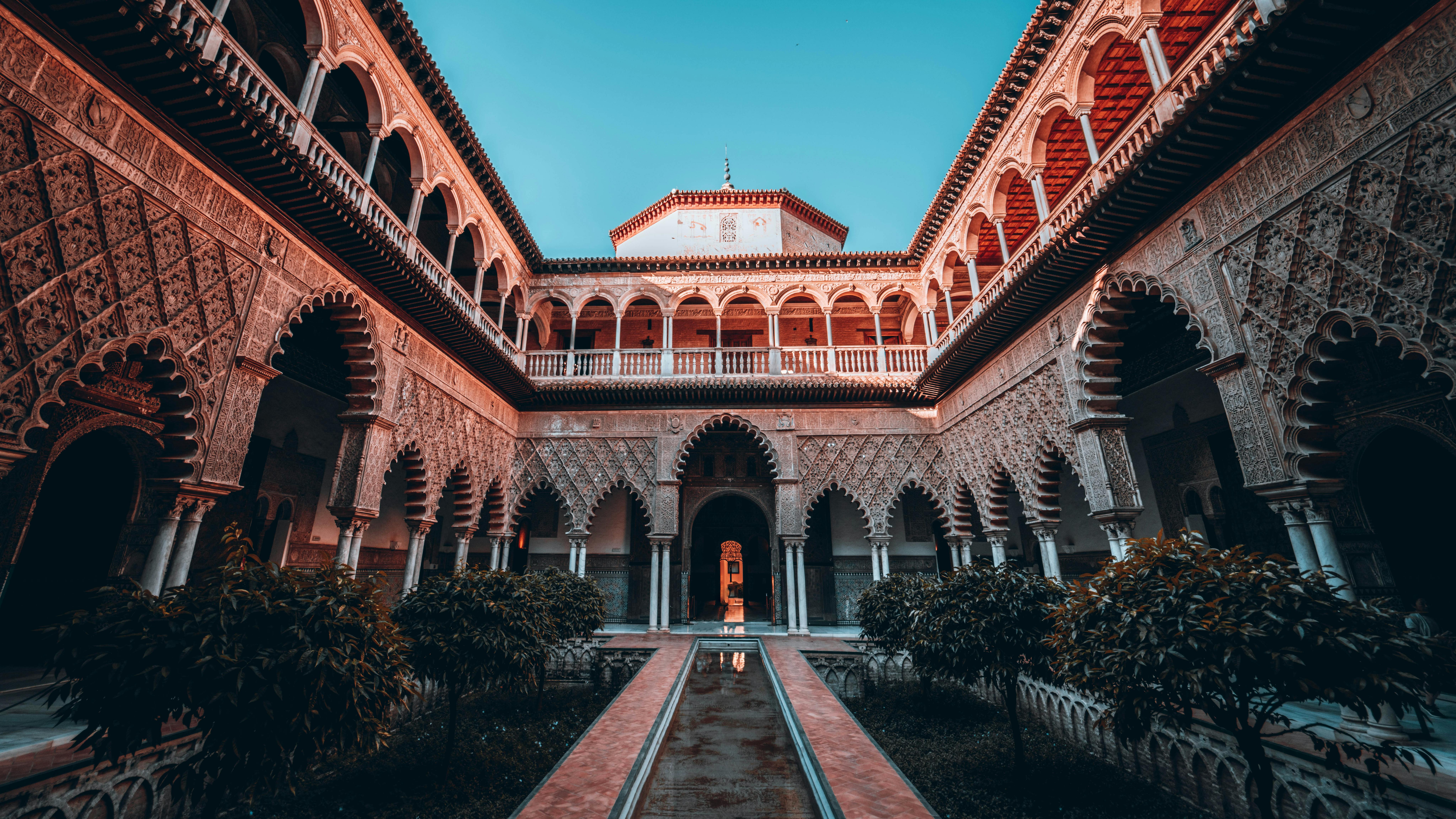
Seville is one of those cities that seems to have been written first and built later: Roman roots, centuries of Islamic rule, the thunder of Catholic monarchs, the wealth of the Indies, and the invention of scenes so theatrical they scarcely need embellishment. It is the capital of Andalusia, cradle of many flamenco traditions, and home to three monuments that alone justify the flight: the Real Alcázar, the vast Gothic cathedral, and the Giralda, whose silhouette still carries the memory of its Almohad minaret origins.
There is also a lighter side to Seville that rewards a 28-day stay far more than a hurried weekend. Bitter orange trees line the streets, late dinners are normal, tapas are not merely snacks but a social language, and neighborhood identities still matter: noble Santa Cruz, ceramic-loving Triana, stately El Arenal, and the more local, food-forward Alameda each tell a different story. Spring and autumn are ideal, summers are intensely hot, and comfortable shoes are non-negotiable on stone streets that invite wandering.
Practical notes: book the Alcázar and cathedral well in advance, especially in high season, and plan major outdoor walks early in the day if temperatures rise. Seville is highly walkable, but trams, buses, and taxis are useful for crossing wider areas; lunch often peaks after 2 p.m., dinner after 9 p.m., and many of the city’s best bites are found standing at a bar with a small plate and a glass of chilled manzanilla. For arrival planning in Europe, compare flights on Omio; if arriving by rail within Spain, compare routes on Omio trains.
Seville
For a 28-day trip, Seville works beautifully as a single-base immersion. Rather than spending valuable time changing hotels, this itinerary treats the city as both destination and launchpad, giving you space to see the essentials properly, return to favorite bars, rest in the hottest hours, and take selective day trips through Andalusia while sleeping in the same room each night.
Seville rewards repetition. The first look at Plaza de España is impressive; the third, at golden hour with rowboats gliding under tiled bridges, feels almost cinematic. The same is true of the cathedral, Triana market stalls, and the riverfront at dusk. Four weeks lets you move past sightseeing into familiarity, which is when Seville is at its best.
Where to stay:
- Hotel Alfonso XIII or Hotel Alfonso XIII, a Luxury Collection Hotel, Seville for a grand historic stay near the Alcázar, ideal if you want old-world atmosphere and an address at the heart of major landmarks.
- Hotel América Sevilla for a practical, central base near shopping streets and an easy walk to the core monuments without premium palace-level rates.
- Meliá Sevilla if you want more space and proximity to Plaza de España and María Luisa Park, a strong choice for a longer stay.
- La Banda Rooftop Hostel for sociable travelers who want design, community, and a famously lively rooftop atmosphere.
- Barceló Sevilla Renacimiento for a calmer riverside setting with larger hotel amenities.
- Hotel Zaida for a well-located budget-friendly option in a handsome historic building.
- Browse wider options on VRBO Seville or Hotels.com Seville.
Days 1-4: Arrival, Santa Cruz, and Seville’s Monumental Core
Ease in by staying close to the old center and letting Santa Cruz orient you. This former Jewish quarter is a tangle of narrow lanes, flowered balconies, tiny plazas, and sudden glimpses of the Giralda. It is touristy, yes, but also foundational: the urban fabric here explains why Seville is felt as much as seen.
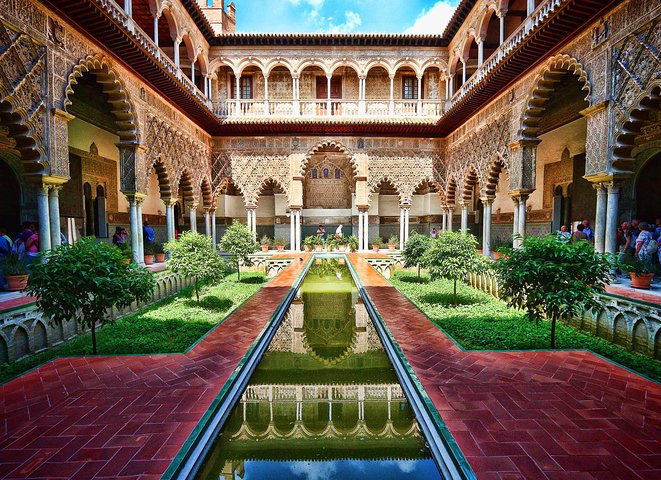
Your first major booking should be the cathedral and Alcázar. The cathedral, built on the site of a mosque, is among the largest Gothic churches in the world, while the Giralda remains one of Spain’s great hybrid monuments. The Real Alcázar is even more layered, with Mudéjar courtyards, tiled chambers, and gardens where Christian kings inherited and expanded Islamic artistic language rather than erasing it.
Alcazar and Cathedral of Seville Tour with Skip the Line Tickets is the smartest opening experience, especially after a flight, because it solves logistics and gives historical context that will enrich the rest of the month.
Coffee and breakfast: Start at Bar El Comercio, famous for old-school churros con chocolate and a sense of continuity that feels deeply Sevillian. For specialty coffee, Virgin Coffee near the center is a strong modern counterpoint, with carefully brewed espresso drinks and lighter breakfast options.
Lunch: Bodeguita Romero is a dependable first stop for pringá montaditos, local wines, and classic tavern energy. Also consider Casa Moreno, part ultramarinos, part standing-bar institution, where the preserved old grocery interior is nearly as memorable as the cured meats and simple montaditos.
Dinner: For a traditional opening dinner, try El Rinconcillo, often cited as Seville’s oldest bar, where azulejos, hanging hams, and handwritten tabs evoke another era. Order espinacas con garbanzos, bacalao, and jamón ibérico; the food is straightforward, deeply local, and exactly right for understanding Andalusian comfort cooking.
Days 5-8: Plaza de España, María Luisa Park, and the Riverfront
These days are for Seville at a broader scale. Plaza de España, built for the Ibero-American Exposition of 1929, is one of Europe’s great civic fantasies: part palace, part theater set, part nationalist mosaic project, with tiled alcoves representing Spain’s provinces. Come in the morning for photographs, then return near sunset when the brick glows and the crowds soften.
María Luisa Park beside it offers shade, fountains, bird calls, and a more leisurely rhythm. Nearby, the Archaeological Museum building and the old pavilions from 1929 reveal Seville’s attempt to present itself to the world as imperial, artistic, and modern at once. Later, walk toward the Guadalquivir, where the Torre del Oro and riverside promenade connect the city to its age of Atlantic trade.
Coffee and breakfast: La Cacharrería is excellent for a longer breakfast with tostadas, cakes, and coffee in a cozy, youthful setting. If you want something lighter, Parcería Café has a more contemporary feel and a brunch-leaning menu that breaks nicely from heavier Spanish breakfasts.
Lunch: At Mercado Lonja del Barranco, choose selectively rather than grazing blindly; it is best for a casual riverside pause. For a stronger sit-down meal, Petitraum offers thoughtful small plates and a more polished but still approachable lunch.
Dinner: Cañabota is the city’s great seafood temple if you want one serious splurge. It is known for pristine fish cookery, technical confidence, and a menu that makes Andalusia’s Atlantic and Mediterranean identity tangible on the plate. For something more informal, La Brunilda remains a popular reservation-worthy option for modern tapas done with consistency.
Days 9-12: Triana, Flamenco Roots, and Ceramic Seville
Cross the Isabel II Bridge into Triana and the city changes register. Historically associated with sailors, artisans, ceramic workshops, and important flamenco lineages, Triana feels less ceremonial and more lived-in. Its market, riverside facades, and tiled storefronts make it one of Seville’s most enjoyable neighborhoods to revisit several times.
Spend one morning in Mercado de Triana, built beside the remains of the Castillo de San Jorge, once linked to the Inquisition. Then wander Calle Betis for river views back to the center, browse pottery shops, and leave space for a flamenco evening. In Seville, flamenco is not decorative background music; it is an art of grief, wit, rhythm, defiance, and family memory.
Coffee and breakfast: Upita de los Melres is beloved for artisan pastries and a breakfast worth crossing neighborhoods for. In Triana itself, try a simple local café-bar for tostada with tomate and olive oil; often the least flashy places deliver the most authentic mornings.
Lunch: Las Golondrinas in Triana is a classic for mushrooms, pork dishes, and no-nonsense bar culture. Also excellent is Casa Cuesta, one of the neighborhood’s enduring addresses, where vermouth, traditional tapas, and old Seville atmosphere come together beautifully.
Dinner: For a memorable flamenco-night meal, pair your evening with dinner around Triana or El Arenal. Abantal, Seville’s Michelin-starred standard-bearer, is ideal if you want a contemporary tasting menu rooted in Andalusian products. For something livelier and less formal, try María Trifulca by the river, where the views add occasion without overwhelming the meal.
Days 13-16: Alameda, Local Seville, and Slow Urban Days
By the second half of the trip, it is time to live a little more like a regular. The Alameda de Hércules, once a flood-prone edge of town and now one of Seville’s most engaging social zones, gives you a different city: creative, younger, less polished, and excellent for bar-hopping, bookshops, and late dinners.
Use this block for slower pleasures: lingering in lesser-known churches, visiting the Palacio de las Dueñas, exploring the Casa de Pilatos, and taking time for siestas or rooftop evenings. Casa de Pilatos in particular deserves attention; it is an exquisite noble residence where Italian Renaissance ideas meet Mudéjar decoration, and it often feels calmer than the Alcázar while being nearly as rewarding.
Coffee and breakfast: Torch Coffee Roasters is a strong pick if you care about specialty beans and a quieter start. Jester, popular for brunch, pancakes, and lighter café fare, is useful when you need a break from toast-and-ham routines.
Lunch: Eslava should be high on your list, especially for inventive tapas that still feel anchored in local tastes. The famous egg-on-boletus sponge cake tapa earned its reputation, but the kitchen’s broader consistency is what keeps it essential.
Dinner: At Duo Tapas, near the Macarena area, you get a relaxed neighborhood setting with creative small plates and fair pricing. Another excellent choice is Al Aljibe, known for rooftop seating and a menu that bridges traditional Andalusian ideas with contemporary presentation.
Days 17-20: Art, Palaces, and Museums
Seville’s museums are often overshadowed by its monuments, but a longer stay makes them far more worthwhile. The Museo de Bellas Artes is one of Spain’s finest art museums, particularly strong in Sevillian Baroque painting; Murillo, Zurbarán, and Valdés Leal reveal the city’s intense religious imagination during its Golden Age wealth.
Also make time for smaller historic interiors and convent pastries if available seasonally. The city’s religious houses, aristocratic mansions, and tucked-away patios often provide the emotional texture that giant landmarks cannot. This is the point in the trip when you start noticing doors, tiles, balconies, and courtyards as attractions in themselves.
Coffee and breakfast: Delatribu offers very good coffee and a polished but unfussy breakfast, ideal before a museum morning. Manu Jara is the pastry stop for those who take dessert seriously; the viennoiserie and refined sweets are among the city’s best.
Lunch: Try Maestro Marcelino for updated Andalusian cooking in a refined setting, or return to a favorite tavern for continuity. Repetition is part of the pleasure in Seville; the second visit often tastes better because you know what to order.
Dinner: For classic fare in a handsome setting, Enrique Becerra remains a reliable address near the center. If you want serious rice dishes and seafood, Becerrita is another long-standing favorite with a polished local reputation.
Days 21-24: Day Trips from Seville Without Changing Hotels
A four-week Seville itinerary should include excursions, but only the ones that justify the time. Córdoba is the strongest first choice: the Mezquita-Catedral is one of Europe’s most astonishing buildings, and the high-speed train from Seville is usually around 45 minutes. Granada is longer but still feasible by train or bus for a full day focused on the Alhambra if booked far ahead. Cádiz is excellent when you want Atlantic light, seafood, and a different urban mood.
For rail day trips within Spain, compare schedules on Omio trains; for buses, use Omio buses. Expect approximate one-way travel times of about 45 minutes to Córdoba by AVE, around 2.5 to 3 hours to Granada depending on service, and roughly 1.5 to 1.75 hours to Cádiz by train. Typical one-way fares vary widely by booking window, but roughly budget $15-$45 to Córdoba, $25-$65 to Granada, and $15-$35 to Cádiz.
If you also want a Madrid extension by day or overnight, note that the high-speed train from Seville to Madrid is usually about 2.75 to 3 hours, often from around $30-$90 one way when booked in advance. For ideas once there, Madrid: Royal Palace Guided Tour with Skip the Line Ticket is a strong central experience, and for a bigger outing, Three Cities in One Day: Segovia, Avila and Toledo from Madrid is an ambitious but efficient add-on if you choose to widen the journey.


What to eat on excursion days: In Córdoba, aim for salmorejo, flamenquín, and eggplant with honey. In Cádiz, focus on fried fish, tortillitas de camarones, and sea views. In Granada, reserve a meal in advance if you are pairing the Alhambra with the Albaicín, since the day can become logistically crowded.
Days 25-28: Favorite Returns, Shopping, Rooftops, and a Proper Farewell
Keep the final stretch light. Revisit the site you loved most, whether that is the Alcázar gardens, Triana at sunset, the Bellas Artes Museum, or simply an hour on a bench in María Luisa Park. Build in room for shopping: ceramics from Triana, olive oil, sherry, saffron, artisan fans, or well-selected food gifts are far more meaningful than generic souvenirs.
Use one evening for a rooftop drink with a view of the cathedral or Giralda. The point is not to chase the trendiest bar but to let the city close around you slowly. Seville’s great trick is that it becomes more legible, not less, with time.
Coffee and breakfast: Return to your favorite café and make it a ritual. If you still have places left, Ofelia Bakery is a good stop for pastries and a gentler neighborhood start.
Lunch: Have one farewell tapas crawl rather than a single long meal. A strong route might include Casa Morales for old bodega atmosphere, Bodeguita Romero for another pringá, and a final stop at El Rinconcillo or Eslava depending on which side of the city you want to end in.
Dinner: End with something memorable but unmistakably local: a proper seafood dinner, a refined Andalusian tasting menu, or a beloved neighborhood bar where the staff already recognize you. On a 28-day stay, that recognition is part of the achievement.
Additional activity worth considering: If you decide to open the trip with a few days elsewhere in Spain before settling in Seville, Barcelona has excellent bookable experiences such as Barcelona in 1 Day: Sagrada Familia, Park Guell, Old Town & Pickup and Barcelona Paella Cooking Class with Market Visit, Tapas & Sangria.


Four weeks in Seville is not excessive; it is corrective. It gives one of Spain’s most beautiful cities the time it deserves, turning major monuments into familiar companions and tapas bars into landmarks of your own making. You will leave with the usual photographs, yes, but also with routes, rituals, and favorite tables—the much better souvenirs.