
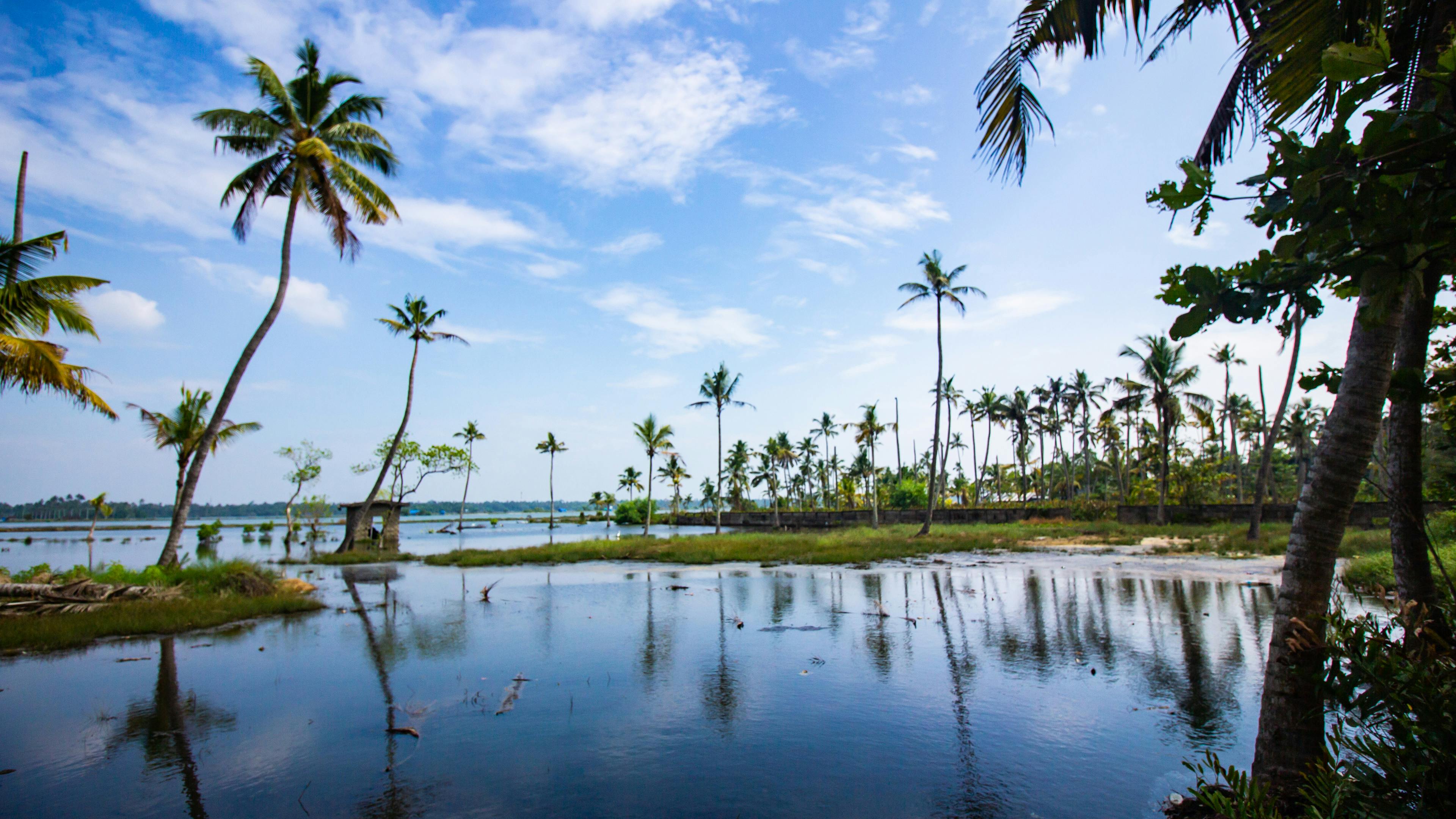
Kerala, India’s lush southwestern state on the Malabar Coast, has long been a meeting ground of sailors, spice traders, missionaries, and monarchs. Arabs, Chinese, Portuguese, Dutch, and British merchants all left their mark here, and the result is a region where synagogue lanes, colonial churches, temple festivals, tea gardens, and backwater villages seem to belong naturally to the same story.
For travelers, Kerala is prized for three things above all: water, hills, and food. You will drift through palm-fringed canals, climb into the cool Western Ghats, and sit down to plates of appam, stew, karimeen, toddy-shop seafood, and banana-leaf meals whose flavors are bright with coconut, curry leaf, black pepper, cardamom, and tamarind.
Practically speaking, Kerala is one of the easier parts of India for a long, slow journey, especially when paced across a full 21 days. March travel is warm on the coast and cooler in the hills, so light cotton clothing, sun protection, good walking shoes, and advance transport planning are wise; for longer intercity moves and arrival logistics, use Trip.com flights or Kiwi.com, and for rail searches within India, Trip.com trains.
Kochi
Kochi is Kerala’s finest opening act: a port city where cantilevered Chinese fishing nets frame Arabian Sea sunsets, ferry horns sound across the harbor, and old mercantile quarters still smell faintly of spice and salt. Fort Kochi and Mattancherry are best experienced slowly, on foot and by tuk-tuk, with enough time to wander into art cafés, old warehouses, and lanes where Indo-Portuguese facades are peeling into beauty.
This is also the smartest base for a first immersion into Kerala. You have history, food, easy airport access, and a strong range of day trips into village life and the backwaters around Alleppey and Kumbalangi.
Arrival and getting in: Fly into Cochin International Airport and book the best fares via Trip.com or Kiwi.com. Airport to Fort Kochi usually takes about 1.5-2 hours by road depending on traffic, and a private transfer or app cab is the easiest choice after a long-haul arrival.
Where to stay: Browse apartments and heritage-style rentals on VRBO Kochi or hotels on Hotels.com Kochi. Fort Kochi is the most atmospheric base for first-timers, while Ernakulam is more practical if you want modern business hotels and quicker rail access.
Days 1-4: Fort Kochi, Mattancherry and the old port city
Spend your opening days inside Kochi’s layered old quarters. The Chinese Fishing Nets are the postcard image, but the real pleasure is nearby: St. Francis Church, Santa Cruz Basilica, Princess Street, and the seafront where local families gather in the evenings for roasted peanuts, ice cream, and sea air.
Mattancherry adds another texture entirely. The Paradesi Synagogue, Jew Town’s antique-lined street, and the Mattancherry Palace reveal how trade shaped Kerala; even when sightseeing is light, the district rewards aimless wandering because the architecture and small storefronts tell the story better than any museum label.
- Breakfast and coffee: Kashi Art Café is still one of Fort Kochi’s most pleasant morning addresses, known for airy interiors, strong coffee, and breakfasts that suit a slow start. Loafer’s Corner Café works well for casual coffee, juices, and people-watching, especially if you want a lighter bite before a walking day.
- Lunch: For seafood with local personality, Oceanos is a dependable favorite, especially for grilled fish and prawns. If you want Syrian Christian flavors and a more traditional Kerala meal, seek out family-run spots serving fish curry meals and appam whenever available near Fort Kochi and Mattancherry.
- Dinner: Ginger House Restaurant offers a memorable waterfront setting in Mattancherry, ideal for a first elegant dinner with Kerala seafood. For a more classic historic-hotel atmosphere, the restaurant at Brunton Boatyard is a fine choice for Malabar-influenced dishes and sunset drinks by the harbor.
Recommended activity: For an excellent orientation, book the Best of kochi ! A private tour in kochi with a local guide !. It is a strong early-trip choice because Kochi’s history can feel scattered without context, and a local guide connects the churches, spice trade, colonial harbor, and neighborhood rhythms into one coherent narrative.

If you prefer something more playful and street-level, the Kochi Tuk-Tuk Sightseeing Tour with Cruise Ship Pickup is a lively way to cover landmarks without losing the feel of the city. Tuk-tuks suit Fort Kochi particularly well because the scale is intimate, the pace is human, and you can stop often for photos, snacks, and quick detours.

Days 5-7: Backwaters, village life and Kerala cooking
Now that you know the city, step into the watery world that gives Kerala much of its legend. The backwaters are not a single attraction but a whole landscape of canals, lagoons, paddy fields, ferries, coir-making villages, church spires, and homes set against coconut palms and still water.
One full day should go to a houseboat or country-boat experience, and another to village life or cooking. These slower, more intimate excursions balance the historical sightseeing of Fort Kochi with the everyday Kerala many travelers come here hoping to find.
- Breakfast: Try a traditional Kerala breakfast of appam with vegetable stew, puttu with kadala curry, or idiyappam when available at your hotel or a respected local café. The appeal is not only taste; these dishes are a daily grammar of the region, soft with coconut and ideal in the humid climate.
- Lunch: On a backwater day, lunch is often part of the cruise and usually includes rice, thoran, sambar, fish fry, pickles, and papadum. This is exactly the kind of meal you want in Kerala: fresh, unfussy, and deeply regional.
- Dinner: Reserve one evening for a seafood-focused meal in Fort Kochi, especially pearl spot fish, squid roast, or prawn curry. Ask for parotta or appam alongside, since the breads are half the pleasure.
Recommended activity: The standout overnight experience is the Kochi Private Tour: Overnight Alleppey Backwaters Houseboat Cruise. This is the Kerala dream in full: a private houseboat, still canals, village scenes at dusk, and the rare pleasure of sleeping on the water while the world goes quiet around you.

For a day-only option, the Private Kerala Backwater Houseboat Day Cruise with Lunch from Cochin gives you the scenery and traditional lunch without committing an overnight. It is a good fit if you prefer returning to your Fort Kochi base each evening.

To understand rural livelihoods rather than simply admire scenery, add the Kumbalangi Village Sightseeing Tour. Kumbalangi is known as a model tourism village, and this kind of outing is valuable because it shows coir making, canoe life, crab farming, and the social fabric behind Kerala’s postcard landscapes.

For one of the best food memories of the trip, consider the Jasmin Villa Homestay Cookery Class. A hands-on class gives you something restaurants cannot: the logic of mustard seed tempering, curry leaf fragrance, coconut textures, and the sequence of a Kerala home meal.

Days 8-9: Waterfalls or one last coastal flourish
Use your final Kochi block flexibly. If you want nature, the forests and cascades near Athirappilly make an excellent contrast to the city and canals; if you want one last easy day, stay local for shopping, galleries, a Kathakali performance, and another sunset along the Chinese nets.
Recommended activity: The Athirapally Waterfalls Tour. Private Day Tour. is worth the time if you enjoy landscapes and photography. Athirappilly is often called the Niagara of South India, and while the nickname is exaggerated, the broad white sweep of water through thick greenery is undeniably dramatic.

Travel to Munnar: Leave in the morning by private car or taxi; the drive takes roughly 4.5-5.5 hours depending on traffic and mountain conditions. Search arrival and onward transport support via Trip.com or Kiwi.com; for this route, road transfer is generally the most practical option. Budget around $45-$90 total for a private transfer depending on vehicle type and season.
Munnar
Munnar is Kerala at altitude: folded hills stitched with tea bushes, drifting mist, eucalyptus scent, and a coolness that feels almost theatrical after the coast. Once a favored hill station of the British, it remains one of South India’s most beautiful mountain retreats, and it earns more time than most rushed itineraries allow.
The town itself is only the gateway. The real joy lies in estate roads, viewpoints, tea factories, forest edges, birdlife, waterfalls, and the changing light over green slopes that look almost hand-combed.
Where to stay: Search cottages, villas, and hillside stays on VRBO Munnar or hotels on Hotels.com Munnar. Stay slightly outside the busiest market area if possible; the views are better, mornings quieter, and the hill-station mood much stronger.
Days 10-13: Tea country, viewpoints and slow mountain days
Begin with the tea landscape itself, because that is Munnar’s signature. Tea here is not just scenery but a living industry that shaped the region’s economy, labor history, and culture; visiting estates and a factory helps turn those rolling green photographs into something more meaningful.
Balance activity with idleness. Munnar rewards unhurried time on balconies, scenic drives, and café pauses as much as formal sightseeing, especially when clouds move in and out over the hills.
- Breakfast: Seek out South Indian breakfasts with hot masala dosa, idli, vada, or appam alongside fresh tea grown almost within sight of your table. In Munnar, tea should not be an afterthought; ask for locally sourced brews and take time over them.
- Lunch: Midday is ideal for a Kerala thali or a simple estate-side meal after sightseeing. Lighter vegetarian lunches work especially well in the hills, where the climate invites longer afternoons outdoors.
- Dinner: Choose a hotel restaurant or well-reviewed local spot with mountain views and order peppery curries, fried fish if available, or paneer and vegetable dishes with Kerala parotta. Cool evenings call for hearty, warming food rather than elaborate dining.
Recommended activity: The Munnar Tea Trail Tour with Factory Experience ( By Munnar Info) is the essential Munnar excursion. It gives you both the visual beauty of plantation walks and the satisfying mechanics of tea production, from leaf to cup, which makes every later tea stop more enjoyable.

Use the rest of this block for classic Munnar outings: viewpoints at sunrise, Eravikulam-side scenery if conditions permit, photo stops around tea slopes, and leisurely market browsing for spices and tea. Do not overschedule every hour; mist and weather are part of the performance here.
Days 14-16: Wildlife, trekking and birdlife
This second Munnar block is for the wilder edge of the hills. The region’s appeal goes beyond tea: elephant corridors, forested valleys, waterfalls, and bird habitats make it one of Kerala’s most rewarding bases for travelers who like soft adventure without needing a hardcore expedition.
Choose one active wildlife-oriented day and one gentler nature day. That pace keeps the trip varied while leaving room for the mountain weather to decide your exact rhythm.
Recommended activity: The Wild Elephant Anakulam & Waterfalls Tour(munnar valley Trekking) is an excellent choice for travelers who want something more vivid than scenic overlooks. Anakulam is known for elephant movement in the area, and while wildlife is never guaranteed, the possibility of seeing elephants in their natural environment makes this one of the most memorable excursions in the hills.

Birders, photographers, and anyone who enjoys quiet natural observation should also consider the Thattekad Bird Watching Tour. Kerala’s biodiversity is easy to underestimate, and Thattekad offers a more contemplative kind of sightseeing than the dramatic elephant and waterfall circuit.

Travel to Thiruvananthapuram: Depart in the morning by road to Kochi or Ernakulam and continue onward by flight or train. A practical plan is a 4.5-5.5 hour drive back toward Ernakulam, then either a roughly 1-hour flight or an approximately 5-6 hour train to Thiruvananthapuram; search options via Trip.com flights and Trip.com trains. Expect total same-day travel time of 7-10 hours depending on connections, with broad cost ranges from about $20 for rail to $80+ for flight combinations plus transfers.
Thiruvananthapuram
Thiruvananthapuram, Kerala’s capital, closes the trip with a different register: more temple-city gravitas, museums, palace collections, scholarly calm, and easy access to beaches along the southern coast. It is a city many travelers underrate, which is precisely why it works so well at the end of a long itinerary.
Here the mood shifts from mercantile Kochi and scenic Munnar to something more civic and cultural. The pace is grounded, the food excellent, and the nearby shoreline offers a satisfying final exhale before departure.
Where to stay: Search rentals on VRBO Thiruvananthapuram or hotels on Hotels.com Thiruvananthapuram. Stay near the city center for museums and dining, or closer to Kovalam if you want more beach time in the final days.
Days 17-19: Palaces, museums, temples and city food
Start with the city’s cultural institutions. The Napier Museum and the Sri Chitra Art Gallery are particularly worthwhile, not only for their collections but because they deepen your understanding of Kerala’s courtly, artistic, and religious traditions after two weeks of coastal and hill experiences.
The area around the Padmanabhaswamy Temple carries enormous historical weight even if entry restrictions limit full access for some visitors. The streets, markets, and temple-city atmosphere are worth absorbing respectfully, and they give the capital its particular dignity.
- Breakfast and coffee: Indian Coffee House is a classic for a nostalgic South Indian breakfast and filter coffee; its old-school character is part of the experience. For a more contemporary café break, choose a well-rated local coffee spot for cold coffee, pastries, or a late-morning pause after museums.
- Lunch: Order a Kerala sadya or full rice meal on a banana leaf if available, especially in a respected vegetarian restaurant. This is one of the finest ways to taste Kerala in ceremonial form, with multiple vegetable preparations, pickles, curries, rice, and payasam.
- Dinner: In the capital, seek out restaurants known for Malabar biryani, fish curry, or Syrian Christian dishes. A final sequence of seafood, parotta, and coconut-forward curries is a fitting way to revisit the flavors you met in Kochi.
Days 20-21: Kovalam, coastal air and an easy finale
End by the sea. Kovalam, a short drive from the city, offers a gentle landing strip for the last two days: beach walks, seafood lunches, late sunsets, and enough infrastructure to make the close of the trip feel easy rather than rushed.
If you prefer a quieter coastal mood, ask your hotel about less crowded stretches nearby and go early in the day. The goal here is not to cram in one more checklist, but to let Kerala settle into memory properly.
- Breakfast: A beachside breakfast with fruit, dosa, eggs, and coffee works beautifully before the heat rises. Fresh juice and tender coconut are especially welcome on the south coast.
- Lunch: Choose a seafood restaurant near the shore and order grilled catch of the day, prawns, or fish curry meals. Simple coastal cooking often tastes best here because freshness does most of the work.
- Dinner: Keep your final dinner relaxed and local, ideally somewhere with sea breeze and Kerala specialties rather than a generic hotel buffet. One last fish fry with curry leaves and black pepper is the kind of farewell you remember.
Departure: Thiruvananthapuram International Airport is the logical exit point for this itinerary. Compare onward flights on Trip.com or Kiwi.com; from central Thiruvananthapuram, airport transfers are usually straightforward at around 20-40 minutes depending on traffic.
Over 21 days, this Kerala itinerary gives you the state in three distinct voices: Kochi’s cosmopolitan past, Munnar’s highland calm, and Thiruvananthapuram’s cultural depth with a final taste of the southern coast. It is a journey built for travelers who want not just famous sights, but the texture of Kerala itself—its tea, tides, spices, villages, stories, and long afterglow.