
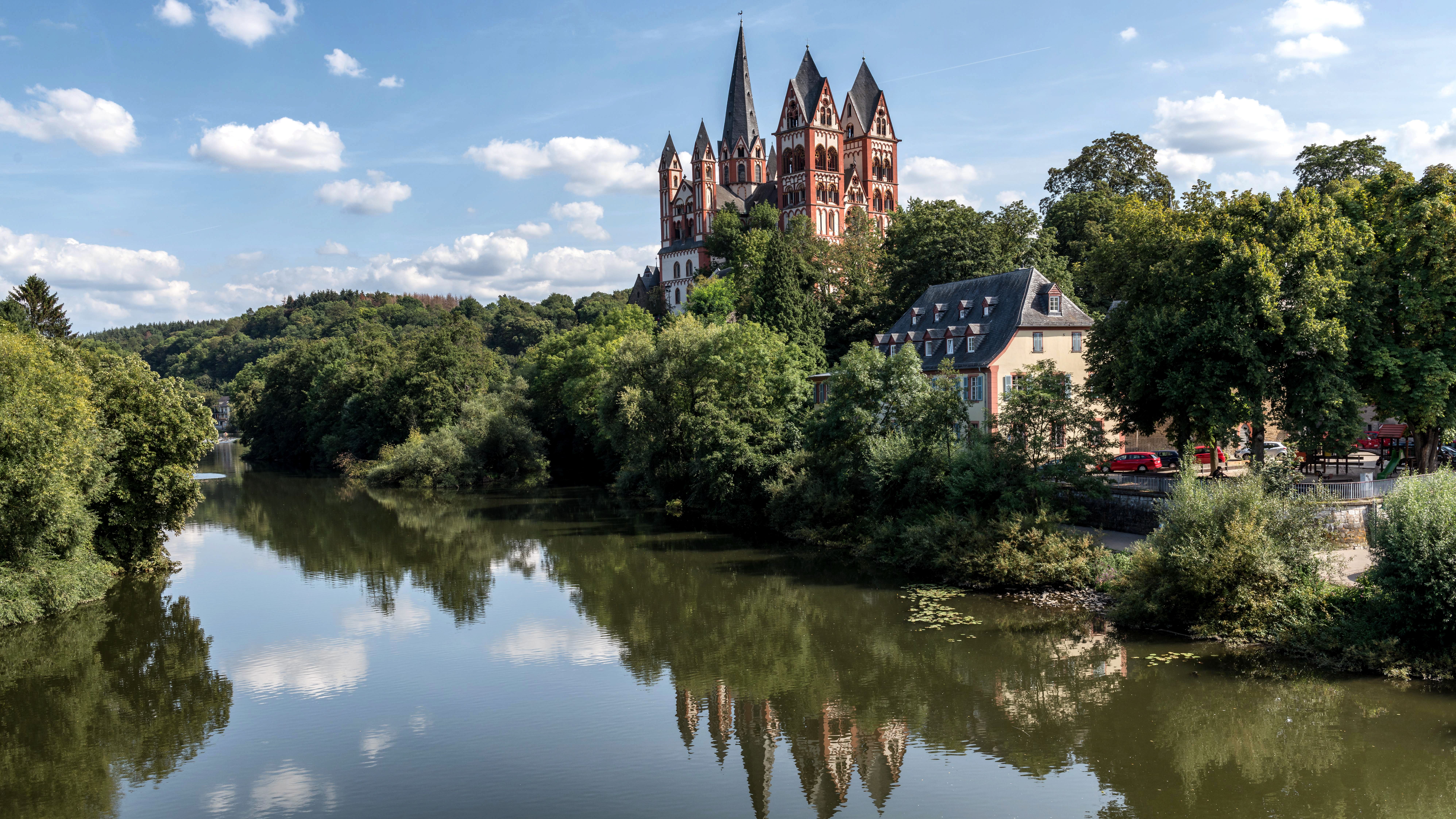
Marburg an der Lahn is one of those rare German towns that feels arranged by a novelist: steep lanes, timber-framed houses, church spires, and a castle watching from above. Long associated with Philipps-Universität, founded in 1527 and among Germany’s oldest Protestant universities, Marburg has for centuries balanced scholarship with fairy-tale scenery.
Its old town rises dramatically up the hillside, which means every walk comes with a view and every view seems to hold another rooftop, stairway, or tower. The Brothers Grimm studied in Marburg, and many visitors still feel that the city’s winding alleys and gabled houses belong in the margins of a folktale.
For a 2-day Marburg itinerary, the city works especially well because it is compact, walkable, and well connected by rail from Frankfurt. Expect cobblestones, some steep climbs, and a relaxed pace rather than a checklist sprint; comfortable shoes are essential, and a light jacket is wise in Hesse’s changeable weather. Local menus often feature regional German fare, seasonal asparagus in spring, sausages, schnitzel, and excellent cakes in old-world cafés.
Marburg an der Lahn
Marburg is small enough to feel intimate and layered enough to reward curiosity. It is a place for travelers who enjoy church bells, university courtyards, old staircases, and lingering over coffee before wandering into a museum almost by accident.
The main draw is the Oberstadt, the upper old town, where narrow lanes and half-timbered façades create the city’s most memorable scenes. Above it all sits Landgrafenschloss Marburg, the castle, while below runs the Lahn River with quieter promenades and green space.
Dining here tends toward cozy taverns, historic inns, student-friendly cafés, and a handful of modern spots woven into old buildings. Because this is a university town, the food scene is more lively than many travelers expect, especially around the market square and lower town streets.
Where to stay: Browse VRBO stays in Marburg an der Lahn for apartments in and around the old town, or compare central hotels via Hotels.com Marburg listings. Staying near the station is convenient for arrival and departure, while staying closer to the Oberstadt gives you the most atmospheric evenings.
Getting there: The simplest route is usually to fly into Frankfurt and continue by train to Marburg. Search European flights on Omio flights and rail options on Omio trains; Frankfurt Airport to Marburg by train typically takes about 1.5 to 2 hours depending on connections, with fares often starting around €20-€45 when booked in advance.
Activity note: The provided Viator inventory for this destination is largely centered on Munich, Berlin, and Frankfurt day tours rather than Marburg itself. For travelers extending their Hesse trip before or after Marburg, the most relevant option is the Frankfurt-based Rhine excursion below.
- Rhine Valley Trip from Frankfurt including Rhine River Cruise — a worthwhile add-on if you arrive through Frankfurt and want to pair Marburg’s medieval lanes with one of Germany’s classic river landscapes.

Day 1: Arrival and the Upper Town
Morning: This is your travel morning, so keep expectations light and focus on arriving smoothly in Hesse. If you are coming from Frankfurt Airport or central Frankfurt, use Omio trains to compare departures to Marburg; most rail journeys take roughly 90-120 minutes and are the most practical option for this Germany city break.
Afternoon: Arrive in Marburg, check into your accommodation, and begin with a gentle orientation walk through the lower town before climbing toward the Oberstadt. Head for Marktplatz, the old market square, where the Rathaus with its tower and clock gives you the classic Marburg postcard view and immediately introduces the city’s medieval character.
Take time to wander the lanes around Barfüßerstraße, Markt, and the stairways threading uphill between old houses. The pleasure here lies in the details: crooked beams, small shopfronts, student life moving through ancient streets, and sudden openings in the urban fabric that reveal distant hills.
For a late lunch or early snack, consider a café stop in the old town. A traditional German café is the right choice on arrival day because Marburg rewards lingering rather than rushing; order soup, a seasonal tart, or coffee and cake so you can settle into the city’s pace.
Evening: Spend your first evening at Landgrafenschloss Marburg, either touring if timing allows or simply walking up for the panoramic views over red roofs and church towers. The castle’s position explains the city at a glance: Marburg is vertical, defensive, scholarly, and theatrical all at once.
Before dinner, continue to the exterior viewpoints near the castle terrace and then descend slowly through the illuminated old town. If energy remains, make a short detour to Elisabethkirche from the outside; this early Gothic church is one of Marburg’s most important monuments and looks especially striking in softer evening light.
For dinner, choose a classic Hessian-German restaurant in or near the center and order something regionally grounded such as schnitzel, roast pork, or a hearty vegetarian dumpling dish if available. Marburg’s best meals tend to be in historic interiors with wood beams and a local crowd, making your first night feel rooted in place rather than generic.
For an after-dinner drink, look for a wine bar, beer tavern, or student-friendly pub near the Oberstadt. Because Marburg is a university town, evenings have a gentle hum rather than big-city noise, which suits a short cultural getaway perfectly.
Day 2: Castle, Elisabethkirche, River Walk, and Departure
Morning: Begin with breakfast at a local bakery-café and keep it distinctly German: fresh Brötchen, butter, jam, cheese, and strong coffee. If you prefer a slower start, choose a café with outdoor seating so you can watch the town wake up beneath the old façades.
After breakfast, visit Elisabethkirche, one of Germany’s earliest pure Gothic churches and a major pilgrimage site in the Middle Ages. Even travelers who are not usually church-focused tend to appreciate it here, because the building is not just beautiful; it tells the story of Marburg’s religious and political importance across centuries.
Continue with any castle interiors or museum sections you missed on Day 1. The exhibits help bring substance to the romantic skyline, adding context on regional rulers, sacred art, and the town’s long role in Hessian history.
Afternoon: Before departure, shift from monuments to atmosphere with a stroll along the Lahn River. The flatter riverside paths offer a welcome contrast to the steep old town and are ideal for a final look back at Marburg’s layered silhouette.
For lunch, pick a relaxed spot serving German standards, soups, salads, or seasonal plates, especially if you are catching a train later in the day. A final lunch in Marburg is best kept unhurried but central, so you can retrieve your luggage easily and leave without stress.
If you have an extra hour, browse independent shops or bookstores tied to the university-town spirit. Marburg’s appeal is not just in its headline sights but in these quieter details: old academic buildings, tucked-away courtyards, and the feeling that history here is still lived in rather than staged.
Evening: Your trip concludes with an afternoon departure, so use the late day for your rail journey onward. For trains back toward Frankfurt or elsewhere in Germany, compare schedules on Omio; if your onward route by bus is more convenient, check Omio buses as well.
In just two days, Marburg gives you a rewarding concentration of medieval architecture, university history, river scenery, and regional food without the fatigue of constant transit. It is the kind of short break that feels fuller than it looks on paper, and many travelers leave already planning a longer return to Hesse.
This 2-day Marburg an der Lahn itinerary is best for travelers who want a compact Germany getaway shaped by old stones, hillside views, and a deeply walkable historic center. Come for the castle and half-timbered streets, stay for the calm rhythm of a university town that knows exactly how to reveal itself slowly.