
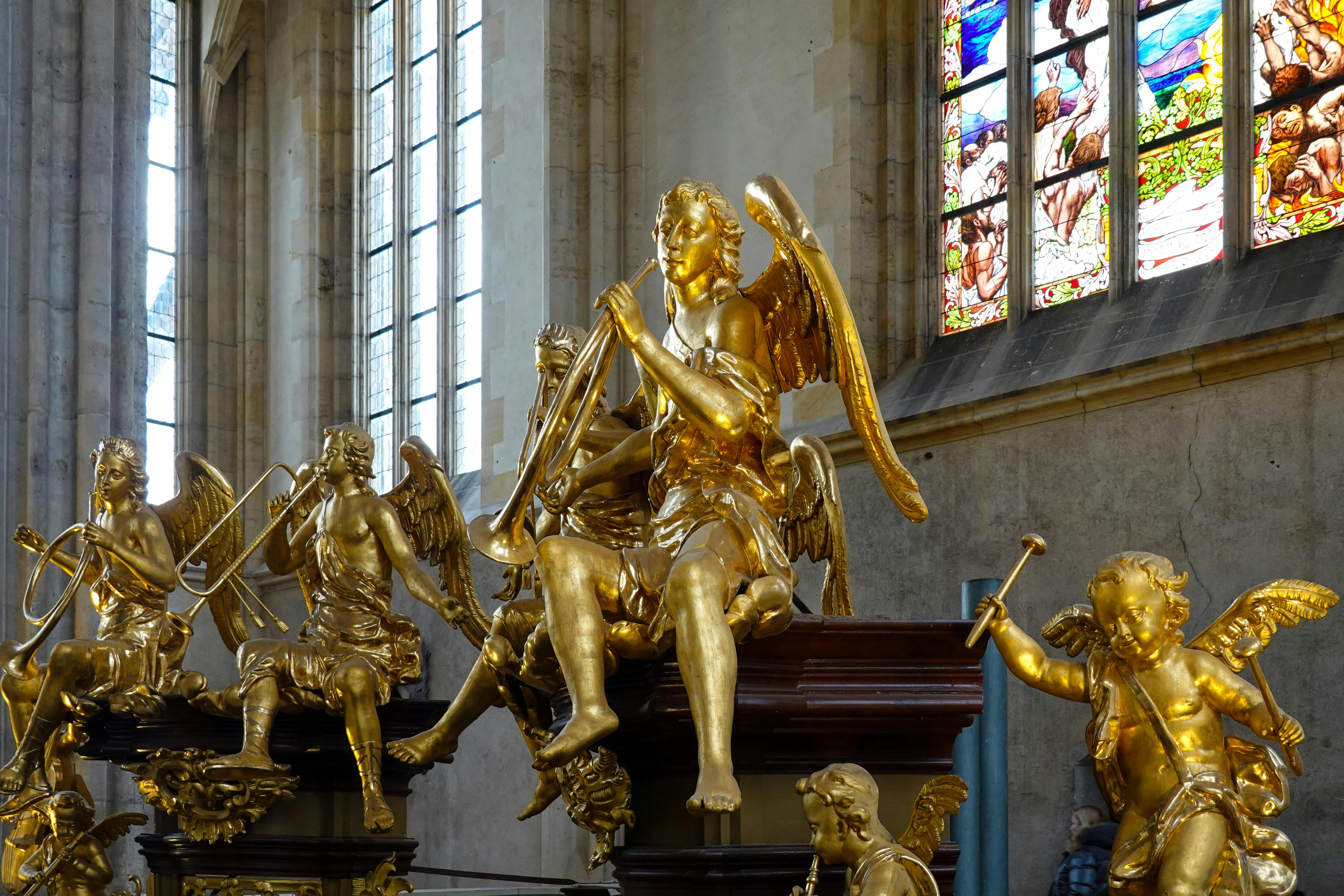
Once a silver-boom rival to Prague, Kutná Hora blossomed in the 13th–15th centuries, minting the mighty Prague groschen and funding soaring churches. Its historic core and surrounding Sedlec quarter are UNESCO World Heritage Sites, celebrated for Gothic splendor and extraordinary craftsmanship.
Two icons define a visit: St. Barbara’s Church, a filigreed Gothic masterpiece built by miners for their patron saint, and the Sedlec Ossuary, whose haunting chandeliers and altars are fashioned from the bones of an estimated 40,000–70,000 people. Between them, cobbled lanes reveal burgher mansions, medieval fountains, and Baroque statuary with wide-angle valley views.
Practical notes: Kutná Hora is an easy train ride from Prague (about 1 hour). Wear good shoes for cobblestones and the mine tour, carry some Czech crowns (CZK), and check seasonal hours—many museums shorten opening times in winter. Reserve timed entries for the Ossuary and the Czech Museum of Silver’s mine tour, especially on weekends.
Kutná Hora
Medieval wealth left Kutná Hora with a skyline of spires, guild houses, and Jesuit grandeur. The Italian Court tells the story of coin minting, while Hrádek houses the Czech Museum of Silver—and a vivid subterranean mine tour with helmet and lamp.
Food and drink are robust and local: roast duck with dumplings, svíčková (beef in creamy sauce), and crisp lagers from Pivovar Kutná Hora. For views, few terraces beat those along Barborská Street facing St. Barbara’s flying buttresses at golden hour.
- Top sights: St. Barbara’s Church, Sedlec Ossuary, Cathedral of the Assumption (Sedlec), Italian Court (Vlašský dvůr), Hrádek & underground mine, Jesuit College promenade, Stone House, Stone Fountain, Plague Column.
- Local flavors: Taste Kutná Hora beer at its taproom; try Moravian/Central Bohemian wines at intimate bars; seek poppy-seed or plum koláče at family-run bakeries.
- Fun fact: During its silver heyday, Kutná Hora’s mint standardized the Prague groschen, a currency that fueled Bohemia’s medieval economy and clout.
Where to stay (browse and book): For Old Town convenience, look near Barborská, Husova, or the main square. Good-value classics include small heritage hotels and pensions such as Hotel U Kata, Hotel Medinek Old Town, Pension Barbora, and family-run B&Bs. Compare options on:
Getting there (from Prague): Take a direct train from Praha hl.n. to Kutná Hora hl.n. in ~55–70 minutes, then a 5-minute local shuttle to Kutná Hora město (walkable Old Town). Expect about 120–180 CZK one way ($5–8). Search times and tickets on Omio Trains (Europe). Buses via Prague’s Florenc/Háje take ~1h15–1h40; compare on Omio Buses (Europe). Flying into Prague? Check fares on Omio Flights (to/from Europe), then continue by rail.
Day 1: Old Town Arrival, Italian Court, and Gothic Vistas
Afternoon (arrival): Arrive in Kutná Hora město station and drop bags. Start with a pick-me-up at Blues Café (a local favorite for espresso and house cakes) or Café 21 on Palackého náměstí for a koláč and seasonal tart. Stroll the Old Town: admire the late Gothic Stone House (Kamenný dům) and the octagonal Stone Fountain—a 15th-century public waterwork that still anchors the square.
Afternoon continued: Head to the Italian Court (Vlašský dvůr), once the royal mint and seat of the central mint master. Exhibits trace the Prague groschen and medieval metallurgy; guided tours often include a peek at minting rooms and a ceremonial hall—aim to enter by mid-afternoon to catch the last tour. On your way out, note the Baroque Plague Column and the dramatic sweep of Barborská Street toward St. Barbara’s Church.
Evening: Time golden hour for the Jesuit College promenade: a ridge-top walk lined with Baroque statues and valley views. Dinner at Dačický Restaurant—wood-paneled, convivial, and known for roast duck with red cabbage, wild game in autumn, and house-made potato pancakes. Beer lovers should sample Pivovar Kutná Hora’s crisp 10°/12° lagers on tap; for something cozier, cap the night with a glass of Frankovka or Riesling at a local wine bar highlighting Central Bohemia and Moravia.
Day 2: Sedlec Ossuary, St. Barbara’s, and the Silver Mine
Morning: After breakfast at Café 21 or a neighborhood bakery, make for Sedlec (walk ~25 minutes, quick local train, or short bus). Visit the Sedlec Ossuary—a small chapel adorned with human bones arranged into chandeliers, coats of arms, and candelabras by woodcarver František Rint in the 1870s. Pair it with the nearby UNESCO-listed Cathedral of the Assumption, whose airy Baroque-Gothic nave and reconstructed vaulting testify to Sedlec’s Cistercian past.
Afternoon: Return to the historic core for the headline act: St. Barbara’s Church, a miners’ votive marvel with flying buttresses and stained glass celebrating local guilds. Walk the terrace along the Jesuit College—now GASK, a contemporary art gallery—before lunch with views at U Varhanáře (try the pork neck with creamy horseradish and a seasonal salad) or rustic-grill dishes at Restaurace V Ruthardce in a medieval house.
Afternoon continued: Dive into the city’s lifeblood at Hrádek – Czech Museum of Silver. Book the underground mine tour: don a helmet and lamp, slip through 70–80 cm passages, and see tool marks that trace centuries of extraction; it’s immersive, not ideal for claustrophobes, and usually takes ~60–70 minutes. Wear sturdy shoes; English tours have set times and often sell out on weekends.
Evening (departure day): If you have time before your afternoon train, wander quiet lanes to St. James Church, whose asymmetrical tower dominates the skyline. For a final taste, share Moravian cheese spread (škvarková pomazánka) and a half-liter at the Pivovar Kutná Hora taproom, or squeeze in a short vineyard tasting if Vinné sklepy Kutná Hora has an open session that day. Depart by rail back to Prague (~1h; check Omio Trains).
Eating & Drinking Cheat Sheet
- Breakfast/Coffee: Blues Café (espresso, layered tortes), Café 21 (house cakes, good filter coffee).
- Lunch with views: U Varhanáře (classic Czech plates, terrace by St. Barbara’s), Barborský dvůr (grilled meats, soups, courtyard seating).
- Dinner: Dačický Restaurant (hearty Czech mains, Kutná Hora beer), Restaurace V Ruthardce (Medieval-style grill, cozy vaulted rooms).
- Drinks: Pivovar Kutná Hora taproom (local lagers), intimate wine bars pouring Central Bohemian/Moravian wines; ask for Müller-Thurgau, Riesling, or Blaufränkisch (Frankovka) by the glass.
Transport Tips Inside Kutná Hora
- Old Town is walkable; Sedlec is ~2 km—use the local shuttle train between Kutná Hora hl.n., Sedlec, and město, or hop a city bus (tickets from kiosks or on board).
- Trains to Prague run at least hourly; plan a mid-afternoon departure on Day 2. Compare schedules on Omio Trains.
Optional Add‑Ons Around Bohemia (Pre/Post Trip from Prague)
Have an extra day based in Prague and want to widen the lens on Bohemia? These curated experiences pair well with a Kutná Hora getaway.
- Private Bohemia Wine Tour from Prague with Gourmet Tastings — Explore a Renaissance château and volcanic-slope wineries north of Prague; great for Central European varietals and history-rich cellars. Book on Viator

Private Bohemia Wine Tour from Prague with Gourmet Tastings on Viator - Pilsen Highlights Tour & Pilsner Brewery Tour (with lunch and tasting) — Trace the birth of the world’s first Pilsner style and see Pilsen’s historic core; expect cellar coolness, copper kettles, and unfiltered pours. Book on Viator

Pilsen Highlights Small-Group Tour and Pilsner Brewery Tour including Lunch and Beer Tasting on Viator - Karlovy Vary Hot Springs Tasting Tour — A classic spa-town ramble through colonnades to sip mineral springs and learn why European elites once wintered here. Book on Viator

Karlovy Vary Hot Springs Tasting Tour on Viator
Good to know: Many Kutná Hora museums reduce hours in winter; the mine tour has age/health restrictions. Dress respectfully in active churches. Restaurants commonly accept cards, but small cafés may be cash-preferred.
In two days, Kutná Hora delivers a rich braid of Gothic art, medieval engineering, and present-day Bohemian hospitality. From the bone-bedecked chapel at Sedlec to the light-bathed nave of St. Barbara’s and the clink of glasses over hearty suppers, this is history you can feel—and taste—every step of the way.