

Kurashiki is a former rice and cotton hub whose fortunes flowed along a willow-lined canal. In the Edo period it was a shogunate-controlled storehouse town; today its impeccably preserved white-walled kura warehouses, tile-roofed townhouses, and stone bridges make the Bikan Historical Quarter one of Japan’s most evocative old towns.
The city is also a launch point for Kojima, the birthplace of Japanese denim. You’ll find artisans turning out indigo-dyed textiles, sashiko stitching, and selvedge jeans coveted worldwide—plus whimsical “denim” soft-serve and souvenirs along Jeans Street. Art lovers shouldn’t miss the Ohara Museum of Art, Japan’s first private Western art museum.
Kurashiki rewards slow travel: strolls by the canal, cozy kissaten coffee houses, relaxed lunches, and hands-on workshops. Expect seasonal fruit parfaits, Okayama-style bara-zushi, and local soy-based cuisine. Most sights cluster in the Bikan Quarter, walkable from Kurashiki Station; trains run frequently to Kojima. Cash is handy for small shops, and comfortable shoes are essential for cobblestones.
Kurashiki
Welcome to a canal town that wears its history lightly. Between kura storehouses you’ll find indie galleries, denim ateliers, and tea rooms tucked inside centuries-old townhouses. Come for the scenery; stay for the craftsmanship and the coffee.
- Top sights: Bikan Historical Quarter, Ohara Museum of Art, Achi Shrine (for views at sunset), Kurashiki Ivy Square, Kurashiki Canal boat ride.
- Unique experiences: Kojima Jeans Street, indigo and sashiko workshops, rickshaw tours along the canal, fruit parfaits made with Okayama peaches and muscat.
- Local flavors to try: Okayama-style bara-zushi (scattered sushi), demi-katsu (pork cutlet with demi-glace), soy-based ramen and set meals, seasonal fruit desserts.
Where to stay (mid-range friendly): Base yourself in or near the Bikan Quarter for postcard views and easy walks, or by Kurashiki Station for quick rail access.
- Search Kurashiki stays on VRBO (machiya townhouses and apartments near the canal).
- Search Kurashiki hotels on Hotels.com (look for Bikan-area boutiques or station-side business hotels).
Getting to Kurashiki (time/cost estimates):
- By train: From Shin-Osaka to Okayama on the Shinkansen ~50 minutes (from ~¥6,000–7,500 one-way), then JR Sanyō Line local to Kurashiki ~17 minutes (~¥320). From Hiroshima ~40 minutes to Okayama, then 17 minutes. From Tokyo ~3.5–4 hours to Okayama, then 17 minutes. Book/search with Trip.com Trains.
- By air: Fly to Okayama Momotaro Airport (HND–OKJ ~1h15). Airport bus to Kurashiki is ~40–50 minutes. Compare fares via Trip.com Flights or Kiwi.com.
Day 1: Bikan Quarter Classics, Crafts, and Izakaya Night
Morning: Travel to Kurashiki. Drop bags at your hotel near the Bikan Quarter or Kurashiki Station. If you’re early, begin with a contemplative coffee at Kurashiki Coffee-kan, a retro kissaten known for siphon brews and dark roasts, or at ivy-clad El Greco beside the Ohara Museum—both atmospheric, photographable starts to the trip. Budget: ¥600–900 per drink.
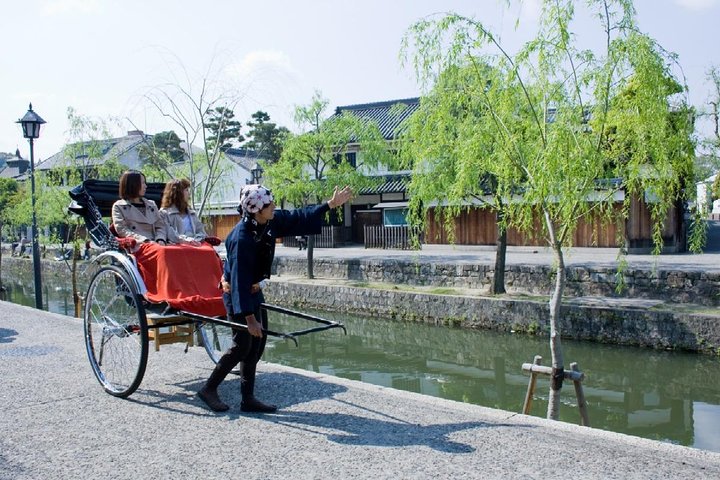
Afternoon: Orient yourself with a rickshaw ride gliding past willows, white-walled kura, and stone bridges. Your driver shares local history and hidden corners you might miss on foot.
Kurashiki Rickshaw Tour (Viator)
For lunch, try Kurashiki Hishio in a historic storehouse, famous for soy-based ramen and set meals using local shoyu—deep, umami-rich and perfect with pickles and rice (¥1,100–1,600). Then browse the Ohara Museum of Art, home to El Greco, Monet, and Matisse, plus exceptional craft galleries. Pop into Kurashiki Ivy Square—a red-brick former mill turned cultural complex—for photos and boutiques.
Late Afternoon (Hands-on craft): Stitch your own piece of Kurashiki using iconic Kojima denim. This sashiko workshop is both meditative and meaningful—a unique souvenir that nods to the city’s textile heritage.
Sashiko Denim Workshop in Kurashiki (Viator)

Refuel with a stroll and a seasonal fruit parfait—Okayama is fruit heaven. Try Kurashiki Momoko for peach or muscat creations layered with sorbet and cream (¥1,200–1,800). Coffee lovers can also duck into the beautifully restored Starbucks Kurashiki Bikan for a machiya-meets-modern pick-me-up.
Evening: Eat like a local on a private izakaya walk through the lantern-lit lanes of the Bikan District. Sample sashimi, regional sake, obanzai-style small plates, and maybe demi-katsu—your guide tailors stops to taste and season.
Kurashiki Bikan Izakaya Walk, 3h (Viator)

Prefer to wander independently? Look for noren-curtained spots along Honmachi-dori; pair grilled yakitori with local sake and finish with a bowl of soy-scented ramen near the station. Expect ¥3,000–5,500 per person depending on drinks.
Day 2: Kojima Jeans Street, Okayama Flavors, and Canal Farewell
Morning: Hop a JR local to Kojima for denim culture. Trains via Chayamachi take ~30–40 minutes (about ¥500–600; check Trip.com Trains). Stroll Kojima Jeans Street, where ateliers sell selvedge jeans, shuttle-loom scarves, and indigo-dyed accessories—many shops open 10:00. Try the playful “denim” soft-serve (naturally tinted) or a hand-drip coffee from a roaster on the strip. If skies are clear and time allows, taxi or bus up to Mt. Washuzan for sweeping Seto Inland Sea views and the Seto Ōhashi Bridge.
Afternoon (late morning to lunch): Return to the Bikan Quarter for a foodie immersion—learn to make Okayama-style bara-zushi, a colorful, festival-style scattered sushi topped with local seafood and vegetables. It doubles as lunch and a cultural deep-dive.
Cooking and Eating Bara Sushi: A Local Dish from Okayama (Viator)

After lunch, savor a last amble along the canal. If time permits before your departure, glide on the Kurashiki Canal boat (boats often run hourly; cash fares) and climb the stone steps to Achi Shrine for a panoramic farewell.
Evening (departure day): Most travelers depart mid–late afternoon. Pick up gifts: indigo handkerchiefs, sashiko coasters, muscat jelly, or kibi-dango sweets. Head to Kurashiki Station for trains, or take the airport bus to OKJ if flying. For last-minute bookings, compare on Trip.com Flights or Kiwi.com.
Optional/Swap-In Experiences (fit them to your pace)
Prefer a guided overview on Day 1? Consider a licensed guide-led walk to condense history and hidden spots, or trade Kojima for extra museum time if you’re art-focused. Coffee fans can add another kissaten stop, and craft lovers might sprinkle in a lantern- or weaving-themed studio browse in the Bikan area.
Quick Bites and Coffee Shortlist
- Kurashiki Coffee-kan: Classic kissaten ambience, siphon coffee, and light sweets.
- El Greco: Ivy-draped café by the Ohara Museum, beloved for cakes and nostalgic interiors.
- Kurashiki Momoko: Seasonal fruit parfaits showcasing Okayama peaches and muscat grapes.
- Kurashiki Hishio: Soy-forward ramen and teishoku in a renovated kura—local flavors in a historic setting.
One More Special Night Idea
If you’re staying an extra evening or traveling as a couple, book a serene hour at Japan’s first private observatory—recliners, stars, and refreshments included.
Kurashiki Private Romantic Night in the Observatory Recliners (Viator)

Estimated budget (mid-range, per person per day): Meals ¥3,500–6,500; coffee/dessert ¥1,000–1,800; activities/workshops ¥3,500–9,000; local trains/bus ¥600–1,200. Many museum/workshop sites are cash-friendly; cards are increasingly accepted in shops and restaurants.
Viator activities included in this itinerary:
- Kurashiki Rickshaw Tour
- Sashiko Denim Workshop in Kurashiki
- Kurashiki Bikan Izakaya Walk (Private)
- Cooking and Eating Bara Sushi
This 2-day Kurashiki plan blends photogenic streets, artisan craft, denim heritage, and memorable meals—at a comfortable, mid-range pace. With hands-on workshops and a guided izakaya evening, you’ll leave with stories, skills, and flavors that stick.