
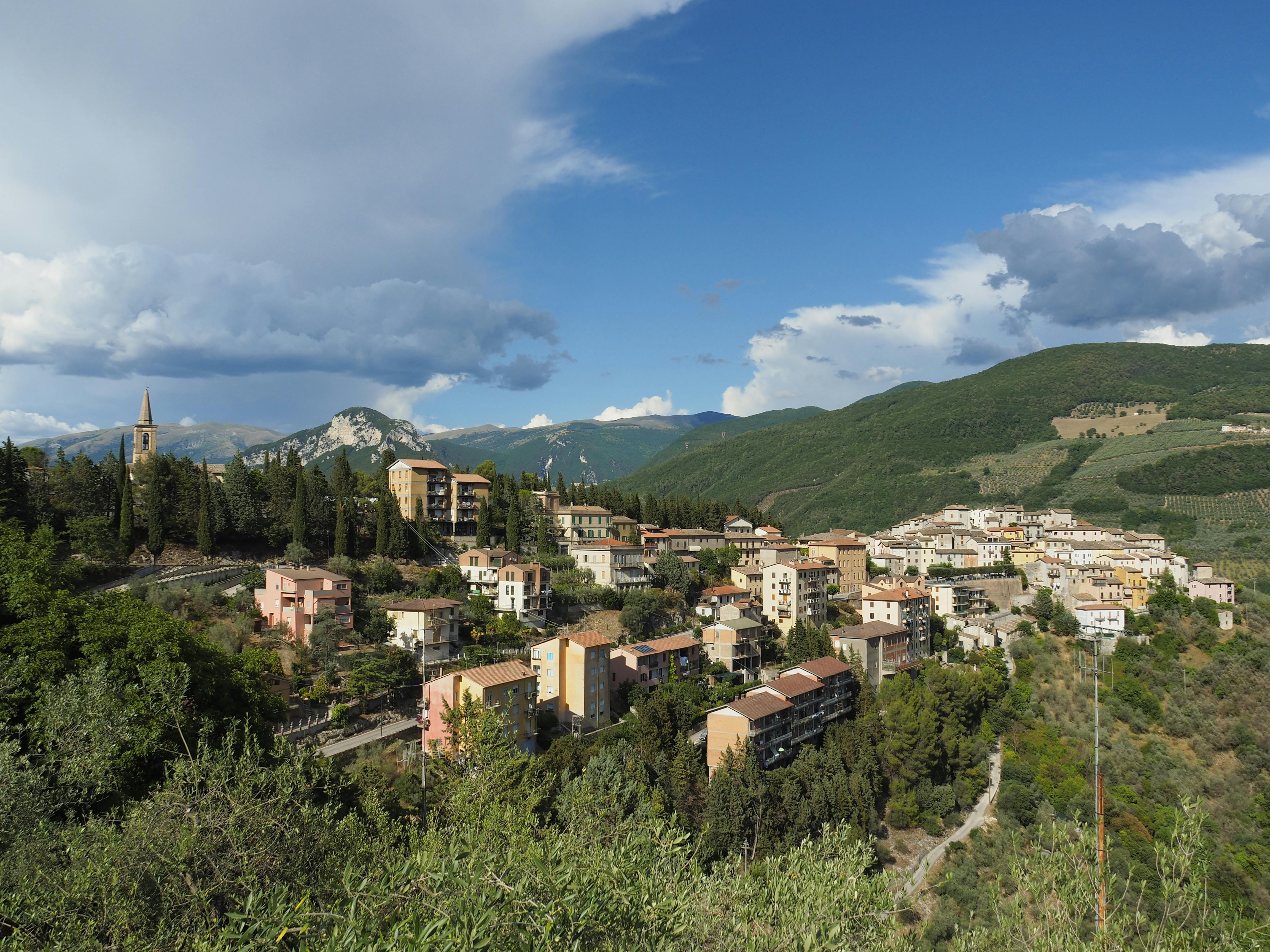
Umbria has long been called Italy’s green heart, a land of forested hills, olive groves, and medieval towns that seem to rise directly out of the stone. For a two-day trip, Assisi is the smartest base: historically rich, visually unforgettable, and compact enough to reward even a brief visit.
Assisi is known around the world as the city of Saint Francis, yet it is more than a pilgrimage destination. Roman ruins lie beneath piazzas, pink-and-white basilicas crown the hillside, and the town’s streets open onto sweeping Umbrian valleys that change color with the light.
Practical notes matter here. Expect uphill walking on polished stone streets, wear shoes with grip, and book major tours in advance in high season and around religious holidays; Umbrian cuisine is a pleasure in itself, with truffles, lentils, olive oil, grilled meats, handmade pasta, and excellent local wines appearing even in modest trattorie.
Assisi
Assisi is one of the great hill towns of central Italy, but its mood is unusually serene. The town has an inward, reflective quality, yet it is never dull: church bells echo through medieval lanes, small wine bars pour Sagrantino and Grechetto, and broad terraces reveal the valley below like a Renaissance backdrop.
The headline sight is the Basilica di San Francesco, whose layered interiors hold some of the most important fresco cycles in Italy. But Assisi also rewards wandering: the Piazza del Comune, the Temple of Minerva’s Roman columns, Rocca Maggiore’s commanding views, and quiet lanes lined with artisan shops create the kind of place where a short stay still feels full.
For accommodations, start with VRBO Assisi stays if you want an apartment in or near the historic center, especially useful for a slower breakfast and extra space. If you prefer a hotel search, browse Hotels.com Assisi options for converted palazzi, spa hotels, and central properties within walking distance of the basilicas.
To reach Umbria from elsewhere in Europe, use Omio flights to compare routes into Rome or Perugia, then continue by rail. For train planning within Italy, Omio trains is the most useful starting point; from Rome to Assisi, expect roughly 2.5 to 3.5 hours depending on the connection, often around $20-$45, while Perugia to Assisi is much shorter, generally under 30 minutes by regional train plus local transfer.
If you want a guided introduction to the city’s essentials, these Viator experiences are particularly well suited to a short stay:
- Private St. Francis Basilica of Assisi and City Walking Tour — ideal if you want focused historical context and a more personal pace.
- Small Group Tour of Assisi and St. Francis Basilica — a strong option for first-time visitors who want the major landmarks explained clearly.
- Truffle Hunt & Bio Lunch in Assisi — a memorable Umbrian food experience if you prefer countryside flavor over museum time.
- Pasta Making Class with Mamma in Assisi — excellent for travelers who want a warm, domestic, deeply local meal experience.


For coffee and breakfast, begin at Pasticceria Sandri-style local counters if you find a classic bar en route: in Umbria, the ritual is simple and satisfying, usually cappuccino and a cornetto taken standing at the bar. In Assisi itself, look for a central caffè serving fresh pastries and good espresso near Piazza del Comune; if you prefer a quieter start, choose your hotel breakfast only if it offers local cakes, fruit, pecorino, and Umbrian jams rather than a generic buffet.
For lunch, choose a trattoria that leans Umbrian rather than tourist-generic. Dishes to look for include strangozzi al tartufo, torta al testo stuffed with local greens or cured meats, lenticchie, and tagliata with rosemary; these are the flavors that define the region and make Assisi worth lingering over.
For dinner, prioritize a vaulted cellar, a terrace, or a stone-walled dining room with a concise menu and local wines by the glass. Roast pigeon, wild boar ragù, handmade pasta, and desserts made with almonds or vin santo appear often, and a bottle of Montefalco Rosso or Sagrantino is the right companion if you want to eat as Umbrians do.
Day 1: Arrival in Assisi and the Historic Center
Morning: This is primarily a travel morning. If you are arriving via Rome, plan a morning rail departure using Omio trains; most routes to Assisi take about 2.5 to 3.5 hours and usually cost around $20-$45 depending on timing and fare class.
Afternoon: Arrive in Assisi, check in, and ease into the town rather than rushing straight into major sightseeing. Start with a gentle walk through the upper streets toward Piazza del Comune, where the Roman Temple of Minerva still anchors the square with striking classical columns that remind you Assisi’s story did not begin in the Middle Ages.
Afternoon: Pause for a late lunch at a traditional Umbrian trattoria in the centro storico. Order strangozzi with black truffle or a plate of torta al testo with local salumi; these dishes are regional signatures, earthy and direct, and they immediately place you in Umbria rather than generic Italy.
Afternoon: After lunch, visit the Basilica di Santa Chiara, dedicated to Saint Clare, whose striped pink-and-white stone façade glows in late light. The church is quieter than San Francesco and offers a more intimate mood, along with a lovely panorama over the valley.
Evening: Spend golden hour walking up to Rocca Maggiore if energy allows. The climb is a little steep, but the reward is one of the finest views in Umbria: the town below, the broad plain beyond, and a sense of how Assisi watched over this landscape for centuries.
Evening: For dinner, choose a restaurant focused on Umbrian cooking and local wine. A good order would be crostini with chicken liver or truffle, pappardelle with wild boar ragù, and grilled lamb or tagliata; the cuisine here is less about elaborate sauces and more about excellent ingredients handled with confidence.
Evening: After dinner, take a slow passeggiata through the illuminated lanes around Via San Rufino and Piazza del Comune. Assisi at night is half the reason to stay overnight: day visitors thin out, the stone streets turn hushed, and the city’s spiritual gravity becomes palpable.
Day 2: St. Francis, Local Flavors, and Departure
Morning: Begin early at the Basilica di San Francesco, the essential sight of any Assisi itinerary. Go soon after breakfast to enjoy a calmer atmosphere, and if you want the art and symbolism properly explained, book the Small Group Tour of Assisi and St. Francis Basilica or the Private St. Francis Basilica of Assisi and City Walking Tour.
Morning: The basilica’s upper and lower churches reveal very different emotional registers, from luminous fresco cycles to more shadowed, devotional spaces. Even travelers who are not religious often find it overwhelming in the best sense, because the building sits at the crossroads of faith, politics, painting, and medieval imagination.
Afternoon: For your final Umbrian meal, choose between two excellent directions. If you want an immersive countryside experience and have arranged it in advance, the Truffle Hunt & Bio Lunch in Assisi is a beautiful way to spend your last hours, combining woods, food culture, and the region’s most famous ingredient.
Afternoon: If you would rather stay in town, opt for a relaxed lunch and then a hands-on culinary farewell with the Pasta Making Class with Mamma in Assisi. It is warm, sociable, and practical, and it leaves you with a recipe memory rather than just a photograph.
Afternoon: Before departing, use any remaining time for a final coffee and a few edible souvenirs: Umbrian olive oil, truffle products, lentils from Castelluccio if available, or local wines. Then make your way to the station or onward transfer; for departures across Italy or Europe, compare rail schedules with Omio trains and flight connections with Omio flights.
In just 2 days, Assisi offers what many travelers hope to find in a much longer Italy itinerary: layered history, serious art, soulful landscapes, and food with a strong sense of place. It is a compact Umbria escape that feels both restorative and richly textured, leaving you with every reason to return for a deeper journey through the region.