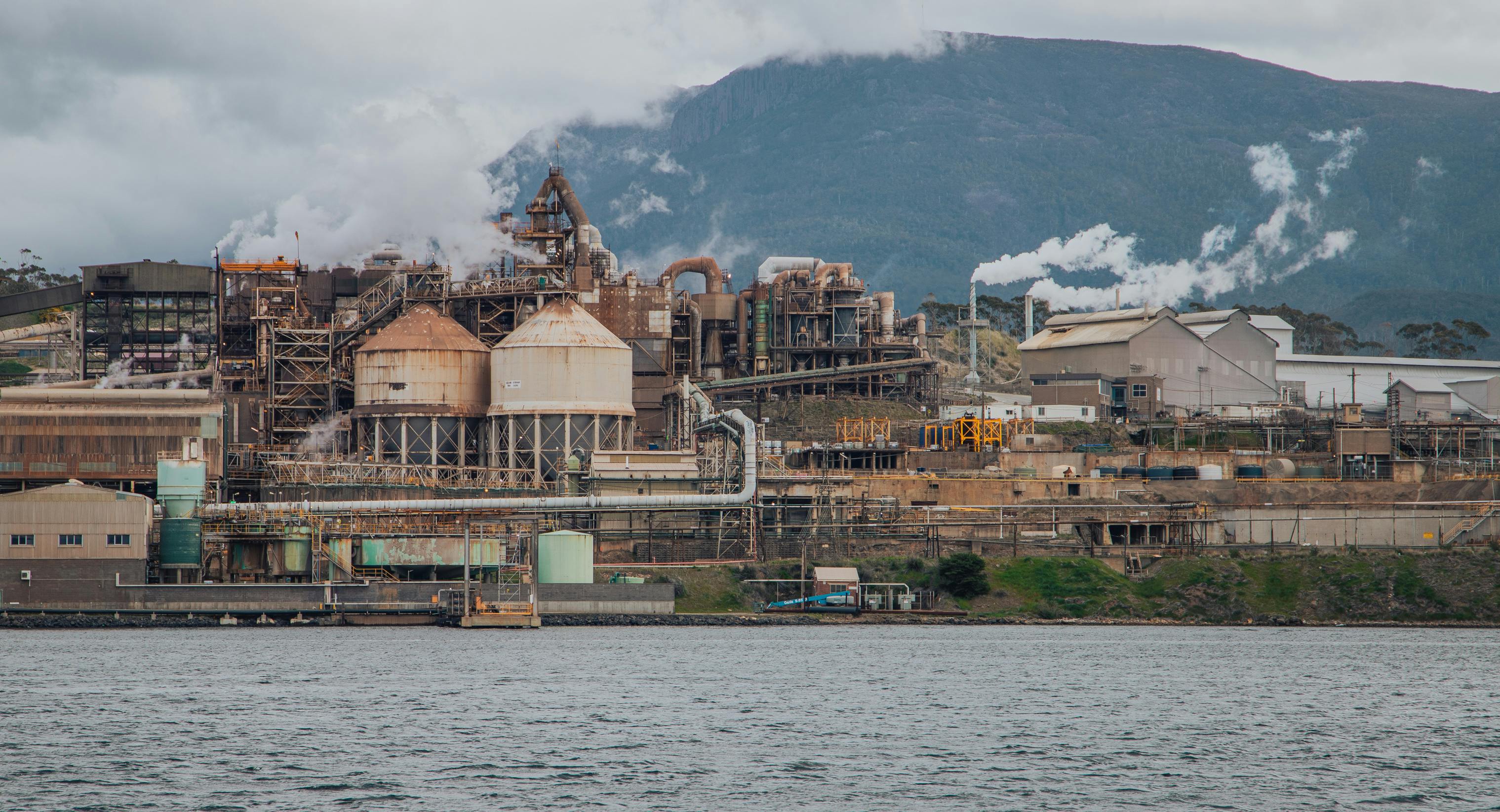
17 Days in Hobart: Tasmania's Capital, Coast, and Wild Interior
A slow, thorough loop through Hobart's harbour, its convict history, and the day trips that make Tasmania unforgettable, from MONA and Mount Wellington to Bruny Island, Freycinet, and Cradle Mountain.
17 days in Hobart
Hobart is Australia's second-oldest capital, founded as a British penal settlement in 1804 and still stitched together with sandstone warehouses, whaling-era wharves, and cottages that climb the hills above the Derwent River. It sits beneath kunanyi/Mount Wellington, a 1,271-metre massif that often wears snow in winter, and it has reinvented itself around one of the most talked-about art museums on earth, MONA.
For a city of roughly 250,000, Hobart punches far above its weight on food and drink: cool-climate pinot and sparkling from the Coal River and Derwent valleys, oysters and abalone from surrounding channels, world-class whisky, and a Saturday market at Salamanca that has run since 1972. It is also the natural launchpad for Tasmania's south and east, with Port Arthur, Bruny Island, Freycinet, Mount Field, and even Cradle Mountain all reachable as day trips.
Getting around is easy: the compact centre is walkable, a ferry runs to MONA, and a hire car unlocks the rest of the island (drive on the left, watch for wildlife at dusk). July is deep winter here, so pack for cold, short days, and possible snow on the mountain, but expect crisp light, roaring fires, roaring seas on the cruises, and far smaller crowds than summer.

Arrival, Salamanca Place & the Waterfront
Salamanca Place · Cheng Fei / CC BY-SA 2.0Drop your bags and walk straight to the waterfront to find your bearings. The sandstone Georgian warehouses of Salamanca Place, built for the whaling and shipping trade, are the obvious start.
Stroll the row of 1830s sandstone warehouses now filled with galleries, makers, and bars, then climb Kelly's Steps, a convict-cut stone staircase, up toward Battery Point for a first look over the harbour. Free and open-air, an ideal jet-lag walk.
A full-scale replica of Douglas Mawson's 1911-14 Antarctic expedition huts on the waterfront, a quick, atmospheric primer on Hobart's role as a gateway to Antarctica. Entry is about AUD 18 and it takes 30-45 minutes.
Ease into the trip with a drink by the water as fishing boats and yachts bob in Victoria and Constitution docks.
A glass-walled cocktail bar cantilevered over Brooke Street Pier with front-row Derwent views, perfect for a sunset drink on night one. Come for the martinis and the vantage point rather than a full meal.
A relaxed spot to sample Tasmanian whisky, gin, and craft beer if you'd rather ease in low-key. Rotating local pours and a warehouse vibe near the waterfront.
Keep the first night simple and Tasmanian, within easy walking distance of the harbour.
A small, acclaimed Italian-leaning restaurant on Elizabeth Street known for handmade pasta and a tight, seasonal menu. Book ahead; expect around AUD 90-120 per head for a serious first-night dinner.
A lively South American-inspired grill on Hunter Street beside the water, big on wood-fired meats and shared plates. Buzzy and dependable, good for an easygoing arrival meal.

Central Hobart, Battery Point & Salamanca Market
Battery Point · Cliffano Subagio / CC BY-SA 2.0Start with a proper Hobart flat white; the city takes its coffee seriously.
A bright Argyle Street favourite with excellent espresso and generous brunch plates. A local benchmark for good coffee in the CBD.
One of Hobart's original specialty roasters, small and serious, on Criterion Street. The place to go for a carefully pulled single origin.
A colourful, long-running cafe in Salamanca Square with hearty breakfasts, handy if you're heading straight to the market. Retro charm and reliable plates.
If it's Saturday, spend the morning at Salamanca Market; any other day, dive into the Tasmanian Museum and Art Gallery instead.
Running since 1972, this open-air market fills Salamanca Place every Saturday from 8:30am to 3pm with around 300 stalls of produce, crafts, woodwork, and street food. Free to wander; graze your way along with a coffee in hand.
Tasmania's flagship museum, free to enter, covering Aboriginal culture, colonial history, thylacine and natural history, and Tasmanian art across historic waterfront buildings. Allow 1.5-2 hours; generally open 10am-4pm and closed some Mondays off-season.
Climb into Battery Point, Hobart's best-preserved historic quarter, for lunch among the cottages.
A beloved Battery Point bakery-cafe known for pies, tarts, and pastries; the pork and fennel sausage roll and the pastries are local legend. Casual counter service, around AUD 15-25 for a light lunch.
A grand European-style bakery near the waterfront with sandwiches, quiches, and a jaw-dropping cake cabinet. A good all-rounder if you skip Battery Point until the afternoon.
Wander Battery Point's lanes on foot; it's tiny, walkable, and full of maritime history.
A compact museum in the historic Carnegie Building tracing Tasmania's ships, whalers, and shipwrecks, entry around AUD 12. Worthwhile for the seafaring context behind the whole waterfront.
Book somewhere that shows off modern Tasmanian cooking.
A tiny, communal-table Italian-inspired restaurant with a daily-changing menu and a cult following; arguably Hobart's most respected dining room. Very limited seats, so reserve well ahead; around AUD 90-120 per person.
An intimate, forward-thinking degustation restaurant championing Tasmanian produce and low-intervention wine. A splurge for a special night, best booked in advance.
A gastropub obsessed with ethical, local ingredients, from house-baked bread to nose-to-tail plates and Tasmanian beer. Relaxed, no-fuss, and consistently excellent value.
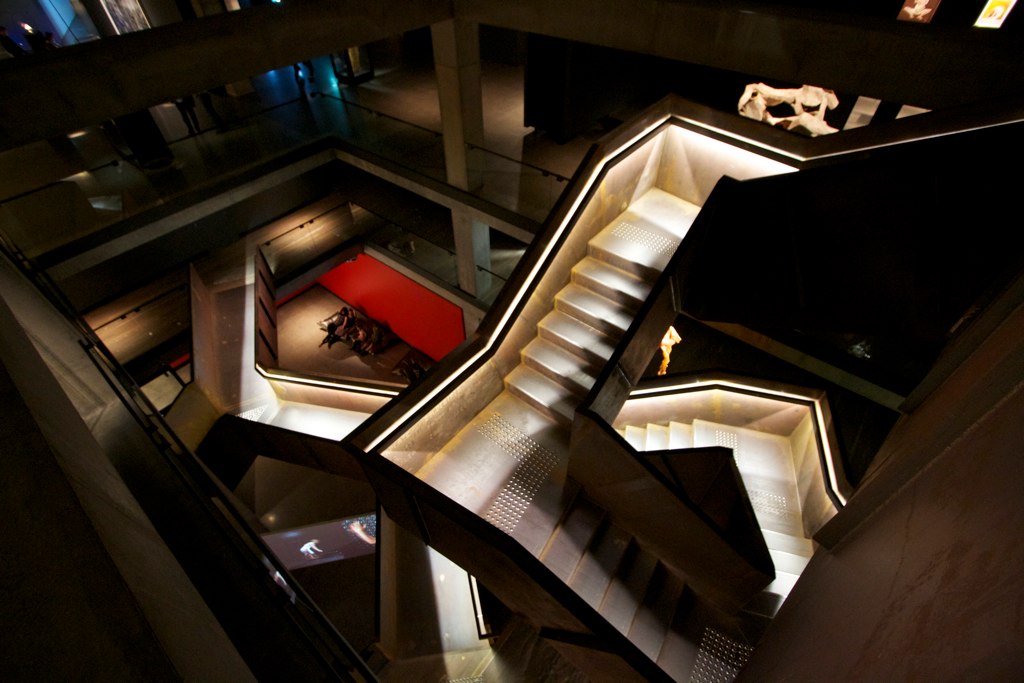
MONA: Museum of Old and New Art
Museum of Old and New Art · Rob Taylor / CC BY 2.0Fuel up before the ferry; the MONA visit is a half to full day.
A pocket-sized specialty coffee bar on Collins Street with some of the city's best pours and pastries. Quick, expert, and central to the ferry departure at Brooke Street Pier.
A creative, seasonally driven breakfast spot in the CBD known for inventive plates and great coffee. Good if you want a sit-down meal before art.
Take the MONA ferry up the Derwent, the only way to arrive that suits the museum's theatrics.
The camo-painted MONA ROMA ferry runs about 30 minutes up the river to the museum; standard return is around AUD 25, or upgrade to the 'Posh Pit' with drinks and canapes. Sit up top for views of the city and Mount Wellington.
MONA, David Walsh's subterranean 'temple of secular art', is confronting, funny, and unlike any museum you've seen. Give yourself several hours.
Carved into a sandstone cliff at Berriedale, MONA mixes ancient antiquities with provocative contemporary work across dim, labyrinthine levels. Entry is around AUD 40 for non-Tasmanians (free for locals); generally open Friday-Monday, closed Tuesday-Thursday, so check the day before you go.
Stay for lunch without leaving the art: Faro is a stylish tapas-and-cocktail bar wrapped around a James Turrell light work, while The Source is the more formal vineyard-view restaurant. Book The Source ahead on busy days.
Back in town, keep it relaxed after a big sensory day.
An elegant Italian dining room in the heritage Tasman hotel, wood-fired and generous, with strong Tasmanian produce and wine. Polished but not stuffy; around AUD 80-110 per person.
A pan-Asian small-plates restaurant with harbour views above Brooke Street Pier, praised for its dumplings and creative sharing menu. A refined but fun choice near the ferry.
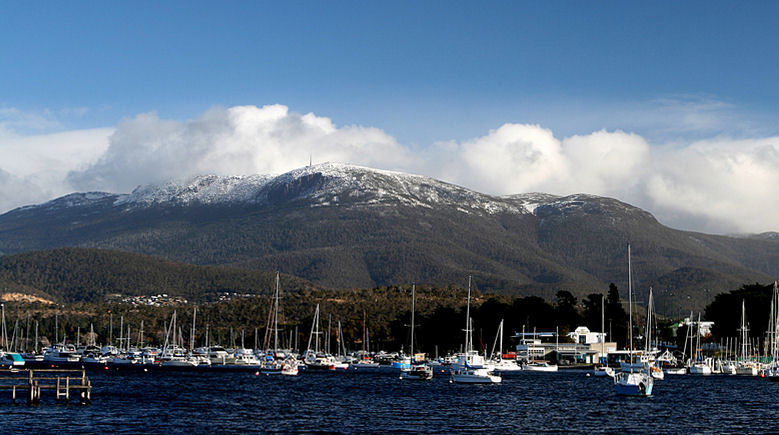
kunanyi/Mount Wellington & Cascade
Mount Wellington (Tasmania) · tubagooba / CC BY 2.0Grab a warming coffee before heading up the mountain, where it can be 10C colder and snowy in July.
A minimalist specialty cafe with meticulous coffee and pretty breakfast plates, a calm start before a big-view morning.
A long-standing, unpretentious cafe doing generous cooked breakfasts and good coffee. Solid fuel for a mountain day.
Get to the 1,271-metre summit of kunanyi/Mount Wellington for the definitive view over Hobart, the Derwent, and Bruny Island beyond. Choose the mode that suits you.
The official summit shuttle from the city, a 2.5-hour return with time at the top and commentary, no driving on the winding road required. An easy, affordable way up, especially if the road is icy.
Ride a bus to the top, then coast the mountain road down by bike with guides, finishing with a gentle rainforest section. One of Hobart's top-rated experiences and suitable for most fitness levels; dress very warmly in winter.
Come down to the foothills of South Hobart for lunch near the historic brewery.
Lunch in the shadow of Australia's oldest continuously operating brewery (est. 1824), a Gothic sandstone landmark below the mountain. Pub plates and estate beers in the garden or by the fire.
Pair the brewery with a sobering piece of Hobart's convict past just downhill.
A UNESCO-listed World Heritage convict site where thousands of women were imprisoned in the 1800s; the guided 'Her Story' dramatised tour is moving and superbly done. Entry around AUD 15, tours extra; allow 1-1.5 hours.
A guided walk through the historic brewhouse ending with tastings, roughly AUD 40 and about 1.5 hours. Book ahead as tours fill.
Head to buzzy North Hobart on Elizabeth Street, the city's best strip for casual, global eats.
A neighbourhood favourite doing wood-fired pizzas and Italian plates on the North Hobart strip. Warm, unfussy, and family-friendly.
An all-day eatery in a converted service station, popular for brunch through dinner with a relaxed, leafy courtyard. Great for a casual, crowd-pleasing meal.

Port Arthur & the Tasman Peninsula
Port Arthur, Tasmania · Martybugs at en.wikipedia / CC BY-SA 3.0Give a full day to the Tasman Peninsula, about 90 minutes southeast, where the UNESCO-listed Port Arthur convict settlement sits amid some of Australia's tallest sea cliffs. A guided tour handles the driving and adds a cruise; self-drivers can add stops like the Tessellated Pavement and Remarkable Cave.
A comprehensive coach day pairing plenty of time at Port Arthur Historic Site (with its harbour cruise past the Isle of the Dead) with Tasman Peninsula lookouts en route. The most balanced way to see history and coastline without driving.
For the most dramatic day, combine the Port Arthur site with a three-hour wilderness cruise beneath 300-metre dolerite cliffs, sea caves, and seal and seabird colonies, lunch included. Bundled up and thrilling, especially in winter swells.
Back in Hobart after a long day, keep dinner easy and comforting.
A snug wine bar and small-plates spot with a great by-the-glass list and Tasmanian produce. Ideal for an unwinding, low-key dinner.
Return to this produce-driven gastropub for hearty plates, house bread, and local beer by the fire. Reliable, warming, and good value after a big day out.

Bruny Island Food, Wildlife & Lighthouse
Lunawanna, Tasmania · JJ Harrison (https://www.jjharrison.com.au/) / CC BY-SA 2.5Bruny Island, reached by a short car ferry from Kettering, is Tasmania's greatest-hits day: a narrow isthmus (the Neck) between two land masses, cliffs and lighthouses, and a run of artisan producers. A guided tour handles the ferry, driving, and tastings.
Hobart's most-reviewed day trip, combining oysters, cheese, fudge, whisky, and honey tastings with the Neck lookout and an exclusive guided climb of Cape Bruny Lighthouse. A full, generous day; roughly AUD 195 including food.
A nature-and-produce blend with easy-to-moderate walks along beaches and headlands plus stops at local makers. A slightly more active, lower-priced alternative to the all-inclusive food tour.
For adventure over grazing, this includes a three-hour open-boat cruise along Bruny's towering southern cliffs, past seal colonies and through the Breathing Rock. Thrilling and wildlife-rich; dress very warmly.
You'll return well fed, so keep the evening light or graze at a wine bar.
A North Hobart wine bar with an adventurous Tasmanian and natural-wine list and snacky share plates. Perfect if you just want a glass and something small after a big day.
A bistro and wine bar in a heritage building doing refined comfort food and an excellent wine list. A cozy, grown-up spot for a relaxed dinner.
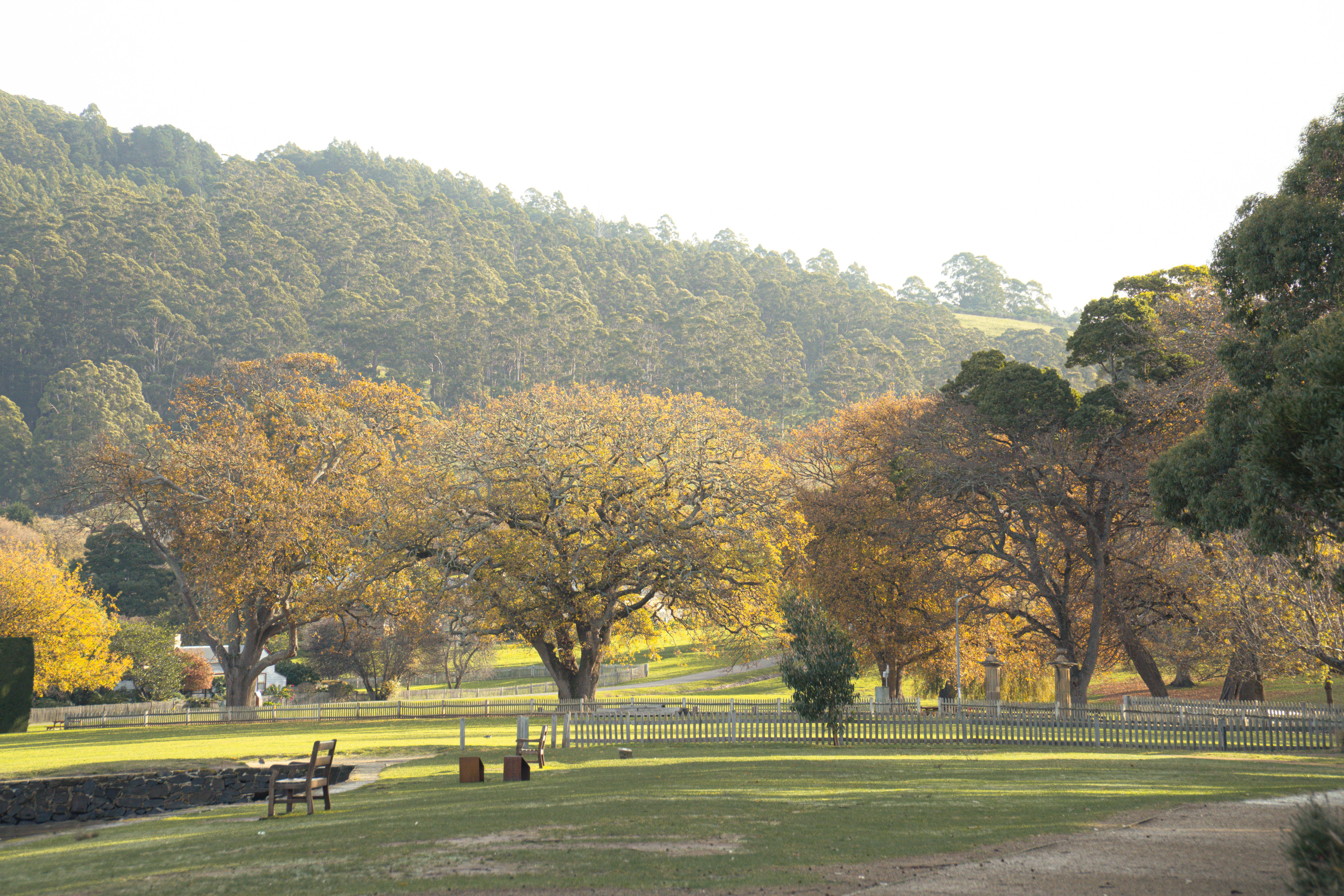
Richmond, Bonorong Wildlife & Coal River Valley Wine
Captivating autumn scenery in Port Arthur, Tasmania with colorful trees and picturesque hills. · Photo by Anh Thu Le on PexelsA relaxed self-drive day northeast of the city; caffeinate first.
A friendly cafe with excellent coffee and generous breakfasts, a good launch pad before heading out of town.
Drive 25 minutes to Richmond, a beautifully preserved Georgian village built by convicts, then meet Tasmanian wildlife up close.
Cross Australia's oldest stone bridge still in use (built by convicts in 1823-25) and wander the sandstone shopfronts, gaol, and galleries. Free to stroll; allow an hour or two with coffee and browsing.
A rescue-focused sanctuary at Brighton where you can see Tasmanian devils, quolls, wombats, and hand-feed free-roaming kangaroos. Entry around AUD 39; keeper talks run through the day and it's excellent for families.
Lunch at a Coal River Valley cellar door surrounded by vines.
A hilltop winery restaurant with valley views, known for polished plates paired with its cool-climate wines. Book a table for a leisurely, scenic lunch.
A family estate with a heritage cellar door pouring some of Tasmania's most awarded riesling and pinot noir, with grazing plates. A lovely stop for tasting and a light lunch.
Taste your way along the Coal River Valley, one of Tasmania's premier cool-climate wine regions.
A warm, family-run cellar door with a relaxed lawn and a signature sparkling, one of the valley's most welcoming tasting stops. Small fee usually refunded with purchase.
Round out the day with a serious pinot or biodynamic tasting; the valley is compact enough to visit two or three cellar doors in an afternoon. Designate a driver or arrange a wine-tour transfer.
Back in the city, choose a relaxed neighbourhood dinner.
A stylish CBD restaurant and wine bar with wood-fired cooking and a strong Tasmanian wine list. Good for a lively, contemporary dinner.
A friendly North Hobart Italian doing dependable pasta and pizza, easy after a day of tasting. Casual and good value.

Slow Hobart: Gardens, Galleries & North Hobart
Royal Tasmanian Botanical Gardens · Barrylb at English Wikipedia / Public domainAfter a run of big day trips, take a gentler city day starting with an unhurried brunch.
A popular all-day brunch spot with creative plates and reliably good coffee. Come hungry and take your time.
A superb sourdough bakery beloved for its pastries and loaves; grab a coffee and a morning bun. Expect a queue on weekends.
Spend the morning in the Royal Tasmanian Botanical Gardens, on the Queens Domain overlooking the river.
Free-to-enter gardens dating to 1818, home to the world's only Subantarctic Plant House (a chilled, misty glimpse of Macquarie Island flora) and heritage conservatories. Even in winter the camellias and structure make for a peaceful hour or two.
Lunch back near the waterfront or in the CBD.
A soaring former Ford showroom with an open wood-fired kitchen and a produce-led menu, one of Hobart's best rooms for a long lunch. Around AUD 30-45 for a main.
If you want lighter, graze at a Salamanca cafe or grab something from Daci & Daci. Handy before an afternoon of galleries.
Browse Hobart's independent galleries and shops, then drift up to North Hobart.
A warren of studios, craft galleries, and small shops inside the Salamanca warehouses, plus the Handmark and Bett galleries nearby. Free to wander and great for Tasmanian art, wood, and design.
Spend the late afternoon on Elizabeth Street's independent strip, anchored by the beloved State Cinema and rooftop bar. Browse bookshops and boutiques or catch an early film.
Stay in North Hobart, the city's most reliable dinner strip.
A long-running Asian restaurant spanning Thai, Nepalese, and Indian dishes, a North Hobart institution for flavourful, good-value plates. Great for groups.
Return for excellent wood-fired pizza and Italian if you want comfort food. Warm and welcoming.

Freycinet National Park & Wineglass Bay
Freycinet National Park · Jane6592 / CC BY-SA 4.0Head up the east coast to Freycinet National Park, home to the pink-granite Hazards and the perfect curve of Wineglass Bay, regularly rated one of the world's best beaches. It's a long day trip (about 2.5 hours each way), so a guided tour is the relaxed choice.
A local-operator day trip to the Wineglass Bay lookout and Freycinet's coast, with short walks and coastal scenery, run by long-established east-coast guides. Reliable and highly rated for a no-driving day.
A scenic version that stops in historic Richmond and along the Great Eastern Drive, with a bakery breakfast break and time at Freycinet. Good if you want a bit of sightseeing woven into the drive.
A more energetic option built around the walk up to the Wineglass Bay lookout and other short trails in the national park. Choose this if you want to earn the view on foot.
You'll be back late; keep dinner simple and close to your base.
Fresh fish and chips at Constitution Dock or a warming counter meal at a nearby pub is plenty after a long road day. Easy and satisfying.
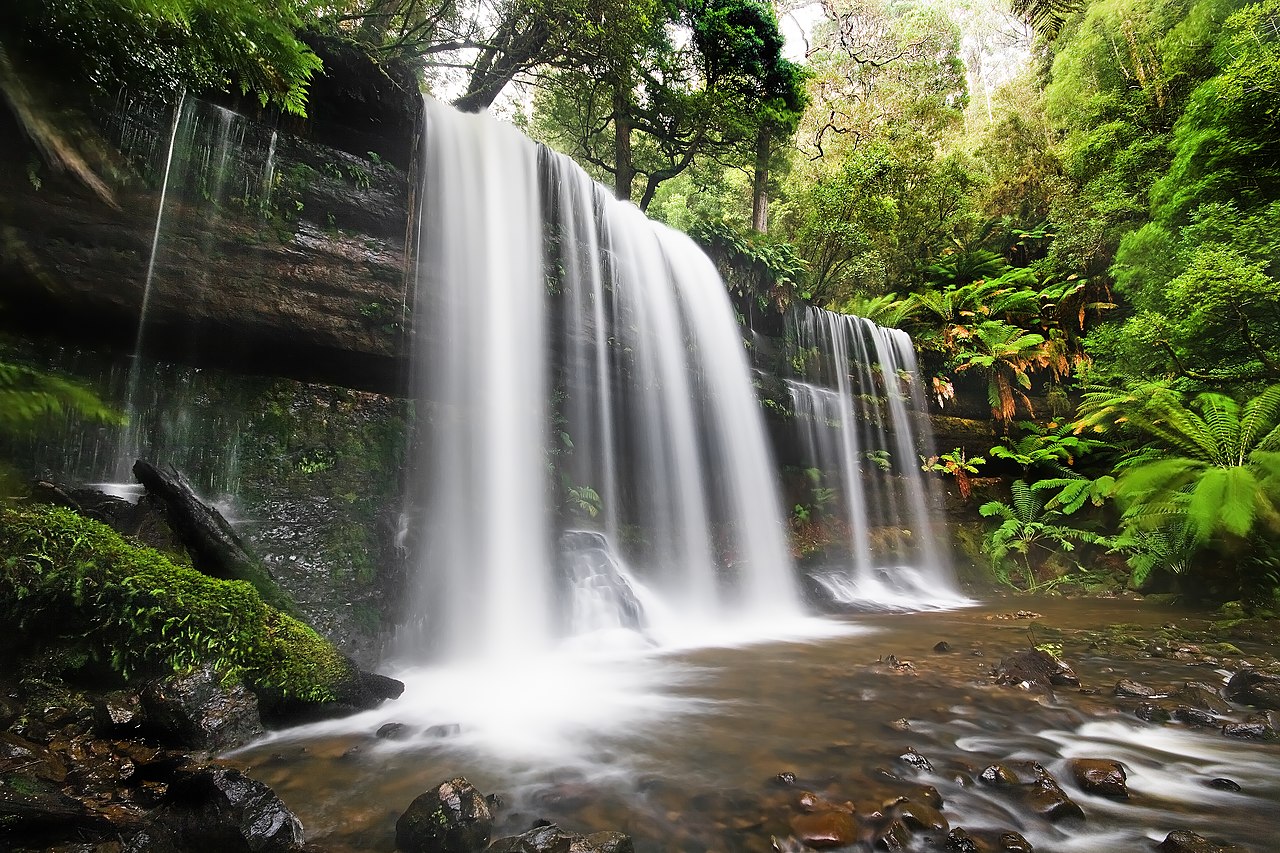
Mount Field National Park & Russell Falls
Mount Field National Park · Noodle snacks / CC BY-SA 3.0An easy self-drive day about an hour northwest into ancient forest; grab breakfast to go or eat on the way.
Pick up pastries, a sausage roll, and coffee for the drive. A dependable Battery Point start to a forest day.
Mount Field is Tasmania's oldest national park (1916), famous for tiered waterfalls and some of the tallest flowering trees on earth.
An easy, mostly flat rainforest loop leads to the three-tiered Russell Falls, extendable to the Tall Trees walk among towering swamp gums. A national parks pass (around AUD 45 per vehicle, valid multiple days) is required; allow 1.5-2 hours.
Lunch at the park gateway before exploring higher up.
A small sanctuary near the park entrance where you may spot devils, quolls, and platypus, a nice add-on with kids. Modest entry fee.
Drive higher for alpine scenery, or turn back via the Derwent Valley's small towns.
Weather permitting, drive up toward Lake Dobson for snow gums and, in July, likely snow; the roadside lookouts reward the climb. Check road/snow conditions and carry warm gear.
Australia's oldest trout hatchery (1861) with heritage gardens and ponds you can feed, an easy stop on the way home. Modest entry; a peaceful, old-world detour.
Ease back into the city with a relaxed dinner.
A cozy wine bar with excellent small plates and by-the-glass pours. A calm end to a forest day.
A lively Mexican cantina in the CBD for tacos, margaritas, and good energy. Fun and casual.

Far South: Huon Valley, Hastings Caves & Tahune
Tahune AirWalk · Bezza84 / CC BY-SA 3.0Explore Tasmania's deep south, apple country and ancient forest along the Huon River, taking in limestone caves and a treetop airwalk. A guided tour ties the far-flung stops together and adds tastings.
A full day through Huonville and the far south: the underground Hastings Caves and thermal springs, the Tahune AirWalk suspended above the Huon and Picton rivers, and tastings along the Huon Tasting Trail (cider, cheese, salmon). A well-rounded southern loop.
Reward the day with a warming dinner in town.
Wood-fired cooking and a strong local wine list in a handsome CBD room. A satisfying end to a day in the forest.
Hearty, ethical pub fare and Tasmanian beer by the fire. Easy and comforting.

Harbour Cruise & Sandy Bay Ease
Hobart · File:Franklin Wharf 2015.jpg: Michael fromholtz derivative work: Georgfotoart / CC BY-SA 4.0A deliberately gentle city day between the big excursions. Start slow.
Return for a top-tier coffee and a quiet morning. One of the city's best roasters.
A relaxed Salamanca Square breakfast before a late-morning cruise. Retro, colourful, and welcoming.
See Hobart from the water on a relaxed harbour cruise, the perfect low-key morning.
A well-priced, informative cruise around the working harbour and up the Derwent, with commentary on the city's maritime history from roughly AUD 25. An easy, warming way to be on the water.
A longer, scenic cruise down the Derwent to the historic Iron Pot lighthouse and Betsey Island, with views of Mount Wellington and the Shot Tower. Choose this if you want more time on the water.
Lunch by the water or in Sandy Bay.
A Hobart seafood institution on Victoria Dock with its own fishing fleet; the upstairs restaurant does excellent fish with harbour views. Downstairs is cheaper and casual if you prefer.
Take the afternoon at an easy pace, either by the water or exploring Sandy Bay's coastline.
A 48-metre 1870 sandstone tower south of the city with a spiral climb to river views, a quirky, quiet stop. Small entry fee; combine with the coastal drive.
A calm bay-side walk near Wrest Point, good for a bracing winter beach wander and coffee. Low-key and local.
Enjoy a slower dinner tonight, perhaps with a view.
Tasmania's revolving restaurant atop Wrest Point tower, turning slowly for 360-degree views over the Derwent as you dine. Book ahead for a window-side table around sunset.
Refined bistro cooking and a great wine list in a heritage building if you'd rather stay central. Cozy and reliable.
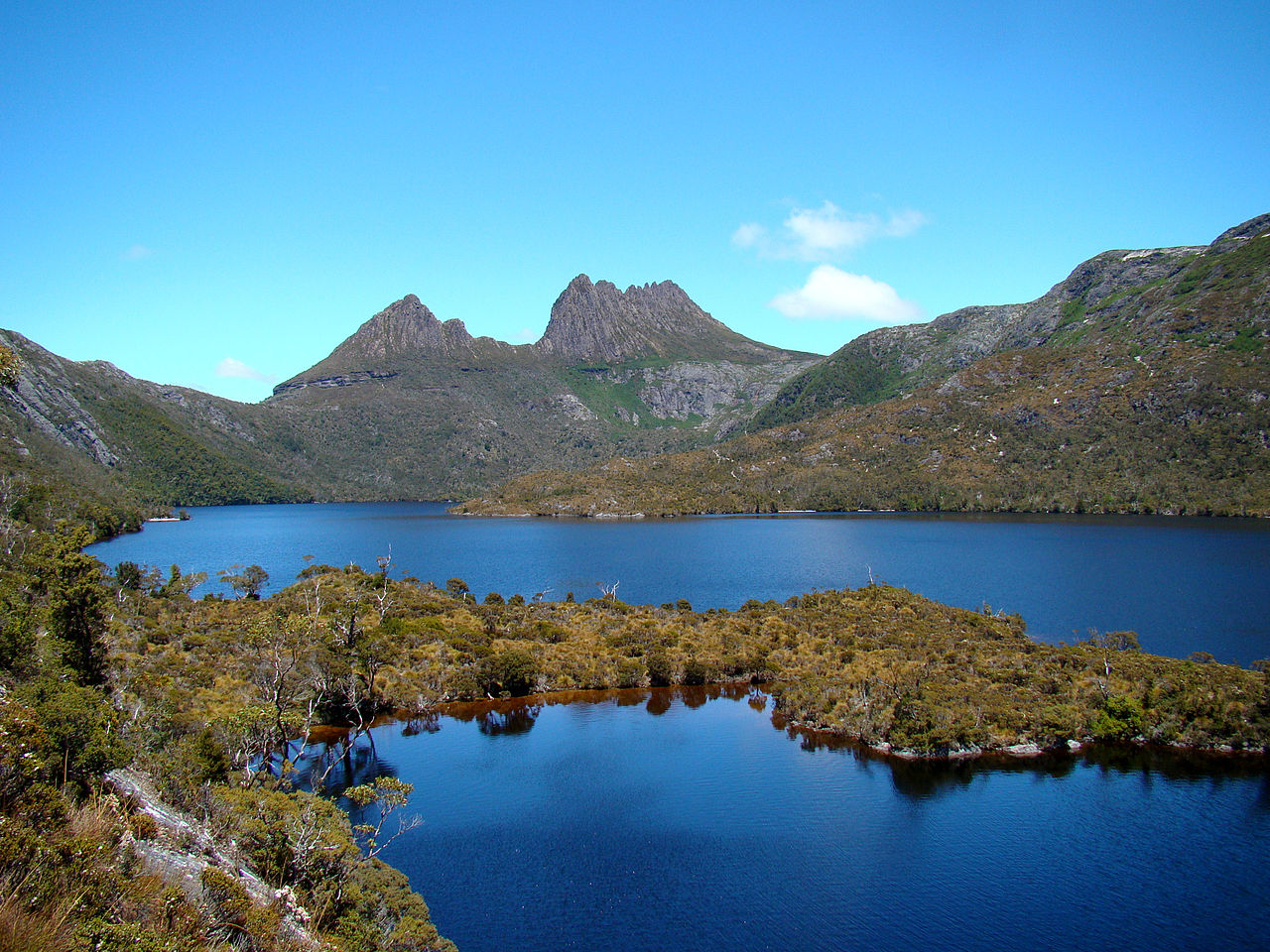
Cradle Mountain Big Day Out
Cradle Mountain · Bjørn Christian Tørrissen / CC BY-SA 3.0The boldest day trip in the state: a very early start for the long run to Cradle Mountain and Dove Lake in the northwest, arguably Tasmania's most famous landscape. A small-group tour handles the driving on this big loop.
An efficient small-group run to Dove Lake beneath the jagged spires of Cradle Mountain, with time to walk sections of the shoreline circuit and spot wombats. It's a long day (around 13-14 hours) but the scenery is worth it; dress for alpine winter.
You'll return late and tired; keep it easy.
After a 13-plus-hour day, a casual takeaway, a bowl at Mures downstairs, or your hotel's kitchen is plenty. Rest up for tomorrow.

Maria Island: Convict Ruins & Wombats
Maria Island · Chuq / CC BY-SA 4.0A car-free island day; you'll drive (or transfer) about 90 minutes to Triabunna for the ferry, so start early with coffee to go.
Grab a strong coffee and a pastry for the drive to Triabunna. A dependable early start.
Catch the ferry from Triabunna to Maria Island National Park, a wildlife-rich island with no cars, convict ruins, and remarkable geology. Bring everything you need; there are no shops.
The ferry crosses in about 30 minutes to Darlington, a beautifully preserved convict probation station and later industrial town, now a World Heritage site. Wander the ruins and expect wombats, kangaroos, Cape Barren geese, and Tasmanian devils reintroduced to the island.
There's no cafe on the island, so pack a picnic and eat with a view.
Walk about 45 minutes to the Painted Cliffs, sandstone patterned with iron-oxide honeycomb swirls, best at low tide, and eat your packed lunch on the shore. Bring water, snacks, and layers.
Keep exploring on foot before the afternoon ferry back.
The Fossil Cliffs loop reveals a wall packed with ancient shellfish fossils, an easy circuit with coastal views. Watch ferry times and give yourself a buffer for the return crossing.
Back in Hobart, refuel with something hearty.
Wood-fired, produce-driven cooking in a striking room, a satisfying reward after an outdoors day. Book a table for later evening.
Easy, tasty Italian in North Hobart if you want low-effort comfort. Good value and quick.

D'Entrecasteaux Channel & the Southern Coast
Kettering, Tasmania · Daryl Jones (Photographer) / Public domainAn easy self-drive day south along the D'Entrecasteaux Channel, all water views and oyster leases. Coffee first.
Precise coffee and a light breakfast to set up a relaxed drive south. Calm and considered.
Drive about 40 minutes south to Kettering and the channel villages, with sweeping views across to Bruny.
Wind through Kettering's marina (the Bruny ferry terminal) and channel viewpoints looking out to the island. A pretty, low-key coastal morning.
A hilltop sheep dairy above the channel making distinctive cheeses and award-winning sheep-whey vodka and gin, with tastings and views. A memorable stop for food-and-drink lovers.
Lunch on the water at one of the channel's best-known spots.
A polished waterfront dining room and bar with big channel views and a menu leaning hard on local seafood and produce. A relaxed, scenic lunch about 45 minutes south.
Meander back via a cellar door or coastal detour.
A respected Huon Valley winery and restaurant known for pinot noir, a lovely afternoon tasting on the way home. Book if you want to linger over a late lunch instead.
A short, easy forest walk to a pretty waterfall near Snug if you want to stretch your legs. About 45 minutes return.
A relaxed final-stretch dinner back in the city.
Creative Asian small plates with harbour views above Brooke Street Pier. A refined but easygoing choice.
Natural wine and snacky plates in North Hobart if you want something light. Friendly and low-key.
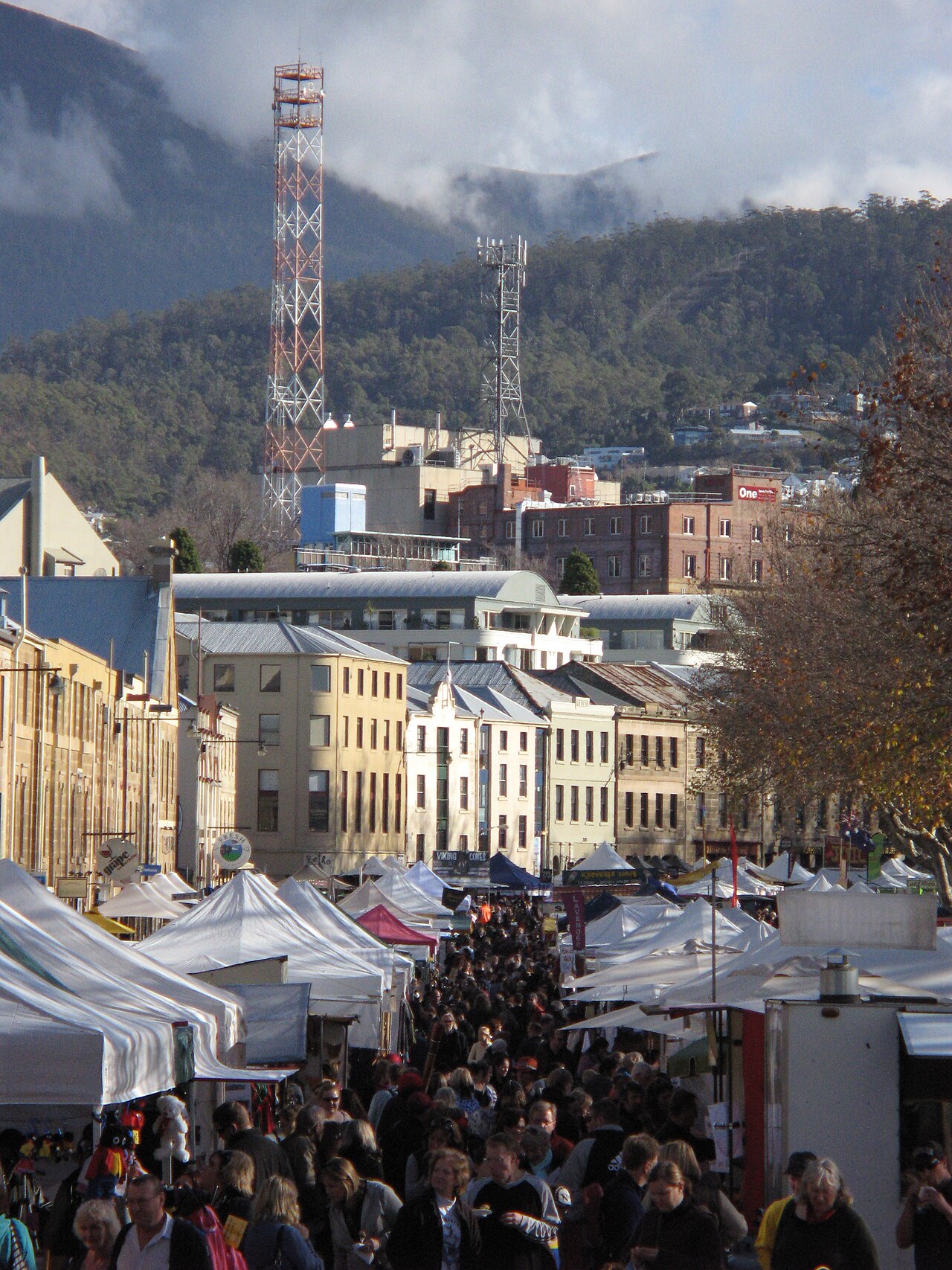
Hobart Favourites & Sunset Farewell
Salamanca Market · Nick carson at English Wikipedia / CC BY 3.0Your last full day: revisit whatever you loved most, starting with a favourite cafe.
One more round of exceptional pastries and coffee. Get there early for the pick of the bake.
A creative sit-down breakfast to mark the last morning. Inventive and satisfying.
Pick up gifts and see the city on your own terms; consider a hop-on hop-off loop to fill in anything you missed.
The Red Decker sightseeing bus loops the city's highlights (Battery Point, the Botanical Gardens, the waterfront) with commentary, a stress-free way to revisit favourites or catch a missed sight. Tickets are valid 24 or 48 hours.
Spend the morning buying edible souvenirs (leatherwood honey, whisky, cheese) and craft from the Salamanca galleries. The best one-stop for taking Tasmania home.
A relaxed farewell lunch on the waterfront.
Casual fish and chips and seafood baskets by the dock, eaten in the sun (or out of the wind). A quintessential Hobart last lunch.
Toast the trip with a Tasmanian whisky or gin flight; the state is now a serious spirits producer.
The pioneer of Tasmanian single malt, with a central tasting room to sample the whiskies that put the island on the map. A fitting, warming afternoon nightcap.
Several bars near the wharves specialise in Tasmanian whisky and gin flights if you want to compare distilleries. Ask the bartender to build you a local flight.
Book your best remaining table for a memorable send-off.
If you couldn't get in earlier, try again for Hobart's most beloved seasonal cooking at a shared table. A special final night; reserve well ahead.
Elegant, generous Italian in a heritage hotel, a polished way to close the trip. Strong Tasmanian wine list.
Wood-fired, produce-led, and atmospheric, a confident last dinner if you want fewer courses than a degustation. Book a later table.

Departure
Constitution Dock · wlcutler / CC BY 2.0Wind the trip down gently with one last excellent coffee before heading to the airport.
A final top-tier flat white and pastry in the CBD. Quick and central for check-out.
One last Battery Point bakery breakfast, a pie or pastry for the road. A warm Hobart goodbye.
Take a short, unhurried final stroll along the docks before you leave.
A last loop of the working harbour, fishing punts, and the finish line of the Sydney to Hobart yacht race. A quiet, photogenic farewell to the waterfront.
Grab a quick bite near the water, then head out to Hobart Airport (about 20 minutes) in good time.
Sandwiches, quiche, and a slice of cake to go before the drive to the airport. Easy and reliable.
Allow around 25-30 minutes to Hobart Airport by car or shuttle, plus return time if you're dropping a hire car. SkyBus and taxis are readily available from the CBD.
Pick your base
For a first visit, stay on or near the waterfront and Salamanca (walking distance to restaurants, the market, and the MONA ferry) or in the CBD around Elizabeth and Collins streets. Battery Point offers quiet, historic charm a few minutes' stroll from the action, while Sandy Bay (home to Wrest Point) trades central buzz for water views and easy parking, handy if you're running day trips by car.
A well-loved boutique hotel on Liverpool Street in the heart of the CBD, with quirky, individually styled rooms and a genuinely central location minutes from Salamanca and the waterfront. Excellent value for a comfortable, characterful central base.
Tasmania's iconic tower hotel in Sandy Bay, with wide Derwent and mountain views, on-site dining, parking, and larger rooms that suit families or car-based travellers. About 10 minutes from the centre and handy for early day-trip departures.
A stylish, design-forward budget stay in Battery Point that mixes private rooms with shared spaces, a short walk from Salamanca. Ideal for value-minded travellers who still want charm and a great location.
Hobart's marquee waterfront hotel, a 'storytelling' property right on Hunter Street where every room is themed around a real Tasmanian character. Steps from the wharves, cruises, and restaurants; the splurge pick if you want to be at the heart of the harbour.
For 16 nights, a self-contained apartment with a kitchen and laundry pays off, especially for families or groups cooking with market produce. Look around the waterfront, Battery Point, or Sandy Bay for water views and parking.
Good to know
How many days do you need in Hobart?
Three to four days covers Hobart's core, MONA, Salamanca, Mount Wellington, and a couple of day trips like Bruny Island or Port Arthur. With a week or more you can add Freycinet, Mount Field, Maria Island, and even a long day trip to Cradle Mountain, which is why 17 days works well as a slow, day-trip-based Tasmanian base.
Is 17 days too long to base yourself in Hobart?
Not if you use it as a hub. Hobart is within day-trip range of Tasmania's south and east coast highlights, so you can mix headline excursions with relaxed city and channel days without changing hotels. Travelers who prefer to also sleep near Cradle Mountain or Freycinet could break up the stay with an overnight, but Hobart alone comfortably fills two-plus weeks.
What is the best area to stay in Hobart for first-time visitors?
Stay on or near the waterfront and Salamanca, or in the central CBD, so you can walk to restaurants, the Saturday market, and the MONA ferry. Battery Point offers quiet historic charm minutes away, while Sandy Bay near Wrest Point trades central buzz for water views and easier parking if you're doing lots of self-drive day trips.
What is the best time to visit Hobart, and what is July like?
Summer (December to February) is warmest and busiest, while autumn and spring are mild and quieter. July is deep winter, with highs around 11-13C, short days, frequent snow on kunanyi/Mount Wellington, and some reduced ferry and tour schedules, but also crisp light, cozy fires, fewer crowds, and dramatic seas on the coastal cruises.
Do you need a car in Hobart?
Not for the city itself, which is walkable, with a ferry to MONA and hop-on hop-off buses. A hire car does make the day trips cheaper and more flexible, but every major excursion in this itinerary, Bruny Island, Port Arthur, Freycinet, Cradle Mountain, and more, is also available as a guided tour from Hobart if you'd rather not drive.
Is Hobart expensive to visit?
Hobart is moderately priced by Australian standards: mid-range hotels often run AUD 180-300 a night, a good dinner is roughly AUD 40-60 per person, and full-day guided tours typically cost AUD 120-250. Many highlights are free or cheap, including Salamanca Market, the Botanical Gardens, Battery Point, and TMAG, which helps balance the pricier day trips.
Seventeen days give Hobart the time it deserves: enough to know its cafes and cellar doors by name, to feel the city's convict-era bones under your feet, and to fan out across Tasmania's south and east, from Bruny and Port Arthur to Freycinet, Maria Island, and Cradle Mountain. Balance the big days on the road with slow mornings on the waterfront and you'll leave understanding why so many visitors quietly start plotting a move. Rug up, chase the winter light, and eat and drink your way through one of Australia's most surprising corners.