
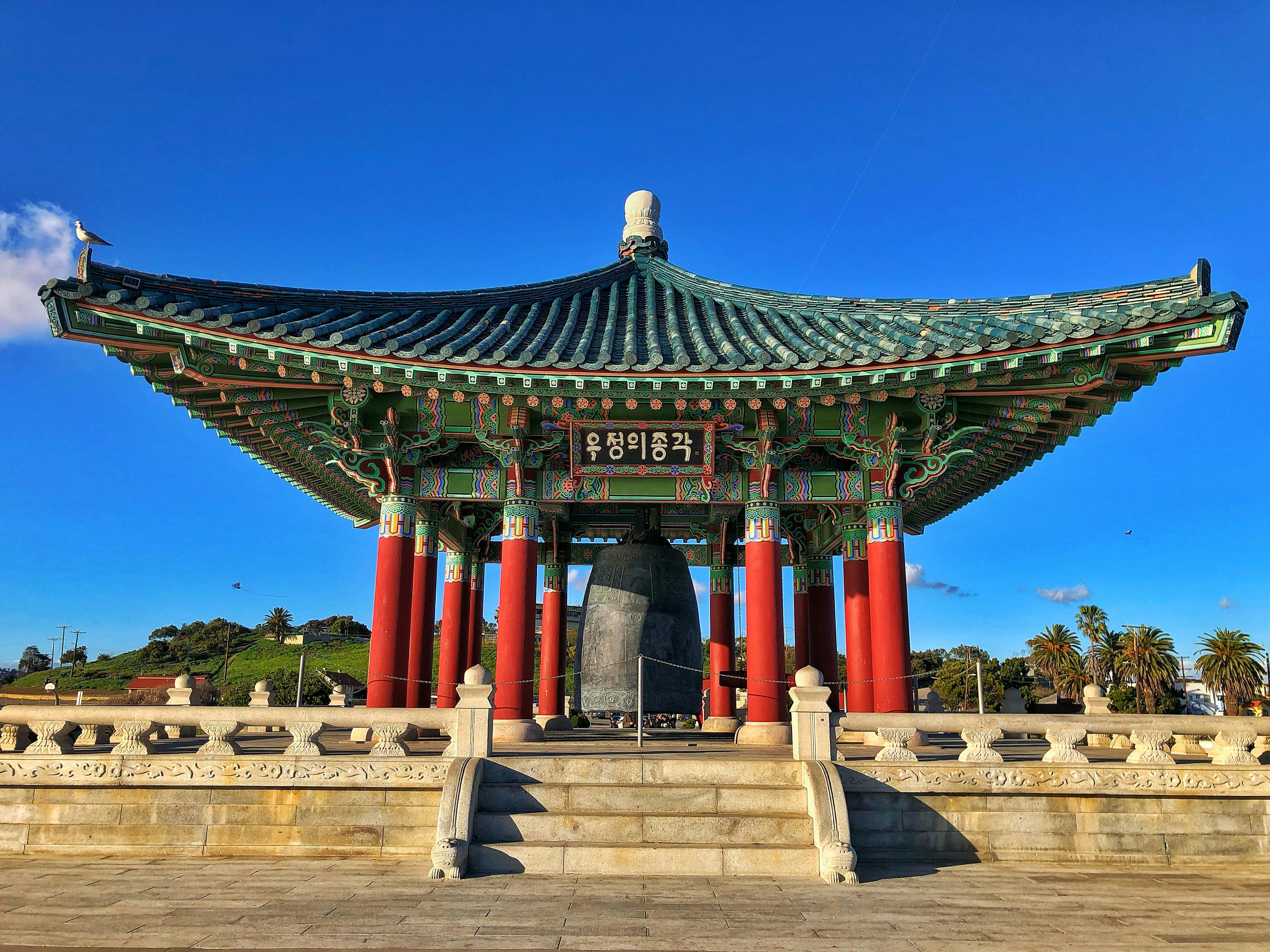
South Korea is a country where dynastic history and hypermodern city life stand side by side with unusual ease. In one trip, you can walk through Joseon-era palace grounds in Seoul, eat raw fish at a working harbor market in Busan, and stand on a lava-shaped shoreline in Jeju, an island built by fire and wind.
It is also one of Asia’s most rewarding destinations for travelers who care about food, design, transit, and culture in equal measure. Korean barbecue, temple cuisine, third-wave coffee, street food, K-pop districts, mountain trails, ceramics villages, and seaside villages all fit naturally into a two-week journey.
For practical planning, South Korea is efficient, safe, and easy to navigate, with excellent rail links and frequent domestic flights. March 2025 is a fine time to visit, though weather can shift quickly between cool mornings and milder afternoons, so layers are wise; a T-money transit card, comfortable walking shoes, and a reservation-minded approach to popular restaurants will make the trip smoother.
Seoul
Seoul is the ideal opening act for a South Korea itinerary because it explains the country in miniature: royal history, cutting-edge design, serious food culture, and neighborhoods with entirely different personalities. One district gives you hanok houses and tea rooms, another gives you grilling smoke, live jazz, and midnight crowds, and another feels as if architecture itself has become a form of performance.
For arrival and onward planning, use Trip.com flights or Kiwi.com flights to compare international airfares into Seoul. If your flight lands at Incheon, allow about 1 to 1.5 hours to reach central Seoul depending on AREX train or car transfer.
Accommodation is best chosen by style of trip. Browse VRBO Seoul for apartment-style stays, or Hotels.com Seoul for hotels across Myeongdong, Insadong, Hongdae, and Jamsil.
- The Shilla Seoul is one of the city’s classic high-end addresses, polished without feeling cold, and well placed for a quieter, refined stay: book here.
- Lotte Hotel World suits travelers who want easy access to Jamsil, shopping, and family-friendly attractions near Seokchon Lake: book here.
- Hostel Haru is a practical lower-cost option with a central base that works especially well for travelers who plan to stay out exploring: book here.
- Hotel 8 Hours is another budget-friendly Seoul option in a convenient area for transit and sightseeing: book here.
Days 1-5: Royal Seoul, Traditional Quarters, Markets & Modern City Life
Begin with Seoul’s historic core: Gyeongbokgung Palace, Bukchon Hanok Village, and Insadong. Gyeongbokgung, first built in 1395, remains the grandest of the Joseon palaces, and the changing of the guard lends some theater to the morning; nearby Bukchon is best approached respectfully and early, when the alleyways are quieter and the tiled roofs feel less like a photo set and more like a living neighborhood.
Insadong is a good lunch and tea stop because it still carries some of old Seoul’s literary and craft traditions. Look for traditional sweets, calligraphy shops, and galleries, then continue to Jogyesa Temple, where lanterns and pine trees soften the city around it and offer a different register of Korean history than the palaces do.
Dedicate another block of time to Changdeokgung Palace and its Secret Garden, one of the most beautiful landscaped spaces in the country. The site is prized not because it is ostentatious, but because its pavilions and pathways were designed in sympathy with the natural terrain, which makes it feel more contemplative than ceremonial.
For a classic Seoul market day, combine Gwangjang Market with Cheonggyecheon Stream and Dongdaemun Design Plaza. Gwangjang is one of the city’s great eating institutions, famous for bindaetteok, mayak gimbap, and knife-cut noodles, while the stream and DDP reveal how Seoul reinvents urban space with flair.
Set aside an evening for Namsan Seoul Tower or the city views from a rooftop bar in Euljiro. Euljiro is especially compelling because it retains a rough-edged industrial soul beneath its current popularity; tucked among printing shops and hardware alleys are now smart bars, coffee counters, and grill houses that still feel unmistakably local.
Coffee and breakfast recommendations:
- London Bagel Museum Anguk is one of Seoul’s most talked-about breakfast stops, known for chewy bagels, playful fillings, and queues that prove how seriously Seoul takes bakery culture. Go early, and order a savory option alongside a sweet one so you can sample the range.
- Cafe Onion Anguk is set in a hanok-style space and is worth visiting as much for atmosphere as for pastries. The contrast between old timber architecture and carefully styled baking displays captures Seoul’s talent for turning cafés into cultural experiences.
- Fritz Coffee Company is a strong pick for travelers who actually care about coffee, not just aesthetics. The roasting is respected, the branding is witty, and the pastries are reliable, making it an easy anchor before a museum or palace morning.
Lunch recommendations:
- Tosokchon Samgyetang remains one of the best-known places for ginseng chicken soup, a dish that is restorative, deeply Korean, and ideal after a flight or on a cool March day. The broth is rich without being heavy, and the restaurant’s traditional-style setting adds to the sense of occasion.
- Jinju Hoegwan is a beloved spot for kongguksu in season and excellent noodle dishes more generally. It is the kind of place Seoul locals return to because the flavors are focused rather than flashy.
- Gwangjang Market stalls are not just a snack stop but an education in Korean market eating. Seek out mung bean pancakes fried to a golden crisp, hand-cut noodles, and addictive mini gimbap that earned the nickname “drug gimbap” for their compulsive appeal.
Dinner recommendations:
- Maple Tree House Itaewon is a dependable Korean barbecue choice for visitors who want high-quality meat and a polished setting without losing the convivial spirit of grilling at the table. Staff help with cooking, which makes it easier for first-timers to enjoy the meal properly.
- Myeongdong Kyoja is legendary for kalguksu and mandu, and while simple on paper, the appeal lies in its consistency and its garlic-rich broth. This is a fine example of a restaurant that became famous by doing a few things exceptionally well.
- Woo Lae Oak is one of Seoul’s historic dining rooms and a particularly good choice for Pyongyang-style naengmyeon and barbecue. It offers a glimpse into a quieter, older form of prestige in Korean dining, where lineage matters as much as trend.
Specific activities and local gems:
- National Museum of Korea is one of the country’s finest museums and well worth several hours. If you want context for everything you will see afterward, from celadon to Buddhist sculpture to royal ritual, this is where to get it.
- Ikseon-dong is a compact neighborhood of restored hanok lanes now filled with intimate restaurants, dessert shops, and bars. It can be busy, but it remains one of the most enjoyable places for a twilight wander and a leisurely dinner.
- Seongsu-dong is Seoul’s current creative-industrial darling, full of converted warehouses, fashion boutiques, and excellent cafés. If you want to see how the city keeps reinventing itself without flattening its character, spend half a day here.
- Starfield Library at COEX is unabashedly photogenic, but the broader COEX complex also offers shopping, an aquarium, and easy access to Bongeunsa Temple. That pairing of giant commercial interior and old Buddhist temple across the road is very Seoul.
On the morning of Day 6, travel from Seoul to Busan by KTX high-speed train. Book via Trip.com trains; the journey typically takes about 2.5 to 3 hours and often costs roughly $45-$75 depending on class and availability. Departing in the morning gives you most of the afternoon in Busan.
Busan
Busan feels different the moment you arrive. Seoul is layered and vertical; Busan opens outward toward water, beaches, fish markets, and hillsides painted in color, with a more relaxed cadence that still carries real urban energy.
This is South Korea’s great port city, and that maritime identity shapes its food and mood. You come here for temple-by-the-sea views, sashimi with harbor freshness, beach walks at dusk, and neighborhoods where the city’s rough working history still shows through the polish.
For places to stay, browse VRBO Busan or Hotels.com Busan. Haeundae suits beach access and modern hotels, while Nampo and Seomyeon are better for markets, food, and central transit.
Days 6-10: Markets, Coastal Temples, Beach Districts & Busan’s Harbor Soul
Start with Jagalchi Fish Market and BIFF Square in the old downtown. Jagalchi is one of Korea’s emblematic seafood markets, where tanks, cutting boards, and the call of vendors remind you that Busan still works for a living; if you choose your fish downstairs and have it prepared upstairs, the meal becomes part market anthropology, part lunch.
Nearby Nampo-dong is excellent for wandering. There are street snacks, cosmetic shops, old movie associations through the Busan International Film Festival legacy, and easy access to Yongdusan Park, whose tower gives a quick visual grasp of how harbor, hillside, and dense city all interlock.
Dedicate a morning to Haedong Yonggungsa, the rare large Korean temple set dramatically on the coast. Most temples in Korea retreat into mountains, which makes this one memorable: stone lanterns, sea spray, and crashing water beneath prayer spaces produce a scenery that feels almost stage-designed, though it is entirely real.
Spend an afternoon and evening around Haeundae Beach, Dongbaekseom, and The Bay 101. Haeundae can be glossy, but it earns its popularity; the beachfront promenade, city skyline, and sea air make for one of the country’s best urban coastal walks, especially as the light changes at dusk.
Gamcheon Culture Village deserves a half day if approached with patience. Once a hillside settlement shaped by hardship and displacement, it has evolved into a vivid arts district of murals, stairways, and viewpoints; go early or later in the day to appreciate both the creativity and the human history beneath the bright paint.
Coffee and breakfast recommendations:
- OPS Bakery is one of Busan’s most respected bakeries and a fine breakfast stop for pastries, breads, and coffee before coastal sightseeing. It has the sort of old-school local reputation that matters more than trend cycles.
- Cafe Rooftop spots in Haeundae are plentiful, but look for independent cafés with sea views rather than chain options. Busan does café scenery especially well, and morning coffee by the beach gives the city its proper introduction.
- Momos Coffee is essential for serious coffee drinkers. Busan’s specialty coffee scene owes much to places like this, where the beans and brewing standards are taken as seriously as the interiors.
Lunch recommendations:
- Jagalchi Market seafood restaurants are the obvious but correct choice. Order sliced raw fish, grilled shellfish, or spicy fish stew, and enjoy the fact that the meal is inseparable from the market around it.
- Wonjo Halmae Gukbap is a smart stop for Busan-style pork rice soup, one of the city’s defining comfort foods. It is inexpensive, fortifying, and a reminder that some of Korea’s best meals arrive in humble bowls.
- Milmyeon specialist shops near Seomyeon or Nampo are worth seeking out because Busan’s wheat noodles are one of the city’s signature dishes. Cold, tangy, and refreshing, milmyeon is especially satisfying after a long walk or temple excursion.
Dinner recommendations:
- Geumsubokguk is an excellent place to try puffer fish soup, one of Busan’s notable specialties. The preparation is clean and precise, and the dish feels distinctly maritime without being intimidating.
- Millak Raw Fish Town offers a more informal seafood dinner with broad harbor views, especially if you enjoy choosing among different fish varieties and eating in a lively local environment. It is less polished than a hotel restaurant and more memorable for that reason.
- Goraesa Eomuk outlets and nearby eateries are ideal for a casual evening snack run because Busan fish cake culture is serious business. These are not mere convenience bites; they are part of the city’s culinary identity.
Specific activities and local gems:
- Spa Land Centum City is one of the best jjimjilbang experiences for travelers who want to understand Korean bathing culture in a polished setting. It is restorative after train travel and long walking days.
- Taejongdae Resort Park delivers dramatic sea cliffs and forested walks on Yeongdo Island. If you want a wilder side of Busan beyond beaches and markets, this is where to find it.
- Huinnyeoul Culture Village on Yeongdo has become a favorite for cliffside views, art spaces, and cafés. It is gentler and less crowded than Gamcheon while offering equally rewarding vistas.
On the morning of Day 11, fly from Busan to Jeju. Search options with Trip.com flights or Kiwi.com flights. Flight time is usually about 1 hour, and fares are often around $25-$80 before bags, though airport transfer and check-in time mean you should budget about half a day overall.
Jeju City
Jeju is South Korea’s volcanic island escape, but reducing it to “beaches and scenery” misses the point. It has its own myths, dialect, food traditions, and landscapes shaped by lava, wind, and women free-divers whose history gives the island much of its character.
For a 15-day Korea trip, Jeju is the right final chapter because it changes the pace completely. After big cities and rail stations, the island offers crater rims, black-rock coastlines, tangerine sweets, waterfalls, and drives that seem designed to rinse urban noise from the mind.
Stay in or near Jeju City if you want easier airport logistics, or use it as a base for island day trips with a rental car or organized tours. Browse VRBO Jeju City or Hotels.com Jeju City for wider options.
- Hotel RegentMarine The Blue is a good practical choice with waterfront appeal and easy access to Jeju City dining: book here.
- Lotte Hotel Jeju is better suited to travelers who want a resort-style stay in the island’s southern resort zone: book here.
- The Shilla Jeju is another polished resort option, ideal if you want more downtime and landscaped grounds: book here.
Days 11-15: Volcanic Landscapes, Coastal Drives, Seafood & Jeju’s Distinct Island Culture
Use your first Jeju block to explore the east: Seongsan Ilchulbong, Seopjikoji, and nearby coastal roads. Seongsan Ilchulbong, the island’s famous tuff cone, is one of Jeju’s signature landscapes; climb early for cleaner light and fewer crowds, and you will better appreciate how this crater rose from the sea through volcanic force.
If conditions allow and schedules align, visit a haenyeo performance area or museum context to learn about Jeju’s female free-divers. Their tradition is not a tourist invention but a profound part of the island’s identity, and understanding it adds depth to every seafood meal and coastal village you encounter afterward.
Another day should be reserved for Hallasan National Park or a lighter scenic route if you do not want a strenuous hike. Hallasan, South Korea’s highest mountain, sits at the island’s center like a geological command; even shorter trails and foothill viewpoints reveal the scale that made Jeju a UNESCO-recognized destination.
Spend time along the black-rock shoreline near Yongduam, Iho Tewoo Beach, or Aewol depending on your pace. Aewol in particular is lined with photogenic cafés, but the appeal is real rather than invented: wind, sea, basalt, and broad horizon lines make even a slow coffee stop feel earned.
If you want a fuller day trip beyond Jeju City, the south side of the island offers waterfalls such as Cheonjiyeon and Jeongbang, plus resort-zone gardens and ocean views. This side of Jeju is greener and more theatrical, a good contrast to the starker volcanic drama of the east and north.
Coffee and breakfast recommendations:
- Anthracite Jeju is one of the island’s standout café experiences, set in a repurposed industrial space with excellent coffee and strong design sense. It is a reminder that Jeju is not just rustic scenery; it also attracts some of Korea’s most interesting creative hospitality concepts.
- Aewol seaside cafés are ideal for a slow breakfast with pastry and coffee, particularly if you plan a coastal drive afterward. Choose an independent café with ocean-facing windows and make the view part of the meal.
- Local bakeries using Jeju citrus are worth trying for tangerine-flavored breads, cakes, and desserts. These make the island’s agricultural identity visible in a lighter, sweeter form.
Lunch recommendations:
- Jeju black pork restaurants are essential, especially those grilling thick cuts over charcoal. Jeju black pork is prized for its texture and flavor, and a good restaurant will let the meat’s quality speak without excessive marinades.
- Abalone porridge specialists are ideal after an early start to Seongsan or a windy coastal morning. The dish is gentle, oceanic, and deeply associated with Jeju’s diving culture.
- Seafood noodle houses around Jeju City provide hearty bowls topped with shellfish or fish-based broths. These make an excellent mid-trip reset after heavier grilled dinners.
Dinner recommendations:
- Donsadon is a well-known and consistently recommended place for Jeju black pork, appreciated for quality cuts and the lively ritual of tabletop grilling. It is popular for a reason, and worth booking or arriving early.
- Haenyeo House-style seafood restaurants near the coast offer a chance to eat closer to the source, often with abalone, sea urchin, and seasonal catch. The appeal here is freshness and cultural context rather than elaborate presentation.
- Dongmun Market is useful for a more casual evening of grazing, especially if you want to sample local snacks, seafood, and Jeju specialties in one place. It is also a good final stop for edible souvenirs.
Specific activities and local gems:
- Manjanggul Lava Tube is one of Jeju’s great geological attractions when open and operating normally, showing the island’s volcanic origins in literal interior form. Check current access before planning, as conservation or maintenance closures can affect visits.
- Jeju Stone Park offers a more interpretive and culturally rooted experience, tying the island’s rock-built landscapes to folklore and tradition. It is especially good for travelers who want more than scenic viewpoints.
- O’sulloc Tea Museum area combines tea culture, green tea desserts, and landscaped grounds in the southwest. It can be busy, but it is enjoyable and distinctly Korean in the way it turns an agricultural product into a full visitor experience.
For your departure, use Trip.com flights or Kiwi.com flights to compare onward domestic or international connections. If you are returning via Seoul, same-day connections are common, but a buffer is wise during busy travel periods.
This 15-day South Korea itinerary gives you the country’s essential contrasts: palace courtyards and design districts, harbor markets and temple cliffs, volcanic craters and island seafood. It is a trip built not just around famous sights, but around the deeper pleasures of Korea in 2025: thoughtful meals, textured neighborhoods, efficient travel, and places that reveal more the longer you linger.