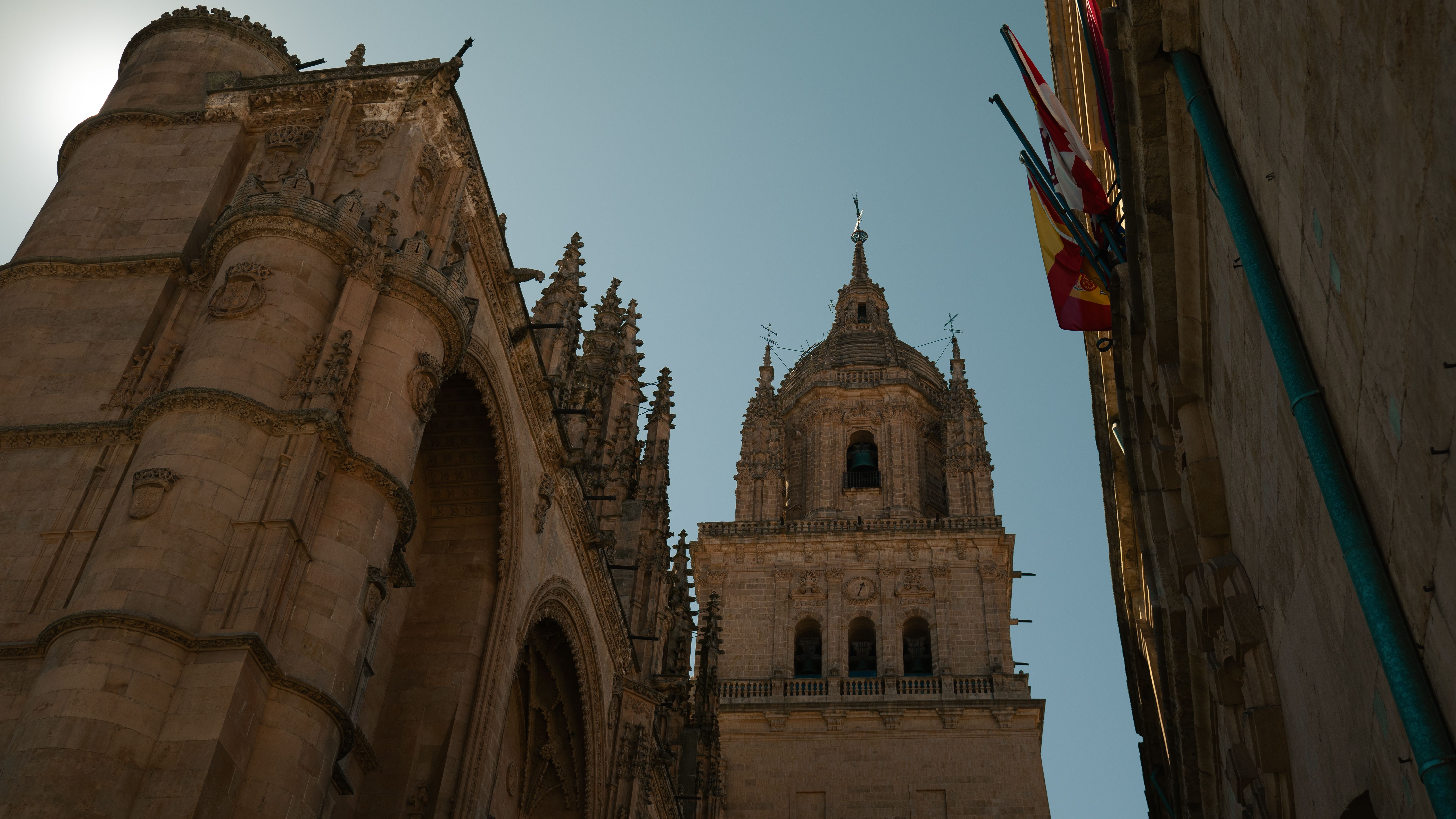
15 Days in Hobart: A Tasmanian Deep Dive from MONA to Cradle Mountain
Two weeks basing yourself in Tasmania's soulful capital, pairing Hobart's convict-era waterfront, art, and food with day trips to Bruny Island, Port Arthur, Wineglass Bay, and Cradle Mountain.
15 days in Hobart
Hobart is the second-oldest capital in Australia, founded as a British penal settlement in 1804 on the wide, cold Derwent River beneath the dolerite ramparts of kunanyi/Mount Wellington. That layered past is everywhere: Georgian sandstone warehouses at Salamanca, the tight lanes of Battery Point, and the sobering convict ruins at Port Arthur, all within easy reach of the city.
Yet Hobart today is defined as much by reinvention as by history. The Museum of Old and New Art (MONA), the privately owned, provocative gallery reached by a catamaran up the Derwent, single-handedly turned the city into an arts destination, while Tasmania's producers (oysters, whisky, cool-climate pinot, apples, cheese) fuel one of Australia's best small food scenes. A base here puts you within a day's drive of Bruny Island, the Tasman Peninsula, Freycinet, the Huon Valley, and even Cradle Mountain.
Practically, Hobart is compact and walkable, but a hire car unlocks the wineries, national parks, and coastlines that make two weeks here worthwhile; guided day tours cover the longer runs. Weather is changeable and often cool even in summer, so pack layers and a waterproof year-round. The Salamanca Market runs only on Saturdays, MONA closes on Tuesdays, and the marquee day tours and hard-to-book restaurants fill fast, so plan the fixed points early and leave slow days between the big excursions.

Arrival, Salamanca & the Hobart Waterfront
Salamanca Place · Cheng Fei / CC BY-SA 2.0Ease in gently. Drop your bags and walk straight to the Georgian sandstone row of Salamanca Place, then wander the working waterfront around Constitution and Victoria Docks where fishing boats still tie up.
A block of 1830s sandstone warehouses now full of galleries, makers' studios, cafes, and bars. Poke into Salamanca Arts Centre and the narrow Kelly's Steps that climb to Battery Point. It is the most photogenic five minutes' walk in Hobart and a good orientation for the whole trip.
Stroll the piers where Antarctic research ships and fishing trawlers dock. Grab a paper cone of scallops or fresh fish from one of the floating punts moored at Constitution Dock for an easy first taste of Tasmania.
Settle in with a drink looking over the water as the light drops behind kunanyi.
A warm, leather-and-timber whisky and gin bar on the waterfront showcasing Tasmanian distillers like Sullivans Cove and Lark. A relaxed spot to toast your arrival even if you aren't staying at the hotel.
A glass-walled cocktail bar cantilevered over Brooke Street Pier with panoramic river views. Ideal for a sunset aperitif before dinner.
Keep the first night close to home with modern Tasmanian cooking built on local seafood and produce.
An upstairs dining room on Brooke Street Pier with river views and confident modern Asian-influenced Tasmanian plates. Booking recommended; mains around A$40-48.
An intimate, much-loved spot doing refined Italian-leaning tasting and a la carte menus with Tasmanian produce. Excellent for a special first evening; book ahead.
The floating fish-and-chip institution moored at Constitution Dock, in its scallop-shaped boat. Cheap, iconic, and exactly what you want tired off a flight; around A$15-20.
MONA: The Museum of Old and New Art
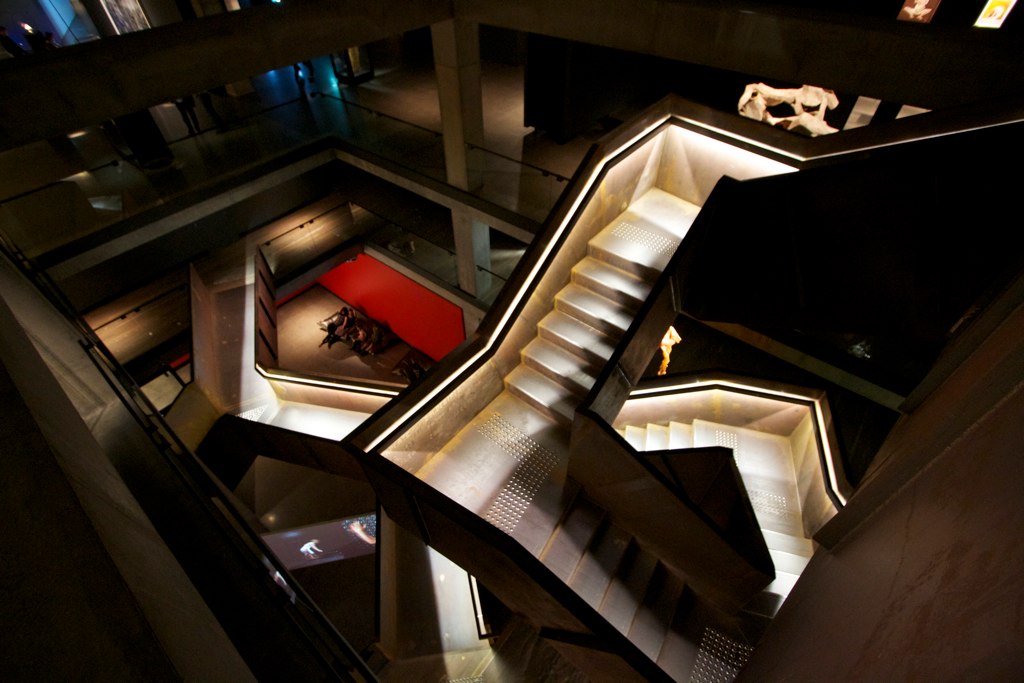
Museum of Old and New Art · Rob Taylor / CC BY 2.0Caffeinate properly first; Hobart takes its coffee seriously and the MONA ferry leaves from the waterfront.
A tiny, exacting cafe on Criterion Street widely rated among Hobart's best roasters. Excellent single-origin espresso and simple, good breakfast plates.
A destination bakery on Argyle Street for sourdough, pastries, and generous breakfast sandwiches. Arrive early; the morning-bun and cheese-and-Vegemite scroll sell out.
Ride the camo-painted MONA ferry up the Derwent and descend into one of the world's strangest and best private museums. Give it real time; the galleries are cut deep into a sandstone cliff.
The 25-30 minute catamaran up the Derwent is half the fun, with sheep-sculpture seating and an optional Posh Pit lounge. Return ferry runs roughly A$28; departures cluster mid-morning, so book online with your museum ticket.
David Walsh's provocative subterranean museum juxtaposes ancient antiquities with confronting contemporary art across dim, mazelike galleries. General entry is around A$40 (free for Tasmanians); allow at least three to four hours. Closed Tuesdays, so plan accordingly.
Eat on site; MONA's own venues use produce from its gardens and vineyard.
A striking bar-restaurant beside James Turrell's light installations, good for share plates and a glass of Moorilla wine mid-visit.
MONA's fine-dining room overlooking the vines, if you want to slow the day right down over a longer lunch. Book ahead for a table by the windows.
Finish the galleries, then wander MONA's outdoor sculptures, vineyard, and the Moorilla and Moo Brew tasting spaces before the ferry back.
The lawns, tennis-court pavilion, and cellar door reward a relaxed hour. Taste Moorilla wines or a Moo Brew beer on the terrace above the river before catching an afternoon ferry.
Back in town, go for one of Hobart's chef-driven small rooms.
A 20-seat neighbourhood favourite doing daily-changing Italian-inspired plates around a communal table. Tiny and hugely popular; reserve well ahead.
An adventurous, ingredient-led tasting menu in a stripped-back space on Murray Street, one of Hobart's most exciting kitchens. Book ahead.
kunanyi / Mount Wellington & Cascade
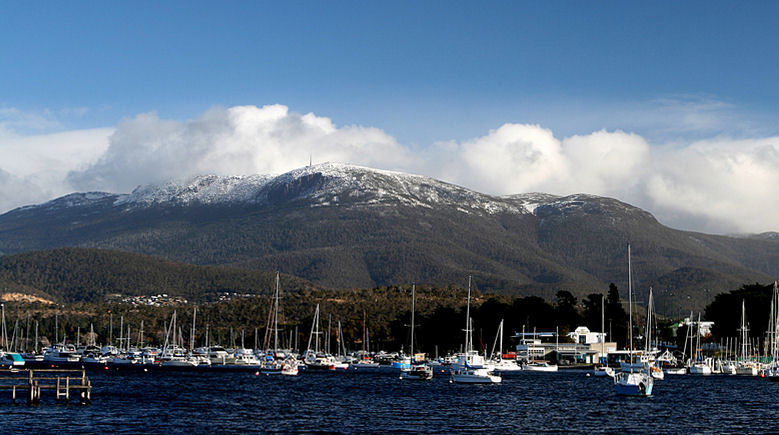
Mount Wellington (Tasmania) · tubagooba / CC BY 2.0Fuel up in South Hobart, on the road up toward the mountain.
A polished little coffee bar with excellent espresso and pastries, a good pre-mountain stop. Central and quick.
A beloved Battery Point bakery-cafe with a cabinet of superb pies, tarts, and breakfast dishes. Grab something for the summit picnic too.
Head to the 1,271-metre summit of kunanyi/Mount Wellington for its enormous views over Hobart, the Derwent estuary, and Bruny Island. The temperature drops sharply and it can be windy or snowy up top, so bring layers.
The official shuttle climbs to the summit boardwalk for panoramic views on a 2.5-hour return trip, ideal if you don't want to drive the narrow mountain road. Easy and well reviewed at around A$35.
A guided small-group ride that shuttles you to the top, then coasts you down through sub-alpine and rainforest terrain. Almost entirely downhill and a genuine highlight, rated near-perfect by past riders; around A$126.
Come down to the leafy foot of the mountain in Fern Tree or South Hobart.
A shipping-container cafe at Fern Tree, a natural stop between the summit and town, with good coffee, toasties, and forest surrounds.
A characterful American-style craft-beer pub in North Hobart if you'd rather head back toward the city for lunch and a local ale.
Explore the historic Cascade precinct at the mountain's base, then the sobering Female Factory nearby.
Australia's oldest continuously operating brewery, set in a grand 1832 sandstone building beneath the mountain. Take a guided tour and tasting or simply drink in the garden bar; tours run most afternoons and book ahead.
A UNESCO-listed convict site where thousands of transported women were imprisoned. The moving 'Her Story' guided performance brings the walls to life; entry around A$25, with tour times posted daily.
Dine in North Hobart, the city's most concentrated restaurant strip.
A warm North Hobart room grilling Tasmanian produce over fire, with a strong local wine list. Great after a mountain day; mains around A$36-44.
A long-running, affordable pan-Asian favourite on Elizabeth Street with generous Thai, Indian, and Nepalese dishes. Reliable and good value.

Bruny Island Food & Wilderness Day Trip
Bruny Island · Kompakt / CC BY-SA 3.0Give a full day to Bruny Island, reached by a short car ferry south of Hobart. It's a compact world of oyster leases, cheese and whisky makers, fudge and berry farms, sea-cliff lookouts, and the historic Cape Bruny Lighthouse, with fur seals and sea birds offshore. A guided tour removes the logistics and the ferry queues.
The most complete Bruny outing: gourmet tastings (oysters, cheese, whisky, chocolate), the famous 'Neck' lookout, coastal scenery, and an exclusive guided climb of Cape Bruny Lighthouse. Runs daily from Hobart, highly rated over thousands of reviews; around A$197 including food.
A slightly lighter, lower-cost small-group option focused on beaches, wildlife, produce stops, and the Neck, with easy-to-moderate walking. Around A$127 and consistently well reviewed.
If you self-drive to Bruny, add the three-hour boat cruise beneath towering sea cliffs to see seals, sea caves, and the Southern Ocean swell. Departs Adventure Bay; around A$134.

Slow Hobart Day: Battery Point, TMAG & the Waterfront
Battery Point · Cliffano Subagio / CC BY-SA 2.0A deliberately unhurried day between big excursions. Start slow with coffee in Battery Point.
The Battery Point original, ideal for a leisurely bakery breakfast among locals before a walk through the old quarter.
A relaxed Salamanca corner for a morning coffee watching the square wake up.
Explore Battery Point, Hobart's best-preserved colonial neighbourhood, on foot; its lanes of fishermen's and merchants' cottages are made for aimless wandering.
Climb Kelly's Steps from Salamanca into a maze of 19th-century cottages centred on Arthur Circus, a tiny green ringed by tiny houses. Loop down to Princes Park and the water for river views; a lovely one to two hours on foot.
A grand 1830s merchant's townhouse furnished as it once was, giving a vivid sense of colonial Hobart life. Modest entry fee; a quiet, atmospheric stop.
Return toward Salamanca for a relaxed lunch.
A quirky Salamanca Square cafe (yes, with working washing machines) doing hearty brunch plates and good coffee.
Tucked in the Salamanca Arts Centre courtyard, a snug spot for sandwiches, salads, and a glass of local wine.
Dive into Tasmania's story and natural history at the free state museum, then browse the waterfront galleries.
Free to enter, TMAG spans Tasmanian Aboriginal culture, colonial art, the extinct thylacine, and Antarctic exhibits across handsome heritage buildings near the docks. Allow a couple of hours; closed some Mondays in low season.
A faithful full-scale replica of Douglas Mawson's Antarctic expedition huts on the waterfront, a compact and surprisingly moving stop that plays to Hobart's role as a gateway to Antarctica.
A relaxed evening near the water.
A stylish former Ford showroom with an open wood-fired kitchen turning out precise, produce-led plates. One of Hobart's best; book ahead. Mains around A$38-46.
A lively South American-influenced grill on Franklin Wharf with wharf-side tables and shared plates from the fire. Good energy and river views.

Port Arthur & the Tasman Peninsula
Port Arthur, Tasmania · Martybugs at en.wikipedia / CC BY-SA 3.0Head 90 minutes southeast to the Tasman Peninsula, where the UNESCO-listed Port Arthur convict settlement sits in unexpectedly beautiful gardens above a bay, and the coast delivers some of Australia's tallest sea cliffs. A cruise-and-site combo makes the most of both land and sea.
The standout way to see the peninsula: a three-hour wilderness cruise beneath 300-metre dolerite cliffs among seals, sea eagles, and dolphins, plus lunch and an afternoon at Port Arthur Historic Site. Full-day from Hobart, around A$243.
A history-focused full day giving maximum time at Port Arthur, including the site's included harbour cruise past the Isle of the Dead, with stops in Tasman National Park. Around A$127.
With a car, drive down yourself and buy a Port Arthur day pass (around A$49, including a short harbour cruise and guided intro walk), then stop at the Tessellated Pavement, Tasman Arch, and the Remarkable Cave en route. The site alone deserves three to four hours.
Coal River Valley: Richmond, Wildlife & Wineries
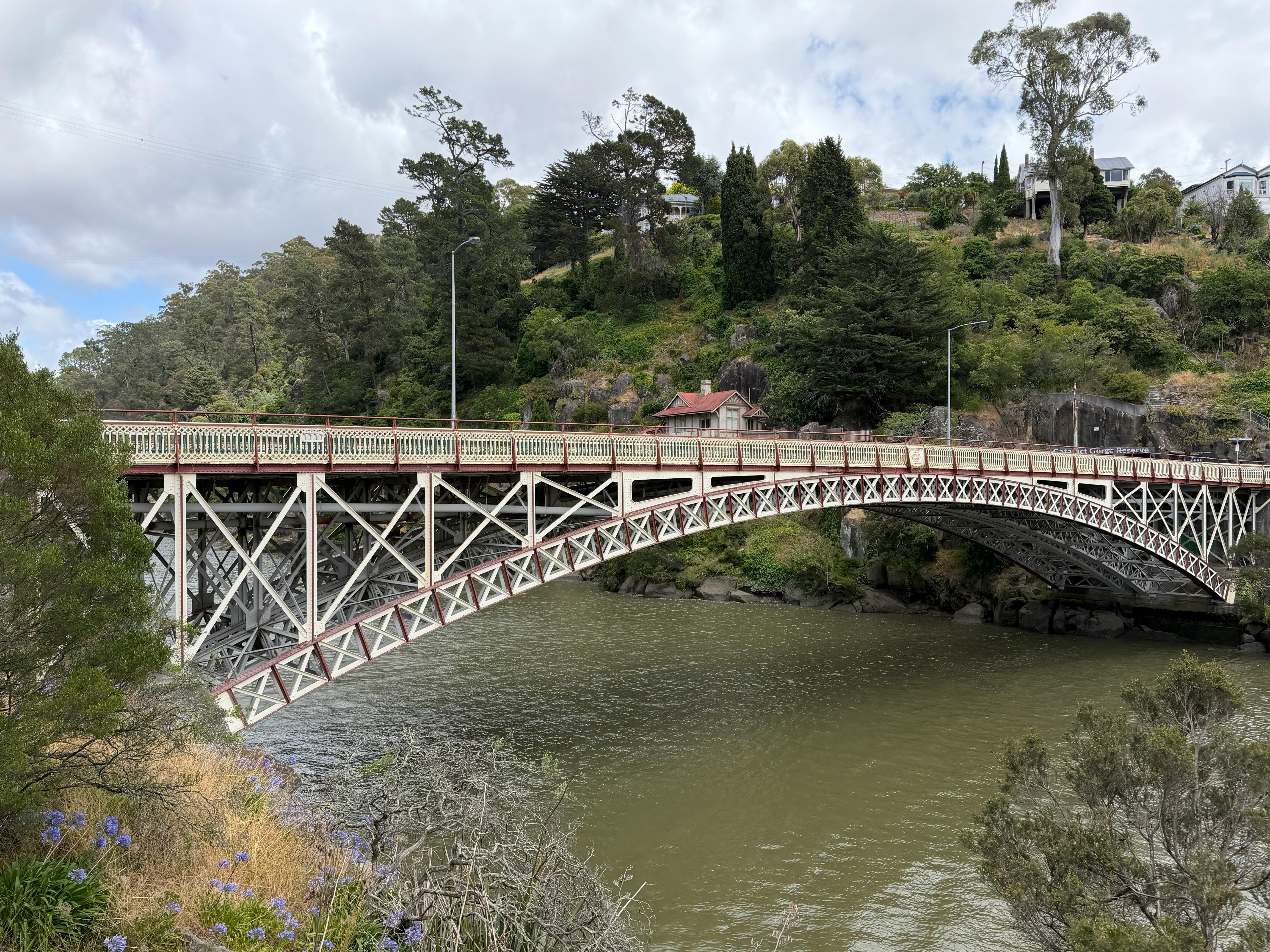
Historic Richmond Bridge spanning a scenic river in Launceston, TAS, Australia. · Photo by Jeremy Wong on PexelsA shorter, gentler day just north of the city. Grab breakfast before the 25-minute drive to Richmond.
A friendly CBD cafe doing generous brunch plates and good coffee to start a relaxed day.
A grand European-style patisserie and bakery on Murray Street for pastries and breakfast before you set off.
Visit Bonorong Wildlife Sanctuary for close encounters with Tasmania's animals, then the perfectly preserved village of Richmond.
A rescue-and-rehabilitation sanctuary at Brighton where you can hand-feed free-roaming Forester kangaroos and see Tasmanian devils, wombats, and quolls up close. Keeper talks run through the day; entry around A$40 and genuinely well run.
If you prefer not to drive, this small-group day covers Bonorong's wildlife, historic Richmond, and Mt Field National Park in one loop. A convenient way to combine several of the region's highlights; around A$133.
Lunch in Richmond among its Georgian streetscape.
A busy village bakery beloved for scallop pies and vanilla slices, best eaten in the courtyard. Cheap and satisfying.
A relaxed cafe on the main street for soups, sandwiches, and cakes between sightseeing.
See Australia's oldest bridge, then taste your way through the Coal River Valley, one of Tasmania's premier cool-climate wine regions.
Cross the elegant 1823 Richmond Bridge, the oldest stone-arch bridge still in use in Australia, built by convicts. The village also holds the Old Hobart Town model and St John's, Australia's oldest Catholic church.
Taste standout cool-climate pinot noir, riesling, and sparkling at cellar doors like Frogmore Creek, Puddleduck, and Pooley Wines, several with lunch and views over the vines. Have a designated driver or arrange a wine-tour transfer.
Back in town, keep it easy.
A cheerful North Hobart Italian doing honest pasta and wood-fired pizza; good value after a full day.
A well-liked North Hobart Vietnamese for fragrant pho and fresh, affordable plates.

Wineglass Bay & Freycinet National Park
Freycinet National Park · Jane6592 / CC BY-SA 4.0A big day up the east coast to Freycinet National Park, home of Wineglass Bay, the perfect arc of white sand and turquoise water regularly named among the world's best beaches. The classic reward is the lookout walk, a steepish 1-1.5 hour return climb; the coast drive itself is glorious.
The original and top-rated Wineglass Bay operator, with local guides, the lookout walk, and Freycinet's beaches and granite peaks. A long but rewarding day; around A$120.
A scenic version that includes a Richmond stop and the Great Eastern Drive, with the Wineglass Bay lookout and coastal walks. Around A$119 and consistently well reviewed.
For keen walkers, this active version adds more hiking around Freycinet's beaches and lookouts beyond the standard climb. Around A$119; expect a full-on day on your feet.

Gardens, History & a Derwent Cruise
Royal Tasmanian Botanical Gardens · Barrylb at English Wikipedia / Public domainA restful day close to town after the east-coast marathon. Ease in with coffee.
A pint-sized specialty coffee bar on Collins Street pouring some of Hobart's most carefully made espresso.
A tiny, characterful coffee window with a loyal following for its brews and pastries.
Wander the Royal Tasmanian Botanical Gardens, a peaceful estate above the Derwent with a unique cold-climate feature.
Free to enter and beautifully kept, with the world's only Subantarctic Plant House recreating the misty, windswept conditions of Macquarie Island. Add the Japanese garden and heritage walls; allow one to two hours.
Eat near the gardens or back at the waterfront.
The gardens' own restaurant-cafe, handy for a relaxed lunch surrounded by greenery.
A Hobart seafood institution on Victoria Dock; the upstairs dining room does fresh Tasmanian fish with harbour views, the downstairs is quick and casual.
See the city from the water with a relaxed Derwent cruise.
An easy, well-priced cruise narrating Hobart's maritime and convict history from the water, past the docks, the old zinc works, and the mountain backdrop. Around A$25 and a restful way to spend an afternoon.
A longer cruise down the Derwent to the historic Iron Pot Lighthouse and Betsey Island, taking in Mount Wellington, the Shot Tower, and Hope Beach from the water; around A$105.
A relaxed evening; consider something a little different.
The elegant Italian dining room in the grand Tasman hotel, doing house-made pasta and wood-fired mains in a handsome heritage setting. Book ahead.
A convivial gastropub championing whole-animal, farm-direct Tasmanian cooking with an excellent natural-wine and cider list. Relaxed and delicious.
Cradle Mountain Big Day Out
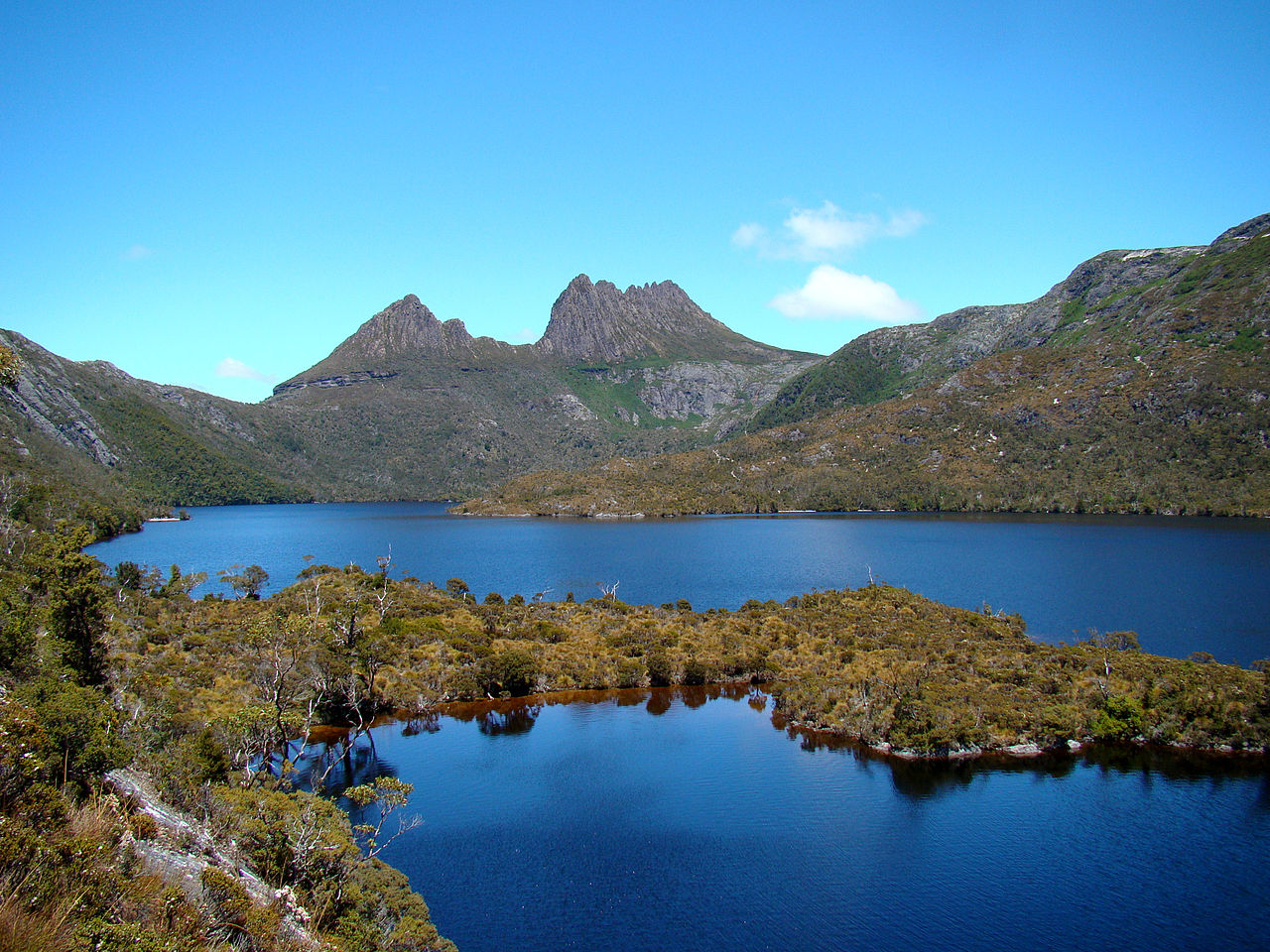
Cradle Mountain · Bjørn Christian Tørrissen / CC BY-SA 3.0Cradle Mountain, the jagged icon of Tasmania's northwest wilderness, is a long haul from Hobart, so an efficient small-group day trip is the sanest way to see it without relocating. Expect an early start and a long drive, rewarded by the Dove Lake circuit beneath serrated dolerite peaks and, often, wombats grazing the buttongrass.
A well-run small-group road trip that leaves early and gets you to Dove Lake and Cradle's boardwalks efficiently, with a guide who knows the wildlife and short walks. A big but exhilarating day; around A$190.
Cradle is roughly 4.5 hours each way, so if you'd rather not do it in a single day, consider driving up and overnighting near the park to walk Dove Lake at dawn. Park shuttle buses run from the visitor centre to Dove Lake; a Parks pass is required.

The Deep South: Huon Valley, Caves & Airwalk
Tahune AirWalk · Bezza84 / CC BY-SA 3.0Explore Tasmania's apple-growing deep south along the Huon River: ancient forests, a treetop airwalk, thermal-fed cave pools, and a tasting trail of cider, cheese, and salmon. A guided tour ties the long distances together, or self-drive at your own pace.
A full day through Huonville and the forests to the Tahune AirWalk (a cantilevered walkway high above the Huon River), the dolomite Hastings Caves, and producers along the tasting trail. Around A$141 and a great overview of the region.
With a car, string together the Wooden Boat Centre at Franklin, Willie Smith's Apple Shed cider house near Huonville, Grandvewe sheep cheeses, and the Huon River lookouts. Flexible and easy at around an hour from Hobart.

Maria Island Day Trip
Maria Island · Chuq / CC BY-SA 4.0An early start for a car-free island of wildlife and ruins. Grab breakfast to go before the drive to Triabunna.
Pick up pastries and sandwiches the day before or early morning; there's limited food on Maria Island, so pack a picnic.
Drive about 75 minutes to Triabunna and catch the passenger ferry to Maria Island National Park, a wildlife haven with no cars, no shops, and abundant native animals.
The ferry crosses to Darlington in around 30 minutes (around A$50 return); a Parks pass is required for the island. Sailings are limited, so aim for a morning departure to maximise your time.
Explore the World Heritage convict ruins at Darlington, then walk about 45 minutes to the Painted Cliffs, sandstone patterned with iron-oxide honeycombing, best at low tide. Wombats, kangaroos, Cape Barren geese, and Tasmanian devils (reintroduced here) roam freely.
There are no cafes on the island, so this is a picnic day.
Find a spot on the grass near the old commissariat store with wombats grazing nearby, or by the water at Darlington. Carry out all rubbish; the island has no bins.
Walk more of the island before the afternoon ferry, then drive back to Hobart.
The gentle Fossil Cliffs circuit passes a cliff face packed with ancient marine fossils and rejoins Darlington via the old brickworks. An easy way to round out the day before catching the ferry back.
Back in Hobart, reward the day at the waterfront.
A quirky, nautically themed seafood restaurant in an old waterfront warehouse, generous and fun after a day outdoors.
Casual, quick fish and chips right on Victoria Dock if you want something easy.
Mount Field National Park & Tall Trees
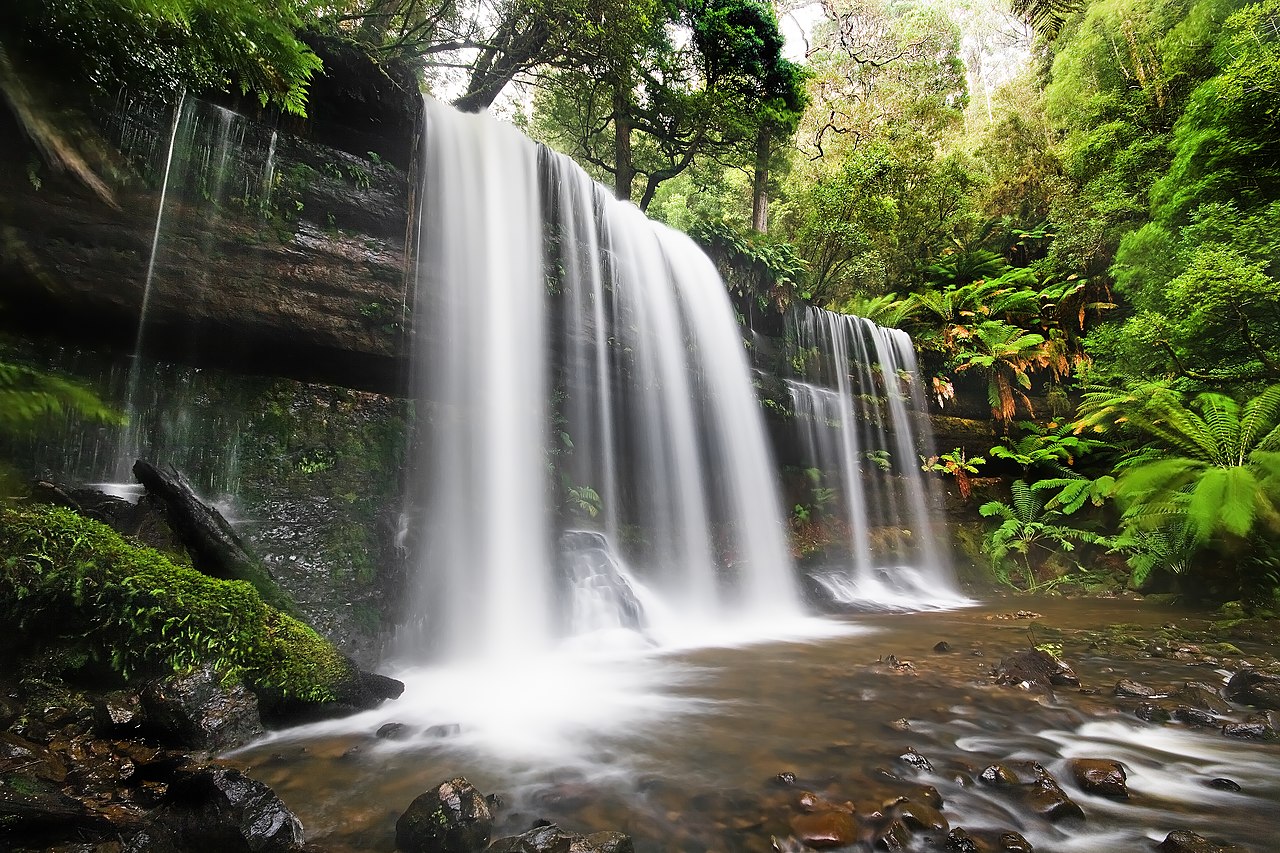
Mount Field National Park · Noodle snacks / CC BY-SA 3.0One more nature day, an easy hour northwest of the city. Coffee first.
Reliable, excellent coffee to start the drive out to Mount Field.
Drive to Mount Field National Park, one of Tasmania's oldest, for its rainforest walks and waterfalls.
The tiered Russell Falls is a flat, pram-friendly 20-25 minute stroll through tree ferns; extend onto the Tall Trees circuit among towering swamp gums, some of the tallest flowering plants on Earth. A Parks pass is required.
On the way out or back, the small Something Wild sanctuary near Mount Field lets you see devils, quolls, and platypus if you didn't get your fill of wildlife earlier in the trip.
Lunch near the park or in nearby New Norfolk.
A riverside cafe at Westerway near the park, a pleasant spot for soup, sandwiches, and cake with platypus sometimes in the creek below.
In nearby New Norfolk, a farm-to-table restaurant in a former asylum building, sourcing from its own garden. A standout lunch; book ahead.
Take a scenic drive back via the Derwent Valley, with a stop for the view.
If energetic, drive up to Lake Dobson for the alpine tarns; otherwise meander the Derwent Valley back toward Hobart, stopping at hop-country lookouts and small cellar doors.
A relaxed dinner back in town.
A buzzy wine bar and small-plates spot on Liverpool Street with a smart, seasonal menu and great by-the-glass list. Good for a low-key, high-quality evening.
An easygoing pasta-and-natural-wine bar that locals love; walk-ins possible earlier in the evening.
Salamanca Market & Farewell Feasting
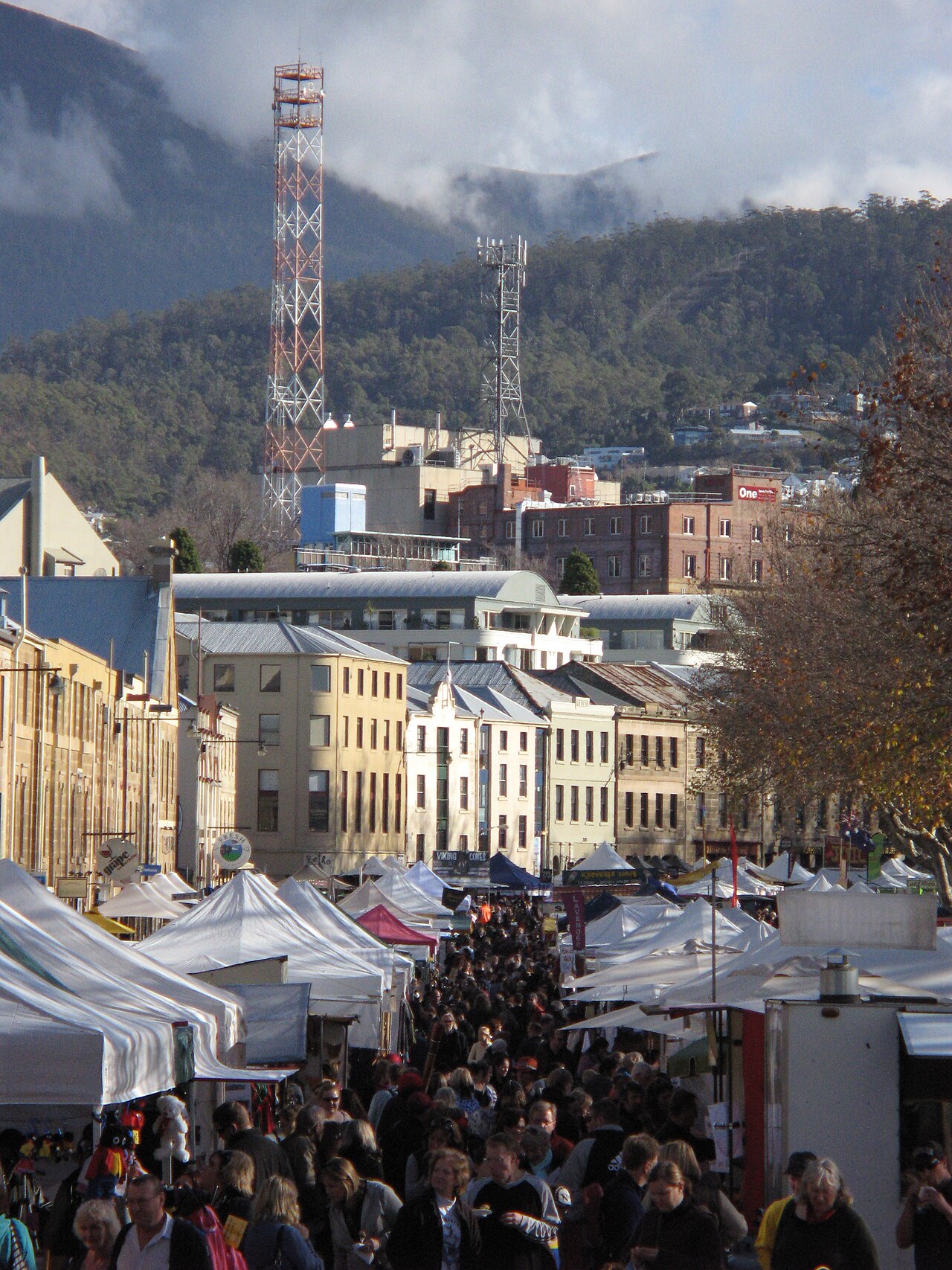
Salamanca Market · Nick carson at English Wikipedia / CC BY 3.0If your stay includes a Saturday, this is the day to time the Salamanca Market; otherwise use it as a flexible catch-up day. Start with coffee near the market.
A handy Salamanca Square base for coffee before diving into the stalls.
A dependable local breakfast spot for eggs and good coffee a short walk from the market.
Browse the Salamanca Market, Hobart's iconic Saturday street market, for Tasmanian makers, produce, and food stalls.
Running Saturdays roughly 8:30am to 3pm, some 300 stalls line the sandstone strip selling Tasmanian timber crafts, wool, whisky, produce, and street food beneath the plane trees. Free and the liveliest morning in town; go early to beat crowds.
If your last full day isn't a Saturday, the Red Decker hop-on hop-off loop is a good way to tidy up any sights you missed (Botanical Gardens, Cascade, Battery Point, the waterfront) on a 24-hour ticket; around A$32.
Graze the market or sit down nearby.
Work through Tasmanian oysters, scallop pies, bratwurst, and hot cinnamon doughnuts (the famous 'Dutch' truck) as a walking lunch.
A lively Mexican cantina just off the market for tacos and margaritas if you want to sit down.
Take in a final panorama and pick up last souvenirs.
A short drive above Sandy Bay to a historic semaphore station with sweeping views over Hobart, the Derwent, and Bruny Island. Free, with a cafe on site for afternoon tea.
Browse the Salamanca Arts Centre studios and shops for Tasmanian ceramics, Huon pine, and whisky to take home.
A memorable farewell dinner in Hobart.
If you didn't dine here earlier, its fire-driven, produce-led cooking is a fitting send-off. Book ahead; mains around A$38-46.
Return to Brooke Street Pier for polished modern plates and a last look over the water at night.
For a grand finale, a vineyard-side dinner at MONA's fine-dining room; the twilight ferry back down the river is a fine last impression of Hobart.

Last Morning & Departure
Constitution Dock · wlcutler / CC BY 2.0Wind down before your flight with one last proper Hobart coffee and breakfast.
A cheerful cafe doing creative brunch plates and excellent coffee, a good final Hobart breakfast.
One more cup from one of the city's best roasters before you head to the airport.
A short, easy stroll to close the trip, keeping an eye on the clock.
A final loop of the waterfront where the trip began, watching the boats and grabbing any last Tasmanian treats to carry home. Keep it relaxed with time to reach the airport.
Grab a quick early bite before transferring to Hobart Airport (about 20-25 minutes from the city).
A final paper-wrapped serve of fresh Tasmanian fish at Constitution Dock, quick and iconic before you leave.
Fast, satisfying sandwiches and pastries to eat in or take for the journey.
Pick your base
Base yourself around the Waterfront, Salamanca, and the CBD for the best walkability to restaurants, ferries, and tour pickups. Battery Point, just uphill, trades a little convenience for cottage-lined charm and quiet. Sandy Bay, a few minutes south, suits those wanting river views and a calmer setting, while a hire car makes any of these areas equally practical for day trips.
A refreshed 1940s pub-hotel on Liverpool Street in the heart of the CBD, with individually styled rooms and shared bathrooms kept immaculate. Great value, genuinely central, and a five-minute walk to the waterfront.
Tasmania's landmark riverfront hotel-casino in Sandy Bay, with wide Derwent views from the tower rooms and easy parking for road trips. A short drive or ferry from town, with restaurants and a revolving-restaurant history on site.
A stylish boutique hostel in a heritage building in Battery Point, moments from Salamanca. Private rooms and dorms with designer touches make it the best-value characterful stay in the area.
Hobart's standout waterfront hotel, a storytelling-themed property right on Hunter Street beside the piers. Splurge-worthy river-view rooms, a superb whisky bar, and tour boats leaving from the doorstep.
For families or a 15-day stay, a self-contained apartment near the waterfront gives you a kitchen for market hauls and space to spread out between day trips. Look in Battery Point, Sandy Bay, or the CBD fringe.
Good to know
How many days do you need in Hobart, Tasmania?
Three to four days covers Hobart's core sights (MONA, Salamanca, kunanyi/Mt Wellington, and one or two day trips). To use the city as a base for the wider south of Tasmania, including Bruny Island, Port Arthur, Freycinet, and Cradle Mountain, plan on 10 to 15 days at a comfortable pace.
What is the best area to stay in Hobart for first-time visitors?
The Waterfront, Salamanca, and adjacent CBD are best for first-timers, putting you within walking distance of restaurants, ferries, museums, and tour pickups. Battery Point is quieter and full of colonial charm just uphill, while Sandy Bay offers river views a short drive south.
What is the best time to visit Hobart and Tasmania?
Summer (December to February) brings the warmest, longest days and peak festivals but also the biggest crowds and prices. Autumn (March to May) offers settled weather and fewer people, while winter (June to August) is cold and quiet, atmospheric around events like Dark Mofo, though some alpine roads and walks may be affected by snow.
Do you need a car in Hobart?
Not for the city itself, which is compact and walkable, and many top day trips (Bruny Island, Port Arthur, Freycinet, Cradle Mountain) run as guided tours from Hobart. A hire car is worth it for flexible trips like the Coal River Valley wineries, Mount Field, the Huon Valley, and the Triabunna ferry to Maria Island.
Is Hobart expensive to visit?
Hobart sits at the mid-to-higher end for Australia: mid-range hotels typically run around A$180-300 a night, restaurant mains often A$35-48, and full-day tours roughly A$120-240. You can trim costs with self-catered apartments, the free Salamanca Market and TMAG, and self-driving instead of joining guided tours.
What are the best day trips from Hobart?
The standouts are Bruny Island (food and coastal scenery), the Tasman Peninsula and Port Arthur Historic Site, Freycinet National Park and Wineglass Bay, Maria Island's wildlife and Painted Cliffs, Mount Field's rainforest waterfalls, and the long-haul Cradle Mountain trip. Most can be done as a guided full-day tour or a self-drive from the city.
Fifteen days lets Hobart reveal itself slowly: convict sandstone and Saturday markets, a subterranean art museum reached by ferry, an alpine summit above the city, and day trips to Bruny, Port Arthur, Freycinet, Maria Island, and Cradle Mountain, all threaded with Tasmania's exceptional food and wine. Base yourself once near the waterfront, hire a car for the self-drive days, book the marquee tours and restaurants early, and pace the big excursions with restful city days. Do that, and you'll leave feeling you've truly known Tasmania's soulful little capital and the wild island around it.