
14 Days in Vietnam: An Adventurous Hanoi, Hoi An & Ho Chi Minh City Itinerary
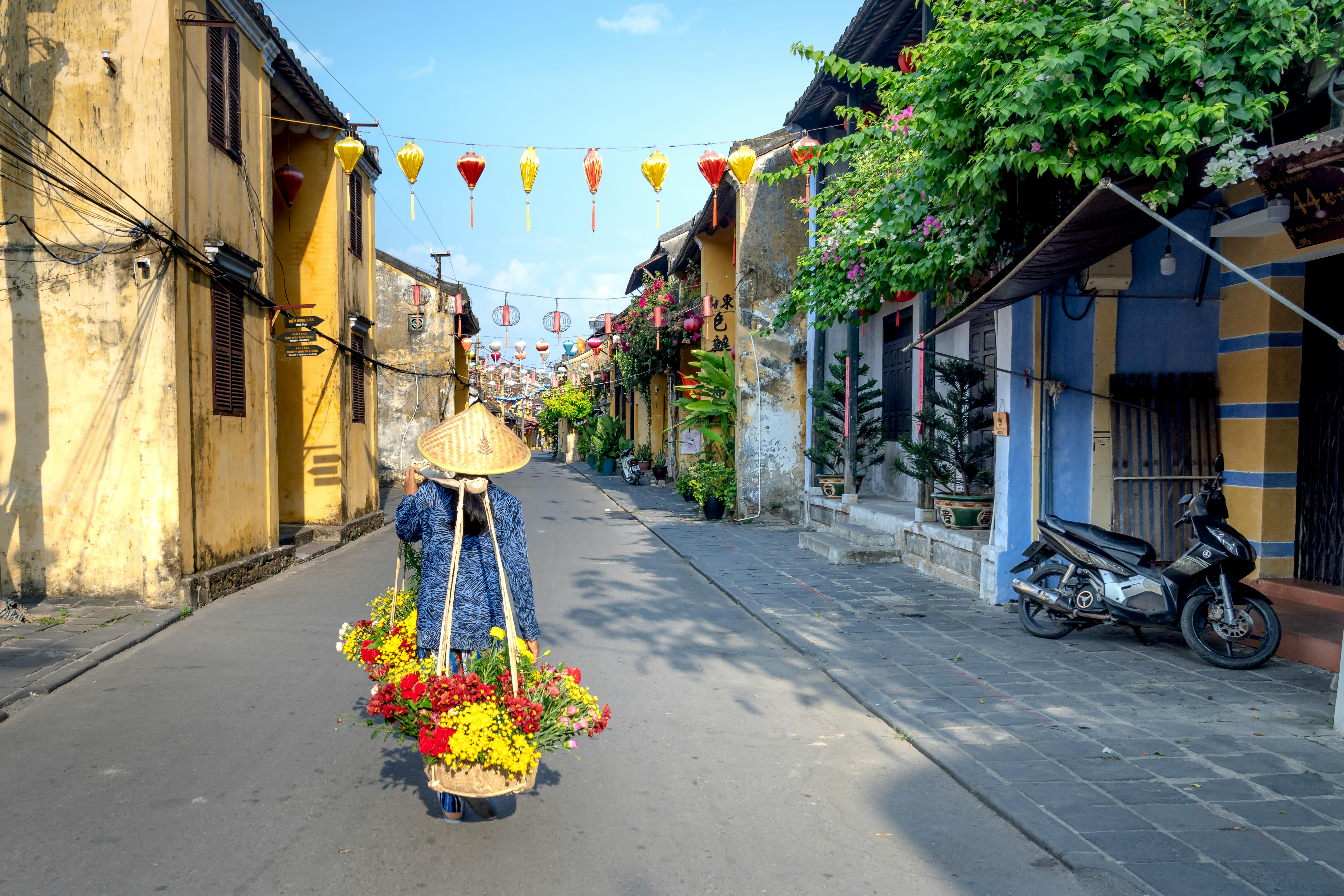
Vietnam rewards travelers who like movement, contrast, and a little sensory overload. In the span of two weeks, you can wake to temple bells in Hanoi, bike through rice fields near Hoi An, and finish with the kinetic energy of Ho Chi Minh City, where scooters stream past French colonial facades and late-night food stalls never seem to sleep.
Its history runs deep and visibly close to the surface. Imperial dynasties, Chinese influence, French rule, the American War, and a dramatic modern economic rise have all left their mark, which is why Vietnam feels at once ancient, resilient, and youthful. The country is also wonderfully regional in its cuisine: northern broths are restrained and elegant, central dishes are fiery and precise, and southern cooking tends to be sweeter and herb-heavy.
Practically speaking, March is one of the better months for a north-to-south itinerary, with generally pleasant conditions in Hanoi, comfortable beach-and-city weather in central Vietnam, and warm tropical heat in the south. Vietnam is a very strong-value destination for a budget-conscious traveler, especially if you favor guesthouses, local eateries, trains or low-cost flights, and a few well-chosen tours rather than an over-scheduled trip.
This 14-day Vietnam itinerary focuses on Hanoi, Hoi An, and Ho Chi Minh City, the most logical three-city flow for a 10+ day first visit. It balances classic sightseeing with adventurous detours, local neighborhoods, hands-on cooking, and memorable side trips that feel bigger than the map suggests.
Hanoi
Hanoi is Vietnam's old soul: lakes, pagodas, revolutionary history, elegant decay, and a street-food culture that can make a single block feel like a festival. It is also the best launch point for adventurous northern excursions, whether that means limestone landscapes in Ninh Binh or a cruise through Ha Long Bay.
The city's rhythm reveals itself slowly. Dawn tai chi by Hoan Kiem Lake, tiny stools on the pavement for bun cha, the clang of metal shutters, the soft hiss of pho broth, and then, suddenly, a boulevard lined with grand French-era buildings. If you want to feel Vietnam rather than just see it, start here.
Stay: For dependable value and a central base, consider Hanoi La Siesta Hotel & Spa. For apartment-style convenience that can be useful on a longer stay, Somerset Grand Hanoi is a practical pick. You can also browse wider options on VRBO Hanoi and Hotels.com Hanoi.
Arrival and onward logistics: Fly into Hanoi and compare fares on Trip.com flights or Kiwi.com. From Noi Bai Airport to the Old Quarter, expect roughly 40-50 minutes by car depending on traffic. For this itinerary's next leg, Hanoi to Da Nang is best by morning flight, usually around 1 hour 20 minutes in the air, with budget fares often in the roughly $35-$80 range when booked ahead via Trip.com or Kiwi.com.
Days 1-5: Old Quarter immersion, food culture, and northern landscapes
Spend your first block getting your bearings in the Old Quarter and the French Quarter. Walk Hoan Kiem Lake early, cross the red bridge to Ngoc Son Temple, and then make time for the Temple of Literature, Vietnam's first national university, where courtyards and stone stelae still speak of the country's Confucian scholarly tradition.
The Ho Chi Minh Mausoleum complex, One Pillar Pagoda, and Tran Quoc Pagoda give needed historical context, but don't over-museum yourself. Hanoi is best absorbed between monuments: in alleyways, wet markets, sidewalk tea stands, and around West Lake at sunset.
Breakfast and coffee picks: Start with pho at Pho Gia Truyen, a beloved local institution known for a clear, deeply aromatic broth and tender beef. For egg coffee, head to Giang Cafe, where the city's most famous creamy, meringue-like version remains a rite of passage. If you want a more contemporary coffee stop, The Note Coffee is whimsical and central, while Tranquil Books & Coffee offers a quieter break from the street churn.
Lunch ideas: Bun Cha Huong Lien is famous for grilled pork, rice noodles, herbs, and dipping sauce done exactly as Hanoi intends it. Cha Ca Thang Long is the place to try Hanoi's turmeric-marinated fish with dill, tableside sizzling pans, peanuts, herbs, and vermicelli—a dish with roots in the capital's old culinary identity.
Dinner recommendations: For northern Vietnamese cooking in a restored old house, Home Hanoi Restaurant is a strong first-night choice. For a more local, high-energy evening, try a bia hoi corner on Ta Hien or nearby streets, where fresh draft beer, grilled skewers, stir-fried morning glory, and snails create one of the cheapest and most social nights in Southeast Asia.
Adventure and local-life experiences: One of the smartest ways to understand Hanoi quickly is by jeep, because the city opens up once you leave the obvious lanes. The Hanoi Jeep Tour: Food, Culture and Fun by Vietnam Army Jeep is excellent for combining neighborhoods, street food, and cultural context in one punchy outing.

For a compact orientation with a bit more structure, the Hanoi City Tour: Private Half-Day Customized with Train Street works well. Train Street is controversial and access can change based on safety controls, but a guided visit helps navigate the current rules while still seeing one of the city's most surreal urban scenes.

For hiking, viewpoints, and a break from the city, Ninh Binh is the best-value adventure from Hanoi. The Ninh Binh Full Day Tour with Hoa Lu, Trang An and Mua Cave is especially well-suited to your adventurous vibe: the boat ride through karst scenery is beautiful, and the climb up Mua Cave's viewpoint stairs gives you the iconic dragon-backed panorama over rice fields and limestone towers.

If you prefer water over hiking, swap or add a Ha Long Bay day. The Ha Long Bay Day Cruise from Hanoi with Kayaking, Swimming & Lunch adds kayaking and island scenery without committing an overnight. For travelers with room in the budget and a wish for a more cinematic experience, the Amanda Cruise - Ha Long, Lan Ha Bay - All Inclusive 2D1N & 3D2N is an upgrade path, though a day cruise may fit your budget profile better.

Local gem: Visit Long Bien Market very early one morning if you want to see commerce at its most unvarnished. This vast wholesale market under and around Long Bien Bridge is not polished for visitors, which is precisely why it is memorable.
Cooking-class angle: Hanoi offers many good cooking schools in and around the Old Quarter; prioritize one that begins with a wet-market visit so you learn herbs, fish sauce variations, and northern seasoning logic before cooking. On a budget, this is one of the best ways to turn a meal into an education.
Hoi An
Hoi An is the pause between two big cities, but it is not sleepy in the boring sense. It is a merchant town of ochre walls, assembly halls, river lanterns, and nearby rice fields where the pace softens just enough for you to notice the details: incense smoke, tailor shops, bicycle bells, and the scent of grilled pork drifting from a corner kitchen.
It is also an ideal base for travelers who want both sightseeing and hands-on experiences. You can explore UNESCO-listed streets in the morning, cycle into the countryside in the afternoon, take a cooking class in a village, and still make it back for the lantern glow along the Thu Bon River by evening.
Getting here: Take a morning flight from Hanoi to Da Nang via Trip.com or Kiwi.com, then continue by car to Hoi An in about 45-60 minutes. Combined transit time door to door is usually around 4-5 hours, and keeping it as a morning move preserves most of the day.
Stay: For budget-conscious comfort close to the action, Hoi An Dream City Hotel is a good-value base. If you want a splurge night or two, Anantara Hoi An Resort sits beautifully by the river. For broader options, browse VRBO Hoi An and Hotels.com Hoi An.
Days 6-9: Ancient town, countryside cycling, beach time, and cooking
Use your first day here to wander without a rigid checklist. The Japanese Covered Bridge, Fujian Assembly Hall, and the old merchant houses matter, but Hoi An's real appeal is the total atmosphere of the old town—the texture of trade history, migration, and architecture compressed into walkable lanes.
For an adventurous but inexpensive day, rent a bicycle and ride toward Tra Que Vegetable Village and An Bang Beach. The route is flat, scenic, and lined with small farms, ponds, and homes, making it one of the easiest ways to feel daily life beyond the heritage core.
Breakfast and coffee picks: Start at Phin Coffee for strong Vietnamese coffee in a stylish but unfussy setting, or try The Espresso Station for a more modern cup. For breakfast, Madam Khanh is a favorite for banh mi with crackling bread and generous fillings, while local noodle shops around the market are ideal for cao lau, Hoi An's signature dish made with chewy noodles, pork, greens, and crunchy crouton-like toppings.
Lunch ideas: Ba Le Well is a classic choice for grilled meats wrapped in rice paper with herbs and dipping sauces; the meal feels communal and hands-on, perfect for your interest in living like a local. Morning Glory, from chef-restaurateur Ms. Vy, offers an excellent introduction to central Vietnamese staples in a setting that is polished but still rooted in local cooking traditions.
Dinner recommendations: For white rose dumplings and regional specialties, White Rose Restaurant remains the essential stop because the family behind the dish still defines the standard. For a more atmospheric evening, cargo-club-style riverside dining or a simple seafood meal near An Bang Beach can be a fine contrast to old-town formality.
Cooking-class priority: Hoi An may be the best place in Vietnam for a cooking class because classes often include market visits, herb gardens, and basket-boat or village components. Choose a class centered on Tra Que herbs and central Vietnamese dishes like cao lau, banh xeo, fresh spring rolls, and fish in clay pot; this is exactly the kind of practical, memorable experience that stays useful after the trip.
Signature excursion: If you want one visually dramatic day from this base, the Bana Hills - Golden Bridge Deluxe Small group from Hoian/ Danang is the most straightforward option. The giant stone hands of the Golden Bridge are unabashedly theatrical, but the long cable car ride and mountain views make it more than a photo stop.

If you prefer departing from nearby Da Nang or want another operator, the Ba Na Hills and Golden Bridge Full-day Tour from Da Nang and Full Day Golden Bridge and Ba Na Hills Small Group Tour are solid alternatives. This is touristy, yes, but still worth it if you enjoy spectacle and mountain air.

Local gem: Go to the Hoi An Central Market not just to eat, but to observe how the town feeds itself. Even if you do not buy much, this is where herbs, noodles, fish sauce, fruit, and daily gossip all seem to circulate at once.
Ho Chi Minh City
Ho Chi Minh City, still called Saigon by many locals, is Vietnam in fast-forward. It is louder, broader, more vertical, and more restless than Hanoi, with a flavor all its own: coffee shops humming at midnight, alleyway food culture, rooftop views, and a city center where colonial architecture and modern glass towers face each other like rivals.
This is the right finale for an adventurous itinerary. The city excels at motion—motorbike food tours, jeep rides, river journeys, market neighborhoods, and historical excursions to the Cu Chi Tunnels or the Mekong Delta, all of which make the final stretch feel expansive rather than repetitive.
Getting here: Travel from Da Nang to Ho Chi Minh City by morning flight booked on Trip.com or Kiwi.com. Flight time is about 1 hour 30 minutes, with common fares often around $30-$70 if booked in advance; door-to-door, expect around 4 hours.
Stay: For strong mid-budget value in a central area, Silverland Yen Hotel is a smart choice. If you want apartment-style flexibility, Sherwood Residence is reliable. Budget travelers who prioritize sociability should look at The Common Room Project, and you can browse more on VRBO Ho Chi Minh City and Hotels.com Ho Chi Minh City.
Days 10-14: Saigon street life, wartime history, and Mekong local culture
Begin with the city's historical core: Notre-Dame Cathedral Basilica of Saigon's exterior, the Central Post Office, the Independence Palace, and the War Remnants Museum. This cluster tells the story of French Indochina, the Vietnam War, and the long afterlife of both in the modern city.
Then leave District 1 often. Cholon, the old Chinatown centered around Binh Tay Market and Thien Hau Temple, reveals a different Saigon—commercial, devotional, and deeply Chinese-Vietnamese in character. The alleys and apartment blocks around local markets are just as interesting as the headline sights.
Breakfast and coffee picks: Have breakfast at Banh Mi Huynh Hoa if you want Saigon's most famous stuffed baguette, absurdly generous and worth sharing. For coffee, try The Workshop for serious specialty brewing, or sit curbside at a local ca phe sua da stall and watch the scooter tide pass. Southern-style coffee tends to be bolder and sweeter than in Hanoi.
Lunch ideas: Com Tam Ba Ghien is a classic for broken rice with grilled pork chop, shredded pork skin, egg, and fish sauce—filling, inexpensive, and quintessentially southern. For noodles, Hu Tieu Nam Vang Thanh Dat is a dependable introduction to the Phnom Penh-style noodle soup that Saigon adopted and made its own.
Dinner recommendations: For a local seafood-and-beer evening, Oc Dao is excellent for Saigon snail culture: shellfish, tamarind sauces, lemongrass, and noisy tables covered with small plates. If you want something more polished but still rooted in Vietnamese flavors, Secret Garden offers classic dishes in a rooftop setting that feels intimate without becoming stiff.
City touring with energy: The Ho Chi Minh City Private Half-Day Tour by U.S Army Jeep is one of the best ways to tackle the city's scale. It gives you speed, context, and access to neighborhoods that are harder to appreciate from a standard car.

For pure food-and-local-life immersion, choose the Ho Chi Minh City Street Food Tour & Sightseeing By Motorbike. This suits your adventurous brief perfectly: you will cover more ground than on foot, eat where locals actually eat, and get a visceral sense of Saigon's after-dark rhythm.

History and river excursion: If wartime history matters most, the Premium Cu Chi Tunnels Tour by Speedboat – Small Group Experience is the most interesting version because the river approach avoids some road traffic and adds scenic value. If you want to combine historical context with rural Mekong life in one long but rewarding day, the Cu Chi Tunnels & Mekong Delta with Coconut Village Tour is a practical all-in-one choice.

Cooking-class angle: Ho Chi Minh City is excellent for southern cooking classes, especially those that include Ben Thanh or a local market visit before cooking. Prioritize dishes such as fresh spring rolls, caramelized pork, green papaya salad, and southern-style pancakes so you can feel the regional shift from the north and center.
Local gem: In the late afternoon, walk through Nguyen Thien Thuat apartment blocks or similar older residential districts with cafes tucked into aging concrete structures. This side of Saigon rarely makes the first-timer checklist, yet it often becomes the part people remember most.
Departure note: For your flight out of Tan Son Nhat, compare options on Trip.com flights or Kiwi.com. If you are departing at a busy hour or want a smoother airport experience, the Premium Fast Track Service at Ho Chi Minh City Airport can be worth considering.
This Vietnam itinerary gives you three distinct faces of the country: Hanoi's history and street culture, Hoi An's slower heritage-and-countryside pleasures, and Ho Chi Minh City's restless southern energy. It is adventurous without being exhausting, budget-aware without feeling spare, and rich in food, local life, and memorable excursions that make two weeks feel satisfyingly full.
If you follow this route, you will leave with more than photos of lanterns and limestone cliffs. You will understand how Vietnam tastes, moves, remembers, and reinvents itself from north to south—and that is the kind of trip people revisit in memory for years.