
Shaped by Phoenicians, Romans, Arabs, Ottomans, and French, Tunisia is a compact country with a colossal story. In two weeks you can walk Carthaginian shores, trace mosaic-laden Roman villas, sip mint tea above a Mediterranean cliff, and ride a camel beneath Saharan stars.
Expect contrasts: the stately medina of Tunis; the blue doors and sea views of Sidi Bou Said; the island rhythms of Djerba; and Sousse’s golden-sand coastline and bustling souks. Cuisine bridges continents—think brik, couscous, harissa, grilled seafood, and honeyed pastries like makroudh and samsa.
Practical notes: Tunisia uses the Tunisian Dinar (TND); Arabic and French are widely spoken. Dress modestly for holy sites, and during Ramadan (dates shift annually) some cafés close by day but reopen with festive nights. As always, check current travel advisories and avoid remote border areas; stick to licensed guides for desert trips.
Tunis
Welcome to the capital: a city of elegant colonial boulevards and a UNESCO-listed medina wrapped around the venerable Zitouna Mosque. North of town lie the scattered ruins of Carthage and the cliff-top village of Sidi Bou Said, a palette of white walls, blue woodwork, bougainvillea, and sea.
Food here sings. Downtown stalwarts plate pristine seafood; medina cafés serve fragrant couscous and lablabi; and in Sidi Bou Said, hot rings of bambalouni arrive dusted with sugar alongside glasses of pine-nut mint tea.
Days 1–5: Tunis, Carthage & Sidi Bou Said
- Getting in: Fly into Tunis–Carthage International. Compare fares and routes on Trip.com or Kiwi.com. A taxi to downtown is ~25–40 TND, or use a metered yellow cab from the official queue.
- Where to stay: For atmospheric riads in the medina or modern stays in Lac/La Marsa, browse VRBO Tunis and Hotels.com Tunis.
- Old Tunis, new tastes (1–2 days): Wander the medina’s Souk El Attarine (perfumes) and Souk El Berka (jewels), then step into the tranquil courtyards of 18th–19th century palaces. Pause for lunch at El Ali (near Zitouna; order brik à l’œuf and seasonal couscous) and book dinner at Dar El Jeld for refined takes on ojja and stuffed squid in an ornate mansion. For seafood and a Tunis institution, Chez Slah downtown is beloved—reserve.
- Mosaic masterpieces (half day): The Bardo Museum showcases one of the world’s great Roman mosaic collections (look for the famed “Virgil Mosaic”). Pair it with a stroll along Avenue Habib Bourguiba’s Art Deco facades, the Cathedral of St. Vincent de Paul, and a coffee at a historic café.
- Carthage & Sidi Bou Said (full day): Ride the TGM suburban rail or taxi to Carthage. String together the sea-lashed Antonine Baths, the Tophet, and Byrsa Hill with its sweeping bay views. Continue to Sidi Bou Said: sip tea at Café des Nattes, sample hot bambalouni from a street stand by the main square, then watch sunset from Café des Délices perched over the water. For dinner, head to La Marsa’s shoreline—Le Golfe plates elegant fish and seasonal sides with waves almost at your feet.
- Slow day options: Book a traditional steam at Hammam Kachachine in the medina (gender-separate hours). Or day-trip to the Roman city of Dougga (spectacular theater and Capitol; about 2 hours by car with driver).
- Cafés & breakfasts: Start with Tunisian pastries at Pâtisserie Masmoudi (try samsa and yoyo), espresso at Café Bondin (a local roaster since 1903), or fresh-pressed OJ and msemen crepes at a medina stall.
Travel to Djerba (Morning, Day 6): Fly Tunis → Djerba–Zarzis (approx. 1 h 15 m; typical one-way $45–120). Search options on Trip.com or Kiwi.com. Taxis on arrival to Houmt Souk run ~15–30 TND depending on distance.
Djerba
Djerba is Tunisia’s laid-back island: palm groves, long crescent beaches, whitewashed villages, and workshops where potters keep centuries-old techniques alive. It’s also a springboard to ksour (fortified granaries) and Saharan oases across the mainland.
Culture sits side by side with leisure here: the El Ghriba Synagogue hosts an annual pilgrimage, DjerbaHood’s murals color Erriadh, and sailing trips reach flamingo-dotted sandbars where the sea turns luminous turquoise.
Days 6–10: Island Life, Street Art & Sahara
- Where to stay: Choose a characterful guesthouse in Erriadh/Houmt Souk or a beach hotel along Sidi Mahrez/Zone Touristique. Compare on VRBO Djerba and Hotels.com Djerba.
- Houmt Souk (half day): Wander the medina’s fabric and basket stalls, then loop the seafront by the 15th‑century Bordj el Kebir fort. For lunch try Haroun on the waterfront (whole grilled sea bream, fish couscous; nautical décor) or El Fondouk for traditional Tunisian plates in a cool, vaulted setting.
- Erriadh & DjerbaHood (half day): Explore the open-air street art project—murals by international artists animate old lanes. Nearby, the El Ghriba Synagogue (one of the oldest in Africa) rewards a respectful visit; bring modest attire.
- Guellala & craft heritage (half day): Drive to Guellala to watch potters throw clay using age-old techniques. The local heritage museum offers island traditions in bite-size exhibits.
- Beach & sea day (1 day): Unwind on Sidi Mahrez beach or try kitesurfing in the shallow lagoons near Ras R’Mel/Seguia (lessons/rentals often ~$30–50/hour). Family-friendly “pirate” sailing trips to the Flamingo Island sandbar include swimming and a grilled-fish lunch (approx. 60–90 TND; 5–6 hours; touristy but fun).
- Sahara sampler (full day by 4×4): Book a licensed driver-guide for a loop to Tataouine and the hilltop village of Chenini (troglodyte homes and a ridge-top ksar) or the dune-ringed oasis of Ksar Ghilane (camel rides, hot spring). Many itineraries combine two: expect 9–11 hours, ~500–800 TND per vehicle including lunch. For movie buffs, some tours detour to Matmata’s Hotel Sidi Driss, the Star Wars “Lars homestead.”
- Eat & drink: Breakfast on samsa and makroudh at Pâtisserie Masmoudi (Houmt Souk branch). For a sunset seafood feast, Haroun is a classic; inland, Dar Dhiafa (Erriadh) offers candlelit courtyard dining with refined island recipes. Beachside, El Ferida serves fresh fish, salads, and chilled rosé steps from the sand.
Travel to Sousse (Morning, Day 11): Easiest is to fly Djerba → Tunis (≈1 h 15 m; $45–120 on Trip.com or Kiwi.com), then take the SNCFT train Tunis → Sousse (~2–2.5 hours; about 10–15 TND). Overland alternatives from Djerba (louage/shared minibus via Gabès/Sfax) take 6–7 hours.
Sousse
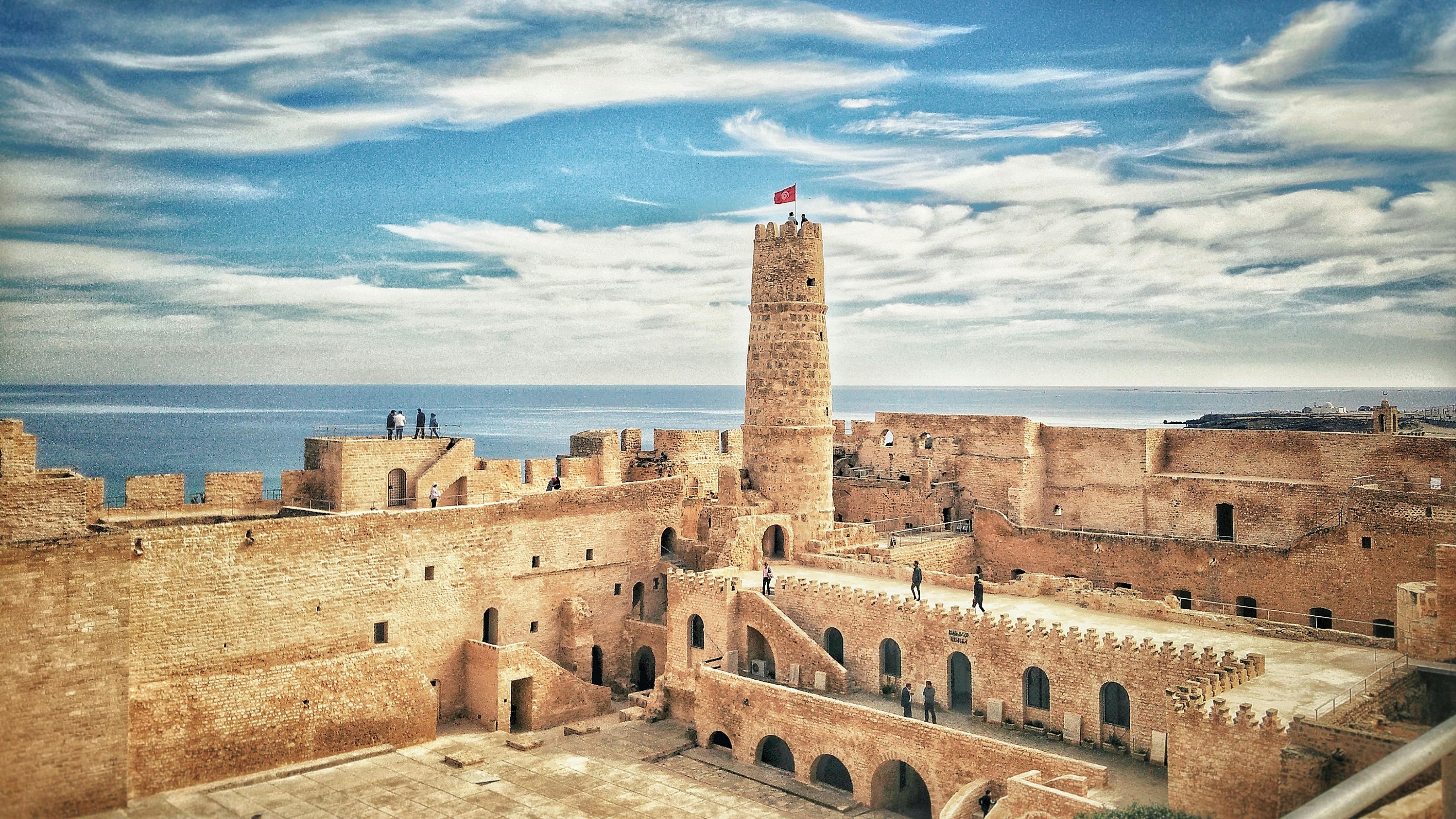
Sousse blends a UNESCO-listed medina and formidable ribat with a resort coastline, palm promenades, and a lively marina at Port El Kantaoui. It’s also your springboard to Monastir’s film-famous ribat and the holy city of Kairouan.
History here is hands-on: climb ramparts, gaze at shimmering Roman mosaics in the city’s Kasbah museum, then end the day with grilled dorade and a seaside stroll.
Days 11–14: Medina, Marina & Day Trips
- Where to stay: Choose medina guesthouses for old-town ambience or beach hotels near Port El Kantaoui for pool-and-sea days. Compare on VRBO Sousse and Hotels.com Sousse.
- Medina & monuments (1 day): Start at the Ribat of Sousse (8th–9th c.)—climb the watchtower for views—then step into the austere beauty of the Great Mosque. The Sousse Archaeological Museum, set in the Kasbah, houses exquisite Roman and early Christian mosaics rivaling Bardo’s.
- Sea & Port El Kantaoui (half day): Taxi up to Port El Kantaoui, a 1970s Andalusian-inspired marina ringed with cafés, gelato stands, and boat operators. Sunset cruises and short sailings are easy to arrange on the spot.
- Day trip to Monastir (half–full day): 30–45 minutes by train or taxi south. Explore the honey-colored Ribat of Monastir (a backdrop in classic films) and the Habib Bourguiba Mausoleum with its golden domes. Lunch on grilled fish at Le Pirate by the marina, then stroll the corniche.
- Day trip to Kairouan (full day): 2–2.5 hours each way (louage or hired driver). See the monumental Great Mosque of Kairouan, the serene Aghlabid Basins, and the medina’s carpet ateliers. For a sweet reward, try makroudh (semolina date pastries) at Pâtisserie Abdelkader, a local favorite.
- Eats in Sousse: For classic Tunisian dishes, La Marmite is a local standby (try fish couscous or slow-cooked mloukhia). In the medina, Dar Soltane offers candlelit, vaulted rooms and refined regional recipes. By the marina, La Daurade serves fresh catch with sea breezes; for a casual bistro vibe, Le Bonaparte plates steaks, pastas, and seafood.
- Cafés & breakfasts: Grab croissants and fresh juice at Pâtisserie Masmoudi or a strong espresso at Café Bondin, then linger over mint tea at a medina terrace.
Getting back to Tunis for departure: From Sousse, frequent SNCFT trains reach Tunis in ~2–2.5 hours (budget ~10–15 TND). For flights out, compare options on Trip.com or Kiwi.com.
Across two weeks, you’ll trace Phoenician harbors and Roman theaters, sip tea above a sapphire bay, and cross desert tracks to a palm-shaded oasis. Tunisia’s scale makes it easy; its layers make it unforgettable.