
14 Days in Japan: Tokyo, Kyoto & Osaka Itinerary with Food, Temples, Trains and Mt. Fuji
Japan rewards the traveler who loves contrast. In one trip you can stand beneath ancient cedar gates at a Shinto shrine in the morning, eat a meticulously assembled ramen lunch at noon, and end the night under the neon canyons of Shinjuku or Dotonbori. That layered identity is the result of centuries of imperial tradition, merchant culture, postwar reinvention, and a national devotion to craft that shows up everywhere from train punctuality to the glaze on a teacup.
For a 14-day Japan itinerary, the most logical and satisfying route is Tokyo, Kyoto, and Osaka. Together they cover the country’s great themes: modern spectacle, classical heritage, and exuberant food culture. This plan also keeps travel efficient, with fast rail links that turn intercity transfers into part of the experience rather than a chore.
Practical notes matter in Japan. Trains are famously reliable, cashless payment is common but carrying some yen is still wise, and etiquette is subtle but easy to respect: keep voices low on public transport, queue patiently, and be mindful in temples and shrines. March 2025 is an excellent time to go, with cool weather, seasonal foods, and the first stirrings of spring in gardens and along riverbanks.
Tokyo
Tokyo is not one city so much as a constellation of cities stitched together by rail lines, backstreets, and appetite. It can feel cinematic at first glance, yet its real pleasures often arrive in miniature: a six-seat kissaten pouring hand-drip coffee, a tiny shrine between office towers, a basement food hall whose pastry counters look like jewelry displays.
Give Tokyo enough time and it starts explaining itself. Asakusa preserves the spirit of old Edo, Ginza still carries the polish of modern Japanese retail culture, Shibuya performs youth culture in public, and Shinjuku swings between government towers, department stores, and lantern-lit alleys. For a first visit, it is the ideal opening chapter to a Japan trip.
Days 1-5: Arrival, classic Tokyo neighborhoods, food culture and a Mt. Fuji day trip
Arrival and getting in: Search flights into Tokyo on Trip.com flights or Kiwi.com. From either Narita or Haneda, allow roughly 30 minutes to 1.5 hours into central Tokyo depending on airport and hotel area; airport rail and limousine bus options are easy to navigate, and taxis are comfortable but substantially more expensive.
Where to stay: For a broad hotel search, use Hotels.com Tokyo or VRBO Tokyo. Strong options include The Peninsula Tokyo for a polished base near Ginza and the Imperial Palace, Hotel Gracery Shinjuku for immediate access to nightlife and transport, Hotel Sunroute Plaza Shinjuku for practical comfort near Shinjuku Station, and Keio Plaza Hotel Tokyo if you want an established full-service stay with easy airport connections.
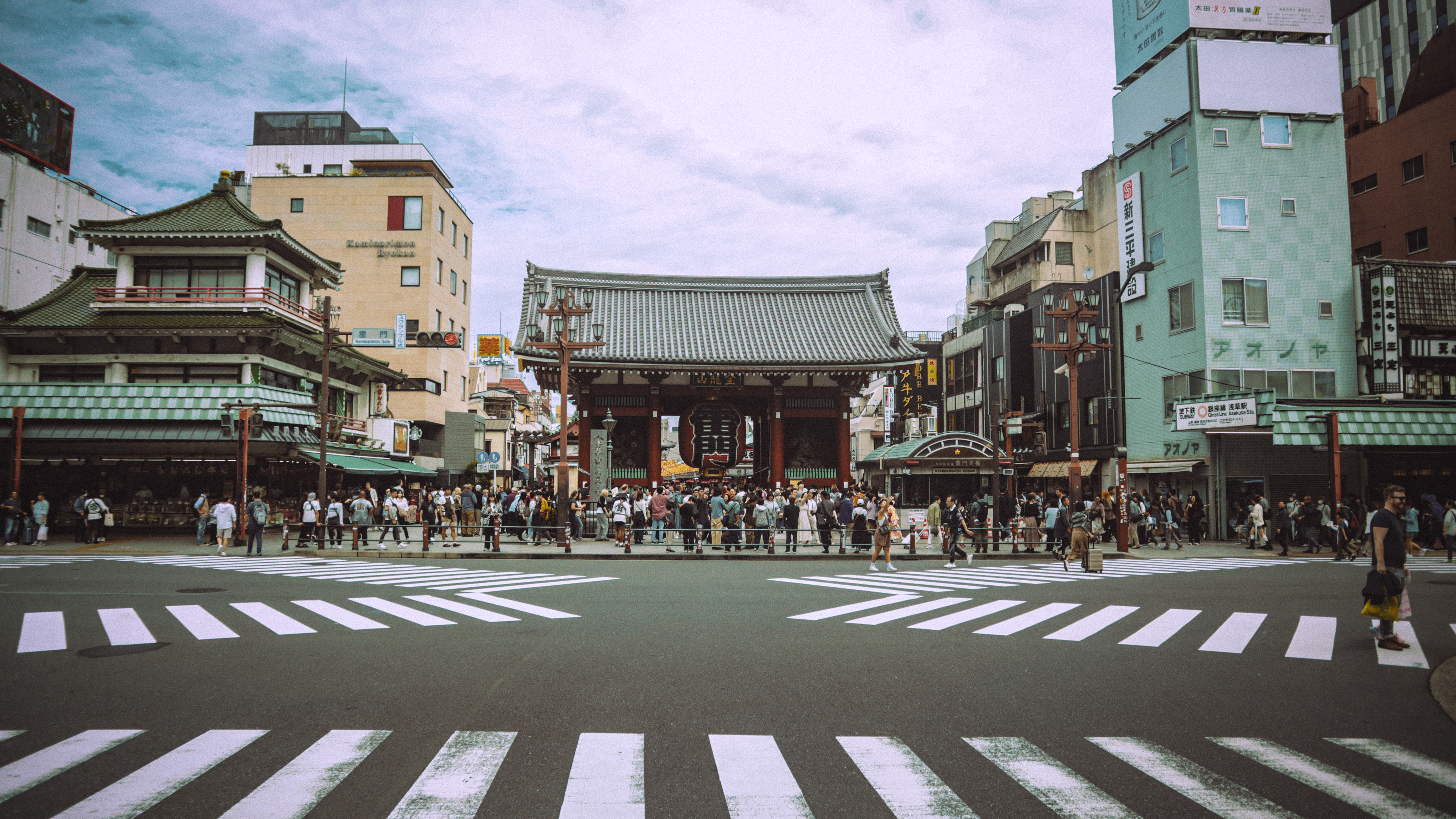
Start in Asakusa and Ueno: Begin with Senso-ji, Tokyo’s oldest temple, where the great red Kaminarimon gate and Nakamise shopping street provide an ideal first encounter with the city’s blend of devotion and commerce. Go early, before the heaviest crowds, when incense drifts through the temple grounds and the neighborhood feels less like a checklist stop and more like a living district.
Nearby Ueno adds museums, parkland, and a more everyday rhythm. Ameyoko, the bustling market street under the tracks, is good for skewers, snack shopping, and people-watching; it still carries the rough-and-ready market spirit that emerged in the postwar years.
Shibuya and Harajuku: Spend a block of time between Meiji Jingu, Omotesando, Harajuku, and Shibuya. Meiji Jingu offers forested calm in the middle of the metropolis, while nearby Takeshita Street and Cat Street show Tokyo’s long habit of turning youth fashion into theater. End in Shibuya, where the famous crossing is less a monument than a ritual of urban choreography.
Shibuya Crossing became globally iconic because it captures Tokyo’s ability to turn everyday infrastructure into spectacle. The surrounding area is packed with department stores, record shops, cocktail bars, and late-night eateries, so it works best not as a photo stop but as an evening neighborhood to wander.
Shinjuku and west-side Tokyo: Reserve at least one evening for Shinjuku. Explore the observation deck area around the Tokyo Metropolitan Government Building, then move into Omoide Yokocho or Kabukicho, where postwar alley culture still survives in pockets of tiny bars and grill counters.
Omoide Yokocho is especially rewarding if you understand what you are seeing. It is a remnant of old Tokyo eating culture: narrow lanes, smoke from charcoal grills, close-set stools, and menus that often feature skewers of chicken, pork, vegetables, and offal. Even if you only stop for one drink and a few skewers, it gives the district historical texture.
Coffee and breakfast picks:
- Fuglen Tokyo in Shibuya is a fine first coffee stop, known for excellent espresso and Scandinavian-Japanese cool without pretension. It is especially good in the morning before the neighborhood fully wakes up.
- Onibus Coffee is beloved for carefully sourced beans and a minimalist, local feel. If you care about Japan’s modern specialty coffee scene, this is the sort of place that explains why Tokyo is now one of the world’s best coffee cities.
- Path is a top breakfast choice if you can time it right; its Dutch pancake and baked goods have earned a faithful following. The atmosphere feels stylish but grounded, and the food is genuinely worth planning around.
Lunch recommendations:
- Tsuta remains a reference point in Tokyo ramen culture, known for refined broth and truffle notes that helped redefine what a bowl of ramen could be. It is ideal if you want a more precise, modern expression of the dish.
- Tonkatsu Maisen Aoyama is one of the city’s classic pork cutlet addresses. The cutlet is crisp, juicy, and remarkably light, and the setting makes a traditional comfort dish feel almost ceremonial.
- Sushizanmai is a practical and reliable way to fit sushi into a busy sightseeing day, especially if you want broad menu choice and central locations. It is not a hidden secret, but it is dependable and good.
Dinner recommendations:
- Izakaya Toyo-style experiences are famous in Osaka, but in Tokyo look for a meal in Shinjuku’s alley districts where an izakaya—a Japanese pub built around shared small plates and drinks—turns dinner into a social ritual. Order yakitori, potato salad, grilled fish, and seasonal specials rather than treating it like a standard restaurant.
- Nabezo Shinjuku is a strong choice for shabu-shabu and sukiyaki if you want a warm, convivial dinner after a long walking day. Thinly sliced meat, vegetables, and simmering broth make for a meal that feels both comforting and distinctly Japanese.
- Gonpachi Nishi-Azabu is atmospheric, known for its dramatic interior and broad menu of skewers, soba, and classic dishes. It is more famous than hidden, but the room itself makes dinner memorable.
Viator activities in Tokyo:
- For a strong orientation day: 1-Day Tokyo Bus Tour. This is useful early in the trip because it combines major landmarks with efficient logistics.

1-Day Tokyo Bus Tour on Viator - For a food-led evening: Tokyo: Shinjuku Food Tour (13 Dishes at 4 Local Eateries). This is particularly valuable because Shinjuku can be overwhelming; a guided route helps you distinguish truly interesting food stops from tourist-targeted noise.

Tokyo: Shinjuku Food Tour (13 Dishes at 4 Local Eateries) on Viator - For a signature day trip: Mt Fuji and Hakone 1-Day Bus Tour Return by Bullet Train. This is one of the most efficient ways to fit Japan’s most celebrated natural landmark into a Tokyo stay, and the bullet train return adds a classic Japan travel moment.

Mt Fuji and Hakone 1-Day Bus Tour Return by Bullet Train on Viator - For deeper flexibility: Tokyo Customized Private Tour (Must See Places in 1 Day). This works well if your interests lean toward design, anime, architecture, or food and you want the city shaped around them.

Tokyo Customized Private Tour (Must See Places in 1 Day) on Viator
Local gems to work in around the block: Yanaka offers one of the gentlest walks in Tokyo, with older low-rise streets and a slower pace than the city’s headline districts. Kappabashi, the kitchenware street near Asakusa, is fascinating even if you are not shopping; it reveals Japan’s reverence for tools, tableware, and food presentation.
For a more contemporary side of the city, spend time in Daikanyama or Kagurazaka. Daikanyama leans stylish and bookish, while Kagurazaka blends old geisha-district traces with French cafés and hidden lanes, making it one of the city’s most quietly atmospheric neighborhoods.
Day 6: Morning transfer from Tokyo to Kyoto
Take a morning shinkansen from Tokyo Station to Kyoto Station. Search schedules on Trip.com trains. The journey is typically about 2 hours 10 minutes to 2 hours 20 minutes on the fastest services, with fares usually around $90-$110 one way depending on class and booking conditions.
Choose seats on the right side when leaving Tokyo for your best chance of a Mount Fuji view on a clear day. This transfer is part of the pleasure of the trip: punctual departure, smooth ride, bento lunches, and a gradual shift from the Kanto plain to Kansai’s more traditional heartland.
Kyoto
Kyoto is where Japan’s historical memory becomes visible block by block. For more than a thousand years it served as the imperial capital, and that inheritance survives in temple precincts, tea houses, gardens, seasonal rituals, and street patterns that still guide the modern city.
Yet Kyoto is not a museum. It is a living city of university students, craftspeople, market stalls, coffee roasters, tofu specialists, and neighborhood shrines that locals still use in the ordinary course of life. The secret is to balance the major sights with time to linger in side streets, riverbanks, and lesser-known corners.
Days 6-10: Temples, traditional districts, markets and an optional Nara outing
Where to stay: Search broadly on Hotels.com Kyoto or VRBO Kyoto. Excellent choices include The Ritz-Carlton, Kyoto for a refined riverfront stay, Kyoto Tokyu Hotel for comfort and easy access, Kyoto Brighton Hotel for spacious rooms and strong service, and Piece Hostel Sanjo for a smart, sociable budget-friendly base.
Eastern Kyoto: Begin with Higashiyama, where Kyoto often appears at its most iconic. Kiyomizu-dera’s wooden stage, set against hills and seasonal foliage, remains one of the city’s essential views, but the real reward is walking the preserved lanes of Sannenzaka and Ninenzaka before or after peak traffic.
Continue toward Kodai-ji, Maruyama Park, and Yasaka Shrine, then into Gion. Gion is often reduced to the possibility of spotting a geiko or maiko, but its deeper appeal lies in the old wooden facades, lantern-lit alleys, and the sense that performance, hospitality, and ritual have long shaped this quarter.
Fushimi Inari and southern Kyoto: Give Fushimi Inari Taisha an early morning or late afternoon window. The endless vermilion torii gates climbing the hillside are among Japan’s most recognizable images, yet the place becomes far more powerful once you move beyond the first crowded section and begin ascending into quieter stretches.
The shrine is dedicated to Inari, associated with rice, prosperity, and business, which helps explain the many donated torii. That forest of gates is not just photogenic; it is a visible record of devotion and patronage over time.
Arashiyama and western Kyoto: On another block, head to Arashiyama for the Bamboo Grove, Tenryu-ji, and the riverfront. The bamboo path is brief but atmospheric if timed early; Tenryu-ji’s garden, however, is the true masterpiece, designed to frame borrowed scenery from the surrounding mountains.
If energy allows, cross Togetsukyo Bridge and continue toward Okochi Sanso Garden or the monkey park for broader views. Arashiyama works best when treated as a half-day district rather than a single-photo stop.
Nishiki Market and central Kyoto: Reserve time for Nishiki Market, a narrow food corridor that offers a compact introduction to Kyoto flavors: pickles, yuba, sesame sweets, tea, grilled seafood, and seasonal snacks. It is touristy, yes, but still genuinely useful for tasting the city’s culinary identity.
Nearby Pontocho is ideal for an evening stroll. This slender lane along the Kamo River has long been associated with dining and entertainment, and even now it feels intimate in a way that larger commercial districts do not.
Coffee and breakfast picks:
- % Arabica Kyoto Higashiyama is famous, but for good reason: superb espresso, elegant design, and a location that fits naturally into eastern Kyoto sightseeing. Go early to enjoy it before the queue builds.
- Weekenders Coffee has a loyal following for serious coffee in a tucked-away setting. It feels less performative than some better-known spots and is ideal if coffee quality is a priority.
- Smart Coffee is a classic kissaten-style breakfast choice, beloved for pancakes, egg dishes, and old-school atmosphere. It offers a more nostalgic start to the day than a modern café.
Lunch recommendations:
- Honke Owariya is one of Kyoto’s historic soba institutions, with roots stretching back centuries. Eating there is not just lunch; it is a way of touching the city’s culinary continuity.
- Omen is excellent for udon, especially if you want a meal that feels local, balanced, and satisfying without being too heavy. The sesame-based dipping style is memorable and distinctly Kyoto.
- Kyoto Engine Ramen is a strong casual option for travelers seeking bold flavor and friendly service in central Kyoto. It is especially handy on a packed sightseeing day.
Dinner recommendations:
- Gion Kappa is a good example of the sort of place that rewards advance planning: intimate, ingredient-driven, and rooted in Kyoto’s respect for seasonality. This is where Kyoto dining shows its quieter confidence.
- Pontocho Kappa Zushi works well if you want a river-adjacent evening in a historic dining lane without committing to an elaborate kaiseki meal. The setting matters almost as much as the food.
- Torisei in the Fushimi area is a wonderful choice if you want local sake with yakitori and hearty Japanese dishes. Fushimi is one of Japan’s great sake districts, and tasting there gives dinner geographical meaning.
Viator activities in Kyoto:
- For an efficient overview: PERFECT KYOTO 1-Day Bus Tour. This is especially useful if you want to cover the headline sights while saving your independent energy for markets, cafés, and evening walks.

PERFECT KYOTO 1-Day Bus Tour on Viator - For a memorable cultural evening: Kyoto Sumo Show Experience with Chicken Hot Pot & Souvenir. It is a theatrical introduction to sumo culture and works well for travelers who want something lively after a day of temples.

Kyoto Sumo Show Experience with Chicken Hot Pot & Souvenir on Viator - For a hands-on food experience: No.1 Ramen Experience in Kyoto – 5.0 rated, 2,100+ reviews. This is a fun contrast to Kyoto’s more formal traditions and a good choice if you want one interactive culinary activity in the trip.

No.1 Ramen Experience in Kyoto – 5.0 rated, 2,100+ reviews on Viator - For a combined excursion: From Kyoto / Osaka: Kyoto Must-see Spots & Nara Park One Day Tour. This is a smart option if you want to include Nara’s great temple and famous deer without navigating all the logistics yourself.

From Kyoto / Osaka: Kyoto Must-see Spots & Nara Park One Day Tour on Viator
Local gems: Visit Kennin-ji if you want a Zen temple with beauty and atmosphere but often less pressure than Kyoto’s most crowded landmarks. The Philosopher’s Path is best outside peak mid-day hours, when the canal-side walk regains its contemplative quality.
If you are interested in crafts, keep an eye out for tea shops, incense stores, and small ceramics boutiques rather than buying all souvenirs in the biggest tourist lanes. Kyoto’s craft traditions are part of the city’s identity, and smaller shops often offer the most interesting objects.
Day 11: Short morning transfer from Kyoto to Osaka
Travel from Kyoto to Osaka by rail in the morning. Search on Trip.com trains. Depending on station pair and service, expect roughly 15-30 minutes and about $4-$15. It is a short hop, which is why pairing Kyoto and Osaka in one trip works so well.
Because the transfer is easy, there is no need to rush out at dawn. Have a proper breakfast in Kyoto, take a mid-morning train, drop your bags, and start Osaka with appetite intact.
Osaka
Osaka has long been known as Japan’s kitchen, and the city still wears that title proudly. Merchant culture shaped its temperament: direct, convivial, funny, and deeply serious about value and flavor. Where Kyoto refines, Osaka relishes.
This is the city for takoyaki eaten hot on the street, okonomiyaki sizzling on the griddle, standing bars under train tracks, and neighborhoods that come alive after dark. It also offers major history at Osaka Castle, a lively aquarium district, and easy access to final souvenir shopping before departure.
Days 11-14: Street food, castle history, neighborhoods and a lively finale
Where to stay: Use Hotels.com Osaka or VRBO Osaka for broad searches. Good picks include The St. Regis Osaka for a polished central base, Swissotel Nankai Osaka for superb access above Namba Station, Hotel Sunroute Osaka Namba for practical proximity to Dotonbori, and Hotel Taiyo if you want a very budget-conscious stay.
Namba, Dotonbori and Shinsaibashi: Start where Osaka performs its most famous self. Dotonbori’s canal, giant signs, animated crab and octopus façades, and dense concentration of food stalls are unabashedly theatrical, but there is nothing fake about the city’s devotion to eating well.
This district is best approached as a tasting route rather than a single meal destination. Try takoyaki, kushikatsu, and okonomiyaki in smaller portions across multiple stops, then drift into side streets where the crowds thin and the bars become more local.
Osaka Castle and surrounding districts: Osaka Castle is one of the country’s great historical symbols, associated above all with Toyotomi Hideyoshi and the late 16th-century struggle to unify Japan. The current main tower is a reconstruction, but the site still matters because the scale of the stone walls, moats, and grounds conveys the strategic ambition of the period.
Pair the castle with nearby museum time or a contrasting afternoon in Nakazakicho, a neighborhood known for independent cafés, old houses, and a more relaxed creative mood. It offers relief from Osaka’s louder commercial zones.
Shinsekai and Tennoji: Shinsekai is delightfully scruffy, full of retro signs and local energy. Developed in the early 20th century with inspirations from Paris and Coney Island, it now feels like a nostalgic fantasy of urban pleasure, anchored by Tsutenkaku Tower and a dense collection of kushikatsu spots.
Tennoji nearby adds temples, parks, and department store convenience. This pairing gives you a more layered sense of south Osaka beyond the usual Dotonbori loop.
Coffee and breakfast picks:
- Lilo Coffee Roasters is one of Osaka’s best-known specialty coffee addresses, with a serious bean list and a loyal following. It is an easy recommendation for anyone who likes to start the day with precision rather than convenience-store coffee.
- Brooklyn Roasting Company Kitahama offers a comfortable morning setup near the river, good espresso, and room to ease into the day. It is particularly nice if you want a quieter breakfast before diving into busier districts.
- LeBRESSO is excellent for thick-cut toast breakfasts and casual café energy. Japan does breakfast toast exceptionally well, and this is a fine place to appreciate that fact.
Lunch recommendations:
- Mizuno in the Dotonbori area is one of the city’s most respected okonomiyaki spots. Watching the savory pancake cooked on the griddle, layered with cabbage, batter, and toppings, gives you one of Osaka’s defining meals in one of its defining districts.
- Harukoma is a dependable sushi choice with strong value and local popularity. It is ideal if you want a quality lunch that does not feel ceremonial or inflated.
- Jiyuken is a classic for Osaka curry rice, with roots going back a century. If you want a dish tied to the city’s everyday eating history rather than its tourist clichés, this is a smart stop.
Dinner recommendations:
- Daruma is the famous name in kushikatsu, Osaka’s battered-and-fried skewer tradition. The pleasure lies in variety: meat, seafood, vegetables, crisp coating, dipping sauce, and beer in a room that feels built for appetite.
- Hajime-style high-end dining is internationally celebrated, but for this itinerary I would prioritize local Osaka personality over formality. Seek out a lively izakaya in Ura-Namba, where small plates, grilled items, and direct service capture the city’s social warmth.
- Hozenji Yokocho area restaurants are ideal for a final atmospheric dinner. The stone lane, lantern light, and proximity to the moss-covered Fudo Myoo statue create one of central Osaka’s rare pockets of old-world texture.
Local gems: Kuromon Market is useful for snacking and ingredients, though best visited with tempered expectations; go for scallops, grilled seafood, fruit, and browsing rather than expecting a purely local market untouched by tourism. For a more neighborhood feel, walk the backstreets of Nakazakicho or the riverside stretches of Nakanoshima.
If you want one major entertainment option, Universal-area hotels are available, but for most first-time visitors, central Osaka near Namba or Umeda is the stronger base. The city reveals itself most vividly at street level and after dark.
Departure planning: If you fly out of Osaka, use Trip.com flights or Kiwi.com to search routes from Kansai International Airport. If you need to return to Tokyo for an outbound flight, a morning shinkansen from Shin-Osaka to Tokyo typically takes about 2.5 to 3 hours and usually costs about $95-$115 one way, searchable via Trip.com trains.
This 14-day Japan route gives you a remarkably complete first introduction to the country: Tokyo for scale and surprise, Kyoto for memory and ritual, Osaka for appetite and personality. It is a trip built not only around famous sights, but around the texture of daily life—train platforms, market counters, temple paths, and the kind of meals that stay in your mind long after you return home.
By keeping the itinerary to three well-connected cities, you gain depth without losing momentum. Japan is a place that rewards repeat visits, but this journey already offers the essential promise: to leave feeling that you have seen something beautiful, eaten something unforgettable, and only just begun to understand the country.