
12 Days in South Korea & Japan: Seoul, Busan, Kyoto, Osaka and Hiroshima by Train
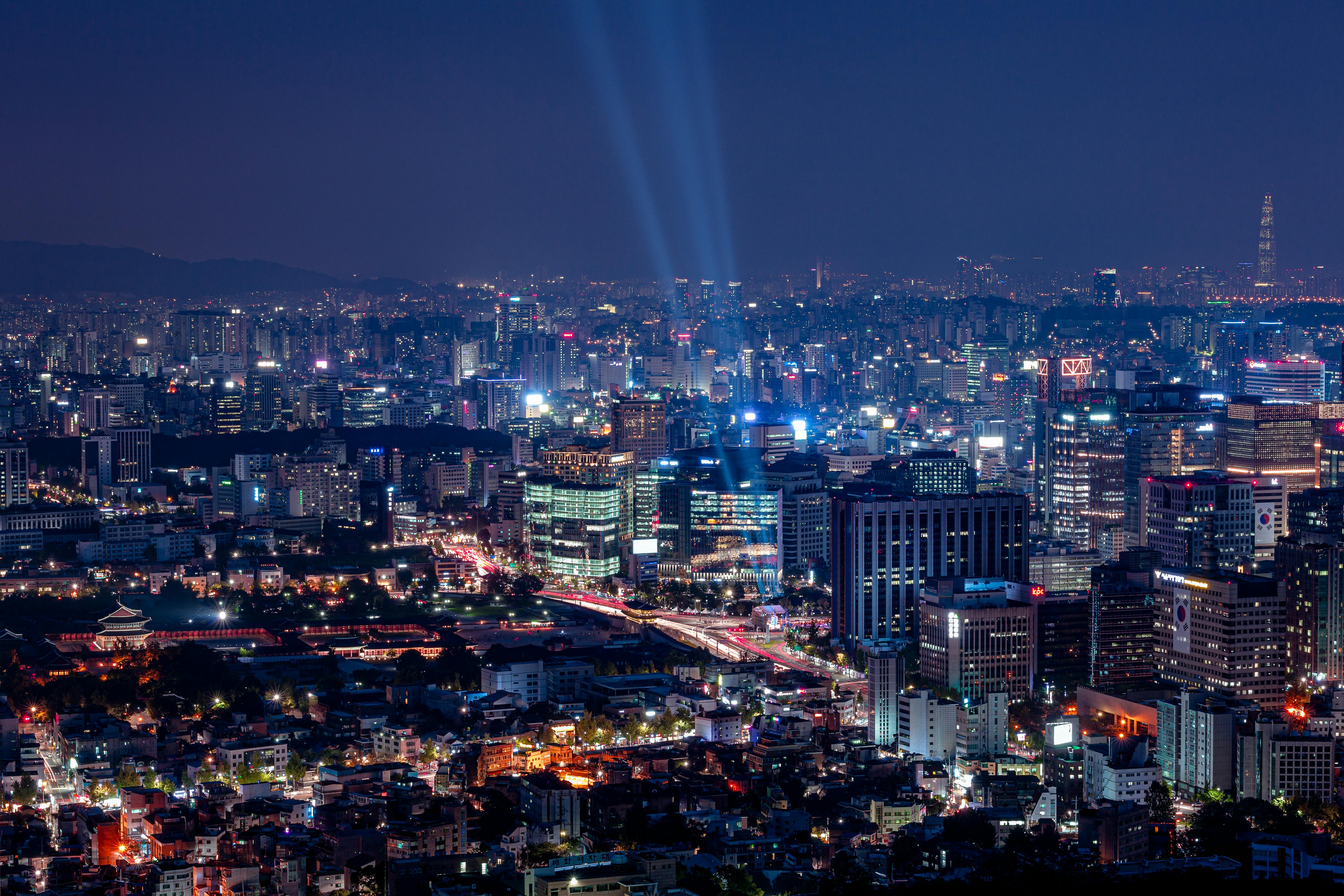
Few 12-day trips offer contrasts as dramatic and rewarding as this South Korea and Japan itinerary. In Seoul and Busan, you move between royal dynasties, mountain-ringed skylines, night markets, and long sweeps of coast; in Kyoto, Osaka, and Hiroshima, the journey deepens into temple culture, merchant streets, culinary theater, and some of the most moving historical sites in Japan.
These cities are tied together not only by short-haul flights and excellent trains, but by a shared devotion to craft, ritual, and food. You will taste knife-cut noodles in Seoul, seafood beside the sea in Busan, kaiseki traditions and tea culture in Kyoto, exuberant street food in Osaka, and Hiroshima-style okonomiyaki in the city that transformed grief into a global message of peace.
Practically, this itinerary is designed for a logical flow and realistic pace: arrive in Seoul, continue south to Busan by KTX, fly to Kansai for Kyoto and Osaka, then finish in Hiroshima by shinkansen. As of March 2025, travelers should check entry requirements, rail reservation policies during peak seasons, and local holiday calendars, while also carrying comfortable walking shoes, a transit card, and some cash for markets, temples, and smaller neighborhood eateries.
Seoul
Seoul is a city of deliberate juxtapositions. A Joseon palace may stand a few subway stops from a design-forward café district, and a market stall serving bindaetteok can be followed by a rooftop bar overlooking the Han River.
This is the best opening act for your South Korea and Japan itinerary because it introduces Korean history, contemporary style, and food culture all at once. Give yourself time to look upward here: palace eaves, mountain ridgelines, neon signs, and tower views are part of Seoul’s visual language.
Where to stay: For a polished base with strong service, consider The Shilla Seoul. For a more budget-friendly central stay, Hostel Haru is a smart pick, while travelers wanting easy family-style convenience may like Lotte Hotel World. You can also browse broader options via VRBO Seoul and Hotels.com Seoul.
Arrival and transport: For flights into Korea, compare options on Trip.com flights or Kiwi.com. If you want an easy first day after a long-haul arrival, the Private Airport Transfer : Incheon to/from Seoul (up to 7 pax) is a sensible splurge.
Days 1-3: Palaces, hanok lanes, markets, and Seoul at night
Begin in the historic north side of the city: Gyeongbokgung Palace, Bukchon Hanok Village, Insadong, and Jogyesa Temple. Gyeongbokgung is the grandest of Seoul’s Joseon palaces, first built in 1395, and its geometric courtyards and painted pavilions provide a grounding sense of dynastic Korea before you dive into the modern city around it.
For a structured first day, the Seoul City Sightseeing Tour Including Gyeongbokgung Palace, N Seoul Tower, and Namsangol Hanok Village is an efficient overview. It is especially useful if you want context before exploring independently.

Another excellent option is the Seoul: Gyeongbok Palace, Hanok Village, and Gwangjang Tour, which pairs royal heritage with one of the city’s great food halls. Gwangjang Market is where you should try mayak gimbap, mung bean pancakes, hand-cut noodles, and raw beef if you are an adventurous eater.

For breakfast, head to London Bagel Museum-style café culture if you can secure a visit independently, or keep things more traditional near palace districts with toast, egg sandwiches, and coffee in Anguk or Seochon. Coffee-wise, Seoul does cafés exceptionally well; in Ikseon-dong and Euljiro, you will find atmospheric spaces tucked into alleys and former workshops, ideal for a slower late morning.
For lunch, Gwangjang Market is the obvious classic, but it earns its reputation. The thrill here is not merely the food; it is the choreography of griddles, steam, sharp knives, and regulars who know exactly which stool to claim.
For dinner, explore Myeongdong or Euljiro for Korean barbecue, dakgalbi, or pocha-style drinking spots. A pocha is a casual tented or street-adjacent drinking venue where skewers, seafood, spicy stews, and beer or soju become part of the night’s social theater.
On one evening, book the Seoul Street Food Market Tour. It is a strong choice because Seoul’s food identity is best understood while standing up, moving between bites, and hearing why tteokbokki in one district tastes different from another.

For a memorable night that is less obvious than simply going up a tower, consider the Seoul Han River Night Tour: Picnic, Games & Starlight Cruise. The Han is Seoul’s civic stage, and seeing the city from the river clarifies its scale and calm after the traffic and energy of the day.

Day 4: A deeper historical day beyond the city center
If this is your first visit to Korea, make time for the DMZ. The border is one of the most politically charged places on earth, but it is also a landscape of abrupt stillness, and seeing it adds historical weight to everything else you experience in Seoul.
The strongest option here is the Best DMZ Tour Korea from Seoul (Suspension Bridge & JSA Museum). If you want added contemporary perspective, the DMZ Insider Tour: Defector Q&A, 3rd Tunnel & Bridge Options is particularly compelling.

Back in Seoul, keep dinner restorative rather than elaborate. Samgyetang, a restorative ginseng chicken soup, or a bubbling jjigae near City Hall, Jongno, or Myeongdong makes sense after a long excursion.
Busan
Busan feels like a release of pressure after Seoul. The pace is looser, the horizon opens, and the city’s personality comes from fishing history, port commerce, beaches, cliffside temples, and neighborhoods that spill down toward the sea.
It is one of Asia’s great urban-coastal combinations. You can have temple bells in the morning, raw fish at lunch, bright painted lanes in the afternoon, and a yacht-lit skyline by evening.
Travel from Seoul to Busan: Take the KTX high-speed train; most services run about 2.5 to 3 hours, and typical fares are often around $45-$75 depending on class and booking conditions. Search schedules on Trip.com trains.
Where to stay: Busan does not have specific hotel affiliate deep-links in your list, so use the search pages: VRBO Busan and Hotels.com Busan. Haeundae suits first-timers who want beach access and modern convenience, while Nampo-dong is better if you want markets, older Busan atmosphere, and easier access to Jagalchi and Gamcheon.
Days 5-6: Seaside temples, colorful hillsides, seafood markets, and night views
Start with Haedong Yonggungsa, one of Korea’s rare major seaside temples. Most Korean temples retreat into mountains; this one faces the surf, which gives it a theatrical force that feels distinctly Busan.
The easiest way to cover the city’s highlights is the Busan Top Coastal Highlights with Gamcheon Village & Sky Capsule. It combines the city’s most photogenic coastal section with Gamcheon Culture Village, whose steep painted houses and stairways tell a story of refugee settlement transformed through public art.

If you prefer a broader orientation, the Busan Highlights in One Day: Small Group Tour (Max 6 Pax) is a very practical choice. Travelers who like flexibility should look at the Busan Private Tour with Licensed Local guide.

For breakfast, find a café in Haeundae with ocean views and keep the morning light. Korean cafés in Busan often excel at pastries and cream-filled buns, but if you want something savory, seaweed soup or abalone porridge near the fish market districts is a very local start.
For lunch, go to Jagalchi Market or nearby seafood restaurants where live tanks, slicing counters, and shellfish platters make Busan’s maritime identity impossible to miss. Order hoe, the Korean raw fish style, and pair it with spicy chojang, lettuce wraps, and side dishes; it is less formal than Japanese sashimi service and more convivial.
For dinner, try grilled eel, dwaeji gukbap, or milmyeon. Dwaeji gukbap, Busan’s beloved pork-and-rice soup, is hearty, inexpensive, and deeply local; milmyeon, a cold wheat noodle dish born from wartime scarcity and northern noodle traditions, is another dish whose history is embedded in the bowl.
One of your best Busan evenings is the Sunset Haeundae Sky Capsule and Busan Night view Tour from Busan. Busan after dark is a city of bridges, harbor lights, and black water, and this excursion shows off that maritime drama beautifully.

Kyoto
Kyoto is where the journey changes register. After the vertical energy of Korea’s largest cities, Kyoto asks you to notice gravel raked into precise lines, incense drifting through temple halls, and the discipline of streets where old wooden machiya townhouses still survive between modern businesses.
This former imperial capital is not a museum piece. It is a living city of universities, artisans, tea culture, neighborhood bathhouses, market arcades, and restaurants where centuries of etiquette still quietly guide the meal.
Travel from Busan to Kyoto: The simplest route is a morning flight from Busan to Kansai International Airport booked via Trip.com flights or Kiwi.com. Flight time is usually around 1 hour 20 minutes to 1 hour 40 minutes, with total airport-to-city transit often 4.5 to 6 hours door to door; fares commonly range about $70-$180 depending on carrier and baggage.
Where to stay: For a refined splurge, choose The Ritz-Carlton, Kyoto. For strong mid-range choices, look at Kyoto Tokyu Hotel or Hotel M's Plus Shijo Omiya. Budget-conscious travelers should consider Piece Hostel Sanjo. You can also browse VRBO Kyoto and Hotels.com Kyoto.
Days 7-8: Temples, tea, old lanes, and Kyoto after dark
Rise early in Kyoto whenever possible. The city’s most famous places are at their best before crowds gather, when temple bells carry further and streets in Higashiyama still feel residential rather than visited.
The Kyoto Early Morning Tour with English-Speaking Guide is one of the smartest bookings in the city because it turns overtouristed icons back into places of atmosphere. It is particularly valuable for Fushimi Inari and Arashiyama, where timing changes the entire experience.
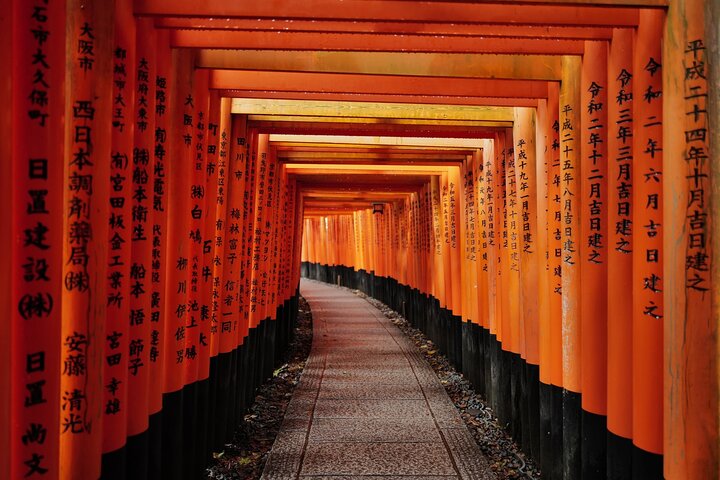
If you prefer a comprehensive sweep of headline landmarks, the PERFECT KYOTO 1-Day Bus Tour is efficient and well suited to first-time visitors. Travelers wanting a more intimate rhythm should consider the Private Kyoto Tour with a Local, Highlights & Hidden Gems, Personalised.
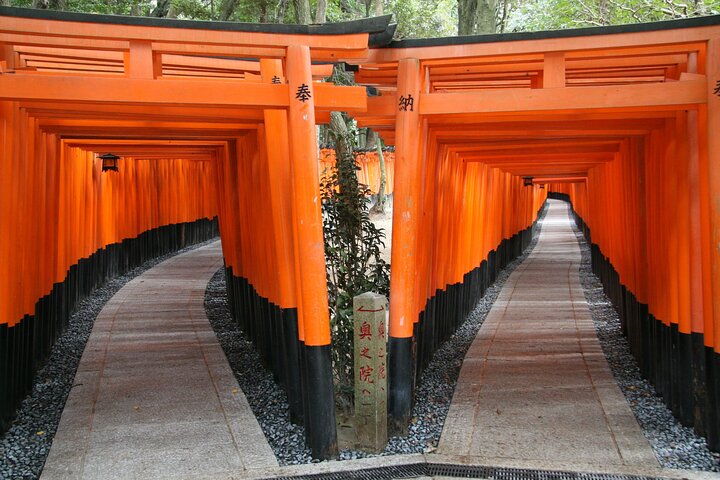
For breakfast, Kyoto is a city of kissaten cafés, bakeries, and refined coffee counters. Around Karasuma, Sanjo, and Higashiyama, look for places serving thick toast, egg sandwiches, and slow-brewed coffee; they offer a gentle contrast to the temple circuit.
For lunch, Nishiki Market remains the classic grazing corridor, but it is best approached selectively. Snack on tamagoyaki, yuba, pickles, sesame sweets, and grilled seafood, then sit down elsewhere for a proper meal if you want less crowding.
Tea belongs in Kyoto not as a checklist item, but as a way of resetting the pace. The Kyoto Tea Ceremony with Kimono near Imamiya Jinjya Shrine offers a graceful introduction, while the Kyoto Kiyomizu Tea Ceremony with Scenic Garden Views pairs ritual with an especially beautiful setting.

For dinner, Gion and Pontocho offer atmosphere, but reservation strategy matters. Instead of chasing only expensive kaiseki, consider obanzai restaurants serving Kyoto home-style small plates, tofu specialists near temple districts, or seasonal multi-course meals in quieter lanes around Sanjo and Okazaki.
On one evening, the Kyoto Gion Geisha District Walking Tour - The Stories of Geisha is well worth booking. Gion is often misunderstood by visitors; a guided walk helps explain the district as a working cultural world, not merely a backdrop for photographs.

Osaka
Osaka is the extrovert of the Kansai region. It is funnier, louder, less ceremonious, and gloriously confident in its appetite.
Where Kyoto edits itself, Osaka performs. The city’s great gift to travelers is permission to enjoy things wholeheartedly: takoyaki eaten standing up, neon reflected on canals, comedy, izakaya culture, and neighborhoods where every sign seems to insist that dinner should begin immediately.
Travel from Kyoto to Osaka: This is an easy intercity hop by JR or private railway, usually 30 to 60 minutes depending on your stations, often for roughly $4-$10. Search rail options on Trip.com trains.
Where to stay: For a high-end central stay, book The St. Regis Osaka or Swissotel Nankai Osaka. For solid mid-range convenience near the action, Hotel Sunroute Osaka Namba is practical. Budget travelers may like Hotel Taiyo. For broader searches, use VRBO Osaka and Hotels.com Osaka.
Days 9-10: Castle history, Dotonbori energy, and Osaka’s greatest skill—feeding people
Osaka Castle should be approached as both symbol and setting. The current structure is reconstructed, but the site remains essential for understanding Toyotomi Hideyoshi’s ambitions and Osaka’s role in the unification struggles of late 16th-century Japan.
For an excellent introduction, book the Ultimate Osaka Walking Tour: Castle, Dotonbori, Gems & Lunch. It gives the city historical context while still leaning into its strongest suit: neighborhoods with personality.

Osaka demands a food tour, and the best fit here is either the Osaka Food Tour: 15 Delicious Dishes & 3 drinks at 5 Eateries or the Hungry Osaka Street Food Tour:15 Tastings & 3 Drinks with a Local. Osaka’s reputation as “Japan’s kitchen” is not branding fluff; it comes from centuries of merchant trade, rice exchange wealth, and a civic culture that values good eating with almost moral seriousness.

For breakfast, choose a neighborhood coffee shop in Namba, Umeda, or Nakazakicho. Osaka mornings are often understated compared with its evenings, which makes them a good time to wander arcade shopping streets before shutters fully rise.
For lunch, prioritize okonomiyaki, kushikatsu, and takoyaki. Kushikatsu, especially in Shinsekai, is the city’s most gleeful fried specialty—skewered meats, vegetables, and seafood dipped in batter and fried crisp, then eaten with a strict one-dip rule in communal sauce.
For dinner, Dotonbori is famous for a reason, but the best meals are often just beyond the main canal strip in side streets full of tiny counters and izakaya. An izakaya is part tavern, part dining room, part social refuge; in Osaka it often becomes the most human-scale way to understand the city.
If you want a more unusual evening, the Osaka Sumo Experience with Live Show and Audience Challenge is lively and memorable, especially for first-time visitors who want a digestible, entertaining window into a deeply traditional sport.

Hiroshima
Hiroshima is not defined only by what happened here in 1945, but it would be dishonest to pretend the city can be understood without that history. What makes Hiroshima extraordinary is how completely it rebuilt itself into a place of greenery, river light, thoughtful museums, and a public language of peace.
It is also, happily, a city of excellent food, baseball devotion, and one of Japan’s most beautiful nearby islands. Miyajima, with Itsukushima Shrine and its great torii seemingly afloat at high tide, provides the spiritual and scenic counterpoint to Hiroshima’s memorial core.
Travel from Osaka to Hiroshima: Take the shinkansen, usually about 1.5 to 2 hours depending on service, with typical fares around $65-$110. Search schedules on Trip.com trains.
Where to stay: The most convenient upscale option is Sheraton Grand Hiroshima Hotel near the station. Other strong choices include RIHGA Royal Hotel Hiroshima and Grand Prince Hotel Hiroshima. Budget travelers can consider Santiago Guesthouse Hiroshima. Broader searches are available at VRBO Hiroshima and Hotels.com Hiroshima.
Days 11-12: Peace Memorial Park, Atomic Bomb Dome, and Miyajima
Dedicate your first Hiroshima block to the Peace Memorial Park, the Atomic Bomb Dome, and the museum. These are among the most important historical sites in the world, and they deserve time, emotional steadiness, and ideally a strong guide who can provide context without flattening the human complexity of the place.
The Hiroshima Peace & History Tour: Why the Atomic Bomb Was Dropped is excellent for travelers who want a more analytical historical frame. If you prefer a concise site-focused introduction, the Hiroshima: Atomic Bomb Dome and Peace Memorial Museum 3 hours is a strong choice.

On the following day, go to Miyajima. The island has deer, forested slopes, temple paths, and one of the most recognizable shrine views in Japan, but it is not just picturesque; it has a centuries-deep sacred identity tied to mountain worship and Shinto tradition.
The most complete option is the Peaceful Hiroshima & Miyajima UNESCO 1 Day Bus Tour. If you want something more personal, the Hiroshima and Miyajima Private Guided Tour is excellent.

For breakfast, stay simple with coffee and pastry near Hiroshima Station or Hondori before the museum day. For lunch, anago on Miyajima is the classic island dish—conger eel grilled and served over rice—and it is one of Japan’s most satisfying regional specialties.
For dinner, you must try Hiroshima-style okonomiyaki. Unlike the Osaka version, the Hiroshima style is layered rather than mixed, usually including cabbage, batter, pork, noodles, egg, and sauce cooked in sequence on a hot griddle. It is a perfect final-night meal because it feels both local and celebratory.
If you have extra energy, an evening walk through central Hiroshima reveals a city that feels unexpectedly gentle after the day’s historical intensity. Rivers divide the grid, bridges glow softly, and the atmosphere is reflective rather than solemn.
This 12-day Seoul, Busan, Kyoto, Osaka, and Hiroshima itinerary is built to keep momentum without sacrificing depth. It begins with royal Korea and modern city life, moves through coastal Busan, shifts into the cultural heart of Kansai, and ends in Hiroshima with a reminder that travel can delight, instruct, and humble you in equal measure.
You will leave with a vivid sense of East Asia’s variety: palaces and hanok alleys, fish markets and beaches, shrines and tea rooms, neon canals and memorial parks. More importantly, you will have moved through these places in a sequence that makes historical, culinary, and practical sense—exactly what a great multi-city itinerary should do.