
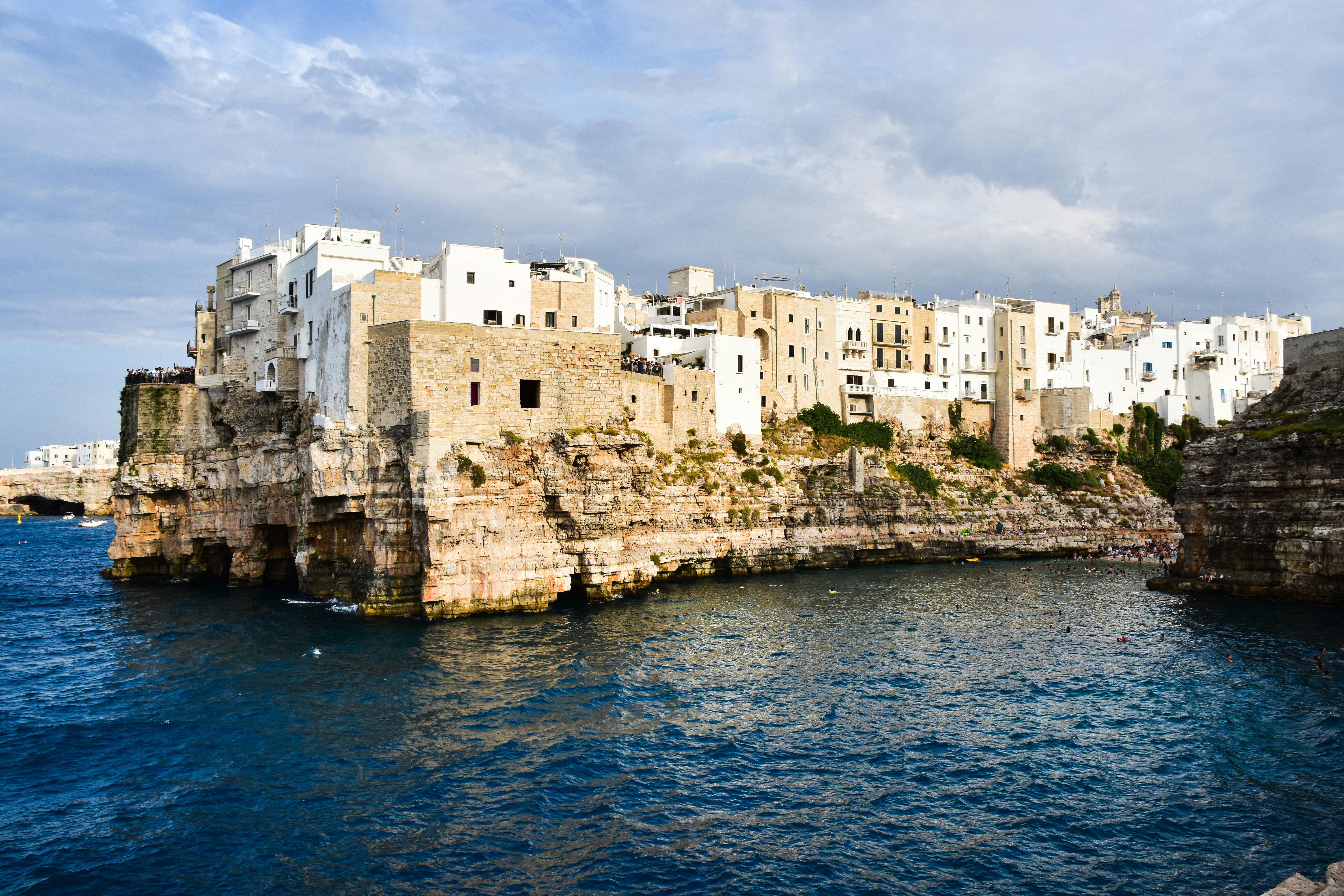
Apulia, or Puglia, forms the heel of Italy’s boot, a region shaped by Greeks, Romans, Byzantines, Normans, Swabians, Aragonese, and Bourbon rulers. That layered history still shows in its Romanesque churches, hill towns, defensive castles, and a cuisine built on wheat, olive oil, vegetables, and the day’s catch from the sea.
Travelers come for the trulli of Alberobello, the limestone lanes of Bari Vecchia, the baroque facades of Lecce, and the region’s famously blue water. They stay for the small rituals: espresso at the counter, warm focaccia from a neighborhood bakery, orecchiette made by hand in the street, and evenings that begin with an aperitivo and drift into a late southern dinner.
For practical planning, Apulia is one of Italy’s most rewarding self-paced regions, but it helps to keep expectations realistic: many historic centers are best explored on foot, summer heat can be strong, and restaurant hours are often traditional rather than all-day. Reserve key stays early, wear proper shoes for polished stone streets, validate train tickets when needed, and lean into local specialties such as burrata, octopus, panzerotti, bombette, pasticciotto, and Primitivo or Negroamaro wines.
Bari
Bari is the natural gateway to Apulia and far more than a transport hub. It is a working port city with a handsome seafront, a deeply atmospheric old town, and one of southern Italy’s best food scenes for travelers who prefer places with grit, life, and excellent lunch options over postcard perfection.
The heart of the city is Bari Vecchia, a dense lattice of alleys where grandmothers still roll orecchiette outside their doors and church bells cut through the sound of scooters. Nearby, the elegant Murat district offers shopping streets, cafes, and a more polished 19th-century face of the city.
Where to stay: Browse apartments in Bari via VRBO Bari or hotels via Hotels.com Bari.
Getting there: Fly into Bari and compare options on Omio flights. From Bari Airport to the center, the train or shuttle typically takes about 20 to 30 minutes, and taxis usually take around 25 minutes depending on traffic.
- Top sights: Basilica di San Nicola, Bari Cathedral, Castello Svevo, the lungomare, Teatro Petruzzelli, and the pasta-making lanes around Strada Arco Basso.
- What to eat: focaccia barese with tomatoes and olives, sgagliozze fried polenta, popizze, raw seafood if you enjoy it, and handmade orecchiette with cime di rapa.
- Coffee and sweets: Start mornings with a fast espresso and cornetto, then try local bakeries for focaccia as a second breakfast, which in Bari is a perfectly respectable habit.
Day 1 - Arrive in Bari
Morning: In transit.
Afternoon: Arrive in Bari, check in, and keep the first hours gentle with a walk along the Lungomare Nazario Sauro, one of Italy’s grandest seaside promenades. This is the right introduction to the city: broad sea views, fishermen, liberty-style facades, and a breeze that immediately makes Apulia feel different from the north.
Evening: Head into Bari Vecchia for your first dinner at La Tana del Polpo, known for reliable seafood in a central location; the mixed antipasti and grilled octopus are a good opening lesson in the local kitchen. If you want something more informal, grab a hot panzerotto at Di Cosimo or Antico Forno delle Sfoglie Calde, then finish with gelato while wandering the old walls around Piazza Mercantile and Piazza del Ferrarese.
Day 2 - Bari Vecchia, San Nicola, and the city’s classic flavors
Morning: Begin with coffee and pastry at Caffè Portineria or Jerome Chocolat if you want a more modern cafe feel. Then visit the Basilica di San Nicola, one of southern Italy’s great pilgrimage churches, built to house the relics of Saint Nicholas; even travelers with only a mild interest in history tend to remember its crypt and quiet gravity.
Afternoon: Have lunch at Mastro Ciccio for a well-executed casual take on Apulian street food, especially octopus sandwiches and fried seafood, then explore Strada Arco Basso, where local women are often seen shaping orecchiette by hand. Continue to Bari Cathedral and Castello Svevo, the sturdy Norman-Swabian fortress rebuilt under Frederick II, whose severe geometry tells a different story from the city’s warm, improvisational street life.
Evening: Book dinner at Osteria delle Travi for traditional Barese dishes in a cozy old-town setting; order orecchiette with turnip greens and ask about seasonal antipasti. If you still have energy, catch a drink near Piazza del Ferrarese, where the evening crowd mixes students, couples, and local families rather than feeling staged for visitors.
Day 3 - Day trip to Polignano a Mare from Bari
Morning: Take a regional train to Polignano a Mare using Omio trains; the journey is usually about 35 to 45 minutes and often costs roughly €4-€7. Start with coffee at Il Super Mago del Gelo Mario Campanella, legendary for inventive coffee granita and gelato combinations, then stroll to the dramatic terraces over Lama Monachile, the cove that has become one of Apulia’s signature views.
Afternoon: Lunch at Pescaria, widely known for seafood sandwiches that are far better than the word “sandwich” suggests, with combinations built around tuna, octopus, prawns, and local bread. Spend the afternoon walking the cliff-edge old town, reading the poems painted on walls and stairways, and if weather permits, taking a swim or simply watching the sea shift color below the limestone cliffs.
Evening: Return to Bari for dinner at Al Pescatore, a long-standing seafood address near the old town walls, especially good if you want a more classic sit-down meal after a day trip. End with a slow passeggiata on the seafront; Bari after dark feels lived-in, not decorative, which is exactly its appeal.
Alberobello
Alberobello is small, but it earns its fame. Its trulli, those white dry-stone houses with conical roofs, create one of Italy’s strangest and most memorable urban landscapes, a place that looks part folklore, part architecture lesson, part dream.
Staying here, rather than just visiting by day, lets you experience the town before the excursion crowds arrive and after they leave. It also places you within reach of the Itria Valley’s finest towns, vineyards, and masserie, making it a smart middle stop between Bari and the Salento south.
Where to stay: Browse trulli stays and apartments via VRBO Alberobello or hotels via Hotels.com Alberobello.
Getting there from Bari: Travel by train or bus via Omio trains or Omio buses. Expect roughly 1.5 to 2.5 hours depending on route and connection, usually around €6-€15; morning departure is best so you can settle in before lunch.
- Top sights: Rione Monti, Aia Piccola, Trullo Sovrano, the Church of Saint Anthony, nearby Locorotondo, Martina Franca, and Cisternino.
- What to eat: capocollo from Martina Franca, local cheeses, orecchiette, grilled meats, and bombette, the small stuffed pork rolls beloved across the Valle d’Itria.
- Why stay overnight: Early morning and late evening transform Alberobello from famous attraction into an eerily beautiful little town of white stone and shadow.
Day 4 - Bari to Alberobello
Morning: Check out of Bari and travel to Alberobello by morning train or bus. The route is not especially fast, but that is part of inland Apulia: olive groves, low stone walls, and towns rising from the folds of the land rather than announcing themselves dramatically.
Afternoon: After check-in, have lunch at La Lira Focacceria for simple regional dishes or a board of local products, then explore Rione Monti and Aia Piccola. Visit Trullo Sovrano, the only two-story trullo, to understand how these ingenious limestone homes were built and why they became a UNESCO World Heritage Site.
Evening: Dine at Trullo d'Oro for dependable Apulian classics or Casa Nova il Ristorante if you want a more polished table in a trullo setting. After dinner, walk the lanes again; once the day-trippers leave, Alberobello regains its mystery, and the rooftops under warm lighting are unforgettable.
Day 5 - Itria Valley day: Locorotondo and Martina Franca
Morning: Start with breakfast at Caffè Plantone or a local bar for espresso and cornetto, then take a short taxi, bus, or regional connection toward Locorotondo. Its name means “round place,” and its old center, arranged in a circular plan, is one of the prettiest in Puglia, with whitewashed lanes, flowered balconies, and viewpoints over the vineyards of the valley.
Afternoon: Continue to Martina Franca for lunch at Gaonas Officine del Gusto, well liked for thoughtful regional cooking, or choose a traditional trattoria in the center for capocollo and pasta. Spend the afternoon admiring Martina Franca’s late baroque palazzi and elegant facades, which feel unexpectedly refined after the rustic forms of Alberobello and Locorotondo.
Evening: Return to Alberobello and keep dinner local with a relaxed meal at Ristorante Terminal or a casual tasting of cheeses, cured meats, and wine if lunch was substantial. If you enjoy photography, this is the evening to shoot the trulli skyline from the Belvedere just before blue hour.
Day 6 - Cisternino or Ostuni excursion
Morning: After breakfast, set out for Cisternino, a handsome hill town known for white lanes and butcher shops that grill meat to order. It is less theatrical than Alberobello and less grand than Lecce, but many seasoned travelers end up loving it because daily life still feels central to the place.
Afternoon: For lunch, try one of Cisternino’s famed fornelli pronti-style butchers, where you choose bombette, sausage, or skewers at the counter and have them cooked on the spot; this is one of the valley’s most enjoyable food traditions. If you prefer a more substantial excursion, continue to Ostuni, the “White City,” whose hilltop gleam and cathedral make it one of Apulia’s most photogenic towns.
Evening: Return to Alberobello for a final quiet evening. Choose a light dinner and a glass of local white wine, because the next leg to Lecce deserves an early start and a clear palate.
Lecce
Lecce is often called the Florence of the South, though in truth it has a personality all its own. Built from warm local stone that seems to absorb and release sunlight by the hour, it is a city of exuberant baroque churches, Roman remains, good shopping, and one of the most pleasurable evening atmospheres in Italy.
It also works brilliantly as a base for Salento, the southern peninsula of Apulia, where Adriatic and Ionian coasts offer very different moods. From here you can immerse yourself in architecture one day and be by the sea the next, then return at night for rustico leccese, a cocktail, and a slow walk through honey-colored streets.
Where to stay: Browse apartments in Lecce via VRBO Lecce or hotels via Hotels.com Lecce.
Getting there from Alberobello: Take a morning train or bus via Omio trains or Omio buses. Depending on the route, expect about 2.5 to 4 hours and roughly €12-€25, often with a change in Bari or another regional hub.
- Top sights: Basilica di Santa Croce, Piazza del Duomo, the Roman Amphitheatre, the Castle of Charles V, and the Museo Faggiano.
- What to eat: pasticciotto, rustico leccese, puccia sandwiches, horse-meat ragù if you are adventurous and a restaurant specializes in it, plus Negroamaro and Salice Salentino wines.
- Best rhythm: Mornings for monuments, afternoons for long lunches or coast trips, evenings for Lecce at its finest, when the stone glows and the piazzas fill.
Day 7 - Alberobello to Lecce
Morning: Depart Alberobello in the morning and travel to Lecce. After check-in, orient yourself with a short walk through the historic center, where the honey-colored pietra leccese stone makes even ordinary facades appear softly theatrical.
Afternoon: Lunch at La Cucina di Mamma Elvira is a fine introduction to Salento flavors, with regional wines and well-sourced ingredients presented without fuss. Then visit Piazza del Duomo, one of Italy’s great enclosed squares, followed by the Basilica di Santa Croce, whose facade is a fever dream of baroque carving and rewards close looking.
Evening: Start with an aperitivo at Caffè Alvino on Piazza Sant'Oronzo, a Lecce institution ideal for people-watching, then have dinner at Osteria degli Spiriti for refined local cooking that respects tradition without copying it mechanically. If you want a late snack afterward, seek out a warm rustico leccese, the beloved pastry filled with béchamel, tomato, and mozzarella.
Day 8 - Lecce in depth: Roman layers, hidden museums, and pastry culture
Morning: Breakfast at Nobile Pasticceria in Lecce or another respected pastry shop for a proper pasticciotto, the oval custard-filled pastry that is practically a civic identity marker. Then explore the Roman Amphitheatre and nearby Piazza Sant'Oronzo, where ancient Lecce, baroque Lecce, and present-day urban life meet in one compact area.
Afternoon: Have lunch at Alle Due Corti, one of the city’s classic addresses for Salento cooking, then visit Museo Faggiano, a fascinating private house-museum accidentally uncovered during renovation and revealing layers of local history beneath a domestic structure. Spend the rest of the afternoon browsing artisan paper shops, ceramics, and boutiques hidden in the side streets.
Evening: Dinner at Bros' Trattoria if you want a more contemporary interpretation of regional ingredients, or choose a simpler puccia spot if you prefer something low-key. End with a night walk to Piazza del Duomo; under evening light it feels almost stage-set perfect, but still unmistakably local.
Day 9 - Salento coast day trip: Otranto
Morning: Travel to Otranto by regional transport using Omio trains or Omio buses; the journey is generally about 1 to 1.5 hours and often costs around €5-€10. Start at the Cathedral of Otranto, whose extraordinary medieval mosaic floor is one of the great artistic surprises of southern Italy, sprawling with biblical scenes, creatures, and symbols that feel almost encyclopedic.
Afternoon: Lunch at L'Altro Baffo if you want a serious seafood meal, or choose a simpler harbor-side spot for grilled fish and pasta with sea urchin when in season. Spend the afternoon walking the waterfront, the Aragonese castle, and the old town lanes, and if the weather is fine, make time for a swim or a coastal lookout stop.
Evening: Return to Lecce for your final full evening and book a memorable dinner at Le Zie, celebrated for home-style Salento dishes served in a warm, old-fashioned setting. This is the place for a concluding meal that tastes like family cooking rather than performance.
Day 10 - Final morning in Lecce and departure
Morning: Ease into the day with coffee and one last pastry, then visit any sight you missed, such as the Castle of Charles V or a final circuit through the historic center for shopping. If you prefer a quieter farewell, simply sit in a bar with a newspaper and watch Lecce wake up around you.
Afternoon: Depart Lecce for your onward journey. If you are connecting out via Bari or Brindisi, compare rail or bus options on Omio trains and Omio buses; Lecce to Brindisi is usually about 30 minutes by train, while Lecce to Bari is commonly around 1.5 to 2 hours on faster services.
Evening: In transit.
This 10-day Apulia itinerary offers an elegant progression through Bari, Alberobello, and Lecce, balancing city life, UNESCO trulli, baroque architecture, Adriatic coast views, and some of Italy’s most memorable regional food. It is a trip built not only on major sights, but on the texture of Puglia itself: sea air, stone streets, family-run kitchens, and the pleasure of moving slowly through the south.