
Yogyakarta, known to everyone here as Jogja, is the cultural soul of Java. It is the only Indonesian city still run by a sultanate, and that royal pulse runs through everything: the palace at its center, the gamelan drifting from courtyards, the batik workshops, and the shadow-puppet performances that stretch deep into the night. It is unpretentious, student-filled, and endlessly creative.
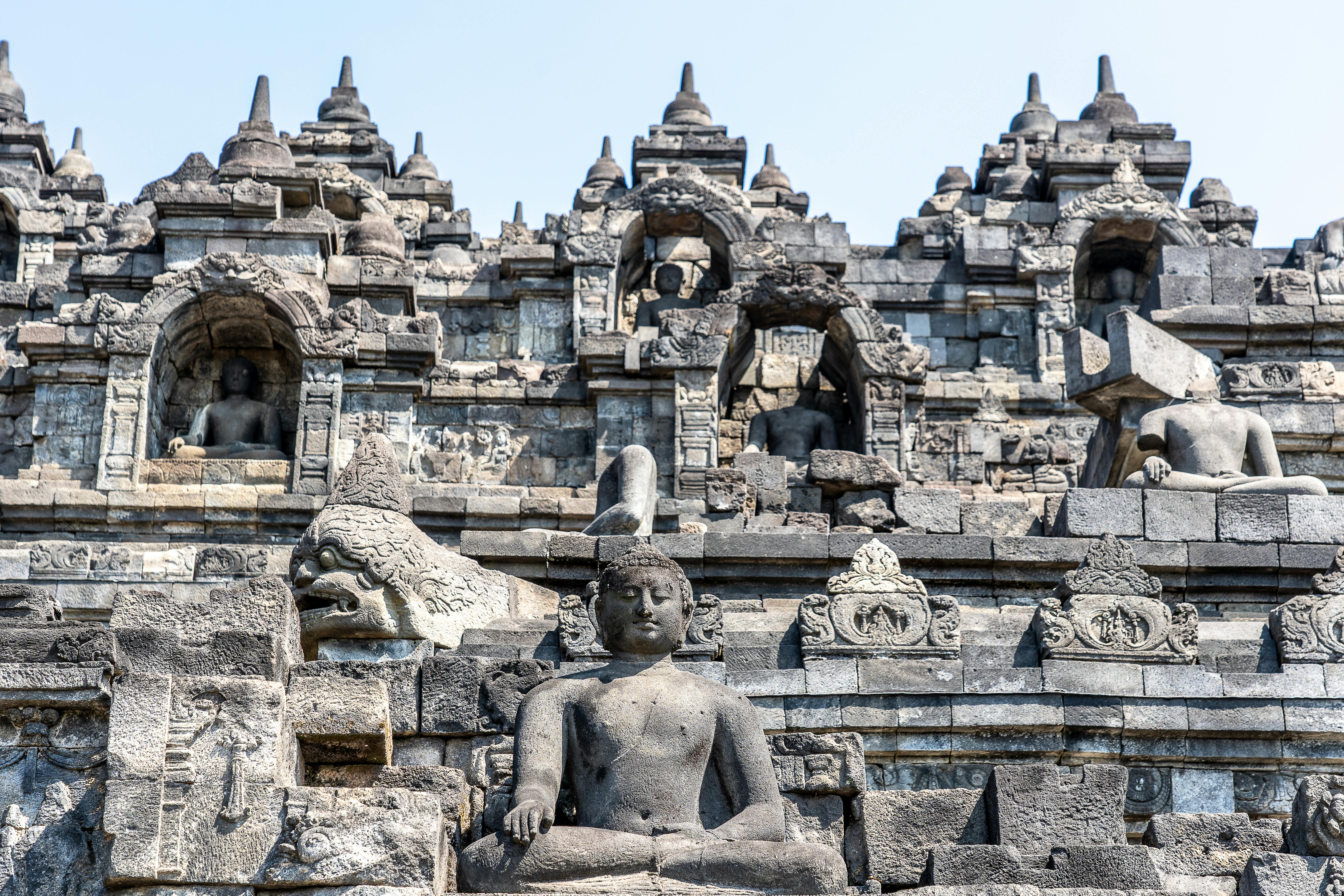
Within an hour of the city sit two of the greatest monuments in the world: Borobudur, the largest Buddhist temple on earth, and Prambanan, a soaring complex of Hindu spires. Between them lies a landscape of rice terraces, caves, and the smoking cone of Mount Merapi, one of the most active volcanoes anywhere.
Add streets perfumed with grilled satay and sweet gudeg, a serious specialty-coffee scene, and prices that make it easy to linger, and you have one of Southeast Asia's most rewarding bases. Jogja rewards slow travelers who lean into its rhythm.
Jogja has a tropical climate with two seasons. The dry season from May to September is the most comfortable time to visit, with clearer skies (ideal for sunrise temple visits and Merapi views) and warm days around 30C. The wet season runs November to March, bringing heavy afternoon downpours but lush green landscapes and thinner crowds. Try to time a trip around the Ramayana Ballet season at Prambanan (open-air shows run mostly in the dry months) or major cultural events like Sekaten and the Garebeg processions tied to the Islamic calendar.
Most travelers arrive at Yogyakarta International Airport (YIA) in Kulon Progo, about 45 km west of the city; the easiest transfers are the airport rail link to Tugu Station or a pre-booked car (roughly an hour). Within the city, ride-hailing apps Gojek and Grab are cheap, reliable, and the simplest way to get around (motorbike or car). The historic core around Malioboro and the Kraton is walkable, and a sunrise cycling tour is a lovely way to see village life. Skip unmetered becak and andong rides unless you agree the fare first, and avoid driving yourself in heavy traffic.
Neighborhoods & hotels


Skip the research, get a day-by-day Yogyakarta plan
Tell us your dates and pace; we'll build the itinerary around these picks.
Best Coffee Shops
Jogja takes coffee seriously, blending Indonesian single-origin beans with a young, design-led cafe culture.


Where to Eat Breakfast & Brunch


Where to Eat Dinner
From smoky satay to candlelit Javanese fine dining, Jogja eats remarkably well for its prices.


Top Sights in the City
Jogja's center is a tight cluster of palaces, water gardens, and royal history easily explored on foot.


Top Things to Do
Beyond the city, the temples, volcano, and caves are the real headliners. These tours match the best of them.


Day Trips Worth Taking
Some of Java's most dramatic landscapes and ancient sites sit within easy reach of the city.


Markets & Shopping
Jogja is Java's craft capital, strong on batik, silver, and leather shadow puppets.


Bars & Nightlife
Jogja is a student city, so nights lean toward live music, rooftops, and laid-back drinks rather than clubbing.
Before you visit
Plan-ahead checklist
Yogyakarta is the rare city that delivers world-class monuments and intimate, everyday Java in the same breath: a sunrise at Borobudur, a plate of gudeg at a roadside warung, gamelan echoing from a palace courtyard. Give it a few unhurried days and it will get under your skin. Start planning, book that climb-up ticket, and let Jogja show you the soul of Java.
Top-Rated Places to Eat, See & Stay
Explore Yogyakarta
Build your own Yogyakarta trip
Tell us how many days, your budget, and what you're into. We'll turn it into a custom, day-by-day Yogyakarta itinerary.