
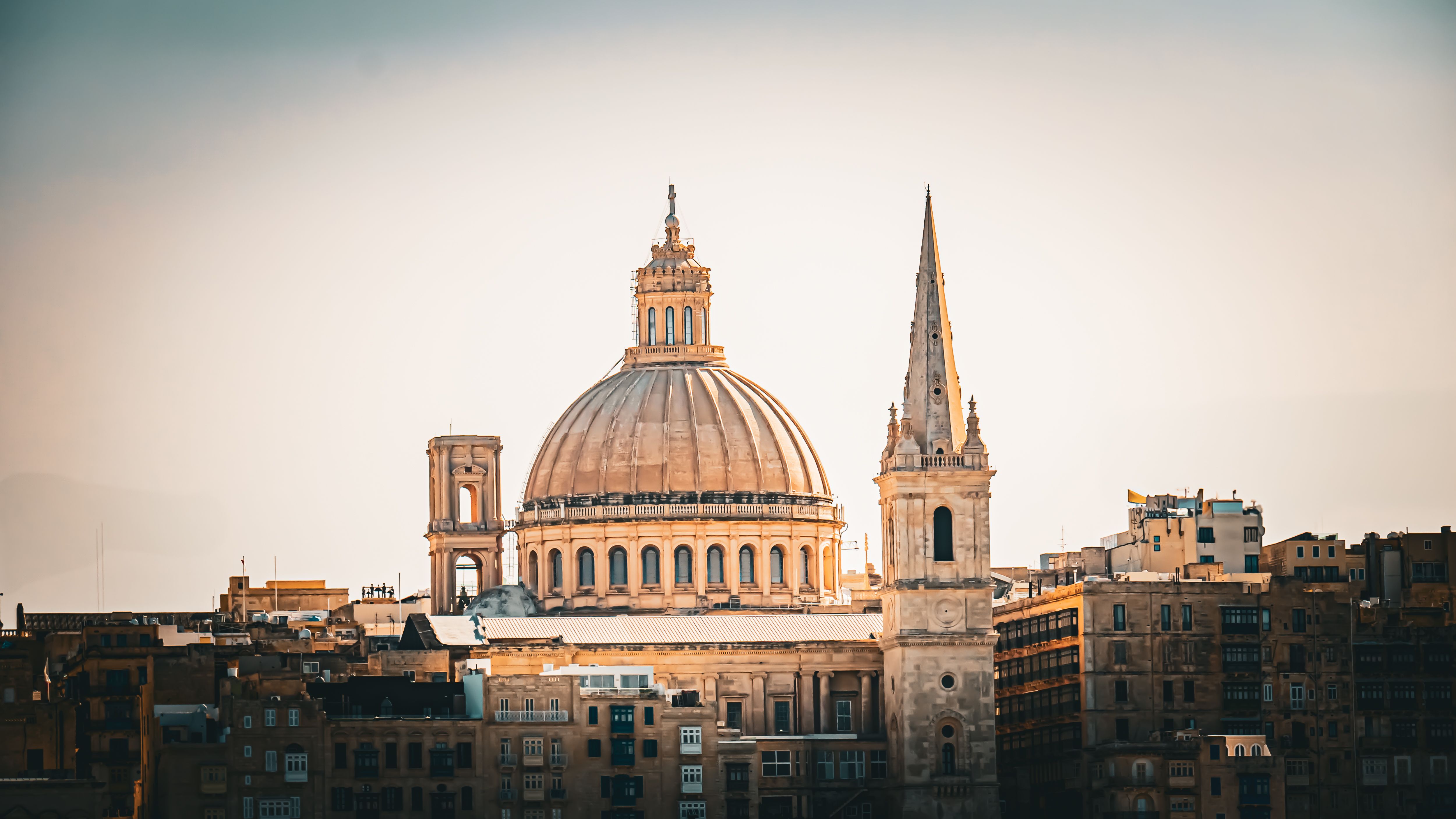
Valletta is one of the smallest capital cities in Europe and arguably the most concentrated. Built by the Knights of St John after the Great Siege of 1565, the entire city is a UNESCO World Heritage Site, a grid of golden limestone laid across a peninsula between two great harbors. You can walk from one end to the other in fifteen minutes, but you could spend days inside its churches, palaces, and steep stepped streets.
The light here is the first thing you notice: that warm Maltese stone glows at golden hour and the Grand Harbour below turns molten. The second thing is the layering of history, Phoenician, Roman, Arab, Norman, British, all stacked into a city that was the European Capital of Culture in 2018 and has been quietly polishing its restaurants and boutique hotels ever since.
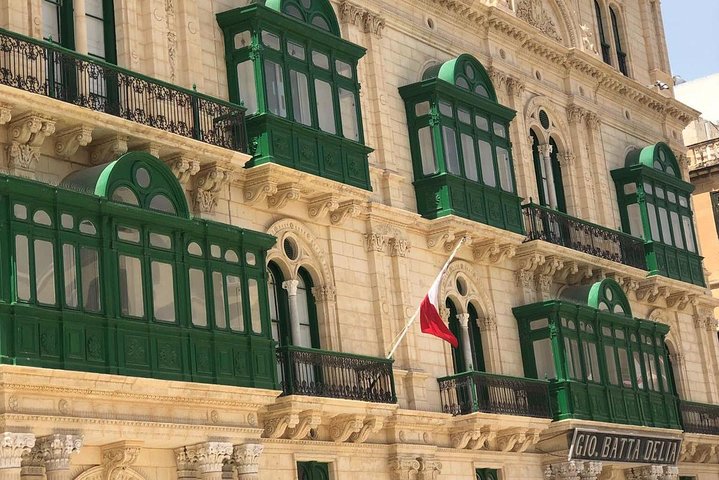
It is a place that rewards slow exploration. Duck down a side street and you will find a hole-in-the-wall serving pastizzi, a wine bar in a 400-year-old cellar, or a balcony view of cruise ships gliding past the bastions. Compact, walkable, and genuinely delicious, Valletta is the ideal base for exploring all of Malta.
Spring (April to June) and autumn (September to October) are the sweet spots: warm, sunny days, swimmable sea, and fewer crowds than the July-August peak, when temperatures push past 32C and cruise crowds fill the main streets. Winters are mild (around 15C) and quiet, with the occasional rain, but the city stays lively. Time a visit around the Malta International Arts Festival in summer, the Valletta Baroque Festival in January, or the dramatic Good Friday and Easter processions if you want to see the city at its most theatrical.
Malta International Airport sits about 8 km from Valletta, roughly 20 to 30 minutes by taxi or ride-hail (Bolt and eCabs are cheap and reliable; the official airport taxi desk uses fixed fares). Public buses run from the airport to Valletta's central bus terminus just outside City Gate. Valletta itself is best explored entirely on foot, as much of it is pedestrianized and cars are restricted, though be ready for steep streets and steps. To reach the Three Cities or Sliema, take the historic dgħajsa water taxis or the regular ferries across the harbor, which are fast, scenic, and inexpensive.
Neighborhoods & hotels


Skip the research, get a day-by-day Valletta plan
Tell us your dates and pace; we'll build the itinerary around these picks.
Best Coffee Shops
Malta's coffee culture blends Italian espresso traditions with a relaxed cafe scene perfect for a mid-explore break.


Where to Eat Breakfast & Brunch


Best Restaurants for Dinner
Valletta's dining scene has quietly become one of the Mediterranean's most exciting, from cellar wine bars to harbor-view fine dining.


Top Things to Do & See
Valletta packs an astonishing amount of history and beauty into a tiny footprint. These are the essentials.



Food & Experiences Worth Booking


Day Trips Worth Taking
Malta is small, so the whole island and its sister island Gozo are within easy reach for a day.


Bars & Evening Drinks
Valletta after dark is atmospheric and surprisingly lively, especially around Strait Street, the old nightlife quarter.
Markets & Shopping
Before you visit
Plan-ahead checklist
Valletta proves that the best things come in small packages: a fortress city you can cross on foot but never quite exhaust, where every corner hides a Baroque church, a harbor view, or a plate of something delicious. Use it as your base, take the ferry to the Three Cities, and give yourself a day on Gozo. Pack good shoes and an appetite, and let Malta's golden capital surprise you.
Top-Rated Places to Eat, See & Stay
Explore Valletta
Build your own Valletta trip
Tell us how many days, your budget, and what you're into. We'll turn it into a custom, day-by-day Valletta itinerary.