
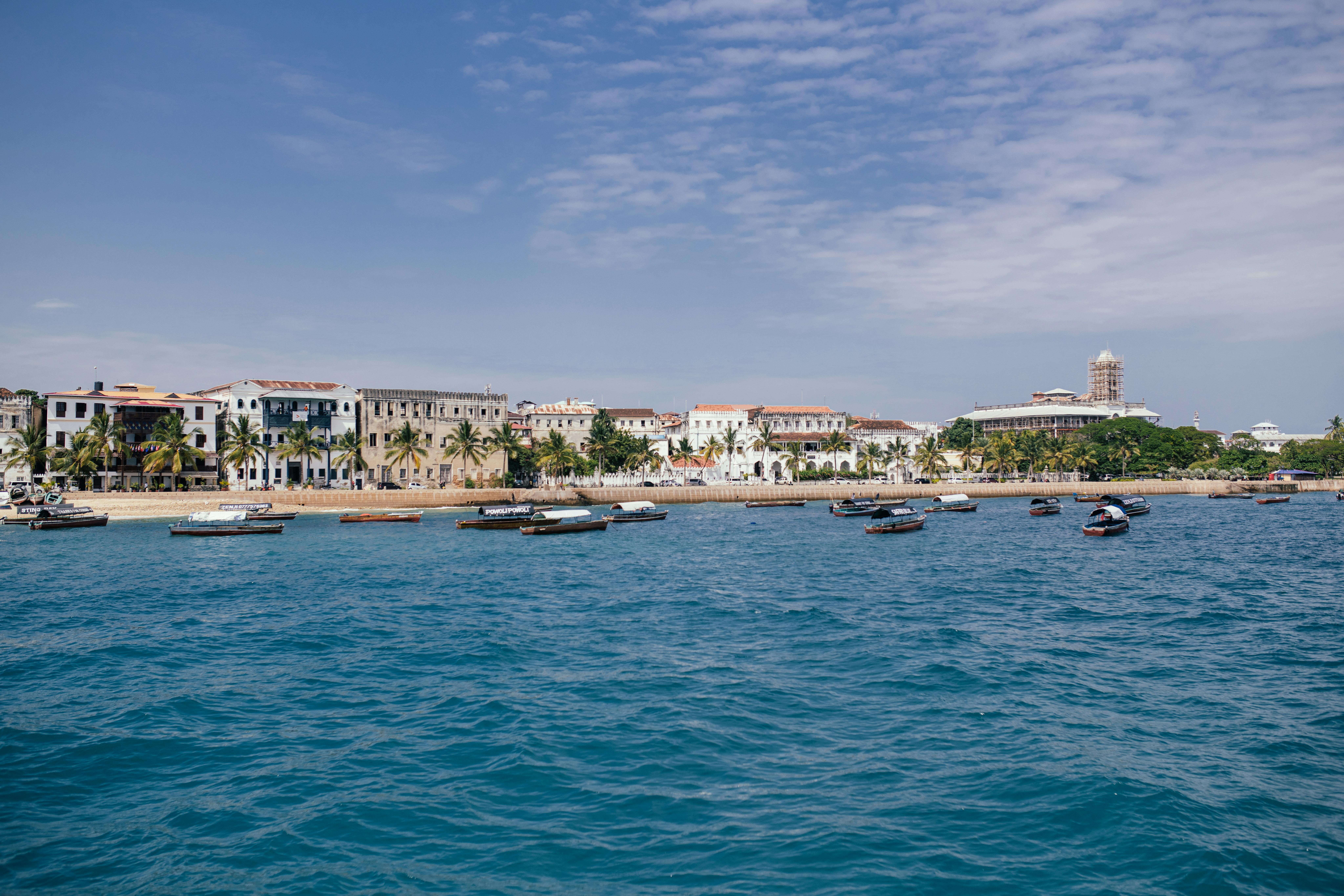
Scenic view of boats and historic Stone Town, Zanzibar under a blue sky.
Best Time to Visit · Zanzibar

The Best Time to Visit Zanzibar: A Season-by-Season Guide

From the long dry season's postcard beaches to the low-price monsoon months, here is when to go to this Indian Ocean archipelago.

Last updated July 14, 20267 min read

Zanzibar sits just south of the equator off the coast of Tanzania, so it never really has a cold season. Instead, the calendar splits into dry stretches and rainy ones driven by the Indian Ocean monsoons, and those rains (not temperature) are what make or break a trip. Air temperatures hover between roughly 25C and 34C (77F to 93F) all year; the real variables are rainfall, humidity, sea conditions, and how many other travelers share the sand with you.

The islands run two dry seasons and two wet ones. The long dry season from June to October is the classic window: warm, breezy, and reliably sunny, which is why it is also the busiest and priciest. A shorter, hotter dry spell in January and February is excellent for diving and beach time. The long rains (late March to May) and the short rains (November) bracket these with heavier skies and steep discounts.

Deciding when to go comes down to your priorities: sun-certainty and diving visibility, festival timing (the Sauti za Busara music festival and Ramadan both shift the mood of Stone Town), or getting a beachfront room for a fraction of peak rates. This guide breaks down each season so you can match the archipelago to the trip you want.

Quick answer

The best time to visit Zanzibar is the long dry season from June to October, when rainfall is low, humidity eases, and daytime temperatures sit around 28C to 30C (82F to 86F) with reliable sunshine ideal for beaches and diving. January and February offer a hotter second dry window with excellent underwater visibility, while the long rains from late March to May bring the lowest prices and the fewest crowds.

At a glance

The short version

Best overall
June to October. The long dry season delivers the most dependable sunshine, comfortable humidity, calm seas, and prime conditions for both beach days and diving, though you pay for it in crowds and rates.
Cheapest time
April and May. During the long rains many resorts drop rates by 30 to 50 percent, and flights are at their lowest, so budget travelers who can accept afternoon downpours get the best value of the year.
Fewest crowds
April, May, and early November. Beaches feel near-empty and Stone Town is quiet during the rainy shoulders, giving you space that the July-to-August rush never allows.
Best weather
July to September. Low humidity, steady sea breezes, and long sunny days with little rain make this the most comfortable stretch on the islands.
Best for diving and snorkeling
February to March and October. Warm water (around 28C to 29C / 82F to 84F) and excellent visibility, often 20 to 30 meters, make these the standout months for underwater visibility around Mnemba Atoll.
Best for festivals
February. The Sauti za Busara music festival fills Stone Town with East African and pan-African sound, one of the region's great cultural events.
Season by season

Through the year

Long dry seasonJune to October
Weather Warm and dry, with daytime highs of 28C to 30C (82F to 86F) and cooler nights around 20C to 23C (68F to 73F). Low humidity, steady southeast breezes, and minimal rain.
Crowds Peak. July, August, and the September safari-combination months are the busiest, with families and European holidaymakers filling the north and east coasts.
Prices High. Expect top-season rates at resorts and higher flight costs, with the biggest premiums in August and over the holidays.

This is Zanzibar at its most reliable: sunny skies, calm swimming, and comfortable evenings. It pairs naturally with a mainland safari, which is part of why it books out. The trade-off is crowded beaches and the year's highest prices, so reserve accommodation well ahead.

Short rainsNovember to mid-December
Weather Hot and humid with brief, often afternoon downpours. Highs of 30C to 32C (86F to 90F). Rain tends to come in short bursts rather than all-day washouts.
Crowds Low to moderate. Early November is quiet before numbers build toward the Christmas peak in late December.
Prices Mostly low, rising sharply in the final ten days of December for the holidays.

The short rains rarely ruin a trip: showers pass quickly and the islands stay green and warm. Early to mid-November is a sweet spot for lower prices and thin crowds, but avoid the last week of December unless you want festive-season rates and a full house.

Short dry seasonJanuary to February
Weather Hot and sunny, with highs of 32C to 34C (90F to 93F) and warm, calm seas. Humidity is high but rain is sparse.
Crowds High. This is a popular winter-sun escape, especially around New Year and through the European and North American winter.
Prices High, though generally a notch below the July-August peak outside the New Year window.

The hottest stretch of the year is also one of the best for the water: seas are glassy, visibility is superb, and Mnemba Atoll diving peaks. Bring sun protection and expect sticky afternoons. February also brings the Sauti za Busara festival to Stone Town.

Long rainsmid-March to May
Weather The wettest period, with heavy showers and thunderstorms, especially in April. Highs around 29C to 31C (84F to 88F) with high humidity and cloudier skies.
Crowds Lowest of the year. Beaches and Stone Town are quiet, and some smaller lodges close for renovations.
Prices Lowest. Resort rates and flights bottom out, with widespread discounts.

The long rains are the gamble season: April in particular can see days of heavy rain, and seaweed and rough seas affect some east-coast beaches. But if you want empty sand, deep discounts, and a lush, green island, late May often clears up nicely as the dry season approaches. Check whether your chosen hotel stays open.

On the calendar

Notable events & festivals

Sauti za Busara (February)East Africa's flagship music festival takes over the Old Fort in Stone Town over several days, showcasing Swahili, African, and diaspora artists. It is the archipelago's cultural highlight and a superb reason to visit in February.
Ramadan and Eid al-Fitr (variable, roughly late February to March in 2026)Zanzibar is predominantly Muslim, and during Ramadan many Stone Town restaurants close or shorten hours by day. Resorts operate normally, but visitors should dress modestly and be aware daytime dining in town is limited. Eid brings festive gatherings.
Zanzibar International Film Festival (usually June or July)Also known as the Festival of the Dhow Countries, ZIFF screens films from Africa and the Indian Ocean region and stages music and performances, mostly around the Old Fort in Stone Town.
Mwaka Kogwa (July)A Shirazi New Year celebration rooted in Persian tradition, held mainly in Makunduchi in the south, featuring symbolic mock fights, ritual house-burning, singing, and feasting.
Christmas and New Year (late December)The festive season is a mini-peak, with resorts booked out and premium holiday rates. Weather is warm with occasional showers; book far ahead if you want a beachfront room.
When to avoid

April is the peak of the long rains and the least reliable month, with the heaviest downpours, rough seas, seaweed on some east-coast beaches, and a number of smaller lodges closed. If sun-certainty matters, skip April and consider late May or June instead.

Got your dates? Build the trip around them.

We'll plan a custom Zanzibar itinerary tuned to your travel month and pace.

Generate itinerary

Frequently asked questions

What is the cheapest month to visit Zanzibar?
April and May are the cheapest, falling in the long rainy season when resorts cut rates by 30 to 50 percent and flights are at their lowest. Early November is another good-value window before the December holiday rush.
Is Zanzibar worth visiting in the rainy season?
Yes, if you are flexible. The short rains (November) bring brief afternoon showers that rarely spoil a trip, and prices and crowds are low. The long rains (especially April) are riskier, with heavier, longer downpours, so late May is a safer bet than April.
When is the best time for diving and snorkeling in Zanzibar?
February to March and October offer the best underwater visibility (often 20 to 30 meters) and warm water around 28C to 29C (82F to 84F), especially at Mnemba Atoll. Diving is possible year-round, but visibility drops during the long rains.
How many days do you need in Zanzibar?
Five to seven days is ideal: one or two in Stone Town for its history, markets, and spice tours, and three or four on the north or east coast for beaches, diving, and dhow trips. Many travelers add Zanzibar as a three-to-four-day beach extension after a Tanzania safari.
What is the hottest time of year in Zanzibar?
January and February are the hottest, with highs of 32C to 34C (90F to 93F) and high humidity. It is a popular winter-sun season with calm, warm seas, but you should plan for sticky afternoons and strong sun.

Zanzibar rewards travelers who match the season to their priorities: June to October for dependable sun and diving, February for warm seas and festival energy, and April or May for empty beaches at the year's lowest prices. Decide whether sunshine, savings, or solitude matters most, then book early for the dry-season peaks, and the archipelago will deliver.

Plan with MagicTrips

Build your own Zanzibar trip

Tell us how many days, your budget, and what you're into. We'll turn it into a custom, day-by-day Zanzibar itinerary.

Ready to book your stay?

Hotels
Homes

Traveling somewhere else?

Generate a custom itinerary